-
Wimbledon Final Preview Roger Federer Vs Marin Cilic All Roads Lead to SW19
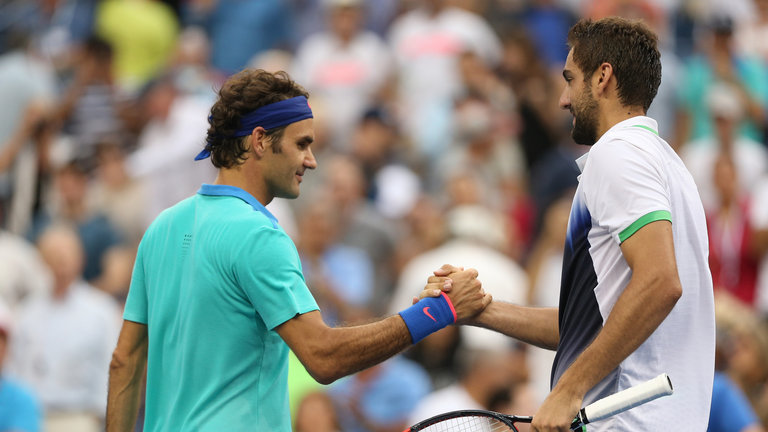
Photo courtesy of halotimes.vn Roger Federer (3) and Marin Cilic (7) will compete for the 2017 Wimbledon Men’s singles title, a final both men have been on the road towards for some time, at the end of which one is looking to add some finishing touches to the most glittering of empires, the other to decorate further an already finely bejeweled palace . The Tennis Review previews the action and predicts the winner.
Roger Federer’s 2017 has seen the Swiss put the finishing touches to the game he reconstructed back in 2014, namely on his single handed backhand’s potency and resilience under the pressure of its greatest potential demolishers, and consequently swell his legacy and build the second quarter of his season around the one achievement that would leave that legacy as out of reach for his competitors as London’s Shard is to the buildings it towers over.
The 18 times slam champion’s decision to skip the clay season in order to prepare himself for the Grass was easy to understand considering the Swiss’ age, the timing of his resurgence, and his skills on the surface, a decision he could afford to take after unexpectedly winning the Australian Open and then following it up with titles in Indian Wells and Miami, his best start to the season since 2006.
Marin Cilic, aged 28 and seven years younger than the Swiss, may not have built his season around the Championships, but his season has shaped into its best form just in time. The Croat did not have such an impressive start to the season as the Swiss- in the events Federer won in the first quarter, Cilic went second round, opening round, opening round- but Cilic found his form on the clay, winning Istanbul and reaching the quarters of Monte Carlo, Rome, and the French Open, and in the process getting some much need match fitness and confidence if he was going to make a push for the Wimbledon title.
While Cilic was working his way into form, Federer’s decision to take a rest from the Clay season and focus on Grass paid off as the Swiss won Halle and then beat Alexandr Dolgopolov, Dusan Lajovic, Mischa Zverev, Grigor Dimitrov, Milos Raonic and Tomas Berdych without dropping a set and while suffering a hold cold.
So so happy and privileged to be in another @Wimbledon final. See you all Sunday 😀
— Roger Federer (@rogerfederer) July 14, 2017
Cilic’s hard work also paid off, too, as he reached the final of the AEGON championships and beat Philipp Kohlschrieber, Florian Mayer, Steve Johnson and Roberto Bautista Agut all in straights at Wimbledon and then Gilles Muller, one of the in form Grass courters, in five sets and then top seed Andy Murray’s conqueror Sam Querrey in four to reach his first Wimbledon final after 11 attempts where he play a man playing his eleventh Wimbledon final in all.
Both Federer and Cilic have taken very different roads to get to this Wimbledon final, and those roads did not just begin at the start of this season, but can be followed all the way back to 2014 when Federer lost the Wimbledon final, his first slam final since Wimbledon 2012, while the statuesque Cilic, long touted as a potential winner in SW19, reached the last eight for the first time and took the eventual champion, Novak Djokovic, to five sets.
That Cilic 2014 SW19 run laid the foundations for a breakthrough for the 2010 Australian Open semi-finalist whose career had never reached its potential, a tendency to choke and to be inconsistent week in week out seeing him trapped under rubble when he should have been scaling the heights.
Where better than to scale the heights than the city of Skyscrapers and a couple of months later in New York, with Federer closing in on the No.1 ranking, and Djokovic knocked out of the US Open, Cilic showed he had the mental strength to reach the top as he defeated the heavily favored Swiss in a straight sets demolition, going on the win the final and enter the very small circle that is 21st century men’s tennis Grand Slam winners.
Cilic’s career would not escalate after that slam win, however, the Croat suffering a shoulder injury that kept him out of the 2015 Australian Open. Federer, meanwhile, did not let up chasing the No.1 ranking, and though he would not take it, in 2015, Federer, playing his best tennis since 2012, would reach another Wimbledon final, and Cilic would get his career back on track, reaching another SW19 quarter-final, losing to the eventual champion Djokovic again, this time in straights.
With both men such prominent figures at the tournament, it seemed only inevitable they would eventually meet on Center Court, and one year later, Federer and Cilic, two of the favorites for the title, went head to head in the 2016 last eight. The match was a classic, Cilic leading two sets to one and holding match points against a Federer struggling with a knee injury but determined to revenge the US Open defeat, the Croat going on to lose the match, and Federer losing the semi-final and then taking six months out the game.
While Federer was out, Cilic made an odd progress of sorts in his career, a rare one on the tour, the Croat one of only seven active slam champs, and the youngest of all, winning a first ATP 1000 title, in Cincinnati, and a first ATP 500 title in Basel, and reaching a career high ranking of 6, displaying the consistency he could build on to win more slams, and the ability to stay strong under the pressure of being the favorite against lower ranked in form opponents or higher ranked but compromised rivals.
Federer knows only too well about being the favorite, having contested 29 slam finals, winning 18 of them, and collecting 74 other titles. The Swiss also knows about how to handle being the favorite in a match up, having defeated Cilic 6 times and losing just the once.
The Swiss matches up better to big servers and big hitters than he does big returners and consistent aggressive base-liners, matching the likes of Cilic service game for service game and having a stronger return to get that decisive edge, and, failing that, the shot-making skills, superior all round game and career experience to get the upper hand in tiebreakers.
The Swiss is only vulnerable to such players when they, as Cilic did in New York in 2014, red-line.
Cilic will need to paint the lines again if he is going to beat a Federer in this fitness and form on Center Court this Final’s day. More likely, though, the Croat’s game will hit highs and lows as he experiences a heady mix of adrenaline and nerves from the dizzying heights of the dream come true of his first Wimbledon final while the Swiss, who has lived the dream eleven times over, and lived the nightmare of it, too, stays steady under pressure, and then plays even better, producing his best grass court tennis on the big points to claim a record eighth Wimbledon title.
A title Federer has been on the road towards for a few years now, a road well-traveled, one he knows Cilic is not far behind him on, the Croat ready to overtake him should the Swiss take a wrong turn in the race to whatever lies at the end of the stretch, an empire already glittering or one on the verge of exploding.

-
Wimbledon Semi Finals Preview Federer Vs Berdych Cilic Vs Querrey
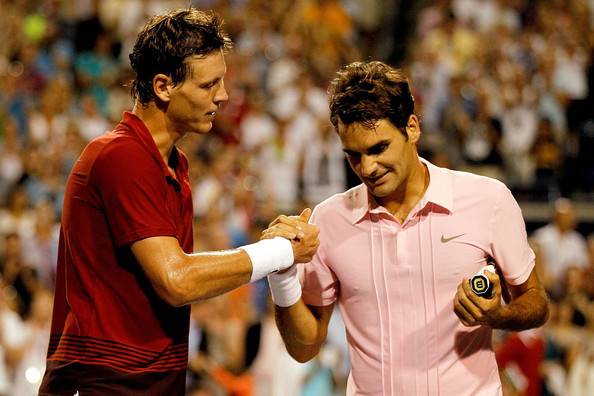
Photo courtesy of wrestlingua.com The Wimbledon 2017 Last Four features the clear favorite for the title, a former slam champ few would bet their house on, the 2010 SW19 runner-up still in the mix, and the first American in the men’s semis since Andy Roddick in 2009. The Tennis Review previews the action and predicts the winners.
Roger Federer (3) Vs Tomas Berdych (11).
A favorite at one of his best events, and at the business end of the tournament, Federer should feel pretty optimistic about his chances of making the final, but one player who might make the Swiss feel a little pessimistic is his semi-final opponent eleventh seed Tomas Berdych.
The Czech beat the Swiss at the 2010 Wimbledon event and at the 2012 US Open, and has beaten him at some of the other tournaments the Swiss could call his backyard such as Dubai (2013) and Cincinnati (2011).
While Berdych has been the spoiler at a few seemingly potential Federer victory parades, the Czech has also been one of the Swiss’ victims on plenty of occasions with Federer leading Berdych 18-6 in their head to head.
It has also been a while since Berdych upset the Swiss, Federer not losing to him since Dubai 2013 and winning seven matches in a row.
Two of those matches have come this season and very different matches they were, too. Federer defeated Berdych for the loss of just ten games in the Australian Open third round while their Miami last eight encounter saw Federer saving two match points and winning 8-6 in a third set tiebreaker.
Those recent Federer victories mean Federer should be feeling confident he can overcome whatever challenges his old rival gives him as should the very different stages both men are at in their careers right now.
Federer has had a career revival, winning another slam at this year’s Australian Open aged 35 and after six months out the game, and the Swiss has been the stand out favorite for the title before the tournament began. Five matches in, despite suffering a head cold, the third seed remains so – the Swiss has not dropped a set and beat last year’s runner-up Milos Raonic in the quarters in, bar a slight lapse in the third set, pretty convincing style.
Roger! (🎥Eurosport) pic.twitter.com/o32vOmV0xt
— doublefault28 (@doublefault28) July 12, 2017
Meanwhile Berdych has declined since 2014, no longer a member of the game’s elite top eight and hovering around the fringes of the top ten. Nevertheless, he is still a high quality competitor and is into the Wimbledon semis for the second consecutive year, coming through a fairly tough draw defeating Chardy, Harrison, Ferrer, Thiem (in five sets) and then Djokovic, leading 7-6 (2), 2-0 when the three time champion retired.
Not the best way to finish the match, but it belongs to sport too.. get well soon @DjokerNole #wimbledon
— Tomáš Berdych (@tomasberdych) July 12, 2017
Prediction: Federer’s cold and Berdych’s clean baseline hitting, the likes of which Federer has not faced this Wimbledon and a style of play which can bother him, means the Swiss is a little vulnerable here, but the seven time champ’s serve and grass court skills should see him through in four sets.
Marin Cilic (7) Vs Sam Querrey (24).
Marin Cilic has been tipped as a potential Wimbledon champion for a few years now though the Croat’s inconsistent nature means few would bet their house on the Croat, who has reached the semis for the first time after his fourth quarter-final appearance, to finally contest the final even though he is on paper very much the favorite.
Cilic leads Querrey 4-0, including a 17-15 fifth set win at Wimbledon 2012, another five set win at Wimbledon 2009, and a three set win at Queens 2012. The only straight sets win came in their most recent match, the 2015 Washington last sixteen which Cilic won in two tiebreaks.
Both men went five sets in their Wimbledon 2017 quarter final matches, with both men winning their fifth sets 6-1, and both were impressive doing so for different reasons– Cilic having to see off an in-form and inspired Gilles Muller, Querrey faced with the distraction of an injured Murray and instead of being dragged down level-wise managing to lift his game instead.
Prediction: A close match looks on the cards, and one which could go either way. Cilic, though, is the more experienced at this level of the sport- this is his third slam semi compared to Querrey’s first- and the Croat should be able to raise his game if things get tight and make it through to his second slam final.
-
Wimbledon Fourth Round Preview Roger Federer Vs Grigor Dimitrov
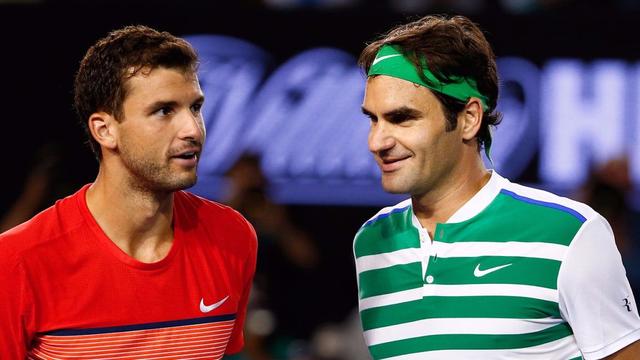
Photo courtesy of giraBSAS.com If Roger Federer is to win a historic eighth Wimbledon trophy this season, it would be only poetic for him to defeat Grigor Dimitrov along the way.
The 13th seeded Bulgarian was touted by the tennis bards as the heir to the Federer throne all the way back in 2008 when he won the Wimbledon Boys’ singles title, the same year Federer lost a final for the first time in SW19 and talk of the Swiss’ demise started doing the rounds.
Neither the Dimitrov rise or the Federer demise came to pass, however. Nine years on and Federer, tennis’ Odysseus, the reigning Australian Open champion, is still winning rounds in slams, and is the favorite to win a record 19th this week. Meanwhile, Dimitrov, aged 26, the age Federer was when he lost that 2008 Wimbledon final, has managed to reach just two slam semis (Wimbledon 2014, Australian Open 2017), his tale more often than not seeming to belong in the tragic rather than epic section of the tennis poetry anthology.
Dimitrov’s tale did begin to sound more upbeat earlier this season when he showed glimpses of promise fulfilled, winning Brisbane and taking Nadal to five in the Australian Open semis, but he did not carry that consistency or spark into the rest of the season, only looking lively again once he hit the Grass, reaching the AEGON championship semis and not dropping a set on the way to this Wimbledon last sixteen match with Federer.
Hyping Dimitrov as the next Federer was always going to be just that, though. Hype which has been both unjustified amid the current tennis conditions favoring maturer players and unfair in the pressure it put on a young man already dealing with being a millionaire, a celebrity and a pin-up before his teen years were over as well as having to live up to the prophecy of being the second coming.
No player is likely to match Federer’s achievements or popularity in the near future, especially in the tennis world Dimitrov currently competes in, a world far different to the one the Bulgarian youngster would have dreamed of competing in, a tennis sphere in which teens and men in their early 20s such as Lleyton Hewitt, Marat Safin and Andy Roddick were slam champs and world No.1s. That world is light-years away now in the ever changing universe of modern sport, a different planet to the one we live in now, a golden orb spinning too slow, conditions wise, for youthful reflexes and ambition to fully thrive, too dense, schedule wise, for young bodies to fully grow into unharmed, and too heavy at the top for young contender’s minds to bloom out from under and grow into those of champions.
Photo courtesy of bg-bg.facebook.com The current trend of elite tennis players in their late 20s and 30s playing championship matches for slam titles while those in their mid 20s hobble along in limbo does not look like it will end anytime soon if Federer’s current form is anything to go by– Federer, aged 35, even with a head cold, playing at 50%, won his third round match versus Mischa Zverev, a 29 year old classic Grass court serve and volleyer at the height of his career, in straight sets, hitting 61 winners.
If Federer’s form in the lead in to this last sixteen match versus Dimitrov is ominous for the 13th seed, wait until we get to the head to head. The Swiss, who said he hoped to be 100% by his last sixteen match, leads Dimitrov 5-0, all five matches played on some of his favorite surfaces – indoor hard in Basel (2013, 2014), outdoor hard in Brisbane (2015, 2016), and in Melbourne (2016) – and the third seed has dropped just two sets, both of them in their last two encounters.
If Federer is 100% in today’s last match on Center Court, expect that dominance to continue, a dominance full of rhyme and reason, easy to understand, easy on the eye or ear. Dimitrov’s classic all-court, aggressive, shot-making style of play, one which earned him the nickname ‘Baby Fed’, is one Federer recites by heart because the heart is where the Swiss himself plays it from, a style which the seven times Wimbledon champ was born singing, and nowhere is he more comfortable executing that song at its poetic best than Wimbledon.
Dimitrov has his poem to write, too, though, and if he is serious about getting scribbling, he is going to have to put in a performance to remember, a piece of tennis folklore well worth tuning in to, much like Federer’s defeat of Pete Sampras in the Wimbledon 2001 last sixteen, a piece of pure poetry which brought to life the opening verse of Federer’s Wimbledon career, and, sixteen years on, versus Dimitrov this Wimbledon last sixteen, Federer looks ready to compose a perfectly timed line to be sung in the closing stanzas.

-
Billie Jean King’s Eye Coach – A Journey to a World Without Head Shifting…

Photo courtesy of connectedclubs.com The team at Billie Jean King’s Eye Coach are on a global mission to spread point of contact training and as a result grow Tennis.
Those in the industry know only too well that participation in Tennis is falling and many clubs are struggling. This is true worldwide except perhaps for Eastern Europe and some parts of Africa. Many meetings, seminars and conferences have focused on why the sport is losing players and what can be done to address the problem.
Part of the decline, at least, is due to the success of competing sports which can be done alone such as cycling, swimming or going to the gym, but this is far from the whole story.
Some point to competition on people’s time such as work pressures, school commitments and the internet – I mean Tennis vs cat memes there’s no contest, right?!
Seriously though, a traditional game of Tennis takes a long time, especially if every game goes to deuce, but that is nothing compared to how long it takes to learn to play Tennis. Sure, most people can get the ball over the net from the service line and have something of a rally quickly, but acquiring all the skills to actually play a match takes months.
The simple fact is it is hard to be good at Tennis and, however good the pro is, many students get frustrated before they have had a chance to fall in love with our beautiful game.
What then is the answer?
Should we write Tennis off as something our parents’ generation did and a complete waste of time only to be resurrected on a games console?
Surely, we can invent a robot to play for us while we chat with friends and look on?
Hold on a minute – we must be able to find better ways of teaching and speed up learning. That makes sense, but we already have the best coaching techniques in the world and still it is too hard.
Had great fun in the #Wimbledon Queue today with @ezeebat @BJKEyeCoach, hope we made it more fun! https://t.co/zRXLpIMKMt @thetennisreview pic.twitter.com/NzIT9QPF1I
— Connected Clubs (@connectedclubs) July 5, 2017
OK let’s step back – what are we asking a student standing on the base line waiting for a fed ball to do? First, after the coach feeds, they must track the ball over the net to where it bounces. At the same time, they are starting to take their racket back and adjusting their feet to get in the right position to hit. As the ball bounces they start to focus on the ball and where it will contact their strings. Then, they must hit it (bend knees, swing low to high, finish on the other side of the body), and, finally, they instinctively start to watch the ball going towards (or in!) the net.
Do you need a lie down? I do! The fact is, when you are learning to do something, it is natural to think a lot about the action, however, if your thinking is cluttered, it stops your natural instincts from taking over.
Far better to say to a beginner –
“get ready to go, move to your position, visualize your target, just hit it!”
These commands tap in to our natural instincts and unleash a power not possessed at a conscious level.

The difficulty with Tennis is that there are two targets and the eye naturally goes to the second target (where you want the ball to go) too early and this creates a head shift.
In other words, while the player is still hitting the ball, their head is moving. This breaks the kinetic chain meaning they hit off balance, and puts the shot at risk of a miss-hit and, therefore, potentially, an error.
With a ball that flies away there is no way to correct this, but now, with Billie Jean King’s Eye Coach, we can dramatically increase the rate of learning by at least 40%, leading to fewer errors and less frustration. We do this by eliminating the fly away ball, but keeping the rhythm of match play on the machine.
Many 1000s of players and coaches have now experienced the difference of a fast, fun and feeling way to learn Tennis and we would love you to be the next to experience it! This year we were delighted to be a finalist in the TIA Innovation Challenge for the best product to help grow tennis and we hope you will join our mission.
For more information please visit: www.theeyecoach.com (US orders) or www.connectedclubs.co.uk/eyecoach (International Orders) Learn Tennis Faster, Play Better Tennis and Love Tennis More! Hugo Allen (June 2017) International Director – Billie Jean King’s Eye Coach Managing Director – Connected Clubs

Photo courtesy of Connectedclubs.com -
Wimbledon 2017 Preview The Favorites Murray Djokovic Nadal Cilic Raonic
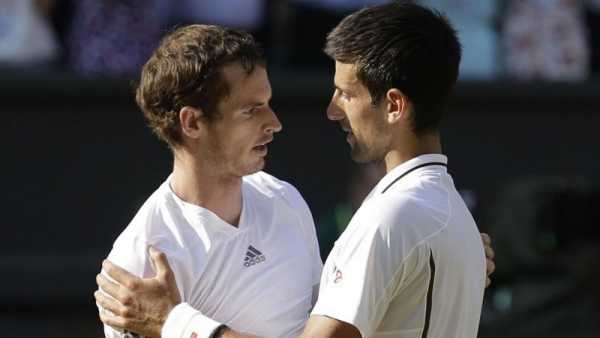
Photo courtesy of Vestionline.com Roger Federer is the stand out contender at this year’s Wimbledon championships, but a few players in the background will be ready to get on their feet and take the trophy should the Swiss fall down.
Andy Murray, Champion 2013, 2016
The top seed and defending champion enters Wimbledon as the joint favorite alongside Roger Federer despite being upset by lucky loser Jordan Thompson in his AEGON championships opener, pulling out of his Hurlingham exhibition on June 27th with a sore hip, looking out of sorts in his Wimbledon practice sessions, and reaching just one tournament semi-final since winning Dubai in early March.
That favored status comes partly because of where Murray reached that semi-final- Roland Garros. Murray may have gone 5-4 in the clay season, but he won five best of five setters in Paris, beating players of the quality of Martin Klizan, Juan Martin del Potro, Karen Khachanov and Kei Nishikori, despite not playing his best, particularly in the early stages of matches.
That ability to win when having a bad day, to find his form when it matters, is why Murray is No.1 and why he has made 21 semi-finals of 45 slams played and, on a surface like grass, on which few players have the vital variety, touch and movement woven so seemlessly into their tennis DNA, and Murray is one of the most blessed of those few, Murray will be favored to fight his way to the business end of the event and take what ever opportunities, be it a worn down, resigned opponent (Novak Djokovic) or a first time slam finalist whose big weapon his own strength is perfectly designed to negate (Milos Raonic), land in his hard-fought-for way.
The big question is, with Roger Federer and Rafa Nadal playing so well right now, if Murray can play better than another opponent playing great tennis late in a Grand Slam, something the defending champion managed to do at stages of his 2012 final versus Roger Federer, and which he did in the final stages of his 2012 US Open final versus Novak Djokovic. The world No.1 does not look healthy enough to do so, but if Federer and Nadal are upset, he may not need to answer that question, not needing to be at 100% full health to defend his title in a sport where success is not so much about being the best but, as Murray knows only too well, more about being ‘just’ better than the rest.
Murray’s draw: Murray will want to avoid a slow start if he meets Dustin Brown in the second round. The German’s big serve and first strike tennis is dangerous in the first week on Grass, as Rafa Nadal can tell you from his 2015 upset at Brown’s hands, and if Murray is playing passive tennis, the Scot may get much longer to prepare for the US Open than anyone anticipated.
Nick Kyrgios will be another grass court test in the round of 16. Murray leads Kyrgios 5-0, but he did lose to him in the Hopman Cup on fast hard courts and Kyrgios, like Brown, has the game to upset a struggling top seed.
Rafa Nadal, Champion 2008, 2010
Training at #Wimbledon! pic.twitter.com/BSVBOa7AyT
— Rafa Nadal (@RafaelNadal) June 28, 2017
Nadal, ranked second in the world and the race to London leader, is seeded fourth, his ’15 last sixteen and ’16 second round losses haunting him when the seeds were calculated.
Not that Nadal will be hiding under the court covers trying to escape the ghosts of his recent early upsets once this Wimbledon starts. Instead, the Spaniard should be full of confidence and ready to banish those defeats to the distant past where they belong, having already shown to great effect on his run to this season’s Australian Open final that he can earn plenty of short points on his serve and flatten out his forehand on fast surfaces.
Those recent memories and ones of successful Championships past should give Nadal plenty of hope of capturing a second slam this season. After all, when Nadal does survive the first week, when the courts are faster before the grass is worn down, then the two time champion (’08, ’10) and three time runner-up (’06, ’07, ’11) thrives, the Spaniard always, bar 2014 when Nick Kyrgios beat him, contending for the trophy.
Nadal’s draw: John Millman, ranked 137 and who has played three Grass lead in events, in round one and potentially Denis Istomin in the second round, the Uzbeki player’s unorthodox game doing for Novak Djokovic at the Australian Open, could be tricky obstacles for Nadal to clear in the first week.
Back to Wimbledon, back to Centre Court. Happy!!! pic.twitter.com/mCaCbBalzh
— Rafa Nadal (@RafaelNadal) July 1, 2017
Milos Raonic, runner-up 2016
Raonic’s appearance in last season’s Wimbledon final was another false start in a stop and start career. The sixth seed seemed to have his big breakthrough, coming from two sets to one down and winning a fourth set tiebreaker versus Federer in the last four, and putting in a respectable appearance in the final for a first timer, only to once again fall through the cracks that beset so many of today’s young players, this one the crack of bones and joints, Raonic’s wrist, knee, and hamstring all bothering him in the last year, the Canadian dropping from a career high of No.3, earned at the WTF finals where the Raonic engine got going again, reaching the semis and challenging Murray in one of the matches of the season, only to splutter and fall to his current ranking of seven.
So what will it be, stop or start, this Wimbledon for Raonic who lost his AEGON championships opener to Thanasi Kokkinakis, a player who had won one match in an ATP main draw in 22 months?
Raonic’s draw: Raonic is going to have to start particularly well if he is going to equal or better his 2016 performance. The Canadian faces Jan-Lennard Struff, ranked 50, in round one, the German a tough competitor who is 1-2 on Grass this season, and lost both matches to Lucas Pouille in three sets. If Raonic gets through his opener, then a potential draw awaits with Nicholas Mahut in round two, Sascha Zverev in the last sixteen, Roger Federer in the last eight. Novak Djokovic in the semis, and Murray in the final.
Novak Djokovic, Champion 2011, 2014, 2015
Djokovic (🎥@TennisTV ) pic.twitter.com/YQAiLsBVGW
— doublefault28 (@doublefault28) July 1, 2017
Djokovic stayed away from the ATP 500 events in Halle and Queens, opting instead to take a wild card into the ATP 250 Eastbourne tournament as the top seed (second seed is wild card Gael Monfils), a smart move on his part, allowing him to get valuable match practice versus good grass court players such as Vasek Pospisil who he beat in his opener, the talented Danii Medvedev in the last four, and Gael Monfils in the final.
Djokovic needs all the practice he can get, and any confidence he can gain, from his title win at Eastbourne after his last eight Roland Garros loss to Dominic Thiem in which the defending champion relinquished the last of his slam titles, losing the third set by a bagel, seemingly giving up the ghost and appearing alarmingly ghoulish at the same time, a phantom of the player who just a year before had so spiritedly won the only slam to elude him.
A year on from the collapse that has seen him drop to fourth in the rankings, though his 2015 win sees him seeded second, Djokovic only has third round points to defend, which seems an easy task on paper, but could be, if the memory of that Thiem Roland Garros loss, and all the other tough defeats he has suffered since losing to Sam Querrey as the top seed in last year’s third round, come back to haunt him.
Djokovic’s draw: Djokovic is lucky he got so much match practice in Eastbourne because he will have to be ready from the first ball versus the dangerous Martin Klizan in the first round, who even if he cannot get the upset, is going to give the three time champ something of a fright.
A possible match versus del Potro in the last 32 will be one of the first week highlights for sure, the two usually producing a competitive match, one of the most famous of those played in the 2013 Wimbledon semis.
Marin Cilic, Quarter-finalist 2014, 2015, 2016
So happy and thrilled for two semifinals this week at @QueensTennis! 💪👊🎾😊 #idemoo #TeamCilic #filatennis #headtennis https://t.co/LJhkY3dDlA pic.twitter.com/E8TaWFpXUt
— Marin Cilic (@cilic_marin) June 23, 2017
You never know what you are going to get with Marin Cilic at a slam. The Croat, the 2014 US Open champ, can be upset in the first round, go deep into the second week, or even, as he did in New York, a rare event in today’s game for players other than the Big Four and Stan Wawrinka, win the whole thing.
Cilic, for what it’s worth, comes into Wimbledon in encouraging form, a Roland Garros quarter-finalist, a run which means he has reached the last eight at every slam, and the AEGON championships runner-up, just losing to Feliciano Lopez in a third set tiebreaker.
Such losses by the smallest of margins are typical of Cilic whose game itself is typically either on or off and can switch from one to the other from one point to the next.
That erratic nature might go a little way to explaining why Cilic is a different beast in best of five setters than he is in best of three. His best of three record over the ATP 1000 events is 84-77 (78 events played) and his best of five sets at slams is 84-35 (36 events played). With more time to recover from his lapses and to tune into and prolong his purple patches, slams are where Cilic is making his legacy, and the seventh seed has been to three Wimbledon quarter-finals in a row now (21-9).
Last year, Cilic led Roger Federer by two sets to love and had match point before losing the contest. Losing after leading and seemingly being in control is as much a feature of Cilic’s career as world beating exhibition like performances, and such extremes are what make Cilic who he is, for better or for worse, and what make him so dangerous.
If Cilic does get a strong enough grip on his game in SW19, and keeps hold of it, it would not be too much of a surprise to see him holding the trophy- the 28 year old is one of only seven slam champs on the tour, and he is the youngest of them all, which, in a game in which the slam champs keep slam-winning, suggests there is likely be more slam silverware to come for this member of that very exclusive club.
Cilic’s draw: Cilic got a tough first week draw with Philipp Kohlschreiber in the first round, Florian Mayer, potentially, in round two, and Steve Johnson in round three, but if Cilic can carry his form into SW19, he is a better Grass court player than all of them and should make it through to round four where he is drawn to face Kei Nishikori and then the last eight where he is scheduled to meet Rafa Nadal.
Nick Kyrgios, Quarter-finalist 2014, Last sixteen 2015, 2016
#ThirstyForWimbledon #NikeCourt pic.twitter.com/KVDgKPaoqh
— Nicholas Kyrgios (@NickKyrgios) June 26, 2017
Nick Kyrgios had to pull out of the AEGON champs with a hip injury, another physical setback for the 20th seed who has also suffered knee and shoulder injuries, but he will play Wimbledon whether or not he has fully recovered, the tournament the scene of some of his greatest wins, and biggest controversies, and the one he is expected one day to lift the trophy at.
Kyrgios’ draw: A potential third rounder with Lucas Pouille should be very entertaining, the winner going on to test a seemingly, at this point anyway, vulnerable Murray in the last sixteen.
Alexander Zverev, Last 32 2016
Sascha Zverev stepped it up this clay season, taking the Rome trophy, but he took quite a fall in his very next tournament when the dangerous Fernando Verdasco upset him in the Roland Garros first round.
That fall did not keep Zverev on his knees for long, though. This Grass season, Zverev made another run to the Halle final, only stopped by an on song Federer, and after what befell him in Paris, Zverev will be better mentally prepared to handle a letdown at Wimbledon and fight back if one of his opponents, like Verdasco did, is able to exploit one of his weaknesses- his height and his play around the net.
Zverev has plenty of ammunition to fight with- a big serve, smart point construction and biting backhand- and if he can keep his cool, stay on his game and make them play his way, his rivals might never get the chance to unravel him.
Zverev’s draw: Zverev has drawn one of only two players to defeat Roger Federer all season, 96th ranked Evgeny Donskoy in his opener, Robin Haase or Frances Tiafoe in round two, Jack Sock in round three, and Roger Federer in round four.

-
Roger Federer Will the Swiss Win Wimbledon 2017?
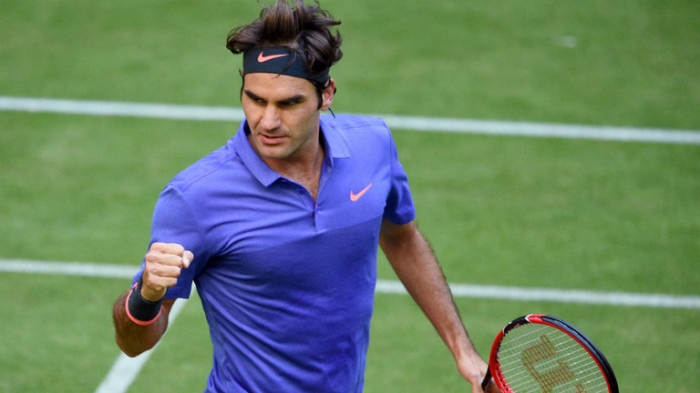
Photo courtesy of TinTheThao.com.vn Roger Federer’s 2017 revival has been a big hit on the tennis scene, but the most popular record could still be to come- The Tennis Review looks at why the Swiss is the stand out contender to win an eighth Wimbledon trophy in a few Sundays time.
History
Federer’s seven Wimbledon titles (2003, ’04, ’05, ’06, ’07, ’09, ’12) is a joint record he holds with Pete Sampras. Federer has the record for most finals with 10 (2003, ’04, ’05, ’06, ’07, ’08, ’09, ’12, ’14, ’15).
The Swiss came out at the event in 2001 as a future Great beating Pete Sampras in the last sixteen in five sets and won his first of seven titles in SW19 two years later.
Federer’s revamping of his game in 2014 saw him pretty much unbeatable on the surface in ’14 and ’15 except for when he came up against the brutal relentless consistency of Novak Djokovic.
In 2016, Federer, despite injury issues, made it to the semis and led Milos Raonic two sets to one before succumbing to the Canadian in a painful defeat.
Game style
Roger Federer’s hard to read, diverse, lethal serve, his all time great forehand, his use of slice to open up the court and throw his rivals off their rhythm, his one handed backhand which tears through the court, his sublime volleying skills, his attacking mindset and his flair and talent for the game are tailor made for Grass, a timeless game he has made his own in the last few years of his career as he did in the early ones.
Form
☁️9⃣🏆 pic.twitter.com/5oaW0jGcCo
— Roger Federer (@rogerfederer) June 25, 2017
//platform.twitter.com/widgets.js
Federer skipped the clay court season to focus on his Wimbledon preparations, a gamble which, after an upsetting start, paid off in the form of a confidence boosting trophy.
Federer played two tournaments going into Wimbledon, losing in his Stuttgart opener to Tommy Haas after holding match point, but shook off the rust a week later winning a ninth Halle title, beating Yuichi Sugita, Mischa Zverev, Karen Khachanov, and Sascha Zverev without dropping a set.
In the Halle final, Federer gave his best performance of the week, winning 6-1, 6-3 in 52 minutes.
Confidence
Federer could not, aged 35, go into Wimbledon with much more confidence than he has right now.
In 2017, Federer is the Australian Open champion, has won two ATP 1000 titles, (Miami, Indian Wells), is ranked No.2 in the Singles race to London despite missing the clay court season, and just won a ninth Halle trophy.
Missing the clay court stretch of the season actually helps Federer’s confidence in one crucial aspect of his game and career, his rivalry with Rafa Nadal. The Swiss has a 3-0 head to head lead over the Spaniard in 2017 (Federer now trails 14-23), a lead which may have been cut or even equaled had the Swiss faced the resurgent Spaniard during his dominant run to the Roland Garros title.
Federer may have to face Nadal late in the second week of Wimbledon, if the Race to London leader can negotiate the tricky first week conditions in SW19, and the Swiss, who lost that epic final to the world No.2 nine years ago now, will feel much more confident having only faced Nadal on hard courts this year, and beaten him each time, two of them convincingly, an invaluable feeling when facing one of the mentally toughest players in the game, and one who leads you 9-3 at slams.
Mental Toughness
Federer bounced back from a rusty start to his grass court season to take the Halle title, but the brevity of the Grass Court Season means we have not seen Federer pushed late in a Grass court tournament or come up against one of his great rivals such as Nadal, Djokovic or Murray.
Halle will have set Federer up nicely, though, for when those meetings do occur, and from what we saw of Federer in his Australian Open run, in 2017, the Swiss can, if healthy and confident, not only hang tough when it really matters, but swing freely under the greatest pressure from his greatest rivals and lift Slam trophies.
Roger !! (🎥@TennisTV ) pic.twitter.com/OmPmn9l2f2
— doublefault28 (@doublefault28) June 25, 2017
//platform.twitter.com/widgets.js
Competition
This Grass court season, Federer is looking by far and away the better of the Big Four, a quartet who have won the last 14 Wimbledon titles between them (Federer 7, Djokovic 3, Nadal, Murray, 2).
Andy Murray lost in his AEGON championships opener to lucky loser Jordan Thompson in straights, but the Scot did show at Roland Garros, where he lost in the semis in five sets to Stan Wawrinka, that he still has the game and fitness to do well at slams and is, considering his defending champion and top seed status, in some eyes the favorite for the title.
Rafa Nadal, meanwhile, has not played any Grass court warm ups and has been vulnerable in the early rounds of Wimbledon in the past few years so it would be no surprise if he exited SW19 early, but no eyebrows would rise either should the two time champion, playing better than he has for a few seasons, go deep in the second week.
Novak Djokovic is an unknown quantity, too after suffering one of his worst ever losses at a slam, to Dominic Thiem, at the French Open a month ago, and the way he gave up in the third set does not bode well for him should he meet an in form Federer at the business end of the event, but the three time Wimbledon champion could gain some confidence from a good Eastbourne showing this week, will have relatively little pressure in SW19 after dropping to fourth in the rankings in less than seven months, and has something to prove after relinquishing all his slam trophies in the past year, and in less than, at times, fighting fashion.
Federer’s most in-form rivals on Grass right now are Marin Cilic, Sascha Zverev, Grigor Dimitrov and Feliciano Lopez. Cilic, who lost a third set tiebreak AEGON championships final to Lopez, could be one of the Swiss’ most dangerous opponents- the three time Wimbledon quarter-finalist has great grass court skills and plenty of potential when it comes to Wimbledon title chances, is one of the few active slam champions on the tour, beat the Swiss when he was world No.2, Federer then challenging for the No.1 ranking, in the US Open ’14 semis, and led Federer two sets to love and held match points in last year’s Wimbledon last eight. Cilic has the big serve and ground-strokes to make any match all about him, much the same way as Federer’s attacking game does, and it is that kind of opponent, with no one currently playing the aggressive consistent baseline tennis needed to negate Federer’s attack on Grass, who will probably be the most likely to put an end to Federer’s Wimbledon dreams.
Federer will need to look out for Wimbledon 2014 semi-finalist Dimitrov, too. The Bulgarian had a great start to the season, has the flair and shot-making skills to do well on Grass, and seems to be re-finding his form after a run to the AEGON championships semis. Dimitrov pushed Rafa Nadal all the way in their Australian Open semi-final, showing he had the nerve for the big occasion, and if he makes it deep at Wimbledon and comes up against Federer, that could be a match for all seasons.
Draw
The draw will be done on Friday June 30th and Federer, who could be seeded in the top four, higher than his world ranking of five, is likely going to have to come up against at least two of his bigger rivals on the surface such as Andy Murray, who should be seeded 1st, Marin Cilic, likely to be seeded 6th, and Milos Raonic, likely to be seeded 7th, all of whom should, due to their Grass court pedigree, all make the later stages of the event, with Federer perhaps, depending how the draw unfolds, needing even, as he would have done last year if he had won the title, to beat all of them to win the 2017 trophy.
Federer, however, will, most likely, not be too interested in the draw, taking one match at a time instead, and focusing on his game rather than his opponent’s, a timeless game the Swiss can trust, one which has and can take him through any draw to the title.
Conclusion
Right now, considering Federer’s history at Wimbledon, his form earlier this season, his run to the Halle title, the rest he has had skipping the clay season, and the confidence his stellar play the past six months must have given him, there really is no one betterer than Federer to win the Wimbledon 2017 trophy.
-
Halle 2017 Final Preview Roger Federer Vs Sascha Zverev


Photo courtesy of http://www.kridangan.com Roger Federer will contest the 2017 Halle final, his eleventh in all, versus Alexander Zverev who will be competing in his second. The Tennis Review previews a match which promises to give both players and their fans plenty to think about going into Wimbledon.
Since winning the Australian Open, Indian Wells and Miami, Federer’s 2017 has been all about the Grass season, the Swiss skipping Clay, and after an upset loss to Tommy Haas in Stuttgart, that grass court focused schedule is looking back on track for the Swiss who defeated Karen Khachanov to reach his 11th Halle final.
While Federer’s 2017 has been about reasserting himself at the top of the game, Sascha Zverev’ 2017 has been about breaking through in the game’s elite, a feat he achieved impressively winning the Rome title and reaching the top ten, but a shock Roland Garros opening round loss, where he was fancied to challenge Andy Murray in the last eight, derailed him and so a semi-final three set win over Richard Gasquet, a player blessed with grass court skills aplenty, to earn his second appearance in the Halle final should be just the result to put that loss behind him and give him the confidence he needs going into Wimbledon.
Halle is the final warm up for both Federer and Zverev in the oh-too-short grass lead-in to SW19 and neither could have asked for more of a challenge than to face each other in this event, and fans could not have asked for a better final contest, either. Win or lose, both men will go into Wimbledon as match fit as it gets for the favorites going into SW19, having contested a final and all the pressure that comes with that, and having played one of the favorites in the Wimbledon draw, one they will likely need to beat to win the trophy. Fans win either way, too, with the Halle crowd guaranteed Federer or a German as champion and neutrals served up a classic veteran versus Next Gen final between arguably the Greatest Vet and Next Genner playing right now.
The history between the two players suggests there is plenty of scope for a dramatic championship match. So far, on the ATP tour, the head to head is level at 1-1, with Zverev winning their last match, in the Halle ’16 semis in three sets. Zverev, though, unofficially leads the head to head 2-1 after beating Federer in the Hopman Cup earlier this season in three tiebreakers in arguably one of the matches of the ITF season.
Zverevs wins may have come against a struggling or rusty Federer, but the Swiss has, like all former No.1s and slam champs, won plenty of matches when sub-par. Federer has not come up against many young players with the potential of Zverev, however, The 20 year old is just the kind of player to give Federer fits- he has a big enough serve to hold his own versus the Swiss and he also has the baseline game, particularly on the double handed backhand side, to keep Federer at the back of the court and stop him executing his attacking game, embroiling him in baseline rallies and armed with the quality of shot to outplay him in enough of those to matter, most importantly of all, on the big points.
Those Zverev strengths make the fourth seed as good a final opponent as the low on match play top seed could have asked for. While the eight time Halle champion has beaten good opposition to reach his eleventh final in Yuichi Sugita, Mischa Zverev, Florian Mayer and Karen Khachanov, his game matches up well to all of them, but Zverev’s consistent baseline aggression, just the kind of game to undo Federer on any surface in recent years, will ask the right questions- can Federer’s second serve hold up to the pressure if the match gets tight? Is his attacking game sharp enough to blunt Zverev’s depth of shot? and does the top seed have the confidence to go for his shots on second serve returns, and the feel for the ball to hit winners when he does so, and get this match won in a clinical straight setter, the kind he has delivered on grass for a decade and a half now, and which he will need to do if he is going to win seven best of fives in a row at Wimbledon?
Federer was broken twice by Khachanov and will want to put together a better first serve percentage than 66 (won 71%) if he wants to avoid a tiring tussle on the Halle grass especially against Zverev who is grooved for the fight after going three sets versus Roberto Bautista Agut and Richard Gasquet, coming from a set down in each match. That kind of fight, though, could be just the kind of match Federer needs going into Wimbledon. Federer could do with having his mental toughness tested more than anything else and a tricky, young, hungry, and confident opponent like Zverev playing before a home crowd and with the added motivation of making up for his loss in the previous year’s final is just the right opponent to give him that test.
-
Roger Federer Who Can Make Life Hell for the Top Seed in Halle?
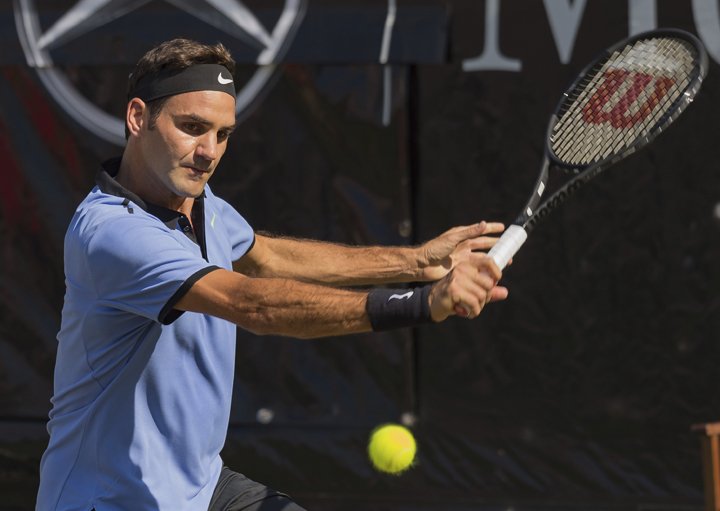

Photo courtesy of toptwitter.com A ninth Halle title seems to be on Roger Federer’s racket this week, but the world No.5 will have to see off some of the best grass courters out there if he is going to win only his second tournament played since his win in Miami. The Tennis Review looks at Federer’s projected and possible opponents and the chances of them upsetting the top seed at one of his very best events.
Round 1 Yen-Hsun Lu
Lu, ranked 73, looks a good draw for Federer on paper but the Taiwanese veteran has some strong previous form on grass, winning the Aegon Surbiton 2016 Trophy and reaching the 2010 Wimbledon quarter-finals.
Federer leads Lu 3-0 (excluding a walkover in the 2014 Halle last eight).
Upset Factor: A Lu win over Federer would end up being one of the more notable upsets of 2017.
Federer may have been rusty in Stuttgart, but Haas, a former world no.2 who beat Federer in the 2012 Halle final, was no ordinary opening round opponent, despite his ranking of 302, but was instead a 39 year old with the kind of top level experience to make rankings and head to heads meaningless and make the match about what happens on the day.
Lu, on the other hand, may be a 33 year old veteran but in his 16 year pro career, he has a career high ranking of 33, and in his 14 events this season (7 ATP, 2 slams, 5 Challengers) has beaten just two top 100 players (Radu Albot, 97, Chennai; Karen Khachanov, 51, Auckland) and Federer, however rusty the Swiss might be, is still going to be a level above the competition the Taiwanese has faced this year (Lu has only faced seven top 100 players in 2017).
If Lu defeats Federer, he would, however be the first player in 2017 ranked in the top 100 to do so, and would jump onto the exalted level of Evgeny Donskoy as being one of the few players, alongside Haas, to beat Federer this season despite the odds being against them, the then ranked 116 Donskoy coming back from match points down in the last 16 of Dubai this year, (Haas also had to save match points) to earn a Federer win, and a Lu upset would likely also be in the same roller-coaster vein as both Federer losses this year.
Round 2 Mischa Zverev
Zverev is one of the tour’s rare serve and volleyers and just reached the semis of Stuttgart.
Federer leads the head to head 3-0 including a 6-0, 6-0 win at Halle ’13.
Upset Factor: Big, at the time, but one of those upsets that would make sense in hindsight.
Zverev has improved a lot over the past year, this week reaching a career high ranking of 29, and is not afraid of the big players, defeating Andy Murray at this season’s Australian Open. The German will also have the home crowd support so if he can get what could be a still rusty Federer to tiebreaks, where the top seed can be as vulnerable in early rounds as he is strong in later ones, and hold his nerve, the crowd might just help Zverev over the line.
Quarter-final Florian Mayer
Mayer is the defending champion and a 2004 and 2012 Wimbledon quarter-finalist.
Federer leads 7-0 including 4-0 on grass and 3-0 at Halle.
Upset Factor: If Federer makes it to the last eight, he tends to go a stage further in Halle, the last time he lost at that stage being 2001 (to Pat Rafter). Still, if anyone is going to do inflict a last eight defeat on Federer in Halle, it may as well be the defending champion and one of the more accomplished Grass court players on the tour.
Lucas Pouille
Great to get the Title 🏆 🙌🏼😛🏆 pic.twitter.com/bq5d7Unr7a
— Lucas Pouille (@la_pouille) June 18, 2017
Pouille is seeded 6th and was a 2016 Wimbledon quarter-finalist. The Frenchman also just won the Stuttgart title beating Feliciano Lopez in three sets.
Federer leads the head to head 1-0, a 6-4, 6-4 win at Paris-Bercy ’14.
Upset Factor: Pouille has the grass court skills to challenge anyone on grass, and he would need those skills to be at their very best to get a win versus Federer in the Halle quarters.
The Frenchman has won some big matches, such as his US Open ’16 last sixteen match versus Nadal, and he is in great form, so Federer will have to be sharp if he is to get past him and into a 13th Halle semi-final.
Semi-final Kei Nishikori
Seeded third, Nishikori has a 6-3 record at Halle and is a two time semi-finalist (’14, ’15).
Federer leads Nishikori 5-2, 1-0 on Grass, beating the world No.9 at Halle ’14.
Upset Factor: Nishikori’s recent Roland Garros last eight finish was a much needed boost to his injury hit season, and that should boost his confidence, but not enough to give him the amount of confidence needed to defeat Federer in the Halle semis on the Japanese’s weakest surface.
The two have had some close matches though and while Federer is far superior on grass, Nishikori is certainly capable of beating him by a small margin should Federer be struggling with form, and with both men having had, by their standards at this point of the season, relatively little match play, this one could be very much up in the air if Nishikori can stay with the Swiss and then pull away should the chance arise.
Ivo Karlovic
One of the tour’s fastest serves and a Stuttgart finalist last weekend.
Federer leads 13-1, 3-0 on Grass including a 7-6, 7-6 win at 2015 Halle.
Upset Factor: Federer typically handles the game’s biggest servers well, as the head to head between these two testifies, the Swiss’ own serve more than good enough to hold his own to tiebreaks where his greater all court abilities make the difference so a Karlovic upset would be a worrying one going into Wimbledon.
Final- Dominic Thiem
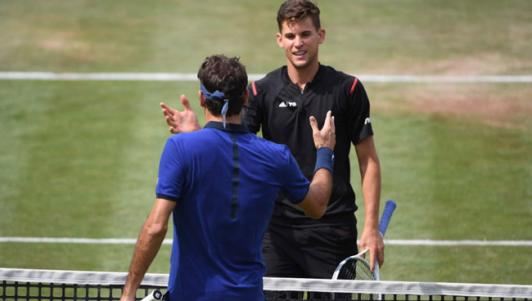
Photo courtesy of http://us.24h.com.vn Thiem beat Federer last year in Stuttgart and leads 2-1, his other win coming at Rome ’16.
Upset Factor: Thiem’s smart and at times big serving coupled with his aggressive baseline game set him up well on grass, and with the Austrian is having the best season of his career, a Thiem best of three sets win over a Federer who has recently had three months out the game would not be such a big surprise, but would be, instead, another step in the right direction for the youngest member of the top ten.
Sascha Zverev
Zverev is the defending finalist at Halle, beating Federer on his way to the championship match last season, and is tied at 1-1 in ATP matches with the Swiss.
Upset Factor: Zverev showed last year at Halle and at the Hopman Cup this season that he can take down an out of sorts Federer and so if the Swiss is not back to his early 2017 standards, there will be no surprise should Zverev repeat his last season last four victory.
If Federer is playing well, then a Zverev win would be a surprise as Federer in full flight in Halle, which he would likely be if in the final, is pretty much unbeatable, and a win for the 20 year old would mean he would have had to be serving brilliantly and keeping Federer back at the baseline, doing damage with his formidable backhand, and playing the better tennis on the big points, meaning Zverev would have to give one of his career best performances, and leave Federer going into Wimbledon with plenty to think about.
Tommy Haas
Haas has some strong pedigree on grass, winning the 2009 Halle title, beating Federer in the Halle 2012 final, and reaching the 2009 Wimbledon semis..
Federer leads 13-4, 5-2 on Grass, but the German won their last encounter on the Stuttgart grass last week.
Upset Factor: If Haas is in the final, and after what happened in Stuttgart, the upset would only be a paper one.
Emotions wise, few would be upset by a Haas win, especially with this being Haas’ last season on tour, the crowd winning either way, and both Federer and Haas getting plenty of match practice in the final lead-in to Wimbledon, and Federer unlikely to be too hurt losing to his old friend with a few levels still to shift into for the big one in SW19.
-
Australian L’Alpina Serves Up Retro and Urban Tennis Style This Grass Court Season

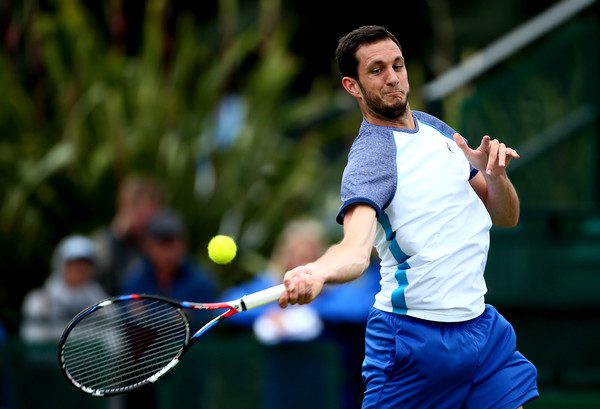
Photo courtesy of zimbio.com That most stylish of tennis seasons, the Grass court one, is upon us and for tennis fans inspired by the lawn tennis panache of Federer, Dimitrov, and Murray, Australian L’Alpina UK’s heritage and lifestyle collection is serving up the chance to add even more style to your on-court and off-court tennis life. The Tennis Review gives you the lowdown on a pioneer of tennis fashion, in the year of tennis comebacks, making one of their own in a fittingly retro-modern way.
Enjoy wearing a polo shirt both on and off the court? Australian L’Alpina is the style pioneer to thank.
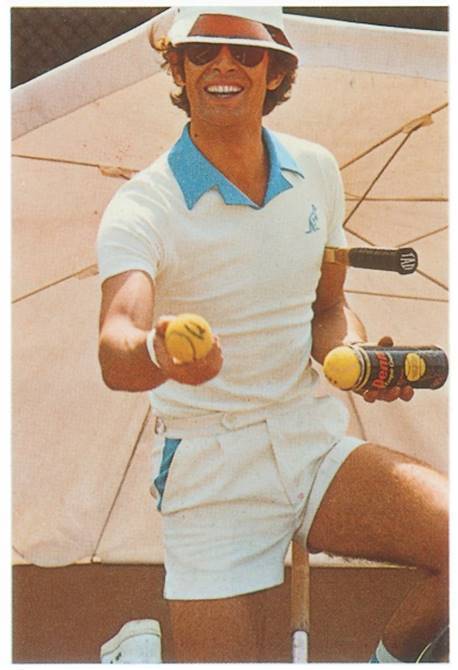
Photo courtesy of Australian L’Alpina A well-fitted polo shirt paired with a pair of shorts is one of the sport lover’s signature styles, and if this is how you dress on or off the tennis court, Australian L’Alpina is the style pioneer behind your look.
Australian L’Alpina modernized tennis clothing back in the 1950 when the Kangaroo emblem took tennis fashion out of a world of gentlemanly cardigans and trousers and into a new sphere of well-fitted polo shirts and short shorts, clothes which served up a sexier on court style, but also a practical one, too, the outfits the perfect match for a more physically demanding game, one growing more and more professional and looking to attract the modern sport’s fan watching tennis court-side, in the club house or on the sofa in front of the television.
Those Kangaroos can be seen even today hopping across tennis courts across the globe.
2017’s tennis fans have access to tennis being played all over the world at the touch of their fingertips on TV or online on their lap tops and mobiles, and eagle-eyed tennis fans keenly watching Rafa Nadal romp through the recent clay court season on any device might have recognized the kangaroo emblem hopping around the Internationale BNL d’Italia on the outfits of line umpires, ball boys and volunteers at one of the world’s most stylish tennis locations, Rome, Italy, the country were Australian L’Alpina is made and styled.

Photo courtesy of Australian L’Alpina Australian L’Alpina has helped plenty of great tennis champions to victory.
Ivan Lendl, who reached world No.1 and won eight grand slams and was one of the pioneers of the modern baseline game, wore Australian L’Alpina, and the kit could not have been worn by a more hard working or professional player than the current coach of Andy Murray.

Photo courtesy of Australian L’Alpina Goran Ivanisevic, 2001 Wimbledon champion, and one of the Open era’s most famous players, courtesy of one of the greatest serves in the game and one of its most charmingly wild on-court and off-court personas, brought even more color to the courts dressed in his Australian L’Alpina gear.

Photo courtesy of Australian L’Alpina Australian L’Alpina is also worn by some of today’s professional tennis players.
Paolo Lorenzi, world No.36 (June 15th 2017), is, like his sponsors, from Italy, and the 35 year old veteran clay courter, enjoying his best tennis days in his 30s like so many players nowadays, enjoyed a stint as the No.1 ranked Italian last August.

Photo courtesy of Australian L’Alpina James Ward will be working hard this grass court season to get back to his best ranking of 89 (July 13th 2015) and the popular British tennis player, who helped Great Britain to Davis Cup victory with his thrilling five set win over John Isner in the 2015 competition’s first round, will hopefully be feeling, after time off the tour with a knee injury, as good as he looks in Australian L’Alpina.
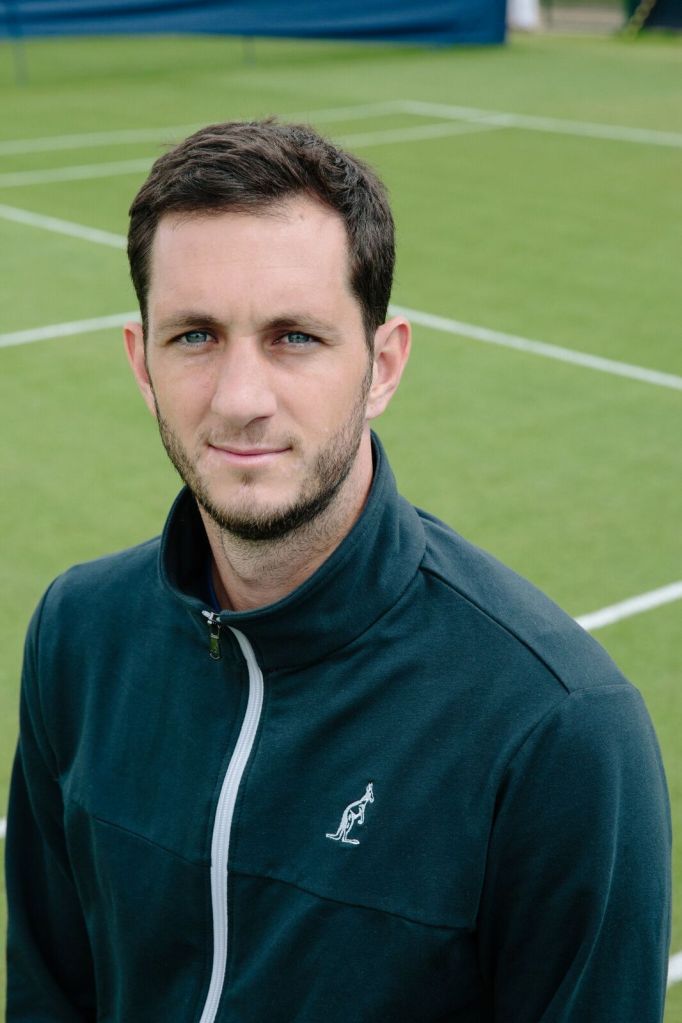
Photo courtesy of Australian L’Alpina Australian L’Alpina’s sporting line’s blend of old and new styles and its modern technologies mean the clothes look great on and feel great, too.
The polo shirt featured below has a classic and cutting edge look with its retro style and urban twist and its striking colors, and is also made with lightweight material, making it perfect for looking stylish hitting sliced backhands and drop volleys as well as sitting court-side taking in a first class Grass court tennis match.
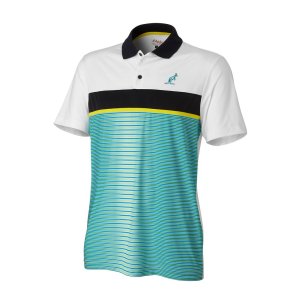
Photo courtesy of Australian L’Alpina 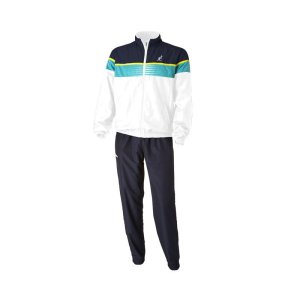
Photo courtesy of Australian L’Alpina Looking to look good this Summer? Check out Australian L’Alpina here.
Follow Australian L’Alpina on twitter.
Follow Australian L’Alpina on Instagram.
-
Roland Garros 2017 Rafa Nadal Achieves La Decima in Suitably Dominant Style
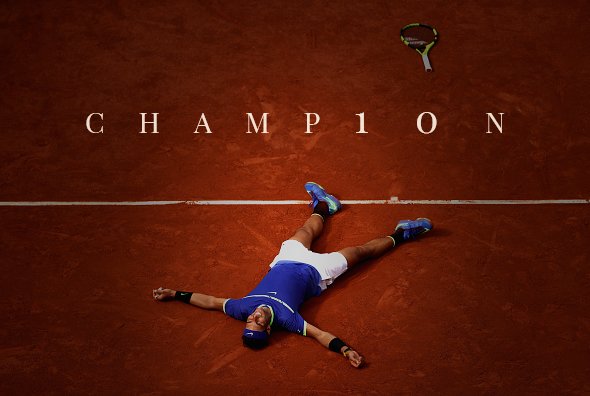
Photo courtesy of twitter.com Rafa Nadal achieved the greatest ever feat in men’s tennis Grand Slam history when he won his tenth title at Roland Garros and the champion marked that milestone in fitting style with one of the most dominant runs to the trophy ever made at the tournament.
La Decima at a slam looked like it might never happen when a shadowy Rafa Nadal was beaten by Novak Djokovic in the Roland Garros 2015 quarters and it looked even less likely to happen when the game’s best ever clay courter withdrew before his 2016 third round match with a wrist injury. Aged 30 and suffering yet another injury, the common consensus was that Nadal’s at times grinding game had cut his life at the top short, even in this day and age of 30 being the new 20, and that the sport would have to make do with Nine as the record number of men’s singles titles won at a slam, a record already held by Nadal at Roland Garros.
Cualquier palabra o frase que ponga no va a describir lo q sos amigo ! 🏆10 #NAD10L #RolandGarros2017 pic.twitter.com/fO1gP5rOCu
— Juan Monaco (@picomonaco) June 11, 2017
This season, however, La Decima became a realistic prospect once more when Nadal finished runner-up at the Australian Open final, his first slam final since Roland Garros ’14, and his first time past the quarters of a slam since that event. With new coach Carlos Moya court-side and armed with hard court and energy friendly flatter shots, Nadal was healthy, wealthy in confidence, and wise, a wisdom he showed after losing the Miami final to Roger Federer when, with La Decima questions coming at him with the ferocity of Federer net attacks, Nadal would not be drawn into discussing his La Decima chances, saying he would take his clay season step by step, knowing only too well, after his run to the Monte Carlo and Barcelona titles a year before seemed to suggest La Decima might be on the cards only for injury to force him to out of the French Open third round, just how temporary the form of a professional tennis player really is.
La Decima. Rafael Nadal from 2005 to 2017 (📽 Live at Roland Garros). #rg17 pic.twitter.com/XHxkC6pxmM
— Ilya Ryvlin (@ryvlin) June 11, 2017
Nadal’s form stepped confidently into this clay court season as did the career slammer’s class, one of the game’s most permanent and legendary. Few clay court specialists have managed to adapt their games to other surfaces quite the way Nadal has, the Spaniard winning the Channel double in both 2008 and 2010, and he demonstrated his diversity this European Clay court season once again by hitting topspin heavy, deep strokes, displaying the depth which marks his best form, and which, added to his highly effective, high percentage serving, earned him a few easy points here and there and helped out his 30 year old body, enabling him to put together a 17 match winning streak, taking the titles in Monte Carlo, Barcelona and Madrid, and reaching the quarters of Rome, and then cruising to the Roland Garros final without dropping a set.
Champion Rafael Nadal in #RG17
6-1 6-4 6-1
6-1 6-4 6-3
6-0 6-1 6-0
6-1 6-2 6-2
6-2 2-0 ret.
6-3 6-4 6-0
6-2 6-3 6-1 pic.twitter.com/c0uZFdSSO3— Tennisweek.de (@TennisweekDE) June 11, 2017
Back into the slam final closest to his heart, Nadal played as ruthless a match as he ever has, his clay court game in the eyes of some experts as good as it has ever been, a performance becoming of a man on his way to becoming the first player in tennis, male of female, to win ten singles trophies at a Major.
— Brad Gilbert (@bgtennisnation) June 11, 2017
In his 6-2, 6-3, 6-1 victory, won in 125 minutes, Nadal marked a record reflecting his dominance at Roland Garros with a performance becoming such a champion. The Spaniard hit 27 winners to 12 errors, won 83% on his first serve, 65 on his second, and won 18/20 points at the net. The Spaniard’s controlled aggression, tailor made for clay courts, was patient, consistent and relentless, and his defense asked Wawrinka, who had won, with his own explosive brand of aggression, all three of his previous slam finals, too many awkward questions, forcing either errors or sending the Swiss on the defense, Nadal ever-ready to turn the tables, his aggression ready to be unleashed whenever Wawrinka fell on his backfeet and his shots fell short, the Spaniard overwhelming the man to beat at slams the last few years to win the Roland Garros title for the first time in three years and achieve La Decima.
Nadal (🎥Eurosport) pic.twitter.com/Qs0KsGM2Ja
— doublefault28 (@doublefault28) June 11, 2017
La Decima takes Nadal to 15 slams, second of all time, moving ahead of Pete Sampras (14), and standing at three behind Roger Federer, and while the greats can decline at the unfortunate twist of a wrist or a sudden letdown from the dizzy heights of slam wins and No.1 rankings, if Nadal can stay healthy and continue to make the brave decisions he has regarding his team and his game, his slam tally could keep growing and in a year’s time La Decima, now considered as the greatest, in the eyes of some, achievement in the history of sport, might be surpassable, #LaOnzieme the game’s next big feat, Nadal, the Clay Court Great even greater, and it is awe-inspiring for his fans, and terrifying for his rivals, to imagine in what fashion he might mark that number.
Simply incredible, Rafa #10 #RG17 #VamosRafa #justdoit
— Roger Federer (@rogerfederer) June 11, 2017

Tennis from a fan's point of view
[
[
[
]
]
]
 thetennisreview