-
Novak Djokovic’s Paris-Bercy Run Reviewed
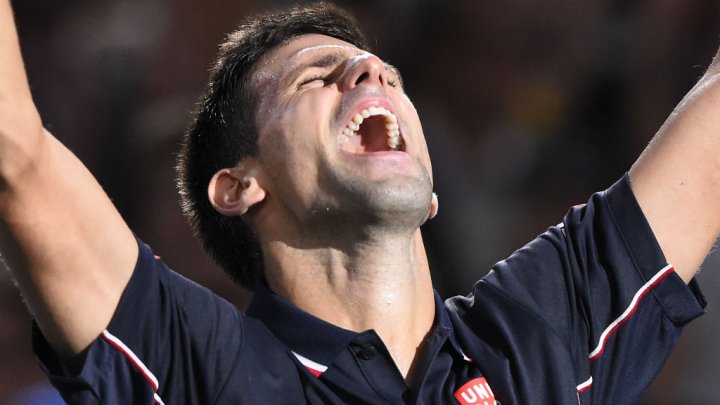
Photo courtesy of http://www.France24.com Novak Djokovic’s run to the final ATP 1000 title of the year, the BNP Paribas Masters at Paris-Bercy, was hardly a surprise- he was the defending champion playing in his best stretch of the tour (US Open Series-Miami)- but the convincing way he took apart his opponents was something of an eye opener for a man who fans predicted might not have been getting much sleep with fatherhood on his mind and the tour’s very own father figure, the 33 year old father of four Roger Federer, on his back in the race to the season ending ATP No.1 ranking. The tennis review reviews Djokovic’s run to the title.
Pre-tournament: All the talk was of “Daddy Djokovic”- the world No.1 had become a father pre-tournament- and how focused Djokovic would be. But babies were not all tennis pundits were musing about. A big defeat to Federer the last time they met, in the Shanghai semi-finals a couple of weeks back, was also a conversation piece. How would the Serb recover? He would need a complete recovery if he was going to defend his Paris title, and more to the point, his place on top of the ATP Rankings. Federer was not far behind him and playing well having just won the Swiss Indoors, and the pressure was on Djokovic to perform like a world No.1 if he wanted to keep that status.
Expectations: Seeded first, defending champion, arguably the best player on medium-slow indoor courts, nothing less than a win was expected, but Djokovic would have been forgiven if he slipped up with the distraction of fatherhood, and if Federer was to be the one who beat him, Djokovic would have been forgiven even more by a pro-Federer media.
The run: The draw could have been kinder than dishing up 24th ranked German Phillip Kohlschreiber in the opening round. Djokovic led the German 5-1, but had dropped six total sets to him. However, Djokovic broke his opponent three times on his way to a 6-3, 6-4 win in 85 minutes.
Perhaps Gael Monfils, the Frenchman who had so nearly beaten Djokovic in their three set thriller in Toronto this Summer, could get under the Serb’s skin? Not in the first set of their meeting in Paris which Djokovic took 6-3. The second set was a different story. Monfils served well- he hit 12 aces in total in the match- and took Djokovic to a tiebreaker which the Serbian edged 7-2 as he took the match 6-3, 7-6 (2).
Andy Murray was Djokovic’s quarter-final opponent. The world No.1 has made beating Murray something of a formality in 2014 and took this match 7-5, 6-2 as he claimed his fourth victory over the Scot this season.

Photo courtesy of http://www.arabnews.com In the semi-finals, Djokovic came up against Kei Nishikori, the 24 year old Japanese world No. 7 who has stunned him in the US Open semis. Djokovic dominated his rival 6-2, 6-3 on a day on which his serve clicked (8 aces and 80 percent of first service points won, 50 percent of second serves), as well as his return game (broke his opponent 4 times).
In the final, Djokovic faced Canada’s tenth ranked Milos Raonic. The Serb led the 23 year old 3-0 but had only competed against him on clay. Well, on Djokovic’s favorite surface, things would be no different as the Serb’s return game put enough pressure on Raonic to break him three times and take the match 6-2, 6-3 in 83 minutes.
With Federer out in the quarters to Raonic, Djokovic increased his lead at the top of the ATP rankings and sent a message out that fatherhood inspired him not tired him and on his favorite surface, it would need a Federer like Shanghai performance to beat him. Now the tour looks ahead to see if Federer can reproduce that form in London as the Swiss attempts to knock the Serb from the top of the ATP rankings.
Commentary by Christian Deverille
-
Berdych, Cilic and Murray Triumph at ATP 250 Events in Race to London
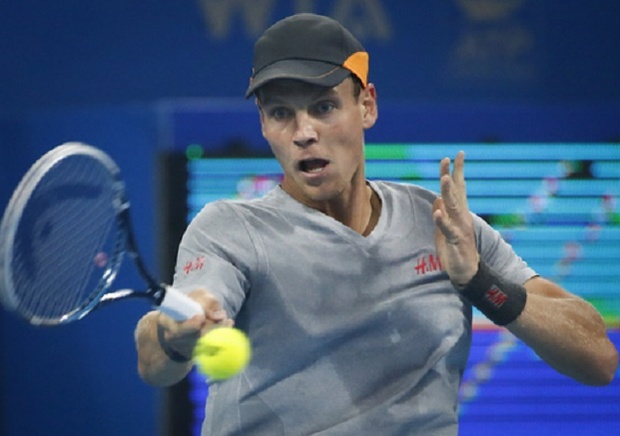
Tomas Berdych, Marin Cilic and Andy Murray all won ATP 250 events today as the race to London reaches its conclusion. While Cilic has already qualified, Berdych and Murray have boosted their chances of qualifying for the season ending World Tour Finals which start Nov. 9.
Tomas Berdych beat defending champion Grigor Dimitrov 5-7, 6-4, 6-4 in the Stockholm final. Berdych took control of the match in the third set breaking the Bulgarian early and then finding some of his best clean ball-striking form as he took his second title of 2014 and resurrected what was becoming something of a season to forget, and one which had started so well with an appearance in the Australian Open semis and the ATP 500 title in Rotterdam.
Andy Murray had to fight back from a break down in the third set of his Vienna final against top seeded David Ferrer. The second seed won 5-7, 6-2, 7-5 to increase his head to head to 8-6 over the Spaniard and beat him in their third final. The Scot will have helped his late surge to qualify for the ATP Tour finals and should be present at the season ending event if he can go far in his next event in Paris-Bercy.
Marin Cilic had the easiest path of the three titlists. The U.S Open champion beat world No. 14 Roberto Agut-Bautista 6-4, 6-4 to win the Kremlin Cup in Moscow. Agut played well, but Cilic was too good and swept to his fourth title of 2014. The Croat, who had already qualified for the World Tour Finals after finishing in the top 20 as a grand slam champion has now definitely claimed the sixth place at the event.
Commentary by Christian Deverille
-
Roger Federer’s Shanghai Surprise
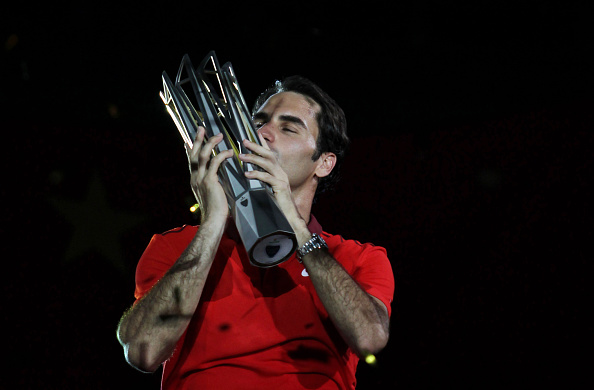
Photo courtesy of http://www.gettyimages.in Federer sprung something of a surprise in Shanghai last week when he won the Shanghai Rolex Masters ATP 1000 event. The tennis review looks back on Federer’s winning week.
For many tennis pundits, Roger Federer’s Shanghai run was supposed to end against Novak Djokovic in the last four. The Serbian, the the two time defending champion, was on a 28 match winning streak in Asia by the time he made the semis. He also had gotten the better of Federer in their two biggest matches of the season- in the Indian Wells and Wimbledon finals- and was coming into the event on the back of a dominating display in Beijing.
However, in the first round, Federer looked to be going out much earlier than his scheduled semi-final as he was five match points down facing Leonardo Mayer. The first one was the most dangerous as Mayer brought Federer into the net, moved forward and got the space and time to pass him with his backhand only to hit the net and the ball to land back on his side of the court.
That piece of luck seemed to be the defining stoke of Federer’s tournament as he saved the other match points, took the match and landed in the third round with a bump. After winning the event, Federer acknowledged how lucky he was to be holding the trophy. But if anyone has worked hard to deserve their luck in 2014, it is Roger Federer.
Once Federer landed and got back on his feet, it was plain sailing. In the third round, he faced fourteenth seed Roberto Agut-Bautista. The previous round’s scare seemed to have knocked the Swiss into form as he swept past the Argentine 6-2, 6-4.
Up next was Julian Benneteau, the French man who had attacked Federer to great effect in the 2013 Rotterdam tournament and knocked him out. Benneteau did push Federer all the way in the first set, taking it to a tiebreak, but the second set was another story as Federer blitzed the Frenchman to the tune of 6-0.
That flawless display set Federer up for the last four clash with Djokovic. Federer came out firing, taking the match 6-4, 6-4, dusting off the world No.1 with the aggressive tennis he needed to avoid a three setter. The Swiss never let the Serb play his game and strode into his second consecutive ATP 1000 final.
Gilles Simon was his opponent, and the Frenchman took Federer to two tiebreak sets as he went down 7-6, 7-6. The Swiss played attacking tennis all the way through, winning 24 of 35 points at the net, and his aggression compensated for his high error to winner ration (36-21).
The Shanghai title was Federer’s fourth of the year (Dubai, Halle, Cincinnati), and improved his chances of finishing the year end No. 1. That would be as much a surprise as the legend’s Shanghai win, and one which will be fascinating to see play out for the 33 year old.
Commentary by Christian Deverille
-
Novak Djokovic’s Brilliant Beijing Run Reviewed
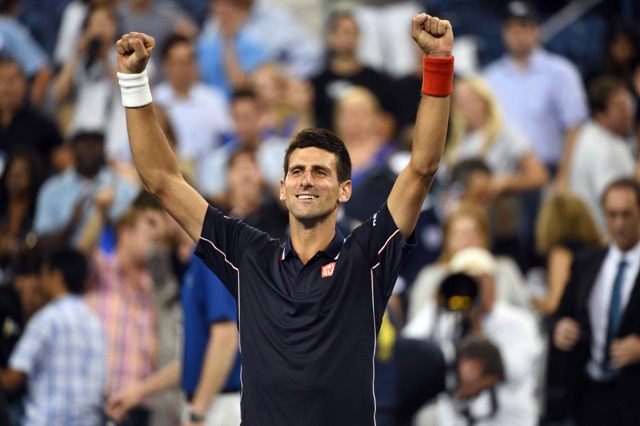
Photo courtesy of http://www.stevegtennis.com Novak Djokovic was not expected to dominate the field like he did last week at the ATP 500 event in Beijing. Though he has won the last four times he had played there, the Serbian was coming off a U.S Open Series slump, and his form was uncertain.
But Beijing brings out the best in Djokovic. He had won four times there before competing this year and credits the pollution for his great form there- it slows the balls down and gives him the time he needs to get the most out of his aggressive baseline game.
In his first round match, Djokovic thrashed Guillermo Garcia Lopez 6-2, 6-1, increasing his head to head lead over the Spaniard to 7-0. Djokovic won 66 percent of his returns and broke Lopez 6 times. Lopez did manage to break twice, however Djokovic won 61 percent of points on serve to ensure he was able to take full advantage of his excellent return game.
In the second round, Djokovic beat Vasek Pospisil 6-3, 7-5. The scoreline is a little flattering for the Canadian, however, and a testament to his serving strength. Djokovic took the match in 73 minutes.
In the quarter-final, Djokovic beat Grigor Dimitrov 6-2, 6-4. Dimitrov has struggled since his Wimbledon semi-final finish, however he has the game to take Djokovic on, but not in Beijing.
Djokovic beat Andy Murray 6-3, 6-4 in the semi-finals. Murray did challenge Djokovic in the second set when he led by a break, however Djokovic won 12 of the last 13 points when trailing 3-4 to make the final.
In the final, Djokovic led Tomas Berdych 6-0, 5-0 before winning the match 6-0, 6-2. The win pushed Berdych to say Djokovic was the best player he had ever played against. High praise for a player well worthy of it.
Commentary by Christian Deverille
-
Beijing Quarter Final Previews
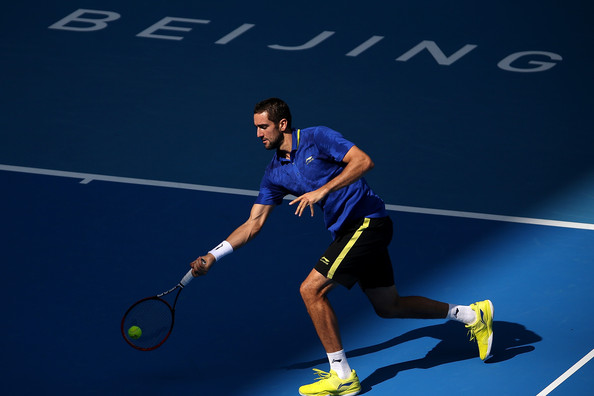
The tennis review previews the Beijing China Open ATP 500 quarter-finals, an exciting line up which features 4 slam winners, one of the game’s best servers, one of its cleanest hitters, the next-big-thing and a qualifier who likes scaring Nadal at slams.
Cilic Vs Murray.
Murray was Cilic’s nemesis for a long time – Cilic led him by a set and a break at both the Australian Open (semi-finals ’10) and the U.S Open (quarter-finals 2012) before squandering his chances. But Cilic is a different player now, and this year saw him beat Murray for the first time in Rotterdam and reduce the head to head deficit to 1-9. Cilic, after all, has the game to beat Murray, it is now about the belief, and he has proven he has that now he has won the U.S Open. Murray, though, will also be feeling bright after his win in Shenzen, his first tournament final and win since Wimbledon ’13, and he knows that if he can play aggressively (if he is at all passive, Cilic should blow him off the court), and stay with Cilic, he will have his chances on the return if Cilic’s first service does not find its mark. However, expect Cilic to come out firing confidently and to take the match in straight sets.
Novak Djokovic Vs Grigor Dimitrov.
Dimitrov burst into the spotlight when he beat Novak Djokovic on clay in Madrid last year. Since then Dimitrov has gone from strength to strength and is now a member of the top ten and a mutli-titlist. Djokovic, meanwhile, has added another slam to his collection. This match, however, finds both men at their weakest in a while. After a great grass court season for both men, they both flopped on American hard courts as Djokovic lost early at the ATP 1000 events and was beaten in the semi-finals of the U.S Open. At that event, Dimitrov crashed out tamely in the last sixteen to Gael Monfils. With neither men coming into the match high on confidence, Djokovic should win as he is more skilled at winning when not at his best, and he should get past Dimitrov in two.
Martin Klizan Vs Rafael Nadal.
Klizan is a dangerous player for Nadal to face at this stage of his comeback. Each time they have played, at the French Open ’13, and Wimbledon ’14, Klizan has taken the first set by being aggressive and doing damage with his forehand. Nadal might have preferred to play someone like Berdych or Murray against whom he has plenty of victories and knows their games inside out. Klizan has come through the qualifying event and knocked out Ernests Gulbis and so he will be confident he can take out an untested Nadal at his comeback event. Only this Spring, Klizan came through qualifying to win in Munich and so self-belief will not be a problem. Expect Klizan to win in two.
Isner Vs Berdych.
Berdych leads this head to head 5-2, and in four of his wins, Berdych has romped to victory. Meanwhile, in true Isner style, the American has had to battle for his two victories. Isner though likes it that way and has already had a final set breaker match in Beijing against Robredo and will be up for battle. With Berdych being a little out of sorts since Spring, Isner could get the upset here. Expect him to edge Berdych in a final set breaker.
Commentary by Christian Deverille
-
Beijing Open: Questions the event will answer for the tennis world.
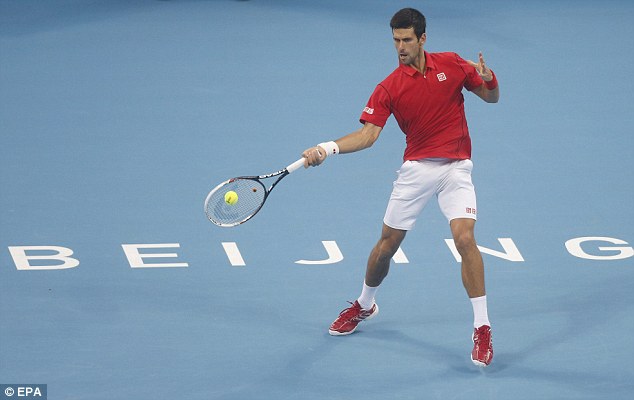
Photo courtesy of Dailymail.co.uk The ATP 500 China Open event in Beijing next week is one much anticipated by tennis fans and will answer some important questions about the tennis world when it comes to players of the likes of Nadal, Djokovic, Murray and Cilic.
It’s over. The wait is over. Since the U.S Open ended three weeks ago, the tennis scene has been a little dead. Yes, the Davis Cup and events in Metz, Kuala Lumpur and Shenzen have kept things ticking over, but the big events such as the Beijing Open bring out the best players and inject life into the tour as rivalries reignite, comebacks take place and a few shocks make the headlines.
The tennis review looks at the key questions this Beijing tournament will have answered by the end of the week.
1. Nadal’s comeback. Can he leave where he left off?
This is not one of Nadal’s longest time aways from the tour due to injury, but it is still a significant one. Since crashing out of Wimbledon’s fourth round and withdrawing from the U.S Open Series, Nadal has fallen from first in the ATP rankings to third.
However the question of can he leave where he left off is a loaded one. For, while he was no.1 and the French Open champion, he suffered some shock defeats (Melbourne to Wawrinka,Indian Wells to Dolgopolov, Monte Carlo to Ferrer, Barcelona to Amalgro, Halle to Brown) and so the question may be does he want to leave where he left off or come back even better?
The Spaniard has said in a recent interview he comes back stronger from injuries but just how strong can he come back in what is traditionally his weakest part of the season post US Open?
With Djokovic and Murray both struggling, this might be the best time for Nadal to catch them in Beijing. Nadal will also be happy for the match practice before the off-season starts in just over a month. If anything, this comeback should be viewed as more about preparation for the Australian Open than anything else, and getting his hard court game in its groove against the world’s best is the best possible prep a 14 time slam champ can have.
2. Djokovic’s slump. Is his dismal showing at this year’s U.S Open Series a bump in the road or a downward spiral?
Djokovic’s U.S Open Series slump was something of a shock for tennis fans. The Wimbledon win was thought to be something of a confidence booster after so many failures in slam finals, but it seemed to deflate him more than anyone dared predict. Djokovic talked about how the defeats in Cincinnati and Canada would only make him stronger, but he was then outplayed by first time slam semi-finalist Kei Nishikori at the U.S Open. Many great players have struggled in smaller events after a big emotional win only to come back at the next slam and win it, but Djokovic was not even able to find his best game on his best surface at one of his best events.
The question is has he been able to crack down on his lack of motivation and find the winner inside himself?
The answer is more yes than no. Djokovic is allowed something of a slump after the effort he has put into his game since 2010, and the Wimbledon win, after all those losses, was huge, and some deflation is understandable.
However, it could be argued Djokovic was struggling at times in big matches before that S.W 19 win and that he was lucky Federer’s serving dropped off in the fifth set.
Djokovic is hardly done, though,and while his losses this U.S Open Series were unexpected, and a continuance of that drop in form for a while longer would not be so surprising, expect him to be back to his old self come early 2015.
3. Cilic Post U.S Open. Is he up to the pressure?
Marin Cilic can ask Stan Wawrinka how hard it is to deal with the pressure after winning a slam. Players are subject to all manner of media obligations, in fact their increased prize money is effectively a trade off for their time post win. This takes up time that would otherwise be taken up with work and rest. Wawrinka did not cope so well after his Australian Open win- it took him until Monte Carlo to remember how to put together back to back wins against the world’s best.
The pressure will be on Cilic to deliver more big wins and more headlines and articles praising his game and keep his sponsors in the public eye. Cilic was much derided for his supposed lack of ‘mental toughness’ before his U.S Open win, and if he stumbles against Bai, a wild card from China, in his opening match, he can expect the praise he has been receiving since his slam success to die down soon and the harsh fact of ‘you are only as good as your last match’ to ring loudly in his ears. Deep down, he will know this, he does have Ivanisevic as a coach after all, and most first time slam champs do fail to deliver on their slam, so he will not be alone if he stumbles.
However, there is something very calm and assured about Cilic right now, and, unlike Wawrinka, who had never performed that well on the North American Spring swing, he will transition onto outdoor hard and indoor hard, where his game is at its best. Cilic also has the added factor of there being still relatively little interest in him as a slam champion whereas Wawrina had been touted by tennis purists for a while before he made big. Expect Cilic to take the pressure in his stride, take advantage of flying somewhat under the radar, and making a deep run in Beijing.
4. Andy Murray- Is his Shenzen victory a factor in getting himself back into the elite?
Success at an ATP 250 event against Monaco, Lacko and Devermann, and Robredo in the final, is not going to rank alongside Murray’s grand slam and ATP 1000 event wins, but if he needed a tournament victory, it is now. Murray has not made an ATP final since his 2013 Wimbledon win, and has fallen out of the top ten.
So how much of a factor is a small tournament win against opponents ranked outside of the top 20 going to play in Murray getting back into the elite?
Outdoor hard courts are Murray’s best surface, and the confidence a win over Robredo in Shenzen will give him is huge after the disappointment of 2014. At the very least, he will have remembered how it feels to win a semi-final and then the final, and that surge of winningness could carry him on through the opening rounds in Beijing, and perk him up when he faces the likes of Djokovic, Cilic or Nadal. A player of Murray’s quality- he has made the quarters of all slams this year despite his ‘rustiness’-is not over at the age of 27, and with his game beginning to switch into gear, he should be able to get back on the road to the elite this Beijing event.
Commentary by Christian Deverille
-
David Goffin: What next for the Belgian?
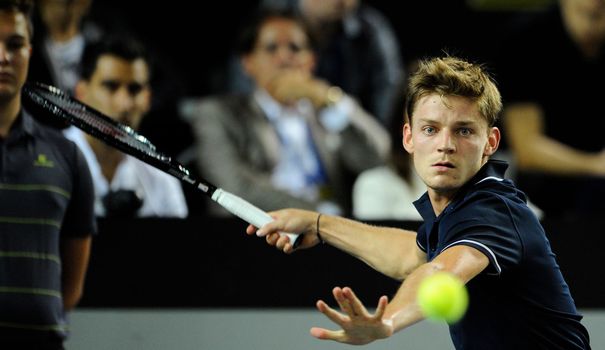
Photo courtesy of http://www.lexpress.fr David Goffin has been tearing up something of a storm on the ATP tour since Wimbledon. In SW19, he faced Andy Murray in the second round, and though he was overwhelmed in the first couple of sets, he showed what he was capable of in the third, losing it 7-5.
Since then, Goffin has won 32 of 34 matches played, won 2 challengers and 2 ATP 250 titles in Kitzbuhel and Metz, and has risen to a career high ranking of 32.
His run has seen him beat 13 top 100 players, most notably Dominic Thiem and Phillip Kohlschrieber in Kitzbuhel, and Tsonga in Metz.
But what is next for Goffin after his success in Challengers and ATP 250 events? The next step would be ATP 500 events. This year Goffin has competed in only one ATP 500 event, in Acapulco, where he lost to eventual champion Grigor Dimitrov in the last sixteen.
After that, would come ATP 1000 events. Goffin has competed in only 3 this year, in Indian Wells, Miami and Monte Carlo, having to qualify for all of them (he was ranked 98 at Indian Wells), and going out in the first round to players of the likes of Davydenko, Zeballos and Robredo.
Now, with his ranking high enough for direct entry to the big events, Goffin will be able to test his game against the likes of Djokovic, Federer and Wawrinka week in and week out. He trails Djokovic 0-2, Federer 0-1, Wawrinka 0-1, Murray 0-1, and is 0-0 against Nadal. Of those meetings with the current elite of the game, the most high profile one was against Federer at the 2012 French Open. Goffin won a set in that last sixteen match as a lucky loser. It was only Goffin’s fourth year on the tour, and he had only competed in a handful of events at ATP 250 level or above.
Against his generation, he trails Dimitrov 0-1, and is 0-0 with Nishikori, Del Potro, and Raonic. The lack of battles with his peers is down to Goffin’s lack of entry into the bigger events such as the ATP 500 events and above where such players make most of their appearances.
Famous for his creativity, style and touch, Goffin certainly has all the tools to reach his potential and get wins over his more accomplished peers. But tennis fans will have to wait a while to find out. Goffin’s next events are the challenger in Mons (Sep 29), and then the 250 event in Vienna (Oct.9). The decision to enter Mons when the lucrative Asian swing is going on, a swing which would have given Goffin both points, prizes and experience against the game’s top players, is an easy one to explain. Perhaps Goffin did not think his year would turn out quite so well as it has when he was making his schedule. It could also help him in the long run to not jet over to Asia and hop about for three weeks and then get back on a plane to Europe. Mons is also a Belgian event, and his appearance there will be much appreciated by Belgian tennis officials keen to have a male player step so confidently into the upper ranks of the men’s game, especially one so highly praised.
Goffin should get enough matches in those events in Mons and Vienna to see him match fit for the ATP 500 event in Basel, and then the real test in how far he has come at the ATP 1000 at Paris-Bercy, an event that is often successful for the lesser-known players as the elite take time off to prepare themselves for the ATP World Tour Finals. Goffin certainly has what it takes to profit from a weaker ATP 1000 draw, the question is will he?
Commentary by Christian Deverille
-
Marin Cilic’s Pleasantly (un)Surprising Journey to the U.S Open Title
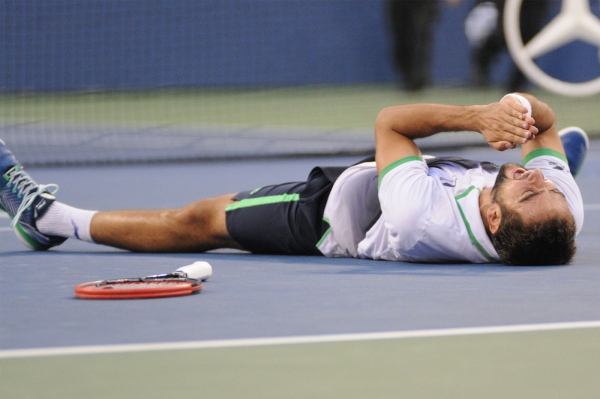
photo courtesy of http://www.gotennis.ru Marin Cilic’s U.S Open surprised the tennis world, Cilic himself, and announced to the world not only a new slam champion but the fact slams were there for whoever had it in them to step up and take them. The tennis world was pretty divided about whether or not Cilic was the man for the task pre- U.S Open, but taking into account his hard work on the court, his expert team led by 2001 Wimbledon champion Goran Ivanisevic and the quality of his ball-striking, his win, why it may be a pleasant surprise was no real surprise at all.
The tennis review looks back at his journey before the event, through the tournament and how match by match Cilic’s destiny unfolded before us.
Early Career:
Marin Cilic was a name on everyone’ s tongue when it came to future slam winners when he finished at No.2 in the ITF Junior rankings in 2005, a year which saw him win the Boy’s singles title at the French Open.
It was not long before the big-hitting Croat was making waves in the Men’s singles fields in slams. Cilic made the fourth round at his fourth slam event in 2008 in Melbourne, made the quarters of the U.S Open that same year, and then the last four of the Australian Open 2009, leading Andy Murray by a set and a break.
However two of his weaknesses let him down that match-his serve was not as strong as it should have been for such a tall man, and, midmatch, his mind could wander at best, get completely lost at worst.
Those weaknesses held him back for years as he failed to make another slam last eight until the 2012 US Open. Once again he made the last eight, and this time he led Murray again by a set and a break. Once again, he lost. It seemed he was stuck.
But while at least things were looking up. However, it was not long before Cilic was in strife, and a drug test taken in Monte Carlo revealed he had used a banned substance and after withdrawing from Wimbledon 2013, Cilic was suspended from the tour for what would be four very crucial months for the Croat’s career.
Pre-tournament:
Marin Cilic was not really registering on the radar at all pre-U.S Open. Too highly seeded to be a dark horse (14), and a two time quarterfinalist at the event. the Croat, who blew a set and a 5-1 lead to Murray in the 2012 last eight, was considered not mentally strong enough to win a slam. And, if anyone was going to win outside of the ‘big four’ it was fancied to be Raonic, Dimitrov or Nishikori.
But, in hindsight, there was plenty to suggest Cilic was a strong contender. The Croat had been retooling his game in his four month absence from the tour due to a ban for substance abuse. When he came back at the end of 2013, he did so with a new coach, Goran Ivanisevic, a bigger serve that did his 6’6 frame justice, and a huge forehand.
Goran had, Cilic said after his US Open win, brought him away from over-thinking tactics and towards just playing his game- the serve, movement and the big forehand the key components. Cilic also not only all the advantages height brings such as great reach and an imposing figure but he also moves extremely well for a man of his height, and he can get into position to bang that forehand deep and heavy and out of his opponent’s reach. That play was seen this season in Delray beach and Zagreb, which the Croat won, and at Rotterdam, where he beat Murray for the first time and ended up as runner-up. He also pushed Djokovic in Miami, Roland Garros and then took him to five sets at Wimbledon in the last eight. Then, in the U.S Open Series, he pushed the in-form Federer to three sets in Cincinnati.
Nothing groundbreaking, sure, but his pre-U.S form, and his improved game, certainly meant he should have been talked about more than he was. But that’s a whole different article.
Round 1: d. Marcos Baghdatis 6-3, 3-1 ret.
Cilic led the 2007 Australian Open runner-up 4-1 in their head to head, and would most likely have got through this match, but Baghdatis is one of tennis’ biggest talents and could have delayed his progress by quite a few hours. The Cypriot though was injured and had to withdraw, allowing Cilic a smooth entrance into round two.
Round 2: d. Illya Marchenko 7-6(2), 6-2, 6-4.
Ranked outside the top 100, Marchenko was never going to be a threat to Cilic in the form he was in. But once upon a time, he could have proved to be a banana skin, especially considering the good draw Cilic had. The Cilic of old may have over-thought and over-hit himself out of this match, but this year Cilic has been doing a very professional job of winning the matches he is supposed to win, and competing to the best of his abilities in the ones he is not. This was one he was supposed to win, a routine second round win. No thrills, no spills and enough energy saved for the third round.
Round 3: d. Kevin Anderson 6-3, 4-6, 6-3, 6-4.
Cilic led Anderson 4-1 but they had had a tough three setter in the Delray Beach final. Cilic was troubled by the giant South African, dropping serve four times, but his own return game enabled him to break 6 times and make the difference.
Round 4. d Gilles Simon 5-7, 7-6 (3), 6-4, 3-6, 6-3.
The first four sets of this clash were played in hot, humid conditions. Cilic got hot and bothered, too. But in the fifth set, as the weather cooled, Cilic’s game cleared up a lot, and he started his string of ten consecutive sets as he took the fifth set.
Quarter-finals: d. Tomas Berdych 6-2, 6-4, 7-6 (4).
Berdych was the perfect seed for Cilic to draw in this late stage of a slam. The Croat had beaten the Czech in the third round of Wimbledon. That day he won in straights and he did the same in New York.
Semi-finals: d. Roger Federer 6-3, 6-4, 6-4.
Federer was the favorite of many at the event, and after the loss of Djokovic, many believed all Federer would have to do would be to make the final to claim his record making 18th slam. But Cilic was coming off two big confidence boosting wins, while Federer had spent a lot of energy defeating Monfils from 0-2 sets down.
Cilic played the match of his life. You can see it in Federer’s smile as they shake hands at the net. Whoever was going to beat Federer at the event would have to play their very best, and Federer knew he had met the best of Cilic. That smile said the Swiss great knew he had met his match, and was somewhat pleased it had taken someone’s best to beat him.
Finals: d. Kei Nishikori. 6-3, 6-3, 6-3.
Cilic had one more big performance in him. In fact, from the way he played, he might have had many more. Fresh, hungry and in the zone, Cilic swept past Nishikori, winning his eighth, ninth and tenth consecutive sets at the Open as he surprised the tennis world, and himself a little bit, too, by performing to the potential so many believed he had when he first started going deep in slams six seasons ago.
Cilic said afterwards he hoped the win would signal to other players they could win slams, too. If they work as hard as he has, dig deep and defeat their demons, and approach tennis with the joy and positivism Cilic displayed in his journey to the title, then he could be joined by the legion of talented professionals of the ATP Tour who might take us tennis fans along with them on a journey to the sport’s greatest prizes.
Commentary by Christian Deverille
-
Marin Cilic is the 2014 U.S Open Champion

Photo courtesy of http://www.kanal5.com.mk Marin Cilic is the 2014 U.S Open Men’s Champion. It sounds strange doesn’t it? But it did not look strange as he dominated his final opponent Kei Nishikori 6-3, 6-3, 6-3 in the Men’s final on Sunday.
It looked like Cilic had been contesting slam finals for years. But he had not. He had not even made a final. He had not even won an ATP500 event.
But, what he had been doing since returning from a ban for substance abuse last year is getting better. With the help of Goran Ivanisevic, his serve, struck down from the height of 6’6 has become a major weapon, and his forehand, too.
Those weapons combined to overwhelm Nishikori who by the time he lost the first set 3-6 and was broken early in the second set, looked a broken man. Cilic meanwhile was only intent on further crushing him, taking the second set 6-3, and then breaking early again in the third. While Nishikori did have 3 chances to break back, the Cilic serve was too good, the Croatian winning 80 percent of his first service points.
At 5-3, in the third, Cilic held championship points on his serve at 40-15. The 14th seed hit a serve down the middle, struck a huge forehand which knocked Nishikori off balance, and then whipped a backhand into the open court, his 38th winner of the match (27 errors) to close the deal on his first ever grand slam title.
Cilic fell on his back and celebrated. A year ago, he had been watching the final on his TV and been impressed by Nadal’s performance, The strangeness of it all was there to see, but there is nothing odd about the best man on the day winning, nor with it being someone of the toughness and talent of Cilic.
Commentary by Christian Deverille
-
U.S Open Quarter-Final Reviews: Federer Comes Back to Beat Monfils, Cilic Slaughters Berdych

Photo courtesy of http://www.melty.it The story of the U.S Open quarter-finals was Roger Federer’s 4-6, 3-6, 6-4, 7-5, 6-2 win over Gael Monfils. The Frenchman took an error-ridden first set 6-4, which inspired him as he played some of his best tennis (10 winners to 4 errors) to win the second set 6-3. Federer, who made 26 errors in the first two sets, then focused and won the third with a 12-1 winner-error ratio. The Swiss then edged a tightly contested fourth set 7-5. That seemed to end the Monfils challenge as Federer then ran away with the fifth 6-2.
Federer will face Marin Cilic who upset sixth seeded Tomas Berdych 6-2, 6-4, 7-6(4). Cilic played some first class big-hitting tennis to repeat his Wimbledon upset of the Czech. The Croatian moves into his first U.S Open Semi-final.
Novak Djokovic battled past Andy Murray in a nervy encounter 7-6(1), 6-7(1), 6-2, 6-4. When these two meet, they bring out the best and the worst of each other. Murray had to better Djokovic at his aggressive baseline game to beat him in the ’12 US Open final and ’13 Wimbledon final, and his presence across the net made Djokovic edgy. The Serbian hit 48 errors to 46 winners, while Murray was 47-65.
Kei Nishikori beat Stan Wawrinka 3-6, 7-5, 7-6(7), 6-7(5), 6-4 to make his first slam semi-final. It was a heavy hitting affair, but Nishikori’s fitness held up to the Wawrinka challenge and he will give the world No.1 Djokovic a stern test on Saturday.
Commentary by Christian Deverille
Follow the U.S Open with The Tennis Review

Tennis from a fan's point of view
[
[
[
]
]
]
 thetennisreview