-
Mutua Madrid Open ATP Preview Four Stories to Follow
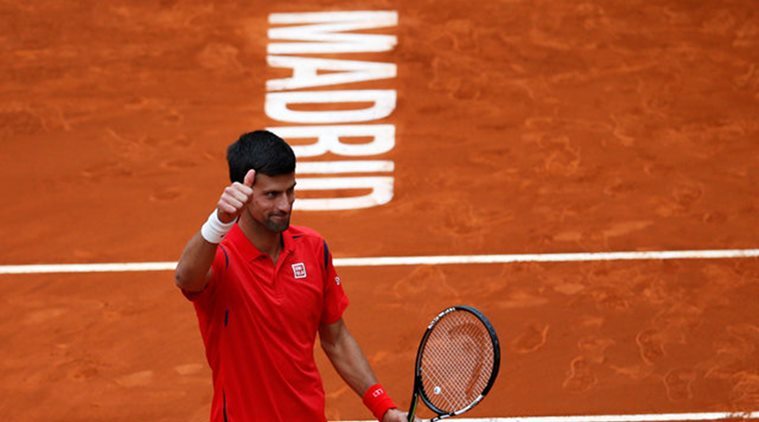
Photo courtesy of ponturi-bune.ro This season’s 2nd Clay ATP 1000 event gets underway this week, the Mutua Madrid Open, and there are plenty of story-lines to follow as tennis’ top players try to get their games in the best possible shape in the lead in to Roland Garros. The Tennis Review previews four of those stories starring Novak Djokovic, Andy Murray, Rafa Nadal and Dominic Thiem.
Journey to the Island Djokovic
Defending champion Djokovic added another twist to his post Djoko Slam career when he announced prior to Madrid he had let his coaching team go.
Going from having one of the most stable and experienced coaching teams around featuring the likes of Boris Becker and Marian Vajda to going it alone is a transition Djokovic hopes will shock him back into title winning action.
The Serb certainly needs a change- he has not won a title since Doha or even been to another final, and since winning Roland Garros last year, he has won just two titles (Toronto, Doha).
A change is as good a holiday, they say, and after winning four slam titles in a row even tennis Gods need a break, so just how will the climate be on Island Djokovic?
Djokovic will be looking to escape the stormy unpredictability of recent times for sunny, calm conditions, and he will need to be at his serene, positive best if he is going to defeat Tommy Robredo or Nicolas Amalgro in his opener, Gael Monfils or Gilles Simon in the round of 32, Kei Nishikori in the quarters, Rafa Nadal in their projected semi-final and then potentially Andy Murray. Dominic Thiem or Stan Wawrinka in the final.
It’s great to be back! Hello Madrid 😃 #FirstPractice at @MutuaMadridOpen pic.twitter.com/7wI1D3AYPQ
— Novak Djokovic (@DjokerNole) May 5, 2017
//platform.twitter.com/widgets.js
Murray and his first ATP 1000 title of the season
Murray is still world No.1 by 3,785 points so he can afford an early exit in Madrid, which is a likely possibility with the draw putting the 2015 champion and last year’s runner-up up against the in-form Dominic Thiem, who beat him in three sets in Barcelona, in the last eight.
Murray will have a better chance this time around, though. Madrid’s relatively fast clay conditions suit Murray’s counter-punching skills which means he will be able to make things more awkward for the powerful Austrian this time around.
A win versus Thiem could be the one which gets Murray’s stop and start 2017 going again, and spur him onto the a first ATP 1000 title for the season, the kind of titles he will need to start collecting if he wants to sit at the top all the way to another season ending No.1 finish.
Nadal the heavy favorite in the event he is least likely to win
Madrid, and its previous incarnation Hamburg has been the clay event Nadal has, during his reign as tennis’ dominant clay courter, been least likely to win, due to the faster conditions. Those conditions have, however, only hindered the Spaniard a little with Nadal still taking the trophy three times in Madrid and twice in Hamburg.
This year, the Spaniard has an awkward draw with Fabio Fognini potentially in round two, Nick Kyrgios in round three, a possible Monte Carlo rematch with David Goffin in the last eight, Djokovic in the semis, and Murray, who beat him in Madrid the last two years, in the final.
Tough as it may look on paper, Nadal is in better form than all of those players, and is the favorite to take the title, but if he is going to be stopped this clay court season, then Madrid is the place most likely, and the draw has placed some of the players most likely to in his way.
Entrenando en Madrid! / Training in #Madrid! pic.twitter.com/E01SFYMROQ
— Rafa Nadal (@RafaelNadal) May 5, 2017
//platform.twitter.com/widgets.js
Thiem Time
Nadal’s tough draw, Murray’s rustiness, Djokovic in new territory, no Federer- this really is the time for Dominic Thiem to make a statement that he and his generation are ready to take on the tennis establishment at the very top of the game, and he has a great draw to do so at an event which, as a qualifier, he scored his first big win versus Stan Wawrinka in the 2014 round of 32.
Three years on, and seeded eighth, Thiem has come a long way since ’14, and this could be the event at which he takes another step further in his career, an ATP 1000 semi or better, with a potential third round with out of sorts Grigor Dimitrov, the vulnerable Murray in the last eight, one of the unpredictable duo of Wawrinka or Cilic in the semis, and a struggling Djokovic or Nadal, at the clay court tournament he is most likely to lose at, in the final.
Timing is everything in tennis, and with Thiem’s timing on his strokes as good as they have ever been, this is the time for Thiem to slide across the clay into his first ATP 1000 final and compete for his biggest title yet.

Need new tennis gear this Spring? Go to Tennis Express and get an Extra 15% off clearance during the 72 hour sale with code SALE72
-
Roger Federer Tennis God Full Time Style Icon On the Side Top Ten Looks
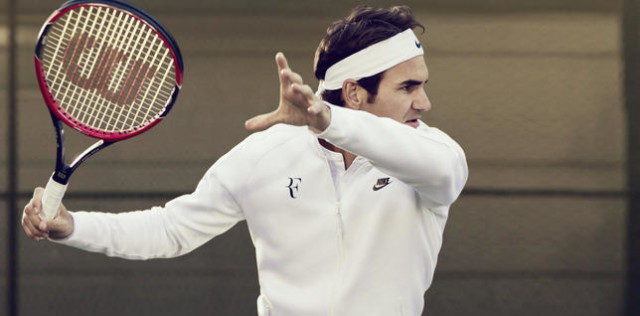

Photos courtesy of MarketingdelosDeportes.com Roger Federer has not just been hitting the headlines in the tennis world with his wins at the Australian Open, Indian Wells and Miami– the Swiss star has also been gracing the world’s fashion pages with his recent GQ feature and turning heads at the Met Gala in his King Cobra tux. The Tennis Review celebrates Federer’s championship form, both on and off court, with a review of his top ten looks.
1. Young Punk

Photo courtesy of worldwidechat.com Baseball cap back to front, baggy shorts, and a scowl at tennis not going his way, Federer is just another tennis kid punk impatient to make his mark on a game he still needs to grow into. The Federer who threw his racket and shed tears, the one Federer would have to defeat just like his rivals if he was ever going to realize a talent and soothe a temper only a tennis brat like the real baby Federer could get away with.
2. Dashing No.1
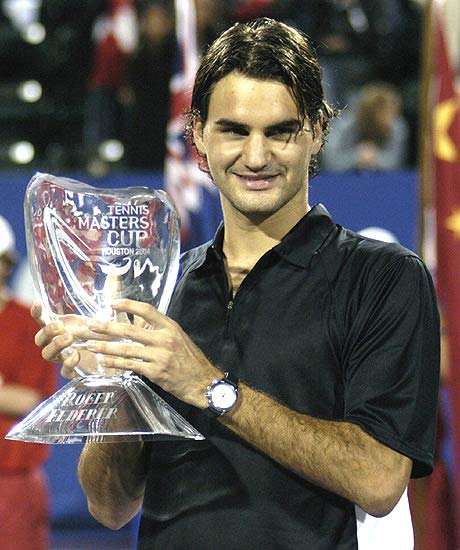
Photo courtesy of federermagicblogspot.com Federer did defeat his inner tennis brat, and bloomed into a dashing no. 1, pictured above looking dapper in black, a color which makes him look even leaner than he already is, and compliments his slick jet black locks. Befitting of a fashion icon in the making, Federer gets the accessories right, too, with a matching black watch strap.
3. Tennis’ Golden Boy
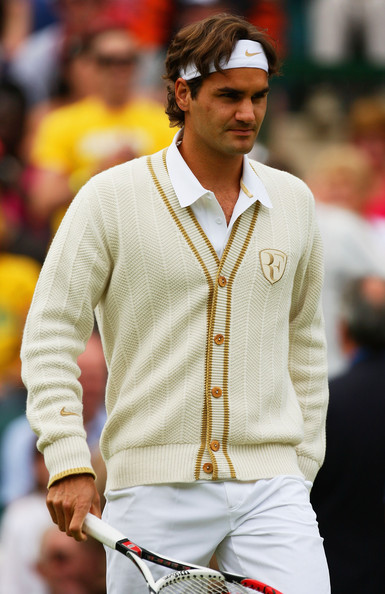
Photo courtesy of zimbio.com During Wimbledon ’08, Federer wore his personalized Nike RF label embroidered in Gold on a classic cardigan, a fitting outfit for the then five time defending champion of tennis’ most traditional tournament, tennis’ very own Golden Boy.
Alison Van der Lande, luxury tennis bag designer, gives her view on Federer’s look:
Federer is always so beautifully styled and groomed pre and post match, no matter how many sets! His self presentation is obviously a key element to his approach to the game and looking good helps to mentally boost his positive approach to the match ahead. This is also reflected throughout his wardrobe both on and off court. The gold detail on his jacket/cardigan is key, gold is the winner’s color….. he was going out to win!
4. Boy Next Door
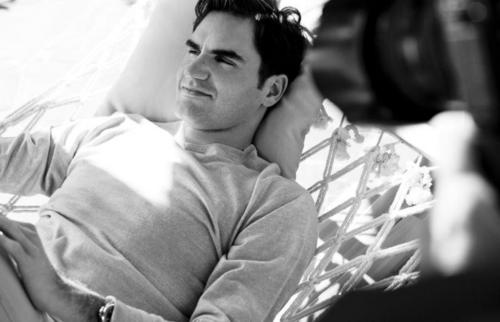
Photo courtesy of fanpop.com When Federer is not creating history and fashion, he needs to relax and get his creative juices going again, and few sports idols can look quite as chilled when pondering world domination as Federer does in the above photo lying on a hammock.
The Swiss’ clothes basic and loose, his hair tidy on the sides, a little ruffled on top, Federer looks every inch the boy next door, but only if you live in Hollywood and the boy next door is 6 ft 1 inches all movie star top model.
5. Call Me Federer. Roger Federer.
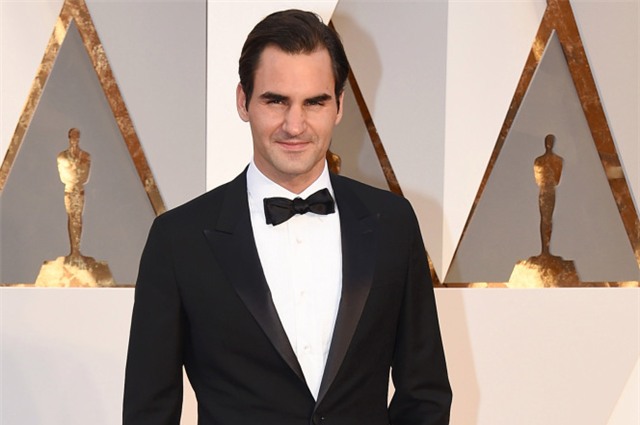
Photo courtesy of http://tintuconline.com.vn Talking of movie stars, Federer gave a few a run for their money when he turned up looking dapper as Bond at the 2016 Oscars, stealing the movie star show in much the same way he has the tennis one.
Federer can also add a bit of bite to the 007 look- check out the clip of him below wearing a Gucci tux with an embroidered crystal King Cobra on the back at the recent Met Gala.
The things Anna Wintour can get them to do. Here’s Roger Federer in Gucci. #metgala #metgala2017 pic.twitter.com/Vh08jghQOY
— Jacob Bernstein (@BernsteinJacob) May 1, 2017
//platform.twitter.com/widgets.js
.@RealHughJackman The end 🐍 #MetGala pic.twitter.com/39XAsh1PUO
— Roger Federer (@rogerfederer) May 2, 2017
//platform.twitter.com/widgets.js
6. Down to Earth Sunday Hit.
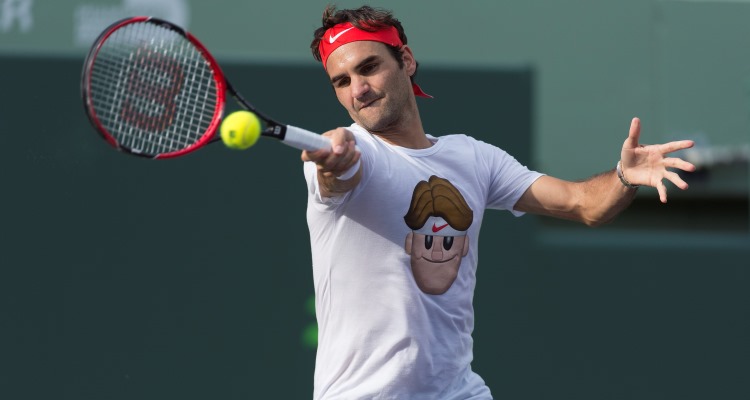
Photo courtesy of earnthenecklace.com Life cannot be all play when you are arguably the Greatest of all time. There’s plenty of practice to be done in order to settle that debate once and for all and Federer is as quick as anyone to put on some shorts and t-shirts and get out to work.
When Federer hits the practice courts, he does not wear any old t-shirt, though – this very modern tennis legend wears t-shirts with an emoji of his own face on them.
7. Smouldering Sex Symbol

Photo courtesy of http://smasoku.blog.jp Clean-cut, check.
Punky look, check.
Long locked pretty boy, check.
Where do you go when you have pretty much done it all? How about Smouldering sex symbol five O’clock shadow look? Federer’s beard nearly overshadowed his impressive straight sets defeat of Novak Djokovic at the 2015 WTF, and you can see why from the above picture.
8. Men’s Fashion Icon.
🙏🏔🎥📸🕶 @GQMagazine https://t.co/UpXnlj7nXu
— Roger Federer (@rogerfederer) March 20, 2017
//platform.twitter.com/widgets.js
Federer’s 21st century icon status was once again celebrated by his feature in GQ magazine celebrating his status as the most stylish man on earth and reminding us how he looks just as good in expensive tailored outfits as he does in his tennis kit.
Roger class and elegance 😍 for QGMagazine #federer #QGMagazine pic.twitter.com/yiQdIeqa0u
— danielle (@dm_mauron) March 20, 2017
//platform.twitter.com/widgets.js
9. Mid 30s Grand Slam Champion
Feels good to be back. Ready for round 2! pic.twitter.com/h7eww368JR
— Roger Federer (@rogerfederer) January 16, 2017
//platform.twitter.com/widgets.js
Black and white is as classic a fashion color combo as Federer’s smart serve and first strike tennis is a classic tennis style, and Federer did both styles more than justice on his run to the Australian Open ’17 title.
10. ATP Tour Race Leader and Three Time Sunshine Double Winner.
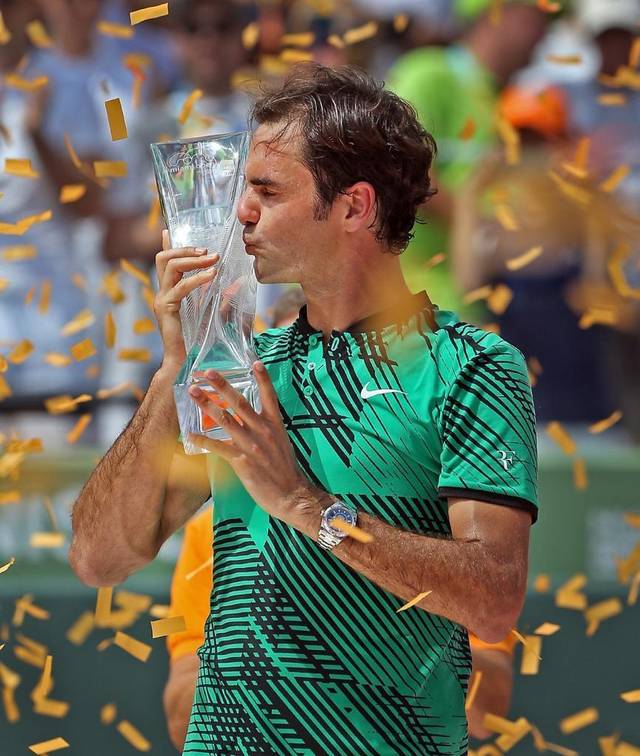
Photo courtesy of twitter.com If it’s not broken, don’t fix it.
Federer has continued his winning ways in 2017, winning the Sunshine double, and kept on his Australian Open tennis kit pattern, too. The color was changed, of course, to match the Miami and Indian Wells tennis court side Green, the kind of deft touch you would expect from Federer, a man as gifted in his fashion sense as he is with his hands at the tennis net.
The Tennis Review is offering readers a 10% discount on Alison van der Lande‘s luxurious tennis bags ( see pic below). Check them out out here. Use code TENNISC1 when you email your order to info@alisonvanderlande.co.uk quoting promo code TENNISC1 and add some style and beauty into your tennis life this Spring.
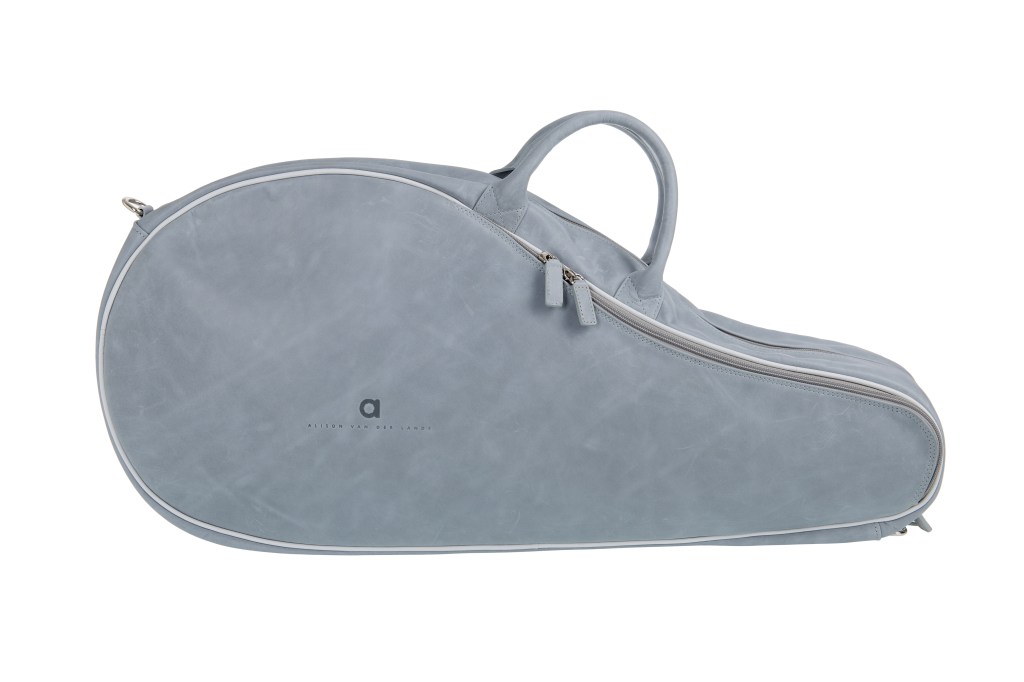
Photo courtesy of Alison van der Lande -
Rafa Nadal Wins Monte Carlo La Decima Part One is Done

Photo courtesy of NWZonline.com Rafa Nadal’s Monte Carlo Rolex Masters trophy win was a historic moment for the Spaniard and tennis, the fourth seed becoming the first man to win La Decima – ten men’s singles titles at a tournament – a moment big enough, luckily for men’s tennis, to cover up the cracks in an event beset by big upsets both inside and beyond the baseline.
How promising it all looked on paper. Nadal’s run to a historic tenth Monte Carlo trophy was drawn to be the kind which, had it delivered, would have gone down in tennis folklore as a real odyssey retold around the fireside for years to come.
The first chapter versus Kyle Edmund, a player with a forehand built for clay, the match up with the least expectations leading into it, turned out to be the one most worthy of staying up for.
The second chapter looked like it was worth stocking up on coffee for, too. In the last 16, the draw scheduled, and delivered in the sense that both men walked onto the court, a Nadal match versus Sascha Zverev, against whom Nadal had battled over five sets on his run to the Australian Open final. The match, however, was served up cold and unappetizing to anyone but the most fervent Nadal fans, the Spaniard giving Zverev a 20th birthday double bread-stick when the young German, his fans, and neutrals had hungered for generous helpings of cake.
Under the weight of Nadal’s return to clay court mastery, the rest of his draw seemed to fall apart, a quarter-final clash against Grigor Dimitrov, another Melbourne five setter rematch, failing to materialize, the Bulgarian sliding back into one of his slumps rather than through the red clay into a one handed backhand winner. Instead, the Spaniard took on Diego Schwartzman, a growing clay court talent, scraping by in a sluggish straight setter late in the day, the Spaniard’s game worryingly blunt early on in sets, but sharpened wisely when matters reached a business end.
¿#elclasico? ¡Esto sí que es un CLÁSICO! 🙌🏼 pic.twitter.com/l01jFxC6xr
— Mutua Madrid Open (@MutuaMadridOpen) April 23, 2017
//platform.twitter.com/widgets.js
A semi-final versus a struggling Novak Djokovic, a first Nadal victory since Roland Garros ’14 on the cards, caved in to a semi-final versus David Goffin, a player pumped up after a career best win over the Serb, primed to turn Nadal’s run to la Decima part one into the bulky page turner Nadal fans had been hoping for, the match to give his charge to La Decima some real weight.
That potential thriller is now doomed to be retold as a horror story round the fire, the umpire Cedric Mourier taking it on himself to play the villain, recklessly and needlessly spilling blood on the clay, and not just Goffin’s, but spectators and armchair fans, too, who had been enjoying the early fireworks, Goffin getting off to the best possible start versus Nadal, the Belgian fighting through an eleven minute game, consolidating an early break to go 4-2 up in the first set after a Nadal shot was correctly called long by a line judge.
As Nadal accepted the call and got ready to serve and get back to business, Mourier descended from his chair, unprovoked by Nadal or the line judge, turning the stadium into an inferno, calling the shot long, circling what he thought was the mark before a disbelieving Goffin, calling the point to be replayed. Five minutes later, boos bombing the court with every Nadal point won where there should have been fireworks bursting and oohs and aahs, the Spaniard broke back for 3-3 and a shell-shocked Goffin won just one more game.
If Nadal’s draw had been an unfair asterisks on his run to La Decima, worse was to come in the form of criticism Nadal could have given the point to Goffin. Nadal, however, on the other side of the court and blind to the mark, left that responsibility to those whose job it is to decide such things. Two wins away from La Decima, Nadal was too busy contending with Goffin, an opponent on a mission, and not worrying about the damage an umpire was doing to his own reputation and to his opponent’s psyche, Nadal, killer instinct ever ready to ignite, smelling the blood spilling from Goffin and pouncing, displaying the kind of mental toughness and survival skills that get you within two wins of La Decima in the jungle that is men’s tennis.
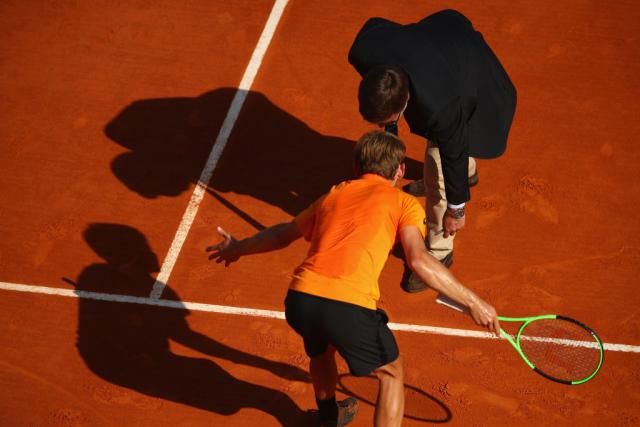
Photo courtesy of http://www.VestiMK.com That mental toughness and those survival skills took Nadal all the way to the final, but not the final that many thought worthy of deciding La Decima part 1. That final was supposed to have been versus Stan Wawrinka, one of the best big match players around, one of just five multiple slam champs on tour, a fitting obstacle for a slice of tennis history. Instead, this final was to be played against a an ATP 1000 final debutante, and a countryman, the kind of opponent Nadal overwhelms in big matches like an ATP 1000 final, and, in one of the most historic matches of his career, Nadal gladly let history repeat itself, defeating Albert Ramos-Vinolas, a man with the form, fight and forehand to bother him, but who Nadal reduced to a 6-1, 6-3 defeat in 76 minutes.
Six months after that painful last sixteen US Open loss to Lucas Pouille, when he had been once again on the comeback from injury, Nadal achieved what no male player, not even Roger Federer, Pete Sampras, Rod Laver or Jimmy Connors, players to rival his longevity at the top, managed to achieve- La Decima, the first of a trio of potential La Decimas, Barcelona the next in line, then last but far from least, the third, La Decima at Roland Garros.
Very happy for the win and the title in #MonteCarlo. The 10th in this tournament in my career. Thanks team and all of you!! pic.twitter.com/GxynF84Rqb
— Rafa Nadal (@RafaelNadal) April 23, 2017
The Spaniard was unable to tell his first piece of La Decima history Federer fairy tale style, the draw collapsing like a deck of cards as his rivals battled more clay hardened rivals, injuries, and themselves, Murray losing from two breaks up in the third, Djokovic on the losing end of a tight three setter, Wawrinka upset in straights, Cilic losing from a break up in the decider. Nadal, meanwhile, made sure his La Decima did not turn into a nightmare, picking up a deck of cards landing more clumsily in the dirt than fans had hoped for, and with all the smarts and skills suiting a man on the verge of clay court and tennis history, spreading the cards out to reveal a red and gold peacock train, the upsets inside and beyond the baseline now hidden from view, all eyes instead on Nadal’s 50th clay court title, his tenth Monte Carlo trophy, La Decima.
I had an amazing week @MCROLEXMASTERS ! Thank you all for your support ❤️ And congrats to @RafaelNadal for his 10th title in Monte Carlo 👏🏻 pic.twitter.com/gNNErpmAEV
— David Goffin (@David__Goffin) April 24, 2017
//platform.twitter.com/widgets.js
-
Does Ramos-Vinolas Have A Chance Vs Nadal in the Monte Carlo Final?
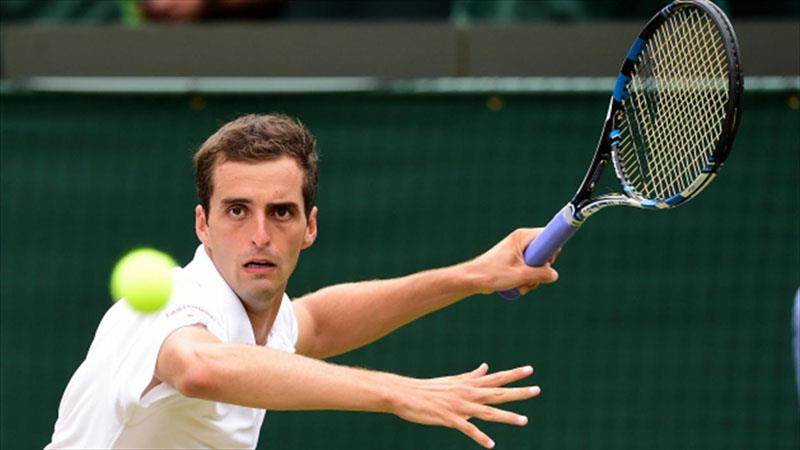
Photo courtesy of http://minkara.carview.co.jp Albert Ramos-Vinolas (15) will be the underdog in his Monte Carlo ATP 1000 final versus Rafa Nadal (4), but the final is unlikely to be a walk in the park for the defending champion. The Tennis Review gives you five reasons Ramos-Vinolas has got plenty of bite to hurt the nine time Champion one match away from La Decima part 1.
Ramos-Vinolas has a match winning shot in his forehand
Ramos-Vinolas is a lefty like Nadal and when the two go forehand to forehand, their strongest wings will be going up against each other.
Ramos Vinolas is not afraid to takes risks on his forehand side in big moments and if Nadal hits his forehand short, the fifteenth seed is no stranger to stepping inside the court and punishing that weakness.
Ramos-Vinolas is on a career great run
Ramos-Vinolas has beaten top seed Andy Murray, coming back from two breaks down in the third, fifth seed Marin Cilic, coming from a break down in the decider, and came back from losing the second set to a pumped eleventh seed Lucas Pouille to command the final set.
Ramos-Vinolas is unlikely to defeat Nadal in straight sets in Monte Carlo, and if he is going to win, he is going to have to do it the hard way, and his run to the Monte Carlo final shows he can take Nadal to three sets and give himself a chance. Fighting back versus experienced, higher seeded opponents and riding through talented rival’s purple patches to then grab the momentum in a brief lull are signs of a player full of self-belief ready and unafraid to take their game to the next level.
¡Vamos! 💪🏻 Amazing feeling! Step by step. Mañana otra oportunidad para seguir disfrutando. Gracias por vuestro enorme apoyo!! 😃 pic.twitter.com/HK9OOSwstE
— Albert Ramos Viñolas (@albertramos88) April 21, 2017
//platform.twitter.com/widgets.js
Ramos-Vinolas may have a negative win-loss ratio, but he has some pretty big wins.
In 2015, Roger Federer was the heavy favorite to defend his title and win Shanghai, but Ramos-Vinolas defeated him in three sets.
The Spaniard has also had wins over Milos Raonic at Roland Garros ’16, and Dominic Thiem and Grigor Dimitrov at Chengdu ’16 so he knows how to exploit the weaknesses of top players, and aged 29 and ranked at a career high of 24, he is enjoying his best years in the later stage of his decade long professional career, his hard work, experience and talent coming together and earning him great results.
Nadal has lost all his three finals this year
On the positive side for Nadal, the two players who beat him, Roger Federer (Australian Open, Miami) and Sam Querrey (Acapulco) play first rate first strike hard court tennis. This final will also be played on Clay, Nadal’s best surface, and at a venue where he is extremely comfortable, though the incident with David Goffin in his semi-final may have made it slightly less so right now.
On the negative side for Nadal, losing in finals can eat into a player’s self-belief and while Nadal may be one of the mentally toughest players around, he has shown more vulnerability in that department in recent years, and if things get tight, Ramos-Vinolas has the match toughness to be able to feed off Nadal’s doubts.
Ramos-Vinolas is inspired
Living a dream! Otro pasito más 😃 Mañana hay que intentar dar el máximo y dejarlo todo en la pista 💪🏻 Seguimos soñando… #Vamos pic.twitter.com/egLHwp0FvO
— Albert Ramos Viñolas (@albertramos88) April 22, 2017
//platform.twitter.com/widgets.js
Ramos-Vinolas is, in his words, living his dream, and defeating Nadal in the Monte Carlo final would be as dreamy as it gets. If the fifteenth seed can get inspired in the final then, tennis being sport, anything can happen.
Prediction: Nadal is the overwhelming favorite, and rightly so, but he is going to have to play at a very high level because if he falls short, Ramos Vinolas has enough bite on that forehand side, the right positive aggressive approach, and enough hunger to win to go from underdog to top dog and cause one of the upsets of the year.
-
Diamonds Are A Tennis Racket’s Best Friend 5 Questions With Bijou Tennis Founder Agnese Rozite
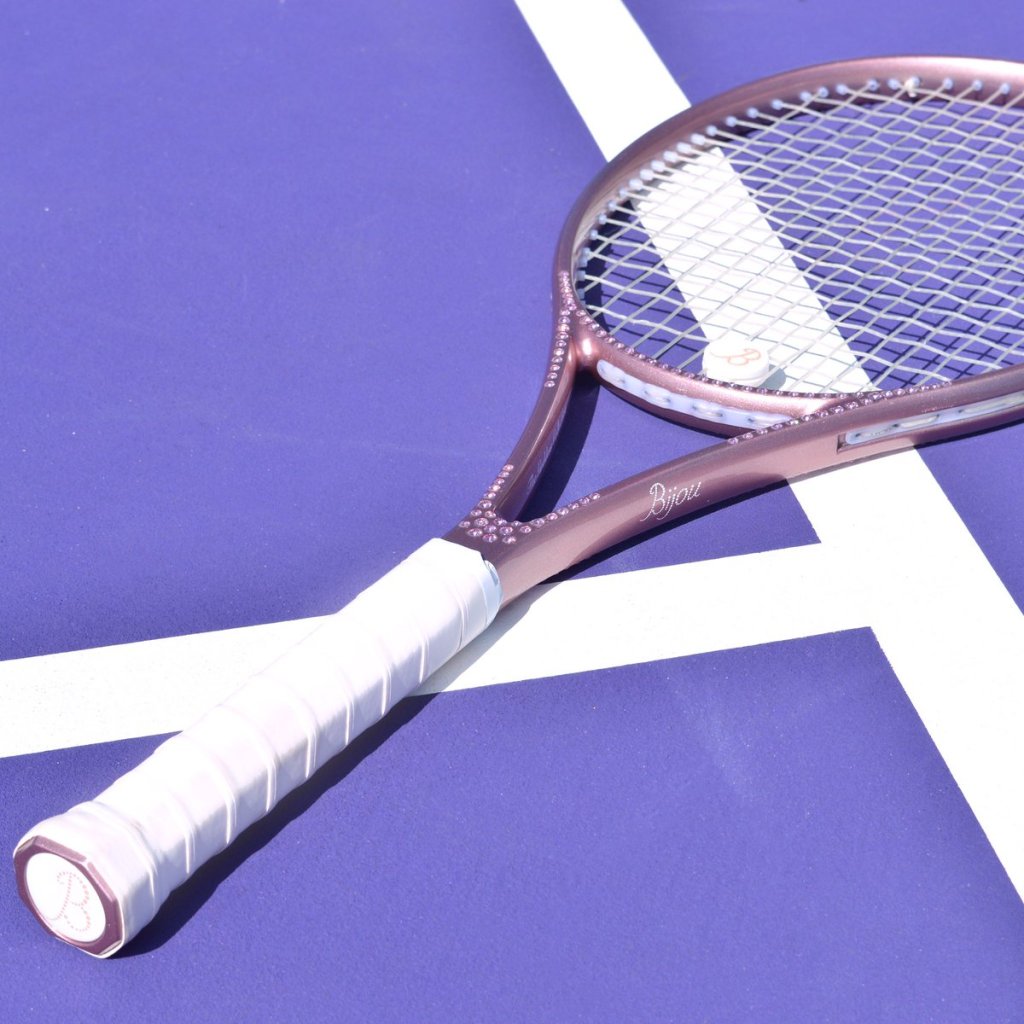
Photo courtesy of Bijou tennis With 56 of the world’s elite players competing in one of the world’s most beautiful and prestigious tennis locations, Monte Carlo, this week, men’s tennis is all about exclusivity. To celebrate, The tennis review asked five questions to Bijou Tennis’ founder and creator Agnese Rozite about her stylish diamond studded tennis rackets, her tennis playing style, and which male player would look great swinging a diamond studded racket.
What inspired you to design the world’s most expensive tennis racket?
I have always been fascinated with the fashion world, and it has multiple price categories from discount to contemporary to a high-end designer. Whereas in tennis, for the most part, everybody plays with the same price racquet. As an entrepreneurship major I just saw a new niche. I wasn’t necessarily going for the ‘’most expensive’’ but rather exclusive and more hand-made rather than large factory production. Lately, even the big brands are starting to do limited edition models, so these premier racquets are becoming more common. More importantly, I wanted to design something that has never been seen before and New York City lights inspired me to add shinning Swarovski crystals to Bijou racquets.
You are a former 3x All-American college tennis player- how would you describe your playing style and were any men’s tennis players your role models when you were growing up?
I love to go for the winners! I have never been a very patient player, so I had to become aggressive in order to win a point. Although I like to slice and drop-shot, there’s nothing like a clean forehand winner. I think in college some players were having a difficult time when playing against me because I am a lefty. During my teenage years Nadal and Federer where dominating the men’s tour so I naturally looked up to them. I definitely related more to Rafa since he grew up playing on clay courts and was also a lefty!
Shine on the court this Sunday #swarovski #tennisplayer #tennisracquet #tennisracket #tennisstyle #eastersunday #luxury #tennisluxury #tenis pic.twitter.com/Qn588QaFp3
— Bijou (@BijouTennis) April 16, 2017
//platform.twitter.com/widgets.js
You are also a former coach- what kind of player would you recommend Bijou tennis rackets for and why?
I have coached at various places, such as college tennis, academy tennis and country club tennis. They are all very different as people are in different points in their life and in their tennis ‘’careers’. My market is definitely geared towards the country club crowd. One of the reasons is that we currently make our models on the lighter side in order to accommodate beginner and intermediate level players. Also, our clientele has a certain disposable income that they enjoy spending on high-end fashion and luxury goods.
The old saying goes “Diamonds are a girl’s best friend”, but I think in this day and age they can be a man’s best friend, too- which men’s tennis player do you think would look great swinging one of your rackets?
Women have always admired diamonds and men have always admired women so it’s been a way to impress them. But in our modern unisex times, style is cross-gender. Especially in major fashion metropolitan cities such as New York, London, and Paris.
A man with a Bijou racquet? I could actually see Roger Federer flawlessly swinging our silver model for charity. Another headliner that comes to mind is Nick Kyrgios who would have fun with the gold racquet. I think he brings a lot of entertainment to such a classic sport. I truly enjoyed their most recent match in Miami.
Bijou Tennis rackets are customized in New York- have you ever been to the US Open and can you tell us about your experience and which men’s players you saw live?
New York City is home to Bijou and the US Open, and we are currently looking to do some interesting events around the Grand Slam. I have been to the US Open numerous times and it just gets better and better every year. In fact, the entire air of New York is filled with tennis, not sure if it’s from the fuzz of the balls, or all the greatness of the players, but it is my favorite time of the year in New York.
Most recently with all the court renovations, the tournament is a must see for every tennis lover. I have seen most of the top 10 players play up close, but it’s another feeling when you see them next to you in the players lounge. I believe this year’s tournament will have some surprises from the youngsters on the tour so I will definitely try to watch their matches!
Everyone loved our beautiful racquets at the Taste of Tennis Miami! #limitededition #luxurytennis #tennisfashion #tennislover pic.twitter.com/bfEfz8YuH0
— Bijou (@BijouTennis) March 24, 2017
//platform.twitter.com/widgets.js
Follow this link to find out more about Bijou tennis
-
Monte Carlo Rolex Masters Who Can Stop Rafa Nadal and La Decima Part 1?
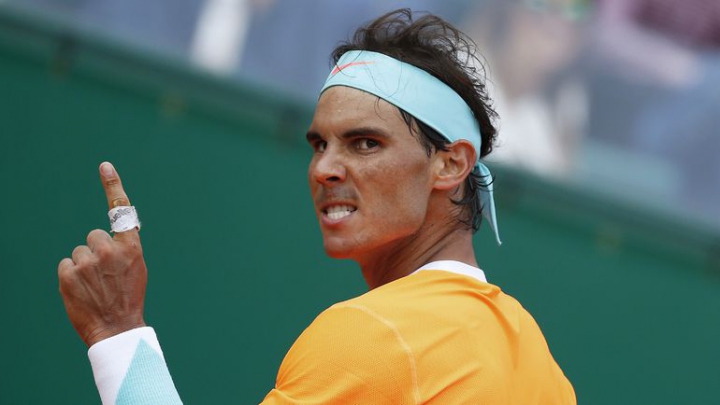
Photo courtesy of http://ru.publika.md Rafa Nadal enters the Monte Carlo Rolex Masters on the back of a strong first quarter of the season as he attempts his first La Decima of 2017. The Tennis Review looks at why Nadal is the man to be stopped and at the rivals who have a chance to stall his striding towards a piece of tennis history.
Why Nadal is the player who needs to be stopped.
Had Roger Federer not been fairy-tailing it up this season, then the award for best comeback would most likely be going Nadal’s way.
In 2017, Nadal has been to a slam final, an ATP 1000 final, and an ATP 500 final, and all on hard courts. Three of his five losses have come at the hands of arguably the best hard courter in tennis history, Roger Federer, another one to Milos Raonic, in Brisbane where the Canadian was defending champion and at a career high ranking of 3, and the other one to a player with the big serve and first strike tennis that bothers Nadal on faster surfaces, Sam Querrey.
That run on hard courts means Nadal, who only came back from wrist injury last Summer, has the confidence he needs entering the Clay court swing, where last year he got off to a tremendous start winning Monte Carlo and Barcelona back to back,
Nadal, who has been practicing on clay since his Miami defeat, looks primed to put all that hard work into trophy winning action, and there is no better venue to start at than Monte Carlo where he has won a historic nine titles (Nadal has the record for most men’s singles titles won at an event at no less than three different tournaments- Monte Carlo, Barcelona and Roland Garros) and where he could become the first man in ATP history to win ten singles titles at one tournament.
Contento de estar entrenando en #MonteCarlo / Already training in Monte Carlo! 👍 pic.twitter.com/7vx1iVzEg7
— Rafa Nadal (@RafaelNadal) April 15, 2017
Who Can Stop Nadal?
Round 2
Kyle Edmund or Dan Evans (Nadal has never played either of them).Edmund’s best surface is clay and the Brit has enough experience now to hang with the game’s best across all surfaces and it may not be long before the 22 year old ranked 47 starts beating them, whereas fellow Brit Dan Evans, aged 26 and ranked 44, is a better hard court player, but has the self belief and flair to beat the big guys with wins vs Nishikori, Thiem and Cilic on his resume.
If the two Brits could form a hybrid then they might stand a chance, but on their own, the chances of either stopping Nadal are slim.
Round 3
Sascha Zverev (Nadal leads h2h 2-0)The draw could have been kinder to Nadal. Zverev likes clay courts and big matches and has pushed Nadal close on two previous occasions, holding match points against him in Indian Wells last year and taking him to five sets at this season’s Australian Open.
Zverev’s backhand is a big enough weapon to stand up to Nadal’s forehand in cross-court rallies and if Nadal is hitting at all short on that side, Zverev will be able to come in and really attack him.
Zverev, though, is still a little green to finish Nadal off, but a breakthrough is going to come his way at some point, the question is could it be this week on the red dirt in Monte Carlo?
Quarter Final
Grigor Dimitrov (8) (Nadal leads 8-1).Nadal and Dimitrov have met at this stage of the tournament before, going three sets in ’13. Right now, after a great start to 2017, Dimitrov has lapsed a little, and will have to be playing well to get past his section of the draw with a potential second round clash with Casper Ruud and a possible third rounder with one of the dangerous quartet of Bernard Tomic, Diego Schwartzman, Nikoloz Basilashvili and Roberto Bautista Agut, none of whom will turn down a shot at upsetting Dimitrov.
If Dimitrov does make his scheduled last eight Nadal date, facing Nadal at an historic event like Monte Carlo might inspire the Bulgarian to pose the kind of challenge he did to Nadal in the Australian Open semis earlier this season, arguably the match of the year so far.
Roberto Bautista Agut (12) (Nadal leads 1-0).
Bautista Agut could be a more likely opponent from the Dimitrov section of the draw, but while Nadal’s fellow Spaniard has plenty of game, his flatter shots are more suited to hard courts, and he lacks the clay court guile needed to beat Nadal on the surface.
Semi- final
Novak Djokovic (2) (Djokovic leads 26-23)
Working that clay with @cilic_marin 💪. Feels great! pic.twitter.com/zKQPpHgRgS
— Novak Djokovic (@DjokerNole) April 14, 2017
If Roland Garros is the end of first semester final for 2017, then this is the mid term test for Nadal.
Djokovic has had Nadal’s number since losing to him in the 2014 Roland Garros final, but since the Serbian’s recent struggles post his Roland Garros ’16 win, the two have not met, and while Djokovic’s struggles worsen, Nadal has been getting stronger.
Right now, in a rivalry that has switched hands from one to the other numerous times over the last decade, this could be Nadal’s chance to grab the momentum at an all important moment, with Nadal primed to reassert himself back at the top of the game, in what would be their 50th meeting.
Dominic Thiem (6) (Nadal leads 2-1).
Dominic Thiem practising with David Goffin ahead of the Monte Carlo Rolex Masters. pic.twitter.com/p46w3VSywU
— Dominic Thiem Fans (@DomiThiemFans) April 14, 2017
Djokovic will have to get that far, though, and in four tournament starts in 2017, he has been past the quarters once.
Thiem may be the one to take advantage of Djokovic’s struggles, if the second seed has not overcome them, and would also prove a strong test for Nadal should they meet in the semis. The Austrian loves clay, has beaten Nadal on it before, in Buenos Aires last season, and, according to his coach Gunter Bresnik, is playing better than ever. The Austrian is still a little unproven though at ATP 1000 level, having yet to make it past the last eight in four tries, however he looks ready to take the next step and Nadal will need to apply plenty of pressure to prevent himself getting trodden on in that process.
David Goffin (10) (Never met).
Goffin, though, may be the scene stealer from the bottom half. The Belgian has the clay court skills to beat Thiem in the last 16, Djokovic, if he is sub-par, in the last 8, and challenge Nadal in the semis. Goffin winning versus Nadal would be a long stretch- he has never made an ATP 1000 final- and he does have a history of choking leads versus top players.
Inexperience, problems closing out matches, Goffin’s weaknesses are, unfortunately for the Belgian, ones Nadal is as adept at exploiting as he is winning matches on clay.
Final
Stan Wawrinka (3) (Nadal leads 15-3).— Stanislas Wawrinka (@stanwawrinka) April 15, 2017
Former champion Stan Wawrinka (defeated Federer in ’14) is due a big title on arguably his best surface, has a nice Monte Carlo draw from the tennis Gods keen to see him do well, and is in the lighter top half with Andy Murray struggling on his serve, Marin Cilic in poor form, and seventh seed Jo-Wilfried Tsonga who had a great early season but has been missing in action since becoming a father, a rival against whom he matches up well.
Wawrinka is a dangerous player in finals, and not one Nadal would choose to face from the top half of the Monte Carlo draw after losing all three finals he has played this year. Any hint of insecurity or vulnerability from Nadal and Wawrinka has the self-belief and weight of shot to send him stumbling across the red dirt rather than sliding through it.
If Nadal does makes it to the Monte Carlo final, though, and does so beating Djokovic on the way, he would be in pretty good physical, mental and technical form, and while the nine time Champion would face a rival who has proven he can beat him in big matches, on clay, Nadal has, if his forehand is working well and he can get his heavy top spin going, the upper hand in the match up.
#NextGenATP ⭐️ fulfills “childhood dream”! @CasperRuud98 trains with @RafaelNadal at Rafa’s academy 👏🏻 (Instagram: https://t.co/c4KMcWWpw0) pic.twitter.com/GK9q9EFtnC
— Next Gen ATP Finals (@nextgenfinals) April 13, 2017
Rafa Nadal
Nadal’s biggest opponent might prove to be none other than Nadal himself. The Spaniard has not won a title since Barcelona last season, has had to come back from yet another injury, and has not won his last three finals, including one in which he led by a break in the fifth set.
If Nadal’s 0-3 finals record or worries about his physical condition creep in, and his forehand falls short and his serve is vulnerable, his opponent will be able to exploit that, and another final loss, on clay, in Monte Carlo where Nadal has so many great memories, could seriously put a dent in Nadal’s chances of La Decima part 3 (the second is Barcelona) at Roland Garros.
But those kind of scenario’s are best left to be played out in Nadal’s nightmares. Nadal this season is all about living his dreams, and living in the now. The Spaniard was very positive after his Miami loss to Federer which he felt played out closer than the score-line, and very pragmatic about taking this season and his clay court chances step by step. So far, that approach has served him well, and Nadal, in his current upbeat, relaxed mood and mode, is unlikely to end up beating himself in a Monte Carlo final. Nadal will leave that responsibility, instead, to his rivals. Rivals who will have a much harder time staying in the now, and with Nadal, with all the nightmares the Spaniard will inflict on them, on one of his favorite courts.
A court on which Nadal has lived out plenty of dreams, a court on which whoever does beat the Spaniard will have to do so with a killer performance if they are going to stop Nadal becoming the first man to live a dream yet to be lived, the dream that is La Decima part One.
-
Men’s Tennis European Clay Season 2017 7 Questions the Red Dirt Will Dig Up
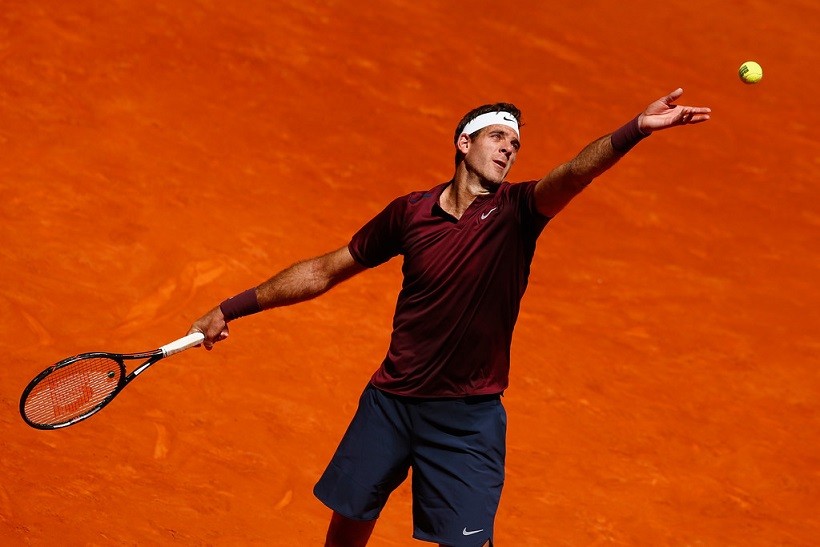
Photo courtesy of http://revistatenis.uol.com.br The 2017 European Clay Court season is underway and The Tennis Review could not be happier as we switch from blue and green to red and our favorite tennis players get sliding in the dirt. Here are seven questions we are going to enjoy seeing the answers to dug up on the red dirt over the next few months.
Can Juan Martin del Potro get lucky with a draw?
Since del Potro got his 2017 season started at Delray Beach, he has been hit by one bad draw after another- Milos Raonic in the Delray Beach semis, Novak Djokovic in the Acapulco round of 16 and the Indian Wells round of 32, and Roger Federer in the second round of Miami.
The Argentine is surely deserving of a break when it comes to draws, and the 2009 Roland Garros semi-finalist will take advantage if one comes along and get some momentum going on a surface which will give him time to run around his weaker backhand side and hit that match winning forehand, and in a season swing in which he has just 90 points to defend, providing del Potro with a great opportunity to climb up from 35 in the rankings and start working towards a top 16 seeding for the US Open, the slam where he made his name and where he has his best chances of really coming back again.
Lindo día para entrenar 🎾☀ // Nice day for a hit. pic.twitter.com/SVj5AreJZe
— Juan M. del Potro (@delpotrojuan) April 6, 2017
Will Stanimal be on the hunt or will he be hibernating?
The 2015 Roland Garros and 2014 Monte Carlo champion knows how to win big on clay versus the game’s biggest players, but Stan Wawrinka can also lose big, either suffering an upset or failing to deliver as he did for some of his 2016 Roland Garros semi-final versus Andy Murray last season.
So what will we get this season? The Stanimal who hunts- like he did so well versus Federer and Djokovic in those big clay finals- or the Stanimal who hibernates as he did versus Grigor Dimitrov twice last season and when he needed to be wide awake in last season’s RG semis?
This season, Wawrinka has been oddly consistent, making the Brisbane and Australian Open semis, and the Indian Wells final, and climbing back to world No.3. There have been the opening round shocks- he went out as Dubai defending champ in his opening round- and an upset in Miami in the last 16 to Sascha Zverev ( the #NextGenATP star proving to be a bad match up for Wawrinka), but Stan is delivering in the big events most of the time, and with the slow conditions of some European clay court events complimenting his big back-swing and heavy shots, the momentum seems to be building for another Stanimal pounce on a title, and the multiple slam champ, whose last title was the US Open back in September ’16, must be feeling a little, somewhat dangerously for his rivals, hungry right now.
Can big cats Murray and Djokovic chase the mice away?
The mice have been playing well while the tour’s biggest cats, world Nos 1 and 2 Murray and Djokovic, have been away, and the question is how quick of the mark will both men be to chase them back into their lower ranked holes?
They won’t have to deal with Federer until Roland Garros, but Rafa Nadal, Stan Wawrinka and Nick Kyrgios could be, after great starts to the season, too strong to send scurrying away.
Today’s practice.. #TeamSerbia🇷🇸 Idemooooooo pic.twitter.com/g2sb8LyIbB
— Novak Djokovic (@DjokerNole) April 6, 2017
Both men might look to Federer and take inspiration from his all conquering return from injury, and they will need such inspiration with both men having a lot of points to defend this clay season- Djokovic has Madrid title points, Rome finalist points and the RG title, Murray the Monte Carlo semis, Madrid finals, the Rome title, and the Roland Garros final, and both men have the small matter of the first quarter of the season racing by with neither player making an impact on the race to London with Murray in 12th place (840 points) and Djokovic in 22nd (475).
Djokovic will be getting to work earlier than Murray, at Monte Carlo, and has a great chance to gain some ground after his second round upset at the hands of Jiri Vesely last season. Murray, meanwhile, will not be appearing until Madrid, the tournament that most compliments his natural game.
With Federer out until Roland Garros, neither man can afford to be too rusty- at a time when Federer has the tennis world once again at his feet, neither Djokovic or Murray want to go into the Grass season and face the Swiss where his fandom is at its most frenzied on the back of a clay season which not only failed to cover up any relative rust, but loosened the wheels even further.
How will Rafa Nadal play and will it be La Decima worthy?
Almost a year later, I’m back on clay… Can you guess where I’m training? 😉 pic.twitter.com/1HCiA8HUsO
— Rafa Nadal (@RafaelNadal) April 5, 2017
Nadal has been taking 2017 step by step and is not even, he says, looking at Roland Garros, but just focusing on practicing on clay.
No expectations and no pressure might be just what is needed for the Spaniard who will have two La Decima narratives going on this clay court season, the first in Monte Carlo, the second at Roland Garros, and while Nadal may not want to think about both those stories coming true, his fans certainly will.
For good reason, too. Nadal is looking like he has a genuine shot at achieving what no other male in tennis history has done- winning ten singles titles at one slam, or any event. The Spaniard is back, once and for all, reaching the finals of Melbourne and Miami, and with Roger Federer, who has beaten him three times this season, out of the picture for a couple of months, Nadal is the player going into the clay season with the most momentum and confidence behind him.
There are still some questions to be answered before we get too excited on Nadal’s behalf such as the Djokovic question- Nadal has not beaten him since Roland Garros 2014 and with the Serb coming back from injury and a less than stellar start to the season, Nadal has a good chance to end that drought- and the most important question, as Nadal pointed out in his post Miami final interview, just how good he will be on clay after a year away.
We may find out in a fortnight when Monte Carlo and La Decima part 1 gets underway, and the thing Nadal is not thinking about, Roland Garros, starts to become clearer on a horizon the Spaniard’s fans will not, except for when they are keeping an eye on their idol’s progress, take their eyes away from.
Many of you guessed it… I’m home training at the @RNadalAcademy! pic.twitter.com/tmodEiWzX8
— Rafa Nadal (@RafaelNadal) April 5, 2017
Will Dominic Thiem take the Next Step?
Thiem has been having a patchy year, but he has won a title (Rio), been to the last 16 of a slam, and made the quarters of an ATP 1000 (Indian Wells) and with his best part of the season coming up, he should have enough confidence and match play under his belt to make the next step, which for Thiem would be the Semis of an ATP 1000, Monte Carlo and Rome the most likely stages for a player who has been threatening the last two seasons to become his generation’s answer to Gustavo Kuerten to go from a cameo role, like he played at Rome ’16 (QF) and Roland Garros ’16 (SF) to starring center stage.
Which big names will fall at the hands of the #NextGenATP?
Zverev, Kyrgios, Chung, Coric, Rublev, Tiafoe and Medvedev are all names no more established ATP player is going to want to see next to theirs in any clay court draw this season.
None of the #NextGenATP will be expected to walk away with any of the big events like Barcelona, Monte Carlo, Madrid, Rome or Roland Garros, but they will have a chance to lift ATP 250 trophies like Munich and Nice and be tipped to cause some upsets with the right match ups.
Still, the way 2017 is shaping up, it might not be wise to dismiss the #NextGenATP’s big title chances. We learned this year anything can happen once already, and a second lesson at the hands of the colorful, dynamic and feisty bunch the #NextGenATP have turned out to be would be warmly welcomed.
Will the Lost Generation find themselves?
Tennis fans are as lost with the Lost Generation as that generation are with themselves. Grigor Dimitrov looked like he was back on track down under only to vanish in the North American Spring Swing, Milos Raonic ended 2016 on a high (No.3 in the world, the highest ranking of his generation) only for injury to take its toll once more, while Kei Nishikori continues to struggle with both body and mind.
All three players are still on tennis’ front line, but the current #NextGenATP are chasing behind them, and getting stronger all the time. However, while time is, in some sense, running out, a tennis pro’s life at the top has an ever lengthening sell-by-date and all three can take heart from Roger Federer’s 2017 success as they dig deep within their own hearts, working out what makes them tick, and what they need to do to find their way back to where they were, and then, if they desire, to climb even higher.
Welcome to Marrakech 🇲🇦 pic.twitter.com/VAz8VWMpZa
— Grigor Dimitrov (@GrigorDimitrov) April 8, 2017
The Tennis Review will be posting at least once a week in the Clay court season so check in with us now and then to read the latest posts about what is looking to be a great European clay court swing.
What do you think will be the answers to any of these questions this European Clay Court Season? Or do you have some questions of your own you would like answered? I would love to hear from you in the comments below.
Promotion! Take advantage of our 2MinuteTennis.net™ promo offer. Enter promo code FREEMONTHTTR when you subscribe and get your first month FREE! Follow the link, enjoy Ryan Reidy’s video and online coaching and improve your tennis!
-
Men’s Tennis European Clay Court Season 2017 Who Will Step Up? Five Faces
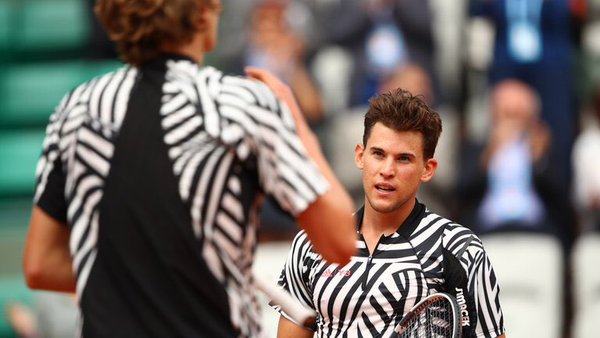
Photo courtesy of http://www.twitter.com The 2017 men’s tennis European clay court season could see some of the tour’s most promising players take a step up to fulfilling their potential. The Tennis Review takes a look at Dominic Thiem, David Goffin, Alexander Zverev, Kei Nishikori, and Martin Klizan and what could help and hinder them taking that next step.
Dominic Thiem
Why he has a chance to take the next step:
Thiem has it all- aggression, defense, and that all important ability to transition between them on a surface which demands the peaks of both styles.
Thiem’s serve earns him short balls to feed off or a weak return on his formidable forehand or one-handed backhand side with which he can take control of the point, moving his opponent around the court, before forcing an error or hitting a winner off either side.
Thiem’s athleticism means he can defend, using his slice to keep the ball low on the forehand side and have them dig deep for the ball, and his slice and loopy forehands and angles buy him the time he needs to reset the point and get his groundies going again. Thiem not only can switch from defense to offence but also transitions well from the baseline to inside the court, moving forward once he has the right ball, and finishing off the point.
Thiem can play with the best of them on clay all day, too- his great fitness and stamina meaning he can go the distance, which on a slower surface like clay, can be pretty far.
Why he might slip up:
Thiem can struggle on the big points, especially on break points, (though this has improved a lot over the last year, he is 24th with 41.2% of break points converted on the ATP stats leaderboard)), when he tends to be more hesitant to come in and end points.
Thiem can also be impatient when faced with consistent opponents who can move him around and vary their shots to prevent him getting any rhythm, forcing him to go for too much power, often at the wrong time, and consequently producing too many unforced errors, a weakness Borna Coric exploited so opportunistically at the recent Miami Open.
Best clay results:
Roland Garros semis 2016, Rio Open title 2017, Buenos Aires 2016.
The Step-up:
The Roland Garros final, an ATP 1000 semi (Thiem has been to four ATP 1000 quarters including Rome ’16).
Thiem said after his Miami loss to Borna Coric he was happy to be looking ahead to the clay season, the surface on which he has given his best performance on in 2017, winning Rio. Some rest after an early exit in Miami and the confidence Rio and his quarter final match versus Stan Wawrinka in Indian Wells bodes well for his first appearance in an ATP 1000 semi-final which could happen somewhere like Monte Carlo with Djokovic returning from injury, Murray and Federer absent, Wawrinka so inconsistent, and Nadal unproven this clay court season, or Rome if Thiem gets some momentum going.
The Roland Garros final might be a little out of reach at this stage of his career, but Thiem is a hard worker and passionate about tennis and while it may not come in 2017, it will not be too far before he is playing for the Roland Garros title.
David Goffin
Why he has a chance to take the next step:
On clay, if you cannot overpower your rivals, then you need to be able to rally with them, and Goffin has some of the tour’s best rallying skills and variety of shot to surprise his opponents on a surface where the irregular bounce and at times fabric lines (the ones at Roland Garros, though, are painted) throw enough curve-balls at players as it is.
The Belgian can mix angles, spins, flat strokes, hit drop shots, lobs, change the direction of the ball, the speed of the ball, the depth of the ball, hit past his opponent, feed off his opponent’s pace, hit winners on the run, and the list goes on.
Goffin is also able to step inside the court and create pace on short balls and his great movement means he can transition up to the net where he showcases his flair, touch and reflexes.
If you are exhausted just reading that list, imagine how Goffin’s opponents feel after being on the receiving end of one of his winning rallies.
Why he might slip up:
Reading about Goffin, one might wonder why he has not won a slam or been No.1, however while his game has plenty of positives, he lacks a stand out shot, much needed in the modern game.
Mentally, Goffin is not one of the strongest players on tour either. His biggest loss in his career, to Dominic Thiem in the quarters of last year’s Roland Garros, still seems to bothers him. A loss Goffin is going to have to put behind him if he wants to take the next step anytime soon.
Best clay results:
Roland Garros quarter-finals ’17, Kitzbuhel title ’14.
The Step-up:
Goffin has been to a few ATP 1000 semi finals, so an ATP 1000 final would be the next logical step considering his all court success.
Given the right draw and some luck, Goffin competing in the 2017 Roland Garros semi-final would not be a surprise.

Photo courtesy of pinterest.com Why he has a chance to take the next step:
Zverev’s double-handed backhand – think potential Safin, Djokovic or Nalbandian quality- has the power and the pace to dictate rallies, and he knows how to construct a rally and get himself into position to hit the winner.
The German also has a big serve for plenty of easy points, helpful at a time when the ATP tour is as ruled by the return of serve as it once was the serve.
Zverev’s fighting qualities and his flair for big matches against top players is also a trait that will do him well at a time when the older generations are dominating the tour.
Why he might slip up:
Inexperience. Zvevev may be up for the fight, but he still lacks the experience to know which punch could be the killer, a very exploitable weakness on the big points when you are facing the likes of Nadal, Djokovic and Federer and tough competitors like Kyrgios and Thiem who know which blows to deliver.
However, Clay also covers up a lot of Zverev’s weaknesses, like his net game and his weaker forehand side- on clay he has plenty of time to get to the net on the right ball, and that aspect of his game is improving all the time, and the time to work the point round to his backhand side.
Best clay results:
Roland Garros ’16 third round, Munich ’16 final.
The Step-up:
Roland Garros last sixteen. Zverev has yet to make the last sixteen of a slam, and he has progressed enough recently to even perhaps skip a step with the right draw and make the last eight.
An ATP 500 title would be a step up, too, and Zverev has looked ready to win a title of that status, but the European clay season only has one of them, the Barcelona event, which is, with the likes of Nadal and Nishikori in the draw, one of the toughest clay court events going.
Kei Nishikori

Photo courtesy of http://www.jiji.com Why he has a chance to take the next step:
With an aggressive baseline game, and strong off both sides, Nishikori can dominate a point no problem, and knows when to move in and finish the point mid-court and at the net.
Nishikori has a lot of experience behind him now, too, which is going to make the difference at some point of his career when the current Big Five are returned and he is one of the tour’s veterans. Experience counts for a lot on clay, a surface on which long matches and grueling points demand match toughness and some hard earned memories, both mental and muscular, of past marathons competed, and Roland Garros has been won by plenty of players in later stages of their careers such as Andres Gomez, Andre Agassi, Alberto Costa and Roger Federer.
Why he might slip up:
Unfortunately for Nishikori, his weak areas are the two most important parts of the game- the mental and the physical. Nishikori too often underperforms in matches he is expected to win such as last year’s last 16 Roland Garros versus Richard Gasquet.
If Nishikori’s mind does not melt, then his body collapses like it did in the Madrid ’14 final.
Like all players, Nishikori needs both his mind and body to be in sync if he going to reach his potential, and he has been close, as seen from some of his career great performances at the US Open. The big question is whether or not he is too fragile in both aspects to ever realize what is deep inside him, a question which, from a player like Nishikori who has not often delivered when expected, will likely be answered when he is under the radar, which, with tennis eyes now on Thiem, Zverev and Kyrgios, is just about now.
Best clay results:
Barcelona ’14. ’15 title. Madrid ’14 runner up, Roland Garros Quarter-finals 2015.
The Step-up:
For someone who has been to three ATP 1000 finals and a Grand Slam final, the next step for Nishikori is the big titles and only a title in Madrid, Rome, Monte Carlo or Roland Garros will satisfy his fans and tennis pundits.

Photo courtesy of topsyone.com Why he has a chance to take the next step:
Klizan has a classic aggressive baseline game. A great ball striker, not afraid to go for his shots, with a great rally ball who can get his rival out of position and hit the winner.
Klizan is one of the most mentally strong underdogs on the tour and is not afraid of the ball, himself, or his opponents, qualities which have made him one of the players most likely to cause an upset as he did defeating Kei Nishikori in the first round of Roland Garros ’14, and two years later dismissing defending champion Stan Wawrinka in his Philippe Chatrier opener.
Why he might slip up:
Injuries. Klizan is one of those players who can win from qualifying or can enter an ATP 500 after hardly playing and win the trophy, as he did in Rotterdam and Hamburg last season, only to then suffer injury from the exertion needed to perform such feats and lose valuable momentum and confidence as a result.
That up and down nature in Klizan’s results is also present in his mental game. As mentally strong as Klizan can be, he can have meltdowns, too, as he did versus Stan Wawrinka in the first round of this year’s Australian Open.
Best clay results:
Munich title ’14, Hamburg ’17.
The Step-up:
For a player who has won two ATP 500 trophies, Klizan has disappointed in bigger events, never going past the fourth round of a slam, (US Open ’12, upsetting Tsonga on the way), and then only once. Klizan has also never been past the second round of an ATP 1000 event, with a 24% success rate in 25 appearances, one of tennis’ mystifying stats.
Technically, then, the next step would be a Roland Garros last eight place, and an ATP 1000 last 32, both achievements long overdue for the 2006 French Open Boy’s champion.
Who do you think will take the next step in their careers this European Clay Court Season? I would love to hear from you in the comments below.
Promotion! Take advantage of our 2MinuteTennis.net™ promo offer. Enter promo code FREEMONTHTTR when you subscribe and get your first month FREE! Follow the link, enjoy Ryan Reidy’s video and online coaching and improve your tennis!
-
Roger Federer Defeats Rafa Nadal Wins Miami Open Prime Time Revival Rival
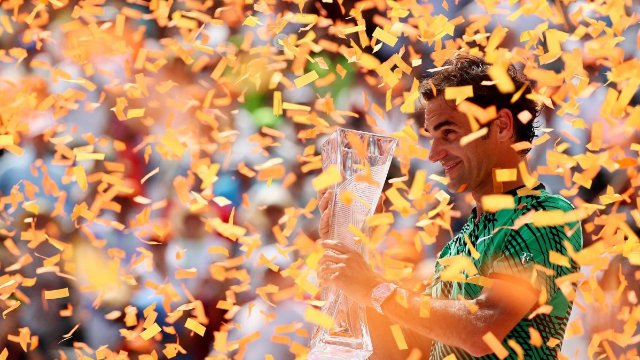
Photo courtesy of twitter.com Roger Federer’s 6-3, 6-4 defeat of Rafa Nadal to win the Miami Open drew the curtain on a remarkable first quarter to 2017, a showstopping revival, even surprising himself as he won the title for the first time since 2006, the same year he also took the Australian Open, Indian Wells and Miami, a revival so good it rivals those prime time day themselves.
Miami might even be Federer’s most surprising run of 2017 yet. The Swiss had not been to the final since 2006, (whereas he had last won in Australian in 2010 and had made the semis in ’16, and had been to the finals of the last two Indian Wells he had played in), and at 35 few thought he would have the energy to continue from Indian Wells where he left off, holding aloft another ATP 1000 trophy, and beating Rafa Nadal on his way too, the Spaniard more at home in the slower Miami conditions, and pumped up to finally win the trophy after four runner up finishes.
🐬🍊🏆🏆🏆 pic.twitter.com/EA6yD616bh
— Roger Federer (@rogerfederer) April 2, 2017
Yet, despite a tough early draw of Frances Tiafoe (Federer is known to struggle in first matches versus young up and comers), Juan Martin del Potro, the Argentine an early round upset expert since coming back last season, and Roberto Bautista Agut who has the baseline skills to keep Federer’s attack at bay on a slow court and bother him, Federer rode the flow of momentum from California, not dropping a set until his quarter-final versus Berdych, who came back from match point down to beat Federer in Miami 2010, in which the Swiss dropped his first set in 9 matches, a change in the tide which turned Federer’s journey towards a third Miami Open title into the work out always looked like it would be, Miami’s medium slow court demanding the very best from Federer’s game, the kind of best he showed back in 2005 and 2006 when he won the title, when Men’s tennis was the Roger Federer Show on Prime Federer Time TV.
Since 2006, conditions changed the tennis channel, the athletic, stamina-driven baseline games of Nadal, Djokovic and Murray getting the better of Federer mid-court and at the net, forcing Federer to base himself back at the baseline where, with his forehand and one handed backhand, he was still formidable- he won three slams in 2007, one in 2008, two in 2009, one in 2010, one in 2012– but the baseline was not where he belonged. Federer belonged center stage, and when in 2014 he returned with a revamped aggressive game which sent him flying up there, and back up the rankings, back in slam finals and winning ATP 1000s, the crowds responded, cheering him on for an encore of another slam title, more ATP 1000s, and now, the next step, another stint at the top of the tennis rankings.
Never has crowd support for Federer been more passionately boisterous than at this year’s Miami Open as Federer fought past Tomas Berdych and then Nick Kyrgios in third set tiebreakers, the prospect of a complete sweep of the season’s first three big titles for the first time since 2006 a feat Federer supporters did not just have to imagine but could realistically expect. Against Kyrgios, the crowd were mean-spirited in their high spirits, cheering Kyrgios’ faults, heckling him, calling out mid rally in the final set tiebreaker. Kyrgios, so easily cast as the villian in the piece, could see the logic in the madness, though, saying Federer, after all he had done in the sport, earned such blind devotion in a match in which the Australian was arguably the better performer.
Yeah, the crowd was obviously on his side, but I think I have to win a little bit more to start getting them on my side
There was no doubt as to who played better in the Miami final, though. In 2017, Federer came full circle from when he last won in Key Biscayne versus current coach Ivan Ljubicic in 2006, his aggressive game executed so well his opponent’s defensive skills never had a chance of really getting under his skin, Federer’s serve, return and second ball of a quality Kyrgios said in his post semi match interview no other player on tour could match.
He’s just such a good — his serve and first shot is I think by far the best on tour. I’ve played all the Top 4, a lot of the top guys, and his first two shots, it’s so hard to do anything against. You feel like you’re making a return, and then he’s right on it and hits a winner.
Here was Federer doing what he should have always done versus Nadal, seeing the attacking plan out from start to finish, a Federer now playing that attacking game as well as he had when he won Miami in 2005 and 2006, with a confidence missing back in 2011 when Nadal beat him in Miami in straights. A Federer with Nadal no longer in his head because across the net is as different a Nadal as he is a different Federer, a Nadal compromised by age and injury while Federer has taken age and injury on, and won.
Federer won that fight by rebooting the game he first came onto the tour with, taking on the serve and the second ball with variety, technical mastery and trust in his instincts. Federer’s first serve went in 63% of the time (the same as Nadal’s), with Federer winning an impressive 87% of points behind that delivery (34/39, compare that to Nadal’s 27/41). Nadal just edged ahead in the second set battle 50-48%, but he did not get a look in at enough of those second serves, particularly in the second set which would have, once upon a time, been when the Spaniard would have carved out his chances and sanded them down.
Federer denied him that chance, getting better as the match went on. The Swiss was 58% on first serve in the first set, a little low to really ensure victory over Nadal, with 86% points won, and 38% on second serve, and faced four break points, but in the second set, he went 71-88-71, and did not have to save a single point threatening his service game. Raising his game in the second set was key for Federer- Nadal has come from a set down versus the Swiss in 6 of his 23 wins, slowly working his way into the Federer game and brain and then taking charge, but Federer being able to take the lead in the match and then dominate with effective, efficient and at times inspiring tennis on a surface which Nadal could have had the upper-hand on made the difference because while Nadal’s forehand was off and his serve was not as good as it needed to be, he is still the Rafa Nadal, and with tennis being such a mind game, if Federer had opened the door, Nadal would have stepped in and tried to take it off its hinges.
Not that Nadal getting back into the match would have meant a victory for the Spaniard- Federer had already seen off fight-backs from Berdych and Kyrgios, two other players who have shown they can beat him in big matches, and could have resisted a Nadal comeback in the same fashion. He did not need, to, though, Federer finally getting Nadal’s number, his win over Nadal his fourth in a row (Basel ’15, Australian Open ’17, Indian Wells ’17, Miami ’17), scene-stealing the final act of their rivalry, cutting the deficit to 14-23 and leading the hard court head to head 10-9.
Those numbers are part of what has been a season of catching up and putting right for Federer. Miami is his 26th ATP 1000 crown, (Nadal has 28, Djokovic 30) and the third time he has won the Sunshine double, putting him one behind Novak Djokovic (2011, 2014, 2015, 2016). It is his 91st title overall, putting him 3rd place on the list, three behind Lendl. 2017 is not just about catching up, but extending as well – his lead at most hard court titles won is now 63, 12 ahead of second best Novak Djokovic (51).
With three of those most recent hard titles big ones, too, and won in the last three months, the first quarter of 2017 has been a Federer run that has also seen him extend his lead in the race to London with 4, 045 points ( Nadal is second with 2, 235). A grueling start to the season, but one Federer played out more like the Spring lamb leaping in the fields than the Wintry Goat nestling in the stable. Now, after all that work and play, the Swiss has time to lie down, the long clay season to be fought out by his rivals while he enters just a few events, allowing him to rest up and prepare himself for when he graces the tennis stage goats would probably, if they played tennis, like most due to its feasting potential. A stage, with Federer’s revival such a success, he will be expected to perform like a Champion on- the Grass Season. Grass, the surface on which Federer’s game looks its brutal prettiest, on which his best performances have always been his very best, and which if this early season hard court lead in is anything to go by, could be, in 2017, 14 years after his first Wimbledon trophy, an encore to rival his prime time mid 2000 performances themselves.
-
Miami Open Final Preview Roger Federer Versus Rafa Nadal
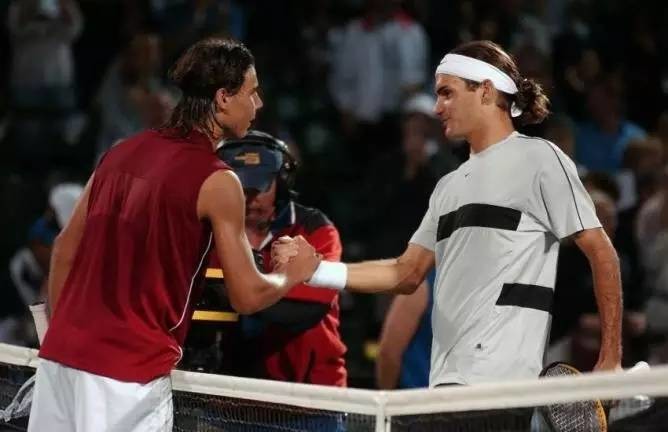
Photo courtesy of Chuansong.me The 2017 Miami Open final is the perfect venue for another Federer- Nadal final, the place where Fedal all started 13 years ago, the venue, 12 years ago, of their first ever championship match on the pro tour, and a place where both men have some unfinished business to attend to. The Tennis Review previews Fedal part 37 and predicts the winner.
Miami, a city rich in tennis history, is the perfect setting for Fedal part 37- Key Biscayne is where Roger Federer and Rafa Nadal first met in 2004 when a 17 year old Nadal notched his first win over Federer 6-3, 6-3 (back when 17 year old prodigies beat No.1s) and where the two contested their second match, in 2005, a five set final (back when ATP 1000s were Masters and finals were best of five), Federer coming back from two sets to love down to win his first Miami crown.
12 years on from that second meeting, and a lot has happened since, both men cementing their legendary status in the game, the other serving as a gauge for how far they have come and how far they have to go. Miami, though, has been one of the few locations neither man has made his own, Federer going on to win just one more title, in 2006, beating his current coach Ivan Ljubicic, (compare two Miami titles to Federer’s five Indian Wells crowns or six Madrid titles or seven Cincy trophies) and Nadal reaching three more finals, but, shockingly for arguably tennis’ greatest ever big match player, never taking the title.
Miami has also only been the setting of their rivalry on one other occasion, a 6-3, 6-2 win for Nadal in 2011, Nadal a season after completing the career Grand Slam, Federer a season before winning his first slam title for two and a half years and returning to No.1.
Now, in 2017, we come to another stage in these two great rival’s tennis lives – their resurgence. At a time, with Nadal aged 30 and Federer 35, which would have once been their twilight years, both men are still very much, after injuries and slumps, back in the limelight, Federer, ranked 6, and Nadal, 7, with both men about to re-enter the top five, and both men this season’s two slam finalists in Australia with Federer taking the title, coming back from 0-3 in the fifth versus a man who has had his number for most of their career.
Now, though, the numbers are stacking up in Federer’s favor and one of the few unfinished business matters Federer has had in his career- that head to head deficit to Nadal, the one some argue is a stain on his Greatest of all time status- is slowly beginning to be taken care of. For the first time since Miami 2004, Federer has beaten Nadal, three times in a row, in Basel ’15, Melbourne ’17, and just recently in Indian Wells, a streak that has cut the head to head deficit to a more respectable 13-23, and leveled their indoor and outdoor hard court head to head at 9-9. Streaks like those usually come to an end sooner or later, but the confidence it must give Federer- who has been at the end of three five match losing streaks to Nadal- and the hope it must install in him at a time he is strengthening his legacy, and getting more wins over Nadal is all part of that, are priceless.
Federer’s recent winning ways versus Nadal come at a time when neither player is who they used to be, but Federer, in his revamped attacking mode is the player he needs to be at 35 while Nadal has struggled with the tennis ageing process, and though he has found ways around the decline of the strength and speed which were his weapons, when, in Melbourne earlier this season, the biggest match of his last two and a half years went the distance, his loss of a step exposed him, his ground-strokes which needed to be deep plonked into the shallow end of the court, he, one of the game’s greatest drivers at the wheel, let his foot of the gas and dropped a lead in the fifth, and, in a rivalry which had seen him the dominant one in slam finals, he was now second best.

Photo courtesy of Colombia.as.com Miami, though, however prestigious it may be in the history of ATP 1000s, is no Australian Open. Nadal had come off a grueling five setter versus Grigor Dimitrov in the semis, and the faster hard courts suited Federer more than they did him. Miami, meanwhile, has been kinder than Melbourne to Nadal who, after a patchy Florida first round versus Dudi Sela and a disastrous start versus Philipp Kohlschreiber defeated Nicholas Mahut and Jack Sock, both aggressive first strike players, in straights, and then dealt with the dangerous Fabio Fognini 6-1, 7-5.
The Spaniard has positively cruised through the draw compared to Federer who had to deal with the hype and emotion of facing good friend Juan Martin del Potro, needed two tiebreaks versus Roberto Bautista Agut, lost his first set since Dubai to Tomas Berdych in the quarters, saving match points in the final set tiebreak, and then needed to play three tiebreakers versus Nicholas Kyrgios in an emotionally draining encounter in the semis.
Luckily for Federer he has a day to rest, and those matches versus Berdych and Kyrgios will at least mean he is battle ready. He will need to be versus Nadal. The Spaniard was already back in the gym after beating Fognini and we only have to look as far as Nadal’s trophy cabinet to see why- the Spaniard has unfinished business he has to attend to, the case of a missing trophy, the Miami Open. Miami, once known as tennis’ fifth slam, not featuring on his resume, must be a huge motivator for the Spaniard, and after four runner up finishes (Federer ’05, Davydenko ’08, Djokovic ’11, ’14), Nadal must be feeling it is finally his time to bite the Miami Open champion’s silverware.
Who wants the Miami Open 2017 trophy most could be the decider in this match if, like Federer’s last two matches, this one comes down to the wire. If Nadal is feeling fresh enough and can employ the heavy top spin game he needs over two hours, the game which will give Federer problems on these gritty slow courts, he could grit his way to a win, and only grit is going to get him past the attacking game of Federer which if on will render whatever strategy Nadal employs redundant, and only grit is what will get Nadal past what might feel at times like a crowd out to get him, though Nadal will have plenty of support with Spanish speakers aplenty in the stadium.
Nadal won’t worry about the crowd, though, he has lived his whole tennis life putting tennis’ darling to the sword, five times before the Roland Garros crowd who until Federer’s win over Kyrgios in the semis were once known as the most hostile in tennis. Nadal won’t be worried at all by what is going on court side in fact, he will instead be focusing on the court, on winning the title and putting himself in the position of favorite going into the clay court season where he has some history of his own to work on, the prospect of La Decima and becoming the first man to win ten Majors at one venue.
So we have “dream” final in #miamiopen2017 pic.twitter.com/AQromGiYum
— Boris Becker (@TheBorisBecker) April 1, 2017
Federer will be in his own world, too, at a time when he is, in the past three months anyway, on top of the tennis world. The Swiss will not play as many events this season as his top five rivals, and another 1000 points which the Miami title would give him, when he already leads the Race to London by 1,410 points (Federer has 3,065 points to second place Nadal’s 1,365) would help him in his pursuit of the only number that matters to him rankings wise- No.1. A Miami trophy would also mean Federer had won every big title going into the clay season where Madrid might be the only trophy he lifts, and with Wimbledon his best chance for the second slam that would help his 2017 No.1 ambitions no end, all the big titles he can get will give him the confidence he needs to win Slam No.19. That’s the world Federer currently rules, and he will be locked in on the Miami courts, his eyes on the ball, his mind in the now, not looking up to enjoy what has become a bewitching sunset on the horizon until the final point is done.
Confidence, history, momentum in the rivalry, and some unfinished business, Federer and Nadal have everything to play for in the Miami Open final, and they have their greatest rival to battle for it, and no better place than the Miami Open, where it all started, where we first got an idea of how great some of their finals would be and a glimpse of what they would come to mean to each other, to play it out.
Prediction: The final will be played at 1pm in temperatures of 28 degrees and in 66% humidity, conditions which will help Federer’s serve and aggressive shots fly through the court and potentially give him the chance to win this match in straights.
However, while the match will be played in faster conditions, the court is still a medium slow hard court and high bouncing, and the trajectory of Nadal’s shots are going to be very different than what Federer dealt with versus Berdych and Kyrgios. Nadal has the ability to keep Federer back and if he finds some depth of shot and plays aggressively, the Spaniard could take control of the match and win his first ATP 1000 hard court event since Indian Wells ’13.
The way 2017 is panning out, this just feels like Nadal’s title to win. He will have to do it the hard way, though, in three, but the Spaniard probably would not have it any other way.

Tennis from a fan's point of view
[
[
[
]
]
]
 thetennisreview