-
Miami Open Third Round Preview Roger Federer Vs Juan Martin del Potro
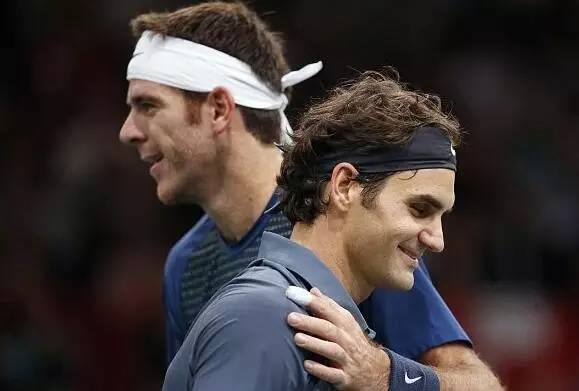
Photo courtesy of sports.sohu.com Finally, the match Roger Federer (4) and Juan Martin del Potro (29) fans, the one we thought we were getting last year at Key Biscayne, is here, this time in the Miami Open third round. The Tennis Review previews the highly anticipated action and predicts the winner.
A year ago, both Federer and del Potro were on the comeback from injury and surgery, and what a difference a year has made to these great friends and rivals. Since last March, Federer took six months off the tour from late June only to come back to the tour in slam and ATP 1000 winning fashion, raising the Australian Open and Indian Wells trophies, and del Potro has climbed all the way back to being seeded for ATP 1000s, (he is 29 in Miami) beaten the likes of Djokovic, Nadal, and Murray, and won an Olympic Silver medal.
Happy to be here! 😀 https://t.co/mQ9GjeFJaq
— Juan M. del Potro (@delpotrojuan) March 16, 2017
//platform.twitter.com/widgets.js
Coming into this Miami Open third round match, del Potro is the rustier of the two, having just played three events (Delray beach, Dubai, Indian Wells), and going 6-3, but those three losses have come to the game’s best, that kind of quality needed to defeat the Argentine, the first to Milos Raonic, and the last two to Novak Djokovic, both times in three sets, the Argentine bringing out the best in the struggling Serbian each time.
Federer, meanwhile is anything but rusty, a finely oiled hybrid, part machine, part living legend, on a roll, winning 7 matches in a row, including wins over Rafa Nadal, and Stan Wawrinka. However, despite his best start to a season since 2006, after his Australian Open win, the world No.6 did suffer a third round loss in Dubai to 117th ranked qualifier Evgeny Donskoy and since revamping his game in 2014 and getting back to the top of the game after an injury hit 2013, he has thrown in the odd shock loss now and then, and early on in tournaments (Ramos Vinolas in Shanghai ’14, Isner Paris ’15), a sign for del Potro that while Federer may not be the best draw the Argentine could have asked for from the tennis Gods so keen to reward their long suffering fans with a match up (this is the first since the WTF 2013 which Federer won in three tough sets), this early match up, with Federer just coming off a big win and del Potro relatively fresh, could be a blessing in disguise.
Miami is not one of Federer’s best platforms to showcase his legendary best, either. Though Federer won the title in 2005 and 2006 and has compiled a 44-13 record, he has not played there since suffering a three set loss to Kei Nishikori in 2014, suffered a rare loss to Andy Roddick in 2012, and has not been past the semis since 2006. Back in that final, he beat now coach Ivan Ljubicic, back when he was at his best, and with his game currently the best in the business, this might be the year to strut his stuff in Key Biscayne once again.
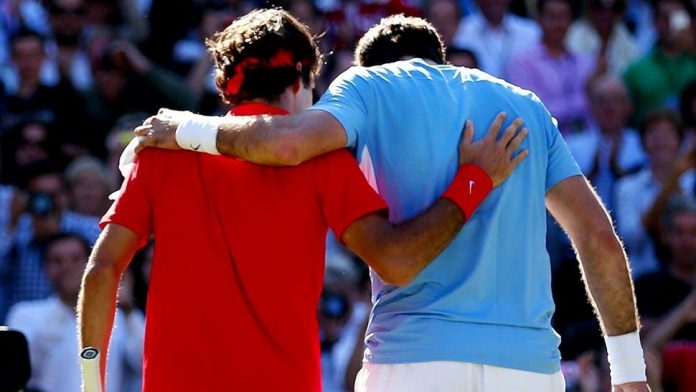
Photo courtesy of pariuri1x2.ro Still, Federer would have likely wished for an easier third round opponent that del Potro, who may be a little out of match practice since winning Stockholm late last season, but has the big match experience and champion’s mentality to draw upon his formidable skills whenever inspired, and he will surely be so in Miami’s humid conditions where he has a career record of 14-8, and made the semis in 2009. The Argentine is also likely to get a lot of support and love from the Latin Americans attending the event, but against Roger Federer, the sport’s darling right now, that will just about be an equalizer rather than an advantage.
del Potro will need some advantages in Miami’s medium slow conditions, his five wins over Roger Federer from twenty matches have come on faster, lower bouncing courts such as the 2009 US Open final, and indoors at Basel (2012, 2013) and the perfect indoor conditions of the ATP WTF (2009, 2012). The Swiss, meanwhile, dominates the head to head, winning 15 matches in faster conditions like Dubai and Rotterdam, and slower conditions like Roland Garros.
— Roger Federer (@rogerfederer) March 25, 2017
//platform.twitter.com/widgets.js
That dominance is down to Federer’s superior all court game, and his ability to match del Potro on all his strengths, the serve and the forehand, and better him in movement and at the net. When it comes to the backhand, the shot which might make the difference in this encounter, the two have always been world’s apart style-wise, but neighbors in strength, with Federer’s one handed shot-maker, (on fire in recent weeks), and del Potro’s steady and at times explosive double hander a sweet contrast, but nowadays universes distance them on the backhand side, with the Argentine’s backhand compromised since wrist surgery, the Argentine relying more on the slice in defensive positions, leaving del Potro vulnerable to Federer exploiting that wing.One positive for del Potro, however, is that the slow Miami conditions mean he has more time to run around his backhand and hit his inside out forehand, which could, if he gets rhythm on that side, be both devastating on the big points, and in the bigger picture, a match winner. However, the slow conditions also benefit Federer, who, perhaps a little tired after winning in IW and traveling to Miami, has a bit more time to set up his own shots, and has the attacking game to take the time away that del Potro will need to cover up his backhand.
How this match plays out depends largely on when in the day it happens, the court surface slowing down in the humid evenings, and whether or not the rain that has been afflicting the event holds off. The later in the evening and more humid things get, and the heavier the balls, the grittier the grip, and the slower the bounce, the more the match could swing del Potro’s way, and the deeper Federer will have to dig. The match, however, has been scheduled for the day, the first match on after two women’s matches, which means Federer and del Potro could be battling it out around 3pm with the temperature at 26 degrees with 52 percent humidity, conditions which means we should be treated to plenty of winners, sets decided on tiebreakers and some risky shot making on the big points.
If that latter scenario is directed by the tennis Gods up high, we lucky fans will have a match on our hands, the kind that would justify both the enormous respect these two have for each other and their individual fan bases have for them and their rivalry, and the expectations that are always going to come with two of tennis’ biggest names meeting so early at one of its biggest events, a tough draw for both men, but a great one for fans who, whatever happens in this Miami third round match, are guaranteed, with the winner progressing to the last sixteen, plenty of great tennis to come.
Prediction: Federer to win in three sets- del Potro to play his best in spells, but lacking the match toughness over recent months to take some of his chances, finally succumbing to Federer’s magic.

-
Miami Open Preview Big Chance for ATP 1000 Trophy Nishikori Nadal Wawrinka
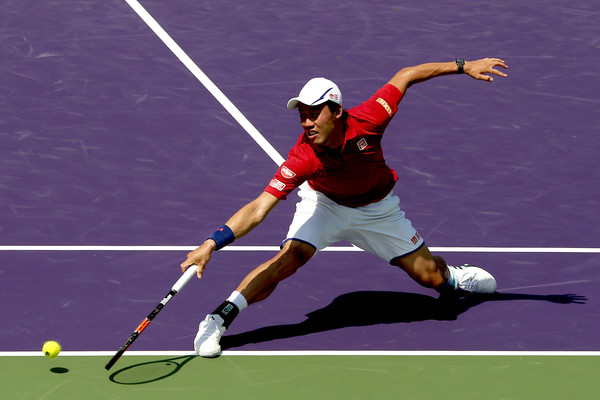
Photo courtesy of zimbio.com The Miami Open is underway and the withdrawals of top seeds Andy Murray and Novak Djokovic, who have won 8 of the last ten trophies between them, opens up the way for a new Miami Champion to be crowned. The Tennis Review previews the players most likely to take advantage.
Kei Nishikori (seeded 2)
Why he could win:
Nishikori’s big breakthrough has to come at some time or another, and after ten years on tour, and three years after his one and only trip to a slam final, an ATP 1000 trophy seems already too long overdue.
Nishikori has been to three ATP 1000 finals, and was on the verge of winning one before injury got the better of him versus Rafa Nadal in Madrid ’14, and lost the other two to Novak Djokovic (Miami ’16, Toronto ’16). Those losses were typical of Nishikori in big matches versus the game’s biggest players- in the first, his body letting him down, in the second and third, the Japanese putting in an underwhelming performance allowing him to be overwhelmed by his rival.
Nishikori does have his moments, though- see his win over Murray in the ’16 US Open last eight- and with Djokovic and Murray out of the draw, while there are still some big players in the draw like Federer, Nadal, and Wawrinka, none are as consistent as the world’s top two, and Nishikori has proven he is capable of beating all of them in big matches (Federer in Miami and Madrid, Nadal in Canada and the Olympics, Wawrinka at the US Open.)
This is not the first time in recent weeks Nishikori has been faced with a promising ATP 1000 chance- Japanese looked like he had a shot to contend for the title last week in Indian Wells, but was defeated by Jack Sock in the quarters. That Sock loss might actually be good for Nishikori in terms of Miami where has been to the final and the conditions suit his aggressive baseline game. The loss to Sock gives him time to work on what let him down- mainly his mentality- and motivate him for what is easily the best chance he will ever have to win his first ATP 1000 title and get tennis’ lost generation in the right direction again.
Why he might not:
Rewatch the Sock match in Indian Wells or his WTF semi final versus Djokovic last season. If Nishikori’s mind does not get the better of him, his body might.
The Japanese also has a tough potential third round match with Fernando Verdasco, and the Spaniard will be ready to take advantage if Nishikori feels the pressure of being the second seed and one of the biggest favorites at an ATP 1000 for the first time.
However, if Nishikori can make it past the third round, he has a pretty favorable draw with Pablo Carreno Busta in round four, the struggling Marin Cilic lined up for the last eight, and Rafa Nadal in the semis, an opponent who may lead him 9-2 in their head to head but who Nishikori defeated in a tough three setter back in Rio and against whom, if his aggressive baseline game is in good shape, he can, as he also showed in Madrid ’14, push to the limits.
Rafa Nadal (seeded 5)
Great night in Miami. Had fun with my friend @enriqueiglesias!#Opening #TatelMiami #Miami @tatelrestaurant @mahou_es @grupocosentino pic.twitter.com/ezQChKjkoY
— Rafa Nadal (@RafaelNadal) March 21, 2017
//platform.twitter.com/widgets.js
Why he could win:
Nadal is a four time finalist, going all the way back to 2005 when he lost to Roger Federer in five sets after leading two sets to love, and there are not many big events like Miami where Nadal has played so well, from earning his first ever win over Federer in 2004 to compiling a 35-11 career record, but has only been at the losing end in the biggest match.
Still going strong, and stronger than he has been for some time with his recent Australian Open final appearance, Nadal enters the Miami Open at a good time- Federer just won Indian Wells and it would be a lot to ask of a 35 year old fresh off a tournament win to win back to back titles, and Djokovic and Murray are out of the draw.
If Nadal, himself, is fit, he has the experience, a game which suits the Miami courts, and the top spin to get the better of both his tricky opponents and the sometimes windy conditions.
Nadal will have his work cut out to defeat Philipp Kohlschreiber in round three, Grigor Dimitrov in round four, Milos Raonic in the last eight, Kei Nishikori in the semis, and Stan Wawrinka in the final, but few players have worked harder than Nadal over the last thirteen years in Miami and the time seems right, with the recent resurgence of the Spaniard’s great career rival Roger Federer and his own comeback to form, for Nadal to win his first Miami trophy.
Why he might not:
Federer said Nadal was not fully fit after his straight sets win over him in Indian Wells, and Nadal will need to be in tip top shape to get through a draw that could see him have to beat, from the fourth round, Dimitrov, Raonic, Nishikori and Wawrinka or Federer in the final,
Stan Wawrinka (seeded 1)
No. 1 seed at work @stanwawrinka #MiamiOpen pic.twitter.com/UOQYTz6LVl
— Miami Open (@MiamiOpen) March 22, 2017
//platform.twitter.com/widgets.js
Why he could win:
Stan Wawrinka can win practically anything he has his heart on, he just has to get deep in the draw to get the heart wanting.
Wawrinka has never gone deep in Miami- in 8 appearance, he has been to the last sixteen twice (‘09, ’14) and has a 7-8 record. But past form at an event means little for Wawrinka who had never been past the quarters of the Australian Open or Roland Garros before winning those events- what matters for the Swiss No.1 is the here and now
Wawrinka is coming in match fit, coming off a finals appearance in Indian Wells where he won two three set tiebreakers back to back, and with a point to prove after being beaten in the final by Roger Federer.
The Miami conditions should suit Wawrinka, the medium slow hard courts complimenting his big back-swing and the Swiss capable of the necessary power to hit through the courts, and if the Swiss can get to the final, through a draw which schedules him versus Alexander Zverev in round four, David Goffin in the last eight, and Roger Federer in the last four, he will be the favorite to win.
Why he might not:
Wawrinka has a poor record in ATP 1000s for someone who has won three grand slams. In 93 main draw appearances, he has won just one title (Monte Carlo ’14), reached three other finals (Rome ’05, Madrid ’13, BNPPO ’17), and been to five other semis and 12 quarter finals.
Getting up for early matches in ATP events seems to be a struggle for the big match loving Stanimal, and it will be interesting to see how he handles being the top seed in an ATP 1000 event for the first time- will it motivate him to jump out of the right side of the bed from the get-go, or will the pressure wear him out and have him hiding under the covers in his opening rounds?
-
Roger Federer Indian Wells Victory The Time Is Now Once Again
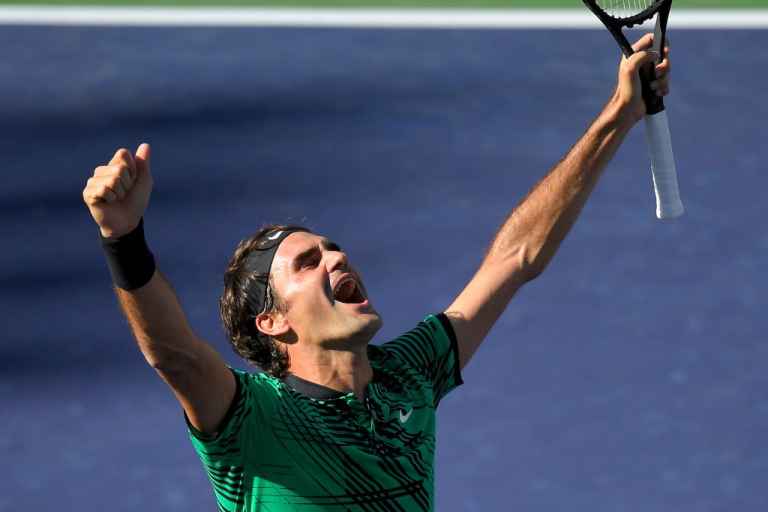
Photo courtesy of YstadsAllehanda.se Roger Federer’s BNP Paribas Open trophy win was his fifth win in the Californian desert and came 13 years after his first win in Indian Wells, his then first ever ATP 1000 trophy. The Tennis Review looks back at the ninth seed’s run to the title which showcased a timeless game making the time right now his once again.
Roger Federer- tennis’ biggest name is engraved on 90 tennis trophies now after his 6-4, 7-5 defeat of third seed Stan Wawrinka in the 2017 BNP Paribas Open final, this latest addition to tennis’ most cramped trophy cabinet Federer’s 25 th ATP 1000 title.
Back in 2016, a year in which Federer’s silverware breathed a sigh of relief not to have another addition, a rare sound in the tennis world, the prospect of Federer beginning the 2017 season with the game’s two biggest trophies seemed as distant as his last slam win in 2012, but the time seems to be now, once again, for Federer as everything seems to be clicking into place- his own game, his rival’s struggles, and his tournament draws.
Roger Federer with the trophy #BNPPO17 pic.twitter.com/zQ9FYhho5C
— Vanni Gibertini (@vgibertini) March 20, 2017
//platform.twitter.com/widgets.js
Timing is everything in tennis, and Federer’s timeless game and perfect timing on the ball is the main reason for his success right now. An aggressive, efficient, and positive game, so classic and easy in its execution, so easy on the eye one could be watching tennis, if the eyes stay on Federer and not on the slow high bouncing hard courts, in any time since the game began, the Swiss’ game shaped by Federer and Stefan Edberg, and now Federer and Ivan Ljubicic, to transcend Federer’s 35 years and slip in step and step inside and hit through as slow a court on which a tennis ball can bounce high before him.
Anyone looking to win Indian Wells will have to be a master of dealing with high bouncing balls and difficult conditions on court, the Californian desert venue famous for its conditions, venue and hospitality wise, and as infamous for its court conditions, medium slow courts sometimes cursed by wind that can make high bouncing spinning balls even more awkward .
When Federer first won in Indian Wells in 2004, he was in his prime, all that mattered was his game, the courts and conditions came second, he was faster anyway, the courts were, too, and that state of play was the same again in 2005, 2006. When Federer’s prime was over, he was losing before the finals to Guillermo Canas, Mardy Fish, Andy Murray, Marcos Baghdatis, and Novak Djokovic. The Swiss did not win the title again until 2012 when he made another charge to the No.1 spot only for an injury hit 2013 seeing him lose to Rafa Nadal. A year later, however, a revamped Federer made the finals again, losing to Djokovic in three sets each time, the Serbian able to chase down one more ball and keep Federer on court long enough to see the first service percentage drop and the errors creep in, the Swiss’ attacking mindset undone by Djokovic’s staying powers.
If Djokovic has staying powers over a course of a match, Federer has shown he has them over a career. 17 years ago he played his first Indian Wells, losing Nicholas Kiefer in his opening match, and 13 years ago he took his first title. Having already put together arguably the greatest career in tennis history, Federer is still adding to his legacy, coming back, aged 35, from six months off after a first career surgery.
After winning the Australian Open, Federer’s loss to qualifier Evgeny Donskoy in Dubai suggested he might be back to slam winning ways but not to No.1 consistency, however the Swiss did suffer an injury in Melbourne, and the rest after Dubai served him well- Federer had taken care of himself, and so it seemed, did his early round draw in IW, serving up Stephane Robert who lacks any weapons to hurt a fit Federer, and Steve Johnson, the kind of big serving first striker Federer feasts upon.
A fourth round match up which looked ominous with old rival Rafa Nadal waiting, was one Federer took care of in a stylish exhibition of attacking tennis done in 68 minutes– the Swiss’ backhand, the shot Nadal so often exploited on high bouncing hard courts, in top shape, the Federer serve strong enough (76% first serves won, 75% on the second), to dictate points so Nadal could not take advantage of the conditions, the Nadal serve crumbling under the pressure of a confident Federer, aware his opponent was a touch below his best and with the tennis IQ to take full advantage and win three matches in a row versus the rival who has posed the sternest questions regarding his Greatest Of All Time status.
Federer emerged from the so-called Quarter of death facing Nick Kyrgios, the #NextGen player defeating Novak Djokovic for the second time in two events, and found the quarter literally lifeless with Kyrgios withdrawing with food poisoning, and one wonders if Federer sent Kyrgios a thank you box of chocolates for when the Australian had recovered, the removal of Djokovic from his path a bonus for Federer. The Serbian may be struggling, and suffering from an elbow injury which has forced him out of Miami, but seeing Federer across the net may have, as it did with del Potro in the third round, revived the second seed somewhat and brought out the best in him, the kind of best that has seen him go 3-0 versus Federer at Indian Wells.
Hope you feel better @NickKyrgios https://t.co/eOuItnixDe
— Roger Federer (@rogerfederer) March 17, 2017
//platform.twitter.com/widgets.js
The walkover over Kyrgios did not interrupt Federer’s rhythm, the Swiss defeating surprise semi-finalist Jack Sock 6-1, 7-6, and entering his 8th Indian Wells final where he would face the Swiss No.1 Stan Wawrinka who was making his BNP Paribas Open Championship match debut.
Excited to represent 🇨🇭 with my pal @stanwawrinka tomorrow in the @BNPPARIBASOPEN finals. Good night! 🌙 pic.twitter.com/UgDip8Ue23
— Roger Federer (@rogerfederer) March 19, 2017
//platform.twitter.com/widgets.js
Federer had Wawrinka’s number on hard courts, defeating him in every one of their 14 hard court matches, most recently in the Australian Open semis, his greater overall consistency making the difference in a match up of attacking games.
In their 15th hard court match, Federer held serve to 5-4 in the first set, and with Wawrinka serving to stay in it, Federer involved him in some longer rallies, forcing the errors to take the set.
In the second set, Wawrinka broke back straight away for 1-0, but at 2-1, Federer got the break back, and held serve all the way to 6-5, and with the Swiss No.1 serving to stay in the match, Federer once again got into his service game, taking it to deuce, and then out played Wawrinka to take the match and the title.
Federer helped wipe away his rival’s tears in the presentation ceremony and referred to another Fairy tale run and the 17 years he had been visiting Indian Wells and looked forward to an 18th. With the perfect timing Federer has when it comes to his schedule, his game, and the decline of some of his rivals, the Swiss’s time seems now once again, and, currently ranked No.6, he could come into the 2018 BNP Paribas Open not just performing the twilight encore some expected at this stage of his career, but playing out the Federer No.1 Symphony instead.
— Roger Federer (@rogerfederer) March 20, 2017
-
BNP Paribas Open Final Preview Roger Federer Vs Stan Wawrinka
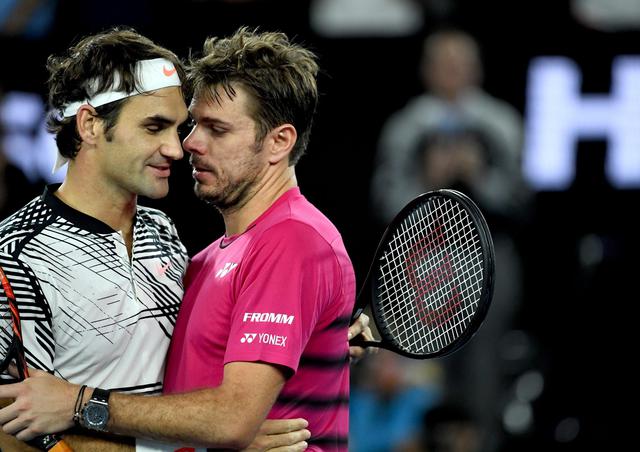
Photo courtesy of ansa.it The BNP Paribas Open final will serve up one of tennis’ most striking rivalries of the past few seasons- Roger Federer versus Stan Wawrinka. The Tennis Review previews the action and predicts the winner.
Men’s tennis 2017 has delivered plenty of surprises (Federer Vs Nadal in the AO final, Tsonga winning back to back titles, Dimitrov’s resurgence) and the BNP Paribas final is no exception. Roger Federer, recently defeated in Dubai by qualifier Evgeny Donskoy, was not the favorite to make the final from a quarter of death featuring Rafa Nadal, Novak Djokovic and Juan Martin del Potro, and Stan Wawrinka had never been past the last eight and was looking in anything but ATP 1000 trophy winning form, having to win two final set tiebreakers back to back.
Look a little deeper though, and like all surprises, this one could have been guessed. In four time champion Federer’s last two appearances he has made the final (2014, 2015) only to be stopped by Novak Djokovic, so considering his recent return to the slam winning circle, another BNP Paribas Open final showing was always likely, and Wawrinka, a master of tennis disguise, has made a slam winning career of overturning a poor record at an event to become the champion.
Wawrinka’s presence in the final makes proceedings even harder to predict. The Swiss has struggled- needing final set breakers to beat Dominic Thiem and lucky loser Yoshihito Nishioka- but the fight he has shown, his clinical semi-final win over Pablo Carreno Busta and his record in finals (11-1 since losing the ’13 s-Hertogenbosch final) suggest the Indian Wells 2017 final is within his reach despite his back being up against the wall, and an old foe who has had his number for most of their rivalry pushing him up against it.
Afternoon commute from the office @BNPPARIBASOPEN pic.twitter.com/8Xv5YtWsSM
— Roger Federer (@rogerfederer) March 15, 2017
An old foe playing particularly well, too. Federer has not dropped a set this Indian Wells, a 6-3, 6-2 win over Rafa Nadal in round four the highlight, and he is fresher than Wawrinka, too, helped out by his quarter-final opponent Nick Kyrgios withdrawing with food poisoning.
Wawrinka will really have to bring his usual finals A game to Indian Wells to defeat Federer and cut the deficit of his 3-19 head to head, a stat which looks ominous, but means little in this match. Since Wawrinka’s entry into men’s tennis’ slam winning circle at the Australian Open 2014, he has beaten Federer twice, in the 2014 Monte Carlo final and in the 2015 French Open last eight, and he has taken him the distance in semi-finals at the ’14 WTF and the ’17 Australian Open. There have also been three straight set losses at the hands of Federer, a reflection of Federer’s overall better consistency.
But if there is one area where Federer has been consistent, and for all the wrong reasons, since 2014 when he revamped his game and became a contender again, it is in big finals and losing them. Since 2014, he may be 12-12 in finals, but he is 4-10 in the big ones (Slams, WTF, ATP 1000s). Taking recent history into account, though, Federer has, like Wawrinka has done so often, proven that stat means little, and what matters is how you play on the day.
A difficult final to predict, but there are some things we can count on in this match- some beautiful one handed backhands (a shot Federer has received many compliments on this week especially), two go for broke styles providing plenty of winners (even if this match is dominated by one player, it will be a performance worth watching) and two players with plenty to play for, and plenty of heart to give with an opportunity for one of them to have the two biggest titles of the season on his resume, and the other the chance to win a second ATP 1000 title and strengthen his reputation as tennis’ big match man.
Prediction: Federer to win in two sets. The Swiss No.2 has great rhythm and plenty of experience in IW finals, and is a bad match up for Wawrinka on hard courts.
-
BNP Paribas Open What The Title Would Mean Federer Nadal Djokovic del Potro
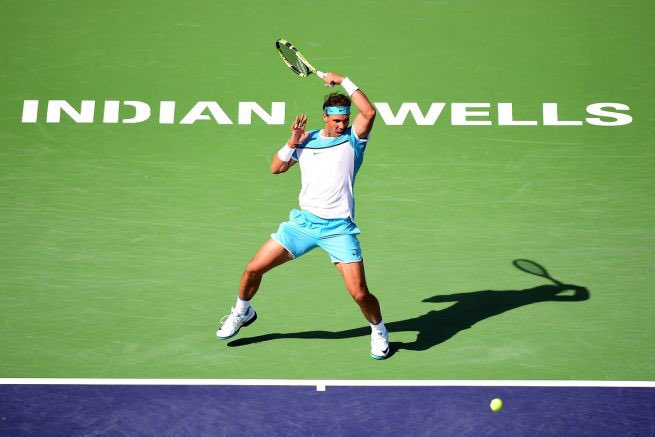
Photo courtesy of twitter.com The BNP Paribas Open, aka Indian Wells, has made a name for itself as arguably the ATP’s premier and most prestigious event. The Tennis Review looks at what such a valuable piece of silverware would mean to some of men’s tennis’ title contenders.
Rafa Nadal
Nadal is back, his Australian Open final appearance testified to that, but an Indian Wells title would be the star witness as to his return to the top of the game since his comeback.
The BNP Paribas Open is arguably the most important ATP 1000 trophy and with top seed Andy Murray out, a struggling Novak Djokovic, and an unpredictable Roger Federer, Nadal, a three time champ (’07, ’09, ’13) in the Desert, may be the Big Four member most likely to take the title.
Nadal’s game is well suited to the conditions-slow and high bouncing, especially at night-and coming off his first Grand slam final for a while (Roland Garros ’14 was his previous final to this year’s Melbourne), and with the the fifth seed having the best return stats over the past 12 months left in the draw now Murray is gone, the stars seem to be aligning for Nadal to win his first hard court title since Doha ’14.
Could that potential Indian Wells title open the door to another first since 2014? Another Roland Garros title? And not just any old one, but La Decima. Ten slams at one major tournament is an achievement no tennis player has earned yet, and if Nadal can win Indian Wells just before the European clay swing gets underway and prove he is back to not just contesting for the game’s big titles, but winning them, too, La Decima and all the history that come with it would be another step into a forehand down the line closer.
Entrenando antes del partido 👍☀ pic.twitter.com/zofnYuEC6y
— Rafa Nadal (@RafaelNadal) March 13, 2017
//platform.twitter.com/widgets.js
Novak Djokovic
Three time defending champion Djokovic is struggling this season, suffering shock defeats at the Australian Open and in Dubai.
The world No.2 says he is in a better place than he was a few months ago, and returning to a venue where he has had so much success, winning five titles, may account for that.
Djokovic will need to be in a better place with a draw that could see him have to defeat del Potro, Kyrgios or Zverev, Nadal or Federer, Nishikori, and then Wawrinka.
del Potro and Kyrgios would be two hurdles the Serbian would like to clear with the two players having brought him down to places he would prefer not to return to, the Argentine defeating him in the opening round of Rio, the Australian beating him in the Dubai quarters. If Djokovic can avenge those defeats in a big event like Indian Wells and then go on to win the title, a sixth BNP Paribas title win would be quite a statement for Djokovic after so many recent losses and slipping to world No.2.
Defending his 1000 points from last season would also put a halt to the Serbian’s drop down the rankings and the taste of victory may re-ignite his passion for the game, though with the draw the second seed potentially faces, he would need to have the gas turned on, ready to be lit, and after stating recently he has lost his love for the game, whether or not that gas is on, only Djokovic knows deep down, and he will need to dig deep to win in the desert.
Such a re-ignition could not come at a much better time. Djokovic is not the only top ranked player in a slump right now- his top ranked rival Andy Murray just suffered a second round Indian Wells loss- and there would be no better time for Djokovic to announce his return to winning ATP 1000s than when the current No.1 is bowing out in his opening match.
Few players have better timing on the court than Djokovic or a better sense of when to strike and seize their chances, the question is whether or not Djokovic is dialed in to showcase those talents.
Roger Federer
Roger Federer has only been stopped in Indian Wells in his past two appearances by Novak Djokovic in the final and the Swiss, who showed in Australia he can still bring his best game to the biggest events, will have plenty of motivation in Indian Wells, where he has won four titles (’04, ’05, ’06, ’12), to once again showcase his legendary game.
If Federer did take the title, the prospect of his winning another slam at Wimbledon would increase. The confidence the Swiss would get from coming through a draw that could see him have to defeat Rafa Nadal, Novak Djokovic, Kei Nishikori and Stan Wawrinka, three of whom he beat on his way to the Australian Open title, would stand him in good stead before the clay season gets going, a swing in which he is unlikely to win a trophy, but one he can continue to fine tune his game and match toughness for when the Grass Swing comes round.
Federer would need to be at his aggressive best to win the title, the slower conditions allowing the likes of Nadal and Djokovic to keep him at the baseline and pass him at the net when he gets there, but if the Federer serve and net game clicks, he has everything necessary to earn a popular fifth BNP Paribas Open title and get his fans thinking about slam No. 19.
When in Cali 🌴 pic.twitter.com/DLQmi7EaP4
— Roger Federer (@rogerfederer) March 6, 2017
//platform.twitter.com/widgets.js
Stan Wawrinka
Wawrinka has shown he has the heart to win big, winning three of the game’s four Grand Slams, and the belief to win at events where he has had poor records, so a title at Indian Wells, where he has never gone beyond the quarter-finals in nine attempts, is not out of the question and would nicely round out his resume where his three slams stand out among one ATP 1000 trophy, three ATP 500 titles, and eight ATP 250 crowns.
Wawrinka has a good chance this year with Murray’s defeat leaving the top half nice and open for someone like the Swiss to charge through and take advantage of both an open draw and a potential finalist who might be more worn out than he is after making their way through the top heavy bottom half.
Wawrinka is very capable of taking such opportunities, blessed with the brute strength to power through in the slow Californian conditions against a weary rival, a feat which, if he achieves, will strengthen his legacy as one of the rare players to rival the Big Four, an effort so successful some might argue, if Wawrinka wins in Indian Wells, we are now living in the age of another tennis rock group- the Fab Five.
Juan Martin del Potro
A win in Indian Wells would be del Potro’s first ATP 1000 title, after three final appearances (Canada ’09, Indian Wells, Shanghai ’13), and one of the ATP 1000 venues the 2013 finalist would most likely be champion, the medium slow hard surface giving him plenty of time to wind up that slam winning forehand and run around that compromised backhand.
Since coming back to the ATP tour last year, del Potro has proven what a big match player he is, beating Djokovic, Murray, and Nadal, and reaching the Rio final and the US Open quarters, and his big game and big heart seem destined to earn him a big title again, and a first ATP 1000 title, an achievement he could not reach in his peak years, would mean he was not just back, but he might be on the way to being better than ever.
Kei Nishikori
An ATP 1000 title would be a big breakthrough at the very top of the game for the Japanese after 3 ATP 1000 finals and a slam final.
Nishikori has a good chance this year at a tournament he has only managed to make the last eight at once in 8 visits. He has a tough draw- the fourth seed could have a match on his hands in the last sixteen versus Lucas Pouille, and would have to play his best versus Grigor Dimitrov in the last eight- but if he can get his aggressive baseline game in sync with the slow conditions, he could face a tired Federer, Nadal, Djokovic or del Potro in the last four, exploit their own slow conditions after their tough draws, and be match tough for a possible final versus Stan Wawrinka, against whom he matches up well.
With that kind of potential draw ahead of him, a long road lies ahead for Nishikori to win that difficult first big trophy, but Nishikori has been on the road for a while now in the quest for his big breakthrough, and if anyone has the game and experience to make it to the end it is him.
-
Who Is Casper Ruud?
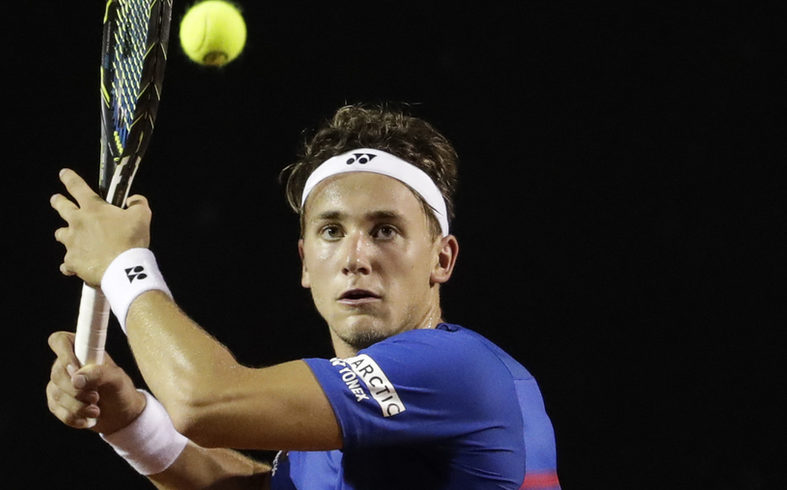
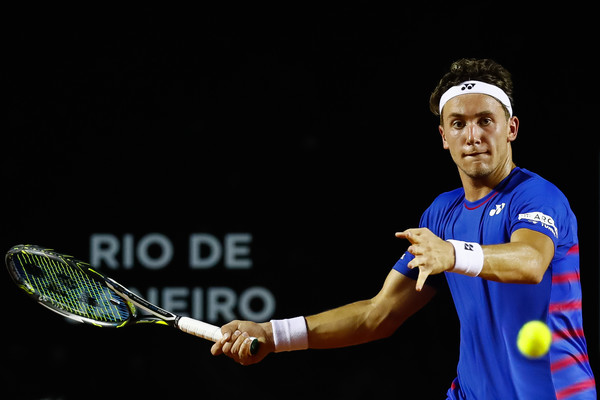
Photo courtesy of zimbio.com Casper Ruud’s name is one tennis fans have warmly welcomed this past week after the Norwegian’s run to the ATP 500 Rio semi final. The Tennis Review gives you the lowdown on the latest of the #NextGen to hit the tennis headlines and looks at why the NextGenner is generating so much excitement.
Background:
Ruud was born December 22nd 1998 in Snarøya, Norway, and lives in Alicante, Spain.
Ruud has tennis in his blood, his father Christian Ruud reaching an ATP world ranking of 39 in late 1995.
Junior days:
Ruud was the No.1 junior on January 4th 2016 and has been to the 3rd round of the Roland Garros and US Open juniors (2015).
Professional career so far:
Ruud won his first Futures event in Paguera, Spain, in February 2016, on his 14th appearance in a Futures draw.
Ruud won his first ever Challenger, in Seville, in early September 2016, beating Taro Daniel in the final.
Watch highlights of Ruud’s Seville win in the video below.
Ruud is currently ranked (2.25.2017) 208 and has been as high as 201 (02.13.2017). The 18 year old has climbed 938 ranking spots from 1146 in just over a year.
ATP career:
So far, short but sweet.
Ruud has played in just three ATP main draws so far- two 250 events, Chengdu ’16, Chennai ’17, and one 500, Rio ’17. He has also played in two qualifying draws, Miami ’16 (lost in the first round to Tatsuma Ito) and the Australian Open ’17 (lost in the final round in straight sets to Reilly Opelka).
In Rio, Ruud won his first ever main draw ATP match. Playing as a wildcard, Ruud beat 88th ranked Rogerio Dutra Silva 6-3, 6-4, going on to defeat 132nd ranked Roberto Carballes Baena 6-7, 6-4, 7-6, and 85th ranked Thiago Monteiro 6-2. 7-6 before losing to fourth seed Pablo Carreno Busta in three sets in the semis after holding a match point in the second set.

Photo courtesy of http://www.vg.no Signature shot:
You need a weapon to set yourself apart from the competition in men’s tennis and Ruud has a real match winning shot in his forehand. The Norwegian has great range on that side enabling him to open up the court and pull his opponents out wide, and hit explosive winners.
Ruud also has a fine weapon in his serve- the youngster has an ATP career 69% first serve average and wins 70% of those points. He also has a 55% second serve success rate and in 20 service games, he has won 16 of them. Early days for Ruud they may be, but those stats suggest Ruud is a player who may have the weapon needed to stand up to what is now tennis’ biggest shot- the return of serve.
Ruud is not as impressive when it comes to the return of serve, winning just 5% of his return games, but expect, with a forehand and work ethic like Ruud has, that aspect of his game to improve soon.
The Norwegian has said he enjoys the underdog role- he was the youngest player in the Rio Open draw- so it will be interesting to see how he performs when he is the favorite to win a match and climbs higher and higher up the rankings.
Ruud’s early success suggests he has the most vital quality to succeed in men’s tennis- self-belief- and another important one- a down-to-earth nature. Despite his recent success, Ruud says he has his feet on the ground, and is working hard, a great attitude which will make the difference in turning his talent and potential into top ten and Grand Slam fortune.
That strong work ethic will come in handy after the 18 year old’s loss in the Rio Open semis, one which showed his fans he has plenty of work to do – Ruud lost his SF after holding a match point. The NextGenner looked tired as experienced and in-form Pablo Carreno Busta saved match point, took the match into a decider, and won the final set 6-0.
Letting leads slip and learning from those experiences is all part of tennis, however, and Ruud and his coach Pedro Rico have a crucial lesson they can use in that defeat to develop Ruud’s fitness and match-play.
Early impressions:
Alongside fellow #NextGenners Alexander Zverev and Borna Coric, Ruud is one player we will be keeping an eye on. Few players make the successful leap from juniors to the professional circuit, but Ruud has the firepower behind him, and his run to his first ATP 500 semi-final in only his third main draw ATP event suggests we will be seeing a few more bullets shot in the near future.
Follow Casper Ruud on twitter here
-
Billie Jean King Eye Coach 5 Questions with Coaches Lenny Schloss and Hugo Allen
-
Mental Toughness Five Questions Thomas Daniels Tennis Warrior Tips Author
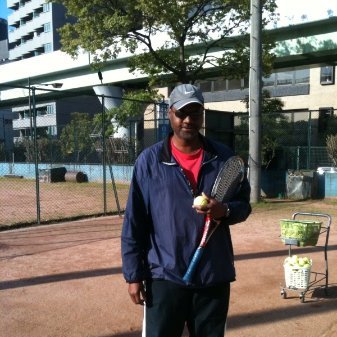
Photo courtesy of Thomas Daniels Mastering mental toughness in tennis is one of the toughest parts of the game, but making that breakthrough just got a lot easier with Thomas Daniels’, a tennis coach and online tennis consultant based in Japan, e-book 30 Warrior Tennis Mental Tips For Match Play, designed to get tennis players first winning the mental game and then winning tennis matches. The Tennis Review asked Thomas five questions about his Warrior Tennis Mental Tips, how he came to understand the importance of mental toughness, and one of tennis’ greatest mental warriors of all time, Rafa Nadal.
One common belief is that tennis is 20% technical and 80% mental- what do you think about this?
Tennis has gone from 80% mental to all mental. And you are only as good as your mental game is, on that given day. See, the fact is, once you start competing, you actually stop playing tennis and start playing the MENTAL GAME.
Where do most players who come to you struggle when it comes to the mental side of tennis?
They don’t understand that they are not playing tennis, but they are playing the mental game. This is the first mind shift that all players need to come to
What about your own mental struggles on the court? Was there a turning point for you which made you a warrior?
Yes, it happened when I was 17 and started really taking the game seriously, which was back in 1983 (a long time!). I didn’t know it at that time, but my coach was teaching me the mental game and the importance of mind strength. I realize now that even though he didn’t stress it like I do, we are on the same page.

What do you hope readers will take-away most from your 30 Warrior Tennis Mental Tips for Match Play book?
That they are wasting too much time on technique and mechanics and not enough time on their mental game. This e-book can help any competitive tennis player make that mental leap with their game in months.
Can you think of any performances you have seen which you would use to illustrate to your students just what it means to be a mental warrior?
I will use Nadal, since he just came back at the AO tournament. Here is a guy who was a true tennis warrior from head to toe and then he lost a little mental edge and his opponents felt it and they took advantage of it, but now he is back and so is his mental game.
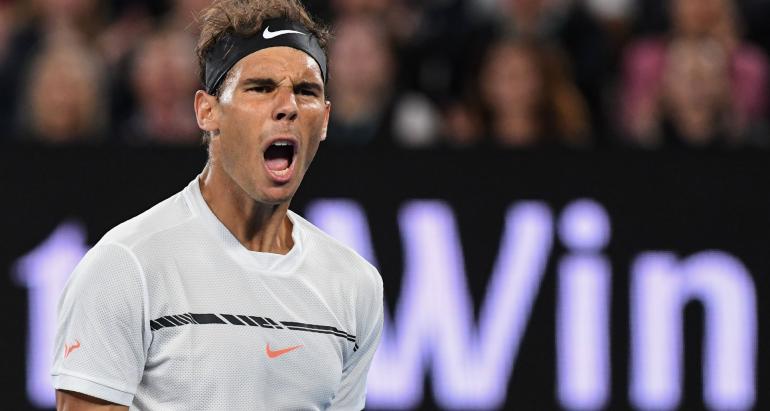
Photo courtesy of dolce-sport.ro Lesson here- one point, you may have your mental game, the next, you may not. Same for games/sets and matches. So, it’s a daily mental grind you are looking at. Accept the challenge and face it head on.
The great thing about the mental game is that it will reveal and then build character, but only if the player is willing to show it first.
Buy Thomas Daniels’ e-book 30 Warrior Tennis Mental Tips for Match Play here and visit Thomas’ website inyourfacetennis.com to get more information on the author.
-
Roland Garros 2017 How The Australian Open Impacts The Favorites Chances
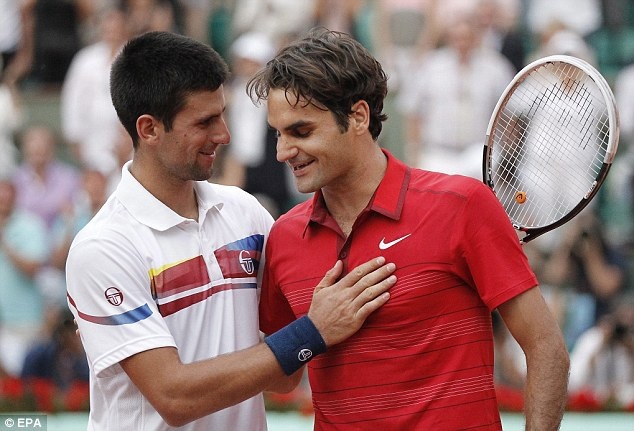

Photo courtesy of cet2581.com An Australian Open which featured two of the Big Four, top seeds Andy Murray and Novak Djokovic, lose before the quarter-finals, while the two other members, Roger Federer and Rafa Nadal, seeded 17th and 9th, contest the final, as well as a feisty run from Stan Wawrinka, has set up an interesting few months of speculation heading into 2017’s second slam Roland Garros as to who will lift the trophy on Philippe Chartrier on June 11th.
Despite Federer’s recent Australian Open triumph, Djokovic is predicted to win the 2017 French Open, and, when you look at the case for the Serb, his status as favorite is easy to understand- Djokovic has been the man to beat in Paris where, since 2011, he has a record of SF-F-SF-F-F-W, and has lost only to Federer, Nadal (x3), and Wawrinka.
The defending champion and three time runner-up (2012, 2014, 2015) may have been suffering a slump since completing the career Grand Slam in Paris last season, but he is a clay court expert, the only player to have seriously challenged Rafa Nadal on the surface, and a multiple winner of all 3 ATP 1000 clay court titles, winning Monte Carlo and Madrid twice, and Rome four times.
Djokovic’s recent Australian Open loss may have alarmed on-lookers and fans but the defeat means little in the bigger picture and with regards to his French Open chances. The 12 time slam champion has come back from plenty of career lapses, (the most recent one being 2013 when he lost his world No.1 ranking to Rafa Nadal), stronger than before, and he has over three months to work out where his game is at post splitting with Boris Becker and achieving his career ambitions, and if Djokovic does the tennis maths and the percentages work out, Roland Garros 2017, taking the past few seasons into account, is more likely to turn out in Djokovic’s favor than it is for anyone else.
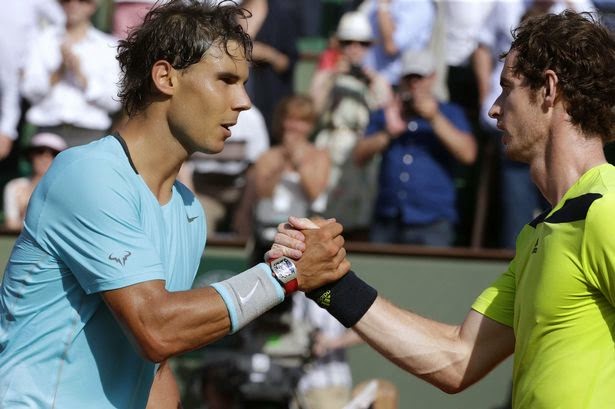
Photo courtesy of rabulleil.blogspot.com Andy Murray will most likely go into Roland Garros as the top seed, but he will not be the top favorite to win the title at a slam at which he has only once contested the final. Murray’s status might have been different had he won in Melbourne and held on to the momentum all the way to the Roland Garros final- he already has the confidence needed to challenge for the Paris title as the defending finalist-but that upset Melbourne loss to Mischa Zverev raises question marks as to whether Murray can handle the pressure of being favorite at a slam, a status he failed to live up to last month Down Under, not named Wimbledon. Murray, though, has always been more prone to upsets at slams than his other big four members, and so, as with Djokovic, his loss to Zverev, while disappointing, is only a blip in his career and should not have any severe consequences other than giving his rivals greater belief they can beat him. The Scot is likely to pick himself up and get going again for Miami, where he has been champion twice and then the clay season where since 2015 he has made great jumps progress wise and the only next step for him to take is the Roland Garros crown itself.
Rafa Nadal, meanwhile, managed to live up his billing as the favorite to reach the final from the bottom half of the Australian Open draw after Djokovic’s departure. The Never Say Die attitude so finely written into the Spaniard’s DNA helped Nadal punch his way through to his first slam final since 2014 and the tenacious and feisty way in which the ninth seed knocked out Milos Raonic and in-form Grigor Dimitrov on his way to the final where he led 3-1 in the fifth set suggests Nadal can do it all again in Paris in June, whatever the draw, and on Philippe Chatrier on the Second Sunday, the Spaniard is unlikely to slip up leading by a break in the fifth set.
Roger Federer proved in Melbourne he can win a slam again, but Roland Garros is the least likely site for slam No. 19 with the slower conditions exposing the Swiss’ weaknesses more than the other slams. Never say never, however, when it comes to Roger Federer. If the Australian Open shock results do prove to be an accurate foreshadowing for the rest of the season, Federer could take advantage of a nice draw and hot conditions which will make the balls fly faster through the Clay and write another fairy tale for men’s tennis 2017. A lot will have to go right for the Swiss if he is to win a second Roland Garros title, but he showed in Melbourne he has the desire to fight for another slam trophy and no obstacle, not even Rafa Nadal a break up in the fifth set in the final, is too big for Federer’s feathery feet to fly over.
Since the Australian Open 2014, tennis’ Big Four has been more of a Big Five with the addition of Stan Wawrinka to the slam winning circle (Post Melbourne ’14, Wawrinka has won the same number of slams as Nadal, Murray and Federer combined) and the fifth member, Stan Wawrinka will be as hard to predict going into Roland Garros as he always is, though his semi-final showing in Melbourne this season was the 2016 US Open champion‘s best post slam win result yet (he lost in the first round of Roland Garros ’14, the quarters of Wimbledon ’15) and he has been gradually showing more and more consistency with each passing season.
Wawrinka also showed a lot of heart in that five set loss to Federer Down Under, and with Roland Garros already once the triumphant scene of his all-conquering brutal aggression, the Swiss No.1 is likely be pumped and primed in June to deliver Federer, Nadal, Murray and Djokovic that final champion’s killer blow to claim the Coupe des Mousquetaires and the Parisian $2.2 million first prize.
A lot of tennis is still to be played before the 2017 French Open, and we will have a much better idea of who might lift the trophy once the Clay gets underway, but the Australian Open has given us a sneak glimpse into the chances of some of the big favorites, showing us Federer and Nadal are in the slam winning mix again, Djokovic and Murray have work to do but few would bet against them putting in the hours, and Wawrinka is as much a big match player as ever, glimpses which suggest the tennis delivered at Roland Garros 2017 could be as thrilling, intriguing and inspiring as the tennis we got served Down Under.
-
Fairy Tales DO Come True When You Are Roger Federer
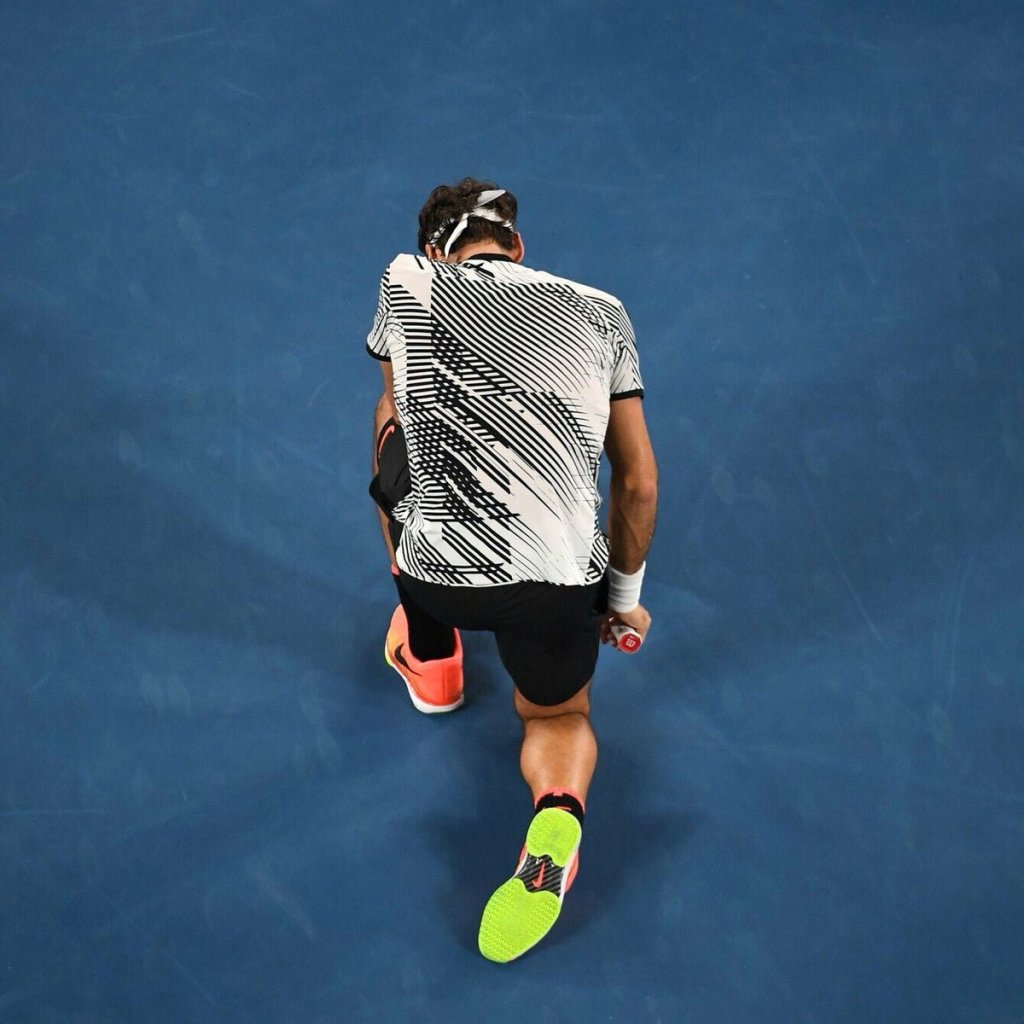
Photo courtesy of twitter.com Roger Federer’s run to the Australian Open 2017 trophy was such a fairy tale finish to the 17th seed’s quest for slam No.18 Hans Christian Anderson would have torn up the manuscript and said “Get real”. Once you told Anderson, however, that Roger Federer composed the tale, he would have put the papers back together for as we learned at the Australian Open, Fairy tales, DO happen when you are Roger Federer.
Fairy tales have their share of muddy swamps and monsters, and in the past five years, since he won Slam No. 17 at Wimbledon, Federer has had plenty of swamps to wade through and monsters to outrun- a back injury in 2013 which saw him drop from No.2 to No. 8 in the rankings, the subsequent overhaul of his game and adjustment to a more suitable racket, his younger rival Novak Djokovic and all time great entering his prime when the Swiss’ revamped game was hitting its stride, (the Serbian defeating him in three slam finals at venues at which Federer’s game seemed destined to win), a first career surgery at the age of 34 (on his knee, the injury caused in Melbourne in 2016) and frustrating comeback from that surgery, (letting chances at another Wimbledon final slip from his grasp), a six month lay off, and then, if the tale needed any more obstacles for its hero to overcome, a leg injury picked up in his second round match versus Noah Rubin in Melbourne this season.
So many swamps and monsters may seem above and beyond the call of duty for a fairy tale hero to overcome, but Federer is no everyday fairy tale hero. After all, few would have shed tears if Federer had not won another slam with the Swiss being far from an impoverished sporting Cinderella, but a rather wealthy one with his record 17 slams.
All those swamps and monsters have been effective narrative devices, though, for if any tennis legend can arouse spectator’s sympathies and lay claim to deserving another slam on the back of talent, hard work, and what he gives back to the sport, it is Federer, the Swiss coming back again and again for the love of the game, and the fans, suffering in failure over and over, only to catch his breath, get back up once again, only to fail to find the feet that used to dance so elegantly to slam trophies once more, scrambling over his obstacles instead, blistered feet, bloody hands, broken fingernails, and all, still coming up short in his quest for slam No. 18, still getting back up to try all over again.
Catch ya later 16…
See ya soon 17…
Going for 18
🙃— Roger Federer (@rogerfederer) December 31, 2016
//platform.twitter.com/widgets.js
This chapter, the Australian Open 2017, Federer’s first professional event back since the Wimbledon ’16 semis, was the climax to Roger Federer and The Quest for that 18th slam and we did not even know it, such was Federer’s monster ridden, swamp filled draw, the 17th seed scheduled to face, from the third round on, Tomas Berdych (10), Kei Nishikori (5), Andy Murray (1), Stan Wawrinka (4) and Novak Djokovic (2).
Lacking in match practice, at the slam at which he had not reached the final since 2010, with some of the game’s best hard court players in his path, the 35 year old looked anything but a champion in the wings, more likely to play a cameo role instead, departing the stage in the first ten days to bittersweet applause.
The Swiss justified doubts concerning his 18th slam winning potential early on, too, looking shaky in the early rounds versus 296th ranked Jurgen Melzer, to whom he dropped a set, and qualifier Noah Rubin, who gave him a tough work out, and against whom the 17th seed picked up a leg injury.
Not that anyone would know from his next performance, his three set defeat of Tomas Berdych, the match that gave us the first sign Federer had it in him to make a comeback few imagined, a clinical and inspired execution against an opponent ripe and ready to be picked off by Federer’s pitch perfect attack.
Defeating Berdych in straights was encouraging, but the Czech does not hit as cleanly as he used to, and while he could have defeated a rusty Federer, he was no threat to a Federer feeling the ball with such feathery fingers. The feeling something special might be about to happen really got underway, however, with Federer’s topsy turvy five set defeat of Kei Nishikori, the Swiss showing he did not just have the head to beat the best the draw could put in his way, but he had the heart to fight when things got tough, and after a straight sets last eight win over Andy Murray’s conqueror Mischa Zverev, Federer was put to the test again by Stan Wawrinka in the semis, winning in five sets, once again showcasing how much he wanted to get that elusive 18th slam, and that he had it in him to do so.
Federer’s reward was both a blessing and a curse- the blessing, another slam final, and not so long after his last, the 2015 US Open, the curse, coming up against the biggest monster of them all- Rafa Nadal. Nadal, his nemesis, who had made him cry on the Rod Laver Arena in 2009, the asterisk to his Goat status in the eyes of tennis legends such as John McEnroe, the monster who had claws sharp enough to tear through that champion’s thick skin.
Just as fairy tales have swamps and monsters, they have fairy godmothers, too, and in this tale, if Federer had ever needed one, it was now, and she kindly obliged, waving her wand and magicing up lighter balls bouncing lower, just where Federer likes them, a faster surface (laid early and playing like it would in the final in the first round), the kind of conditions in which Federer had beaten Nadal in some of his 11 wins.
Federer deserved the flick of a fairy godmother’s wand for if you do not ask, you do not get, and Federer had not been afraid to ask for what he wanted, calling for ATP tournaments to be speeded up in previous years, and though the tournament has denied speeding up conditions to favor him, the ball certainly flew faster through the courts at this year’s Australian Open, and just as Federer’s shots were finding their marks, everything else fell into place, too, with Murray and Djokovic, the reigning duo of the Big Four, upset by Istomin and Zverev, two journey men feasting in the faster conditions, setting the stage for the two sidelined members of the Big Four, a pair strong enough to have their very own name -Fedal- to dance once more in the spotlight that is a Grand Slam final, and before an audience in their hearts looking forward to a classic such as the 2009 final, in their heads, dreading a drubbing like the 2014 semis, the kind Federer fans watch through their fingers.
For Federer fans, in the first set, the only place their fingers belonged was in the air where Federer, himself, was dancing, playing the tennis called for to avoid a repeat of 2014- aggressive, big serving, risk taking, believing, the tennis of the Federer who had marched to three slam finals in the last two seasons while Nadal had been struggling to get through the opening rounds.
Fingers dropped down to faces in set two though, the Federer who had lost those three finals making an appearance, falling behind 0-4. Just as Federer had done versus Wawrinka and Nishikori, the Swiss fell back down onto the plexi-cushion with a thud while Nadal picked up his game, the Spaniard’s power and will reminding the Swiss just what kind of tennis monster he was facing for the title, sending the Swiss’ demons swirling and the Swiss backing down, his feet stuck in the swamp, his mind, too, thinking twice about coming forward, moving back into the past, a time when losing to Nadal in slam finals was the downside to being Roger Federer.
The clouds have never been too far away from Federer’s lowest moments this Australian Open, though, and Federer soon soared back up, to the upside of being him, racing through the third set 6-1, going all the way back to 2007 when the Rod Laver Arena was his very own practice stage, and then, the clouds thickened into swamp, and we were back in mid 2016, the the demons swirling, descending upon him in a flurry of shanks and misfired attacks, the pressure of Nadal never-ending, and the Swiss falling 1-3 behind, the 2009 defeat, the tears in the trophy ceremony, the 2-6 deficit in slam finals to Nadal, those moments, despite Federer’s words they would not, seeming to dictate the now, the dark side shutting out the light Federer had looked so ready to step into.
The 18th slam trophy, his name upon it, lit up, waiting at the end of the player’s tunnel into Rod Laver, the light Federer had been running to all this time, no way, not today, was the Swiss going to let it flicker out before him after coming this far, his fingers so close to feeling its warm glow. There was no running away this time, Federer was ready, the swamps and monsters of the past strengthening him for the now as he embraced the dark side, taking another strategic medical time out (he took his first ever in his semi versus Wawrinka), his quad and groin troubling him, at the start of the fifth set, giving himself some time to pull his body, and most crucially, his mind back together with that elusive 18th slam seeming to pull away from him.
While the MTO did not seem to pay off for Federer as Nadal rode his momentum to lead 3-1, at 3-2 Nadal serving, Federer found a hole in the Spaniard’s well rehearsed game plan, earning a break point with a cross court backhand winner. This time, Federer did not blink, his eyes widened instead, taking in, in all its glory, the chance to get back into contention for the trophy before him, his ground-strokes refusing to break down under pressure, standing up to Nadal on break point, the pressure causing the Spaniard’s forehand to give out on him, missing the lines he needed to paint against a Federer at his most Picassoesque.
Back in the match, and freed from his fears his attack and his rally balls would be gobbled up by the tennis monster facing him, heartened by the conditions the fairy godmother had magicked up for him, the Swiss dispelled the demons of all those missed break points of slam finals past to break again for 5-3 before serving out for the title with the confidence displayed in his No.1 days, his belief wading him through the swamp, past the monster, all the way to the fairy tale ending, a 6-4, 3-6, 6-1, 3-6, 6-3 victory, punctuated with a celebration worthy of one, one which many in the tennis world had been asking for but few dared to imagine would happen at the 2017 Australian Open, even Federer, who, by his admission, lacked the vision back in mid 2016, vision he had in abundance in that fifth set.
Tears of joy for the champ #Federer #AusOpen pic.twitter.com/t048S5Spcm
— #AusOpen (@AustralianOpen) January 29, 2017
//platform.twitter.com/widgets.js
The last time Federer’s vision in a slam final had been so 20/20 was five years ago, in the Wimbledon 2012 final. Five years is a long time when in the prime of your career, you won 12 slams (2003-2007), and Federer’s tears of joy at winning big again were shared by many in that special moment bursting with tennis history- a record 18th slam, beating four top ten players on his way to the trophy, (the first player since Mats Wilander at Roland Garros ’82 to do so in a slam), becoming the first man to win five titles at three majors. That one moment and all that history cemented Federer’s status as the Greatest of all time, beating his principal rival for that status to do so, the rival who has the best chance of tearing that status up from the foundations and building it for himself, the rival cast as a monster in the fairy tale but a respected and fondly admired friend in the real world.
2 #goats …@rogerfederer @RafaelNadal …we salute you…#Melbourne pic.twitter.com/SiHVlvRuIs
— Boris Becker (@TheBorisBecker) January 29, 2017
//platform.twitter.com/widgets.js
In his runner-up speech, Nadal said Federer deserved the trophy more, and we take his word for it. Nadal, after all, should know. The ninth seed has been working as hard as anyone to secure his own fairy tale ending to an already legendary career and that day, while he was the villain in Federer’s Quest, he was a hero in his own, and just as he plays the hero with passion and charm so he does the villain, proving the equal to Federer in that respect, the only draw the two can call in a game which does not award them, a status Federer said he would have happily called on the match, one which would, perhaps, be the real fairy tale ending to this bromantic rivaly, an ending no tennis fairy godmother would refuse.
Fairy godmothers were not thanked by Federer in his speech, however, for as much as Federer made it look like a fairy tale just as he makes his game look like such effortless magic, there is no fairy godmother in this tale because this is no tale, this story is real, and Federer made it so with his wizardlike concoction of talent, hard work, and when it mattered most, self-belief.
Just how many more years Federer will be around to summon up his own unique spells only a crystal ball could tell us, though Federer did give us a clue with his final words to the crowd that he would see them next year and if not, thanks for the ride.
If not.
Federer fans had, at times, clung to if only when it came to the prospect of Federer winning another slam, and there is always a chance of If only, a glimmer of light in the darkest of sporting fandom times, with a champion like Roger Federer, and while if not may be a much darker place, when it comes to the Federer career, his fans will be happy with not ending up somewhere in the middle – the semi final defeats to Thiem and Zverev on grass, the quarter-final losses to Tsonga in Monte Carlo- where Federer, to those who did not believe, was starting to look like he might slip to mid 2016, the swamp to his green and blooming gardens, gardens which, he confirmed after the match, if he suffers another injury, he will not strive to grow again.
So we will take if not and thank Federer for putting pen to paper once more, talented story teller that he is, and taking us on the ride with him, a ride of defeating swamps and monsters, of finding Federer’s dancing feet again, of healing broken bones and hearts, of stepping out of the dark and back into the light.
Fairy tales do not write themselves, we have to write them ourselves, and while the magic in Federer’s game may have been a gift from the tennis Gods, the fairy tale story that was the Australian Open 2017, that was all Federer.
1️⃣8️⃣🏆 pic.twitter.com/Ap8aZGhBNf
— Roger Federer (@rogerfederer) January 29, 2017

Tennis from a fan's point of view
[
[
[
]
]
]

 thetennisreview