-
Australian Open Final Preview Roger Federer Vs Rafa Nadal
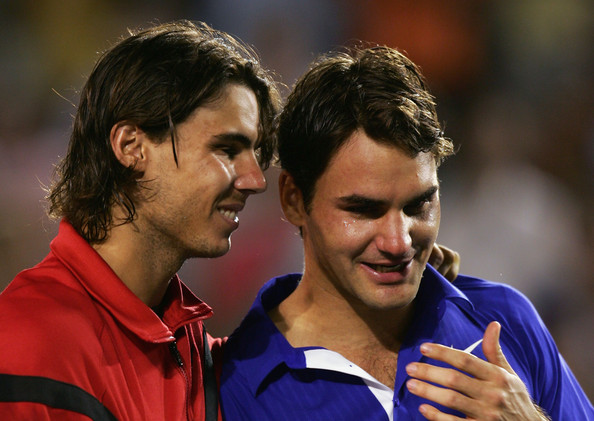
Photo courtesy of zimbio.com The biggest surprise of the Australian Open, a tournament beset with shocks, is the names of the two finalists, and very well-known names at that-Roger Federer and Rafa Nadal. The Tennis Review previews a final in which history is at stake but which history will not dictate.
A slam that was expected to deliver another slam final in the Djokovic Murray era witnessed that potential final disintegrate before the last eight and instead has brought us another final, featuring a rivalry rising from the ashes, one not seen in a slam championship match since 2009, on the Rod Laver Arena, no less- Federer Vs Nadal aka Fedal.
Those scenes from their last slam final will be well remembered in the lead up to this year’s final. Federer seemed to be in control that day going into the fifth set, but he could not close the deal, and Nadal won, taking the trophy and breaking Federer’s heart, leaving the Swiss in tears as he gave his runner-up speech.
Eight years is a long time in tennis, and both men have moved on- Federer went on to complete the career slam at that season’s Roland Garros, and take the Australian Open title a year later on his journey to holding the record of 17 slams, and Nadal went from one achievement to another, winning his career slam in New York in 2010 and winning his 14th slam at Roland Garros ’14.
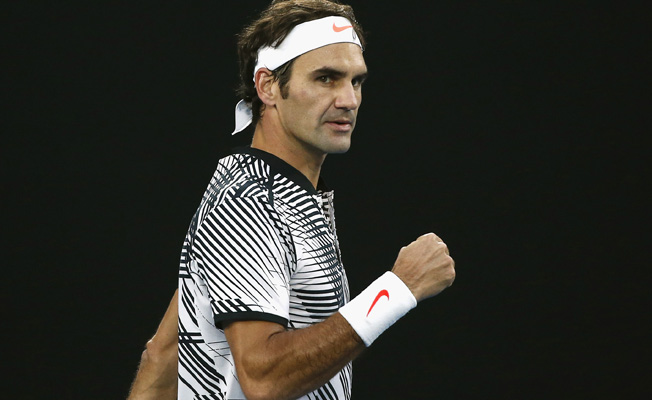
Photo courtesy of MensXP.com Fedal fans had moved on, too. With Federer and Nadal no longer the world’s No.1 and 2, and with their being only one Fedal match, in Basel 2015, since the Australian Open ’14 semis, another Fedal slam final seemed to be the stuff of dreams (or nightmares depending on who you support) especially as both men have been contending with injuries the past year.
Yet here we are with Fedal part 35 ahead of us in the Australian Open final, a slam in which both the Swiss and the Spaniard have resurrected their careers- (Federer is seeded 17th and Nadal 9th and neither were favored to get past the last eight)- and their rivalry the hard way, both men twisting and turning along highs and lows as they made their way through the draw. Roger Federer, coming off a six month injury lay off, beat Tomas Berdych in straights, Kei Nishikori in five, Murray’s conqueror Mischa Zverev in straights, and Stan Wawrinka, in five, while Rafa Nadal, who had not been to a slam semi since Roland Garros 2014, beat Sascha Zverev in five, Gael Monfils in four, Milos Raonic in straights, and Grigor Dimitrov in five.
All the hard work, for whoever wins what will be the toughest match for either of them, the final, will be worth it with history there to be made for both men- Federer can win his fifth Australian Open crown and break his own slam record of 17 while Nadal can win his second Norman Brookes Challenge Cup and move one slam trophy ahead of Pete Sampras to 15 as well as complete the double career grand slam with at least two trophies at each of the four slams.
Watching that history unfold is almost worth tuning in for alone, and the match is fortunate to have such a historic backdrop, one which will overshadow whatever result or kind of match we get. For while the best case scenario would be a five set classic such as we got in 2009 to warrant the hype and what is at stake, there is also the danger of the worst case scenario, a familiar scenario in Melbourne, one played out the last three times Fedal has played out on Rod Laver- Nadal breaking the will of his rival with his relentless brutal baseline game, teasing out patches of the best of the Swiss in each match before bubbling his demons to the surface, and drowning the beauty of the Federer game in a tidal wave of heavy top spin and awe-inspiring will-power (Federer has been a good match up for Nadal at the Australian Open- the Spaniard beat him for the title in the 2009 final, and defeated him in 2012 and 2014 in the semis stage, in four and three sets respectively).
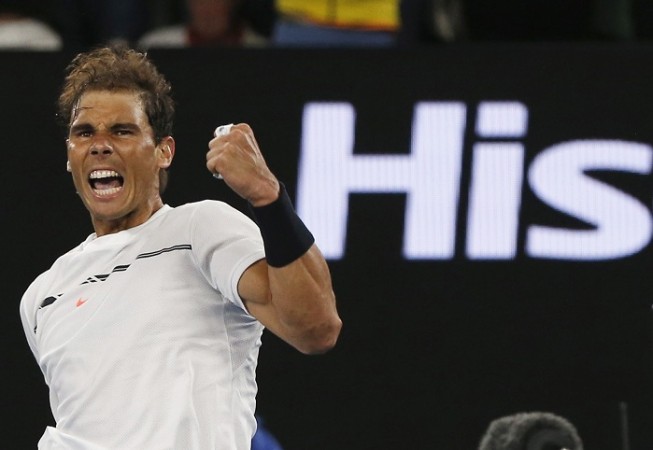
Photo courtesy of http://www.makfax.com.mk Nadal has dominated the head the head, (he leads it 23-11 and 6-2 in slam finals and while the head to head is skewed with so much of it played on clay that clay dominance by Nadal did, by the Swiss’ own admission, get into his head) and his strategy of attacking the Swiss’ backhand with his highly spun loopy ground-strokes is well known. This year, though, with faster balls and a slightly faster surface (due to the surface being set a little earlier than usual meaning the court, which gets faster as the tournament progresses was fast from the get-go), the ball will bounce lower to the Federer backhand which is more to the seventeenth seed’s liking, allowing him to stay down and pick the ball off, and meaning the Swiss’ own serve and second balls will bite through the court with the kind of venom needed to knock Nadal out for the count, and while Nadal also plays well on medium fast surfaces with his defense frustrating opponents into error and his forehand down the line finishing them off, he is more prone to being floored on them when facing a big serving aggressive opponent, and few come as big serving and aggressive as a mid 30s Federer.
Predicting the match on conditions in Melbourne, a city which can have four seasons in one day, is nigh on impossible, however, and unnecessary, too, because in a match which is sure to have as many highs and lows as differing conditions, the result will not come down to the temperature, the speed of the courts, the weight of the ball, or the bounce, aspects which will play a role but not a deciding one, that will instead be played by which player is in the best condition mentally on the day and, most crucially, in the moment when the big points are played.
When it comes to the points that decide breaks, sets and slam titles, neither man is going to pay too much attention to history or the strange omens surrounding the match- such as Nadal beating another dangerous seed in the 2009 semis, again the second semi, in five long sets to come back and beat Federer in the final, or Pete Sampras being seeded 17 at the 2002 US Open and beating long term rival Andre Agassi to win his 14th and final slam.
This season’s Australian Open final will rise above both those elements lurking somewhere in both men’s minds and be about the here and now – who plays better on the day, who can keep their first serve percentage high, and their second serve, too, who can execute their game despite the nerves and the pressure, and who can take their chances, chances they have worked hard for, ones they know do not come so often as they used, too, and which, if you keep your eye on the ball, come around when you least expect it, and when they do, you had better be ready, and if there were ever two men ready, then it is Roger Federer and Rafa Nadal.
-
Australian Open Djokovic Murray Defeats 1st Time Since RG 2004 Top Seeds Out Before QFs

Photo courtesy of WKBT News8000.com Novak Djokovic’s five set defeat to wild card Denis Istomin and Andy Murray’s four set upset at the fine hands of Mischa Zverev will go down as two of the biggest upsets in tennis for a decade, the first time since Roland Garros 2004 the top two seeds had both been upset before the last sixteen of a slam was over, and there are many good reasons why we never saw either of them coming. The Tennis Review looks back at what made the losses such a shock and how, with the benefit of hindsight, they both made perfect sense.
Djokovic had just beaten Andy Murray in Doha and looked good in his first round win over Fernando Verdasco and Murray was the top seed who, after Djokovic’s defeat, looked to have his best chance ever to win the title.
Since winning Roland Garros, Djokovic’s falling out of love with tennis has been well documented. After managing a feat not even Sampras, Federer or Nadal could achieve- winning all four slams in a row, the mental toll on the Serb was all too obvious in his third round Wimbledon loss to Sam Querrey.
Djokovic did win in Toronto, but he suffered an emotional defeat to Juan Martin del Potro in the first round of the Olympics, and at the US Open an injured Djokovic, helped along by walkovers, made the final where he was dismissed in four sets by Stan Wawrinka.
In his typically best part of the season, Djokovic then lost for the first time to Bautista Agut (Shanghai semis) and Cilic (Paris-Bercy Quarters) and though he won four matches at the WTF, he under-performed in the final, losing the match and his chance of ending the season ranked No.1 to Andy Murray.
That up and down last half of the season made his Doha win over Murray at the beginning of this one a victory to fill both him and his fans with confidence along with talk he was enjoying tennis again doing the rounds. That optimism was strengthened when Djokovic handled Verdasco, who had held match points against the Serb in Doha, in straight sets in his Melbourne Park opener, and his journey to the final and the title, in the bookmaker’s and many pundits eyes looked very likely.
In the final, Djokovic was supposed to face Murray for what would have been their fifth contest on Rod Laver since 2011. Murray was a strong bet to make his sixth final in Melbourne- he had put up a big fight in the Doha final and had not dropped a set to Illya Marchenko, Andrey Rublev, and Sam Querrey.
Once Djokovic was knocked out, Murray was, for the second time, the first being Wimbledon 2016, the favorite to win a slam, and with his record at the open and the consistency he had displayed the past year, his march to the title looked a safe bet, and Mischa Zverev, like Istomin had been with Djokovic, was one of the last name’s on people’s lists to stop Murray finally realizing his Melbourne Park dreams.
Denis Istomin was a wild card who had been a point away from being knocked out of the Wildcard qualifying event while Mischa Zverev, ranked 50, has the serve and volley game Murray has usually proven to be a master at destructing.
While Djokovic may have been looking good, Istomin had been struggling. He lost in a Bangkok challenger to Christian Garin, ranked 211, in the fourth round (Garin is, though, the 2013 Roland Garros Junior champ, beating Sascha Zverev in the final, so he is something of a big prospect) and he had not beaten anyone in the top 100 before his first round Australian Open win over Ivan Dodig since beating that same player back in late October.
Istomin did have a good run at Wimbledon ’16, however, beating Anderson and Amalgro before losing to Goffin in four.
Istomin is anything but an unknown quantity, reaching a career high of 33 (2012.08.13). He had been to the third round of the Australian Open in 2014, losing in straights to Djokovic, as well as the last 16 of the US Open (2013, lost to Murray), the last sixteen of Wimbledon (2012, lost to Youzhny), and made three other trips to Grand Slam third rounds.
A tendency to over-hit rather than patiently constructing points and then unleashing had gotten in Istomin’s way of reaching his potential. The Uzbek 30 year old put that right against Djokovic this year in Melbourne Park, however, when he patiently set up his big shots and remained unflustered in the face of causing one of the big upsets of the last decade.
The Uzbek said himself, when asked at the end of the match how he felt that he felt sorry for Djokovic, after all, on the day, he was just too good.
Zverev played out and out serve and volley tennis in his win over Murray, a style the Scot is very adept with his big return and passing shots at defeating. The German, much like Murray, had been gathering his own momentum since the Summer of 2016, qualifying for the US Open and reaching the last 64, qualifying and reaching the last eight of Shenzen and Shanghai (where he won a set off Djokovic) and beating Stan Wawrinka in the last eight of Basel before losing to the eventual champion Marin Cilic in three sets so that serve and volley style had had plenty of practice and Zverev had gotten used to winning.
Murray could not find an answer to Zverev’s awkward groundstrokes and attacking approach – Zverev came in 118 times- and the Scot did not take his chances, failing to consolidate his breaks in set one and managing to win just 35% points on his second serve, perhaps what hurt him the most.
Djokovic’s road to slams are usually filled with roadblocks but he typically overcomes them while Murray may be more susceptible to upsets but not in Melbourne.
Djokovic struggling in the early rounds of a slam is not unusual. As Djokovic himself said after the match everyone is dangerous (use exact quote) and he has been, in the last year, bothered by Simon (Australian Open ’16 last sixteen), Bautista Agut (Roland Garros last 16) and was actually not just bothered but actually upset by Querrey at Wimbledon, and it is most likely, if he had not been on the receiving end of so many walkovers and retirements at the US Open, he would have been more than bothered there.
Part of what makes Djokovic such a great champion is his ability to get out of those matches, pacing himself at a slam so that he peaks at the right moments, no moment better than the finals. He was not able to do that, however, versus Istomin, and in Melbourne, since 2011, only Stan Wawrinka has been better than the six time champion, leaving Istomin in pretty elite company.
Murray has experienced someone being better than him plenty of times since 2011 in Melbourne, and four of those times it has been Djokovic (Federer in 2014), but when Murray does play someone better than him in a slam, is it usually late in the day, when most of all rivals have already been put to bed. Murray may not have been as prolific at slams as Djokovic has, winning three slams to Djokovic’s 12, but he has made plenty of finals, 11 of them, and he has been to the semis 20 times, the quarters 27 times since Wimbledon 2008 so to lose in the fourth round at the Australian Open as the top seed is a big dent in his record.
Big Upsets in slams do not happen like they used to.
There have been notable upsets in slams the last decade- Nadal losing to Robin Soderling at Roland Garros ’09 and Rosol at Wimbledon ’12, Federer losing to Stakhovsky at Wimbledon ’13- but with the top players mastering games which allow them to dominate across more homogenized surfaces, and with seedings being bolstered from 16 to 32, the top seeds have been more protected in the earlier rounds of slams than previous top seeds were. (Sampras was often upset at the French Open and even at the US Open and Australian Opens in his prime as was Becker, Edberg and Agassi).
Djokovic, the houdine of upset escapes, finally fell to one of his rival’s better form. Djokovic’s words themselves sum up why he lost the best:
What can I do? I did try my best till the last shot, but it didn’t work.
We have to go all the way back to Roland Garros 2004 when Roger Federer and Andy Roddick, the top two seeds, went out in the third and second rounds respectively (Federer lost to Gustavo Kuerten, Roddick to Olivier Mutis after leading two sets to one).
Those losses were easier to understand- Kuerten was a three time Roland Garros champ and Federer was an attacking player back then while Roddick never achieved great success on clay. These losses Down Under are more difficult to get our heads round- Djokovic and Murray have, one or the other or both, featured in every Australian Open final except 2009 and 2014 since Djokovic first took the trophy in 2008.
The conditions at this year’s Australian Open were prime for upsets, however, the tournament playing like a different event, with many reports that the surface itself was faster and faster balls which fluffed up less than usual in play. The scheduling did not help either- Djokovic is more likely to be upset in a match scheduled on a hot day and both Istomin and Zverev have games which are most dangerous on fast surfaces, and with the balls used at this year’s Open faster than in previous ones, Djokovic and Murray were at risk. Murray himself said:
Murray himself likes fast conditions, and he took advantage of them, hitting 72 winners, and not playing a bad match- his opponent, though, also likes it fast, and played a great match:
he came up with some great pickups, you know, reflex volleys especially at the end of the match when it was tight. That was tough because I was hitting some good shots, chasing some good balls down.
Intriguingly, it was two experienced journeymen, both Istomin and Zverve are aged 30 and 29 respectively, who picked them off and not young guns feeding off the faster pace. Most likely it is Istomin’s and Zverev’s experience which helped them to be mentally tougher than their far more high achieving opponents. Going into the Open, Istomin had played 402 pro matches, Zverev 207, and with all the fighting through injuries and comebacks that both have done, they were up for a fight against two of the best scrappers in the game.
Two Big Questions: Is Djokovic declining and Will Andy Murray ever get as good a chance to win the Australian Open again?
Djokovic has gone from holding all four slams at once, the first man to do so since 1969, to a Win-third round-Runner-up-second round record in his last four slams, and in the last six months, the world No.2 has won just two titles- compare that to he same six month period the previous year he won seven titles, so his career is definitely in a slump of sorts, but a permanent decline is questionable.
Only 12 men have won slams after turning 30 in the open era and so Djokovic, who turns 30 on May 22, when Roland Garros starts, still has a slam or two left in him, but he is unlikely, if history is anything to go by, dominate like he had been doing since late 2014.
Murray, who also turns 30 going into the French Open (May 15) came into this Australian Open with the momentum of being world No.1 with seven tournaments won since Wimbledon, and after Djokovic’s defeat he had a great chance, on paper anyway, to win his first title and get a step closer to a career grand slam.
Next year, Murray will be 30 in Melbourne and his chances of winning there will be less, but Andre Agassi won the Australian Open twice, at 30 years and 8 months and 32 years and 8 months, and like Murray his athleticism helped him in the brutal Melbourne conditions. Agassi had a second wind in his late 20s and 30s, much like Murray has since rebounding from back surgery in 2013, but Agassi had also much more time out from the game than Murray, and was also a more accomplished player, one who could revert back to a champion’s mentality built up over eleven years from his first slam win to his last while Murray has only been winning slams for four years. Murray, though, is the reigning Wimbledon champion, the world No.1 and a five time Australian Open finalist so once Djokovic was out, he was, on paper, the heir apparent.
Tennis is, however, not played on paper, and as both Djokovic and Murray were keen to remind us in their interviews, tennis is sport and the better player wins on the day. That player is usually one of them,though, and will be again, but how often and where and when is up in the air, and for any sport’s health, that is a great place for things to be.
-
Australian Open Fourth Round Preview Roger Federer Vs Kei Nishikori
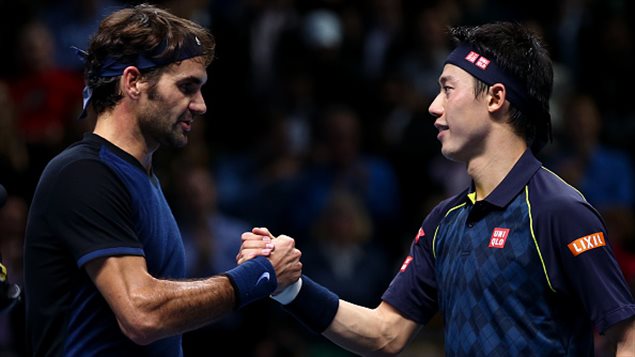
Photo courtesy of ici.radio-canada.ca Roger Federer (17) takes on Kei Nishikori (5) in the Australian Open fourth round. The Tennis Review previews the action between two of the tournament’s most dangerous threats for the title.
Roger Federer had the tennis world in awe with his sublime 6-2, 6-4, 6-4 win over Tomas Berdych in the Australian Open third round. The Swiss executed his own strengths on the serve and at the net with pitch perfect precision, exploiting the Czech’s weaknesses, and reminding the tennis world just how good attacking tennis can look in the right conditions.
Federer had the right conditions alright with the roof closed and an opponent he matched up well against, and performances like that the one he gave versus Berdych should be savored because the conditions in Federer’s fourth round will not be so favorable.
Federer’s last sixteen opponent Kei Nishikori’s movement and baseline skills mean the fifth seed will be far more of a challenge to overwhelm in a hurry, and those skills are working very nicely for the Japanese. Nishikori, as the fith seed, has not had to beat anyone of Berdych’s stature, but he has been put to the test, defeating Andrey Kuznetsov in five in the first round, Jeremy Chardy in the second, and Lukas Lacko in the third, and the Brisbane finalist is nicely warmed up.
Federer will not enjoy indoor conditions which make his already perfect game more so, either, as a predicted 0% chance of rain means the roof will be open. The temperature will be 27 degrees at 8pm, though, and there will be 44% humidity, so the lighter balls being used this year should still fly fairly fast through the court, allowing Federer to play aggressively and rob his opponent of time. The Swiss will need to be quick- by 11pm, when, if Nishikori gets his teeth into the match the two could be locked into a fifth set, the temperature is forecast to be 22 degrees and the humidity 63%, taking some of the zip out of the ball, cooling down a potentially hot Federer, and allowing Nishikori more time to both track down the ball and set up his shots when he goes on the attack.
This match is on Federer’s racket and if he can get on top of Nishikori, and knock his confidence, he could trigger one of the Japanese’s infamous meltdowns against top players in big matches, and of their six matches (Federer has four wins over Nishikori, one on grass, and three on indoor hard, and two defeats, one on slow hard courts in Miami, and one on the faster clay courts of Madrid in 2013 when Federer was struggling with a back injury), this is the biggest one yet- the first time they have met in a slam.
Federer’s chances of winning an 18th slam improved when Djokovic was knocked out of the draw, and with fate working its magic, Federer has to keep his part of the deal and work his, too, to get this match won quickly and save himself, and his legs, for when he will need all his hard court wizardry- a potential last eight contest with world No.1 Andy Murray.
-
Australian Open Preview The Big Title Threats Federer Nadal Nishikori Raonic Cilic
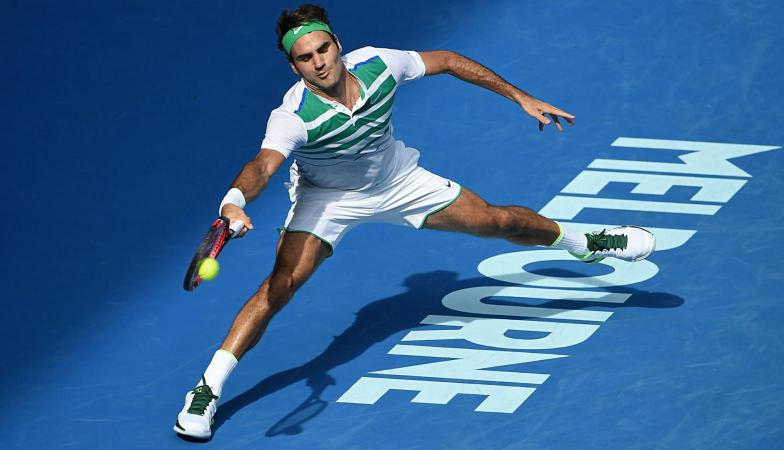
Photo courtesy of b2.mk.com Behind the big three favorites, Novak Djokovic, Andy Murray and Stan Wawrinka playing for the Australian Open trophy, five dangerous threats will be gunning for them- Roger Federer, Rafa Nadal, Marin Cilic, Kei Nishikori and Milos Raonic. The Tennis Review looks at why they are threats, what stands in their way and how the draw treated them.
Roger Federer (Seeded 17)
Champion 2004, 2006, 2007, 2010
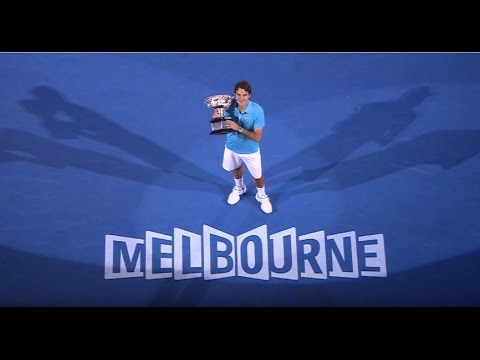
Photo Courtesy of http://www.youtube.com Why he has a chance: Federer winning an 18th slam is one of tennis’ big story lines, and while it may get less and less likely as each Grand slam passes, you can never count the four time Australian Open champ out.
Slam draws can fall apart, and if any man has the experience, weapons, and crowd support to help him take advantage of that, it is Roger Federer.
The chances of the draw falling so apart that Federer avoided both Novak Djokovic and Andy Murray- the two players built for Melbourne Park and who could prevent Federer executing his attacking game over three sets- is slim and the big question is can Federer win the trophy if he has to beat both of them?
The heart says yes. After undergoing his first ever career surgery, on his knee, last season, the Swiss needed a rest and he got six months of it, a period in which he also says he missed the game, and if absence makes the heart grow fonder, a Federer back on court, rested and healthy and in love with tennis and the tour, has to stand a chance.
What stands in his way: The heart may say Federer can win, but the head says it is most unlikely. The Swiss may be healthy and hungry, but he will still be hindered by lack of match practice and that rust means the wheels might come off in tense moments.
Federer’s recent return to the tour, at the Hopman Cup, saw the Swiss beat Dan Evans and Richard Gasquet, players he matches up well against, and lose to Alexander Zverev, a player who has the kind of double handed backhand that can really hurt him, in three sets.
That kind of form is pretty much where Federer left off back last Summer, a Summer in which he did not win a title on his favorite surface, Grass, and let slip a chance to make the Wimbledon final. That’s not going to be good enough to win in Melbourne with Djokovic and Murray in good form.
How the draw has treated him: For a 17th seed, very well- Tomas Berdych (10) in R3, Kei Nishikori (5) in R4, and Murray (1) in the QF. Federer could not have asked for much more considering he could have faced Murray, Djokovic or Stan Wawrinka in round three.
An easier early path means he has some time to get the rust out of his game, get some rhythm, and. perhaps most importantly, get some inspiration from being in the mix for a slam title again.
What has also worked out well for Federer is that he would not have to beat Murray and Djokovic back to back over five sets to win the title. Things will still be tough in the semis versus Wawrinka or Marin Cilic, who could both, if redlining, knock him out in straights as they have done at slams at which he was in form (Roland Garros 2015 and US Open 2014 respectively), but if Federer is in the semis and playing well, he matches up better against them then either of the top two seeds and will have a chance to get some more confidence going into a potential final with Djokovic.
Rafa Nadal (Seeded 9)
Champion 2009
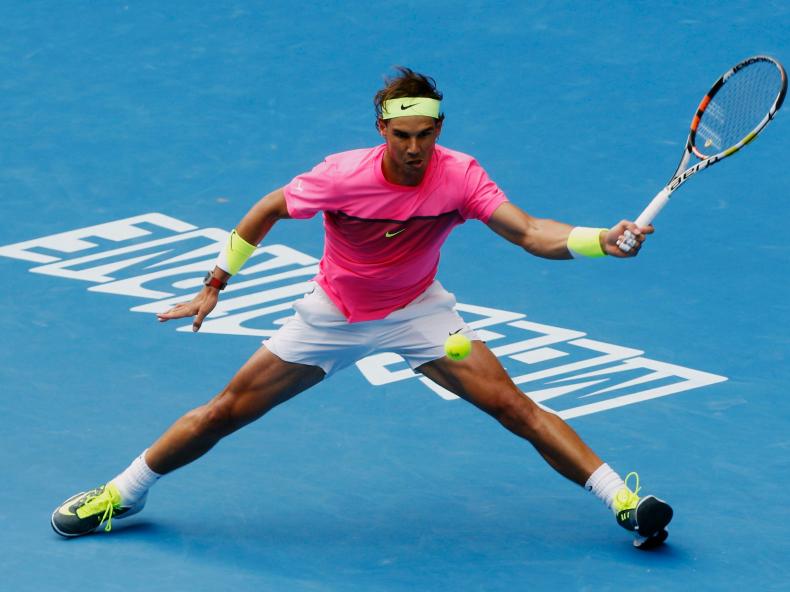
Photo courtesy of http://www.maisfutebol.iol.pt/ Why he has a chance: Like Federer, Rafa Nadal has the experience and strengths to take advantage if the draw falls apart. He also has the shots and mental toughness to beat anyone he faces if he can find some great form.
The Spaniard looked very good winning an exhibition event in Abu Dhabi and reached the semis of Brisbane losing to Milos Raonic.
What stands in his way: In Brisbane, Nadal said he did not take his chances. Hardly surprising considering he has played so few professional events since Roland Garros last season. That lack of match play could hurt Nadal in Melbourne, too, where he is going to come up against players with a lot more recent mileage who will be more tuned into taking their chances when they come.
How the draw has treated him: Nadal has one of the tournament’s #NextGen stars Zverev (24) in round three, Gael Monfils (6) in round four, Raonic in QF, and Djokovic in the semis.
Zverev is a tough draw for the third round- the 24th seed is coming off a three set win over Roger Federer in the Australian Open and has been gathering a lot of momentum recently, winning his first title a few months back in Stockholm and breaking into the top 20. The German also came close to defeating the Spaniard last season in Indian Wells, and may be feeling motivated to make amends should they meet in Melbourne.
Marin Cilic (Seeded 7)
Semi-finals 2010

Photo courtesy of zimbio.com Why he has a chance: Cilic is a slam champ, one of only seven active slam champs on the tour.
On Cilic’s run to his slam title at the US Open ’14, his big serving first strike game was unbeatable and if he finds that form again, he could take out anyone in the draw.
What stands in his way: Cilic is a little inconsistent and can have sudden drops in form when he is vulnerable to an upset.
Cilic also has some issues closing out five set matches- he lost against Federer at Wimbledon and del Potro in the Davis Cup final despite leading both matches.
How the draw has treated him: Bernard Tomic (27) in r3, Jo-Wilfried Tsonga (12) in r4, (though Auckland winner and Cilic’s US Open conqueror Jack Sock could make it to that part of the draw), Nick Kyrgios (14) or Wawrinka in QF, Murray in SF.
That is a good draw for the Croatian, allowing him to work out any kinks in his game, and if he makes it to the semis, and is firing away, anything could happen for the seventh seed.
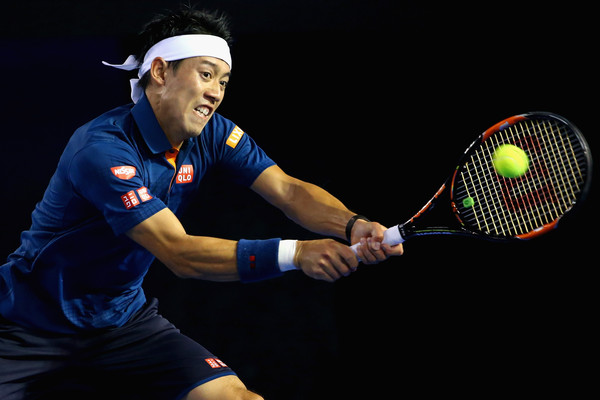
Photo courtesy of http://vb.alkass.net/ Kei Nishikori (Seeded 5)
Quarter-finals 2012, 2015, 2016
Why he has a chance: Nishikori has mastered the modern baseline attacking tennis style and also has the shot-making skills to set him apart from others of his ilk. The Australian Open plexi-cushion compliments his game (he has been to at least the last sixteen in his last five appearances), and as he develops as a player, he is only going to get better there.
Nishikori has been developing, too, in the past season- after slumping a little after his US Open final finish in ’14, he is back to the top five, and made the US Open semis, knocking out the in-form Andy Murray in the process.
Nishikori is in good form right now, too, making the Brisbane final where he lost a three set battle to Grigor Dimitrov.
What stands in his way: Two big things- his body and his mind, both of which let him down in Brisbane. The Japanese suffers with injuries and also gets nervous and over-hits when he faces the best players in big matches.
How the draw has treated him: The draw could have been kinder. Albert Ramos-Vinolas (26) in round 3, Federer in the last 16, Murray in the last eight, and one of Wawrinka, Kyrgios (14), or Cilic in the SF.
Milos Raonic (seeded 3)
Semi-finals 2016

Photo courtesy of http://www.wordpress.com Why he has a chance: Raonic’s huge serve, big forehand and attacking mindset make him a threat on plexi-cushion where he has also a little bit of extra time to set up his shots which will make his forehand side even deadlier.
What stands in his way: That little bit of extra time also helps his rivals who he matches up badly against – over five sets, maintaining his best form against the more all round and fitter players like Djokovic and Murray, especially in slower night time conditions, is a tough ask.
How the draw has treated him: Not so well in the nervier opening rounds with the unpredictable Dustin Brown in round one, the big serving and in-form Sydney champion Gilles Muller in round two, Gilles Simon (25) in round three, who has the baseline play to tire Raonic out, and Roberto Bautista Agut, (13) the recent Chennai champ, in the last 16.
If Raonic survives, he could face a potential QF with Nadal and then Djokovic in the semis.
Daunting as all that may be, testing his game against former Australian Champs, and no less than the defending one at that, would be a reward for Raonic who, after all, is the third seed, last year’s semi-finalist and Wimbledon runner-up. The Canadian has come so far by taking on a challenge or two, and he will go even further if he stays positive and keeps working hard when he comes up against obstacles as tough to clear as Nadal and Djokovic in arguably Grand slam tennis’ toughest conditions.
-
Australian Open Preview The Favorites Novak Djokovic Andy Murray Stan Wawrinka
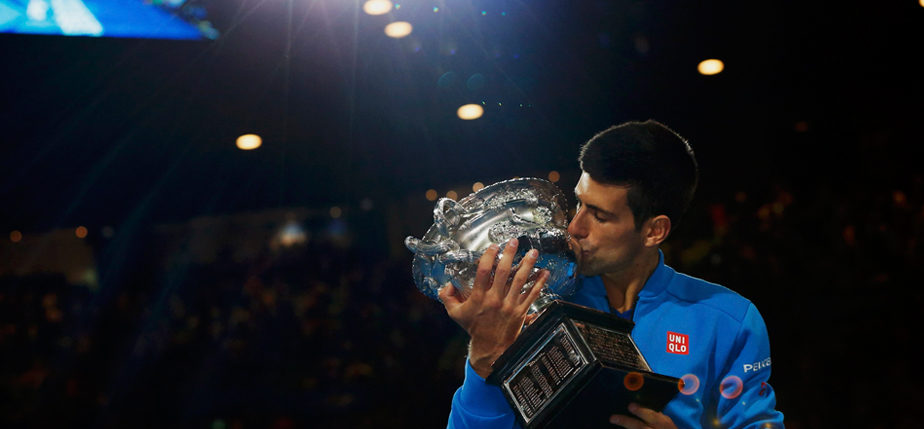

Photo courtesy of Ahramonline.com The Australian Open 2017 gets underway next week and the trophy is most likely to be raised by one of three big favorites – Novak Djokovic, Andy Murray, and Stan Wawrinka. The Tennis Review looks at the chances of the two-time defending champion, the 2014 winner, and the event’s five time runner up.
Novak Djokovic, Champion 2008, 2011, 2012, 2013, 2015, 2016
If Novak Djokovic is looking to find the joy in tennis again, he will not have too look too far when he gets to Melbourne Park.
Novak Djokovic’s recent Doha final victory over Andy Murray showed fans the Serbian had recovered from his late 2016 slump, was enjoying his tennis again (check out the smiles he and Murray shared at the net in the video below), and cemented his status as the Australian Open favorite.
Not that Djokovic’s status down under was not concrete enough- the 12 time slam champ is the man to beat in Melbourne with six titles won there since 2008.
However, Djokovic’s form in his typically best stretch of the season was sub-par in 2016- he did not win a title post the US Open (he won 4 in 2015, Beijing, Shanghai, Paris-Bercy, WTF)- which raised questions as to whether his dip in form might spill over Down Under.
Those questions have now been answered by the heart the Serbian showed defeating Murray in Doha, pulling himself back together after letting four championship points slip in the second set and winning in three, a feat which must have rebuilt both his own confidence and his fans’.
If Doha sparked some life back into Djokovic, he will be bursting with it when he starts playing in Melbourne Park where the world No.2 has lived some of his greatest tennis moments such as his epic back to back five set wins over Andy Murray and Rafa Nadal in 2012.
Such Melbourne Park matches are chapters of the history Djokovic has written as one of tennis’ all time greats, and his Doha form suggests he is not ready to put the pen down yet after suffering a letdown of sorts after finally winning Roland Garros (Djokovic’s letdowns still see him win ATP 1000s, reach slam finals, and end the season ranked No.2).
If the world No.2 won a seventh trophy, Djokovic would break away from Roy Emerson with whom he shares the record of most Australian Open titles in history (six), and he would have 13 slams overall, one away from Rafa Nadal.
If Djokovic does find slam winning form in Melbourne, an upset at the hands of the likes of Sam Querrey is unlikely. Most of his rivals out to shock the Serbian need him to be a little out of sorts, and while Djokovic is infamous for putting in some patchy performances early on in Slams, his recent dip in form might cause him to be extra focused in the early rounds, a stage at which, as Gilles Simon showed us in last year’s last sixteen, the six time champion is most vulnerable.
Djokovic had a lot more pressure back then- of equaling Emerson at Melbourne Park, and the Roland Garros question was still hanging over him- pressure which, while he will still feel this season as favorite, will be less now he is ranked No.2 , and stories such as top seed Murray attempting to win his first title in Melbourne, and the Roger Federer comeback stealing the headlines.
Less pressure on Djokovic should mean the second seed can find the joy he has been missing from tennis, and if is enjoyment that Djokovic is looking for then the Australian Open’s conditions and the fans who have taken him to their hearts as much as he has taken them and the trophy to his means he will not have to look far to find it in Melbourne Park.
How the Draw has treated Djokovic: Not so kindly- in his opening round, Djokovic has drawn one of the more dangerous floaters, Fernando Verdasco, against whom Djokovic had to save match points just recently in Doha.
Verdasco is unlikely to upset Djokovic, but he could rattle a nervous defending champion and dent some of the valuable confidence the second seed gained winning in Doha.
That opener does have one positive side- the Serb will have to be focused from the first ball, and if he is a little sleepy, that forehand of Verdasco will wake him up, and warm him up for the rest of his draw which is a little kinder- Pablo Carreno Busta in round three, (or Kyle Edmund), Grigor Dimitrov or Richard Gasquet in round four, Dominic Thiem in the last eight, and Rafa Nadal or Milos Raonic in the semis.
Andy Murray, Runner-up 2010, 2011, 2013, 2015, 2016
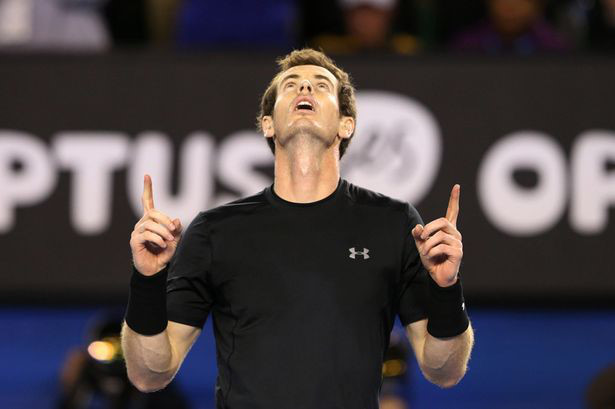
Photo courtesy of http://www.baimoi.com Murray will have to play the match he has failed to deliver in his five previous visits to the final- the kind of performance to beat a recently resurgent Novak Djokovic.
Andy Murray may be Number One and the top seed, (his first time to hold that status in a slam), and he may have just recently put together a 28 match winning streak including wins over Djokovic, Wawrinka, Nishikori and Raonic, but he is still not the favorite to win the Australian Open.
He will, however, as a five time finalist in career best form, be one of the favorites to contest the final- it would take a huge performance for anyone to upset a rested and match fit Murray on plexi-cushion– where he is likely to face his lifelong rival Novak Djokovic.
The big question is – can Murray defeat Novak Djokovic in the final?
History says he cannot, however history, as much as it likes to repeat itself, is also there to be overturned, and Murray, who has come from a youngster criticized for choking in Major finals, including in Melbourne in 2010 and 2011, all the way to the world No.1, the holder of three slams, and the reigning Wimbledon and WTF champion, is as good at proving history wrong as any tennis player has been.
.
If Murray is to win a first Australian Open trophy and add to his ever-growing legacy, he is going to have to, if Djokovic maintains his Doha form and contests the final, play one of the matches of his life, and answer far more serious questions about his game than he has had to in the last six months, a period in which the Scot, with Ivan Lendl by his side, has shrewdly taken advantage of the Serb’s drop in form to put himself in the position of top seed for the Australian Open, capitalizing climatically on an error strewn performance by Djokovic in the WTF finale to clinch the end of year No.1.
But Murray may not be able to keep taking advantage of the Serb’s dips in form much longer. With Djokovic’s recent win over the Scot in Doha, (he now trails Djokovic 11-25 in their head to head and what must be a psychologically damaging 0-5 at Melbourne Park), Murray is going to have to really up his game to levels he has managed versus Djokovic only once in Australia, in the 2012 semis, and not just match that level, but go beyond it.
Murray may have previously shown he has the game to beat Djokovic in slam finals, at Wimbledon and the US Open, in conditions that are more favorable to his game in many ways than they are to Djokovic’s, but this is Melbourne Park, Djokovic’s back garden, and if the Serb’s green fingers work their magic and make his shots down under bloom this season, Murray had better have his shears sharpened beautifully if he is going to cut them down.
How the draw has treated Murray: All the hard work Murray has put in to become top seed has paid off with a nice draw early on with Ilya Marchenko in round one, and then a qualifier or Yen-Hsun Lu in round two. The Scot then has Sam Querrey in round three, and Lucas Pouille or John Isner in round four.
As they do in any slam, things get tougher from the last eight onwards and Murray has Roger Federer or Kei Nishikori in the quarters, and Stan Wawrinka or Marin Cilic in the last four.
Nishikori did beat Murray in the US Open quarters, but this is quite a different Murray, the recently crowned No.1, benefitting from all the confidence that comes with that, much more rested than he was back in New York, and unlikely to be as bad-tempered if a similar incident like Gong-gate occurred.
Federer in the quarters would be dangerous, but the two have not met since Murray started winning slams again and reached No.1, and the Swiss is low on match play, and would likely have to get past Nishikori in the fourth round in a tiring encounter.
Stan Wawrinka, Champion 2014
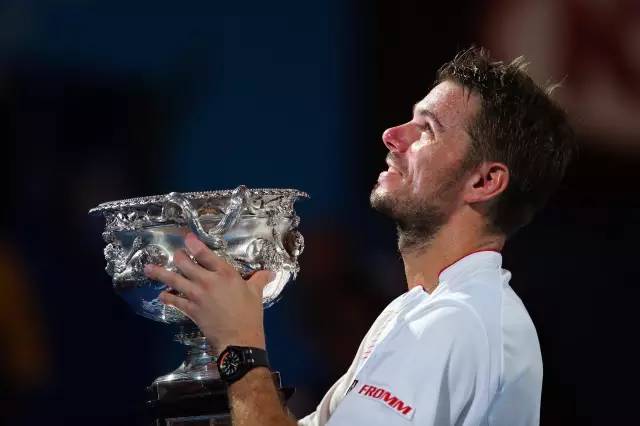
Photo courtesy of http://www.jqzfxxgk.cn/ Murray and Djokovic’s form are irrelevant when it comes to Stan Wawrinka’s 2017 Australian Open chances- it’s all about the Swiss’ game and whether he can get into the gears that have driven him to three Grand Slams.
The Australian Open is where it all started for Wawrinka, the venue where he went from being a Nearly Man to Stan the Man.
In 2013, the Swiss led Novak Djokovic by a set and a break before losing to him in five sets, and then came back a year later to make amends and beat the defending champion 9-7 in the fifth on his way to his maiden Grand Slam trophy.
Since then, Wawrinka has gone on to win two more slams, becoming a member of a rare and distinguished group of active multiple slam champions (Murray, Djokovic, Nadal, Federer), and of champions who have won slams at three different venues, (a group even Andy Murray does not belong to).
The Swiss is perhaps the only man healthy enough in the draw to be able to take out the two main favorites, Djokovic and Murray one after another and no matter how good their form. The 2014 champion, unlike a lot of his fellow pros, does not need the top two seeds to have an off day to beat them, possessing the all out aggression to break down their defenses, the rare ability to rob them of time and keep the ball out of their reach, meaning if Wawrinka does get momentum and goes deep, which, in a slam, as he showed us at the US Open, is when he really starts digging into his heart, the trophy could very well come within his.
How the draw has treated Wawrinka: Like a red headed stepchild. Unpredictable Martin Klizan in round one, tricky second rounder with Steve Johnson or Federico Delbonis, Viktor Troicki in round three, Nick Kyrgios in last sixteen, Cilic or Jo-Wilfried Tsonga in last eight, Murray in the semis.
If Wawrinka can make it through those early rounds, all the way to the last eight, then he will go into the business end of a slam well tested, match fit, and hungry- just the kind of condition he will have to be in to defeat Murray and Djokovic back to back for a fourth Grand Slam.
-
Grigor Dimitrov Beats Kei Nishikori Wins Brisbane Trophy Five Points
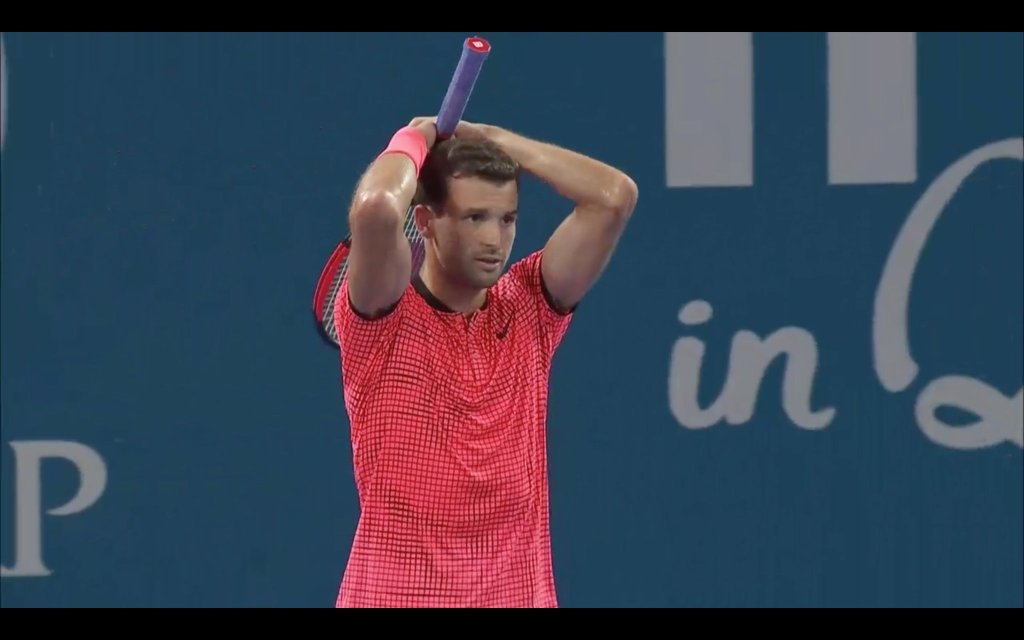
Photo courtesy of twitter.com Grigor Dimitrov (7) defeated Kei Nishikori 6-2, 2-6, 6-3 to win the 2017 Brisbane trophy. The Tennis Review looks back at an impressive run from the Bulgarian.
Dimitrov won the title in three sets
Dimitrov took the first set 6-2 in a positive display of big serving and attacking tennis leaving Nishikori few openings.
The Japanese did not back down, though, and came back in the second set with some heavy baseline hitting and attacking shot-making to take the set 6-2.
At the beginning of the third set, Nishikori took a medical time out. That may have worked in Dimitrov’s favor, allowing him to recover from losing his momentum, and giving him time to refocus.
In the third set, both men served well for the first six games, going 4-3 Dimitrov, but it was Dimitrov who broke through first, and then served out for the win.
Watch highlights of the final in the video below:
Dimitrov was the underdog in the final
Nishikori led Dimitrov 3-0 before the final and the Bulgarian was always going to have to play his best tennis to take the upset and the title.
The only way for Dimitrov to win was to execute his all court attacking game, and serve a high percentage, and he managed to do both of those things in the first set, and most impressively, when it really mattered in the third. Dimitrov put together a first serve percentage of 68% and converted 79% of points behind that delivery. Dimitrov also won 48% of his second serves, and, perhaps the most important stat of them all, he saved five of the seven break points Nishikori held against him.
What makes Dimitrov’s win even more impressive is that Nishikori is one of the ATP’s best players in three set matches, winning 73.7% of deciding sets he contests, the seventh best player on the tour in that area (Dimitrov is ranked 37 with 52%).
Dimitrov beat 3 top ten players in an event for the first time
On his way to the trophy, Dimitrov beat top tenners Dominic Thiem, Milos Raonic, and then Kei Nishikori in the final. That’s the first time Dimitrov has beaten three top tenners in a row. Those players are highly likely to be the same ones Dimitrov could be facing in years to come for ATP 1000 and Slam titles, and so a strong run like this bodes well for Dimitrov in the future.
Dimitrov won his first title since 2014
Dimitrov’s last title was the Queens 2014 trophy back when the Bulgarian was being promoted as one of the ATP’s young guns. After that Queens win, Dimitrov made the Wimbledon semis and rose to No. 8 in the world, but he suffered from the curse of Baby-Fed and slumped for the rest of the season, not picking himself up until mid 2016 when he rose from No.40 in the world in late July all the way to his current ranking of 17.
The Brisbane title is Dimitrov’s fifth overall, and he said after the match, winning the title was the most fun he had ever had on a tennis court.
— Övgü Kazanç (@ovgukazanc) January 8, 2017
//platform.twitter.com/widgets.js
Dimitrov is now one of the most dangerous outsiders in the Australian Open draw.
As a former top tenner, a one time Grand slam semi-finalist, and with wins over Djokovic, Murray and Nadal, Dimitrov is not exactly an outsider in men’s tennis, but he has been out of the limelight for much of the last couple of years, and he is anything but a favorite for the Australian Open title.
Dimitrov may not quite be ready for Grand Slam success, but no one will be that surprised, considering this great run of form, to see him in the second week on the Rod Laver Arena.
A refocused, more mature, in-form and confident Dimitrov is the last thing a top seed with a lot of pressure on their shoulders wants to see across the net at the business end of a sweltering Australian Open, but it’s a sight fans of the Bulgarian’s all court shot-making and casual fans, as well, will warmly welcome.
-
Brisbane Final Preview Kei Nishikori Versus Grigor Dimitrov
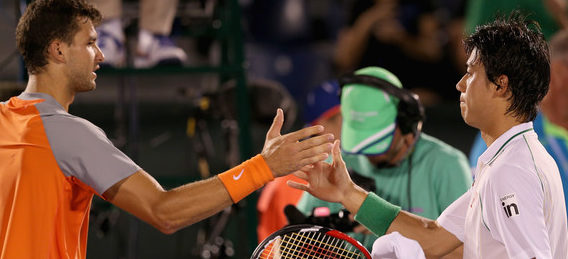

Photo courtesy of zimbio.com The Tennis Review previews the Brisbane Open final between Kei Nishikori (3) and Grigor Dimitrov (7) and asks if this is the match that will send Dimitrov back into the ATP’s winning circle.
Back at the end of 2014,when Kei Nishikori and Grigor Dimitrov were making the business ends of slams, breaking into the top ten and winning ATP 500 titles, matches between two of the then touted ATP Young Guns looked like they would become a regular event.
Since then, injuries, mental toughness issues, and the distractions of being twenty-something millionaire pro athletes have taken their toll and they have met just once, in the Canadian Open last season, a match which Nishikori won in three sets, giving the Japanese a head to head lead of 3-0. All three of those wins have come on Outdoor Hard, and this match, played on the Outdoor Hard courts of Brisbane, will be their first final.
Both players beat higher seeded opponents to reach the final, and both won in straight sets, Nishikori beating Stan Wawrinka and Dimitrov putting out defending champion Milos Raonic.
This final, then, looks like a surprise- the start of the season tends to spring them with some players improving weaker parts of their games or adding new touches- but it’s only a shocker on paper with both men evenly matched with their semi-final opponents. Nishikori was 3-4 versus Wawrinka and had won their last match at the ATP WTF, and Dimitrov had a 2-1 lead over Raonic (their last match was three years ago, but that head to head still suggests Dimitrov, on his day, has a little too much all court variety and baseline guile for Raonic).
One thing that is a genuine surprise for men’s tennis, and a pleasant one, is the recent resurgence of Dimitrov, a player who has the attractive game, personality, and looks to draw a lot of fans to the game, and retain those impatient for the next generation of talent to rise to the top.
The Bulgarian seemed to be suffering from the ” Baby Federer” curse, but has been showing signs of improvement since the second half of 2016, rising from No.40 at the end of July 2016 to his current ranking of 17.
That shift of momentum, and subsequent confidence, in his favor presents Dimitrov with a good opportunity to win his first title since Queens 2014, and with three finals on his resume in 2016 (Sydney, Istanbul, Beijing), he has plenty of recent experience of playing for titles to draw upon if things versus Nishikori get tense.
The Big Question is can he turn around not only his luck in finals, but also his head to head versus his Japanese rival?
Nishikori has a lot going for him when it comes to playing all court players like Dimitrov, (and Wawrinka) on medium speed hard courts. The Japanese has the powerful baseline skills to keep them pinned back where he wants them, and the superior overall quality groundstrokes to get the better of them on big points. He can also put a lot of pressure on them on the return, while their own return games, often a weaker part of their games, do not allow them to take advantage of Nishikori’s vulnerable second serves.
Those factors, and the mental advantage Nishikori has over Dimitrov, including the head to head lead and his greater experience in big matches, mean the match is very much in the hands of the Japanese.
Nishikori will not, however, face many players with quite the talented tennis hands Dimitrov possesses. Dimitrov will, needless to say, have to play a great match to win the final, but, luckily for the Bulgarian, he has it in him- his service, his attacking game and his variety of shots have the potential to, if they are all clicking, put him into a winning position against the Japanese, a player who can get edgy in big moments.
The final of an ATP 250 event is far from the biggest moment Nishikori has faced- he has been in a slam final, ATP 1000 finals, ATP 500 finals, Slam semis-and he usually handles being the favorite in a final very well. That means the Japanese should come out feeling good and playing his fine brand of baseline attack, but he will not have faced many underdogs with the hard court movement and defensive game of Dimitrov, skills the Bulgarian can use to keep the pressure on Nishikori in his confident periods, and if Dimitrov can apply the pressure for long enough and make Nishikori doubt himself, the Japanese might start overhitting and help Dimitrov in his quest to earn another trophy.
The Bulgarian has to be careful, though and only go on the defense when he needs to and not when he gets nervous, lacks confidence, or starts feeling the pressure.
That’s what this, like all finals, comes down to- who handles the pressure better, an issue both Dimitrov and Nishikori have struggled with in different ways and at different levels of the game since their breakout 2014 seasons. Dimitrov, from late 2014 through to mid 2016, could not handle it at all, from the early stages of ATP tournaments across the board, and Nishikori has coped with it better in the bigger events only to fall apart facing the best players in big matches.
Right now, it is Dimitrov who seems to be breaking through the better of the two in the area where he has been mentally struggling the most, and with momentum, confidence, form, and the quicker speed of the Brisbane hard courts all on Dimitrov’s side, the Brisbane final versus Nishikori might be the match that gets him back into the place where many think, and which he seems to now believe, he belongs- men’s tennis’ winning circle, one he has the talent and the work ethic to help nicely spin along.
Prediction: Dimitrov to score his first win over Nishikori, in straight sets.
-
Tennis Rackets Five Things To Think About When Choosing A New One
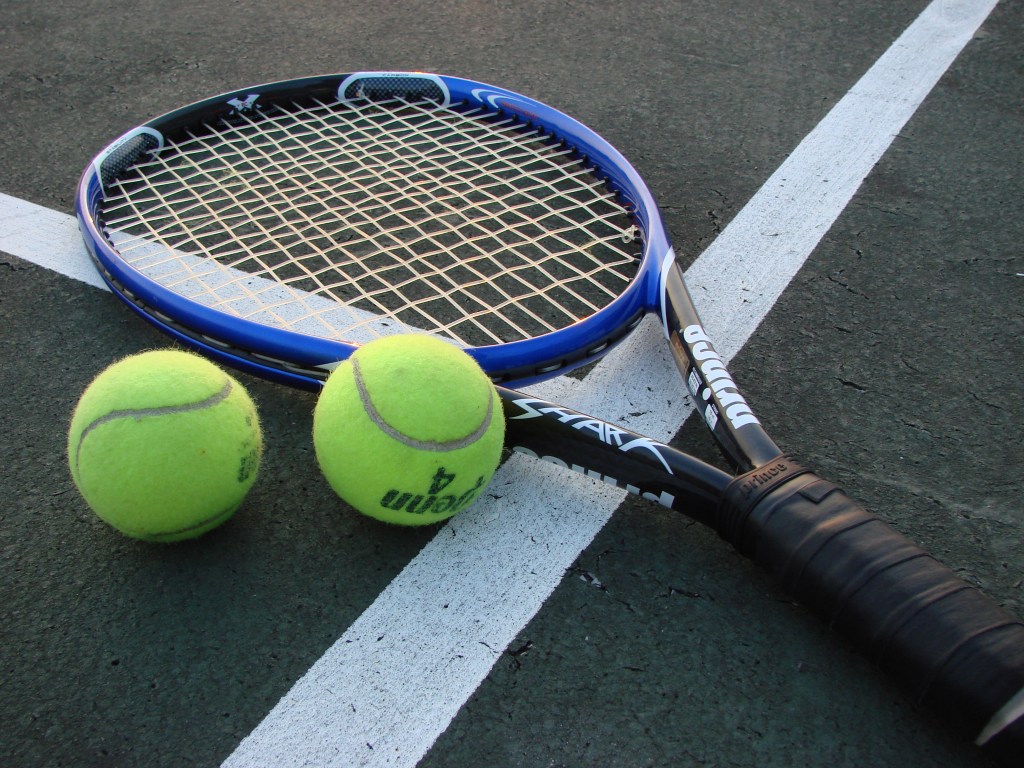
If one of your New Year’s Resolutions is to pick up a tennis racket more often and improve your game, you might be considering buying a new racket and, with the huge number and variety of rackets on the market, wondering where to begin. Hugo Allen, tennis coach and Managing Director of Connected Clubs, is here to help with five important things to consider when getting a grip on which racket to buy.
As a coach, I am often asked by players how they should choose a new racket or indeed whether they should change from their existing weapon of choice. It is not an easy question to answer as selecting a tennis racket is a very personal choice and depends on your playing style.
You should also consider the level at which you play and any existing injuries you have. There are different schools of thought on preventing tennis elbow but personally I have found for my players that purchasing a slightly heavier racket can help.
The ranges manufacturers offer can also be confusing with some releasing two new ranges or more a year. In many cases new rackets are simply cosmetic updates of previous models so while there have been thousands of new rackets released in the last 10 years many are very similar to each other.
The most important thing to think about when choosing a racket is whether power or control is more significant to you. For players with a long fast swing a racket designed for control is best; for those with a compact swing a racket aimed at creating power will be best.
Weight & Swing Style
In general rackets designed for the most control will have a small head size (under 98sq inches), be fairly heavy (over 300g), have a thin beam and be head-light in terms of balance. A player using this kind of racket usually will not be struggling to generate power on their shots and the majority of pros use rackets which fall into this category. Example of current rackets in this category include the Wilson Pro Staff range and the HEAD Speed rackets.
The next category of rackets, designed for a mixture of control and power, will suit the majority of recreational players. They will have an average head size (around 100sq inches), thicker beam and an even balance. Examples include the Babolat Aero range and the HEAD Instinct range. If you are unsure what to buy, picking a racket in this category from a season or two ago (you need not spend more than £70) is a safe option.
The final category are rackets designed to help players develop power and are lightweight. These will weigh less than 280g, an oversized head (greater than 102sq inches), have a thick beam have a head-heavy balance. An example would be the HEAD TiS6 racket and these are perfect for beginner players who want to have success quickly. Rackets in this category are very user friendly.
Try before you buyThe best way to choose a racket is to try it on court as all will have slightly different playing characteristics and the balance can vary significantly. Most good sports shops will allow you to borrow demo rackets and there are a number of online demo options. It is also important to consider the grip size and strings.
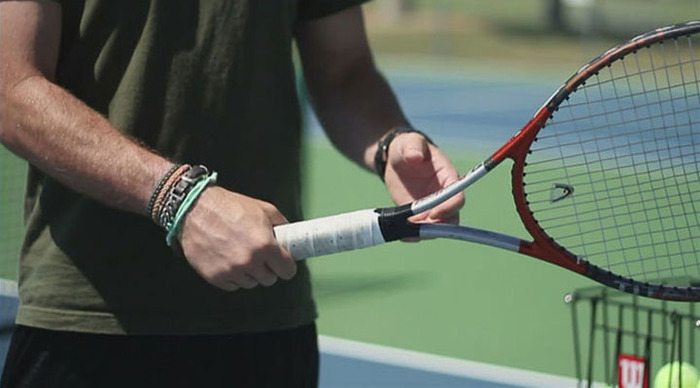
Photo courtesy of IndcenResor.com Grips
In terms of grip size, most juniors go for grip 0-2, women for 1-3 and men 3 or 4. Many players also choose to use an over grip so take this into account. To check which grip size you need, take a ruler and measure from your bottom lateral palm crease to the top of your ring figure. To convert this measurement to your grip size use the table below:
GRIP 0 is 4 inches
GRIP 1 is 4 1/8 inches
GRIP 2 is 4 1/4 inches
GRIP 3 is 4 3/8 inches
GRIP 4 is 4 1/2 inches
GRIP 5 is 4 5/8 inchesStrings
The strings in a racket can make a big difference to how it plays, but will lose tension over time. As a rough guide, you should have your racket restrung based on the number of times you play a week. For instance, if you play twice a week, it is a good idea to have the racket restrung twice a year. Of course you may have to get it restrung more often if you break strings!
The majority of rackets come pre-strung from the factory with the exception of the most expensive advanced rackets. They are likely to be fairly poor quality strings and will have lost tension since manufacture so you may want to have it restrung straight away. In general the tighter you have your racket strung the more control you will get and conversely stringing it loosely will give you more power.
There are lots of different types of strings available and your coach or local sports shop should be able to advise you on the best string for you.
Style
The reality is that there are far more important factors than your racket which determine how you play! Roger Federer could play well with any racket and buying Federer’s racket isn’t going to allow you to win Wimbledon without a lot of hard work and talent. The most important thing is to choose a racket you like and if you base that solely on the colour, don’t worry too much.
Hugo Allen – Tennis Coach and point of contact training specialist coaching in Hertfordshire and London. MD of Connected Clubs Limited European distributors for the Billie Jean King Eye Coach, UK distributors for OnCourt OffCourt and the Heavy Trainer.
-
Tennis 2016 A Tale of Two Number Ones Novak Djokovic Andy Murray
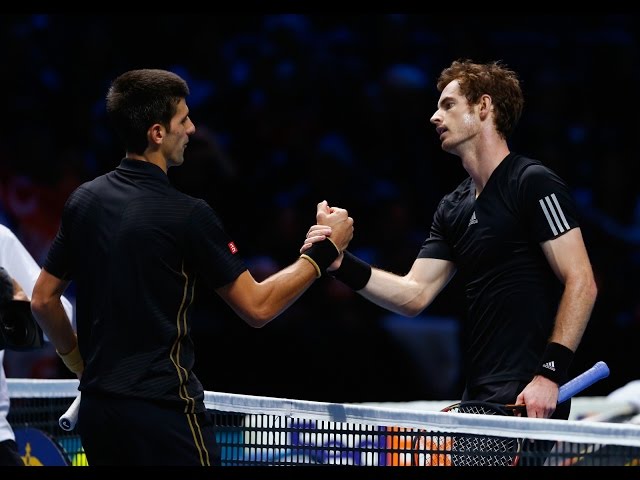
Photo Courtesy of http://www.youtube.com 2016 was shaping up to be a repeat of the Novak Djokovic No.1 show 2015 until Andy Murray stepped up and put the fight back into men’s tennis. The Tennis Review looks back at 2016’s A Tale of Two Number Ones.
History Repeating
A familiar scene played out in this year’s Australian Open final- Novak Djokovic tearing Andy Murray apart on the Rod Laver Arena. A scene men’s tennis might have preferred to replace with a repeat of Djokovic and Murray’s Australian Open 2012 semi-final, arguably the best match of the 35 they have played. That match would have been just what tennis needed- two of the world’s best going five sets at the business end of the season’s first slam. Instead, Djokovic defeated Murray for the title for the fourth time since 2011, in straight sets, in another tough to watch encounter for neutral fans who admire variety in their tennis skills, but which was compulsory viewing for lovers of modern tennis and the battle of athletic endurance it has become.
If that Australian Open final was a preview of what was to follow in 2016 for men’s tennis, the game was in trouble. While there were elements to admire – the length of some of the rallies, some fine winners, the ability of both men to track down every ball, the mental toughness of Djokovic- the match lacked one of the most basic sporting elements of them all- unpredictability. The Djokovic-Murray rivalry had become so uneven, with Djokovic winning ten of their last eleven matches going into this year’s Melbourne final, going back to Miami 2014, the outcome was never in doubt once Djokovic had weathered Murray’s attempts now and then to take charge .
The Novak Djokovic Show Continues
Taking charge was what Djokovic was all about in men’s tennis since Beijing 2014, and with his sixth Australian Open title under his belt, (tying him with Roy Emerson for all-time, and making him the leader in the Open era), Djokovic continued winning in 2016, taking the Indian Wells-Miami double for a record fourth time.
On his way to the Indian Wells-Miami double, Djokovic beat his next-in-line rivals Milos Raonic and Kei Nishikori in the finals, dropping just eight games. Raonic and Nishikori’s inability to impose their games on the world No.1, and these games have taken both players into the top ten, into the business ends of slams, were not so much down to their own failings, but down to Djokovic’s strength- whatever weapons you have to throw at him, he catches them, sends them spinning back, as awkwardly as he can, either back to your strength, weakening it in the process, or striking it right at your Achilles heel, careful to stab it twice, even after you are down.
Murray Struggles
Just as the rest of the tour were unable to inject drama into men’s tennis by challenging the world No.1, the Djokovic-Murray rivalry looked unlikely to deliver as a battle between the top two in the world either as Murray lost to Federico Delbonis in Indian Wells and Grigor Dimitrov in Miami, losing both times after being up a set and a break, and failing to provide a challenge to Djokovic at the top of the rankings.
That lack of consistency in Murray is what had held him back from the top spot throughout his career, but what made these losses worse is that he had finally found the key to his game on clay, putting together some fine results in 2015, and he had a decent history in Indian Wells and Miami, good enough to make the semis and finals, even take the title in Florida.
With Murray still unable to play top class tennis all year round, an assault at No.1 in 2016 looked like it would need Djokovic to either suffer an injury, or suffer a dramatic decline, and Djokovic’s superb conditioning and his desire for a historic first Roland Garros trophy meant things looked bleak for Murray, and for those who were crying out for a contest at the top of the game, the kind Becker-Edberg, McEnroe-Borg, Sampras-Agassi, and Federer-Nadal had delivered.
A Change in fortunes?
The tennis Gods must have ears. Djokovic faltered in his Monte Carlo Opener to Jiri Vesely, a surprise loss considering how far ahead he had looked of the pack.
That Vesely loss was perhaps the first hint of real vulnerability from Djokovic since the Summer of 2014. The Serbian had been close to big defeats, but he had always found a way back. Against Vesely, he looked at times like he could turn things around, but he was nowhere near as sharp as he had been in his previous events, and fell flat when the few chances he had came his way.
With Djokovic, aged 28, an all time Great and in his tennis prime, feats such as winning Indian Wells and Miami back to back and then taking the Monte Carlo title were expected, only to be thwarted by great performances by his rivals in the later stages of events. Djokovic suffering such an upset loss to Vesely, a promising youngster but still far from his potential, sent more than a few whispers around the tennis world, and the word was out- perhaps, just perhaps, Novak Djokovic, the pressure of the approaching Roland Garros mounting, was finally losing his edge.
Madrid, not, historically, Djokovic’s best ATP 1000, was where Djokovic managed to reassert himself, defeating Murray in three sets in the final, ending on a 13 minute final game. In hindsight, that game was also a turning point in both men’s fortunes- Murray, the defending champion, refusing to give in without a battle, (the faster conditions suiting the No.2 better, but the mental side of things still not on his side) , Djokovic pushing himself all the way to keep his domination of his rival going, but his grip on things ever so slightly loosening.
That match perked Murray up and the Scot convincingly beat Djokovic in the Italian Open final, winning 6-3, 6-3. The world No.2 gave a performance tennis fans had been crying out for, playing aggressive, efficient tennis, the only kind good enough to defeat a tired out Djokovic.
That win boosted the Scot’s confidence and he went all the way to the Roland Garros final, the Scot’s first in Paris, and completing his set of Grand Slam finals.
Djokovic peaks.
Djokovic had struggled throughout Roland Garros, most notably in his fourth round match versus Roberto Bautista Agut. Struggling through some tough matches in the early round of slams is not new for Djokovic, though. The Serb saves his best for last, and his Roland Garros final performance ended like most of the Djokovic-Murray encounters, a couple of patches of intrigue followed by Djokovic’s superior stamina and mental strength prevailing, that stamina and mental strength in its final reserves, the last drops spent by Djokovic in his now successful quest for a history making four slams in a row, and the Career Grand Slam.
While Murray had not managed to turn the head to head round when it really mattered, the stage was at least set for a real fight for Number One with Djokovic’s weakest part of the season, and Murray’s strongest, coming up.
Murray Gets High on the Grass
The clay stretch was the last to be seen of Djokovic’s superior stamina and mental strength for 2016. The Serbian’s dream fulfilled in Paris, he was knocked out of the Wimbledon third round by Sam Querrey in the kind of match he had managed to fight through against Anderson a year before in SW19, against Gilles Simon in Melbourne earlier in the year, and Bautista Agut in Paris.
At Wimbledon, something was up with the No.1 however, and on a surface which is faster in the first week than the second and at a stage of a tournament in which Djokovic is the most vulnerable, Querrey took advantage of the weapons he has on grass and beat the defending champion.
The upset certainly got the headlines tennis needed and its shock value was much appreciated, but it did deny tennis fans a Murray-Djokovic contest on Grass. Grass is the surface where Murray has the edge on Djokovic, the Scot’s naturally finer touch and hands earning him the advantage. They have played two big matches on the surface, the Wimbledon 2013 final, and the 2012 Olympics Semi-final, and Murray has won both, and without dropping a set.
How their head to head would be panning out had Grass a greater share in the season’s surfaces, and how that would affect Djokovic’s dominance over Murray is an interesting question, and one which, in 2016, we did not get answered.
Tennis is not about ifs and buts, however, and with Murray playing some of his best ever tennis going into Wimbledon 2016, and Djokovic somewhat spent, if they had met in the final, Murray might have begun his sudden climb to Number One with a very credible victory.
How Murray would handle being a favorite in a slam for the first time, considering his mental struggles in the past, was another interesting question, and one we did get answered. Having Ivan Lendl, a man so integral in his first two slam wins, back in his camp certainly seemed to be helping. The Scot struggled versus Jo-Wilfried Tsonga in the quarters, going five, but he had no problems dismissing Tomas Berdych in the semis, and then slam final debutante Milos Raonic in the final in straights to lift his second Wimbledon title, and third slam overall.
Murray reaches Number One
That Wimbledon win presented tennis with what had been an unlikely scenario back in the Spring- Andy Murray reaching world No.1.
The closest Murray had been before was after winning Wimbledon 2013, and holding the US Open, the Olympics, Queens, Miami, Brisbane, the Australian Open final, and the Shanghai final, giving Murray 9360 points to Djokovic’s 12310. Back then, though, Djokovic was not as dominant as he was in the first quarter of 2016, and Murray was underperforming on clay. There was the chance, nevertheless, that Murray, who had won titles in Cincinnati and Montreal in the past could have challenged for the top ranking, and taken it.
In the early Summer of 2016, when Djokovic’s loss of form began to really show itself, Murray, trailing Djokovic by close to 8000 points, looked like his first stint at No.1 would have to wait until at least Spring 2017 when he had few points to defend and Djokovic might still be struggling to defend his thousands of points from his early season run. Murray needed a declining Djokovic in order to get the No.1, just as he had needed Federer and Nadal to be out of his way to finally win his first slams. Djokovic, too, had gotten back to No.1 in 2014 when Nadal had declined with injury and Federer had entered his mid 30s. That is a big part of reaching No.1 – the condition of your main rivals for the top spot, and you being in better condition. That condition does not have to be the greatest ever, either- just better than them.
No one though quite predicted just how far Djokovic would fall in the latter stages of the 2016 season, nor just how Murray would so deftly take advantage of that decline to feed his own motivation, most evident in his improvement on his second serve.
While Djokovic slipped from one loss to another, Murray kept rising, winning Olympic Gold, beating an inspired del Potro with all the Olympic goodwill of the crowd behind him, and then mimicking Djokovic’s usual end of year domination win for win as he went on a tear, winning Beijing, Shanghai, Vienna, Paris-Bercy, and the ATP WTF.
Djokovic, meanwhile, was struggling with injury, and other than winning in Toronto, suffered one upset after another. The Serb lost to Wawrinka in the US Open final, to Bautista Agut in Shanghai, and to Marin Cilic in the Paris-Bercy quarters, the loss that paved the way for Murray to take the final step to the top.
With Djokovic out in the Paris-Bercy quarters, Murray now had to win his semi-final to reach world No.1. The Scot, in the end, did not have to hit a ball as his rival Milos Raonic withdrew with injury.
Murray had not had to beat a single top ten player in his Autumn run to Number one, (though the match versus 5th ranked Raonic in the Paris semis would go down as a win) and he did not have to win the final match needed to claim the top spot. That was not the kind of run to have the critics welcoming him arms open. It had them up in arms instead, claiming Murray was a computer No.1 and did not truly deserve to be men’s tennis leading player.
Two Number Ones Battle it Out in the Decider
The ATP finals would put an end to the Number One debate. If you wanted a match which illustrated just why Andy Murray deserved to be No.1, if his actual accumulation of points was not enough, then his three set win over Milos Raonic in the ATP World Tour Semis would be that match.
Murray faced, in Milos Raonic, who would finish the season the world No.3, a hungry, young opponent with a great serve and a big forehand, two weapons which had gotten the better of Murray in the past. The Scot, though, with his much improved second serve, superior fitness, and greater consistency and match play, strengths not dissimilar to the player he overtook at No.1, prevailed in the longest match played at the ATP World Finals, decided on a final set tiebreaker.
That Murray win over Raonic and Djokovic’s demolition of Kei Nishikori in the semis meant 2016’s ATP World Tour Finals finale was the first time in its 26 year history that the World No.1 ranking had come down to the very last ATP match of the season.
The match was far from a classic, Djokovic hitting just 13 winners to 30 errors as Murray exposed him 6-3, 6-4, yet it did deliver an unpredictable end to the season, and ensured an interesting start to the next one as Murray heads into the Australian Open looking to win a title he has failed to grasp in five championship matches and at which Djokovic is the winningest champion in the Open era.
With the win, Murray edged Djokovic for the year end number spot by 12,410 to 11,780 points. The Scot had won one less slam, but he had done the job a Number One needs to do- racking up more points than anyone else, and in beating five top tenners to claim year end No.1, there could be no questions as to how worthy Murray was heading the ATP rankings.
If numbers were not convincing enough, then the strongest argument for Murray’s worthiness is the very player he so narrowly beat to the Year End Number One spot- Novak Djokovic, a player who has ended the season No.1 four times (2011, 2012, 2014, 2015), has spent a total of 223 weeks at number one (the fifth most in history), and as world No.2 had two slams and four ATP 1000s on his resume. A player who leads his head to head with Murray 24 -11.
That Murray was able to put an end to his old rival’s dominance over the tour, and himself, tells you all you need to know about whether or not he deserved to be Number one. In a year which told the tale of two Number Ones, one of them the greatest to hold that post in the history of the game, it was Murray who held the year end status, and injected some much needed contest into men’s tennis, turning a leisurely read through the history books into not exactly a page turner, but a book worth staying with until the end.
-
Tennis Christmas 2016 What ATP Top Players Want
Photo courtesy of sport.slaq.am Christmas is here and it’s time for men’s tennis’ top players to receive some much deserved presents from the Tennis Santa. None of those presents will be entirely gift wrapped, of course, the likes of Federer, Murray and Zverev having worked hard over the years to get into the position where whatever Santa brings them has been much deserved. The Tennis Review tries to guess just what 12 of the ATP’s top players would like to find under their Christmas tree in 2016.
Andy Murray: An Australian Open title
If Santa brings presents to tennis players who have been good, then no player is more deserving than world No.1 Andy Murray, and there would be no more fitting prize for the Scot than an Australian Open trophy.
Five times Murray has contested the Australian Open final (’11, ’12, ’14, ’15, ’16), and five times he has held up the runner up plate. That’s an unenviable record- the most times a player has lost a Grand Slam final.
As if that was not bad enough, the Scot has also managed to only win two sets in those five attempts, unable to make a contest of one of the sport’s biggest matches.
Such potentially career damaging stats and performances make Murray’s current status even more impressive. In 2017, Murray will go into the event as the favourite- the world No.1, unbeaten since the US Open- and is unlikely to ever, if he gets there, contest the final with such momentum and confidence.
If Murray is ever going to get his hands on the trophy he has watched his rivals raise again and again, with a little help from Santa, and you need all the help you can get to defeat Djokovic down under, 2017 is the year.
Novak Djokovic: Cincinnati
Only one of the ATP’s big trophies has eluded Djokovic, and that’s Cincinnati. Djokovic is more than competent in fast conditions, but if he is vulnerable then it’s on a hot day on a medium paced hard court with lighter balls and, as he has experienced in his most recent trips to the Cincinnati finals, a fast court expert like Federer across the net.
After achieving historic feats such as winning all four slams in a row and completing the Career Grand Slam, Djokovic has suffered something of a letdown, and no longer wants the pressure of being No.1 and winning slams. Instead, what he wants, he says, is the simple pleasure of just playing tennis.
Perhaps that move away from his all conquering history making focus opens the door for Djokovic to focus on “smaller” goals such as winning Cincinnati and becoming the first man to win all 9 ATP 1000 titles.
Djokovic looks like he has found the joy he has been looking for- see the facebook post below– and with the weight of the tennis world off his shoulders, come August, he may be able to really loosen them where he is least comfortable yet still more able than most and enrich his legacy even further.
Rafa Nadal: A healthy season
Back in the European Spring, Nadal looked like he was back to his clay court best, winning Monte Carlo and Barcelona back to back. A wrist injury put an end to that run, though, and by the time it came to Roland Garros and for fans to learn just how back he was, the Spaniard had to withdraw during Roland Garros.
Nadal did come back at the Olympics, but, once again, his return to the tour was short-lived and he took more time out after losing his Shanghai opener in a third set tiebreak to Viktor Troicki.
The stops and starts which have inflicted Nadal’s ATP tour runs since Wimbledon 2014 have not helped his rhythm and in turn his confidence, and another comeback to the tour before he is ready might only serve to aggravate his injuries and damage his confidence even further.
What Nadal would most want for Christmas is something he no doubt shares with nearly all tennis professionals on this list- good health.
For Nadal, with age and years of baseline play taking their toll on his kness and wrists, his health is more or less out of his control now, and having it back really would be a gift he and his fans would not take for granted.
Roger Federer: One more big performance
At 35, having undergone his first ever career surgery aged 34, and ranked 16, Federer’s chances of winning an 18th slam and leaving the game on a high like Pete Sampras did look less and less likely.
When Sampras won the US Open 2002, he had recently turned 31, (close to the age Federer was when he won his 17th slam), conditions were faster, he was only two years off his last slam win at Wimbledon 2000, and his serve those two weeks was world class.
Federer’s current ranking is the greatest similarity – Sampras won the US Open 2002 ranked 17. The American drew a favourable draw, though, and faced 6th ranked and an old rival against whom he had a dominant head to head, Andre Agassi, in the final.
Federer does have some positives for Santa to work with. With Federer still making slam semis last season, and with his big four rivals either injured or declining or relatively untested in their No.1 status, Federer could be presented with a slam draw opening up and a rival in the final who he matches up well with.
After all, just how would Murray feel facing a motivated, hungry and in form Federer in a Wimbledon or US Open final? We can guess how Federer would feel – few players have been so keenly self aware of their position in tennis history, and it is hard to believe the Swiss would let a such a gift wrapped chance from the tennis Gods slip from his grasp.
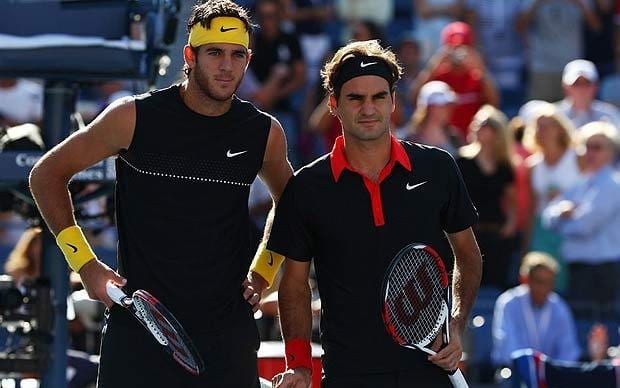
Photo courtesy of pic2fly.com Juan Martin del Potro: A slam final
After nearly 11 months off the ATP tour, del Potro has returned to the top flight of tennis quicker than he can hit a forehand winner past his rivals. The 2009 US Open champ contested major ITF finals such as the Olympics and Davis Cup finals, reached slam quarters, and won a title in Stockholm.
But all along, his success has never been about winning, but about the taking part. If del Potro did make a slam final, and his wins over Djokovic, Murray, Wawrinka, Nadal and others in 2016 mean it is not improbable, whether or not he wins it would come second to the very fact that he was there, competing, after everything he has been through.
Marin Cilic: Wimbledon
Cilic has had to clear big hurdles in his career such as being suspended for banned substances, and an inclination to choke big matches. Two hurdles which carry great stigma in pro sports, and which still haunt him somewhat.
This season Cilic let big leads slip to Federer at Wimbledon and to del Potro in the Davis Cup final.
Those kind of losses don’t hurt Cilic as much as they used to – he bounced back strongly from the Federer SW19 loss, perhaps because he has already proven to himself he has it in him to win the game’s biggest prizes.
Despite that slam winning status, Cilic does not receive the credit he deserves and which he might have received had his past been less tainted. He is, after all, one of only seven active players with a slam title- and at 28, the youngest on tour, too.
This season, Cilic has shown off his gifts to more silverware winning effect, winning his first ATP 500 and 1000 titles, and finishing the season ranked 6th.
The next step for Cilic is top five and another slam title, and while his all round strengths and peak level play mean that could come anywhere, Wimbledon is the most likely venue to further reward his big serve and first strike tennis, and perhaps finally exorcise those demons – his own, and other’s. For while a one slam winner can be labelled a wonder, a multiple champ, and a Wimbledon one at that, is nothing less than a hall of farmer.
Alexander Zverev: A Net Game
A great serve, a potentially all time great double handed backhand, and all the focus you could ask of a teenaged millionaire, Zverev is really set for a great future. There is one glaring weakness, however- his net game.
These are still early days for Zverev, very much a work in progress, but the sooner Zverev can improve that part of his game, the sooner we will see him in the second weeks of slams and the business ends of ATP 1000s, and some new blood can start flowing in men’s tennis.
Nick Krygios: Balance
Whether or not Kyrgios deserves a gift from Santa will swing from one extreme to another when it comes to the answers of most tennis fans with the Australian being a player fans either love or love to hate.
Whichever side you sit on, one thing which cannot be debated is that Kyrgios made great leaps in 2016, winning two ATP 250s, Marseille and Atlanta, and the ATP 500 in Tokyo and ending 2016 ranked 13.
Yet Kyrgios’ on court antics such as tanking in Shanghai and his off court words such as his own love to hate relationship with tennis managed to overshadow those achievements in tennis’ headlines, achievements which are impressive for a 21 year old in today’s far less youth friendly tennis conditions.
Kyrgios’ “antics” and words may be entertaining and controversial in a game looking for personality over substance, but they are just that- the “antics” of a 20 year old, the head of the Next Generation, in a game desperate for young stars to come through.
Those antics are also nothing new- we have been there and worn the fluorescent colored T-Shirt with Andre Agassi, who was much less vilified for expressing his darker side, and who, having expressed it in as extreme a fashion as, we were later to find out, it can go, turned out to be one of tennis’ most beloved and decorated players.
Kyrgios’ star has the potential to soar Agassi style, but right now it is being dimmed by the Media zooming in on his darker side, and his skills and talent getting blurred in the background. There is certainly room in the tennis media for both to be in focus, and if both sides can be celebrated and balance restored, the game may just find it has what it is looking for right there under its nose.
Photo courtesy of menstennisforums.com Dominic Thiem: Batteries that never die
Thiem won’t need them, however, if he does the smart thing and cuts down on how many tournaments he plays.
The Austrian may be the youngest player ranked in the top ten and have wins over Federer and Nadal on his resume, and have competed in a slam semi-final, but his ranking is largely built on the back of wins at 250 events and not on wins at big events, the type that would build his confidence and set a solid foundation on which to build a career worthy of a player touted as a future Roland Garros Champion.
Tomas Berdych: A dream slam draw
Berdych, aged 30, may look past his best, but the 2010 Wimbledon runner up is still ranked in the top ten, still making slam semis and still winning titles. Unfortunately for Berdych, his runs come to an end once he meets one of the players who he matches up badly against, such as Djokovic or Murray, and his chances of winning a slam title before he retires are unlikely to happen unless those players are absent from the final stages of draws or have an off-day.
Players such as Johansson and Gaudio have taken advantage of a kind draw and a struggling favourite in the final to take a slam title, the kind of things Berdych needs to fall in place, alongside his clean hitting game hitting top form, for him to achieve a distinction a fine career and his all time great ball-striking certainly merit.
Lucas Pouille: To avoid the Sophomore slump
Pouille was touted from early on in the season as a player to watch, and the Frenchman with the fine groundstrokes and court craft not only lived up to expectations, but exceeded them. The Frenchman made the final in Bucharest, defeated Rafa Nadal in five in the US Open fourth round, and won the Metz title, beating Thiem in the final.
That’s a strong year for an ATP top 100 rookie, and it will be hard, with plenty of ranking points to defend, to back up, especially with his rivals now keenly aware of the strengths that have seen Pouille rise from a world ranking of 91 on the 15/02/2016 to a year end ranking of 15.
Gael Monfils: A Roland Garros final
2016 was the year Monfils started to look like he was fulfilling his potential with a run to the Monte Carlo final, a first ATP 500 trophy, in Washington, and a slam semi at the US Open.
Monfils’ potential, though, is greater than that, but he never quite shrugged his demons to reach it in 2016, injuries forcing him out of his best slam, Roland Garros, and some questionable tactics causing him to leave the stage of his greatest achievement in New York more infamous than famous, just when it seemed he was about to be recognised as a focused pro and not a distracted clown.
Conquering demons is what all players have to eventually do to reach their goals, and Monfils, whose athleticism and baseline skills are tailor-made for the modern game, has at least a couple of ATP 1000s titles and a couple of slam finals in him, perhaps even a slam title, if he can finally slay them.
Roland Garros, where Monfils has reached the semis once and the quarters three times, would be the perfect setting for Monfils to win such a battle, before a crowd eager to see one of their country’s many gifted talents morph into the first men’s champion since Yannick Noah in 1983, a present that, if Monfils delivered, would elevate him to a Tennis Santa, and God, himself.

Tennis from a fan's point of view
[
[
[
]
]
]
 thetennisreview