-
Andy Murray The Last of the Big Four Becomes the Big One
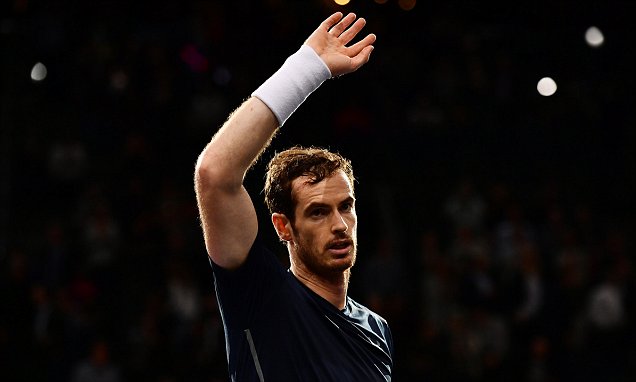
Photo courtesy of Pegitboard News The Big Four, the ATP’s marketing goldmine which branded the rivalries of its four most consistent players and created the conditions for them to dominate the game, took on new meaning on November 8th 2016 when the last of its members to hit the No 1 Spot, Andy Murray, finally became the Big One.
The Big Four defenders, in response to criticism that it was really the Big Three plus Andy Murray, have always argued the Big Four was not about Greatness but consistency.
However, now that Murray has applied his consistency in the game’s biggest events- he has reached the semis of 20 of the last 32 slams he has entered – to his year round ranking and reached No.1, the Big Four is now as much about the subjective topic of Greatness as it is about objective week in – week out results.
In becoming number one, Murray has gone from the elite circle of being one of tennis’ few multiple slam champions (there have been, including the man himself, 54 of them) to an even more elite one – the Scot is only the 26th player to become world No.1 in the ATP rankings since 1973, and with three slams on his resume, he has won more slams than ten of those men, and stands equal with Gustavo Kuerten (Kuerten was no.1 for 43 weeks, so Murray has some way to go to beat that record, but Murray’s additional 8 slam finals over Kuerten balance things out a little when it comes to who is greater? debates).
Tennis records are not always what they seem on the surface, however. There are plenty of names who won multiple slams and were the best in the game before the ATP No.1 ranking list was compiled (63 players, throughout the game’s history, have been ranked No.1 by either the ATP or by journalist’s annual rankings).
Kuerten also played in an era of, at times, wildly contrasting court surface speeds, from the mud of Hamburg to the ice rinks of Stuttgart, so, considering today’s surface homogenization, of which even Roger Federer has himself acknowledged, there is plenty of contention when it comes to ranking one player over another.
But one thing that is not up for debate is that Murray, a no.1 player and a multiple slam champ, is up there with the best of them.
The long road up to that pinnacle is down to two factors. The first is Murray’s hard work and sacrifice, leaving his family in his early teens to train in Barcelona, and transforming both his body and mind from muscles vulnerable to stress and negativity to those worthy of a champion. The second is Murray’s ability to craft his versatile game to the ATP’s slower conditions. Murray, at his very best, is a versatile counter puncher, the type who can boast of eleven wins over Roger Federer, including his first ever win over the Swiss in Cincinnati, two wins over Djokovic in slam finals, and victories over Nadal at the US Open semis 2008 and the Madrid 2015 final.
Murray’s fine touch, net skills, counter punching, and creativity helped him climb up tennis’ rankings, and his athleticism and the ability to make his opponents play one more shot made sure he stayed there with a game which could win with flair and speed on the tour’s faster courts and grind it out with the best of them on its more common slower ones.
Those predominant medium slow courts were, over the last decade, designed to make the Big Four just that. Federer, Nadal, Djokovic and Murray were arguably the best players in the game, anyway from 2008 onward, but with the surfaces of events playing more alike, their skills thrived week in – week out, and where tennis’ spotlight shone the brightest, at the slams and ATP 1000s.
The subsequent confidence the quartet of Roger Federer, Rafa Nadal, Novak Djokovic and Andy Murray gained winning week in – week out, earned them a heavy advantage over their second tier rivals, and their prospective future rivals, and the ATP had what it wanted, and what it believed fans wanted, too- not just one big Rivalry, but six of them.
The confidence Murray gained from his consistent record and from being branded in the same breath as three of the game’s most decorated players eventually paid off when he finally won his first slam at the US Open 2012. That was when the Big Four started to become more than just a reference to the same four players competing in the final stages of tournaments- Murray was no longer ‘just’ one of a small elite circle of players who had competed in several slam finals and multiple semi-finals, he also had a trophy cabinet home to slam-winning silverware, and added another less than a year later, and not just any other, but Wimbledon.
As much, however, as surface homogenization helped Murray rack up ranking points, it also hurt him – as the weeks playing strenuous rallies across the globe piled up, a back injury, which started to aggravate him before his Wimbledon ’13 win, saw him slide down the rankings at a time when he held two of the game’s biggest titles, Wimbledon and the US Open.
Murray’s injury at an age most greats are past their peak did not, fortunately for the Scot, matter in the Big Four era of tennis. The slower courts have also extended the shelf life of the ATP’s four biggest products, with Roger Federer still competing for slams in his mid-30s, compensating for the loss of a step or two, and giving the Big Four’s second tier rivals and potential usurpers an extra millisecond to think, to make the kind of snap decisions which, on big points, can undo the inexperienced.
Those slower career extending conditions meant Murray had time on his side as he endured a miserable 2014, and time did its job, healing his injury. Refusing to give up, a quality champions and world No.1s have in common, Murray came back to reach the 2015 Australian Open final, climb back to No.2 in the rankings and win his first ever clay court title in Munich, following it up with another in Madrid. That clay court development was a crucial one with Murray’s 2016 clay court performances racking up 3,160 of the 11,185 points he currently has on his No.1 ranking.
We have a new in town. Congrats Sir @andy_murray
— Roger Federer (@rogerfederer) November 5, 2016
//platform.twitter.com/widgets.js
For much of his time as world No.2 and 3 in 2015, Murray received heavy criticism as he proved to be an ineffective rival to Djokovic, suffering one heavy defeat to his former Junior rival, and now senior one, after another in big matches. Finally, though, his versatility and counter punching came into its own in the 2015 Canadian Open final against Djokovic, and at this year’s Italian Open, when tennis was crying out for Murray to make a real rivalry out of it, he defeated the world No.1 in straight sets, and with conviction.
That win boosted tennis temporarily, but did not translate into Murray breaking the spell Djokovic had cast over him in Slam finals. After adding another slam runner-up plate, his first at Roland Garros, and his 8th overall, to his collection, Murray trailed the world No.1 and his French Open conqueror by 8000 points, or two grand slams and four ATP 1000 titles.
That deficit seemed too much to cut anytime soon, but, just a few weeks later, Murray found himself as the favorite at Wimbledon when Djokovic was upset by Sam Querrey. Murray had never been the favorite at a slam before, and the last remaining Big Four player in the world’s biggest tennis event took full advantage of his new status.
Murray’s years of experience of both victory and defeat on the game’s biggest stages, his consistency, athleticism, self belief, and versatility all proved too much for the likes of Jo-Wilfried Tsonga, Tomas Berdych, and first time grand slam finalist Milos Raonic on the Scot’s road to his third Grand Slam trophy.
To the background of the tennis world’s chatter concerning his chances of reaching No.1 in the next few months, Murray wobbled in New York when burst speakers disturbed him versus Kei Nishikori and he slipped into his old bad habits of letting his frustration slip over into his body language and attitude, and giving himself, and ultimately the match, away.
The Scot got himself back together, however, when he replaced Djokovic as the man to beat in the final stretch of the season. Armed with a much stronger second serve, his biggest weakness now another strength, Murray stepped in to Djokovic’s shoes and stepped up to the challenge of taking the Serb’s world No.1 ranking, winning Beijing, Shanghai, Vienna and then Paris.
Murray only faced one top ten opponent in that stretch, one in which typically many pros are fatigued and less motivated after nine months on a grueling tour, and he finally grabbed the final points he needed to get the No.1 ranking without hitting a ball when Milos Raonic withdrew from their semi-final in Paris, the Canadian’s body letting him down once more in a career that has suffered in the slow conditions of today’s ATP tour as much as Murray’s has thrived. That, though, has been Murray’s strength – in the ATP’s survival of the fittest, he, like the rest of the Big Four, has been one of the last men standing. With Federer, Nadal and Djokovic all struggling with injury, Murray has now become the last man standing, the last of the Big Four to become the Big One, the last of them to become both consistent and Great at once.
-
Juan Martin del Potro Stockholm Trophy Run Five Points
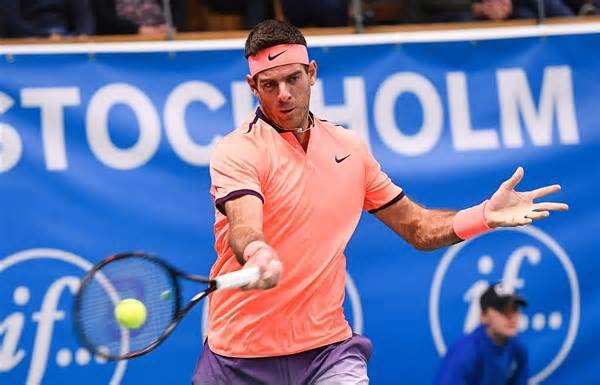
Photo courtesy of http://www.Newstaggr.com Juan Martin del Potro’s comeback to the ATP tour has gone from strength to strength since Delray Beach and was sealed with a title run in Stockholm. The Tennis Review looks at the Argentine’s return to men’s tennis’ Champion’s circle.
The Stockholm trophy is del Potro’s first since Sydney ‘14
del Potro’s latest trophy has been a long time coming, nearly three years, and his comeback success has been met with welcome arms by his devoted fans and by neutrals who admire his great serve and forehand, two weapons del Potro has been firing since his return and which are particularly explosive on indoor hard courts like those found in Stockholm.
Another title has been on the cards considering the great form del Potro has displayed since coming back to the tour in Delray Beach and reaching the Semis. The Argentine followed that impressive return with another semi-final finish in Stuttgart, a runner-up finish in Rio, and a quarter-final finish at the US Open.
That impressive string of results has now been crowned with the ATP 250 trophy in Stockholm, his first title since the 2014 Sydney ATP 250 title.
Qué felicidad!!! // So happy!!! pic.twitter.com/76bQaoPFYV
— Juan M. del Potro (@delpotrojuan) October 23, 2016
//platform.twitter.com/widgets.js
Del Potro did not drop a set on his run to the title.
Del Potro had to get through a tough draw, too, beating John Isner (ranked 27 going into the event), Nicolas Amalgro (41), Ivo Karlovic (21), the in-form Grigor Dimitrov (18), and Jack Sock (23).
That’s a pretty strong, big serving field on indoor hard, and del Potro dismantled them all in straight sets.
Del Porto’s serve was particularly impressive in the indoor conditions. Over the course of his championship winning run, the Argentine faced just 8 break points in 49 service games, and failed to defend just two of them, both against Grigor Dimitrov. The Argentine also did not face a single break point versus Isner, Amalgro or Sock.
#Delpo pic.twitter.com/pFINO846F4
— doublefault28 (@doublefault28) October 23, 2016
//platform.twitter.com/widgets.jsStockholm is del Potro’s 19th career trophy.
Del Potro has won 5 of his 19 career titles on indoor hard, and has won 15 hard court titles overall including the 2009 US Open trophy.
Del Potro is now ranked 42.
Del Potro is now 28-11 in 2016 in ATP events, and has climbed from a ranking of 1045 (08.02.2016) to 42, a climb of 1003 spots over 12 events and ten months.
42 is del Potro’s highest ranking since October 20 2014 when he was ranked 29.
February: world No.1045
October: world No.42Having won Stockholm, @delpotrojuan is now back inside the world’s Top 50 #MondayMotivation pic.twitter.com/IgQ1TEXvte
— Wimbledon (@Wimbledon) October 24, 2016
//platform.twitter.com/widgets.js
The ATP’s top players will be hoping del Potro gets a top 32 seeding by the Australian Open
Since coming back to the tour, del Potro has beaten the likes of Stan Wawrinka, Novak Djokovic, Andy Murray, Dominic Thiem, and Rafa Nadal.
15 of del Potro’s 34 wins (including ITF events in Rio and the Davis Cup) have come against players ranked in the ATP’s top 32, an ominous sign for the potential top 32 seeds in 2017’s Australian Open. Seeds who will be hoping del Potro joins them.
The Argentine currently has 1020 points while world No.32 and recent Moscow champion Pablo Carreno Busta has 1,360.
Del Potro will next be competing in Basel (where he faces Robin Hasse in round 1 and could meet David Goffin in round 2) and a deep run there would help his Australian Open seeding chances.
However, while del Potro’s seeded rivals will be happy if he joins them, it won’t make much difference to the man himself if he misses out. Seeded or not in Melbourne, the Argentine has the weapons and the heart, if his Stockholm title and Rio and US Open 2016 runs are anything to go by, to do damage whoever the seed, whatever the round.
-
ATP Tour 8 Questions for the Last Stretch of the 2016 Season
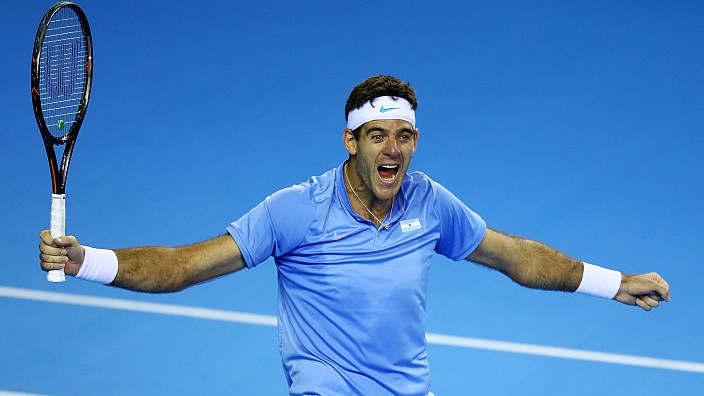
Photo courtesy of btnovinate.bg Men’s tennis has hit its final stretch of the 2016 season and there are plenty of questions to keep fans interested in the run up to the World Tour Finals. The Tennis Review gives you eight of them.
Can Juan Martin del Potro keep the momentum going?
Expectations about del Potro’s return to the ATP tour at Delray Beach were low which made the Argentine’s achievements such as defeating Novak Djokovic on the way to the Rio final and reaching the US Open quarters even more of a high for his devoted following.
del Potro’s popular comeback and the way he connects with fans via social media has been a much needed injection of passion and genuine charm to the tour, and considering the ever improving state of the now ranked 64th player’s backhand and health (after just 11 tournaments played), and his past success in the tour’s final stretch, with titles in Basel (2012, 13), Tokyo (2013) and Vienna (2012), and a runner up finish at the 2009 WTF (2009), that comeback may reach even greater peaks.
Since coming back to the tour, del Potro has beaten the likes of Thiem, Wawrinka, Nadal, Djokovic, and Murray. On the upcoming hard courts and indoor hard where the conditions allow the big serving and huge forehand-striking Argentine to hit through the court, del Potro, with no points to defend, could repeat those high caliber wins and possibly work his way back into the top 32 in time to be seeded for the Australian Open, a prospect the other seeds would meet with as much enthusiasm as his fans.
See the Argentine’s tweet below for del Potro’s October commitments:
Hola! Esta es mi lista de próximos torneos:
//
Hi! Here’s my tournament schedule for the next few weeks: pic.twitter.com/XJgHT5LncL— Juan M. del Potro (@delpotrojuan) September 29, 2016
//platform.twitter.com/widgets.js
Will Novak Djokovic dominate the final stretch once again?
Djokovic’s withdrawal from Beijing is another low results-wise in a series of dips since the peak of his Roland Garros win. The world No.1’s self-confessed gradual falling out of love with tennis has been there for all to see with losses in the Wimbledon third round, his Rio opener, and the US Open final.
Such a let-down is not shocking after Djokovic winning four slams in a row and his all-time great dominant lead in the ATP rankings, but if the letdown descends into career meltdown, that would be somewhat jaw-dropping.
With Djokovic’s favorite stretch of the season coming up, now would be the time, if he is physically able, to reassert himself and continue adding to his all time great resume.
The issue, however, is not all in his shoulder and wrist, but in his mind, where it seems, as far as Djokovic is concerned, there are no issues at all. Djokovic has been very open with his current philosophical approach to his tennis career and no longer wants to talk or focus on chasing slams or holding onto the No.1 ranking. Instead, he wants to go back to enjoying the sport.
Read what Djokovic had to say about his feelings on tennis right now below:
ICYMI: here’s the most-discussed segment of Novak’s press conference. pic.twitter.com/cuvr6udv5Y
— Ana Mitrić (@ana_mitric) September 30, 2016
//platform.twitter.com/widgets.js
That kind of mindset might be just what is needed after the last couple of pressure filled seasons, and with Djokovic having proven his career decision making skills already with his 2014 hiring of Boris Becker, his days at the top winning slams are, most likely, far from numbered.
The world No.1 also says he is not that far off his best physical condition:
Because reports vary & people have asked, here are Djoković’s complete answers to questions about his physical condition. pic.twitter.com/QYzyLv7OwS
— Ana Mitrić (@ana_mitric) October 2, 2016
A relaxed, fit Djokovic enjoying his tennis without pressure in the final stretch of one of his best parts of the season? His rivals won’t be happy, but his fans certainly will.
//platform.twitter.com/widgets.js
Can Stan Wawrinka add consistency to his strengths?
Wawrinka has very little to prove to the tennis world with three Grand Slam titles, including his recent US Open win, an ATP 1000 and 11 other titles. The Swiss could never win another title and still go down in the Hall of Fame.
Yet, if he could add some consistency to his career, it would, if such things matter to one of the tennis’ most easy-going champions, make that Hall of Fame Induction speech even more impressive.
The Swiss looked like he was about to show that consistency when, just a couple of weeks after winning the US Open, he reached the ATP 250 St Petersburg final and led Zverev 3-0 in the final set. Wawrinka, who had won 11 finals in a row going into the match, lost his lead and his seemingly assured grip on the title, but reaching the final so soon after an overwhelmingly emotional run in New York was an encouraging sign.
While Wawrinka will not be defending his Tokyo title, the final stretch of the season could be one in which he shows us he has what it takes not to just turn up and turn the tennis world upside down but to be the one keeping the whole thing spinning. He would do it to a very receptive audience, too. Tennis fans do not just want him to be more consistent to prove anything, he doe not need to, but purely because his aggressive, risky, and beautiful tennis is the kind to remind us why we all became fans in the first place.
Will Andy Murray keep his charge for Number One going?
Andy Murray has a lot in common with his Big Four comrades- Slam titles, finals at each Slam, multiple ATP 1000 trophies- bar one important thing: the world No.1 ranking.
That milestone is now closer than it ever has been- Murray is only 2, 055 points behind the world No.1 in the race to London, and with Djokovic currently injury-hit, Murray is a career best season ending run away from world No.1.
Murray has been pushing himself hard enough already and his quarter-final loss to Kei Nishikori at the US Open saw him rattled and tired. However, one skill Murray has shown throughout his career is coming back from adversity- he lost his first four slam finals only to become a three time slam winner- and if a late season surge is needed to grab another big career achievement, Murray will be certain to, however much his legs may want to buckle, make a run for it.
What next for the #NextGen?

Alexander Zverev’s St Petersburg title run, which took him to a career high 24th in the rankings, was another big leap for the 198 cm tall 19 year old.
Things had gone a little quiet on the #NextGen front since Nick Kyrgios took the title in Atlanta this Summer, but Zverev breaking through trophy-wise, and 20 year old Karen Khachanov recently winning the title in Chengdu, might be just the inspiration needed to get the likes of Borna Coric, Hyeon Chung, and Taylor Fritz giving the tour’s established vets and struggling next-in-line stars a late season wake up call.
Can Dominic Thiem keep climbing the rankings?
Thiem started out 2016 ranked world No.20 and after reaching the Roland Garros semi-finals, his best slam finish, he hit a career high of Seven.
The 23 year old is now ranked ten, but is seventh in the Race to London.
That career high in June was earned the hard way, on the back of a packed schedule which saw him play week in week out, one that seemed to leave him injured and spent by the US Summer hard-court swing.
Thiem has already signaled he is back to reaching finals, finishing runner up to Louis Pouille in Metz, but that loss was a rare one for the Austrian who had won four out of five previous finals this season.
Losing to Pouille, one of his own generation, is nothing to be ashamed of, though – the Frenchman is coming off a breakthrough last eight US Open run- and if the hip injury that impaired his North American Summer and the exhaustion of a very successful 2016 can be overcome, the Austrian, as professional and disciplined as 23 year olds get on the ATP tour, could soon be competing in his first ever World Tour Finals.
How Is the Tour coping without Roger Federer?
The tour’s final stretch has often been a happy hunting ground for Roger Federer, especially in his home town of Basel where he has won the title seven times.
The Swiss’ absence as he recuperates from a first ever career surgery, on his knee back in February, leaves quite the void in the game, and while his presence at the big tournaments doing promotional events and his popular online presence make up a little for his absence, nothing but the real Federer’s classic and guileful serving and attacking game will really do.
Federer’s departure from the ATP tour is one we will have to get used to one day, and this current absence will make his return one to savor even more. For now though, the tour has a little time to experiment with how it is going to deal with life after Federer, a life we may not be looking forward to, but which, on a tour with the talents of Zverev, Thiem, and Nishikori, is one that will still be well-worth living.
— Roger Federer (@rogerfederer) September 3, 2016
Will Rafa Nadal put together another confidence boosting late season run?
This time last season, Rafa Nadal began one of his best ever final stretch runs after an injury hit year.
Unfortunately, after going into the French Open this season looking like he was getting back into slam winning form, the Spaniard has suffered another ailment plagued season, and was forced to withdraw during Roland Garros with a left wrist injury.
Few players bounce back better than Nadal though and a couple of months later, he managed to reach the Rio bronze medal match.
While that may be admirable, however, his three set losses to del Potro and Nishikori plus an early loss in Cincinnati to Born Coric and a painful five set fourth round defeat in New York to Lucas Pouille did little to ease fan’s worries concerning Nadal’s health and form.
Nadal has had a month to rest since then and won his opening match versus veteran Paolo Lorenzi in Beijing for the loss of just two games.
But getting past his opening matches versus players he matches up well against gives us little insight into whether one of tennis’ fittest ever players, whose peak form has been one of the greatest the game has seen, has it in him to hit those slam winning top-ranked heights once again.
In the age of the uber-fit Djokovic and Murray and with emerging talents of the likes of Pouille, Thiem, and Zverev, it would require not just will, which Nadal’s Rio run shows he still has plenty of, to get back on top, but for Nadal to also strike his forehand with depth and bite and for those legs to still be able to turn defence into offense in the decisive stages of three hour long matches.
If Nadal can summon up the magic formula of form, wheels, inspiration, will, and the luck of the draw in the final stretch of the season, we should get some glimpses of what he is capable of, which should, at the very least, get his confidence going heading into 2017 and the Clay.
Nadal is certainly looking fit and inspired if the video in the tweet below is anything to go by.
Incredible hotshot from El Matador against Lorenzi in Beijing R2.#VamosRafa pic.twitter.com/Zzzo0XcS00
— Rafa Nadal Morocco (@ReyDelTenis_) October 4, 2016
//platform.twitter.com/widgets.js
Once there, Nadal won’t be able, now aged 30, to control how his body reacts to another eight month long run on one of sport’s toughest circuits. But, if his health holds up, he will be able to control what he does on the court, which when everything is clicking, is the kind of tennis that can leave his opponents helpless. Right now, the last stretch of the season might be just the launch-pad he needs to get firing once again and give himself another chance at a comeback worthy of one of the game’s most ruthless fighters.
-
Five Questions With Racqueteers.co.uk Managing Director Richard Lawrence
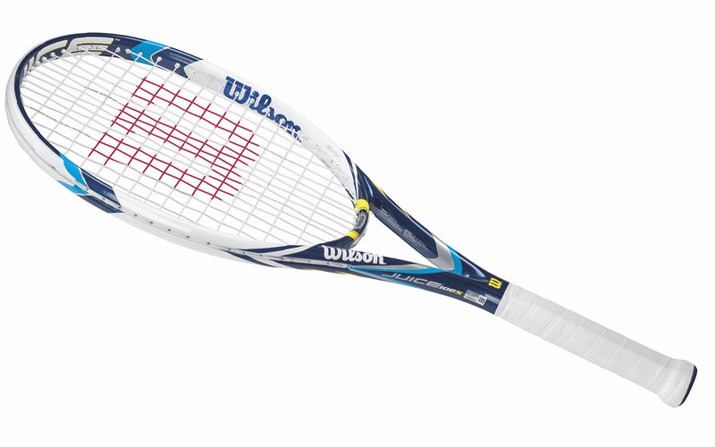
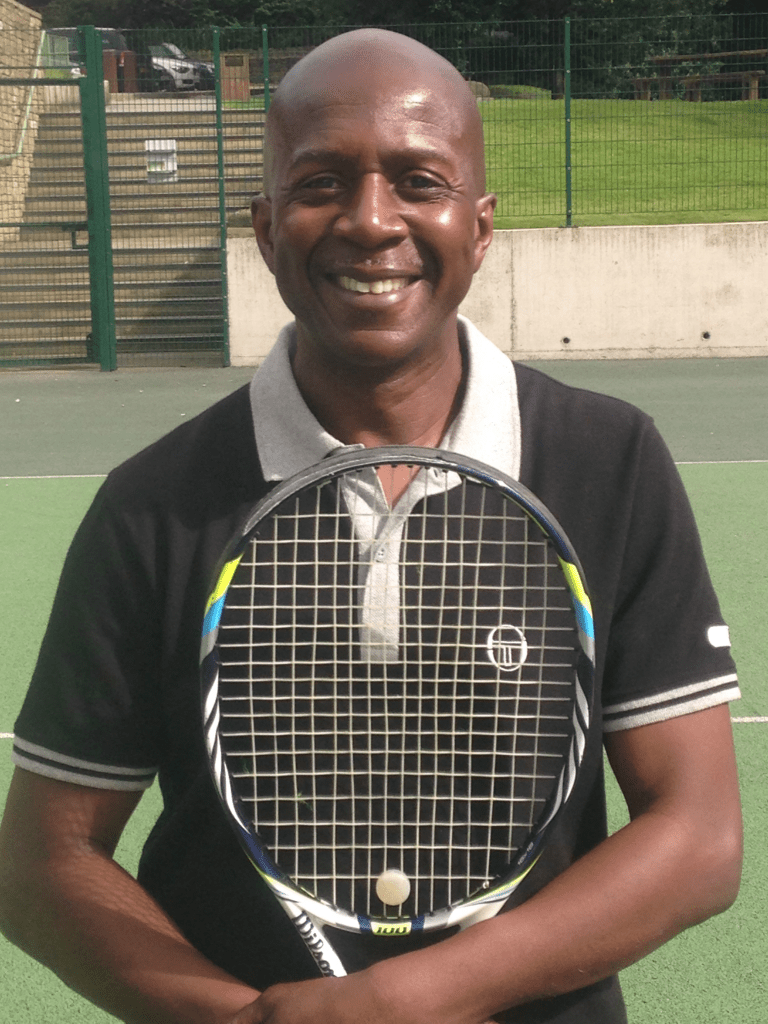
Photo courtesy of Richard Lawrence 
Wilson Juice racket (Photo courtesy of articulo.mercadolibre.com.ar) Looking for that racket that is just right for you but is an old model? Have an old racket you would like to see go to a good home? Check out the following link to racqueeters.co.uk and happy racketeering!
-
Stan The Big Match Player Man Wawrinka The Game The Fight The Heart
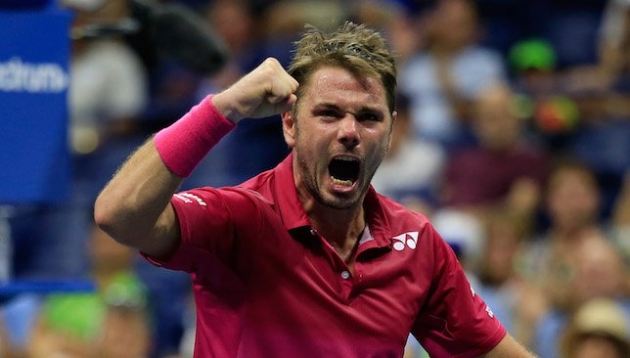
Photo courtesy of http://www.buaxua.vu Stan Wawrinka’s 6-7 (1), 6-4, 7-5, 6-3 US Open final defeat of Novak Djokovic showed tennis fans once again why he has earned himself the reputation of the game’s current best big match player. The Tennis Review looks at the Champion’s big game, fight and heart.
Before Stan Wawrinka contested this year’s US Open final versus top seed Novak Djokovic, he was, in his own words, shaking and crying in the locker room. After one long match after another in fierce humid conditions, he was about to compete on the 22, 000 capacity Arthur Ashe stadium, the biggest tennis stage of them all, in the Big Apple, against a much fresher world no.1 renowned for finding his best game in finals.
That stage fright did not get the better of Wawrinka, though- champion that he is, it made him dig deep and fight. The Swiss did get off to a slow start, going 3-5 down, but he took the first set to a tiebreaker, and while he won only one point in that tiebreak, when it came to his chances in the rest of the match, it was a big one.
After striking forehand blows from the baseline, Wawrinka approached the net on a backhand which drew Djokovic wide, picked up a half volley, got his racket on a perfectly placed shot on the sideline, hit a high backhand volley and then finally put the ball away on a forehand volley.
Djokovic may have won the next five points to take the first set, but from the second set onwards, the Swiss was in it, and he was not afraid to win it. His offensive game, arguably the biggest in men’s tennis, clicked, just as it had done versus other supposedly better fast hard courters Juan Martin del Potro and Kei Nishikori, and Wawrinka took the next three sets, and his third slam from three finals.
That big offensive game is one reason Wawrinka has now won his last 11 ATP finals, a haul which includes three slams, an ATP 1000 in Monte Carlo, and ATP 500s in Rotterdam, Tokyo and Dubai.
Few tennis players hit with Wawrinka’s power, aggression and courage in the big moments, strengths which, when he finds his rhythm, dominate whatever the surface. As good as the defence of the likes of Djokovic and Nadal might be, it cannot answer to a Wawrinka at the height of his powers, heights he strolls to once the peak is in his sight.
The US Open, for example, was considered to be too fast for Wawrinka to set up his powerful strokes, but, unlike in New York in 2015, Wawrinka did not face an opponent like Federer who took his time away over the course of an entire match.
This year, Wawrinka’s opponents managed to exploit his weaknesses for spells here and there but they then fell away in the heat, both from the punishing weather and the punishing serve and groundstrokes of a Wawrinka who was able to outlast and outslug them.
That ability to stay with better playing opponents and then raise your game and turn the match your way when the chance comes is one Wawrinka has developed since 2013 when he was one of tennis’ nearly men and it is an ability that has made him one of its seven active grand slam champions and even fewer active multi slam champions (five). Now, when momentum swings Wawrinka’s way, he doesn’t just grab it, he tears it from its roots and plants it in his heart.
On the way to defeating Djokovic in the final, the third seed hit 46 winners, including 13 winners on his forehand and 12 on his backhand, and made 51 errors. Those stats show the courage he had to take the match to Djokovic and while they are not as impressive as his ones from the 2015 Roland Garros final win over Djokovic (60-45), in any tennis match, no matter how big, you only have to play bigger than one other person, your opponent, and you have to do it on the big points.
In his seventh US Open final, Djokovic was below his best, but he was still playing well enough that if Wawrinka had not been as tough as he is on the big points, the Serbian might have gotten away with it.
The defending champion was not getting away with an impaired serve and backhand in this year’s final, however. Points in slam finals do not come much bigger than break ones, and the Swiss took full advantage of Djokovic’s weaknesses, earning ten break points and converting six. Meanwhile, Djokovic had 17 and won 3, his lack of match practise hurting him as well as his inability to hit his destructive backhand down the line.
That ability to convert a greater percentage of break points, and to bring out his big serves breakpoint down was a crucial factor in Wawrinka’s win. The Swiss has an enviable knack of fighting back from 0-30 and break point down in big matches. It is an ability born from his all-consuming desire to win the big matches when he is in them, the desire that drew him to tears in the locker room.
Those nerves were settled with some key advice from coach Magnus Norman who told him, however much he was suffering physically and mentally in the final, to make sure to hide his pain and keep fighting, a fight he knew he could give, fight ignited in the third round when the Swiss saved a match point versus Dan Evans and which spread like wildfire from one match to the next all the way to the final.
Wawrinka, if he is in the final, knows he has improved match by match, which gives him confidence to fight, and confidence is everything when taking on the likes of Novak Djokovic, a player who led him 19-4 before the final, a player Wawrinka said in his trophy presentation speech made him the player he is.
With three slam wins from three finals, and defeating the number 1 in each of them, Wawrinka is the player who has posed the greatest challenge to the dominance of the Big Four, the Swiss now holding as many slams as Andy Murray. In each final, Wawrinka has been the better player despite his opponent’s potentially distracting injuries and possibly derailing MTOs, winning head to heads and better history at the event. None of that matters for Wawrinka when winning matters most, and tennis fans will look ahead eagerly to see if Wawrinka can bring that big match mentality to the biggest event of them all, Wimbledon, and complete the career Grand Slam.
-
US Open Men Final Preview Novak Djokovic Versus Stan Wawrinka
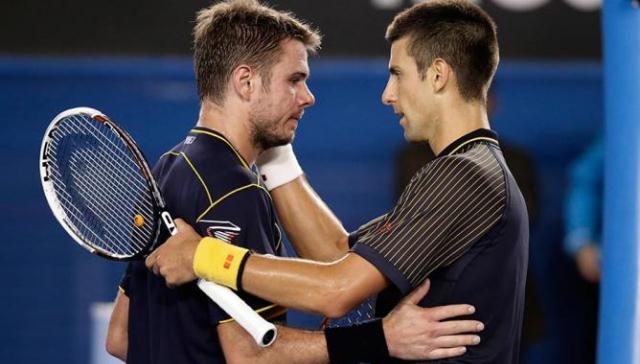
Photo courtesy of http://www.thethao247.com After one of Novak Djokovic’s easiest paths to a slam final, he will face one of his most difficult opponents, Stan Wawrinka, for the US Open trophy.
Novak Djokovic’s US Open 2016 draw looked anything but easy. A potential line-up of John Isner, Marin Cilic, Rafa Nadal and Andy Murray had many doubting the injured top seed would defend his title.
Draws fall apart in tennis, however, and Djokovic’s not only fell apart, his eventual opponents collapsed, too. After a rusty four set opening round win versus Jerzy Janowicz, Djokovic was given a walkover by Jeri Vesely in round two, moved into the fourth round when Mikhail Youzhny retired after six games, defeated Kyle Edmund for the loss of seven games, played just two sets versus Jo-Wilfred Tsonga before the Frenchman retired in the last eight, and then defeated Gael Monfils in four sets.
In the final, another unexpected opponent awaits in third seed Stan Wawrinka. The Swiss had to reach his first US Open final the hard way, facing Fernando Verdasco in round one, saving a match point versus Dan Evans in round three, and then dropping sets to Ilya Marchenko Juan Martin del Porto and Kei Nishikori to set up a second slam final contest with the world No.1.
US Open final sunday. Who would have thought. #StanTheMan
— Magnus Norman (@normansweden) September 10, 2016
//platform.twitter.com/widgets.js
Their previous slam final, at Roland Garros 2015, brought out the best in the Swiss, as the big matches tend to. Djokovic acknowledged after his semi-final win that the Swiss was a big match player and if Wawrinka serves big, and can move Djokovic around and buy himself time to set up his powerful strokes, no one will be shocked to see him lift a third slam trophy and go 3-0 in finals.
As unpredictable as Wawrinka is, two things that are certain is he turns up for finals – he has won his last ten- and he will not be afraid to beat Djokovic in a slam. Djokovic may lead the head to head 19-4, but two of those losses have been big ones (Australian Open 2014, Roland Garros 2015), and on both of Wawrinka’s marches to a slam trophy. That head to head tells you everything you need to know about what unites the two rivals, a love for the big occasion, and what separates them, consistency.
This meeting comes at a time when Djokovic, the model of consistency in big matches since the Australian Open 2015, has never been, form wise, more enigmatic going into a slam final. The top seed has suffered shoulder and wrist injuries in recent weeks causing him to take a medical time out versus Monfils and hampering his serve.
A weak serve and a restricted backhand plus a motivated imposing Wawrinka may be too much for even Djokovic to overcome, but so far this US Open, as Djokovic himself has said, everything has fallen into place with his opponent’s injuries allowing him the time needed to recover from his own.
Wawrinka may not be so obliging as to offer Djokovic a helping hand, but if the Swiss gets off to a slow start, as he has done, allowing Djokovic to find his rhythm and confidence to take time away from him on big points, the Serbian may come through for a 13th slam title and third US Open.
Everything is up in the air in this year’s US Open final. Whether Djokovic has the strength to negate Wawrinka’s power and exploit his weaknesses or if Wawrinka can overpower Djokovic over five sets on a surface his muscle is less easy to flex on is anyone’s guess. This year’s US Open final is one of the most unpredictable in a while, and in a season that started so very predictably, the uncertainty that lies ahead will be met by tennis fans with very open arms.
-
US Open 2016 ATP Second Round Preview Novak Djokovic Versus Jiri Vesely
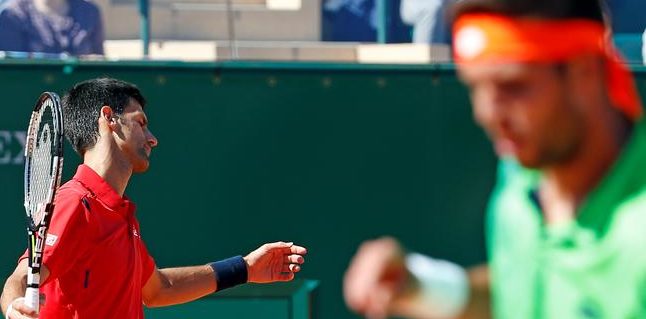

Photo courtesy of siol.net The US Open second round gets underway on Wednesday and it is one to look forward to with some intriguing match-ups and potential sporting drama ahead. The Tennis Review previews the upcoming action featuring Novak Djokovic, Rafa Nadal, Marin Cilic, and Benoit Paire.
Novak Djokovic (1) Versus Jiri Vesely
Assessing Novak Djokovic’s form is always tough in the early rounds of a slam- the world No.1 does just what he needs to do to get through, saving his very best for the final stages.
Doing just what needed to be done is just what Djokovic did in his first round match versus Jerzy Janowicz. In a patchy performance, the top seed won the first set, dropped the second, and then lost just three more games as Janowicz’s erratic game and Djokovic’s consistency got the better of the former Wimbledon semi-finalist.
Djokovic may need to up his game early on this US Open for his second round opponent Jiri Vesely. The world No.49 beat him in Monte Carlo earlier this season and finishing that win off should give the 23 year old, playing in just his fourth US Open, some confidence against a Djokovic who may be at his most questionable, form-wise, since the Spring of 2014.
If the Junior world No.1 in 2011 can serve big, play the aggressive tennis he has committed to this season, and execute a strategy to take advantage of Djokovic’s left wrist injury, then he is in with a chance of the upset. The left handed Czech will have to be smart about it, and brave- Djokovic, whatever his personal problems off-court may be, whatever his injuries, will not give up his title without a fight, and if his body is struggling, his mentality is unlikely to fail him if the match comes down to mental toughness alone.
William Hill has Djokovic at 1/16 to beat Vesely, (Click on the link below to see the odds before and during the match) but while the Serbian is the heavy favorite to make a statement win over his Monte Carlo conqueror, his Wimbledon loss to Sam Querrey, his heart-breaking Rio defeat to Juan Martin del Potro, and his recent Cincinnati withdrawal with injury mean the time is ripe for his rivals to upset him, and with Vesely capable of doing so, this match will be one to keep an eye on.

Marin Cilic (7) Vs Sergei StakhovskyCilic and Stakhovsky, ranked 92, both have big serves and are aggressive which means on fast hard courts this match could be a close one. Their previous matches have certainly been so- Cilic leads the head to head 4-0, their three best of three matches have all gone the distance, and their Wimbledon round of 64 match earlier this season went to four sets.
Cilic’s better all-round game, especially his defense and return, is what makes the difference in this contest, and should see the seventh seed through to the US Open third round. The match is one to watch for those who like aggressive game styles and hard courts. Few players can hit the heights Cilic can on fast hard courts and if he is playing well, there will be plenty of winners to admire.
Cilic is also prone to lapsing in form and if Stakhovsky can take advantage of that then watching 2014 Champion Cilic fight to win at a tournament he is passionate about should be a great sight.
Rafa Nadal (4) Vs Andreas Seppi
These two veterans go back a long way- to the 2005 Davis Cup. Since then, Nadal has won seven of their eight contests, and in six of his wins has not dropped a set.
Don’t discount Seppi, though. The Italian turned round another dismal head to head when he beat Roger Federer at the 2015 Australian Open, and led Novak Djokovic by two sets to love in the 2012 Roland Garros last sixteen.
Seppi, who has won ATP titles on can raise his game on his day, and if he gets into the match versus Nadal, once again on the road back from injury, he could play above his current ranking of 87 and make this a contest. While Seppi may not have the weapons stroke-wise to hurt Nadal, he does have a very consistent, solid game, and if Nadal, who has won just 5 of 8 matches since Roland Garros, (at Rio and Cincinnati), is below his best, like he was for some of his first round match versus Denis Istomin, in which he let a 4-1 second set lead slip, Seppi has the experience and the solid game to take him out.
If, however, Nadal hits his forehand like he did in his third set versus Istomin, then the match could be a boost to Nadal’s fans as he moves deeper into the draw and towards his projected semi-final clash with Djokovic.
#USOpen2016pic.twitter.com/9q0yqZNT2q
— Rafa Nadal (@RafaelNadal) August 22, 2016
//platform.twitter.com/widgets.js
Benoit Paire (32) Vs Marcos Baghdatis
Two players blessed with sublime talent and both cursed with, at times, ridiculous minds have a great chance to make the US Open third round. Paire, ranked 34, leads the head versus 44th ranked 2006 Australian Open runner-up Baghdatis 2-1, winning their last two matches.
After their opening US Open 2016 matches, Paire is 3-3 in main draw ATP matches this hard court season, and Baghdatis is 4-3. With two such unpredictable players facing one another, predicting the winner is tough. There is one thing almost for certain, though- when it comes to shot-making and risk-taking, this match will deliver entertainment-wise, and with both men tending to let leads slip, this match could be one of those early-round dramatic US Open five setters to remember.
Promos: Take advantage of our 2minutetennis.net™ promo offer. Enter promo code FREEMONTHTTR when you subscribe and get your first month FREE! Follow the link, enjoy Ryan Reidy’s video and online coaching and improve your tennis!
Take advantage of the UK pound by spending your US dollars and add some serious style to your tennis game when you purchase an Alison Van der Lande tennis bag. Email info@alisonvanderlande.co.uk with promo code TENNISC1 and your order and get 10% off!

-
US Open Preview The Favorites Novak Djokovic Andy Murray Rafa Nadal
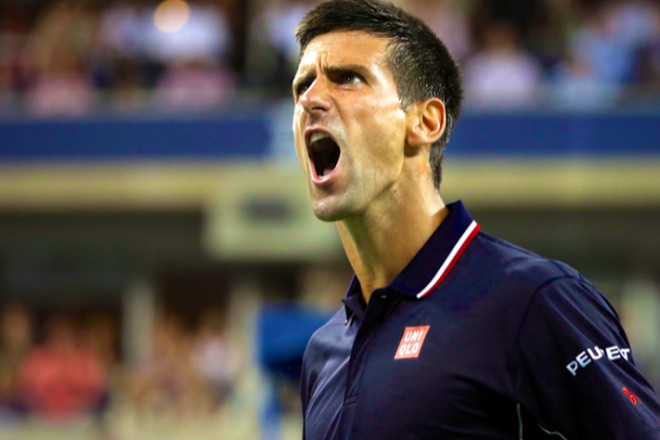
Photo courtesy of tenisconestilo.com.uy The US Open draw has been made and the speculations as to who will win begin. The Tennis Review looks at the favorites- players who are US Open former champions and finalists, or who have won other slams and made other slam finals- and assesses their chances of winning big in New York.
Novak Djokovic, Champion 2011, 2015. Runner-up, 2007, 2010, 2012, 2013.
For Novak Djokovic, in 2016, anything, it seems, can happen. The world No.1 can win a record 6th Australian Open title in the Open era, lose his Monte Carlo Opener to Jiri Vesely, complete the Career Grand Slam at Roland Garros (and the Non Calendar Grand Slam, at the same time, too), and fall in his Wimbledon third round match to Sam Querrey.
That Anything Goes nature of Djokovic’s season means it’s hard to draw much conclusion from the top seed’s US Open draw. On paper, it looks tough- Jerzy Janowicz, a big hitter who made the Wimbledon 2013 Semi-finals, in his opening round, Vesely in the second round, 28th seed Martin Klizan in round three, John Isner, potentially, in the last sixteen, and Marin Cilic in the last eight.
If Djokovic is still hampered by the injury that kept him out of Cincinnati, or if he is at all rusty, as he often is early on in slams, all those players have a shot at upsetting him.
The full scale of the Djokovic left wrist injury and its consequences on his backhand remain to be seen, and his cancellation of his practice session the morning of this US Open draw will be worrying for his many fans.
Injuries are part of tennis professional life, however, and one of the Serbian’s strengths is finding a way to win no matter how brutal the conditions, his own pain, or his opponent’s form, and now is the time for him to tap into that ability. Andy Murray is chasing him in the race to London, and this US Open would be a good time to remind everyone that while anything can happen, the thing that happens more often than not, in recent times, is Novak Djokovic winning the trophy.
Andy Murray, Champion 2012, runner-up 2008.
If the tennis Gods wanted to ensure Andy Murray reached his third US Open final, and were keen to make the year end No.1 ranking as exciting as possible, they did a pretty good job of it by delivering Murray up the draw they did.
Murray has been the man to beat in men’s tennis since losing to Djokovic in the Madrid final- winning Rome, where he beat Djokovic for the title, finishing runner-up at Roland Garros, winning the AEGON championships, Wimbledon, and Olympic Gold in succession, and making the Cincinnati final.
That run, along with Murray’s appearance in the Australian Open final, means that while Murray may trail Djokovic by 5,535 points (the equivalent of 2 slams, an ATP 1000, a 500 and 35 points to spare) in the 12 month ATP rankings, he is only 1215 points behind him in the race to London. With Murray only having fourth round points to defend in New York, and the recently-injured Djokovic defending 2000 points as champion, this US Open could really swing the momentum in the determined Scot’s favor.
Looking at Murray’s draw, it is hard to imagine him having a better chance to make a run at No.1 than he has right now.
Grigor Dimitrov and Feliciano Lopez could certainly take Murray past three sets in the third round, but they would both need to play one of the matches of their careers to cause an upset.
Gilles Simon in the fourth round is also troublesome, but does not have the tools to beat Murray outright, the Frenchman would need a lot to go his way to get the win.
What Murray would be really bothered by would be one of the tour’s committed go-for-broke hitters, and the only one in his section happens to be lined up for him at the first hurdle-Lukas Rosol.
The tennis Gods have been kind enough, however, to not draw Murray against an in-form big-hitter- Rosol, ranked 82, has not won a main draw ATP match since beating Andrey Kuznetsov in the Geneva quarter-finals back in May.
Grand slams bring out the best in players like Rosol, however- the Romanian took Stan Wawrinka to five sets in the Roland Garros first round- and so considering their different styles of play and the big match occasion, the Murray-Rosol match is likely to be an entertaining one.
The two times they have played, Murray has won each time, and in three sets (the scoreline has always, oddly, been the same – 4-6, 6-3, 6-2).
Even if Rosol does not find some form and the match fails to deliver as an engaging sporting contest, the volatile relationship between the two could make things interesting.
Things heated up when the two met in Munich 2015. The match got a little personal when Rosol bumped into the Scot on a changeover prompting Murray to shout to Rosol across the court:
“No one likes you on the tour, everyone hates you”. (See Vine below).
How much Murray likes facing Rosol, one of the tour’s biggest hitters, in the opening round of a slam, (the stage most favorites are the most vulnerable), at a venue where the speed of the court depends on the court allocated and the time of day, will be one to watch play out.
Juan Martin del Potro, Champion 2009.
With Roger Federer not in the draw, the player who will be receiving the most love at the Open will be Juan Martin del Potro.
The draw gave the wild card, a lot of love, too, dealing him countryman Diego Schwartzman in the opening round. 24 year old Schwartzman, who won a title this year in Istanbul, will be playing in only his tenth main draw of a slam, and has a 3-9 win-loss record in tennis’ biggest events.
Look who’s back 😀🎾🗽 @usopen pic.twitter.com/FZB6Zei62C
— Juan M. del Potro (@delpotrojuan) August 25, 2016
In the second round, things could get interesting- del Potro could meet Steve Johnson (19) who was critical of the 2009 Champion being awarded a wild card in case he beat an American player in the opening round. Johnson, ranked 21 in the world is in good form, but he does not have the big match experience or the Champion’s mentality of del Potro, and that should make the difference in that match.
In the last 32, del Potro could face David Ferrer (11), although Fabio Fognini could make it through that section. Ferrer is one of the best seeds- the Spaniard is below par- del Potro could have drawn. As for Fognini, he may have the shot-making skills to make life difficult for aggressive base-liners, but the Italian is inconsistent, and in a battle of wills is likely to come second.
In the last 16, Dominic Thiem (8) is the scheduled opponent, one the Argentine beat in Madrid this Clay season. Thiem, who reached the US Open fourth round in 2014, has recently been suffering a hip injury and, after a busy season in which he broke into the top ten, may not have the energy needed to get past a confident del Potro .
Stan Wawrinka, who del Potro beat at Wimbledon, is scheduled for the last eight, Murray for the last four, and Djokovic the final.
A decent draw and fan favorite status means if del Potro fires on his forehand and goes on a run, he will be both the Championship’s fairy-tale Prince, and its scene-stealing assassin.
Rafa Nadal, Champion 2010, 2013, Runner up 2011.
#USOpen2016pic.twitter.com/VzaJSLH9LH
— Rafa Nadal (@RafaelNadal) August 22, 2016
The last thing Rafa Nadal needs right now is a slam draw with five set matches versus the likes of Tomaz Bellucci, Alberto Ramos-Vinolas, Federico delBonis, Guillermo Garcia-Lopez, and Roberto Bautista Agut ahead of him.
Unfortunately for the Spaniard that is just what he got.
All of those players can tough it out with the best of them, and while Nadal is, historically, one of the toughest player to beat at the Slams, going into the upcoming US Open, he is a lot more fragile than he used to be. The fourth seed has been the top seed twice (2008, 2010), and this season will be only the second in the nine years he has been seeded (played eleven) that he has been seeded outside the top two.
Most of Nadal’s current ranking of five is built on his form from Beijing last season until his win in Monte Carlo this season. Nadal’s wrist injury forced him to withdraw before his last 32 match at Roland Garros and he did not return to the tour until the Olympics. Despite missing so much of the season, Nadal still managed to make the last four in Rio, losing to del Potro in a final set tiebreaker, and coming back from a set and 2-5 down in the Bronze Medal match versus Kei Nishikori to take the match to a third set.
The Rio performance is encouraging for Nadal’s US Open prospects- the Spaniard’s injury did not force him out of the event, and Nadal showed he could tough his way to the final stages of an important event without any warm-up.
Digging himself into the last eight of the US Open would be quite the achievement, and if he got there, Milos Raonic is his seeded opponent. Nadal leads Raonic 6-1 and if he improved on that in New York would be scheduled to face Novak Djokovic in the last four.
That prospect might not excite Nadal fans, but the Serb’s form is uncertain, and slam semis bring out the best in champions. Nadal is certainly a champion and still has plenty to give – just how much will be one of the stories of the Open.
Marin Cilic, Champion 2014.
Cincinnati Champion Marin Cilic, (7) has the kind of game which, if he is on, can hit through, nearly, anyone. He also has a tendency to be beaten by nearly anyone, too. Only back at Roland Garros, Cilic went from taking Wawrinka to two close sets in the Geneva final to losing in the first round to then ranked world No. 166 Marco Trungilliti.
Cilic the 2014 Champion, has drawn Jack Sock in round three, Jo-Wilfried Tsonga in round four, and Novak Djokovic in the last eight. Cilic lost to Sock recently in the Davis Cup, leads Tsonga 5-1, including a five set win in the US Open ’15 quarters, and is 0-14 versus Novak Djokovic. Cilic’s last match versus the top seed was at last season’s US Open in which an injured Cilic could only win three games.
The Croat, however, has challenged Djokovic in some of their recent matches, but while he can take the world No.1 the distance, the world No.1’s stamina and retrieving skills get the better of him. The question is can Cilic’s new coach, Jonas Bjorkman, and the confidence from his recent Cincinnati win help him make a breakthrough versus the world No.1?
Players have earned their first wins in an unfavorable head to head many times over the years in the five set format of Slams, and if Cilic likes to make a first, it’s on hard courts in the U.S Summer.
Kei Nishikori, runner-up 2014.
@DjokerNole and @keinishikori Uniqlo designs for the U.S. Open:https://t.co/ghq6sLEedu pic.twitter.com/UcYW69vhaM
— Tennis Identity ® (@TennisIdentity) August 21, 2016
Kei Nishikori has a difficult task ahead of him. Benjamin Becker, his first round opponent, is an experienced aggressive player. Philipp Kohlschreiber would be tough in the third round as would David Goffin (12) in the fourth.
The Japanese made the US Open semis in 2014, defeating Novak Djokovic on the way, and he would have to beat another reigning Wimbledon champion if he was going to repeat his ’14 run after drawing Andy Murray in the quarter-finals. The Scot has proven to be a bad match-up for Nishikori, leading him 7-1 and since returning to the top of tennis has won their last three ATP tour matches in straights, dropping no more than four games in one set.
Nishikori did push Murray to five sets in their recent Davis Cup match. If Nishikori can get inspired by playing at the scene of his most successful Slam run, he could make a match of it with Murray as when Nishikori is not over-hitting but finding the lines, he can beat anyone on tour.
Stan Wawrinka, Semi-final 2013, 2015.
Stan Wawrinka has the toughest opener. The Swiss will face tour veteran Fernando Verdasco in his opening match. In the third round he is drawn against Alexander Zverev (27) and in the last sixteen he is scheduled to meet Nick Kyrgios (14).
Everything needs to be clicking if Wawrinka is going to win his first US Open title. He needs to overpower his opponents and not let them take advantage of his long back swing on courts which will be, depending on which court and time of day, some of the tour’s fastest.
Milos Raonic, Last sixteen, 2012, 2013, 2014.
Milos Raonic‘s next step at a Grand Slam is a final showing, and he will do well to make it through his draw and take it.
The Canadian has Dustin Brown in the first round, and Gael Monfils (10) in the last sixteen, Rafa Nadal in the last eight and Novak Djokovic in the final.
Raonic has not been past the last sixteen at the US Open, and it will be a tough ask for him to improve that record this year with Monfils lined up in the round of 16. Monfils leads him 3-2 and recently beat him in the Toronto quarters. That match would be a great opportunity for both men, and their different styles and strong fast court games would likely provide a high quality match.
Promos: Take advantage of our 2minutetennis.net™ promo offer. Enter promo code FREEMONTHTTR when you subscribe and get your first month FREE! Follow the link, enjoy Ryan Reidy’s video and online coaching and improve your tennis!
Take advantage of the UK pound by spending your US dollars and add some serious style to your tennis game when you purchase an Alison Van der Lande tennis bag. Email info@alisonvanderlande.co.uk with promo code TENNISC1 and your order and get 10% off!
-
Marin Cilic Wins Cincinnati Another Big Stride in a Great Direction
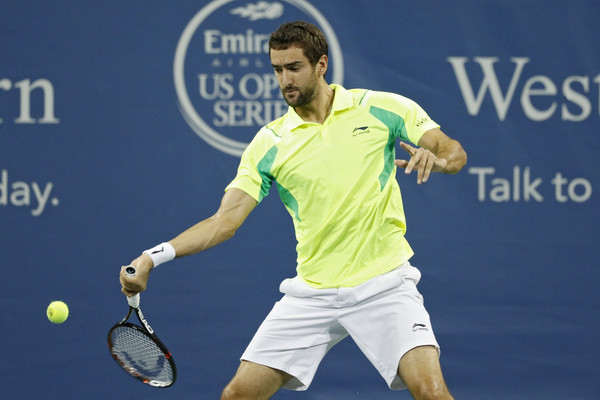
Photo Courtesy of Zimbio.com Two former US Open Champs competing in the Cincinnati final is nothing out of the ordinary- it has happened nine times in the last twenty years- so it was no surprise that Marin Cilic should take on Andy Murray for the title.
The way Cilic won the Cincinnati trophy was something of a shock, however. Cilic’s semi-final versus Grigor Dimtrov did not finish until close to 1:30 AM Sunday morning and his rival in the final just over 14 hours later Andy Murray, the world No.2, was on a 22 match win streak, and a two time Cincinnati Champion (2008, 2011).
Yet, despite the quick turnaround and a determined opponent on the chase for the ATP No.1 ranking, the 12th seed Cilic beat the top seed Murray 6-4, 7-5.
Murray may have been close to exhaustion after being the player to beat since Madrid, but Murray wins ugly often and had an 11-2 head to head advantage over the Croat.
That history meant little to the Croat who, playing his first ATP 1000 final in his 71st main draw appearance at such an event, (before this week his ATP 1000 best results were 8 quarter-finals), played much like he did in what has been his one and only Slam final- like a tennis player born to win on fast hard courts, showcasing his main weapons, his serve and forehand at their best, and backing them up with his solid backhand, net game and defense.
With Cilic firing on his serve against one of the best hard court players on tour, and hitting through him on the forehand, Murray had no chance of working his way to a win, as he does so often, through his own will alone, or, as is also often the case, with a little help from his rival.
In this season’s Cincinnati final, Cilic was not in the generous mood he had been in when he led Murray a set and a break at the 2012 US Open before losing in four sets. The Croat did wobble a touch at 5-2 in the first set, but he served it out for 6-4. In the second set, Cilic held firm all the way through to the business end of the set, breaking Murray for 6-5 and then serving out for the title.
The win was as straight forward as the score, the Croat’s aggression and preciseness winning out versus Murray’s more defensive minded game.
Cilic’s win means he is now, as the 2014 US Open champion, the youngest active winner of a Slam (del Potro is five days older than him) and an ATP 1000 title, (Djokovic held that distinction for nine years). Cilic is also one of only seven active slam champs on the tour (Federer, Djokovic, Nadal, Murray, del Potro and Wawrinka are the other six), and is now one of just ten active ATP 1000 champs (Federer, Djokovic, Nadal, Murray, Berdych, Robredo, Ferrer, Wawrinka, Tsonga are the others).
“What does it matter”, my tennis partner asked me while watching the Cincinnati final, “whether Cilic wins or not? He already has the US Open. Who cares if he wins in Cincinnati?”
It’s a good question.
In the freakish world of 21st Century Men’s tennis in which the same players win big over and over, another ‘Big title’ (The ATP now groups slams, ATP 1000 and WTF as Big Titles), makes you stand out from the chasing pack struggling to break the Big Four hold on the big events and make semis and finals. With only Cilic, del Potro and Wawrinka stepping out of their shadow on the biggest stages, every big win, and if like Cilic you can secure it with a win over a Big Four member, is a nice step into the sunlight, a big stride in a great direction.
On a tour which may have the same competitors winning week in week out but is as competitive at the top as it ever has been, standing out when you are already 6ft 6″ can be one of the decisive factors that could work in your favor when you play to stand out a little more, which, if Cilic can stay healthy and peak for championship matches the way he does, he is likely to be doing for a while.
Distancing himself from his rivals clearly meant a lot to Cilic.. The now world No.9 shot pistols from the hip to celebrate the win, one that brings him both a first ATP 1000 trophy and the No.7 seed at the US Open (after Roger Federer and Tomas Berdych’s withdrawal). The 2014 champ has shown that slam win, in which he defeated Tomas Berdych, Roger Federer and Kei Nishikori without dropping a set, was not a fluke- his previous lack of 500 or 1000 titles raising some questions as to his slam title worthiness- by reaching the US Open semis last season and now winning Cincinnati, and enters the upcoming US Open as one of the well deserved favorites.
Seeing two former US Open champs going for a US Open title is no surprise either, and if Cilic makes it to the title match in three weeks time, do not expect any dropped jaws in response- expect, instead, some appreciative head-nodding at Cilic’s aggressive game and champion’s mindset worthy of the biggest hard court title matches out there.
-
Cincinnati Marin Cilic and Grigor Dimitrov to Play for First ATP 1000 Final
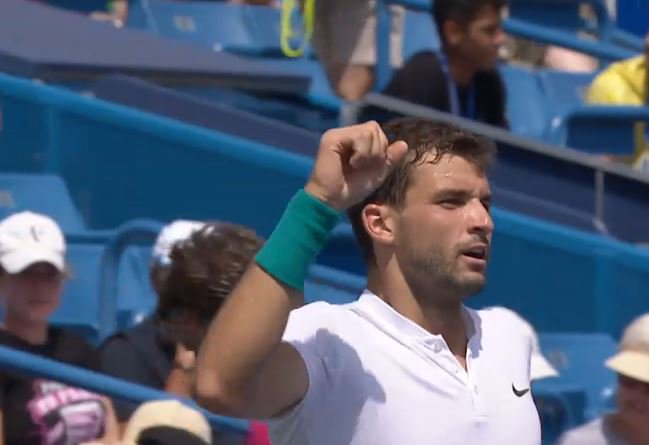
Photo Courtesy of grigor-dimitrov-tenis.blogspot.com In the Cincinnati Semi-finals, 12th seed Marin Cilic and unseeded Grigor Dimitrov will play for a first appearance in an ATP 1000 final. The Tennis Review previews the action.
Cilic and Dimitrov are not names tennis fans are used to seeing in the last four of an ATP 1000 draw. In fact, this is the first time Cilic has appeared at this stage of one of the ATP’s biggest tournaments after the Slams and the World Tour Finals.
On Cilic’s 71st appearance at an ATP 1000 event, the 2014 US Open Champion finally broke through, and on a surface similar to that of the US Open, which he surprised many by winning in 2014.
That Major win in New York makes Cilic’s ATP 1000 record even more baffling. The 12th seed, up until this week in Cincinnati, had reached as many Grand Slam Quarter-finals as he had ATP 1000 (eight in total.)
When it comes to baffling and tennis results, Grigor Dimitrov is another name who comes to mind. This will not be the first time tennis fans have seen him in the semis of an ATP 1000 (this is his third appearance), but the world No.34 has not been to the semis of an ATP 1000 since Canada ’14, the Summer he reached his ATP world ranking high of eight. Since then, the the once highly touted Bulgarian has struggled to establish himself at the top of the game, putting in the odd good run here and there, but mostly losing before the business end of events.
Cilic and Dimitrov arrival at the final stages of Cincinnati has seen them take advantage of a Djokovic-Federer less draw– both the Serbian and the Swiss are difficult match ups for them- but their paths have been anything but easy.
Cilic has defeated Viktor Troicki, Fernando Verdasco, Tomas Berdych ( now coached by Cilic’s former coach Goran Ivanisevic), and his countryman Borna Coric, who retired after dropping the first set.
Dimitrov has had to get past Gilles Simon, Feliciano Lopez (who he beat in a final set tiebreaker), Stan Wawrinka, and the in-form Steve Johnson.
Both Cilic and Dimitrov have a great shot at winning their Cincinanti semi. Cilic has the head to head advantage- he leads 2-1, winning both matches on outdoor hard (Rio ’16, Brisbane ’15). Meanwhile, Dimitrov won on indoor hard at Paris-Bercy ’15. All of their matches have been decided in straight sets.
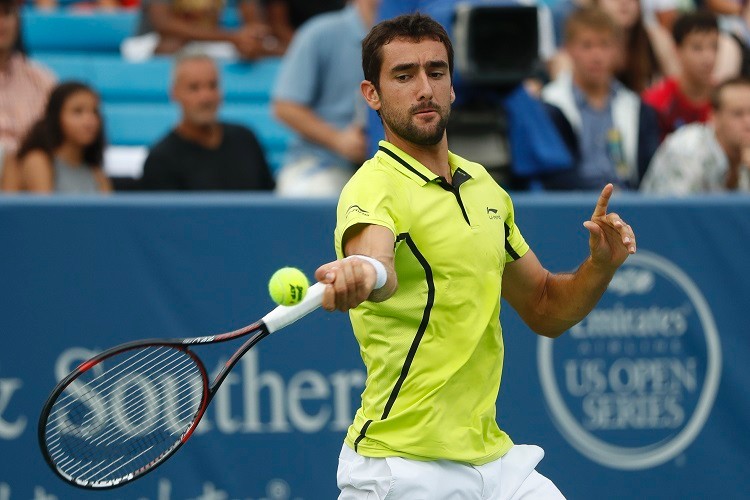
Photo Courtesy of http://www.rtcg.me Cilic also has the surface advantage- the Croat can play great tennis on fast hard courts, as we saw when he did not drop a set in his last three matches at the US Open ’14 (beating Berdych, Federer and Nishikori).
The surface is one factor that makes this match one to watch. Both men are aggressive and the fast courts will bring out some great winners. Cilic and Dimitrov have different types of aggressive styles, too. Cilic has a big serve and big ground-strokes which are a sight to behold when he hits through the court with them. Dimitrov’s aggression is that of the versatile shot-maker and his winners make up many a tennis highlights reel. Both men also have well developed defensive games so each player will need to come up with something special to get the better of their opponent, which is only good news for the spectator.

Tennis from a fan's point of view
[
[
[
]
]
]
 thetennisreview