-
Interview with Hernan Chousa Author of My Son The Tennis Player


Photo courtesy of Hernan Chousa Tennis Parenting is not the easiest role in the tennis world, and it’s tough on tennis juniors, too, but help is at hand. The Tennis Review talked to ex ATP pro Hernan Chousa about his book My Son the Tennis Player and asked him his thoughts on the complicated world of tennis parenting.
What is your book about?
My book is a Tennis Parents’ Guide. It’s a very difficult role to play in the tennis game and there isn’t much information about how to behave, so I found it interesting writing something about the topic. It isn’t a to-do list- the book approaches the issue in an humorous way presenting different parent, player and coach types. For sure, My Son the Tennis Player features some tips, too, but they are very reader-friendly, mixed with drawings and other stuff.When you were a junior, what were your parents like?
When I was young my father was really a problem, always behind me, asking questions like “Who did you practice with?” He wanted to get involved in all the details. When I was 15, I didn’t allow him to watch me playing anymore. My mom was the opposite. She never spoke and was beside the court in silence. Tennis was the issue at dinner time and that was a big mistake, I have a sister that played another sport and she was never part of the conversation. Tennis is one of those things that turns into a virus easily.What do you wish you had been taught as a Junior to help you with life on the pro tour?
I think that tennis is getting difficult for the young players. There are many old players still playing and playing really well. With that in mind, I think College tennis is a great step for a pro career. Kids spend time in a good environment between the ages of 18-22, and then they can step onto the tour. I know it is nice being a Del Potro or Federer, but chances are that only 1 in 16.000 can make a living from sports so it is better to be prepared for life.What kind of tennis parent are you?
I think that I got better with time. Maybe because I am an ex ATP player you may think that I didn’t make mistakes- in fact I did, and a lot!!!When my son was 15 he quit tennis, and I felt very good because his tennis was very heavy for me, and during that time I wrote the book. At 17 he got involved in tennis again seeking a tennis scholarship and now I am a very different parent that I was in his first tennis stage. For example I don’t go to his practices. In the past I was there analyzing each stroke and talking to coaches- for sure I did things wrong and nobody gave me any advice. Parents think they are “Healthy” when in fact tennis is a permanent disease that has to be controlled.
What do you like most about helping tennis parents?
I will tell you a story. After I launched the book, I had a radio Interview. The program had a large audience. It was during the afternoon so I told my wife to listen. At that time she was on a charter van home from work. She asked the driver to turn on the radio. It so happened that he had a 10 year old child playing soccer at a club. The interview lasted 20 minutes- we talked about the book and about professional tennis too. Next morning my wife took the van again to go to her work and the first thing the driver said to her was: “After hearing your husband yesterday I went home and told my kid that I will never ever watch him during his practices, You know what my kid said?, He said THANK YOU!!!!!”That is what I like most- when you can help a kid. I am not helping parents, I am helping kids from parents.
Check out Hernan’s blog about tennis parenting here: My Son the Tennis Player
-
Juan Martin del Potro’s Return to Clay Court Tennis Five Points

Photo courtesy of zimbio.com Juan del Potro’s comeback continues this clay season after the Argentine made his appearances in two upcoming tournaments official. The Tennis Review looks ahead to the 2009 US Open Champs clay schedule and reviews some of the Argentine’s highlights on the red stuff.
del Potro made the announcement on twitter and facebook
del Potro let his fans know on April 6th he was playing back on the clay via the tweet below.
Y después de mucho tiempo, volví al polvo de ladrillo… 😀💪🎾
//
After such a long time, I’m back to the clay… 😀💪🎾 pic.twitter.com/u1ZbSTm1yU— Juan M. del Potro (@delpotrojuan) April 6, 2016
On April 14th, del Potro announced he would be playing in Munich and Madrid and was pleased to be able to commit to two consecutive tournaments for the first time since his come back which started back at Delray Beach.
del Potro has had great success on the clay. His serve is big enough to hit through the court and the surface rewards his aggressive ball striking, particularly on his famous forehand, arguably, the best on the ATP tour.
In addition, the extra time the surface gives him compensates for any weaknesses movement-wise.
del Potro will also be able to run round his backhand, which has been his weaker side since coming back from wrist injury, and hit his formidable inside out forehand.
Check out the clip below of del Potro practising on clay.
.@delpotrojuan getting ready for his first official clay-court tournaments in three years. pic.twitter.com/Dc1xCQEPZg
— Jorge Viale (@jorgeviale) April 14, 2016
del Potro will compete in Munich and Madrid
del Potro is 9-3 on the Madrid clay courts, reaching the semi-finals of the blue clay event in 2012 where he lost to Tomas Berdych in a match featuring some formidable baseline exchanges.
Watch highlights of Berdych vs del Potro in the Madrid ’12 semis below.
In 2009, he also made the Madrid semis, beating Berdych, Wawrinka and Murray before losing to Federer.
In Munich, del Potro has only competed once, in 2008, beating Arnaud Clement and Igor Andreev before losing to Younes El Aynnaoui.
Overall, del Potro has a 62-24 record on clay and it is the surface on which he has his highest winning percentage of 72.1.
The Argentine won his first ever match on the surface, at Vina del Mar 2006 where, ranked 159, he defeated 117th ranked Albert Portas 6-2, 6-2. He also played his first six career ATP tournament on clay courts.
del Potro has won 4 clay events in his career.
The Argentine won Stuttgart and Kitzbuhel in 2008 and Estoril in 2011 and 2012.
Stuttgart, in 2008, was del Potro’s first ever ATP final and he beat Richard Gasquet in straight sets in the final. He won Kitzbuhel the week after, defeating Jurgen Melzer for the title.
del Potro defeated Fernando Verdasco for his first Estoril title in 2011, (he beat Robin Soderling in the last eight), and beat Richard Gasquet for the 2012 trophy.

Photo courtesy of http://www.taringa.net del Potro has not played on clay for three years
His last match was in Rome 2013 in the round of 16 where he suffered a 4-6, 6-7 defeat to Benoit Paire.
del Potro has been to the Roland Garros semis once.
In 2009, del Potro reached the semi-finals of Roland Garros where he lost to Roger Federer in five sets after leading by two sets to one.
Watch highlights of del Potro’s 2009 clash with Federer in the video below.
del Potro is 12-6 in the French Capital, reaching the quarter-finals the last time he played in 2012. Once again, he lost to Federer in five sets, this time after leading by two sets to love.
A last eight finish in Paris looks unlikely for del Potro right now, but with a player of del Potro’s clay court skills and slam winning pedigree, anything could happen.
If del Potro can get his game going in Munich and Madrid, and enter a couple of other events, he could play himself into form and challenge the game’s current top ranked players on a surface the Argentine has given us plenty of thrills on in the past, thrills we hope he can provide us with again in the coming months.
-
Dominic Thiem and His Generation The Lowdown Tomic Sock Vesely
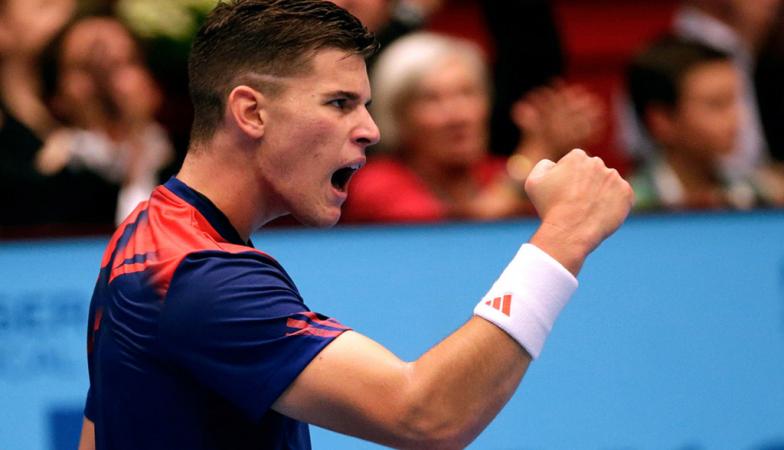
Photo courtesy of sportmedia.mk Dominic Thiem is currently leading his generation, (players born between 1993 and 1995), in the rise to the top of the world rankings. The Tennis Review takes a look at these young players, what they have achieved, where they are now and what might lie ahead.
Dominic Thiem, 22 years old
Thiem is on a real roll this season- in February alone he won two titles, (Buenos Aires, Acapulco), made the semis of Rio, and beat two top tenners in Rafa Nadal and David Ferrer.
That success won’t have come as a surprise to anyone following Thiem’s career the last couple of seasons.
The 2011 French Open junior runner-up (defeated by Bjorn Frantangelo) has had some success at slams, making the US Open 2014 fourth round, and is 11-9 overall at the game’s biggest events.
In 2014, he beat Stan Wawrinka, who was then the reigning Australian Open and Monte Carlo champ, in the second round of Madrid.
Thiem’s first final was at the 2014 Kitzbuhel event, which he lost to David Goffin. He won his first title at Nice 2015, and followed it up with titles in Umag and Gstaad.
One of the most encouraging aspects about Thiem is that his game keeps developing. Thiem has always been famous for his signature shot, his one handed backhand, but these past few months, his serve has become a real weapon and he seems set on finishing points as early as possible on the back of his steady point construction which allows him to set the points up with high percentage tennis and then hit winners when the time is right.
That development is what has helped him earn his biggest achievement- the ATP 500 Acapulco title-off clay, and will only add to his clay court skills. In a very physical game like men’s tennis, a big serve and the quick points it can bring, could save him a lot of energy in big matches.
You can be sure that Thiem is going to be present for a lot of big matches in future. His big match experience is growing, he is very capable of handling the pressure of beating those ranked below him, and he bounces back from defeat quickly. Look at how he came back to win Acapulco after what must have been a tough defeat to Guido Pella at the Rio Open just a week before.
Indeed, Thiem has hunger and fight in spades- his match point saving win over Rafa Nadal in Buenos Aires was a great example of that– and that combined with his weapons and mental toughness is going to set him up nicely for quite a few shots at the French Open title.
Thiem’s recent rise comes along at a good time prospects wise. While Djokovic may still be dominating, Federer, Nadal, and Murray have not won slams for a couple of years, and the time of the likes of Berdych, Ferrer, and Tsonga’s is really running out. Meanwhile, the Nishikori generation seems a little lost. There could be a window in a couple of years for Thiem and his generation to push through, and the Austrian will, if recent evidence is anything to go by, be at the front of the pack.
Strengths: Thiem is as professional as it gets- focused, hard-working, and well-behaved on court. Thiem also has a good serve, great point construction and an aggressive mindset, and of course that one-handed backhand.
Weaknesses: With today’s game being so physical, Thiem’s weakness is one many of his generation and the one below share- fitness. He was pretty ineffective against Guido Pella in his Rio semi, the week after winning Buenos Aires, losing in straights.
The Austrian has also failed to play his best tennis on big points versus the game’s biggest players, namely Novak Djokovic and Rafa Nadal. In his matches versus Djokovic in Miami, and against Rafa Nadal in Monte Carlo, Thiem played great aggressive tennis only to withdraw on break points, failing to convert 13 in Miami and 18 in Monte Carlo.
That weakness needs to be tackled as soon as possible- Thiem is likely to be battling in big matches on a regular basis and the more he fails on the big points in those matches, the harder it is going to be to progress to the next level which is competing at the business end of ATP 1000s and Grand Slams.
The look on Thiem’s face, however, after that Nadal loss told us he would be fixing that problem soon, and that next time the likes of Djokovic and Nadal might not be so lucky.
Slam he is most likely to succeed at: Roland Garros
Bernard Tomic, 23
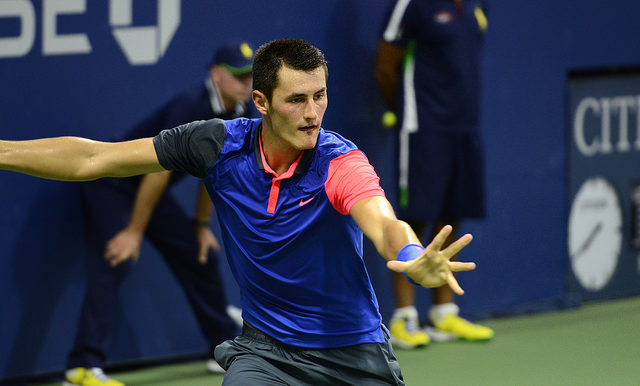
Photo courtesy of Steven Pisano at Flickr.com (creative commons license) You could write a book about Bernard Tomic already and he is only 23. The Australian’s career has been marked by one controversy after another, the most relevant being his lack of fight at times (see his 2012 US Open performance versus Andy Roddick which led to tanking accusations directed at him.)
The vitriol Tomic received after that match was a compliment of sorts – if people did not think he had the talent to become a future No.1, then they would not have been so vocal.
Strengths: Tomic is a versatile player with fine touch and a nice serve, and an awkward slice. Those skills have seen him reach a slam quarter-final (Wimbledon 13), win titles in Bogata (2014, 2015) and Sydney (2013), and reach the Australian fourth round twice.
Weaknesses: For all the talent he may have, Tomic seems to undermine it with enough off court problems to keep his entire generation distracted. Negative emotions can also overwhelm him on court and result in outbursts or less than convincing performances. Tomic can also give up if things do not go his way (Quito this year), and unless he can resolve those issues he may never get it together to achieve all the great things that could lay in store for him such as slam titles (Wimbledon and the US Open would be most likely) and a stint at the top of the ATP rankings.
The good news is all those weaknesses can be overcome, and if they are, his strengths will take Tomic far.
Slam he is most likely to succeed at: Wimbledon
Jack Sock, 23
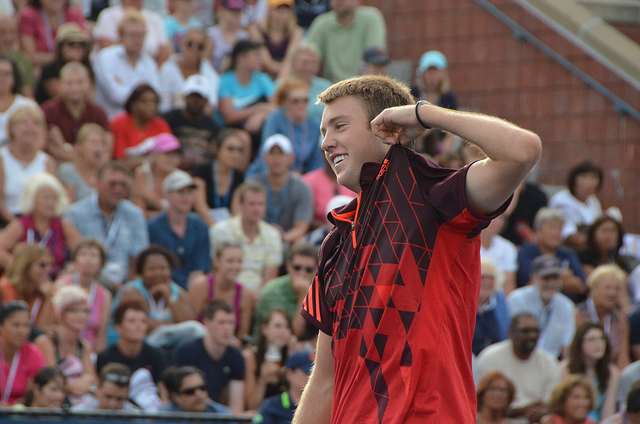
Photo courtesy of Jennifer Liquido at flickr (creative commons license) Jack Sock is a big serving, aggressive player from the US, who won the 2010 US Open Juniors tournament, beating Denis Kudla in the final. That achievement was impressive in itself, but was made even more remarkable by the fact it was only his second ever Junior Slam played, and his last.
Sock entered the top 100 of the pro rankings on July 8th 2013 after a nice run which saw him qualifying for Roland Garros and making the second round (beat Guillermo Gracia-Lopez in the main draw) and winning the Winnetka challenger.
Sock fell in and out of the top 100 until Spring 2014 and by the end of the year he was ranked 42.
In 2015, he won his first title in Houston beating Kevin Anderson in the Semis and Sam Querrey in the final. He also reached the last 16 of Roland Garros where he took a set off Nadal, beat Gasquet in the last 16 of the Citi Open, beat Gasquet again on his run to the Stockholm final where he lost to Berdych, and beat Isner on his way to the Basel semis.
This season, he started well by beating Ferrer on his way to the Auckland final but he had to retire injured versus Bautista Agut.
Sock also made the Houston final but lost in three tough sets to Juan Monaco as he struggled with fitness.
Sock has potential to be a top five player, and his success on all surfaces (he is also a Wimbledon doubles champion with Vasek Pospisil in 2014) means he could have deep runs at any of the ATP 1000s and Slams.
Strengths: A big serve and first strike tennis.
Weaknesses: Fitness. The American struggles if matches go the distance.
Slam he is most likely to succeed at: US Open.
Jiri Vesely, 22
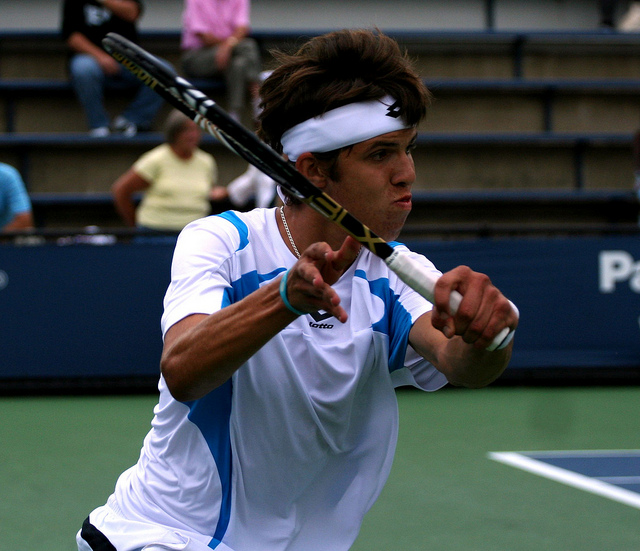
Photo courtesy of robbiesaurus at Flickr.com (creative commons license) Vesely, the 2011 US Open Boys juniors runner-up, has some big weapons with his huge serve and ground-strokes and he showcased them best when he took the 2015 Auckland title on outdoor hard as a qualifier.
Vesely looked like he might be ready to breakthrough in 2015 when he built on his Auckland win with a final appearance on clay in Bucharest in late April, but he did not win more than two consecutive ATP matches until the US Open, and he only achieved the same feat once more the rest of the year in Shenzhen where he beat Ze Zhang, ranked 216, and Zhizhen Zhang, ranked 583, before falling to Berdych.
This year, if you had not heard of Vesely before the Monte Carlo Rolex Masters, his second round upset of Novak Djokovic would have changed that. The Czech put in a career best performance to shock the world No.1 in his first ATP clay match of the season.
Strengths: Vesely has a huge serve and big shots. If he gets into a rhythm, he is hard to beat.
Weaknesses: As hot as Vesely can get, he can also plunge into very cold waters in a sea of errors.
Slam he is most likely to succeed at: The US Open
Thiem, Tomic, Vesely, and Sock are the four biggest achievers of their generations so far. Here’s a brief look at their fellow top 100 members.
Denis Kudla
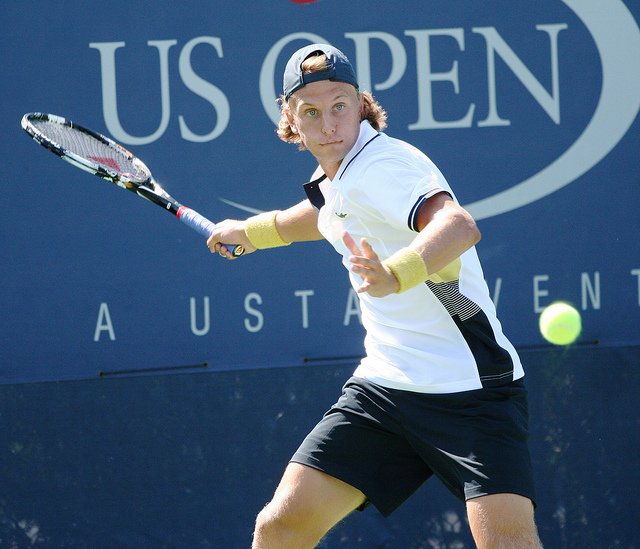
Photo courtesy of robbiesaurus @fllickr.com (creative commons license) Denis Kudla’s deepest run at an ATP event came at the 2015 BT&T Open, Atlanta, beating Jack Sock on his way to a three set semi-final loss to John Isner. That run came on the back of a run to the fourth round of Wimbledon where he lost to Marin Cilic.
Kyle Edmund, 21
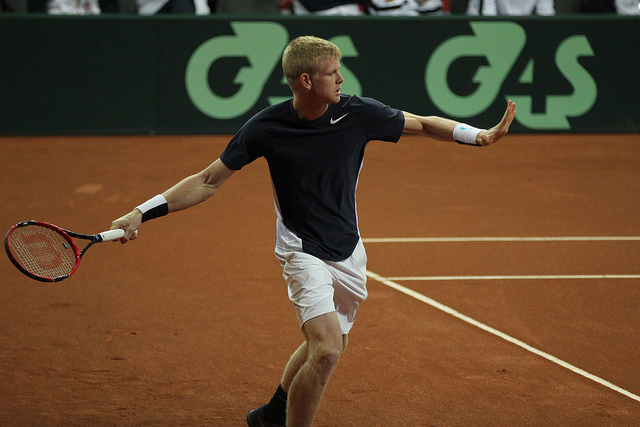
Photo courtesy of Marianne Bevis at Flickr.com (creative commons license) Edmund has come to the tennis world’s attention mostly on the red clay- reaching the French Open second round in 2015 and leading David Goffin by two sets to love in the first rubber of the Davis Cup final that same year.
Diego Schwartzman, 23
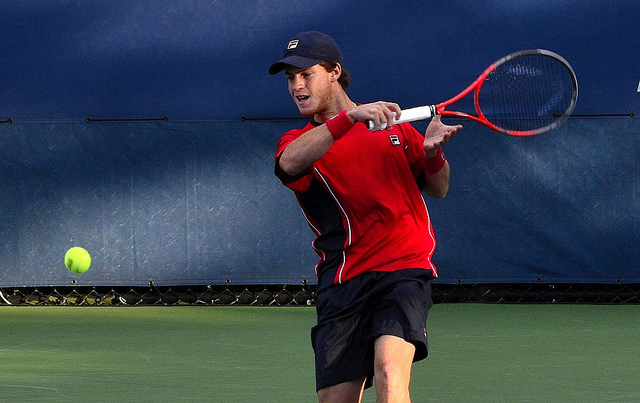
Photo courtesy of Steven Pisano at Flickr.com (Creative commons license) Schwartzman, from Argentina, made the semis of Istanbul in 2016.
Taro Daniel, 23
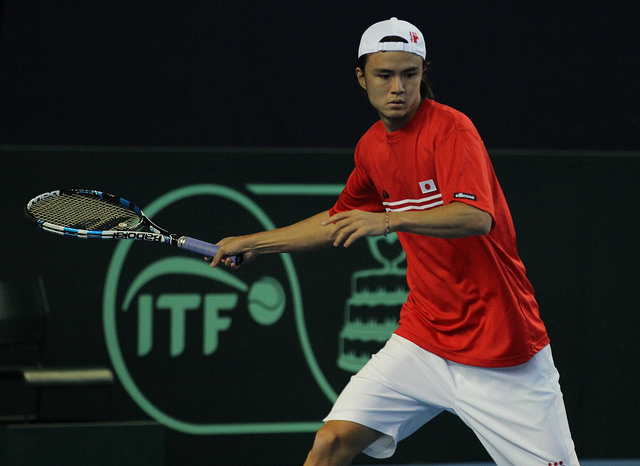
Photo courtesy of Marianne Bevis at Flickr.com (Creative commons license) Daniel is a counter-puncher who has had most of his success on clay including a run to the quarter-finals of the Chile Open in 2014.
Lucas Pouille, 22

Photo courtesy of Mathys Cresson at Flickr.com (Creative commons License) Pouille is a much-talked about player this year after his run to the Brisbane semi-finals which saw him defeat then 16th ranked David Goffin in the fourth round.
Pouille has had some nice runs in his short career such as getting to the Paris Masters last 16 in 2014 where he beat Karlovic and Fognini before losing to Federer.
Much of Pouille’s pro success has come on clay. In 2015, he defeated Thiem in Monte Carlo’s first round, and in Hamburg, he beat Monaco and Paire on his way to the semis
Marco Cecchinato, 23

Photo courtesy of Vale Alemanno at Flickr.com (Creative commons license) Cecchinato only competed in his first slam last year at the US Open where he lost to Mardy Fish in the first round in four sets.
Damir Dzumhur, 23

Photo courtesy of http://www.rtvusk.ba Dzumhur, a former junior No.3, won his first main draw ATP match in 2015 when he saved two match points versus Michael Berrer in the opening round of Zagreb. He reached the semis of Casablanca, and beat Youzhny and Baghdatis before losing to Federer at Roland Garros.
In 2016, Dzumhir is 5-6 beat Kyle Edmund in five sets in the Australian Open first round before losing to David Goffin.
At the 2016 Miami Open he defeated Rafael Nadal in the second round when the Spaniard had to withdraw down in the third set with heat illness.
In his next event, Dzumhur beat Tomas Berdych in the second round of Monte Carlo and then pushed Milos Raonic to a final set tiebreak in the last sixteen.
-
Monte Carlo Rolex Masters Final Rafa Nadal Defeats Gael Monfils Five Points

Photo courtesy of matiastania.gr Rafa Nadal lifted his ninth Monte Carlo Rolex Masters trophy beating Gael Monfils 7-5, 5-7, 6-0 in a 2 hour 45 minute contest. The Tennis Review gives you five points on a thrilling final.
The title is Nadal’s first ATP 1000 since Madrid ’14.
Since that victory over Kei Nishikori in the Madrid ’14 final, Nadal had reached just two other ATP 1000 finals, both on clay, in Rome (2014) and Madrid (2015) losing to Novak Djokovic and Andy Murray respectively.
Nadal now ties Novak Djokovic with 28 ATP 1000 titles
That did not look likely back in Miami when Djokovic took the record for most ATP 1000 titles, climbing one above Nadal and his jointly held record of 27.
That same week, while Djokovic continued his dominance of the ATP tour, Nadal had problems with the heat and had to withdraw from his third round match with Damir Dzumhur.
In the space of a few weeks, however, Nadal has turned his season round from one in which he struggled with confidence and fitness to one in which he excelled in both as he took one of the tour’s oldest and most prestigious titles with wins over Dominic Thiem, Stan Wawrinka and Andy Murray, all well-regarded, even highly rated clay court players, and then emerged the winner in a hotly contested final.
Nadal now leads Monfils 12-2 in their head to head.
Considering their head to head, few expected the Nadal-Monfils Monte Carlo match to be such a closely contested one.
Especially considering their clay court history. Before the match, Nadal led Monfils 4-0 on clay and had never dropped more than 3 games to him in a set, losing 17 games in total.
In the 2016 Monte Carlo final alone Nadal lost 13 games to the Frenchman, and five of those were on his own serve.
The match had 13 breaks of serve
Nadal got 8 of them, Monfils 5. Monfils saved a total of 13 break points, while Nadal saved 8.
Breaks of serve on clay are more common than on hard, and both men returned from quite far back which meant they could neutralize the serve with their ground-strokes. If one of them managed to get a good strike on the return, they were able to effectively take control of the point, diffuse the weapon that the serve can be and make this match one decided from on and inside the baseline. Both men also approached the majority of the break points with aggressive tennis which led to the high number of points both converted.
In the first set, Nadal broke first for 3-1 with some sublime defense and then transitioned into offense, earning a short ball and hitting it down the line with authority to force an error from Monfils.
Monfils broke back immediately as he remained solid in rallies, forcing an error from Nadal on break point, and then held serve for 3-3.
At 4-3, Nadal broke again as Monfils fired a forehand long, but the Spaniard could not serve the set out and Monfils leveled the set at 5-5.
Nadal held for 6-5 and then broke Monfils to take the first set 7-5.
In the second set, Monfils was not going to go away, breaking for 2-1 and holding for a 3-1 lead. Nadal fought back to level the set at 3-3, but Monfils never gave up, breaking again for 4-3.
Nadal breaking straight back did not dispirit the Frenchman, who was 5-18 in finals, as he held serve to stay in the match at 4-5 and then broke Nadal for 6-5.
The Frenchman then served out the set and leveled the match at a set apiece.
That, however, was as far as the Frenchman’s challenge to the eight time Monte Carlo champion was going to go. Nadal broke at the start of the decider, held serve, broke again, and as each point went on, the Spaniard grew in confidence and authority as he took the deciding set 6-0, and with it his ninth Monte Carlo Rolex Masters title.
Nadal said “I had to decide the match with my forehand”.
The match was full of long rallies as both men, two of the game’s greatest defenders, tracked down every ball that came their way and sent it back until they got an opening to take charge of the point. In the end, it was Nadal’s forehand, once the shot that defined his career, particularly down the line, which made the difference.
That shot has looked less than potent at times the last season and a half, especially in tight matches, but in the Monte Carlo final, at the scene of a third of his ATP 1000 trophy finals, it once again burst into life.
After the match, Nadal said ” I had to decide the match with my forehand”. He certainly did, and on no more a decisive point than match point.
Check out Nadal’s winning forehand on match point below.
What a way to end it! A thumping forehand from #Nadal to clinch his 9th title in Monte Carlo. #Monfilshttps://t.co/H836R8k3Nm
— TennisTV (@TennisTV) April 17, 2016
Monfils hit some pretty impressive forehands, too. None more so than the one in the video below.
//platform.twitter.com/widgets.js
This was Nadal’s ninth Monte Carlo crown, his 68th title overall, and his 47th on clay.
Next up for Nadal is Barcelona, his home event, and one where he now has a chance to really stamp his mark on the 2016 clay court season.
With question marks over his chief rivals form, the nine times French Open champion has answered the questions about his with a resounding response and while we won’t know if he is truly back until he has a win over Djokovic or has regained his Roland Garros title, we do know he is back to winning European clay court titles and proving the mentally tougher in final sets, two things which will set him up nicely, and rightfully worry his rivals, as he challenges for a record breaking tenth Roland Garros title in the coming weeks.
Watch highlights of Nadal’s win over Monfils in the Monte Carlo Rolex Masters final below.
-
Monte Carlo Rolex Masters Final Preview Rafael Nadal Vesus Gael Monfils

Photo courtesy of zimbio.com The Monte Carlo Rolex Masters 2016 final will be contested by eight time champion Rafael Nadal (5) and Frenchman Gael Monfils (13). The Tennis Review previews the action and predicts the winner.
Both Nadal and Monfils come in to the final after traveling down very different roads this week.
Nadal has had mini struggles all the way, and then a monumental one in his semi-final with Murray. Monfils, meanwhile, has cruised through the draw without dropping a single set.
In Nadal’s first match he failed to serve out both sets versus Aljaz Bedene the first time of asking. In his last sixteen match versus Dominic Thiem, he was vulnerable on his serve again as he faced 17 break points. In his last eight match against Stan Wawrinka, he again struggled when it got close to closing out the match. In his last match, Nadal fell behind a set and looked in danger of being overwhelmed by Andy Murray in straights.
In each match, though, Nadal managed to survive the problems posed to him, something he has failed to do at times over the last season and a half since coming back from injury.
Nadal could not have asked for a better struggle to set him up for the rest of the clay season than the one Murray gave him.
If any match was going to remind him of his career achievements, it was this one, a come back three set win versus another member of the Big Four, one who had beaten him the last time they had met on clay.
The Scot took the first 6-2 with some fine clay play, the kind that earned him his best ever run on the surface last season. Nadal, though, wrestled control of the match at the end of the second set, his level rising and his forehand growing in depth, confidence and precision. Once the Spaniard took the set, he then dominated the third as he gave the kind of performance we were used to seeing in his heyday, like in 2011 when he defeated Murray in a similarly brutal three set Monte Carlo semi.
Nadal’s win over Murray this year brought him into his 10th Monte Carlo final, and his 100th career one, becoming the sixth man to achieve that feat.
In that final he will face Monfils who breezed past Jo-Wilfried Tsonga 6-1, 6-3 and enters his third ATP 1000 final, and his 24th overall.
That win over Tsonga was Monfils’ fourth straight sets win in a row after defeats of Gilles Muller, Paolo Lorenzi, Jiri Vesely, and Marcel Granollers.
Facing an in form Nadal, perhaps arguably his best form since 2014, in a final is tough enough, but it’s even tougher when you have a finals record like Monfils- 5-18- and the head to head he has with the Spaniard- 2-11. The Frenchman has also only won 17 games and never won more than 3 games in a set in his four clay court matches versus the Spaniard.
So, on paper, this final looks like a certain win for Nadal.
This week has been a strange one, though, and while Nadal may look back to form, he did have some advantages in his match up with Murray in a match where his psychological edge over the Scot, who has struggled recently, paid dividends.
You could say he has an edge over Monfils, too, but there are two important factors in this final which may play a part in the outcome.
One is that Monfils has nothing to lose- Nadal is the runaway favorite here, and Monfils’ final record is such that he is always the underdog. Also, crowds love a home player and an underdog which means Monfils is going to receive plenty of support, and if he can the crowd going with his athletic skills and shot-making, he could really get some momentum going.
This match could be the perfect chance for Monfils, who has under-delivered throughout his career, to give the kind of performance he is capable of, one in which he combines his great defense, depth of shot, ability to track down balls, and fine, inspired shot-making skills, to realize his potential, which should have by now realized itself in the form of at least one ATP 1000 trophy.
Second, Nadal has not won an ATP 1000 since Madrid 2014, and while his gutsy three set win over Murray must give him confidence, we do not know how he will respond if Monfils feels inspired by the occasion before a home crowd and takes the match to him. Will the pressure be too much? Will Nadal, as strange as it sounds, with another ATP 1000 title a match away after two years in the wilderness, by his standards anyway, want this win too much?
Prediction: Nadal should win this, and if previous matches with Monfils on clay are anything to go by, he should win it without a fuss. But Monfils is having a good season, plays well on clay- his best ever slam finish is the Roland Garros semis- and he has the home crowd support so this might not be as straightforward as it seems.
-
Monte Carlo Rolex Masters Semis Preview Nadal Vs Murray Tsonga Vs Monfils

Photo courtesy of http://www.publika.md The Monte Carlo Rolex Masters Semis feature Rafa Nadal taking on Andy Murray and Jo-Wilfried Tsonga versus Gael Monfils. The Tennis Review previews the action and predicts the winner.
Rafa Nadal (4) Vs Andy Murray (2)
This match will really tell us where both men’s levels are at, particularly Nadal.
This event Nadal has had mini struggles in all his matches- failing to serve out both sets vs Bedene the first time he had the chance to do so, facing 17 break points versus Thiem, and losing a break of serve vs Wawrinka in the second set. Nadal survived all of them, an encouraging sign, but was helped a little by his rivals.
Murray will not offer any helping hands at all. The Scot is up for a fight this week, as showcased in his recovering from a set and two breaks down, and a break down in the final set, versus Benoit Paire. But like Nadal, Murray had Paire to help him out a little, and in his 6-2, 6-0 defeat of Milos Raonic he benefited from an injured opponent.
But that is what both Nadal and Murray do so well- take what ever their opponents offer them, be it the mental fragility of Paire or Wawrinka or the abductor injury of Raonic, and then run with it all the way to the finish line.
The question is what weaknesses will they exploit in each other?
Nadal knows Murray can get frustrated under pressure. He knows that if he can overwhelm the Scot with brutal relentless hitting from the baseline, it could get on top of him not just on the court, but, even more destructively, in his head, too.
Murray will be aware Nadal has been struggling with his length of shot, particularly on the forehand, and with his confidence. If Nadal does get a lead, Murray will make him work to close it out, and his solid ball striking will ask plenty of questions of Nadal’s game on the big points.
Watch highlights of when Nadal and Murray met in the Monte Carlo 2011 semis below.
Last year in Madrid, Murray exploited Nadal’s weaknesses royally, and emphasized his own strengths as he used the fast conditions, which complement his game, in Madrid to his advantage and defeated Nadal in straights.
Monte Carlo is a world away from Madrid, though, and Nadal is far away from the player Murray defeated in the Spanish capital. The Rolex Masters courts are slower, which benefits Nadal, and the Spaniard is much more solid, more confident and hitting his forehand down the line better than he was 12 months back.
The Spaniard is king of the Monte Carlo courts, too, winning eight titles there. That will give him some confidence to play with the authority he will need if Murray, who has pushed Nadal hard in a few clay court matches over the course of their rivalry, threatens to inflict a rare loss on him at the venue.
Prediction: Nadal to win. The world No.5 has the advantage in this match up (leads 16-6), plays better on slow clay courts, and is the mentally tougher of the two. When things get tight, those factors should see him through.

Photo courtesy of http://www.zimbio.com Jo-Wilfried Tsonga (8) Vs Gael Monfils (13)
The next best thing for the the Monte Carlo Rolex Masters crowd after a Federer-Djokovic semi is this one- two of France’s finest shot-makers and entertainers going head to head before a home crowd.
This will be the biggest stakes match between the two. They did meet in the 2012 Doha final, but this match is a chance to make an ATP 1000 final on a surface they both play well on and in their home country. Whoever they face in the final, they are going to have the crowd on their side and that might give them the edge.
The two have met six times, (Tsonga leads 4-2), but this is their first meeting on clay. Both men have had success on the surface, both reaching the Roland Garros semis and the Monte Carlo semis, too, with both men excelling at their very different styles, Tsonga an aggressive shotmaker, Monfils a more defensive one, on a surface which rewards both.
Tsonga will be feeling good, coming in off the back of a tough fought three set win over Federer. Meanwhile Monfils beat lucky loser Marcel Granollers in straightforward fashion.
What this match will come down to is mental toughness, an aspect both men struggle with, which could mean, considering the occasion, this match may have some interesting twists and turns.
Prediction: Tsonga. He has the advantage in the match up and the greater big match experience.
Watch highlights of Tsonga Monte Carlo quarter-final win over Federer below.
-
ATP Clay Court Season 2016 Seven Questions Djokovic Nadal Zverev Thiem

Photo courtesy of http://www.rtcg.me The Clay Court Season is underway and there are plenty of questions tennis fans will have about what the red stuff will serve up. The Tennis Review gives you seven of them.
Will Novak Djokovic win the French Open and complete the career grand slam?
The big one. The question that will dominate the tennis media this Clay court season much like Djokovic dominates the ATP.
Once again, just as he did from 2011-2015, Djokovic goes into Roland Garros as the favorite, and once again, as he has done since 2012, he has to deal with the pressure that comes with not only that but also with trying to complete the career grand slam.
That pressure, and the pressure his opponents put on him has always gotten the better of him. In 2011, he was outplayed by Roger Federer, in 2012 he double faulted championship point down in a tight fourth set, in 2013 in the semis versus Nadal, he hit the net when leading by a break in the fifth, lost the point and never recovered, in 2014, he caught a virus and played one of his worst matches of the season after winning the opening set, and in 2015 he came up against a Stan Wawrinka armed with exactly the right game plan to beat him.
Will one of these scenarios stop him again? Will a new one get in the way such as an inspired up and comer or a lower ranked big hitter redlining? Or will Djokovic finally join Rod Laver, Andre Agassi, Rafael Nadal and Roger Federer as the elite few to win the career slam?
Djokovic himself says winning Roland Garros is not an obsession, but a wish, a dream, and that he will tackle it step by step.
Certainly, many will be wishing Djokovic well as he attempts to live his dream. The French crowd have warmly applauded him the last couple of seasons when he has received his runners up trophy and he will not come undone because of a lack of support.
Whether or not Djokovic wins, he, like Sampras before him who could not win in Paris, or Lendl, who could not win Wimbledon, will go down as an all time great.
If he does win, he will, if he keeps picking up slams, go down, in some eyes, as the greatest. A dream every pro tennis player has when they set out on that long road to the top, one that for Djokovic will be just seven matches away in the third week of May.
Can Nadal ‘come back’?
Nadal is back in many ways- he is no. 5 in the ATP rankings, he has beaten the likes of Murray and Wawrinka this past year, and he took a set off Federer in the Basel final.
But he is not really back in the way which for many really matters- as the world’s greatest clay courter or even the reigning Roland Garros champion, a position he held nine times.
Little suggests he will get back there soon, but this is Nadal, the one-time comeback king, and his clay court season could turn on a single point.
That point could be won with confident decision making, and confidence is where the difference between coming back and ‘coming back’ really lie for Nadal.
That confidence might start with his comeback from match point down versus Alexander Zverev in Indian Wells or the tiebreak set he contested with Djokovic in the semis- the furthest he had taken the world No.1 in a set since he beat him in the 2014 Roland Garros final.
If Nadal can draw on those moments, he could get some more confidence going, and if he succeeds in doing so and goes into Roland Garros with an ATP 1000 final or title behind him, then we might see a very different Nadal to the one we have seen in big matches this past season, a Nadal none of his opponents, particularly Novak Djokovic, will want to see across the court from them in Paris.
Can Dominic Thiem or David Goffin reach an ATP 1000 final?
Thiem and Goffin are faces to watch this clay court season. Both have great clay games, have success on the surface, and are ranked in the top 15.
With both men experiencing success at ATP 250 and 500s, and Goffin has also had some success at ATP 1000s with recent semi-final finishes in Indian Wells and Miami (Thiem’s best finish at an ATP 1000 was Miami quarters 2015), the next step is to challenge for ATP 1000 titles and make finals.
Thiem has proven he can take on the big players with his Buenos Aires win from match point down versus Nadal and his close match with Djokovic in Miami. Goffin, too, has shown he can close out tough matches versus the elite with his win over Wawrinka in Indian Wells.
What we have yet to learn is whether they can do it in an ATP 1000 semi or final. If they can, then the next question will be can they do it at Roland Garros. Goffin has already had some success there, reaching the fourth round as a lucky loser in 2012 when he took a set off Federer. Thiem has not made it past the second round in his two visits to Roland Garros, but he has been to the US Open last sixteen.
This clay court season, the two might answer questions about their potential in matches against one another. With both seeded to reach the last sixteens or last eights at upcoming clay events, they could meet in the last eight or deeper. So far, their head to head is 4-2 in Goffin’s favor, but tied at 1-1 on Clay, with the Belgian taking their first clay court final in Kitzbuhel in 2014 and Thiem taking their 2015 Gstaad final.
Should the two contest another clay court final this season, that match, for those interested in how a future Roland Garros final might look, will be one to watch.
Watch highlights of Goffin versus Thiem in the 2015 Gstaad final below.
Will the Next Gen follow up on their first quarter success?
Alexander Zverev and Nick Kyrgios are part of tennis’s next generation and have been living up to that billing very well in the first quarter of 2016 with Zverev beating Cilic and Simon, and Kyrgios winning his first career title in Marseilles and making his first ATP 1000 quarter-final (Miami).
Both have had some success on clay- Zverev made the semis of the 2014 Hamburg Open and Kyrgios defeated Roger Federer in Madrid last year and was runner up in Estoril so the signs are there that both young men have the tools to keep their 2016 runs going strong.
With young players really struggling to break through on the tour the past few years, momentum is key for both these men. Zverev, ranked 54, and Kyrgios, 20, have put in the hard work to get that far, if they can keep focused and get some lucky breaks here and there, they could rise even higher this clay court season and keep doing the fine job they have been doing of breathing some new life into the ATP tour.
Can Stan Wawrinka defend his Roland Garros title?
The streakiest of slam winners, Wawrinka has shown a more consistent level since winning Roland Garros last year going on to win ATP 500 crowns in Tokyo and Dubai and winning in Chennai.
Last season, Wawrinka stunned many tennis fans when he came back from a set down to overwhelm Djokovic in the Roland Garros final. This year, he could repeat that feat or crash out in the first round, and his incoming form will make us none the wiser when it comes to predictions.
The 2014 Monte Carlo champion will benefit in some way from Djokovic’s French Open quest. Much of the media focus will be on the No.1 and not on the defending champion. Under the radar and on the big stage is where the Swiss likes to be- if he gets there again, that could be, much like his 2015 Roland Garros win, a pretty stunning scene.
Can Murray repeat his 2015 Clay form?
Murray is world No.2 right now and part of the reason for that was his consistency across all surfaces last season.
The Scot, who developed on the clay courts of Barcelona as a teen, had always under-performed on the surface until last year when he won Munich, Madrid, beating Nadal in the final, and took Djokovic to five sets in the Roland Garros semi.
This season, Murray has had mixed fortunes- he made the Australian Open final for the fifth time but lost early in both Indian Wells and Miami despite leading 3-1 in the third sets of both matches.
With the grass season just a couple of months away, the clay court season is when Murray needs to get some confidence.
Memories of his 2015 clay court season might be just what the Scot needs to get his game- which when on is one of the few that can trouble Novak Djokovic- going and to get his season back to one worthy of a world No.2.
How will Federer fare coming back from his first ever surgery?
Federer has done amazingly well to not have had surgery his entire 18 year career. The 2009 Roland Garros champ has only been sidelined for 2 months as a result, and has been ready to return for a couple of weeks, but how will the surgery impact his game and will there be any mental effects?
Tennis with a view 😎⛰ pic.twitter.com/0pyzbZos2C
— Roger Federer (@rogerfederer) April 11, 2016
//platform.twitter.com/widgets.js
In Monte Carlo, where Federer makes his much awaited return to the tour, everything looks very positive. Federer has talked about how he has benefited from the rest he has had as a result of the surgery, the fine preparation he has had with nine to ten days of practice in Monte Carlo, and the fact his knee has not bothered him.
What he does not know, he says, is how the knee will hold up in match conditions. Fortunately, Federer’s comeback coincides with the clay which will be forgiving on the knee, and his playing in front of European clay court fans who will, if his knee struggles to support him in a tight match, do as much as they can to compensate.
What questions do you have about the clay court season? Let us know below and we will discuss it with you.
-
Monte Carlo Rolex Masters Who Will Take the Trophy Now Novak Djokovic is Out?

Photo courtesy of teniszvilag.com With Novak Djokovic out of the Monte Carlo Rolex Masters, the trophy is there for the taking. The Tennis Review looks at the eight quarter-finalists and asks who is most likely to win the clay season’s first ATP 1000 title?
Stan Wawrinka (4)
Before Novak Djokovic’s upset at the hands of Jiri Vesely, Stan Wawrinka was widely considered the man most likely to beat the world No.1 if anyone was going to do so.
The Swiss is the reigning Roland Garros champion, beating Djokovic in the final to achieve that feat, and is the 2014 Monte Carlo champion.
His 6-1, 6-2 victory over Gilles Simon in his last sixteen match is a sign of his fine form, and when Wawrinka hits that kind of form, he can be pretty unstoppable.
The two time slam champ is capable of beating everyone in the draw and has defeated Federer, Nadal, Tsonga and Murray all convincingly on clay the last few years.
Great clay history, a difficult match up for the rest of the draw, and playing at the top of his game, it is hard to look past Wawrinka as the man most likely to take the Monte Carlo Rolex Masters trophy.
Roger Federer (3)
Monte Carlo is one of only two ATP 1000 tournaments Federer has not won (the other is Rome) and the four time finalist will be very motivated to rectify that situation.
Federer has been playing well this event, taking advantage of favorable match ups and getting things done in straights. He hit 29 winners in his last sixteen win over Roberto Bautista Agut.
The Swiss’ draw from the quarters onwards features two players who have troubled him greatly in the past- Tsonga and Monfils- so things might not be straightforward from now on.
But with the 17 time slam champ feeling refreshed and his knee reacting well to match conditions, his chances of dealing with his rivals in his efficient and no nonsense way looks good.
Rafa Nadal (5)
The fifth seed and 8 time champion survived a tough 80 minute first set in the last sixteen versus Dominic Thiem and showed great fighting qualities to fend off 15 of 17 break points and to come back from a break down in each set.
Monte Carlo, the scene of eight trophies for Nadal, could be the place to reawaken the all time great clay courter in the fifth seed.
The Spaniard will need to play close to his best if he is going to get past Stan Wawrinka in the last eight, and if he achieves that his confidence could be back to the level he needs it to be at if he wants to win ATP 1000 titles again.
Andy Murray (2)
Murray did what he does better than anyone bar Djokovic against a redlining Benoit Paire in the round of 16. The Scot hung in as winner after winners flew past him and when Paire started to think about the prospect of a win over the world No.2 a set and two breaks up and began to wobble, Murray pounced.
The Scot bounced back again in the third set when Paire served for the match, playing his best tennis when he really needed it.
Unless the more aggressive players in the draw overwhelm him, Murray could potentially fight and frustrate his opponents all the way a second career ATP 1000 clay title.
Jo-Wilfried Tsonga (8)
Tsonga can catch fire now out of nowhere it seems, and if he can get to the business end of an event, he can collect the trophy with his impressive serving and unpredictable game just like he did when he defeated Djokovic, Murray and Federer on his way to the 2014 Canadian Open trophy.
Milos Raonic (10)
The Canadian has been to the quarters at least of all five events he has played this year and survived a tough three setter that went all the way to a final set tiebreaker versus Damir Dzumhur in his last match.
The tenth seed likes the time the clay gives him to execute his aggressive game and his much improved baseline skills mean he is no pushover at the back of the court.
There were injury worries in his last match, though, but if his fitness holds up, and if he taps into the kind of form that saw him beat Federer for the Brisbane title, Raonic could take another step forward in what has been a great season so far.
Gael Monfils (13)
Monfils defeated Federer in Monte Carlo last season on his way to the last four and could meet the Swiss at the semi-final stage if he can get past lucky loser Marcel Granollers in the quarters.
That potential Federer match is a winnable one for Monfils who has four wins over the Swiss so the crowd favorite has a nice chance to make the final and keep his 2016 going from strength to strength.
But once Monfils gets there, the odds are stacked against him- the Frenchman has lost 18 of his 23 finals.
Marcel Granollers (LL)
Granollers, a lucky loser who replaced David Ferrer in the draw, is into his third ATP 1000 quarter-final and the Spaniard, who has beaten two of this year’s hottest players in Alexander Zverev and David Goffin, will have nothing to lose in his upcoming matches.
-
Monte Carlo Last 16 Preview Rafa Nadal Versus Dominic Thiem
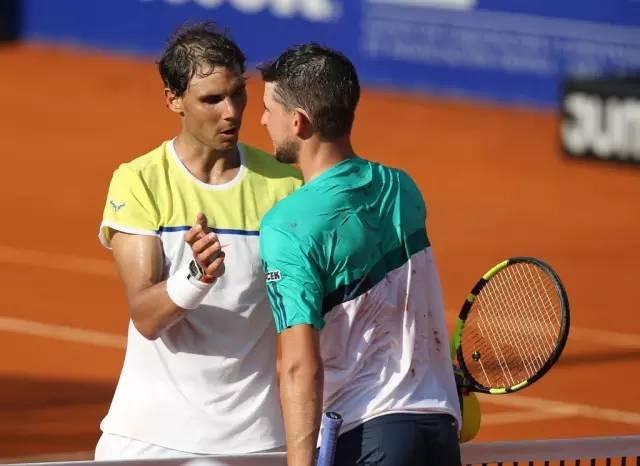
Photo courtesy of guajiyixia.cn Tennis’ greatest ever clay courter Rafa Nadal takes on Dominic Thiem, a potential great on the surface himself, in the last sixteen of the Monte Carlo Rolex Masters. The Tennis Review previews the action and predicts the winner.
Dominic Thiem’s three set win over Rafa Nadal in the Buenos Aires semi-finals kickstarted a tremendous run for the Austrian which saw him win the title, make the semis of Rio, win his first ATP 500 event (Acapulco), and reach back to back ATP last sixteens in Indian Wells and Miami.
Since that loss to Thiem in Argentina, Nadal has been showing signs of improvement. At Indian Wells, the Spaniard saved a match point on his way to beating in-form Alexander Zverev and he held a set point in the first set versus Novak Djokovic in the semis, the furthest he had taken the Serb since beating him in the Roland Garros 2014 final.
That momentum was disrupted in Miami when he pulled out with heat sickness in the third round versus Damir Dzumhur, but that unlucky interruption should not have any effect on Nadal in Monte Carlo. If Nadal is going to feel comfortable anywhere, and get some of his confidence back, it is going to be at the Rolex Masters where he has won the title 8 times.
The Spaniard had a comfortable 6-3, 6-3 opening round win versus Aljaz Bedene, though he did fail to serve out for the first set at 5-1, and the second at 5-2.
Thiem, meanwhile, has been struggling in his opening Monte Carlo matches. The world No. 14 had a cyst on a toe which caused him to have a hard time in his opener versus Jan-Lennard Struff and he dropped the first set to Taro Daniel in round two before taking the next two sets for the loss of just two games.
Yet despite that physical impediment, Thiem still fought to come through in his first round, and those final two sets versus Taro showed the Austrian was feeling comfortable on the clay once more- a fact that will be dangerous for Nadal who could not have come up against a trickier opponent in the last sixteen.
This match is an important one for both men and the fact it will take place so early in both their clay court campaigns has both pros and cons.
Nadal has a great chance to reassert himself on clay with a victory, especially with Djokovic now out of the draw, while a defeat to one of his biggest challengers on the surface could set him back confidence wise.
Meanwhile Thiem has a great opportunity to equal his best ATP 1000 run after his last eight finish in Miami in 2015 but also risks his momentum stalling if he fails to deliver in a match in which though he is the lower seed (12), he is, in many eyes, the favorite.
Thiem should handle the pressure a little better considering he has both the psychological edge after his win over Nadal in Buenos Aires and the confidence that a great start to the season should give him.
Nadal, though, should not be written off. His vast experience and overall quality could come to life at any moment, and he will be well- prepared versus an opponent many are touting as a future Roland Garros champion.
Prediction: Thiem to win in three tough sets. The Austrian has shown great improvements this season and this match should bring out the best in him, and his best, this season, is better than Nadal’s.
-
Jiri Vesely Shocks Novak Djokovic Monte Carlo Rolex Masters 5 Points
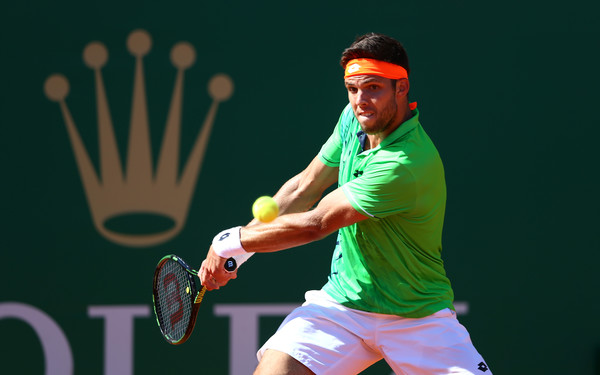
Photo courtesy of zimbio.com Jiri Vesely’s 6-4, 2-6, 6-4 defeat of world No.1 Novak Djokovic in the second round of the Monte Carlo Rolex Masters will go down as perhaps the upset of the season. The Tennis Review gives you five points about the world no. 55’s shocking win.
Vesely was a tough match up for Djokovic
22 year old Jiri Vesely was always going to be a tough opponent for Djokovic. The Czech, standing at 1.98 m, is a big serving, aggressive risk taker, just the kind of player to trouble Djokovic on clay. Vesely’s serve and ground strokes are big enough to hit through the court and past his opponents, even Novak Djokovic, and the clay gives him that little bit of extra time to set up his shots and execute his aggressive game.
The 22 year old has some pedigree on clay, too, finishing runner up at the ATP 250 Bucharest event in 2015, one of the best results of his career.
Vesely was also match fit, reaching the Marrakesh semis last week and fighting back from a set down in his Monte Carlo opening round versus Teymuraz Gabashvili.
One thing is having the game to beat Djokovic, another is to actually carry it through. Vesely showed he had the game to do it, and not just his big hitting one, but a more balanced game than we have often seen from the 2011 Australian Open Boys singles champion.
Employing slice, drop shots, and patient point construction alongside his big serving and deep, powerful ground strokes to great effect, Vesely took the first set in 37 minutes.
However, whether or not the Czech could see the win through was in doubt when he struggled in the second, as Djokovic pulled his erratic game together while Vesely’s form dipped, and the Czech dropped the set 2-6.
Vesely’s ability to pull off the upset looked possible at the start of the 3rd set as the 55th ranked player in the world broke in the opening game, but doubts arose once again when he was immediately broken back.
Players such as Kevin Anderson, Ernsts Gulbis, David Goffin, and Gilles Simon have all had Djokovic on the ropes the past year but have all been unable to resist the Serb’s ability to play his best tennis on the big points, and it looked like Vesely might meet the same fate.
Vesely, however, was not to be dispirited- he broke Djokvic for 2-1, and then played some of the best tennis of his career as he held serve to 5-3 and then pushed Djokvic as he held to stay in the match, holding match point.
Vesely could not convert but he made up for it at 5-4 when he served out the match to 15, opening up the game with another superbly executed drop shot and converting match point by winning another long rally with impressive defending, turning the tables on the world No.1 as he forced Djokovic to go for too much and error on the forehand, before an excitable crowd enjoying the dramatic finale to the year’s biggest upset.
Watch highlights of Vesely’s upset of Djokovic in the video below.
This is Djokovic’s first loss of the season in a completed match.
The world No.1 suffered a loss to Feliciano Lopez in the quarter finals of the Dubai Open when he withdrew with an eye infection after dropping the first set, but other than that he had won 28 matches this season, winning Doha, the Australian Open, Indian wells, and Miami.
During that run, Djokovic beat Federer, Murray, Nadal, Nishikori, Thiem and Raonic. After such a successful first quarter of the season for Djokovic, for many, the big question of the clay season was if anyone would defeat Djokovic and Vesely was not the name on most people’s lips.
The last time Djokovic lost in his opening round match was at Madrid 2013
That loss was to then 28th ranked Grigor Dimitrov.
Vesely, ranked 55, is the lowest ranked player Djokovic has lost to since then 74th ranked Xavier Malisse beat him in the last sixteen of Queens in 2010.
This is Vesely’s first win over a top ten player.
Prior to this Vesely’s biggest scalp was 13th ranked Ernests Gulbis on his run to the 2015 Auckland title, a tournament he won as a qualifier.
The furthest he had taken a top ten player before his win over Djokovic was against Andy Murray who he led by a set to love in the round of 32 of Indian Wells in 2014.
Vesely next faces Monfils while Djokovic is not scheduled to play until Madrid.
One positive for Djokovic is that he now has plenty of time to rest after such a formidable start to the season and refine his clay court game for his assault on a so far elusive Roland Garros title. His next event is likely to be Madrid which starts May 8th.
Considering how Djokovic reacted after he lost a set to Bjorn Fratangelo in Indian Wells this season- going on to win 28 sets in a row and two ATP 1000 titles- his reaction to losing this match might be a sight to behold.
The loss may also relieve the world No.1 of some pressure regarding Roland Garros. Maintaining a perfect record going into Roland Garros has not helped him win the title before, and in the seasons he managed it, 2011 and 2015, he was overwhelmed by an aggressive risk taker.
Vesely, though, will have given players of his big-hitting ilk hope which could be dangerous for Djokovic who is more vulnerable to such players than any others. His win shows Djokovic is not unbeatable if you can, like Vesely did, belief in yourself, execute your game and take advantage of the Serbian’s erratic form in earlier rounds.
Vesely won’t have much time to react to his win. Next up for Vesely is Gael Monfils who he will face on Thursday. The two have met once, at Wimbledon 2014 in the second round, a match Vesely won in five sets.
The Czech could run with this momentum or suffer a letdown- just as we never knew how he would handle his leads in this match, what will happen next is hard to predict. All we know is the 22 year old is capable of one tennis feat few have achieved the past couple of seasons- defeating Djokovic, which whatever happens next will make him a name to remember, and a name many tennis fans craving a touch of unpredictability in their sport will hope to see up against the world No.1 and the rest of the game’s elite in the near future.

Tennis from a fan's point of view
[
[
[
]
]
]
 thetennisreview