-
Five Questions with Tennis Experience Project Manager Hugo Allen
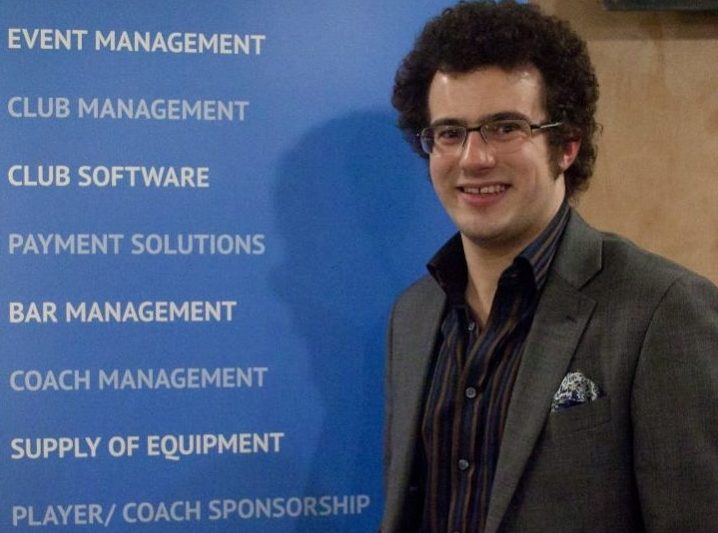

Photo courtesy of Hugo Allen The Tennis Experience, part of the Elite Sports Performance Expo, at London’s ExCeL is only a month away (June 15th-16th) so we talked to Connected Club’s Hugo Allen, project manager for The Tennis Experience, about preparations for the upcoming event, what inspired him to put it together and why you should go along and enjoy the show.
-
Rome Final Andy Murray Defeats Novak Djokovic on Final Stretch to Roland Garros Five Points
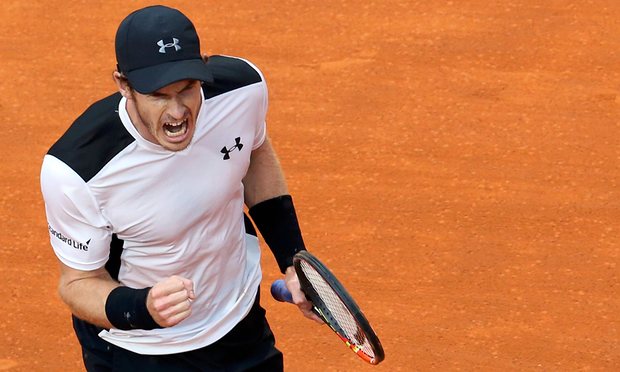
Photo courtesy of tip.com.mk Andy Murray’s 6-3, 6-3 defeat of Novak Djokovic in the Rome final earned the second seed his first title of the year. The Tennis Review looks back at the Scot’s best career performance on slow European clay courts, one that sees him go into Roland Garros as one of the favorites.
Murray scored his first Clay court win over Djokovic.
Djokovic had beaten Murray in all four of their previous matches on clay going back to the Monte Carlo ’08 last sixteen all the way to the recent Madrid final which the world No.1 won in three sets.
The Serb had also dominated Murray since Miami 2014, losing just once in 13 matches, in the 2015 Montreal final.
The head to head now stands at 23-10 in Djokovic’s favor.
Murray won his first slow clay court ATP 1000 title.
The Scot now has 12 ATP 1000 titles, putting him fifth on the all-time list, and this is his second one on Clay after Madrid 2015.
This is his first ATP 1000 on slow European clay though (Madrid plays faster due to the high altitude). Rome is more of a traditional clay court speed wise and, arguably, the most similar to Roland Garros.
Djokovic skipped his morning practice and had his ankle strapped.
The news Djokovic had skipped his morning practice and the sight of his strapped ankle certainly boosted Murray’s chances. As did Djokovic’s much tougher draw, defeating Nadal and Nishikori in hard fought matches, and the fact he had played the second semi-final late into the previous evening.
If those factors were not damaging enough to Djokovic’s chances, the rainy damp conditions, which caused the world No.1 to slip several times, left Djokovic less than happy out on court, and he made no secret about it, requesting the match to be stopped, and having his request denied.
Injuries, long previous matches, an off-day- Djokovic has managed to overcome all those hindrances and grab victory in the past so full credit has to go to Murray for not allowing the Serb to find his way back into the match, and doing exactly the right things to take advantage of the situation.
Murray delivered his best ever Clay performance.
Aggressive tennis was needed to overwhelm Djokovic, and that is exactly what Murray produced. The Scot was aggressive, especially on the forehand, hitting 11 winners, had a positive winner-unforced error count of 24-19, and won 13/17 points at the net.
Against the game’s best returner, Murray needed to be strong on serve, and he did not let himself down. The Second seed was impressive on his first serve, winning 31 of 38 first serve points, and saved all three break points against him.
The Scot converted 3 of his 6 break points, too, one of them on match point. The Scot defended brilliantly as Djokovic moved up to the net, and when the world No. 1 struck an angled backhand inside the service box to Murray’s backhand side, Murray ran outside of the doubles line, got his racket on the ball and hit it back into the court for a winner.
That match point highlighted Murray’s positive attitude throughout the match, the most crucial factor in his win. There was the odd negative outburst, but he never let it get in the way of his impressive play. This time it was Murray who proved the mentally tougher of the two, and what better timing that just before Roland Garros.
Murray now goes into Roland Garros as a genuine favorite for the first time in his career.
The world No.2 has talked about his hopes of winning Roland Garros, but with this win over Djokovic in Rome, where the Serb is a four time champion, those hopes could conceivably become a reality.
While Murray had Munich and Madrid on his resume, he was missing a prestigious ATP 1000 slow clay title, and a win over Djokovic on the surface. Now, he has both.
Whatever the draw, Djokovic’s ankle, or the conditions, Murray proved the better of the two on the day, and the confidence that very important fact should give him will do wonders for his chances in Paris.
The Second seed would avoid Djokovic until the final, and would have a mental edge over all the field bar Nadal and Wawrinka. Should he meet either of those two, those could be stumbling blocks, but if Murray has proved anything in his career, it is that he is well versed at eventually clearing such blocks quite elegantly.
Should Murray make the final and face Djokovic, if he can once again tap into Djokovic’s weaknesses on the day, namely his mind which is at its most vulnerable at the business end of Roland Garros, then the rival Djokovic has been so brutally dominating of late could end up being the world No.1 ‘s unlikely undoing.
-
Rome Final Preview Why Tennis Needs Andy Murray to Defeat Novak Djokovic
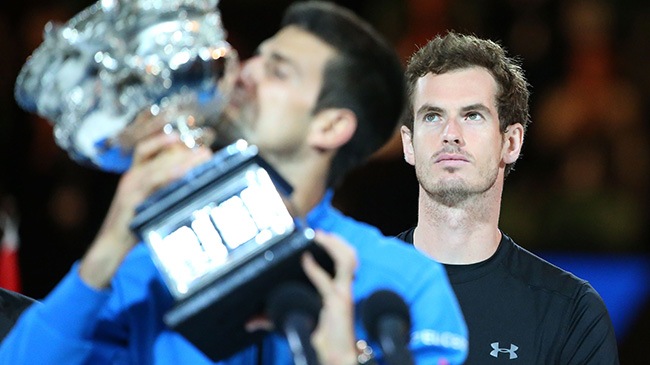
Photo courtesy of http://www.forum.x7c8.com The Rome final features top seed Novak Djokovic versus second seeded Andy Murray in their third final of the season. The Tennis Review looks ahead to a match men’s tennis really needs Andy Murray to win, and which he is in a privileged position to do so.
Here we are again- an ATP 1000 match, at the business end of the event, and world No.1 Novak Djokovic is taking on Andy Murray, currently ranked No.2.
The contest, on the one hand, is what the Rome organizers will have hoped for- the two best players in the draw, two Marquee names, too, going head to head.
Tennis fans, neutrals especially, will not have hoped for this match up, however. After all, here we are again, and the destination is a little too predictable for tennis fans who like their contests to be just that.
Since the 2014 Miami Open quarter-finals, Novak Djokovic has beaten Andy Murray in 12 of their 13 matches, and 7 of those wins have come in ATP 1000 events, 5 of those in straight sets.
Most recently, in Madrid, Murray managed to take Djokovic to a third set, but was not able to make much of matters when he got there, trailing 3-5 before he fought hard in a 13 minute game he had seven break points to win, but which he ended up losing.
Andy Murray losing the big points to Novak Djokovic in a big match, the kind of matches casual fans tune in to, is the stuff ATP matches are made of, it seems.
There is of course, another point of view- Novak Djokovic playing his best tennis on the big points is what ATP 1000 matches are about.
Neither, however, is ideal- ‘the outcome of Novak Djokovic versus Andy Murray matches in ATP events is always in doubt until the final point‘ would be much better.
Actually, that was the scenario for a while. Back before Miami 2014, the head to head, now 23-9 in Djokovic’s favor, was 11-8 for the Serb. Murray had plenty of wins in big matches versus his old friend- 3 ATP 1000 finals and 2 Grand Slam final wins no less.
That was before Murray’s back injury, which hit him after Wimbledon 2013 when he was the reigning champion at two slams, and before Djokovic hired Boris Becker and went from being a serial slam runner up to a prolific winner.
Murray’s injury, however, has been healed a while now– he has risen back to world No.2 since his injury- affected 2014, made two slam finals, added a Clay ATP 1000 title to his resume, and he has beaten Djokovic, too, in the 2015 Montreal final, in three sets.
That Montreal win certainly lifted the tennis world excitement-wise. Djokovic’s dominance of the ATP since Beijing 2014 was a testament to the Serb’s talent and hard work, but it was not a spectacle for the neutral tennis fan, or to fans of Djokovic’s rivals.
From Beijing 2014 until Montreal, Djokovic had won two slams, the WTF, 5 ATP 1000s and Beijing, and suffered just four losses. Murray’s Montreal win injected some much needed unpredictability into things.
The win was not entirely shocking, however. Montreal suits Murray’s game more than it does Djokovic’s, playing slightly faster than other ATP hard courts and rewarding Murray’s greater counter-punching ability.
Faster surfaces, however, are few and far between on the ATP tour, and that is part of Murray’s problem- the majority of the ATP courts are a better fit for Djokovic who is just that bit better than Murray when it comes to their shared strengths- the backhand, their return of serves, their athleticism- and a whole lot better regarding their common weaknesses- the serve, the forehand, and most crucially the mind. Decisive factors which tends to work in Djokovic’s favor on the big points when he and Murray meet to decide the big titles.
Since that Montreal loss to Murray, Djokovic has gone on to add to his ever-growing title collection- two more slams, another five ATP 1000 titles, another WTF, on surfaces he has tailor-made his game for, and even on those surfaces that are not the perfect fit. Madrid, for example, faster than most clay courts due to the higher altitude, should have favored Murray, but, as that final game showed, Djokovic’s mind can beat anyone, anywhere, whatever the surface (Cincinnati the only exception to this tennis rule).
Unfortunately for Murray, just when tennis needs him most, Rome also works better for Djokovic than it does for the world No.3- the world No.1 is a four time champion at the Foro Italico while Murray will play his first final in nine attempts.
Even factors which should favor Murray in most circumstances may not against Djokovic. Murray will go into his first Rome final the fresher of the two- his semi-final saw him drop just three games to lucky loser Lucas Pouille while Djokovic endured an ankle injury and survived some sublime shot-making from Kei Nishikori to win his match 7-6 in the third late into the night.
Watch highlights of Djokovic-Murray in the 2011 Rome semis below.
Being fresher in the final will not help Murray out too much against Djokovic, however. The world No.1 has the best stamina levels in the business and is likely to turn up as fresh as Murray. The Serb’s tough draw may also work to his advantage, too, leaving him the more battle hardy of the two. You have to feel for Murray at times- he simply cannot win against a rival as capable of working adversity in his favor as the Serb.
In the Rome final, Murray will have to face the biggest adversity in his career right now, the one standing between him and a first Rome title-Djokovic. We know he has the potential to overcome it, that he is no pushover on slow clay courts, especially in Rome. The Scot took Djokovic to a final set tiebreak in the 2011 semis, and Nadal to 7-5 in the third in the 2014 last four. Only recently, he had the better of Nadal in the Monte Carlo semis for a set and a half, and at last year’s Roland Garros, he went to five sets with Djokovic in the semis.The big question the Scot has to answer if he is to finally win his first slow clay court ATP 1000 trophy is this- does Murray believe?
Tennis fans tuning in to Rome will not just hope Murray believes- they will expect him to.
The world No.3 and second seed benefited from the kind of draw such status can earn you and of which you dream of, and while the final is the type of nightmare to scare most of the ATP away, it should not scare Murray.
Facing Djokovic in the Rome final should not inhibit a tennis player who has beaten Djokovic in slam and ATP 1000 finals, has worked his way back to world No.2 from career threatening injuries, and who has the dreams of many a tennis fan- of engaging in a sporting event of which the outcome is in doubt until the final second-on his very capable racket.
That’s a lot of pressure, but pressure, as Billie Jean King said, is a privilege, and Andy Murray should feel very privileged indeed.
Take advantage of our 2MinuteTennis.net™ offer- Get your first month’s subscription free with code FREEMONTHTTR.
-
Five Questions With Luxury Tennis Bag Designer Alison van der Lande
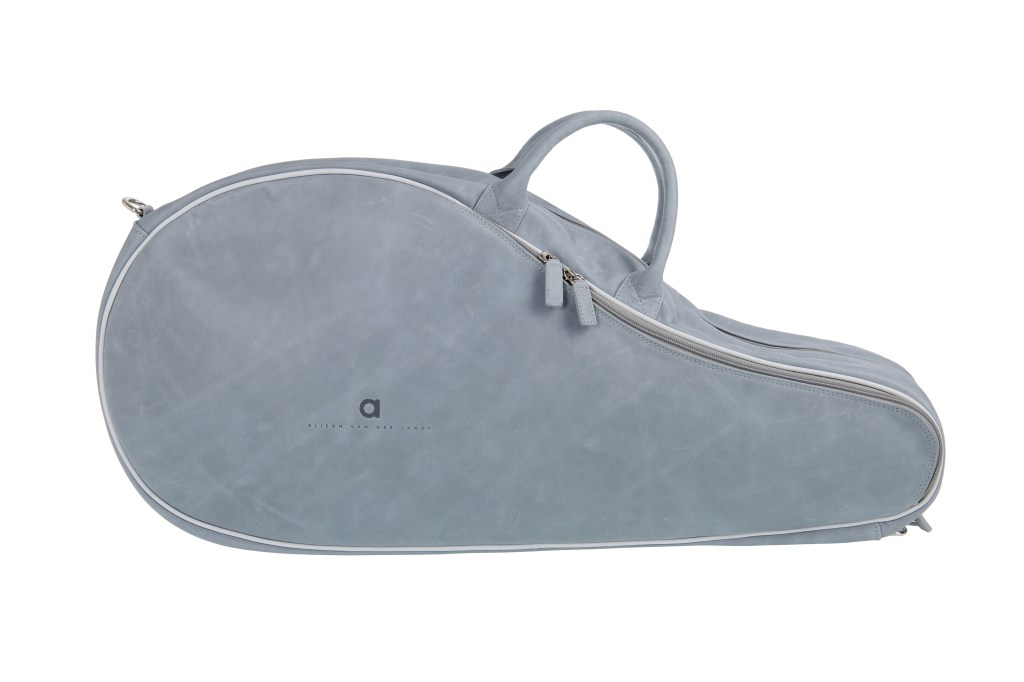
Photo courtesy of Alison van der Lande The tennis circuit is about to hit one of the world’s most stylish cities, Paris, for Roland Garros so The Tennis Review decided to ask luxury tennis bag designer Alison van der Lande five questions about her lovely tennis bags (we’ve felt them and they feel as good as they look), her favorite players, and her favorite tennis memory.

Photo courtesy of Alison van der Lande What inspired you to make luxury tennis bags?
We are a luxury lifestyle company- we love beautiful leather, we love style and we love to find new ways to combine the two.
We felt that the tennis market was very orientated towards man-made materials, huge logos and not always aesthetically beautiful. We wanted to make a bag that brought functionality, practicality and durability together with style, elegance and long-lasting quality, using the best natural leathers and craftsmanship.
What do people love most about them?
Their simple elegance stands out a mile. The depth of color and beauty of the leathers we use. Our customers recognize the craftsmanship and love that goes into making the bags and are therefore proud to use them. But also remember, whilst beautiful and luxurious they are also practical and to be used and enjoyed. Good bags and beautiful leather get better with age, which sadly cannot always be said for one’s game!
Which tennis players do you think are the most stylish?
On court I do like the Williams sisters, they push the boundaries and have some fun with color, trying to maintain their femininity at the same time.
I also like Roger Federer, he always looks very dapper, arriving on court, during a match and post-match.

Which player’s do you like watching play the most?
I enjoy watching quite a few players for different reasons, their brilliance, humor, speed, determination etc. but particularly Mansour Bahrami, Nadal and Novak Djokovic
What’s your favorite tennis memory?
A very long time ago I was living in California and went to San Francisco to watch Jimmy Connors and John McEnroe, I think it was 1996!!! My first time watching a game and my first time of eating sushi at a celebratory meal afterwards!
The Tennis Review is offering readers a 10% discount on Alison van der Lande’s luxurious tennis bags. Use code TENNISC1 when you shop for tennis bags at Alison van der Lande and add some style and beauty into your tennis life this Summer. Offer is valid until the end of May 2016.
-
ATP 1000 Rome Preview The Last Chance Before the Showdown in Paris
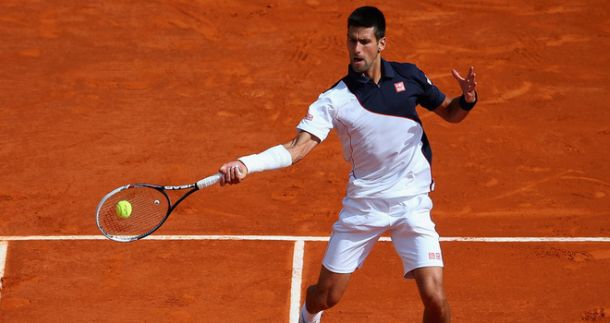
Photo courtesy of bih.time.mk Rome is the last chance for the Roland Garros title favorites to get some match practice in before the big one in Paris in a couple of week’s time. The Tennis Review looks at what a deep run in Rome would do for the likes of Novak Djokovic and Rafa Nadal.
Novak Djokovic: Champion 2008, 2011, 2014, 2015
Match practice at ATP events is not a pre-requisite for Djokovic when it comes to entering and winning a slam. The six times Australian Champion and three times Wimbledon champion has tended to come into both those events quite cold recently, just competing in Doha and exhibition events. The Serb also has not won many events in the lead up to the US Open the years he has won (he won Canada in 2011, but none last year).
In fact, the French Open is the slam at which Djokovic has been most successful in the lead up to, partly because it has the longest lead-in of the four slams, and yet it is the only slam he has not won.
Djokovic has won Rome three times in the years he has been favored to win in Paris (2011, 2014-15), but it has not helped him win the big one.
Djokovic has had as unpredictable a clay season as it gets this year- losing in his Monte Carlo opener to Jiri Vesely, and then winning Madrid, his historically least successful Clay ATP 1000 event.
The Serb is still the favorite to win in Rome, but he will have a tough time doing so. Nadal is scheduled for the last eight, Federer in the semis, and he could face his Roland Garros conqueror Stan Wawrinka in the final.
If he does win, we will be none the wiser about his Paris chances. Another ATP 1000 trophy will not hurt him, but it won’t heal what is by far Djokovic’s biggest tennis wound.
Rafa Nadal: Champion 2005-07, 2009-10, 2012, 2013.
Confidence is key for Nadal right now and the Spaniard’s may have been dented a little by his recent loss to Andy Murray in the Madrid Semis.
Nadal may not recover by the time he meets Djokovic in the Rome quarters, but if his confidence is going to come back anywhere, Rome is a likely place- Nadal has won seven titles at the Foro Italico.
Nadal has been playing better tennis than Djokovic on slow clay this season with wins in Monte Carlo and Barcelona, and he will want to make another big statement just before Paris.
How Nadal will respond if he beats Djokovic will be interesting to see. He could have a let down after finally getting his first win over the world No.1 since Roland Garros 2014, or it could get his career really going again.
Most likely, it would be the latter- if he does beat Djokovic, then it is hard looking past Nadal as the Rome Champion, and if he achieves both a win over the world No. 1, and the Rome title, that would be just what he needs to set him up for a historic tenth run to the Roland Garros title.
Andy Murray: Semi-finals 2011, 2014
Murray seems to really believe he has a French Open title in him, and why not? The Scot is a multiple slam winner, and has in the last fourteen months proved he can compete with the best on Clay.
A win in Rome would strengthen his case- the event has similar conditions to Paris, unlike Madrid, and has a much stronger field than Murray’s other clay court title, Munich (2015).
For such a consistent player, Murray has a wildly inconsistent record in Rome. The Scot has played some of his best clay court matches in the Italian Capital, taking both Nadal and Djokovic to the brink in three sets in 2014 and 2011 respectively, but has also only made it to the last eight twice in nine visits.
In those Rome matches versus Nadal and Djokovic, Murray could not play his best tennis on the points that mattered. History seems to repeat itself with the world No.2- he played his best slow clay tennis versus Djokovic at Roland Garros in 2015, and versus Nadal in Monte Carlo this season only to weaken when he really needed to be strong, and it is hard to see him winning the French Open unless he can change that unfortunate, and harmful, recurring scenario.
Murray has a nice Rome draw this season- he is in the opposite half of Djokovic, Nadal, and Federer.
The second seed is scheduled to meet Tomas Berdych in the last eight- the Scot has not lost a set to the Czech in their last three matches going back to the 2015 Miami semis.
Wawrinka is scheduled in the last four, but whether or not the Swiss makes it there is anyone’s guess.
If Murray makes it to the final relatively fresh, he could take advantage of a final opponent more worn out by a tougher draw and get some invaluable confidence going into Roland Garros from winning his biggest slow court Clay title yet.
Roger Federer: Runner-up 2003, 2006, 2013, 2015.
Federer has played just three matches on Clay this season, in Monte Carlo, and is 2-1 on the surface.
Expectations of Federer in Paris are as low as they ever have been in a season hampered by knee surgery, which means he can go into Rome, try out a few things, and have some fun, too.
The Swiss will need to be relaxed- he is scheduled to meet the dangerous Dominic Thiem in the third round.
” I never imagine being so loved ” @rogerfederer ❤ pic.twitter.com/Lxuf3GujIO
— norinchi (@norinchi_df) May 8, 2016
//platform.twitter.com/widgets.js
The recently restored world No.2 will receive plenty of support whoever he faces. Check out the video above to see the reaction the Swiss got when he came onto court in Rome to practice.
Stan Wawrinka:
Wawrinka went into Roland Garros 2015 with a 6-4 record on clay so how he does in the run-up is not going to help us when it comes to predicting the Swiss’ chances in Paris.
The Swiss has a tough match with Benoit Paire in his Rome opener, and could face ninth seed David Ferrer in the quarters (Jo-Wilfried Tsonga has pulled out of the draw).
Murray would await in the last four, and the Swiss has won their last three matches, including their round robin match at last year’s World Tour Finals.
The world No.4 gets inspired by the big occasion, so if he makes it out of his half to the Rome final, then he is as likely to win it as anyone.
-
Mutua Madrid Open Final Preview Novak Djokovic Versus Andy Murray
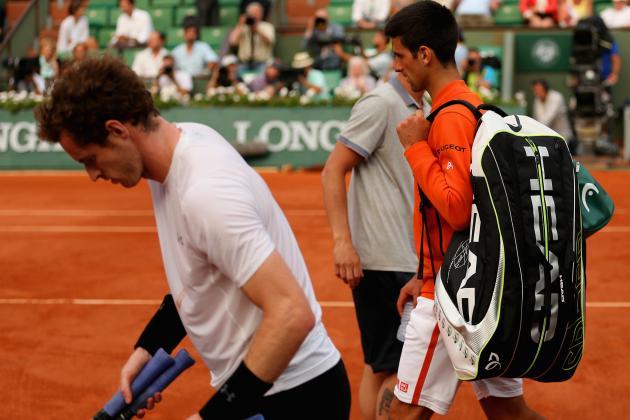
Photo courtesy of movietvtechgeeks.com The Mutua Madrid Open final features an intriguing encounter between top seed Novak Djokovic and defending champion and second seed Andy Murray. The Tennis Review previews the action and predicts the winner.
The Madrid Open has a couple of unique features which set it apart from the other ATP 1000 clay events. First, Madrid’s high altitude (2,188 feet) means the balls fly faster through the air which rewards more aggressive and counter-punching styles of tennis. Secondly, it is the only ATP 1000 Clay event each member of the Big Four has managed to win.
Andy Murray was the last of his fellow Big Fourers to achieve that feat when he defeated Rafa Nadal in straight sets in last season’s final. The Scot defeated the Spaniard again in this year’s semi-finals, 7-5, 6-4, in a trickier encounter – the Scot could not serve out for either sets the first time of asking- which he did well to pull through.
That win has given Murray the chance to defend his title, and he will do so against Novak Djokovic who beat Kei Nishikori 6-3, 7-6 (4), and who also struggled at the business end of the match, squandering three match points when serving for a place in the final.
Playing Djokovic in the Madrid final gives Murray another chance, too- to get a rare win, for recent times anyway, over the Serb. Since beating Djokovic in the 2013 Wimbledon final, Murray has scored just one win over the world No.1 in 11 attempts, a three set victory in last season’s Canadian Open final.
Montreal was a prime location for Murray to beat Djokovic- faster than most of the ATP tour’s hard courts and a time of the year Djokovic ‘struggles’. (It is hard to consider Djokovic, a two time US Open champ and three time Canadian Open champ struggling in the North American Summer Swing, but compared to the other season stretches, he does.)
Madrid is also a part of the season in which Djokovic has not put together his best results. The Serb has won it ‘only’ once (2011), did not enter in 2014 and 2015, lost early on the blue clay in 2012 (lost to Tipsarevic in the QF), and suffered both an upset at the hands of Grigor Dimitrov in 2013, and a fallout with the crowd.
The world No.1’s game is not as primed for faster conditions as it is for the slower ones which dominate the tour, but he can, if he plays the aggressive tennis needed, win on them, like he did in the year he won the Madrid title, beating Nadal in straights in the final.
Murray’s counter-punching game is more cut out for faster courts than Djokovic’s, and venues like Cincinnati, the Canadian Open, Wimbledon, Dubai and the US Open, medium-fast courts where he plays his best tennis, also bring out the more aggressive side of Murray, the side he needs to tap into to beat Novak Djokovic.
Djokovic will come out and be offensive, too, (he won 51 points under five shots of the 85 points he won versus Nishikori), which is what will make this match so interesting to watch- both players will have to come out of their comfort zones. For as much as Murray’s counter-punching skills flourish on fast courts, his athleticism and baseline skills come to the fore on the tour’s other surfaces far more often due to necessity more than anything else. As for Djokovic, he is be able to finish points quickly, and serve through the faster courts, no problem, but he can be outplayed by rivals who do it better- something which can rarely be said when it comes to Djokovic and the tour’s slower surfaces.
Prediction: In a match that will draw out the chameleon in both men, Djokovic should come through a colorful encounter.
The Serb has the mental edge over Murray- leading the head to head 22-9- and if this match comes down to a few points here and there, which it likely will, that advantage will work in his favor.
Murray, however, has a great chance here, and will be only too eager to grab it. A win in Madrid versus Djokovic would boost Murray’s confidence no end, and while it would, conditions wise, mean little for Roland Garros, it would mean the world where it really matters in Grand Slams- between the ears.
Watch Djokovic and Murray go head to head in their 2015 Roland Garros five set semi-final below:
-
Mutua Madrid Open Preview Rafa Nadal’s Moment to Take Down Novak Djokovic
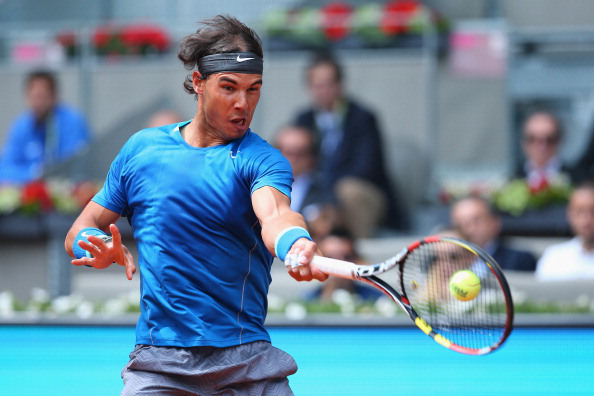
Photo courtesy of http://www.ontennis.com This year at the Mutua Madrid Open, Rafa Nadal looks like he might just have the momentum to make the ATP tour very interesting with a first win over Novak Djokovic since Roland Garros 2014. The Tennis Review previews the chances in the Spanish Capital of a Nadal on the up and a Djokovic in need of some clay court magic at the Caja Magica.
So, how did the tennis Gods in charge of the Madrid draw treat Djokovic who suffered a shock upset to Jiri Vesely in Monte Carlo and could really do with a little bit of luck on the road to Roland Garros?
At first, it looked like they had been kind to him. However, now that Nicolas Amalgro, Djokovic’s potential second round opponent, has won in Estoril, they look less so.
Djokovic leads Amalgro 4-0, but did drop a set to him in last year’s Rome round of 32.
Amalgro, match tough and confident after that Estoril win, with the home crowd support, and a former semi-finalist at the event (2010), could cause the world No.1 a few problems.
Roberto Bautista Agut in round three might cause the Serb a couple of headaches, too-the Spaniard took a set from the world No.1 at the US Open last season.
Anything could happen with Djokovic’s projected quarter-final and semi-final opponents, Jo Wilfried-Tsonga and Stan Wawrinka. Both of them have the game to upset Djokovic but whether or not they can bring it on the day is anybody’s guess. (Wawrinka will have an especially tricky time of making his projected last four place in the draw- he could face Nick Kyrgios, recent Estoril semi-finalist, in the second round).
What we will not have to guess is if Djokovic will turn up or not- if he gets to the quarters, his march to the final, looks inevitable. But if any players are going to get in the way of Djokovic’s incredible ATP 1000 run- that second round loss in Monte Carlo was the first time Djokovic had lost before the final of an ATP 1000 event since Shanghai 14 (SF loss to Federer)- it will be the likes of Tsonga or Wawrinka who have the kind of big serving, aggressive games that trouble the world No.1, and could be fatal in the faster conditions of Madrid, (2, 188 ft elevation), conditions which do not suit Djokovic as well as Rome or Monte Carlo.
The resurgent Nadal is the player most likely to be facing Djokovic in the final. The Spaniard has been getting better step by step the last few weeks, and the time feels right for him to get his first win over the Serbian since the 2014 Roland Garros final.
Nadal has won three times in Madrid since 2009, (2010, 2013, 2014), and was runner up in 2010 and 2015.
The draw has been good to him, too with David Goffin scheduled for the last 16. The Belgian is a tricky opponent on clay, but suffered a three set loss to Zverev in Munich, where he was the top seed, and if his confidence was hit in even the slightest way, Nadal will find a way to exploit that.
Watch Nadal training in Madrid in the video below:
Federer was scheduled for the last eight, but that is most likely to be Dominic Thiem now that the Swiss has withdrawn. Thiem has been a tricky opponent for Nadal this season. The Austrian upset Nadal in Buenos Aires and pushed him to the brink in the first set of their recent Monte Carlo Masters last sixteen match.
If Thiem makes it to the quarters, that would be his best showing at an ATP 1000 since Miami 2015, and a match versus Nadal in Madrid would be a great stage for Thiem to show he has solved what has been his most pressing problem this season- his inability to convert break points in big matches versus the likes of Nadal and Djokovic.
Nadal should, however, prove to be too motivated for Thiem- the Spaniard may have, if his seeded rivals make it through, a couple of pressing issues he needs to deal with in the next two rounds.
First up in the Semis could be Murray who defeated Nadal in the Madrid final last season. That, though, was a very different Nadal, and only a similarly aggressive performance by the Scot is going to cut it.
The kind of performance Djokovic would need to put in if he meets Nadal in the final. The kind the Serb showcased when he defeated Nadal in the 2011 final in straight sets, the only time he has lifted the Madrid trophy.
In 2012, Djokovic was upset by Janko Tipsarevic in the quarters on the now infamous Blue Clay, and in 2013 Grigor Dimitrov defeated him in the Serb’s opening round match as the Serbian struggled with an inspired opponent and an upset-hungry crowd.
Since then, Djokovic has not competed in Madrid, and his participation this season was in question until his early Monte Carlo exit.
The Serb now finds himself on the road to Roland Garros without a clay court ATP 1000 title or any known clay court form, and the prospect of facing a resurgent Nadal ready to prove a point at the clay event the Spaniard has the record for most titles won, and at which his chief rival, Djokovic, is less than comfortable.
A scenario which adds some spice to a tour which a month ago was looking a touch predictable but which now, for us lucky tennis fans, is anything but.
-
Seven Signs Rafa Nadal Is Back- and the Two Signs We Are Waiting For
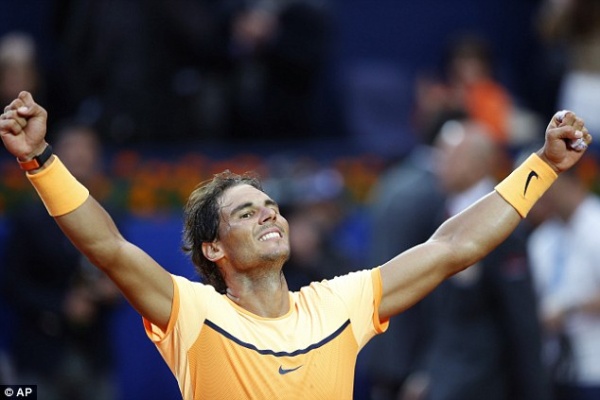
Photo Courtesy of http://www.sportfejm.pl The answer to the question of whether or not Rafa Nadal is back to his Roland Garros winning best was clearer after his Barcelona win last weekend. The Tennis Review looks at seven signs from Nadal’s play the last couple of months which tell us he is back, and looks ahead to two more signs we are waiting for.
1. Saved Match Point Versus Zverev in Indian Wells
Prior to Indian Wells 2016, Nadal had suffered some tough losses to the ATP’s Next Generation- to Nick Kyrgios at Wimbledon 2014, and to Borna Coric at Basel 2014.
Alexander Zverev looked like he was going to inflict another one on the Spaniard when he held match point in the Indian Wells last sixteen. Nadal, though, hung in, fought off Zverev’s match point and then went on to take the match.
A year ago, Nadal might not have had the self-belief to pull off that kind of comeback over such an in-form player, but this season he does have it, and that comeback win over Zvevev got the first rumblings going that the old Nadal might be coming back.
Watch the video below to see Nadal winning his match point versus Sasha Zverev in Indian Wells.
2. Held set point Versus Novak Djokovic in Indian Wells
The last time Nadal won a set from Novak Djokovic was back in the 2014 Roland Garros final. Between that match and his Indian Wells ’16 semi-final versus the world No.1, Nadal had not taken a set from Djokovic in five matches.
In Indian Wells, Nadal may not have managed a set, but he did hold set point at 5-4 returning, and a few games later he was battling his old rival in a tiebreaker.
That effort was the furthest Nadal had pushed Djokovic in a set since the first set of their 2015 Roland Garros quarter-final which Nadal lost 5-7, and a surefire sign he was on the way back.
3. Defeated Fabio Fognini in Straights in Barcelona Last Sixteen
In Barcelona 2015, Nadal was defeated by Fabio Fognini in straight sets in the last sixteen, Nadal’s second loss to Fognini that season after being defeated by the Italian in three sets in the Rio semis.
Nadal would beat Fognini later on in July in the Hamburg final, but he would once again suffer a defeat to the Italian, and this one would be the most painful yet- Nadal’s first defeat in a Grand Slam after leading by two sets to love.
This year in Barcelona, Nadal did not stumble versus the Italian as he defeated Fognini in straights in the last sixteen, taking the first set 6-2, and then dominating the second set tiebreak 7-1.
Nadal did drop serve three times, but the win was still more straight-forward than might have been expected against an opponent who could have gotten inside Nadal’s head with those 2015 wins.
Nadal refused to let Fognini in his head, and showed he was over those losses last season out on the court.
4. Breaking Down Rivals in Third Sets in Big Matches
In Monte Carlo, Nadal was pushed to the limit by rivals Andy Murray and Gael Monfils as he split the first two sets of his semi-final and final with his rivals in both matches.
There was no competition, however, in the third sets. Nadal took the third 6-2 versus Murray and 6-0 versus Monfils. Nadal upped his aggression and intensity when the match came down to a single set, a scene his fans would have well-remembered and a sign warmly welcomed.
5. Won Monte Carlo and Barcelona Double
Winning the Monte Carlo-Barcelona double was another return to Nadal’s reigning days on Clay- he did it six times in his Roland Garros winning seasons, and seven times in all (2009 was the one year he did not follow up the Monte Carlo-Barcelona double with success in Paris).
In the Barcelona final, Nadal beat Kei Nishikori, the two-time defending champion, 6-4, 7-5.
In the second set, Nadal led 4-1 only to be pulled back, but he managed to stay calm, and crucially broke the Japanese in the final game to take the match, and the title.
Handling his nerves like that, and proving the stronger of the two on the return game that really mattered, with Nishikori serving to stay in the match, was the Nadal of old, raising his game when it was most vital.
Watch Nadal celebrating his Barcelona win in the video below.
Una tradición del #Godó celebrar la victoria con los recogepelotas! pic.twitter.com/jXgsBS4Pnh
— Rafa Nadal (@RafaelNadal) April 24, 2016
6. Getting the Nadal Name Back into the History Books
Nadal has won Barcelona a record nine times now, matching his nine titles in Monte Carlo, and at the French Open.
Nadal has also now equaled Guillermo Vilas’ 49 career Clay court titles.
Nadal is back to where he used to be on clay- being not just relevant in the current era, but in the history books, too.
7. Second Best Return Game on the Tour in 2016
Nadal has the second best return game of all time with 33 % of return games won (Djokovic is fifth with 32).
Nadal was third in 2015 with 31, and in 2016, he is second with 36. That return game is an all too important one on clay where breaks of serve are common place, and both the ability to break right back, and to have a two break cushion can make the difference. Nadal being up there with the very best in that category is a promising sign he is back to his best.
Leyendo vuestros mensajes. Gracias por el apoyo, dentro de la pista y fuera. Muy contento por la victoria #Barcelonapic.twitter.com/TtQ7MqzIA6
— Rafa Nadal (@RafaelNadal) April 24, 2016
The Signs We Are Still Waiting for
While Nadal is certainly looking back to his best, there are still going to be some who are not convinced. For that to happen, there are two things which Nadal needs to accomplish:
//platform.twitter.com/widgets.js
1. A Defeat of Djokovic
If Nadal beats Djokovic this clay season, then he is definitely back, no more questions. Djokovic is so far ahead of the field right now – he is 410 points shy of holding as many ranking points as the world No.2 and 3 put together- and has been so dominant of Nadal in the last two seasons, that a win for Nadal over the world No.1 would be the final silencer to any doubters, and, most importantly, to any doubts Nadal himself might have going on in the back of his mind.
The time is right, too. Djokovic has recently suffered a shock defeat to Jiri Vesely in his Monte Carlo opener– and has all the pressure in the tennis world upon him with Roland Garros, the only slam he has not won, coming up. Facing Nadal in Paris would only crank that pressure up even higher for Djokovic, and Nadal will be only too aware of that, and, crucially, both how it could work in his favor, and how to make it count.
2. The Big One- Winning Roland Garros
If Nadal gets that win over Djokovic prior to Roland Garros, his chances of a historic tenth title in Paris would increase significantly- the Serb is likely to be standing at some point between the Spaniard and a record tenth Roland Garros title.
Whatever happens in the French Open lead-ins, if Nadal beats Djokovic at Roland Garros, and in the final, the question of whether he is back or not would be well and truly redundant, and leave us with another question that will have a fascinating answer to watch unfold- when will Nadal really be back- as a seasonal multi-slam winner, and the world No.1?
-
Roger Federer Where Would He Most Likely Win Grand Slam No 18?
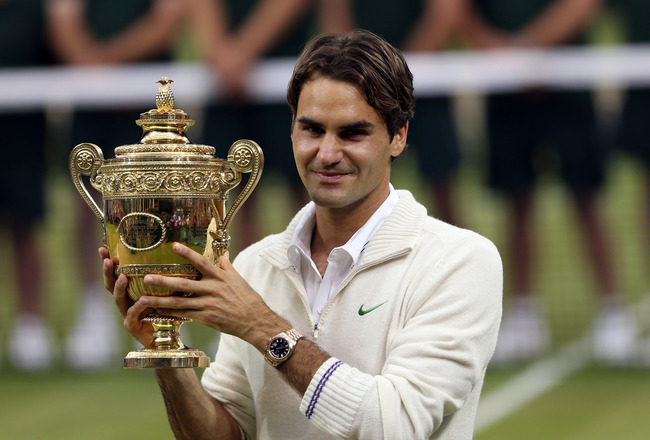
Photo courtesy of zidapps.boku.ac.at Can Roger Federer win Grand Slam No. 18 has been one of the big tennis questions of recent years. We think, as the world No.3 and a 17 times slam winner, he certainly can so The Tennis Review gives you an answer to another question: where would Federer most likely win that elusive 18th Major title?
1 Wimbledon – Champion in 2003, 2004, 2005, 2006, 2007, 2009, 2012.
With Federer organizing his 2016 season around the Grass courts, skipping much of the clay to leave him fresh for the surface that most naturally complements his game, he has given himself a great opportunity to win slam No.18 in SW19.
SW19 was both the scene of Federer’s very first and his last slam victory, and the venue of seven of his 17 slam wins.
Last year when Roger Federer defeated Andy Murray, the Queen’s champion, in straight sets in formidable style, in the semis, many thought that the Final was on his racket.
Novak Djokovic, though felt otherwise, and he defeated the Swiss in four sets.
What Federer needs to happen if Wimbledon is to be the 18th slam:
Federer needs to make it to the final in speedy fashion, just like he did last year, and in 2014. At the age of 34, and he will be almost 35 by the time Wimbledon comes around, Federer cannot afford to go into the final on the back of any epic matches.
Especially as he would likely face Novak Djokovic. The world No.1 has been the final hurdle for Federer in all three of his slam finals since his last slam win at Wimbledon ’12, and each time he has not been able to clear the Serb. The world No.1 simply does not let Federer play his aggressive game, keeping him back with his depth of shot, and negating his serve the second it drops in quality, with his formidable return.
If Federer gets to another Wimbledon final, and if he faces Djokovic, he needs to overwhelm the three time champion, not giving up control of the match for even a second. The Swiss has to keep his first serve percentage in the mid 70s at least, stay true to his aggressive game style- there can only be plan A versus Djokovic in the slower second week SW 19 conditions- and stay calm on the big points.
The moment Federer gives him an inch, the Serb will take a mile, and then some.
Watch highlights of Federer’s last Wimbledon win in the video below.
2 US Open – Champion in 2004, 2005, 2006, 2007, 2008.
In 2014, Roger Federer went into the US Open semi-finals with the unexpected boost that must have come with the news of Novak Djokovic’s upset at the hands of Kei Nishikori.
That, though, was as far as Federer’s luck was going that day. Despite all the hard work he had put into climbing back to No.2 in the rankings to earn second seeded status, and coming back from two sets to one and match point down in the fourth set to defeat Gael Monfils in the last eight, Federer could not capitalize on Djokovic’s defeat and the prospect of facing Grand Slam beau Nishikori for the title and was instead overwhelmed in straight sets by a red-hot opponent in Marin Cilic.
Last year, Federer did manage to live up to his second seeding and make the final, for the first time since he was runner up to del Potro in 2009, but he never produced anywhere near his best tennis, failing to convert 19 of 23 break points, and making errors at the net when he had the court waiting with open arms for the kind of winners he had produced in his last four straight sets win over Stan Wawrinka.
What Federer needs to happen if the US Open is to be the 18th slam:
One big positive for Federer this season is that the US Open’s Arthur Ashe court will have a retractable roof. Last year, rain delayed the final until the early evening which favored Djokovic who enjoyed the slower cooler conditions at an event he had won once and not since 2011. This year, if the Swiss does face Djokovic and it rains, Federer will enjoy indoor conditions, which he usually excels on, and they should be faster than the ones Djokovic does so well on.
But while the weather conditions and what influence they have on the outcome is now under control, there is still one aspect the Swiss will not be able to command- a red-lining opponent.
If Federer does face a del Potro or a Cilic, he needs to somehow keep them on court until they run out of steam. Federer certainly has the defensive skills to do it, but he likes to go down swinging nowadays.
Can Federer execute a defensive plan B if his opponent is swinging even better than he is at the business end of the tournament? He would only need to do it until their form had blown over and then the Swiss could himself get sailing again with his own aggressive game.
Watch highlights of Federer’s last triumph in the US Open final in 2008 below.
3 Roland Garros – Champion in 2009.
Federer was, from 2005-2011, the world’s second best clay Courter after his red dust nemesis Rafa Nadal.
The 2009 French Open champion has all the skills to do well on clay with both aggressive shot-making and baseline defense among his artillery, but it was only when Nadal was defeated by Robin Soderling that the Swiss was able to get his hands on the trophy and complete his career Grand Slam.
Federer does not seem at all focused on Roland Garros this season, and it is only because of his recent knee surgery he entered Monte Carlo to get some much needed match practice, but Roland Garros might be where he has a great chance to finally win slam No.18.
The Clay courts are more forgiving on the knees than hard courts and the slower courts give the 34 year old some much needed time to set up his shots and track down his opponent’s.
That advantage, of course, all depends on his opponent and the quality of their shots. Last year, Federer was overwhelmed by a superbly aggressive Stan Wawrinka in straights in the quarters and he will always be vulnerable to an opponent like Wawrinka playing their best aggressive tennis on clay courts in hot conditions, the kind of tennis that not even Djokovic’s defensive skills could negate.
But there is one opponent who has yet to redline in his final Roland Garros match, and that might be one reason why Federer has a great shot at the French Open- it is the slam his current nemesis Novak Djokovic has not been able to crack.
Federer, himself, has played a major role in Djokovic’s Roland Garros nightmares – it was the Swiss who put in one of his career-best performances in 2011 to defeat Djokovic, who was on a 43 match winning streak, in four sets, and ended the chances of the Serb, who had defeated Nadal in two French Open lead-in finals, and was favorite to take the title.
What Federer needs to happen if Roland Garros is to be the 18th slam:
Roland Garros is the slam where Federer would most likely, if he can get back the No.2 seed, avoid Djokovic in the final- the world No.1 is more vulnerable in Paris to the likes of Nadal or Wawrinka before the championship match.
However it is also the slam where avoiding Djokovic is the least beneficial- if he does face the Serb, Federer will have a rare mental edge over him and a chance to take advantage of the nerves that befall the world No.1 when he gets within a match of the one slam trophy missing from his collection.
Federer can enter the French Open pretty much under the radar- well, by Federer’s standards, anyway- and a relaxed, loose Federer is the last player Djokovic, or anyone right now, wants to see on the other side of the court and up at the net fighting for an 18th slam in the Roland Garros final.
Watch an emotional Roger Federer in the trophy ceremony for the 2009 French Open in the video below.
4 Australian Open – Champion in 2004, 2006, 2007, 2010.
The Australian Open is where Federer first lost to Djokovic in a slam and has been the scene of some of his greatest losses such as his 2005 semi-final defeat at the hands of Marat Safin, and his 2009 tear-jerking final loss to Rafa Nadal.
Federer also suffered his biggest upset since returning to form in 2014 when he went down to Andreas Seppi- who he had defeated nine consecutive times- in the 2015 third round.
The slow hard courts at Melbourne park, even slower at night when the semis and finals are played, are tailor made for players like Djokovic and Murray who can track down every ball against the tour’s more aggressive players and force them into error.
Federer’s defensive game, meanwhile, does not benefit from the slowness of the court as it does on clay. For, while the the court is slow, it is still faster than clay so does not compensate for Federer’s decreased foot speed over long points. Federer also does not have as much time as he does on clay to unleash his formidable shot-making skills for winners.
While Federer can, on a good day, hit through the plexi-cushion court and challenge his chief rivals, he is not able to sustain that level for more than a set or two against men who can run side to side five sets long.
What Federer needs to happen if the Australian Open is to be the 18th slam:
Federer would have to produce two weeks of stunning tennis to win a fifth Melbourne title. Everything would need to fall in place at a tournament Novak Djokovic seems to have on lockdown for a couple more seasons at least.
Federer’s finest strokes painting the court might not be enough so he might also need the most strokes of luck he has ever had in a slam to come his way, too.
For, if the draw fell apart, and if Federer got his best match ups on the other side of the court, slam No.18 could come in the most unlikely of ways in what, to many, would be the most unlikely of venues, which is, now and then, exactly how tennis works out.
Watch Federer’s last triumph in Melbourne in the video below.
Where do you think Federer would be most likely to win Slam No.18? Let us know in the comments box below.
Like this article? Why not help us get it read and share it.
Sign up for our e-mail subscription to receive notifications of our latest posts and receive our monthly newsletter.
-
Barcelona Open Final Preview Rafa Nadal Versus Kei Nishikori
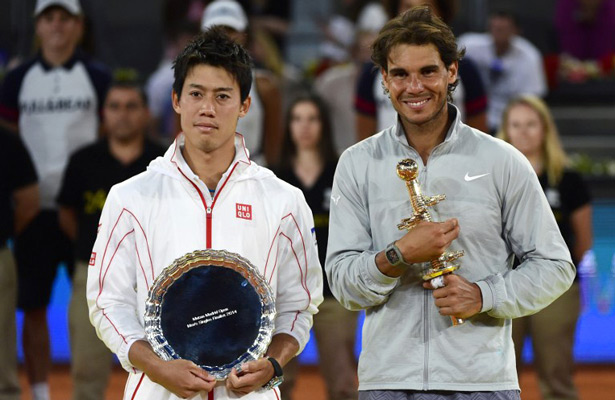
Photo courtesy of sport-asia.com The Barcelona Open final features Rafa Nadal (1) up against Kei Nishikori (2) who have won the last five titles in the Catalan Capital between them. The Tennis Review previews the match and predicts the winner.
The word on the tennis courts is that, after winning the Monte Carlo Rolex Masters and breaking down his rivals Andy Murray and Gael Monfils in deciding sets, Rafa Nadal is back.
Not everyone, however, agrees, arguing that while Monte Carlo was a return to ATP 1000 winning form, Nadal still has a few more comeback milestones to pass before being back to his Roland Garros winning best.
The Spaniard has a great chance of passing another one of those milestones with a win over Kei Nishikori in this year’s Barcelona Open final. The Spaniard has won the Monte-Carlo- Barcelona double seven times, and six times in his Roland Garros winning years, and if he can do the double again this Sunday, doubters might be a little more inclined to believe another Roland Garros might be on the cards.
Especially as the Spaniard would have to beat Nishikori on the way- the Japanese has won the title the last two years and is on a 14 match winning streak at the tournament.
Nishikori, though, has not met anyone of the quality of Nadal during that Barcelona run- the Japanese has never met anyone ranked higher than 16, Roberto Bautista Agut, during his reign.
Nadal is a tough match up for Nishikori. The 8 time Barcelona Champ leads the two time champ 8-1 in their head and head and won their last encounter in straight sets in the Indian Wells quarter-finals.
The Spaniard leads the series 2-0 on Clay, winning their first encounter on the red stuff in the Roland Garros fourth round in 2013 in straight sets, and taking the second one in 2014, in the Madrid final, when Nishikori had to retire 0-3 down in the third set after leading a set and a break with some stunning aggressive baseline tennis.
Watch highlights of Nadal’s win over Nishikori in the Madrid ’14 final below.
This match might be the highest quality encounter we have seen between the two since that Madrid final.
Neither player has dropped a set on their way to the championship match and both put in dominant semi-final performances with Nadal seeing off Philipp Kohlschreiber and Nishikori defeating Benoit Paire, who had beaten him the last two times they had met, and both feel comfortable on the Barcelona Clay.
Nishikori has been in good form recently- in his last event in Miami he reached the final where he lost to Novak Djokovic. That was over three weeks ago now, but the rest and recovery after what must have been a tough loss, might pay off in the final, especially considering Nadal’s recent run which has seen him win nine matches in less than two weeks.
That run for the Spaniard, however, does mean that Nadal is the match tougher of the two, coming into the tournament after an inspiring run to the Monte Carlo title. That run saw him pushed to three sets by Andy Murray and Gael Monfils, and in each match he proved by far the stronger in the third, and looked more like the Nadal of old, the Nadal who survived Nishikori’s fierce display in the Madrid final two seasons ago.
To see off Nadal in his current mood, Nishikori would have to produce his best play, which he has struggled to do in big matches versus the top players recently. If Nishikori comes out aggressive and misfiring, as he has been prone to do against the top players, Nadal will lap it up. If the Japanese comes out on the attack and his shots fall in, Nadal will weather the storm until Nishikori’s game or, as happens all too often, his body gives up on him.
For Nishikori to win, both body and game need to hold up over a possible three sets. If that happens, it will be some scene, the biggest win of the Japanese’s career so far.
If Nadal can see off that kind of Nishikori performance, that will be another scene, too, one we have seen many times before. A scene that would be another milestone reached on the road to getting back to where Nadal once was, sweeping all before him in the run up to Roland Garros.
A milestone to make the doubters think twice.
Prediction: Nadal has the momentum on clay right now, and Nishikori is likely to be swept away in its path.

Tennis from a fan's point of view
[
[
[
]
]
]
 thetennisreview