-
Wimbledon 2016 Preview Five Questions the Grass Court Slam Will Answer
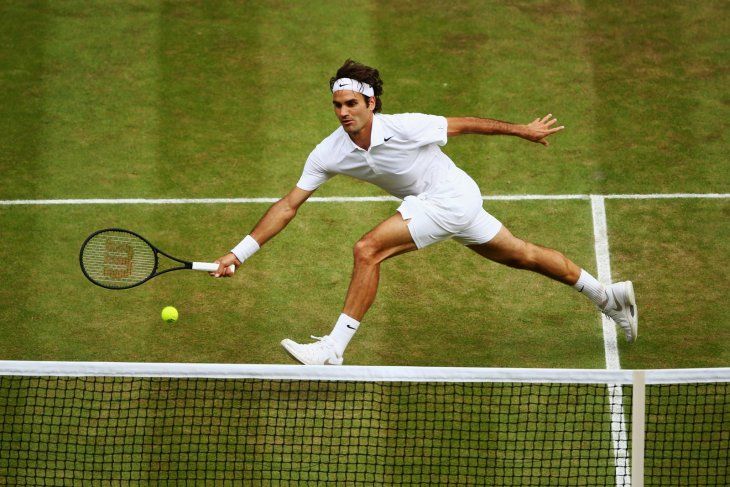
Photo courtesy of in.pinterest.com The Wimbledon 2016 draw is out, and the tennis world looks forward to a fortnight of intriguing stories headlined by the game’s biggest stars, and some potential future champions. The Tennis Review gives you the five most intriguing questions the 2016 Championships will answer about the likes of Roger Federer, Novak Djokovic, and Nick Kyrgios.
1. How far will Roger Federer go?
Roger Federer’s quest for slam No.18 would have been the leading story heading into Wimbledon had it not been for his injury-hit season which sees him enter his most successful slam with a 15-5 season win-loss record and ranked 13th in the race to London.
But while the Swiss’ body has been failing him, the Wimbledon draw has not.
Federer has drawn Guido Pella in the first round, Ricardas Berankis or a qualifier in the second, Alexandr Dolgopolov (30) in the third round, and Gilles Simon (16) in the last sixteen, (Steve Johnson, a Nottingham finalist, and Grigor Dimitrov, the 2014 semi-finalist, are also potential last 16 opponents), avoiding Dominic Thiem and Alexander Zverev who defeated him in Stuttgart and Halle, and a host of other dangerous players such as Lukas Rosol, Dustin Brown, and Nick Kyrgios.
Matters get trickier from the last eight onward. Kei Nishikori (5) is Federer’s seeded opponent, but the Japanese’s recent injury could mean that Marin Cilic (9) could be waiting for the Swiss. Cilic has been in good form this grass season, and if he is in the quarters, his big serve and powerful ground-strokes will be in the kind of condition that could hit through an in-form Federer let alone a sub-par one.
If Federer manages to play himself into the tournament well enough and gets past Cilic then Novak Djokovic should await him in the semis. Last year facing Djokovic in the semis, and not the final, might have been a positive for a then healthy Federer coming off the back of a Halle win, but this year meeting Djokovic at any stage of the championships is going to be tough for the Swiss.
But what if Djokovic were to be knocked out? The Serb has a potentially tough draw and if he slips up then Federer would likely face Philipp Kohlschrieber, Kevin Anderson or Milos Raonic for a place in his third consecutive Wimbledon final. Players who can push him but against whom he generally matches up favorably.
The Swiss would certainly be inspired to make it third time lucky in his ambitions for a final Slam. A Djokovic free path, and Andy Murray in the final, who he has few issues with when on his game, and slam No.18 would be within Federer’s reach, and if the goodwill of the crowd alone were enough to push him over the finish line, there is no doubt the trophy would end up in his very fine hands.
2. Can Novak Djokovic complete the Channel double?
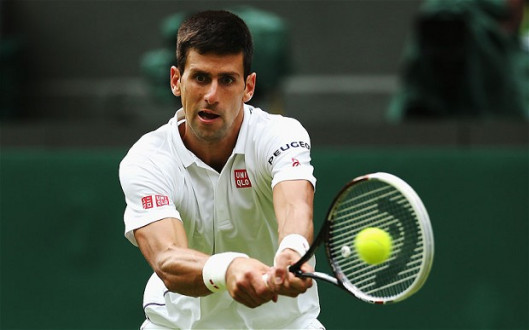
Photo courtesy of meappropriatestyle.com Every week Djokovic seems to be on the verge of another slice of tennis history, and the next chuck is the Channel double.
Laver, Borg, Federer and Nadal have all completed it in the Open era, and the two-time defending champion, who has been matching, and surpassing, their historic achievements week in week out, is a favorite to join them.
The question is will Djokovic suffer a letdown after finally winning Roland Garros? He has suffered one before- after winning Wimbledon 2014, his first slam trophy win since the Australian Open ’13, Djokovic flunked out early in Canada and Cincinnati, and was beaten in the US Open semis.
This 2016 Djokovic is quite a different player though to the one who was struggling to win slam finals back then. The Serb has just won four in a row, and five of the last six.
With the prospect of a Calendar year slam ahead of him, it is hard to see Djokovic not having the heart to keep winning in a field of rivals who seem to be fighting among themselves for second place rather than challenging for first.
Djokovic has drawn James Ward in his opener, Kyle Edmund or Adrian Mannarino in the second round, Sam Querrey (28) or Lukas Rosol in the third round, David Ferrer (13) in the round of 16, though it will most likely be Philipp Kohlschreiber, and Milos Raonic (6) in the quarters, Federer in the semis, and Murray in the final.
There’s some threatening players on that road, but none more dangerous than a Djokovic with an appetite- Boris Becker recently said he was as hungry as ever- and a ravenous Djokovic is not in the habit of letting slices of tennis history slip from his lips.
3. Will the Lendl-Murray pairing produce another Wimbledon trophy?
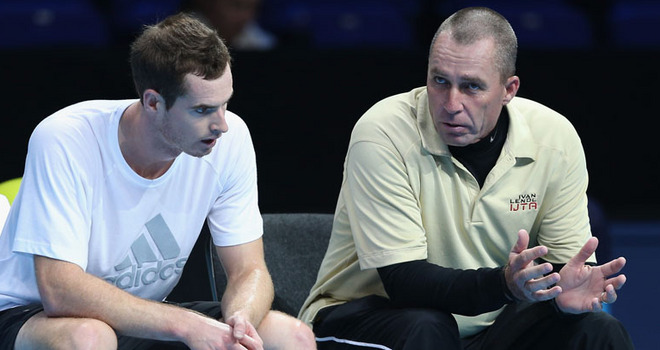
Photo courtesy of http://www.spillednews.com Murray is having the best first half to a year he has ever had, reaching the Australian Open and French Open finals, and winning the Rome title.
2016 could end up being his best ever season if Murray and his re-hired coach Ivan Lendl can repeat their slam winning ways of US Open ’12 and Wimbledon ’13.
Like those slam runs, Murray is most likely going to have to defeat Djokovic for the title.
The Scot will be the heavy favorite from his half to make the championship match. Murray has drawn Liam Broady in round 1, skilled grass courter Yen-Hsun Lu or a qualifier in round 2, Benoit Paire (26) in the last 32, Nick Kyrgios (15) in the fourth round, Richard Gasquet (7) in the quarter finals, and Stan Wawrinka (4) in the semis.
Murray may be a better grass court player than Djokovic, (he leads 2-0 on the surface), but the Serb is an excellent grass court player himself, and, more importantly, since 2014 he has grown into a far superior big match player than the injury-hit Scot, which is one of the reasons why Djokovic has three Wimbledon titles, and Murray has one.
Now that Lendl is back in the Murray camp, we will find out if the Czech can make a difference to Murray’s big match mentality against a maturer and more complete Djokovic than the one Murray beat in the 2013 final, or if the gap between the world No.1 and 2, even on a surface which should favor Murray, really is as big as it has looked in the past two Australian Open finals and their recent Roland Garros contests.
4. Will Alexander Zverev and Nick Kyrgios lead the #NextGen into the second week?
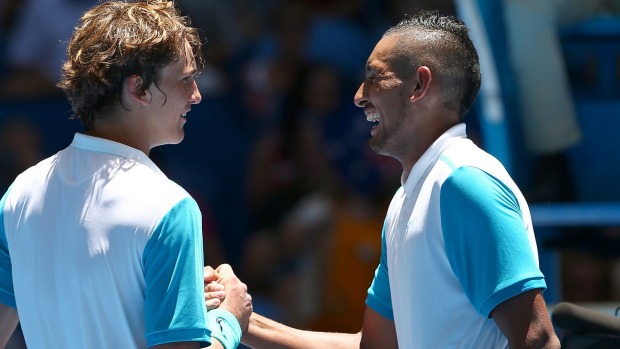
Photo courtesy of http://www.stuff.co.nz The #NextGen have been generating some real interest this season, winning titles, making finals, and getting involved in some of the season’s best matches.
That interest could peak this Wimbledon with two of the #NextGen front-runners equipped with the weapons needed to go deep at SW19.
Alexander Zverev‘s big serve, backhand down the line and great defense make him a potential future Wimbledon Champion while Nick Kyrgios’s huge serve, explosive shot making and fiery temperament put him up there, too.
Zverev has a very nice opportunity to make his first ever slam fourth round with an out-of-sorts Tomas Berdych (10) his scheduled seed in the third round.
First, though, Zverev has to get past Paul-Henri Mathieu and then possibly Mikhail Youzhny, but his skills, youth and fine form displayed on his recent run to the Halle final should see him through to his second slam round of 32 in a row.
If Zverev does get the Berdych upset, he could face Dominic Thiem (8) in the last sixteen. Thiem is not quite #NextGen- he belongs in the Tomic-Sock-Vesely generation– but he is still an up and comer, now ranked in the top ten, and he and Zverev are beginning to get something of a rivalry going. Thiem leads 3-0, but their two three set matches went the distance, and their Roland Garros Zebra clash went to four.
Zverev is arguably a better grass courter than Thiem, and he could end his losing streak to Thiem in SW19. However there is one dangerous dark horse in that section to consider- Florian Mayer, who defeated both Thiem and Zverev for the Halle title recently.
Zvervev could face Wawrinka in the quarters if he makes it past Thiem or Mayer, and the draw could not have been kinder to Zverev at this stage of the tournament. The two-time slam winner, who has a long swing to rip his strokes, is not made for Grass which favors shorter swings, and has a tough potential second round match with 2013 semi-finalist Juan-Martin del Potro, too.
There is also the question of Bernard Tomic in the Wawrinka section- the world No.19 recently made the AEGON championships semi-finals, and made the Wimbledon quarters in 2011.
Wawrinka, Tomic or del Potro all have very exploitable weaknesses on grass and all would be a winnable match for a fit Zverev who seems to be learning quickly from his mistakes- his win over Federer in Halle some redemption for his failure to close out Nadal in Indian Wells, for example, and with some experience now of closing out a big win, and with his serve more effective on grass than any other surface, Zverev may find himself closing out a few big wins in a row.
If Zverev makes it all the way to the semis, there is a chance, a long-shot maybe, that we could get a #NextGen semi between Zverev and Kyrgios.
Kyrgios has a tougher task from the get-go- his draw is Radek Stepanek in the opening round, Dustin Brown, potentially, in the second, Feliciano Lopez (22) in the third, and Andy Murray in the last sixteen.
The world No.2 is a terrible match up for Kyrgios, his strengths canceling out Kyrgios’ and his greater experience giving him the edge.
The Australian would need to blow the Scot of court if he is to reach his third slam quarter-final with the kind of explosive tennis which has him touted as a future Wimbledon champion.
The kind of tennis that could propel him from being one of the #NextGen leaders to one of the game’s top players right now.
5. Can Raonic’s health hold up?
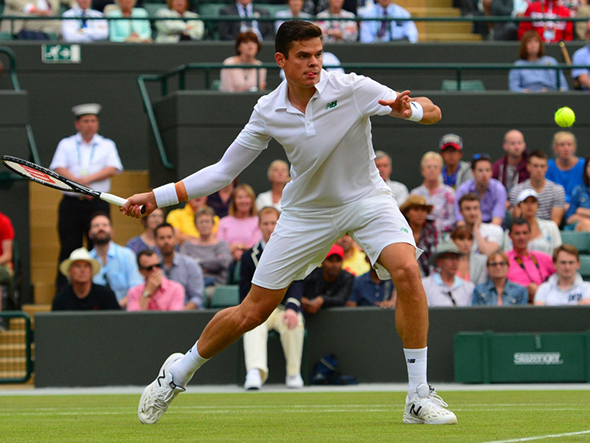
Photo courtesy of http://www.tennis-junior-repentigny.com Raonic has all the makings of a Wimbledon champ with a big serve, a solid back court game with a forehand that is becoming a real weapon, and an admirable commitment to the game.
Those factors really came together for Raonic on the grass this season. The SW19 sixth seed led Murray by a set and 3-0 in the AEGON championships final before Murray fought back for the win.
The question is can he close out such a lead if he gets one against a higher ranked player in SW19, and if his mind lets him do so, will his body back him up or break down as it did in his Australian Open semi-final against the Scot?
With McEnroe in his camp, Raonic has a great chance of overcoming his self-doubts in big matches, but the three time Wimbledon champ can do little to heal the Canadian’s body which gave up on him in the Indian Wells final.
However if both body and mind are in good shape and Raonic makes his last eight match with Djokovic, the world No.1 will have to be sharp to avoid an upset or the kind of five set match that could leave him vulnerable later in the event.
If Raonic can out serve Djokovic, and edge the tiebreaks, we could see him finally break out in a slam with his first run to a final, a run those who admire hard work, perseverance, and a quiet passion for the game will be only too happy to cheer at the finish line.
-
Novak Djokovic Wins Roland Garros Leave History for Later Let’s Talk About Now
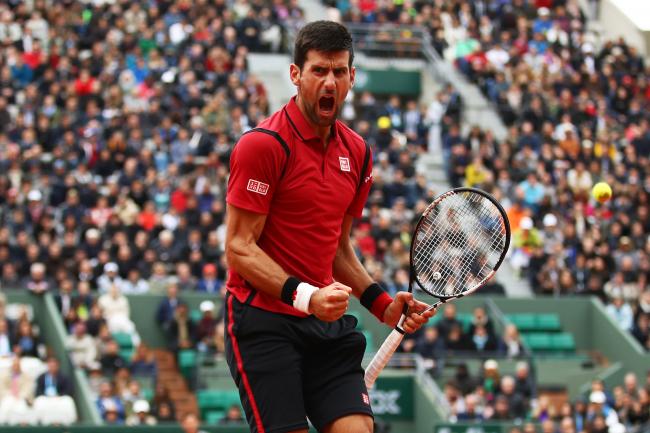
Photo courtesy of matiastanea.gr Novak Djokovic beat Andy Murray 3-6, 6-1, 6-2, 6-4 to win his first Roland Garros trophy, complete the Career Grand Slam, and hold all four Grand Slams at once. It was a historic win, but like Novak Djokovic himself had to do to finally lift the Roland Garros trophy, we should leave the history for later, and focus on the moment.
Forgetting his own history in Paris, and the history he could achieve by winning, was the only way Djokovic was ever going to experience the beautiful moment that would come with winning his first Roland Garros trophy.
Three times the Serbian had been one match away from joining Don Budge, Rod Laver, Andre Agassi, Roger Federer, and Rafa Nadal in the Career Grand Slam Club, and each time the occasion, his opponents, his body, and his own doubts, had overwhelmed him.
On his fourth chance, Djokovic had Murray in his way, and was, like he had been in 2014 and 2015, expected to have his moment with the Roland Garros trophy.
However, Murray, like Wawrinka and Nadal before him, was in the mood to seize that moment for himself, fighting back from losing his serve in the opening game to break for 1-1 with a signature lob. The Scot then held to love, broke Djokovic again and held all the way to 5-2.
Such a commanding performance from Murray, playing his first Roland Garros final after a career best clay season, fired up the Scot who had enough intensity and shot-making prowess for both himself and a seemingly subdued and error-prone Djokovic.
Murray did not look he was going to suffer a letdown either, as he has been known to do after giving his all in big matches versus Djokovic. At the start of the second set, the second seed held a break point in the opening game.
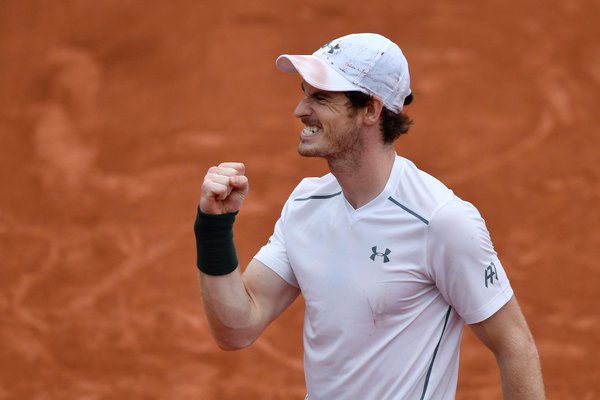
Photo courtesy of twitter.com What followed was not so much a letdown, but Djokovic doing what he does so well. The subdued player in the first set was perhaps not subdued because he was afraid he would not perform. He was just biding his time until the moment came his way to get into gear. The moment arrived, Djokovic fought back, held serve, and a Murray double-fault gave him a 2-0 second set lead.
Djokovic dropped just one game as he took the second set 6-1 with a perfectly timed spin laden ace down the tee.
A story we all know only too well was now playing out as Djokovic went to work tiring Murray out emotionally and physically, moving Murray round the court with depth of shot and angles, opening the court with his backhand down the line, and taking away the time the Scot needed to play aggressively and mix things up.
Djokovic was now in full control. Leading 3-1, Djokovic ran down a Murray drop shot and returned it for a winner- the most heartening shot for the Serb, the most dispiriting blow for the Scot, the balance of power laid bare in a single exchange as the Serbian strode on to take the third set 6-2.
While history was repeating itself, we were also in unknown territory- Djokovic leading a Roland Garros final by two sets to one.
The Serb enjoyed this rare moment of success in a Paris final. Dialed into the precision and placement on his serve and ground-strokes needed to survive the heavy conditions and the defense of Murray, the world No.1 served for the Roland Garros title at 5-2.
It was not just the title on the very close finish line though. With it came plenty more- the Career slam and the Non Calendar Year Grand Slam, no less. The hours of chatter on those matters drowned out the clarity so needed in that brief moment to produce the tennis that had taken Djokovic to his current position- a service game away from the French Open title-in the first place.
If doubts crept into Djokovic’s mind, Murray shook off his own tiring ones to break back, and then held serve.
Djokovic had a second chance to serve for the title, but on the first point his head was still in the past. The top seed fell behind 0-15 as, after a long rally, a backhand went long.
On the next one, Djokovic let go of the last error, defended well, and, his head now on his shoulders, his mind thinking clearly, hit a winning drop shot for 15-15.
That fine play pushed Djokovic closer to the finish line, and at 30-15, moving forward and defending the net, a smash forced a Murray error and earned him two match points.
The first one, 11 bounces before delivering the second serve, a flash-back to the ball-bouncing Djokovic who won his first slam in Melbourne 8 years ago, resulted in a double fault.
The second match point was an error, and the score was back to deuce.
No one thought sealing that Roland Garros title, with all the history, both past and potential that came with it, was going to be easy. Not until something clicked in Djokovic’s mind and woke him up from wherever his head was and brought it back to the there and then.
And then it clicked.
Djokovic served out wide, hit a forehand down the line, came in and took the ball out the air. The right play, at the right time. The moment had come, and he jumped in.
On the third match point, Djokovic got back every ball Murray urged him to error on, before going down the line and forcing Murray into error instead, a familiar play, earning Djokovic the unfamiliar feeling of winning a Roland Garros title.
A rare moment of first time pleasure in a career now rolling on the back of repeated success after repeated success. A moment that saw Djokovic lose his legs as he staggered mid-court and drew a heart into the Clay, lying down in it, a tribute to what he said had been his most beautiful moment at Roland Garros, watching Gustavo Kuerten draw the same heart.
Djokovic now has a new beautiful Roland Garros moment – his own.
Let’s not lose that moment, of Djokovic winning his first Roland Garros, in all the talk about history, of best-evers.
Whether or not Djokovic is the best ever is open for a debate best left until he is retired. Going over it now is like performing an autopsy on a healthy, robust, and still hungry tennis player. One whose heart, left out on the Roland Garros Clay and then drawn into it, beats as loud for the sport now as it did during that first slam win back in 2008.
Instead, let’s talk about right now. For while Djokovic’s place in history is up for debate, his current status as the best in the sport, a status beautifully updated when he held aloft that hard earned Roland Garros trophy, lit up by a Sun finally showing its face, is anything but, and should, like that Sun, be enjoyed while it lasts.
-
Roland Garros Final Preview Novak Djokovic Vs Andy Murray History Awaits
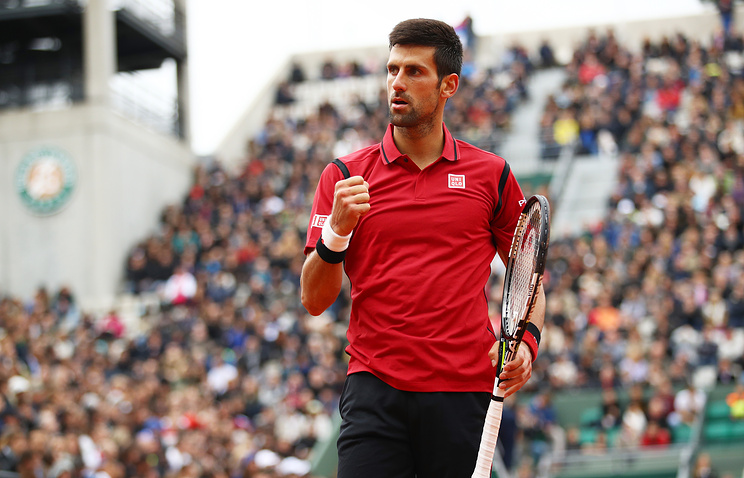
Photo courtesy of 24news.club. One match, and two opponents, stand between Novak Djokovic, a first Roland Garros trophy, and his picture on the front page of the tennis history books.
If the world No.1 wins the Roland Garros final versus Andy Murray, he will be the first man to hold all four Grand Slams since Rod Laver in 1969, and the first man to hold them on three different surfaces.
That feat would go down as arguably the greatest in tennis history. One which has been beyond even the likes of Roger Federer and Rafa Nadal, players who won three consecutive slams, eventually won all four, but could not hold all four at once.
One match to go, and two opponents to down. One of them, Andy Murray, is the second seed and his recent conqueror in the Rome final. The second one, the most dangerous, is Djokovic himself.
Murray will be the third player Novak Djokovic has faced for the Roland Garros trophy after Rafa Nadal (2012, 2014) and Stan Wawrinka (2015).
Nadal, the nine time champion, was too tough to overcome in a final Slam match he has never lost. Wawrinka was too aggressive in his shot-making, hitting through one of tennis’ greatest walls.
Murray is not known for his mental toughness in slam finals or for outhitting his opponents, and if he is going to defeat Djokovic it will be with his tactical skills, employed so well in his semi-final win over Stan Wawrinka, and with his variety of shot, which can disrupt the three time runner-up’s rhythm.
Those Murray strengths will have to be at their optimum if they are going to be as effective as Nadal’s mental strength or Wawrinka’s heaviness of shot against Novak Djokovic in a Major final.
For while Djokovic could do little against either Nadal or Wawrinka doing what they do best, he will be capable of shutting Murray out from the get-go, and while he may have the odd lapse, he can keep Murray at bay all the way to converting championship point.
The reigning Wimbledon, US Open and Australian Open champion has a few winning tactics of his own, the kind that have seen him defeat Murray 23-10 times, 4-1 on Clay, and 4-2 in Slam finals.
Djokovic can hit with enough depth of shot, and with enough angle, to keep Murray behind the baseline and out wide, on the defense, taking away the time the Scot needs to mix things up. He can also put pressure on Murray’s serve, a shot which has improved in recent weeks, but which has not been tested under the pressure produced by a slam final.
Murray can get Djokovic on the run, too, if he plays aggressively enough, and he can also get him off-balance with slice, and bring him into the net with drop shots and then lob or pass him. But, for the most part, Murray only executes such play in short bursts, apart from odd matches now and then, before he withdraws inside himself, usually once Djokovic has managed to turn defense into offense, taken control of the point, and shaken Murray’s confidence.

Photo courtesy of twitter.com If Murray is able to take this match on and dictate play, like he did in their 2013 Wimbledon final, and in several of their ATP 1000 finals, then he may set off another weapon at his disposal. One ticking inside Djokovic’s head. One that tends to go off in every Roland Garros final Djokovic has played since the chance to win the Non Calendar Year Grand Slam (2012) or complete the Career Grand Slam (2014, 2015) has come his way- the time bomb that is history.
While Murray can come into his first Roland Garros final with nothing to lose, and take a few calculated risks on big points early on, Djokovic has plenty to let slip from his grasp, and the memories of witnessing his tennis dreams shattered across the Parisian Clay too many times for comfort may get in the way of him seizing the moment.
Unlike other years, however, when tough schedules, illness, and a tough final opponent have gotten in the world No.1’s way, Djokovic’s potentially imminent grip on history is looking quite firm.
The Serbian has dropped just one set this tournament, to Roberto Bautista Agut, in the kind of nightmarish conditions his rivals could not have dreamed up better- muddy courts on which the world No.1 could not slide, battling one of the tour’s most dogged and consistent competitors, and a rain-hit stop and start schedule from which no rhythm could be worked up.
Still, the No.1 came through, and that match may be looked back on in the same way as Djokovic’s win versus Kevin Anderson at Wimbledon 2015, or against Gilles Simon in this season’s Australian Open- trials against opponents employing the right strategy, trials overcome by undoing that strategy, trials which set him up perfectly for the remaining hurdles to clear.
It seems to be looking that way already. Since that Bautista-Agut match, Djokovic has sailed through the draw, defeating Berdych and Thiem both in straights.
Getting those matches won without much fuss means that unlike last year, Djokovic will also have a full day off before the final.
Barring a stomach virus like the one that hurt him in 2014, or the kind of weather that interrupted his fine streak of play in the 2012 final, Djokovic may go into this year’s French Open final as healthy and rested as he ever has.
This will be quite a different Djokovic to the one Murray beat in Rome, a Djokovic who had played a final set tiebreak versus Kei Nihsikori the previous evening and came into the final with his ankle strapped.
A healthy Djokovic will go into the final as a favorite against a player he has won twelve of his last fourteen matches against since Miami 2014, who he is a vastly more experienced clay court player than at the highest levels, and against whom his clay court skills and mental toughness are superior.
But he will only justify that status if he can overcome any doubts he may have about being one of tennis’ all-time greats, doubts that only come up at Roland Garros, just as they came up for Ivan Lendl at Wimbledon. If Djokovic does get close to cementing that status, and if he is within a service game of holding all four Slams at once, will he be able to hold his nerve? Will he be able to serve out a piece of history?
It won’t be easy against a Murray who has shown plenty of fight this event, defeating qualifier Radek Stepanek and wildcard Mathias Bourges in five sets in his opening rounds, and, if his last three matches are anything to go by, is executing his much improved clay court skills with clear headed self-belief.
That question of whether Djokovic can fight off Murray, and himself, is what will make this final one to watch, whatever the quality of play might be.
Watch highlights of Murray versus Djokovic in the Roland Garros 2015 Semi-Final below:
Djokovic and Murray have not served up the best spectacles in their six Slam finals, tending to try and force errors from the baseline rather than take the match on against a rival they know is better than anyone at disarming aggression.
They can deliver at slams, though, and served up a real drama in their 2015 Roland Garros Semi-final in which Murray fought back from two sets to love down to take the match to a fifth set, and if we are lucky, such a historic match as this will be graced with similar twists and turns.
Whatever happens quality-wise, this match will at the very least provide a great historic spectacle. Novak Djokovic versus Andy Murray, the world’s current two best clay-courters fighting to fulfill their potential on tennis’ trickiest surface at one of the sport’s toughest events, perhaps never more so than it has been this year in a flooded Paris, conquering both their rival, and their own self-doubts. Djokovic finally mastering the French and holding all four slams, or Murray becoming the first British winner at Roland Garros since Fred Perry in 1935.
A sight that, however ugly play gets, will bring us, at the very least, some degree of beauty.
-
Five Questions with SPORTmind Founder Jose Antonio Fernandez
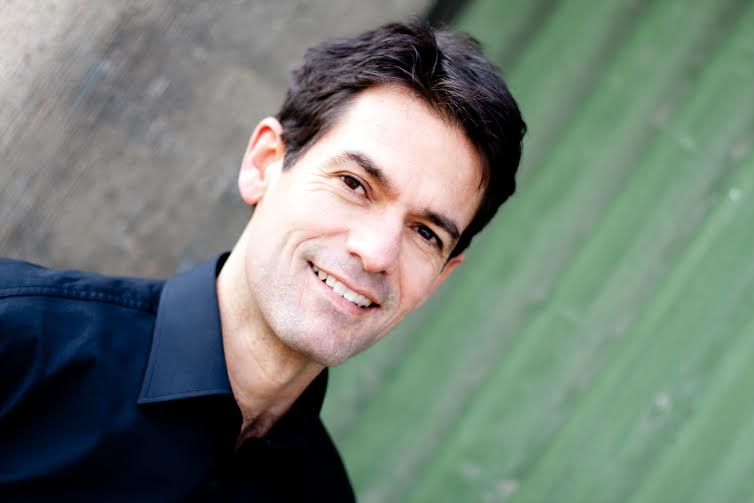
Photo courtesy of Jose Antonio Fernandez at SPORTmind The Tennis Review chatted to Jose Antonio Fernandez, founder of SPORTmind, about his work, why players are sometimes afraid of success, and how it feels to help players evolve.
Could you tell us in one sentence what SPORTmind is about?SPORTmind wants to show young players the universal tools and values that can be discovered and learned by playing tennis. It can serve as training that may help and promote human growth.What inspired you to start SPORTmind and share your philosophy?
My own story as a tennis player. I realized on my path that tennis was much more than only winning or losing. Tennis is the mirror of your soul. So, it gives you the opportunity to go deeper and get to know yourself better.This insight into how to really make contact with your inner strength and your true self made me want to share it with my students so they could also feel the satisfaction of competing while being in the present moment.If you could talk to the younger you, starting out as a tennis pro, what would you say to him?That tennis is a beautiful sport that gives you the gift to grow and that you should never validate yourself or identify yourself too much exclusively by your results. We are much more than our results – we are the energy that helps us externalize who we are.There is a theory that some people are afraid of success. Do you agree? Have you seen this in your tennis career or in the career of a fellow professional?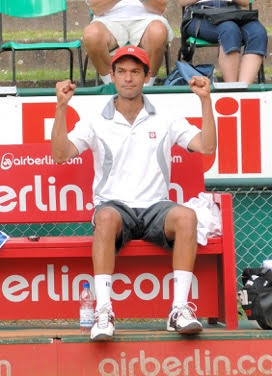
Photo courtesy of Juan Antonio Fernandez at SPORTmind I have experienced it myself and I have seen others get scared when they are about to reach an important goal. However, I believe this happens out of attachment to the result. Similar to trying to hold onto something in the future that doesn’t last forever, but can only be experienced in the present moment.Success is elusive. It’s there for a little while, until it’s gone, along with the feeling of euphoria that it brings.What is the most rewarding part of your job?When I see a passionate kid grow, mature and be happy while developing and performing in tennis. When I can open doors and help create positive change. When, after years of a profound relationship with a sport, they evolve into a better person than they were when they first stepped foot on the court.Find out more about developing your tennis game at SPORTmind -
Roland Garros Who Will Reach the Semi-Finals from Rafa Nadal’s Quarter?
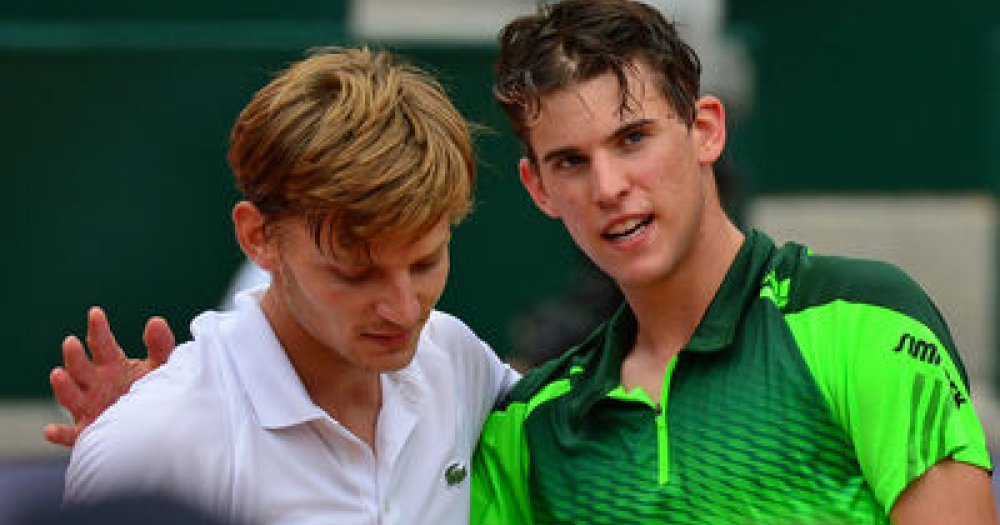
Photo courtesy of http://www.avaz.ba Rafa Nadal was highly anticipated to make the Roland Garros semis this season after his fine clay court form in the lead up to the event, but after his withdrawal with wrist injury, an opportunity has arisen for one of the players in his quarter. The Tennis Review looks at who is most likely to take advantage and reach their first ever slam last four.
David Goffin (12)
Goffin reached the Roland Garros fourth round in 2012 as a lucky loser where he took a set off Roger Federer.
The Belgian has been having a strong 2016 campaign, reaching the Australian Open last sixteen and the semi-finals of the ATP 1000 events in Indian Wells and Miami.
In Indian Wells, Goffin made a vital mental breakthrough, too. The 25 year old beat Stan Wawrinka in a tense match which saw him drop 5-3 leads in both the second and third sets before finally closing it out in a final set tiebreaker. That match was the first time Goffin, who led Djokovic 3-0 in the third at Cincinnati ’15, had been the mentally stronger one in a match versus a top player.
Goffin’s clay season has been a little disappointing considering his fine North American Spring form- he lost to Grannollers in the Monte Carlo last sixteen, was defeated by Zverev in the Munich Quarters, and lost to Lucas Pouille in his Madrid opener. The Belgian, though, did defeat Tomas Berdych 6-0, 6-0 in Rome on his way to the last eight where Andy Murray defeated him.
Goffin is likely to meet Thiem in the quarters- the Belgian leads the head to head 4-2, and has won their most important match, the Australian Open third round earlier this season.
On Clay, the two are 1-1, splitting finals in Kitzbuhel in 2014 (won by Goffin) and Gstaad in 2015.
Goffin is the more experienced of the four players left in his quarter and has won the bigger matches. He has also had the tougher test so far at Roland Garros, a five set win over Nicolas Amalgro in round three. Goffin edged that match with his great clay court game featuring aggressive play, variety of shot and pace, and very fine hands.
If anyone is going to step up and make the breakthrough into their first Grand Slam semi-final, it is most likely Goffin’s experience and clay court prowess that will see him be the one.
Dominic Thiem (13)
Thiem is the general favorite among the four to likely face Djokovic in the semi-finals. The 22 year old has earned that status on the back of his clay court skills which have won him five ATP 250 clay court titles since Nice 2015.
Thiem defended the Nice title the weekend before Roland Garros started, and was also runner-up to Philipp Kohlschreiber in Munich this season.
Thiem has all the qualities needed to do well on Clay. He is aggressive, has great defence, and his powerful ground strokes allow him to dictate play. The forehand can be a very aggressive shot that can hit through his rivals, and his one handed single backhand can produce stunning winners from anywhere on court.
Thiem has never, however, won a big match in an important tournament, though his Buenos Aires win over Rafa Nadal– in which he saved a match point- suggests he has the potential to do it.
The 22 year old has had chances this season, particularly versus Nadal in Monte Carlo, but has had a problem converting break points, a disadvantage on clay, a surface on which breaks of serve are commonplace.
Thiem let multiple break points slip away at 5-5 in the first set of his third round match versus Alexander Zverev, and went on to lose the set on a tiebreak. He did not let it get to him, however, going on to win the next three sets by the same 6-3 scoreline.
Thiem is more than capable of overcoming his break point conversion weakness, and has been building up to a breakthrough at a major event, and they don’t get more major than Roland Garros, and if that breakthrough is going to happen, then now, with Nadal’s withdrawal and a very open quarter, is the time.
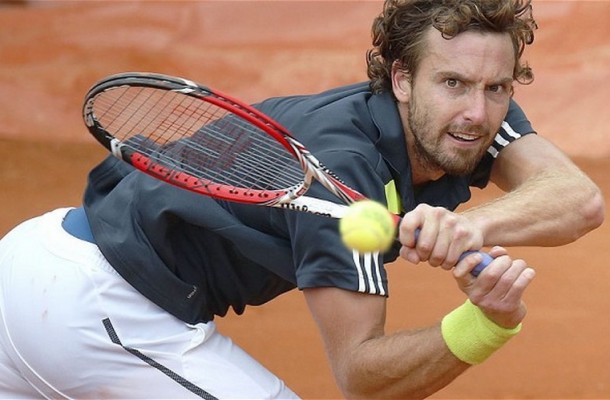
Photo courtesy of http://www.sportolunk.sk Ernests Gulbis, ranked 80
Unseeded Gulbis had not won back to back matches in the main draw of an ATP event in 2016 until he made the third round of this season’s Roland Garros.
The Latvian, who beat Andreas Seppi and 26th seed Joao Sousa, both in straights, in the first and second round, went through to the fourth round after Jo-Wilfried Tsonga’s withdrawal with a groin injury.
Gulbis is going to find it tough to get past Goffin and then possibly Thiem. However, beating Seppi and Sousa back to back and in straights suggests he is finding form and the 2014 semi-finalist, who held 2 match points versus Djokovic in Montreal last season, can go on a streak of hitting his rivals off the court.
The scene of Gulbis’ finest slam run to date might just be the place to inspire another one.
Marcel Granollers, ranked 56
Granollers upset 32nd seed Fabio Fognini in straights in the opening round.
Nicolas Mahut retired from their second round match two sets to love down, and then Nadal’s withdrawal meant Granollers was into his fourth Grand Slam last sixteen, his third in Paris (2012, 2014).
Granollers’ luck is likely to end in the last sixteen though. He trails Thiem 0-3. He can’t be counted out though-his luck has definitely been earned on the back of some hard work in his 13 year career. The former world No.19 has a wealth of experience, has wins over del Potro, Cilic, Soderling and Wawrinka, has been to the last sixteen before so will not be overawed, and has an aggressive game with fine net skills which could hurt Thiem if the Austrian is at all tight with the pressure of being the favorite in their fourth round match.
-
Kei Nishikori Vs Richard Gasquet Roland Garros Fourth Round Preview
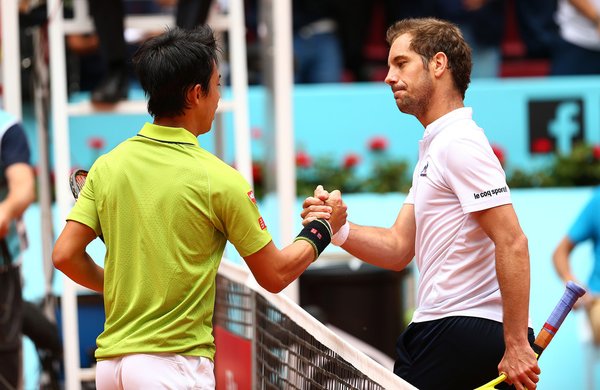
Photo courtesy of twitter.com Roland Garros’ fourth round features the last remaining French player in the draw and a Japanese star expected to one day win a slam. The Tennis Review previews what could end up being the match of the day in Paris.
Kei Nishikori only recently solved the problem posed by Richard Gasquet. The Japanese’s 7-5, 6-4 defeat of the Frenchman in Madrid this season- their first contest on Clay- was the first time he had beaten him after six defeats, defeats which went all the way back to 2008 until Paris-Bercy last season.
A week later, in Rome, Nishikori inflicted a 6-1, 6-4 defeat on Gasquet suggesting he had not only solved the problem, but mastered it.
For now, anyway.
Head to heads can go out the window when it comes to five set matches at slams. Especially on a surface on which both men have such good offensive and defensive skills.
This match, like all fourth rounders at slams between well matched players, will come down to who handles the pressure the best.
Both men have different, but just as tough, pressures on them.
Nishikori has the pressure of winning his first slam. The world No.6 is one of just a few players touted as future slam winners, but, at the age of 26, Nishikori is no longer a ‘Young Gun’, and with young players like Thiem, aged 22, and Kyrgios, 20, getting better all the time, fulfilling those slam champion expectations is not going to get any easier. In fact, with Federer and Nadal absent, Djokovic with the greatest pressure of them all, Murray having played two five setters in his opening rounds, and Stan Wawrinka being Stan Wawrinka, this could be Nishikori’s best ever shot at that first slam title win.
Gasquet can relate to the slam-winning pressure on his rival- the Frenchman was tipped to be a slam champion early on in his career, pressure which, in the age of Federer, Nadal, and Djokovic, he could never live up to.
Those days are long gone for the one time child prodigy who turns 30 next month. Gasquet is now in a much more attractive situation- still playing well enough to be a regular feature in the top ten (though he dropped out of the top ten to 12 last week) and relatively under the radar on a circuit where being over 30, with the experience and physical strength that comes with that, is an advantage, and one he may be able to work in his favor versus Nishikori.
Gasquet, though, does have one unenviable pressure on him- the pressure of being the last French player left in the tournament’s singles draws.
Gasquet has never been past the fourth round of the French Open, and this is his fifth time at that stage in his last six appearances. The closest he has been to getting through was in 2013 when he lost 8-6 in the fifth to Stan Wawrinka.
Playing in front of a home crowd should be a plus, but not always in France. The French crowd may only support him as long as he performs- Gasquet will know only too well, having grown up watching the likes of Mary Pierce booed by the crowd, and from his own exits at the tournament, including letting a two sets to love lead versus Andy Murray slip from his grasp in 2010, if he slips up this time, the French crowd may not be there to help him back up and clean his wounds.
Nishikori will never understand what the pressure of playing in a slam in front a home crowd feels like, but he is not completely free from the pressures of a country eager to have a slam winning tennis champion. Nishikori’s matches are broadcast on terrestrial TV back home and plenty of home fans will be tuning in now that he is once again a favorite in Paris after some impressive recent form, notably in his semi-final defeat to Novak Djokovic in Rome.
As if slam winning expectations and those of the home crowd are not enough, this will also be the biggest match they have played by far, their first match at a slam. Six of their eight matches have been in last sixteens, one in the last 32, and one in the last eight, in Washington 2014.
A fourth round match for a place in the last eight of a slam, a contest between a highly ranked home player and a tournament favorite, slam tennis does not get much better, or much more pressure filled than this. Nishikori should be the one who puts up with it the better. On a surface which complements his aggressive baseline game more than it does Gasquet’s all court one, the Japanese is likely to come through in a nervy, dramatic and fascinating encounter.
-
Roland Garros Third Round Preview Dominic Thiem Vs Alexander Zverev
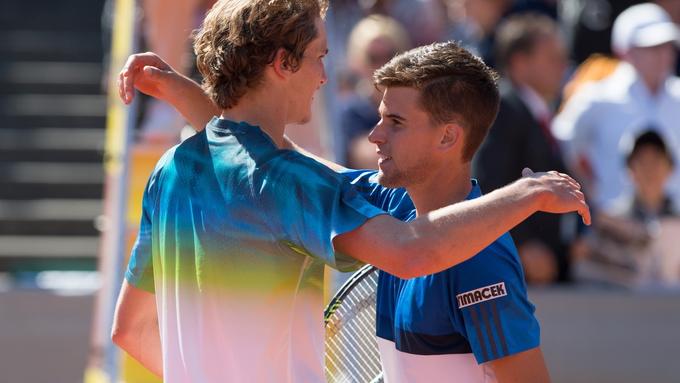
Photo courtesy of ch.tennisnet.com For anyone curious about the future of tennis at Roland Garros then make sure to check out the third round match between Dominic Thiem and Alexander Zverev.
The Austrian and German, if their early pro careers are anything to go by, are going to be competing in later rounds in Paris in the future, with the trophy likely on the line.
Both these players have great clay court games. Thiem has real weapons in his forehand and one-handed backhand. Zverev has a formidable backhand, potentially an all-time great shot.
Both men can serve well, too, hitting through the clay, and earning short balls, giving them an advantage over the game’s great returners who do so well on Clay.
Thiem and Zverev both also have a lot of talent which expresses itself in some fine touch at the net and in drop shots.
Clay is where both men have had a lot of their early success. Thiem has five clay court titles on his resume, all won since Nice 2015, while Zverev broke out as a 17 year old making a run to the Hamburg ’14 semis. They also win a lot for their age groups. Thiem, aged 22, is 38-10 this season, second behind Djokovic, and is ranked 13 while 19 year old Zverev is 23-13 and is ranked 41.
Clay is also the only surface where both men have played one another in ATP matches. Thiem leads the head to head 2-0 with both those victories coming this clay season. The two matches went three sets, too, in the Munich semis and the Nice final.
Watch highlights of Thiem-Zverev in the Munich semis below:
In both matches, Thiem’s greater experience and maturity were the crucial factors in helping him get the win. Zverev can get emotional and his game can suddenly flip from finely timed backhands to baffling errors, as was seen in the Nice final when after taking the second set, he lost the final set to love.
Zverev, however, is a fighter, too, a trait he has shown time and again this season. That aspect of his game is what makes this Roland Garros meeting so intriguing. Five sets means there will be ample opportunity to fight back against the more polished Thiem and the occasion is sure to inspire the teen contesting his first third round of a Slam.
The match also now has an added dose of pressure- with Nadal’s withdrawal, their is a much stronger chance for the winner, who was scheduled to meet Nadal in the last sixteen, to make the semi-finals where an encounter with top seed Novak Djokovic could await.
Lucky loser Marcel Granollers is the scheduled last sixteen opponent for the victor of this last 32 contest. Thiem leads the Spaniard 3-0 while Zverev is 1-1 with the Spaniard, avenging a loss in Monte Carlo this season with a win in Nice.
Thiem is likely to feel the pressure the most. The Austrian has been highly-touted this season, but under-performed at the big events, letting multiple break points slip versus Djokovic and Nadal in big matches. The Austrian is the favorite going into this match, a high profile one, too considering both men’s status in their generations, and how he handles that pressure on the big points will be critical for both men.
The five set format and the occasion could bring out hidden depths in either man, and this match between good friends could go either way considering those aspects, but Thiem’s experience at this stage of both their careers is likely to be the deciding factor which sees him across the line and into his second slam last sixteen, his first since the US Open 2014.
Whatever happens, we can be pretty certain that this will not be the last time we will see the Thiem-Zverev rivalry played out at Roland Garros, and this first outing will give us an intriguing glimpse into the future of the business end of the tournament. A future which, at an event Roger Federer and Rafael Nadal are now both absent from before the end of the third round, starts now.
-
Roland Garros The Favorites The Second Tier Nishikori Tsonga Thiem Kyrgios
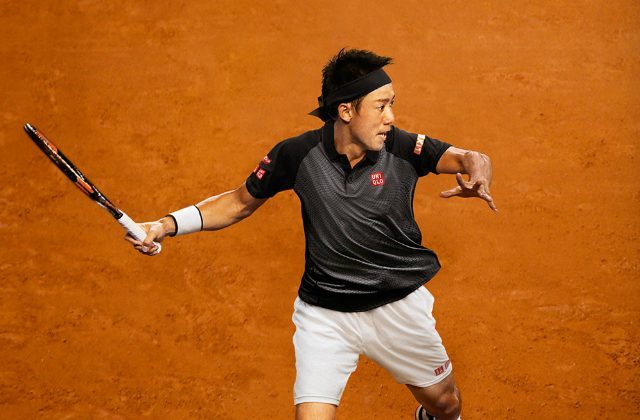
Photo courtesy of bolamarela.pt Roland Garros has four clear favorites in Novak Djokovic, Rafa Nadal, Andy Murray and Stan Wawrinka. Standing hungrily behind them are six players we believe are next in line take the title. The Tennis Review previews the chances of Kei Nishikori, Dominic Thiem, Jo-Wilfried Tsonga, David Goffin, Nick Kyrgios, and Marin Cilic (10).
Kei Nishikori (5): Quarter-finalist 2015
Tennis fans have been waiting a while for Nishikori to build on his run to the 2014 US Open final and compete for another slam trophy, and this Roland Garros could be when he finally does it.
Nishikori has had a good lead-in to the French Open and was impressive in his defeat to Djokovic in Rome in which the Japanese led 3-1 in the final set tiebreaker.
Some loose errors let the match slip away from Nishikori, but the five set format in Paris means he will both feel less pressure if he does get such a lead and that he will also have more time to recover if he lets a set slip.
The Japanese has a good draw with Murray in his quarter. The second seed may be a favorite to win, and matches up well to Nishikori, but Nishikori will feel less pressure in the quarters than he would versus a slam veteran like Murray in the last four, and has the aggressive baseline game to defeat Murray.
A win would leave Nishikori confident in a potential semi-final with Stan Wawrinka, and would also mean he was playing his best tennis, the kind that beat Wawrinka in a tough five setter at the 2014 US Open.
If Nishikori got to the final versus Djokjovic, the Japanese has a great chance of upsetting the Serb. Djokovic has the pressure of the tennis world on his shoulders with the Non Year Calendar Slam on the line and Nishikori has beaten him in a big slam match before at the 2014 US Open . He also showcased in Rome why he is such a dangerous player when he plays controlled aggressive tennis against the Serb- the Japanese can get the Serbian out of position, and surprise him with his formidable shot-making skills.
If Nishikori can take advantage of Djokovic’s nerves, he could finally get that breakout Slam win, one which feels long overdue, and one which could signal an exciting shift in the tennis hierachy.
Dominic Thiem (13): Second round 2014, 2015
Thiem just won his third title of the year in Nice, beating Alexander Zverev in three sets in the final, the perfect preparation for Roland Garros.
Thiem has a tough draw with a possible clash with Zverev in the third round, and then Rafa Nadal in the last sixteen. Both matches are very winnable. Nadal may be back to winning clay court titles, but he has still not been beyond the quarters of a slam since Roland Garros 2014 and is vulnerable to someone like Thiem who is confident and has beaten him before.
Thiem’s has won more matches than anyone bar Novak Djokovic on the tour this season, winning many of them at ATP 250s and 500s, but has not taken that confidence into the bigger events, making just one ATP 1000 last eight, in Rome. The time has come for him to step up and the Grand Slam format with its five sets and day off between matches could be the stage for Thiem to take the time he needs to find his big match game, one which if he does tap into, considering his excellent clay court skills, would make life very difficult for his potential Roland Garros rivals.
Jo-Wilfried Tsonga (6): Semi-finals 2012, 2015
Tsonga has a habit of saving his best for the big events and last year’s semi-finalist could easily make a run for the title if the draw opens up.
The French man will certainly have the crowd’s support, and could even spring a surprise on the top seeds in his half- Djokovic and Nadal-if he gets inspired and they get edgy. The Frenchman has big wins over them in the recent past, beating Djokovic in Canada in 2015, and defeating Nadal in last year’s Shanghai semis when the Spaniard was on a good streak of form.
Slam matches tend to have a habit of making history in rivalries redundant, too. Anything can happen in best of five in front of crowds of 15,000 fans, especially partisan ones, and Tsonga, while prone to letting victories slip from his grasp, also has a habit of pulling off some real upsets, too.
David Goffin (12): Fourth round 2012
The Belgian made the 2012 Roland Garros last sixteen as a lucky loser, and his recent runs to both the semis of Indian Wells and Miami tell us he is starting to feel comfortable again at the game’s prestigious events.
Goffin has a great clay court game- check out his recent double bagel destruction of Tomas Berdych on his way to the Rome quarters- but is prone to one crucial weakness which could damage his long-term French Open chances- closing out matches versus the big guns.
That weakness can be overcome though, and the Belgian has shown he can do it- defeating Wawrinka in a nervy Indian Wells match.
Goffin would benefit from Thiem upsetting Nadal- he would face the winner in the quarters-and while Djokovic in the semis would be a long shot, Goffin has the variety to trouble the world No.1- he led him 3-0 in the final set of their 2015 Cincinnati third round and pushed him to a tiebreak in the Indian Wells semis.
If Goffin can play aggressive tennis and deny Djokovic the baseline rhythm he thrives on, then the Belgian could make his biggest breakthrough yet on the stage where he first showcased his talent to the tennis world.
Nick Kyrgios (17): Third round 2015
Of the #NextGen, Kyrgios is the one whose game is the most ready to win a slam. The Australian is the first man since Roger Federer to reach two slam quarter-finals at different events as a teenager and plays some of his best tennis against the higher ranked players on the big stage.
He also has a tough draw with Gasquet in the last 32, and Nishikori in the last 16, but he is competitive with both men and is powerful enough to hit through the clay court and overwhelm them. Most importantly, he has the belief that he belongs at the top of the game, and the slams are where he has tended to show it.
Marin Cilic (10): Fourth round 2009, 2010, 2015
You cannot count out one of tennis’ few active Slam champions, especially considering his run to the Nice final where he played a competitive final with Stan Wawrinka.
The 2014 US Open champion has some of the best technique in the game, a huge serve that can hit through the clay, and the kind of ground strokes which, when on form, can trouble even the likes of Djokovic (the Croatian took the eventual runner-up to four sets at Roland Garros in 2014).
If the Croatian gets some wins and some confidence, he could go on the kind of streak that surprised many on his way to the 2014 US Open final where he showed he had the game, and most crucially, the self-belief to be a Grand Slam Champion.
Read our other Roland Garros previews: Who Will Win A Very Open Roland Garros?
Will Novak Djokovic Finally Win The French Open?
Take advantage of our 2MinuteTennis.net™ offer- Get your first month’s subscription free with code FREEMONTHTTR.
-
Roland Garros Will Novak Djokovic Finally Win the French Open Trophy?
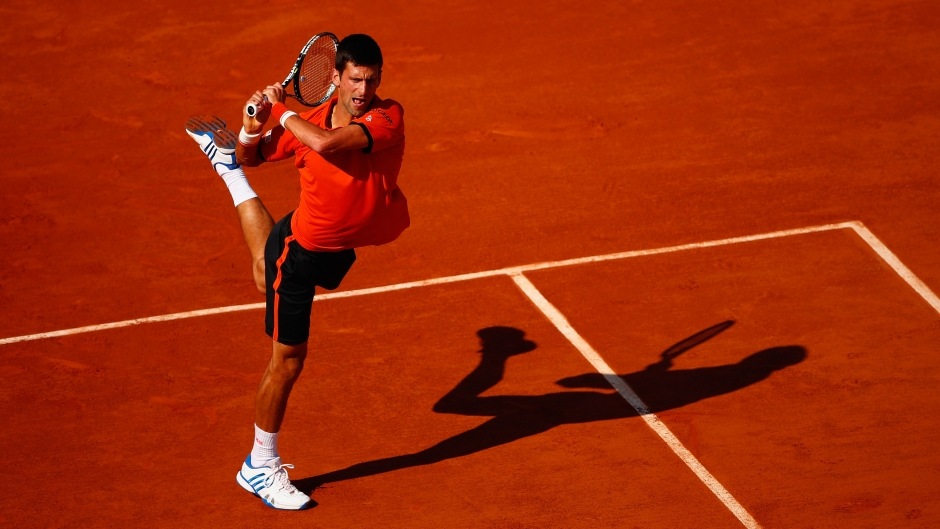
Photo courtesy of 34sad.com Roland Garros is days from getting underway, and the big story of the tournament is Novak Djokovic’s bid to finally take the title and complete the Non Calendar Year Grand Slam. The Tennis Review looks at Djokovic’s history at the French Open, his recent form, and his draw, and asks if this Roland Garros will finally be Novak’s year to reign in Paris.
History: Djokovic’s speed, stamina, aggressive baseline game, superior defensive skills, and his return of serve make him one of the ATP’s toughest competitors on Clay and have earned him three runner-up finishes at Roland Garros (2012, 2014, 2015).
Since 2011, the Serbian has been either the favorite to take the title, or joint favorite with Rafael Nadal, but, despite positive match ups with his rivals and good form coming into the event, he has been unable to fulfill his French Open title winning potential.
Djokovic’s defeats at Roland Garros since 2011:
In 2011, Djokovic was beaten by Roger Federer in a sublime performance by the Swiss.
In 2012, Djokovic made his first final, and played Nadal, but just when he was hitting his stride, after falling two sets behind, and won the third in favorable damp heavy conditions, play was called off. The next day, a hot one which allowed the Spaniard’s heavy top spin to shine, Djokovic managed to stay with Nadal until 5-6 in the fourth when the pressure, like Nadal’s clay court skills, proved too much to handle and he hit a double fault championship point down.
In 2013, in the semi-finals, top seed Djokovic led Nadal by a break in the final set when his racket touched the net before a ball he struck bounced, losing the point, his serve, his momentum, and finally the match.
In 2014, Djokovic was hit by a virus and played a sub-par final, going down in four sets to Nadal.
In 2015 Djokovic was overwhelmed by the all-conquering ball striking of Stan Wawrinka.
For: Djokovic ‘s three finals in the last four years means he has no problem getting to the Championship match and another trip there this year is well within his capabilities.
Against: Great players throughout tennis history have struggled to complete the Career Slam let alone the Calendar one- Lendl at Wimbledon, McEnroe and Sampras at the French-and the battle to win that elusive title gets harder and harder as the big losses pile up.
Djokovic has been unable to perform at his best or take his opportunities these past five years in the big matches in Paris- are the wounds caused by such painful defeats too deep for him to rise above?
Watch Novak Djokovic receiving a warm standing ovation from the Roland Garros crowd in last season’s final.
Form going into the event: Djokovic has a stellar first quarter of 2016, but suffered a shock loss to Jiri Vesely in his Monte Carlo opener.
The Serb bounced back to take the title in Madrid, but the faster conditions tell us little about Djokovic’s Roland Garros chances.
In Rome, where conditions are more similar to Paris, we learned more about the Serb’s slow court clay game this season, and the lesson will have been a hard one for his fans to take.
Djokovic dropped a love set to Bellucci, was pushed by Nadal in their toughest contest since the Roland Garros ’14 final, and trailed Kei Nishikori 1-3 in a final set tiebreaker.
In the Rome final, Djokovic had his ankle strapped, protested against playing in the rainy conditions which hampered his movement, and lost in straights to Andy Murray.
That run of events suggests Djokovic is struggling on slow Clay, and is having a tough time mentally, the last situation he wants to be in going into the only slam he has not won.
For: Djokovic has played eleven matches, won nine of them, beaten Milos Raonic, Kei Nishikori (twice), Nadal and Murray, and the title in Madrid means he has not gone too long without a dose of that winning feeling he enjoys so often.
Djokovic also fought hard in Rome despite being out of sorts. Winning on an off day is as much a part of winning slams as playing your best – a skill Djokovic has showcased beautifully in his last three consecutive slam wins, but has not yet mastered at Roland Garros.
Also, while Djokovic did suffer two bad losses, beating the world No.1 in three sets is one thing, but beating him in five on clay in Paris is another. Only Nadal, Federer and Wawrinka, all three of them Roland Garros champs, have managed it since 2011.
Not peaking yet on Clay may actually work in Djokovic’s favor. The Clay season has the longest lead-in of any of the Slams, and so it is easy for a player who wins as many matches as Djokovic does to peak before the Slam itself. This year, in playing below his level, Djokovic may actually be playing it right and play himself into peak form when he needs it most to put his name up there with the all-time greats-in the Roland Garros final.
Against: Djokovic suffered some undesirable firsts in his losses to Vesely and Murray- the first time he lost in his opening match since Madrid ’13, and the first time he lost to Murray on Clay.
The loss to Vesely may give some heart to lower-ranked underdogs, while the loss to Murray will have given hope to Murray himself that he can beat Djokovic on the Roland Garros clay, and to Djokovic’s other top ten rivals who have gone a while without beating him.
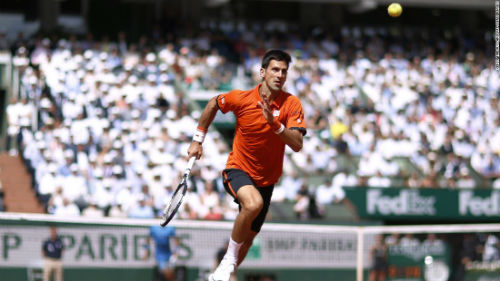
Photo courtesy of khampha.vn The Draw:
First round: Yen-Hsun Lu, ranked 100. Djokovic leads this series 1-0 though that match happened at Wimbledon 2010.
Lu has not played a professional match on Clay since last season’s Roland Garros where he lost in the second round to Kevin Anderson.
Second round: Qualifiers Steve Darcis or Marcel Ilhan. Steve Darcis, who upset Rafa Nadal at Wimbledon 2013, has the big serving attacking game that can trouble Djokovic. Both men will also be comfortable having played through qualifiers and won a round in the main draw.
Third round: Federico Delbonis (31). The two have never met, and the Argentine recently reached his career high ranking of 33 with semi-final appearances in Istanbul and Bucharest, and a title win in Marrakesh. Delbonis also upset Murray in Indian Wells.
This could be a tough match for Djokovic, but Delbonis is pretty inexperienced at Slams, going 4-10 in his career (1-3 in Paris) and Djokovic’s far greater experience should see him through if the match get messy.
Fourth round: Roberto Bautista-Agut (14). Djokovic leads the head to head 4-0 and won their most recent match at the Madrid Open 6-2, 6-1. Bautista Agut has won a set, though, at the US Open ’15 in round four.
Quarter-final: Tomas Berdych (7) . Djokovic has beaten Berdych the last ten times they have played, and leads the series 23-2. One of Berdych’s victories came on Clay though, back at the 2013 Rome Open.
Pablo Cuevas, (25), is in Berdych’s section of the draw, and could take advantage of the Czech’s poor recent form, and reach the last eight. The Clay courter has defeated Nadal in Rio this season, won titles in Rio and Sao Paulo, reached the last 32 in Paris last year (defeated Thiem), and won the 2008 French Open Men’s doubles crown.
Djokovic and Cuevas have never played.
Semi-final: Rafael Nadal (4). Djokovic leads Nadal 26-23 and has won their last seven matches, three of them on Clay, in straight sets.
Final: Andy Murray (2). Djokovic leads the series 23-10, has won 12 of their last 14 matches and leads 4-1 on Clay. Both Murray’s slam wins, however, have come against Djokovic.
For: Djokovic has a positive head to head versus all his rivals and has dominated them in the recent past.
Against: Nadal and Murray have both been playing some of their best tennis on Clay, and must be feeling confident of their chances. Murray is playing even better than he was last season when he took Djokovic to five sets on the Serb’s way to the final.
Djokovic could end up playing Stan Wawrinka in a repeat of that final. The Swiss showed last year he has a powerful enough game to hit through Djokovic on Clay and also has the psychological edge that comes along with that kind of win.
Conclusion: Djokovic may not get this close to creating such illustrious history as the Non-Calendar Year Slam again (the Career Slam will be up for the taking for the next few years) which must be both inspiring and terrifying at the same time.
No one would put achieving such a feat past a player whose record already glitters with some of tennis’ most impressive historic achievements.
The only person it seems who may doubt he can do it is Djokovic himself. If the Serb can win that battle of battles, then the ones he will face in Roland Garros would be, in comparison, nothing more strenuous than casual strolls in the very pretty courts of Paris.
-
French Open 2016 Preview Who Will Win A Very Open Roland Garros?

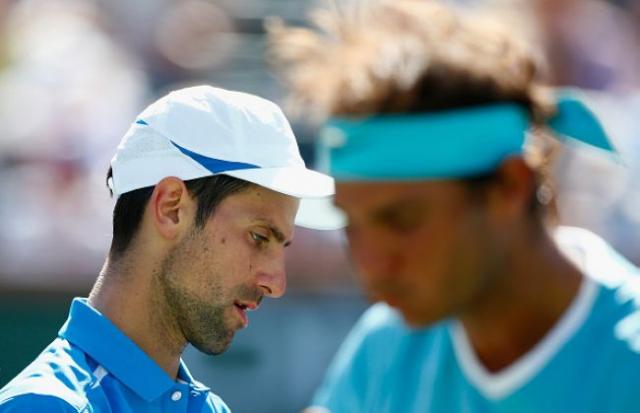
Photo courtesy of b92.net Roland Garros is as unpredictable as it has been for over a decade after the three ATP 1000 lead-ins were won by three different men- Nadal, Djokovic and Murray. The only thing that does seem safe to say is that the winner will come from the group below, but who that will be is anyone’s guess. The Tennis Review takes a look at the five men most likely to lift the Roland Garros 2016 trophy.
Novak Djokovic, seeded 1: Runner-up 2012, 2014, 2015
Lead-in results- Monte Carlo 2r, Madrid W, Rome RU
Djokovic’s unexpectedly poor Roland Garros lead-in, for his standards, may be a blessing in disguise.
Stellar pre-Paris form has never seen Djokovic over the Roland Garros finish line, so it could be that this clay season his peak performance may come just when he needs it- in the final.
The world No.1 is likely to have a few scraps on the way to another crack at the title- as he has done in his last three slams- but if he can peak for the big one, the final, another habit of his, then he will not only have achieved the Career Slam, but the non calendar slam, too.
Shock losses to Vesely and out-of-sorts performances versus Murray or not, Djokovic will still have all the pressure of the tennis world on his shoulders. Whether or not he can finally carry and lift it above his head along with the trophy is going to be a potential piece of history well worth witnessing unfold.
Rafa Nadal, seeded 4: Champion 2005-2008, 2010-2014
Lead-in results- Monte Carlo W, Barcelona W, Madrid SF, Rome SF
Rafa Nadal’s career vertigo seems to be over after his Monte-Carlo and Barcelona wins, but he has still not beaten Djokovic since Roland Garros 2014, and failed to convert multiple set points in their recent Italian Open semi-final.
Five sets at Roland Garros is more likely to be where that losing streak comes to an end than anywhere else. Nadal has defeated Djokovic in several years the Serb was favored to win Roland Garros (2012, 2013, 2014), and is in much better form than he was this time last year when he lost in straights to the Serb in the last eight.
The world No.5 will have less pressure on him if he does hold set points in a five setter, and if he can get to the final, (his first for two years), and face Djokovic there, the occasion is sure to produce the best in Nadal on the big points, a sight sure to get the demons circling Djokovic, and to stir the memories of Nadal and his fans.
Andy Murray, seeded 2: Semi-finals 2011, 2014, 2015
Lead-in results- Monte Carlo SF, Madrid F, Rome W
Murray’s defeat of Djokovic in the Rome final was impressive, but how will Murray deal with Djokovic on a good day?
Fortunately for Murray, Djokovic has never had a good day in the final where Murray is scheduled to meet him.
Murray cannot count on that, though. The Scot also cannot count on getting that far with Nadal and Wawrinka as possible semi-final opponents.
However, after his Rome win and run to the Madrid final, which included his second clay court win over Nadal, the Scot can go into his matches against his main rivals with plenty of self-belief, the one factor that so often lets him down, but which this year could finally pull him up.
Stan Wawrinka, seeded 4: Champion 2015
Monte Carlo QF, Madrid R2, Rome R3, Geneva TBA
Defending champion Wawrinka has not had a great lead-in to Roland Garros (he is competing in Geneva this week so that could change), but even if he had, we would still be none the wiser about his chances.
Last year, Wawrinka came into Roland Garros with a last four result in Rome the best finish on his clay season, yet went on to defeat Federer, Tsonga and then Djokovic for the title.
If we are lucky, the scene of that second slam triumph may inspire Wawrinka again- he will have to be playing some all time great aggressive tennis if he is going to win the title.
If our luck is out, Wawrinka’s shots will be, too, and he could go down in the first round.
You never know with the Swiss, and that’s what makes following his progress as intriguing as any of the favorites.
Roger Federer, seeded 3: Champion 2009
Lead-in results- Monte Carlo QF, Rome R3
Rumors have been going around Federer may not even compete, but he has been seen practicing in Paris, and if he is in the draw, you cannot count out a former champion, arguably the second best clay-courter of the last decade, and the world No.3.
Favorites get upset, injured, and draws fall apart, and if that happens, who better than Roger Federer to put it back together again in the form of a second Roland Garros trophy?
Keep calm and… WAIT, @rogerfederer has arrived! He’s currently practicing on Court 1! 🇨🇭#RG16pic.twitter.com/ii5aqeRaoq
— Roland Garros (@rolandgarros) May 18, 2016
Take advantage of our 2MinuteTennis.net™ offer- Get your first month’s subscription free with code FREEMONTHTTR.

Tennis from a fan's point of view
[
[
[
]
]
]
 thetennisreview