-
Roger Federer ATP 1000 Shanghai Rolex Masters Who Can Stop Him?

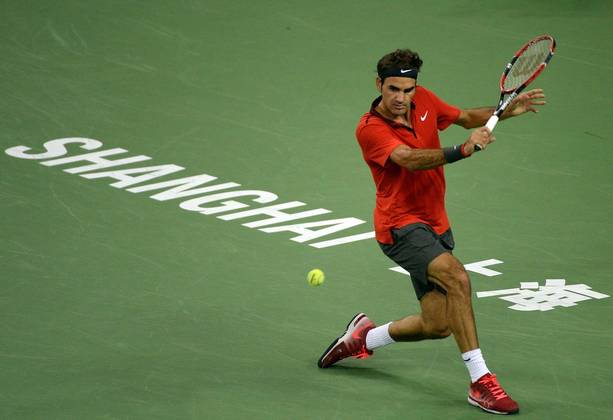
Photo courtesy of http://www.delo.si Roger Federer enters the ATP Shanghai Rolex Masters as the second seed and firm favourite. The Tennis Review looks at who will most likely get the chance to stop the defending champion on his quest for his 88th career title.
Round 2 likely opponent Sam Querrey
Federer leads his head to head with Querrey 3-0, has never dropped a set against him, and only dropped eight games when they met in this year’s Wimbledon second round.
To win, Querrey would have to serve his very best, and take big risks on second serves and with his ground game in tiebreaks. Even then, though, that would still not cut it – Querrey’s serve is easy for Federer to read, and the Swiss would most likely just up his own level on key points, take wiser calculated risks of his own, and pull out the win.
Last Sixteen scheduled opponent Tsonga (8)
Federer leads 11-5 and 9- 4 on hard.
This is a tough draw early on for Federer who has suffered some tough losses to the Frenchman (Wimbledon 2011, Canadian Open ’09). Tsonga is in good fast hard court form, reaching the US Open quarters and winning the Metz trophy. But Tsongas’s record in Shanghai is average (9-5), he has never had any big wins there and it is hard to see him suddenly defeating Federer in the upcoming week.
For the win, Tsonga would have to be at his very best, and while he can produce that in big matches, his at times weak shot selection will most likely let him down if things get tight.
Possible Quarter-Finalist Kei Nishikori
Federer leads the head to head with Nishikori 3-2 with the last two wins convincing ones at the ATP WTF and Halle last season.
Nishikori can beat Federer on slow courts (Miami ’14) or Clay (Madrid ’13), but he will not have as much time as he needs on the Shanghai ones when it comes to the return or passing shots to really bother Federer.
Likely Semi-Final opponents
Stan Wawrinka, Marin Cilic, Rafael Nadal
Cilic would be the most dangerous opponent here. Federer leads him 5-1, but that one defeat was when Federer was in fine form in the US Open semis ’14.
Cilic is a streaky player and if he reaches the semis he would be hitting one of those streaks, especially since he has never reached an ATP 1000 semi-final. Should he make that breakthrough in the upcoming week in Shanghai that means the Croat will be serving big, teeing off on his ground strokes, defending well, attacking the net, and in the form that is capable of winning slams, and, more crucially, of beating Federer in big matches.
Second most likely to upset Federer in this round would be Wawrinka, but the chances are low- Federer has the upper hand in this rivalry on faster courts (see their recent US Open semi). Wawrinka, though, is coming off a win in Tokyo, can play great on fast hard, and is better than anyone at winning matches he is expected to lose.
As for Nadal, who just had a positive defeat, if such a thing exists, in the Beijing final versus Djokovic, the chances of Federer losing to him are the hardest to speculate on. These two have not played since the Australian Open ’14, and their fortunes have been strikingly different since that one sided contest.
This rivalry, led by Nadal 23-10, is as all about the lopsided nature of the surfaces competed on, the way Nadal has used that to get into Federer’s head, and the Nadal tactic of feeding deep high topspin groundstrokes to his backhand side.
Back in the days when Federer was losing to Nadal so often, he allowed Nadal to attack that backhand, abandoning an attacking strategy mid match. The 2015 version of Federer is not going to do that and his commitment to attack, and his riskier approach to his return game, should allow him to cut the deficit in that lopsided head to head versus Nadal should they meet in Shanghai.
Likely final opponent- Djokovic or Murray.
With the way Djokovic is playing on hard recently, (two runner-up finishes, two wins) he is Federer’s most likely final opponent. Federer would welcome that though. The Swiss may have lost the last three slam finals he has made to the Serb, but he has beaten him on the tour’s fastest ATP 500 and 1000 events in Dubai (x2), Cincinnati and Shanghai the past two seasons.
Last year Federer was decisive in his victory over Djokovic in the Shanghai semis, winning 6-4, 6-4 in a match in which both players had positive winner-error differentials.
This year, if the two meet in the final, the result, unless Djokovic is more aggressive than usual or Federer is below par, would most likely be the same.
In fact, if Federer is going to lose to anyone in the final, it is more likely to be Andy Murray who has beaten him twice in Shanghai (2010, 2012), but those defeats were after Federer’s peak and when he was not so committed to the aggressive tennis he is now.
Since adopting that career rejuvenating attacking style, Federer has beaten Murray decisively on faster courts, and would be likely to do so again. Murray, though, has proven this year he cannot be counted out from surprising us and could push Federer hard if his serve is on and he commits to being aggressive.
Nothing less will do. Hard to read effective serving and aggressive play- that is the kind of tennis Federer will be bringing to the final, and the only kind that will, on Shanghai’s faster than average courts, trump him.
Commentary by Christian Deverille.
Liked this article? Share it and help us get read.
Have something you would like to say? Get yourself heard in the comments box below.
Subscribe to our email list for all the latest posts straight to your in-box.
-
Japan Open ATP 500 What the Trophy Would Mean Nishikori Wawrinka Dimitrov
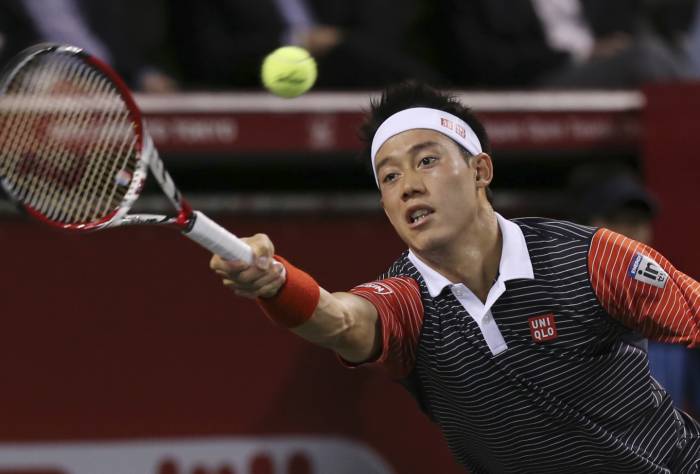
Photo courtesy of http://www.sipse.com The Japan Open features one of the most competitive fields on the tour at an ATP 500 event this season. The Tennis Review looks at the potential Champions, what obstacles they have to overcome, and what the title would mean to them.
Kei Nishikori (2)
The two time defending champion goes into his home event at the end of another remarkable but injury hit, and at times inconsistent, year.
The Japanese, who hit a career high of four in the ATP rankings this March, becoming the first Japanese player to do so, has fallen down to world no. 6 since then. That fall mostly is due to his failing miserably to defend his US Open final points- the Japanese suffered a shock upset to Benoit Paire in the first round.
Nishikori has not competed since that disappointing defeat, and he has his work cut out on his return to the ATP tour. The second seed has been drawn against Borna Coric in round 1, could face Alexandr Dolgopolov in round two, and is scheduled to meet his 2014 US Open conqueror Marin Cilic in the quarters.
If Nishikori navigates that tough section of the draw, he is scheduled to face fourth seed Richard Gasquet and then top seed Stan Wawrinka in the final.
A third consecutive Japan Open trophy would get 2015 back on track for Nishikori and save him from possibly slipping even further down the rankings. A win would also put him in strong contention for the ATP World Tour finals. Meanwhile, a loss would be further disappointment for Nishikori and his fans, particularly considering his heroic status in his homeland, and an early defeat before an idolizing crowd which might take Nishikori some time to recover from.
Stan Wawrinka (1)
Wawrinka has had a career year this season winning the French Open in emphatic style, reaching the Australian Open and US Open semis, and winning Rotterdam and Chennai.
Wawrinka’s streaky nature –he has suffered eight upsets this years-means he could win the whole thing or bow out early. The latter occurrence is not too far-fetched either as his first round opponent is the unique Radek Stépanek who leads their head to head 4-1, though the Czech’s last win came all the way back in 2009.
Wawrinka has nothing to lose this event- he has already qualified for the ATP World Tour finals- but if he does win the title it would balance out his season nicely.
Marin Cilic
Cilic surprised many in reaching the US Open semi-finals last month and he was unlucky to suffer an ankle injury before his semi-final against Novak Djokovic.
Cilic is a curious case. The 27 year old has a Slam trophy in the cabinet, and 12 ATP 250 titles, but has never made the semis of an ATP 1000 event, and has never won an ATP 500, finishing runner up four times. So a first ATP 500 title would make his tournament record less quirky when compared to other Slam champs.
Cilic, who this weekend lost in the Shenzhen semi-final to Garcia-Lopez in three sets, has a tough task ahead of him in Tokyo if he is to win the title. The Croat has the recently in-form Donald Young in the first round and is scheduled to meet Nishikori, who beat him in this Summer’s Washington final, in the quarters.
Grigor Dimitrov
The recent news Grigor Dimitrov had taken on Franco Davin as coach was well received with his fans who are hoping Davin’s slam winning touch (del Potro, Gaudio) might rub off on the now ranked no. 19 (Dimitrov was ranked 8 in August 2014).
The pair’s first event together last week in Kuala Lumpur resulted in a straight sets loss to 74th ranked Veteran Benjamin Becker in the quarter finals. While that was another frustrating loss for Dimitrov and his fans, there was one positive factor- it was the first quarter he had reached since Madrid.
If anyone’s season needs saving, it’s Dimitrov’s, but there is unlikely to be a successful rescue mission in Tokyo next week. Dimitrov has drawn the dangerous Benoit Paire in the first round, and if he manages to survive that test, he would face either Fernando Verdasco or Marcos Baghdatis. Should he make his second quarter in a row, he would then come up against nemesis Richard Gasquet whom he trails 0-3.
Commentary by Christian Deverille.
Liked this article? Share it and help us get read.
Have something you would like to say? Get yourself heard in the comments box below.
Subscribe to our email list for all the latest posts straight to your in-box.
-
ATP China Open What You Need to Know Draws Champions & Novak Djokovic

Photo Courtesy of livetennisguide.com The ATP 500 China Open, the second event of the Asian Swing, starts next week in Beijing. The Tennis Review tells you what you need to know about the event’s draw, past winners and this season’s likely champion.
When? Oct 5th-11th.
Where? The Beijing Olympic Green Tennis Center, Beijing, China. The main stadium, the Diamond Court, named after its shape, holds 15,000 people and has a retractable roof.
Status and prize money: The Beijing Open, an ATP 500 event, will reward its champion with 500 ranking points and has a total prize money fund of $2, 700, 510. Last year’s champion Novak Djokovic took home $604, 000.
Surface and conditions: The surface is a slow hard court. The event is played outdoors, and in the late Summer Beijing humidity this means the balls are a little heavy. Slow Harcourt and heavy balls equal perfect conditions for Novak Djokovic who has only dropped three sets in his 24 matches in the Chinese capital.
Past Champions: Novak Djokovic has won the event the past five out of six years, winning 25 matches in a row and is unbeaten at the event.
In 2011, when Djokovic did not play, Tomas Berdych took the trophy, beating Marin Cilic in the final.
Other past champions since the tournament’s start in 2004 are Marat Safin, Fernando Gonzales, Andy Roddick, Marcos Baghdatis and Rafael Nadal.
The Draw: The 32 player draw is features top seed Novak Djokovic in the top half and second seed Tomas Berdych in the bottom half.
Djokovic is scheduled to meet Nadal (3) in his semi-final while Berdych is projected to meet David Ferrer (4).
The quarter-finals are scheduled to be Djokovic – John Isner (6), Ferrer – Milos Raonic (5), Nadal – Jo-Wilfred Tsonga (8), and Berdych- David Goffin (7).
The rest of the field: The event also stars Dominic Thiem, Fabio Fognini, Ivo Karlovic and Martin Klizan.
Possible Upsets: Tomas Berdych is a likely candidate. The Czech has not been winning much since the Spring (10-6 since Halle), will have played two matches on Sunday in Shenzhen if he makes the final, and could go down to Karlovic or Garcia –Lopez in his second round match.
Sixth seed John Isner has a tough first round against Dominic Thiem, who has won three clay court titles this year, and will enjoy the slow, high bouncing conditions. The two have met once, this year in the Nice semis, with Thiem taking that match in straight sets.
Matches to look out for: All eyes will be on a possible Nadal-Djokovic final, though that match should be a fairly straight-forward Djokovic victory. What it will mainly reveal is how far away Nadal is to getting back to his best since his shocking third round US Open defeat to Fabio Fognini.
Fifth seed Milos Raonic’s first round clash with Viktor Troicki is the pick of the first round matches. Raonic, on the comeback trail from surgery on a foot injury, recently won the St Petersburg Open while Troicki, ranked 24, is 31-22 this year and one of the most dangerous floaters in the draw.
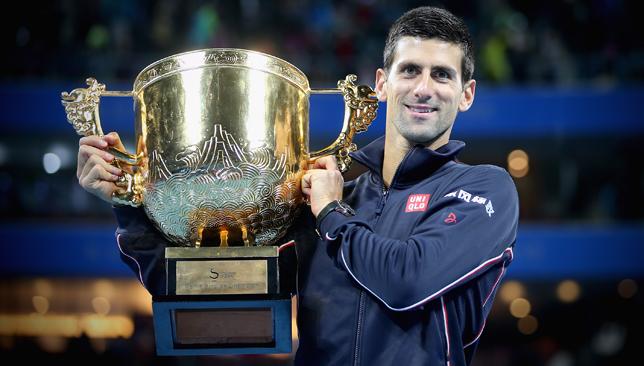
Photo courtesy of http://www.sport360.com Likely winner: Novak Djokovic. The Serb has all the time in the world to track down balls, execute his baseline skills, get the rhythm he thrives on and win his sixth China Open title.
Djokovic lacks any serious challengers in the draw, but the tournament is still worth watching to see the world No.1 at his distinctive best. Also, if someone does upset him, spectators will witness that player play the slow hard court match of their life to do so.
Commentary by Christian Deverille.
Liked this article? Share it and help us get read.
Have something you would like to say? Get yourself heard in the comments box below.
Subscribe to our email list for all the latest posts straight to your in-box.
-
5 Reasons We Love ATP 250s St Petersburg Metz Shenzhen Kuala Lumpur

Photo Courtesy of sport1.de Last week’s ATP tennis action took place at 250 events in St Petersburg and Metz and this week’s will take place in Shenzhen and Kuala Lumpur. The Tennis Review looks at how these events and others perfectly illustrate why we love ATP 250s.
- The chance to see up and coming players cutting their teeth
Perhaps the biggest reasons to love ATP 250s is the chance to see new players to the pro ranks cutting their teeth on tough competition.
Last week in St Petersburg and Metz, teens Andrey Rublev, Thanasi Kokkinakis, and Alexandr Zverev were all in action. All ranked in the top 100, these highly acclaimed teen’s rankings are high enough to get them direct entry, leaving them fresh in the early rounds, but they are still ranked low enough not to be seeded and so have to play their best to make it to the later stages.
Though tennis fans did not get long to see the trio of teens as they were all beaten in the first round, those losses will be an important part of their learning process and their development on the tour. Rublev lost to the in-form Bolelli after winning the first set, Zverev lost to the veteran Fernando Verdasco in three tough sets, and Kokkinakis was overwhelmed by the wily Marcel Grannollers whose nets based game is a tricky one indoors.
Those losses may have been tough for both players and fans, but they will be invaluable for both in the long run- when these players are eventually competing for 1000 titles and slams, these lesson filled 250 defeats will be part of the reason for their progress to the game’s higher ranks.
Next week, Zverev will be coming up against Jeremy Chardy in the first round of Kuala Lumpur while South Korea’s Hyeon Chung, fresh off a Challenger title last week in Khaosiung, takes on wild card Di Wu in Shenzhen.
- Great stargazing opps
The ATP’s top ten players are limited to how many 250 events they can compete in a year, and the tournaments compete for their time with their wallets, offering huge appearance fees, with Doha reputedly being the most generous, to get the crowd-drawing stars.
In St Petersburg and Metz, world no. 4 Stan Wawrinka, no. 5 Tomas Berdych, former top tenner and 2008 Australian Open runner up Jo-Wilfried Tsonga and world no.9 Milos Raonic were all making appearances. Raonic and Tsonga both gave the tournaments great value for money, too, winning the titles in St Petersburg and Metz respectively and taking three sets in the finals to do so.
This week Tomas Berdych and Marin Cilic headline Shenzhen while David Ferrer and Grigor Dimitrov will be pulling in crowds in Kuala Lumpur.
- The tour’s journeymen get some much needed points and prize money.
Pro tennis is an expensive occupation. Not only is it reported to cost $385, 000 to produce a pro player, but only the world’s top 100 actually make a comfortable living from it. For many of those players working hard to make ends meet, ATP 250s can be a very welcome profitable week.
In St Petersburg, quarter-finalist Denis Istomin (career high rank 33, 11 years on tour,) earned $30, 450, 45 ranking points and moved up two spots to 60. Istomin had earned about $430,000 in his career before last week, and that one week in Russia increased that total by 7%.
- Headline making upsets
This combination of up and comers, journeymen, and big stars produces some shocking and, at times, pleasantly surprising results. The top players, more used to playing on the world’s biggest stages for the chance to win ATP 1000 and slam trophies, can find it hard to get up for an ATP 250 second round match. Meanwhile up and comers and journeymen get inspired by the chance to get a big win and make some progress in a draw.
In St Petersburg, Simone Bolelli, who has been on the tour for over twelve years and only scored his first top ten win this year (Raonic, Marseilles), grabbed his second top ten win when he defeated Tomas Berdych in the second round.
This year, ATP 250s have been the scenes of Ivo Karlovic defeating Novak Djokovic, (Doha), and, in St Petersburg last week, Joao Sousa upsetting Dominic Thiem on his way to his first ATP final since he won the Kuala Lumpur 250 in 2013.
In 2013, tennis fans in Stockholm were treated to Grigor Dimitrov winning his first ATP title and beating David Ferrer to do so. Those kind of breakthroughs will be reminisced over fondly further down the line if Dimitrov finally reaches his potential.
- Get to see tennis in new locations
Tennis’ big prizes are competed for in the world’s capitals, London, Rome, Madrid, Paris, its sporting cities such as Melbourne, and its most glamorous locations like New York and Shanghai. Most of those places are also located in countries with a history of tennis and of great players.
ATP 250s bring tennis to new parts of the globe and parts with no tennis culture such as Shenzhen, Kuala Lumpur, Bangkok, Casablanca, Chennai and Doha. Locals can watch a sport played at professional level to a high standard they might otherwise only admire from afar, and new fans might be drawn to the game, schools might take it up, and tennis associations get more income.
ATP 250s also bring tennis to regions of established countries such as France (Metz, Montpellier, Nice), Australia (Brisbane) and the U.S (Houston, Atlanta) which builds on the good work already done by bigger events such as the Slams and ATP 1000s, and, above all, makes high quality, exciting tennis more accessible to those who might not be able to get to Melbourne, New York or Paris.
Commentary by Christian Deverille.
Liked this article? Share it and help us get read.
Have something you would like to say? Get yourself heard in the comments box below.
Subscribe to our email list for all the latest posts straight to your in-box.
-
US Open Final Novak Djokovic Defeats Roger Federer Head Trumps the Heart

Photo courtesy of http://www.vietreader.com The heart said, and with such conviction many people listened, the 2015 US champion would be Roger Federer. The 34 year old veteran going for his 18th slam. The all-time great in the form of his life making the US Open final for the first time since 2009 and for the first time getting there without dropping a set. The player with the beautiful game, a timeless one, a heart-winning one.
The head said, with its usual matter of factness, Novak Djokovic. The world no. 1 who had beaten Federer in the last two Wimbledon finals. The player who had struggled in the best of three lead ups in Montréal and Cincinnati, but was a different beast in best of five and who raised his game better than anyone in the crucial matches and, crucially, against Federer. The player who was simply a terrible match up for the Swiss in a night match at the Open after rainy conditions, whose solid baseline game, whose athletic defence would ask one question too many of the Swiss’ attacking game, would pose one too many passing shots, one too many deep returns.
In the early stages of the match, the head looked like it would trump the heart with a royal flush. Federer needed to win the first set of the final, preferably the first two, if he stood a chance of winning his sixth US Open title, and an early break for Djokovic giving the Serb a 2-1 lead was the worst possible start, and seemed a foreboding sign. The Federer serve had only been broken twice in the Swiss’ past thirteen matches, in the same set to Phillip Kohlschreiber, in the third round, and his biggest weapon had to be at its best to negate his rival’s greatest strength, his return. If it was failing so early in the match how would it do in the tougher moments to come?
Hearts did not sink for long, though. In the next game, Djokovic, running down a volley, slipped, fell and bled on his elbow. The shaken Serb duly lost his serve and the match was even again.
The top seed’s loss of focus was short lived. Djokovic would not drop serve again that set and leading 5-4 he broke Federer to take the first set 6-4.
Federer, a set down, did not lose heart, however. The Swiss pursued with his attacking strategy and at 5-4 up in the second, his bravery was rewarded with a set point. The crowd, as pro a player for Federer as ever seen in a slam final not involving a home hope, had their hearts in their mouths when Federer made his way to the net, had Djokovic out of position, a forehand volley on his racket and an open court for the taking yet somehow missed.
Djokovic held serve, but Federer did not lose his momentum, created another set point chance at 6-5 returning, and this time he took it, his roar to the crowd as passionate as their own.
The heart might be right this time, we thought, as Federer’s net game continued to pay off deep into the third set. It really did seem that Federer’s lead-in form, and his style of play was actually good enough to beat Djokovic, that perhaps the heart had been speaking for the head, too, all along.
Djokovic, though, is not without heart himself, and he listened to his, and the few in the crowd beating for him. Tied at a set apiece in a slam final is no new territory for him – he experienced it in all three of the previous four slam finals he had won (Wimbledon ’14, ’15, Australian Open ’15) – it is a situation in which he excels, in which he has proven to have the most heart of them all.
A set all, deep in the third is when Djokovic digs deep inside of himself, stays strong when a point here or there decides matters. He faced many threatening points too, points that could have decided things in favour of the Swiss – Federer held five of his 23 break points in that third set, converting just one while Djokovic converted both break points he held(the Swiss ended the match with a 17% break point conversion rate (4/23) compared to Djokovic’s 46 (6/13). Djokovic just did not give in to the pressure. Instead he did what he does best – he fought, stayed steady and took his big chance when it came, playing the big points better, breaking Federer at 5-4 to take the third set 6-4.
In the fourth set, Djokovic, as we all knew he would likely do, pulled away from the Swiss, having broken his will once more, breaking early, and then again, for a 5-2 lead. The Serbian faltered though as Federer moved up a gear, taking on the net and the game’s best tracker and passing shot striker, breaking back and then holding for 4-5 to the backdrop of the passionate celebrations of the majority of the 23, 000 crowd. A crowd whose hearts ached at Federer’s lack of recent slam trophies enough to shout out between Djokovic serves, mid serves even, in their quest to get their heart’s desires, an 18th slam for Federer.
But those hearts were not out there on the court- Djokovic’s was. A heart that had its own desire, the desire to win a tenth slam, a second US Open crown. A heart that had been broken in four US Open finals already as he held aloft runner up plates, and what gets the heart desiring more than the things it cannot have, or even worse the things we can have but have been unable to get.
Djokovic was able to get what he desired now, and his head calm, his heart strong, his knowledge that one ball back too many would break his opponent, the world no.1 got to work, and the heart that wanted that tenth slam so very much, and the head that knew how to get it, proved to be in sync. The Serbian converted championship point and won himself his third slam trophy of the season 6-4, 5-7, 6-4, 6-4.
When Djokovic talked of how it felt to beat an all-time great in the final and held aloft the trophy with a huge grin full of pride, his love of the game there for all to see, the hearts of millions of the Serb’s fans worldwide were content, and a few in the crowd, must have been won over.
It will be a while before all of them are, perhaps not until Federer is retired and Djokovic plays the role of the fighting vet. But the crowds better get used to more hurt because Djokovic’s heart is huge and our heads say there are more heart breaking wins to come yet.
Commentary by Christian Deverille.
Liked this article? Share it and help us get read.
Have something you would like to say about the US Open? Get yourself heard in the comments box below or why not contact us with a guest post idea?
Subscribe to our email list for all the latest US Open 2015 posts straight to your in-box.
-
US Open Final Preview Novak Djokovic Vs Roger Federer Who Will Win?

Photo Courtesy of zeenews.india.com The 2015 US Open men’s final serves up the 42nd career meeting between world No.1 Novak Djokovic and No.2 Roger Federer, and their second Grand Slam final in a row. The Tennis Review previews the action and predicts the winner.
History at the Open:
Roger Federer is a five time US Open Champion (2004-8), a one-time runner-up (2009), and a three-time semi-finalist (2010, 2011, 2014).
Novak Djokovic is the 2011 Champion and a four time runner-up (2007, 2010, 2012, 2013).
Head to head:
Federer leads the head to head by a whisker- 21-20.
Since 20014, Djokovic leads 6-5 and has won the majority of their finals. The Serbian was victorious in finals at Wimbledon ’14 and ’15, Indian Wells ’14 and ’15, Rome ’15, and WTF’14.
Federer, though, has won their fast court matches including a straight wins in the Cincinnati final a few weeks back, the Dubai final this season, and the semis in Dubai ’14, Monte Carlo ’14 and Shanghai ’14.
Federer leads their US Open head to head 3-2 but has lost the last meetings (2010, 2011) after holding match points. Those losses, however, came when Federer was more inclined to take on Djokovic from the back of the court than executing the attacking game he commits to nowadays.
What’s at stake?
Federer, aged 34, might not have too many more chances to break his own Grand Slam tally of 17. Another slam, and at his age, would put an end to any Greatest of all Time debates and guarantee him that status.
Djokovic would increase his grand slam tally to ten and push him closer to Rafael Nadal who has 14. The title would also cut his US Open winner to runner-up ratio from 1-4 to a more respectable 2-4.
Form coming in:
Federer has not dropped a set on his way to the final- the first time he has reached a US Open final without doing so. However, his most dangerous opponent, Philipp Kohlschreiber, underperformed in their third round match, and the Swiss has had favourable hard court career head to heads versus his other opponents.
Federer also won the Cincinnati warm up title without being broken and has been broken just twice this US Open, both times by Kohlschreiber in the third set of their contest, a set in which he was sub-par but was let off the hook by his rival.
Federer goes into the final after beating Stan Wawrinka in the semis 6-4, 6-3, 6-1. The Swiss had to defend well in that match against the aggressive fifth seed, and did so impressively, which will give him some much needed preparation for the running he will have to do against Djokovic.
Djokovic has been patchy this US Open Series. He lost in the Montreal and Cincinnati finals and has dropped sets this US Open to Agut and Lopez.
Gauging his form from his semi-final is hard as his opponent Marin Cilic was injured. But what we do know from that match is that Djokovic did seem to have his baseline game well-grooved, is keeping his unforced error count remarkably low, and, from the manner in which he handled his opponent’s injured state, is feeling very calm and focused.
The Favorite:
Djokovic.
While he has not played his best tennis these last few weeks, and deco-turf is his weakest surface, Djokovic has a habit, since pairing with Boris Becker, of raising his game in Slam finals.
Federer has also not faced anyone like Djokovic so far in the tournament. The Swiss has been hitting winners all tournament but against players with much less defensive skill than the world No.1.
Djokovic is going to make Federer hit two, three, even four winners to end rallies and that kind of pressure could be too much for Federer in a best of five sets match.
Beating Djokovic in a best of five match in a slam is a different task to getting the better of him in best of three at an ATP 1000 or 500. Djokovic is better than anyone at seeing through his opponent’s best patches of play and then raising his own game the second they show any weaknesses and best of fives give him even more time to work his way into a match against a redlining opponent.
Federer may be playing great tennis, arguably his best at the Open since 2009, but can he sustain it over three to five sets? Because against Djokovic in the US Open final he will have to.
Federer was also playing some sterling tennis at Wimbledon and after his remarkable semi-final win over Andy Murray many thought he would win his 18th Slam. But Djokovic brought out the worst of him in the final, breaking his strengths down, exploiting his weaknesses and running away with the third and fourth sets.
Federer could win if:
The Swiss needs everything to go his way if he is to win this match. Some of those things he can control such as his first serve or his attacking strategy, and some of them he cannot, such as Djokovic’s level and the weather, which looks to be damp and humid, the kind of conditions that will make the balls heavier thus helping Djokovic more than they will Federer.
Looking at factors Federer can control, the Swiss has to have a first serve percentage in the high 60s to mid 70s. Djokovic is the best returner in the game and if Federer’s percentages drop, Djokovic’s chances increase. Federer will also need to go for it on the second serve as it would be better for him to lose the point on a double fault than due to a Djokovic confidence boosting return winner.
Federer has to be 100 % aggressive from the baseline, too, stepping inside it at the first chance and not getting into long rallies of more than seven shots otherwise Djokovic will find his rhythm and force him into error. He also has to take risks on the return and unleash the SABR which will get the crowd going, a crowd eager to give Federer their full support in his quest for a history making 18th slam.
Federer has to win the first and second sets, and if he drops the second then he has to win the third. If this match goes into a fourth set, he might be able to raise his game and make a final push, but if it goes into the fifth, then his chances decrease dramatically as the match goes on into what could be a damp evening with heavier balls.
Prediction: If Federer brings and sustains his best fast hard court tennis, and if the conditions allow him to hit through the court, and Djokovic, then just as Wawrinka did to Djokovic in the French Open final, he could overwhelm the world No.1.
But the likely scenario that will play out is an all too familiar one- Djokovic will be steady in Federer’s best patches, wait for the moment the Swiss’ level drops , and then unleash his A game to win in four sets.
Commentary by Christian Deverille.
Liked this article? Share it and help us get read.
Have something you would like to say about the US Open? Get yourself heard in the comments box below or why not contact us with a guest post idea?
Subscribe to our email list for all the latest US Open 2015 posts straight to your in-box.
-
US Open Semi-Final 5 Reasons Marin Cilic Could Finally Beat Novak Djokovic
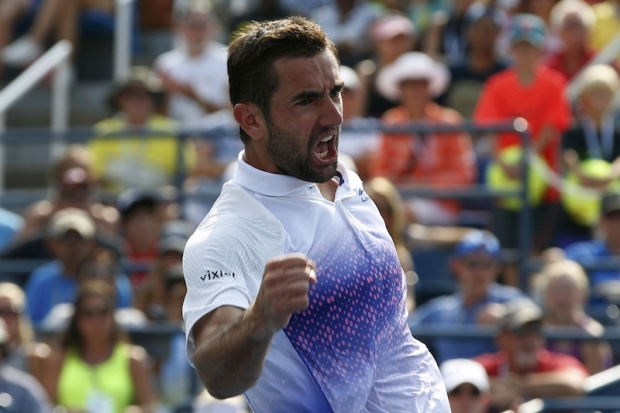
Photo courtesy of themalaymailonline.com Marin Cilic may trail his head to head with Novak Djokovic 0-13, but the defending champion has a great opportunity to get his first win over the world no.1 when the two meet in this year’s US Open semi-finals. The Tennis Review gives you five reasons why the man who surprised much of the tennis world last year in NYC might have another surprise in store this year.
The US Open’s Decoturf is his best surface
Cilic’s big serve, flat, deep ground strokes, mid court and net skills, and aggressive mind-set are tailor-made for the US Open’s fast deco-turf surface which is reportedly the quickest it has been for years.
Cilic’s serve bites through the court, he can hit through his rivals from inside the court or at the baseline, and his volleys die before his opponents can retrieve them.
But Cilic is much more than just a big hitter. The former boys junior Roland Garros champion (2005) has an underrated defensive game, intelligent point construction and is one of the best on the ATP tour at turning defence into attack.
Cilic has tons of confidence in New York
The ninth seed is on a roll in New York. Cilic has won 12 straight matches and beaten the likes of Gilles Simon, Tomas Berdych, Roger Federer, Kei Nishikori and Jo-Wilfred Tsonga.
That 12 match streak, and previous deep runs at the US Open which saw him defeat the likes of Andy Murray in 2009, have given Cilic great confidence in New York.
At this US Open 2015, Cilic has won five consecutive matches for the first time this injury-hit season and the 253 winners he has unleashed are a sign of just how good he is feeling right now in New York.
That kind of confidence could be what clinches Cilic his first ever win over Djokovic.
Decoturf is Djokovic’s worst surface
Djokovic, meanwhile, has looked far from his confident best these past twelve days. The 2011 champion has dropped sets to Agut and Lopez and while he has hit just 11 errors, he has struck just 166 winners.
Only one of the Serb’s nine slams has come at Flushing Meadows. The Serbian has been to fives finals in total (2007, 2010, 2011, 2012, 2013) and has lost each time quite decisively. And the only semi-final of a slam Djokovic has lost in his last eight slam semi showings was last year on Arthur Ashe to first time slam semi-finalist Kei Nishikori.
Deco-turf does not give Djokovic the slow high bouncing conditions he thrives on at Melbourne Park and while his baseline skills can take him deep, he struggles to find the rhythm he needs, and fails to get across the finish line against more attacking, confident opponents.
Djokovic has struggled this US Open season.
Djokovic lost his first ATP 1000 final since Cincinnati 2012, and suffered his first loss to Andy Murray in nine matches in this season’s Montréal final. The following week he was beaten soundly by Roger Federer in the Cincinnati final. He was also match points down against a slumping Gulbis and 0-3 down in the third to Goffin in that period.
While Cilic is a streaky player and can gather confidence with short bursts of momentum, Djokovic is used to winning, rarely losing before finals, so can be vulnerable when suffering losses in consecutive tournaments (see last year when he went down to Nisikori in four in the semis after suffering back to back losses in Toronto Cincinnati.)
Cilic is up for a fight.
Cilic has come through two five setters (Kukushkin, Tsonga) and a tough four setter against Chardy.
The Tsonga match was the toughest of those tussles with Tsonga fighting back from two sets down and saving three match points in the fourth set. Cilic did not get disheartened though and produced his best tennis 3-2 up in the fifth on his way to a 6-4 final set win.
Lucky for Cilic his fighting qualities are intact- against Djokovic, he is going to need them.
At Wimbledon 2014 Cilic led the nine time slam champ two sets to one before losing in five. At Miami the same year he stormed to a 6-1 first set win before going down in three. The Croat also took Djokovic to four sets at Roland Garros a couple of months later. In all those close defeats, Cilic succumbed to Djokovic’s own formidable fighting skills, consistency and ability to make him go for one ball too many.
Djokovic will draw upon all those qualities once more in his upcoming his US Open semi-final versus Cilic, but it may not go his way this time. The Croat has the surface, the momentum, and, most crucially, the heart in his favour as he strives to take his first win against the world No. 1 on his way to another surprise US Open final.
Liked this article? Share it and help us get read.
Have something you would like to say about the US Open? Get yourself heard in the comments box below or why not contact us with a guest post idea?
Subscribe to our email list for all the latest US Open 2015 posts straight to your in-box.
-
Roger Federer Vs John Isner US Open Round 4 Preview
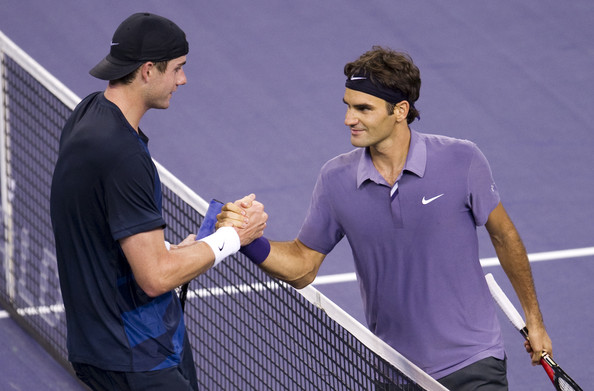
Photo courtesy of http://www.zimbio.com Roger Federer and John Isner will contest what is easily the highest profile US Open fourth round battle this year. The Tennis Review previews the action and predicts the winner.
Head to head:
Roger Federer leads the head to head 4-1, and has won all three of their hard courts matches (US Open ’07, Shanghai ’10, Indian Wells ’12).
The only set Federer has dropped to Isner on hard courts is the first set they played in their US Open ’07 match which Federer lost on a tiebreak. Federer has won the other three tiebreaks they have played.
Isner’s sole win over Federer came in 2012 in the Davis Cup on Clay in Switzerland.
US Open History:
Roger Federer is a five time US Open Champion (2004-08), a one-time runner up (2009) and has a 72-10 record at Flushing Meadows.
John Isner has been to the US Open quarter-finals in 2011 and the fourth round in 2009. He has a 17-8 record at his home slam.
Form coming in:
Federer won the ATP 1000 Cincinnati Open in convincing fashion, not facing a single break point as he beat world No.2 Andy Murray and world No.1 Novak Djokovic for the title.
That title run featured great serving, his now signature shot the SABR and the aggressive tennis that has seen him dominate the tour’s hard court events the past two seasons (Dubai, Shanghai).
Isner had a strong US Open Series winning the title in Atlanta and making the last eight in Montreal where he lost to Jeremy Chardy in three tiebreakers. The American was also runner up to Kei Nishikori at the ATP 500 Citi Open.
At the Open so far both men have been impressive. Neither one has dropped a set, Isner has not lost his serve and Federer has only been broken twice (versus Kohlschreiber).
Federer has had arguably the tougher draw though. He faced world no.34 Leonardo Mayer in round one and 29th seed Kohlschreiber in round three.
Who Will the Conditions Favor?
The night time conditions will mean the already heavy balls will fly through the court a touch slower, but that will not make much difference to these two.
Whatever the conditions, both men will attack and come in on short balls. The night time conditions actually give both men an extra edge- Federer might get more balls back and lure Isner into error while Isner will have more time to set up his forehand.
Federer will have the biggest advantage, however. The slower conditions will mean longer rallies and Federer, who remarked in Cincinnati his backhand had much improved over the last couple of years under Edberg, is the much steadier of the two from the baseline.
Isner can be very effective in slower conditions, too – he nearly got the better of Nadal at Roland Garros and has great records in Indian Wells and Miami- and will take some confidence from his only win over Federer coming on the slowest conditions they have played on – indoor clay – and what he describes as the best win of his career.
The Favorite?
Federer. He has better baseline skills and will have more time on the return. He also has the more complete service game.
Isner could win if…:
Isner would have to repeat the high level of his 2012 Davis Cup win over Federer to get a win over the second seed right now. Or Federer would have to be below par.
Federer was looking a little under the weather in his third match against 29th seed Philipp Kohlschreiber, and the German said himself Federer’s form was not that impressive.
Federer dropped serve, twice, in that match, the first time he has done so this tournament and during the US Open Series. If Federer is under the weather and his serve and net game are below bar, Isner has a chance, especially as the night time conditions will give him a little extra time on the return and he can run round that forehand.
Prediction: Federer to win in four sets.
Liked this article? Share it and help us get read.
Have something you would like to say about the US Open? Get yourself heard in the comments box below or why not contact us with a guest post idea?
Subscribe to our email list for all the latest US Open 2015 posts straight to your in-box.
-
US Open Lowdown The Roger Federer SABR (Sneak Attack By Roger) Return
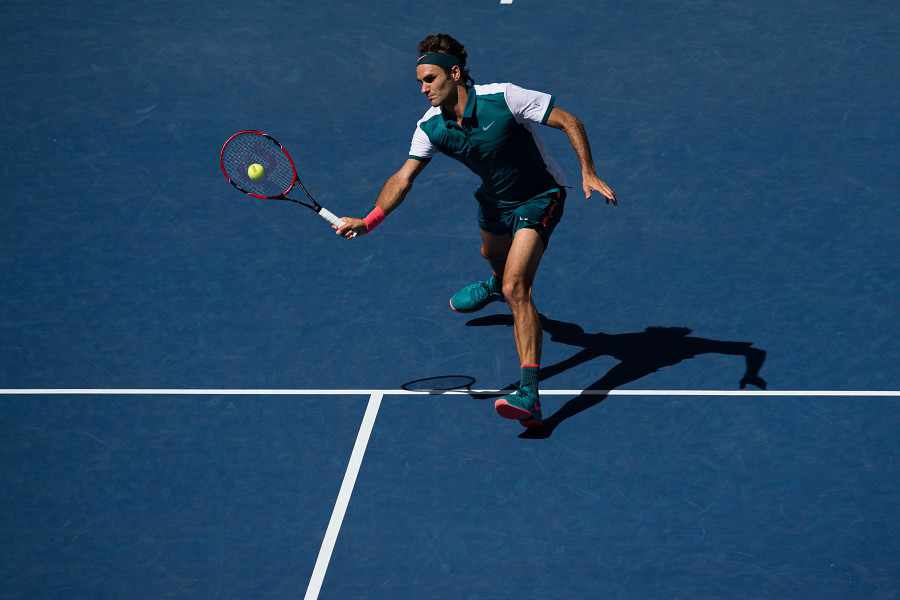
Photo Courtesy of shropshirestar.com Roger Federer’s SABR return has been creating a lot of headlines at this year’s US Open. The Tennis Review explains what the SABR is and what all the fuss is about.
What is the SABR?
Roger Federer calls the shot the SABR- the Sneak Attack by Roger- and that sums it up perfectly.
When Roger Federer hits the SABR return he jumps into the service box once his opponent has served, hits a half volley and, if everything goes well, sends the ball flying out of the reach of his opponent for a winner or rushes them into error.
See the video below to see the Sabr return in action against Leonardo Mayer in the first round of this year’s US Open. Federer used the shot three times in the game and broke Mayer’s serve.
How did it come about?
The shot, also known in some circles as the ‘crush and rush’, is an old school technique rarely employed on the modern tour and was used mostly, much like the drop shot, when players were tired and wanted to get the point over quickly
The shot was also used more frequently when tennis was mostly played on fast courts.
Federer says he started using it when having a hit with Benoit Paire in Cincinnati. The two of them were both tired and decided to play a quick few points. Federer took on a Benoit serve with the SABR return and hit a winner which was, in his own words, ‘ridiculous’. The Swiss said he enjoyed it so much he and his coach Severin Luthi decided to make it a feature of his return game.
How effective is it?
For Federer on a fast court it has the potential to be very effective. The Swiss, a seven time Wimbledon champ and five time US Open champion, excels on fast courts due to his all court game and fine hands at the net. Taking on half volleys in the service box is second nature for Federer and his instincts and muscle memory make it an educated risk.
Federer, now aged 34, also needs to save as much time on court as he can if he wishes to win his 18th slam this year in New York. The SABR serve effectively ends the rally in two shots and saves the Swiss a lot of much-need energy.
The shot can only be employed against players whose first or second serves land mid-way to three quarters into the service box. Against players such as Isner, who Federer faces in his fourth round US Open match and whose serves skim the lines at 130 mph, the strategy would be a little dangerous.
What do the critics say?
Boris Becker has been the most vocal critic of the Federer SABR serve. The German, who did not look pleased when Federer employed the strategy to winning effect against Novak Djokovic in the Cincinnati final two weeks ago, has said that if Federer had tried it in his era and the one immediately before, the era of Connors, McEnroe and Lendl, then someone would have purposely hit him with a body serve.
However, the SABR, is, much like Michael Chang’s infamous underhand serve in the 1984 French Open fourth round Vs Ivan Lendl, completely within the ITF and ATP rulebooks.
In fact, the SABR has been received positively by the tennis media and fans in general, happy to embrace some much needed variety to the tour, and pleased to see Federer’s ingenious strategy injecting some excitement into the game.
Liked this article? Share it and help us get read.
Have something you would like to say about the US Open? Get yourself heard in the comments box below or why not contact us with a guest post idea?
Subscribe to our email list for all the latest US Open 2015 posts straight to your in-box.
-
US Open Third Round Fabio Fognini Defeats Rafael Nadal 5 Formidable Things
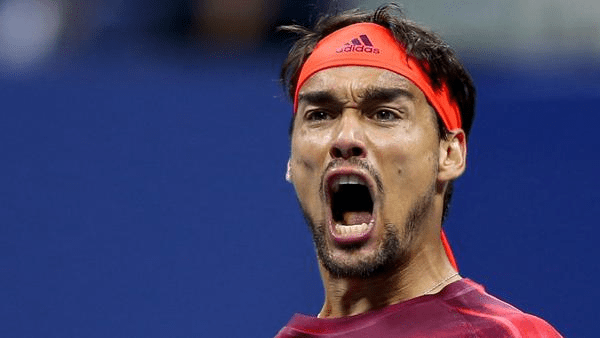
Photo courtesy of http://www.pbs.twimg.com Fabio Fognini’s comeback win over Rafael Nadal in the US Open third round was formidable for many reasons. The Tennis Review gives you five of them.
- Rafael Nadal had never lost from two sets to love up in a slam before.
Before Nadal’s 6-3, 6-4, 4-6, 3-6, 4-6 loss to Fognini, the Spaniard had won all 151 of the Grand Slam matches which he had led two sets to love.
Nadal’s athleticism and baseline strength have helped him compile a career record of 14 slams and a 198-28 slam win-loss record. Consequently, beating Nadal in a best of five at a slam has been considered one of tennis’ most difficult achievements, even on his weakest surfaces.
Once Nadal is in control of a match, he does not let go, and even if he is taken to a fifth, few elite players in the game’s history have been better at digging out a win (Nadal’s five set 2008 Wimbledon final win over Roger Federer being the perfect illustration of that aspect of his game).
Up until Nadal’s five set defeat to Fognini in New York, he had only played one five set match at the US Open against Ivo Heuberger in 2004, a match he won. Other than that match, he has either won convincingly or been beaten in three or four playing a big hitter, a big server, an all courter or a counter puncher, all bad match ups for Nadal on a fast court.
Fognini, though, as a fellow baseliner, is not a bad match up for Nadal on hard courts. In fact, Fognini was 0-6 on hard courts in 2015 before the US Open and until this year he was 0-4 versus Nadal and was 0-2 on hard courts, suffering defeats in 2013 in Beijing and a 2-6, 2-6 defeats in Miami in 2014.
- The match featured 17 breaks of serve
Both players had fairly high first serve percentages – 62 for Fognini, 67 for Nadal- but this match was decided on the return game with Nadal getting 79% of Fognini’s first serve into play and Fognini getting in 70% of Nadal’s first serve.
Nadal won 8/19 break points and Fognini converted 9/16. This is what we would expect of two of the game’s best returners- Nadal is second on the ATP’s return games won stat (33%) and Fognini is ranked 11 (27).
There were seven breaks of serve alone in the ten game fifth set
Under such pressure on the return, this match was won from the baseline and Fognini’s formidable winners count made the difference.
- Fabio Fognini hit 70 winners and 39 winners at the net
Fognini’s shot-making has been his defining feature throughout his career. It has also been his Achilles heel – too often he has lost focus in matches as he has gone for risky shots rather than playing the percentages and waiting for the right moment to show off his range of shots.
Though there were elements of such behaviour in Fognini’s defeat of Nadal at this year’s US Open, the Italian managed to rein himself in and wait for the right moments to unleash his formidable shot-making skills, hitting a total of 70 winners to 57 errors compared to Nadal’s 30-18 ratio.
Fognini did not just stay at the baseline though. While the night time conditions and heavy balls were perfect for his baseline skills, the US Open court is faster than most on the tour, and Nadal is prone to upsets in fast conditions. The 32nd seed made the most of it – Fognini came to the net 54 times and won 39 of the points. Nadal, who as a two time US Open and Wimbledon champion is no stranger to the net, ventured up there 22 times and won 19 of those points.
- Fognini has never been to the US Open fourth round
In Fognini’s previous seven visits to Flushing Meadows, he had compiled a 4-7 record and made the third round once (2012).
Fognini’s Nadal win also puts him into the fourth round for only the second time in his entire career. His previous slam best showing was a quarter-final finish at the 2011 French Open.
Winning his last three matches at this year’s US Open puts Fognini in the black when it comes to his Slam win-loss record. Before this event, he was 28-29. Now he will walk away with a minimum 31-30 and +1 differential.
- 2015 is the first year since 2004 Nadal has not won a slam.
Since Nadal won his first slam in 2005 at Roland Garros, he has won 14 slams in total, and a minimum of one slam a year.
That phenomenal run, and another part of Nadal’s legacy, has come to an end, and at the hands of one of tennis’ great underachievers.
Fognini now has a chance to amend his less than flattering grand slam match win-loss record when he comes up against Feliciano Lopez in the fourth round of this year’s US Open.
Liked this article? Share it and help us get read.
Have something you would like to say about the US Open? Get yourself heard in the comments box below or why not contact us with a guest post idea?
Subscribe to our email list for all the latest US Open 2015 posts straight to your in-box.

Tennis from a fan's point of view
[
[
[
]
]
]

 thetennisreview