-
US Open 2015 Preview The Favorites Roger Federer Novak Djokovic Andy Murray
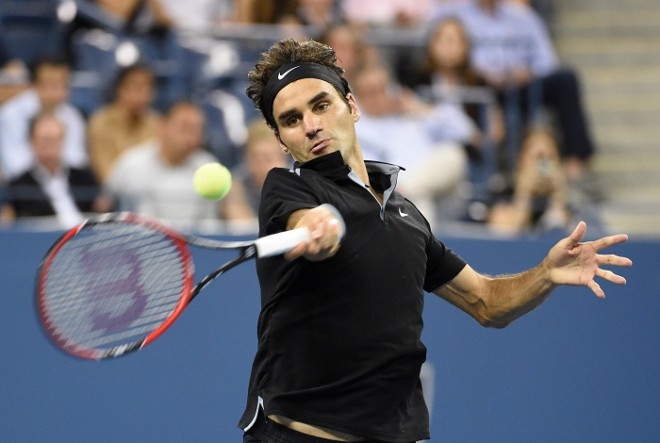
Photo courtesy of IBtimes.co.in Three former champions enter the US open 2015 as the main favorites- Roger Federer, Novak Djokovic and Andy Murray. The Tennis Review looks at their chances and predicts how they will do in the season’s final slam.
Roger Federer
Form coming in: Federer was in great form on his run to the Cincinnati title a week ago. He beat world no.1 and 2 Novak Djokovic and Andy Murray in straight sets and he did not get broken once.
How will the conditions suit him? There have been reports the Open’s Decoturf surface is playing fast this year, faster than last year’s conditions which allowed Cilic to blitz through the draw, which will help Federer’s serve, net game and forehand.
The main problem will be the wind, especially if Federer is having one of his more erratic days when he needs bigger margins for error. His high risk game will need to be toned down a little on those days.
The heavy Wilson balls could be another problem, negating the speed of the courts a little, and playing into the hands of his more defense minded rivals.
Federer will also want to play in the heat of the day and avoid the night matches which will also slow things down, unless he is playing one of the game’s big servers like Karlovic and Isner who are in his quarter, when the night conditions would suit him more.
The Draw: Federer won’t have it easy against Philipp Kohlschreiber if they meet in the third round- the German likes fast courts and took Federer to a final set tiebreaker in the Swiss’ opening round Halle match this year.
Kohlschreiber has also been to the fourth round of the US Open the last three years, beating Isner on the way each time. If Federer beats the German, he could face Isner in the last sixteen. That match should not be a problem for Federer- he does well against big servers and has too much game for Isner in tiebreaks.
In the last eight, Federer is drawn against Tomas Berdych. The Czech beat Federer in 2012 when the Swiss came into the US Open as world No.1 and the Wimbledon champion. But Berdych has been in pretty poor form since Roland Garros and though he will challenge Federer it is hard to see him upsetting him again.
Murray should await in the last four. However Federer has handled Murray perfectly the last few times they have met, most strikingly in the Wimbledon semi-finals this season, and would likely do so again.
Djokovic is Federer’s projected final opponent. But Djokovic, like Federer, has not had too much luck at the US Open since his title run in 2011. Fast hard courts are the Serb’s weakest surface, where he has suffered the majority of his defeats to Federer since 2014, and Federer won’t have a better chance to beat Djokovic for his 18th slam than he will in New York.
In his favour: The surface, his form, the crowd support, the sunny forecast for the first four rounds.
Against: Federer has not won in New York since 2008 and has not been in a final since 2009. Best of five is not the best format for his age and he will have to get his matches won quickly if he is to win.
The balls. They will be heavy, and if it gets humid, his attacking game won’t be as effective against the likes of Murray and Djokovic whose defensive games will be well grooved by the business end of the Open.
The weather for the end of the tournament is quite gloomy. Muggy wet conditions will do Federer no favors at all.
His own game. Federer’s high risk game pays off beautifully on fast hard courts, but he has had a bad day at each slam since winning Wimbledon 2012. In his prime, he was able to get through those bad days and win, but he does not seem to have that ability any longer. One bad day in New York and his campaign could come to a disappointing end.
The Verdict: Everything has to go right for Federer to win- the conditions, the schedule, his own game. If he can get his first five rounds over with quickly he should have enough in the tank to get through his last couple of matches and get that elusive 18th slam.
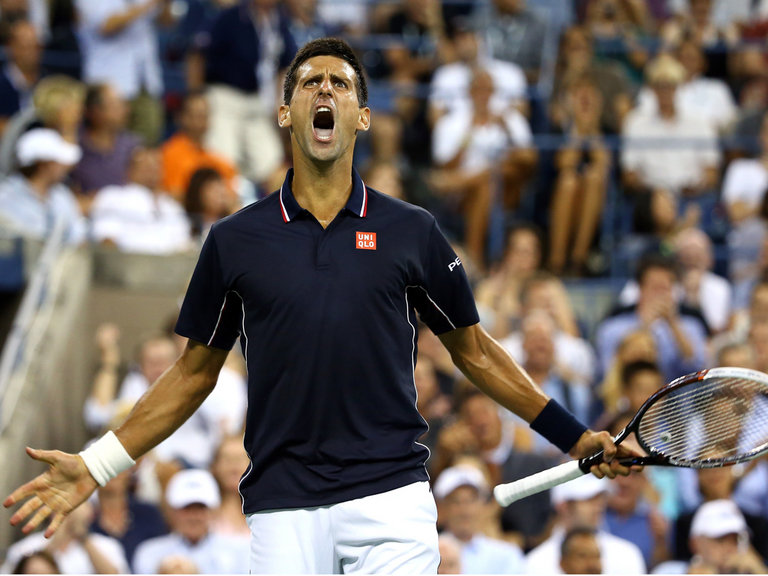
Photo courtesy of sportinglife.com Novak Djokovic
Form coming in: This is typically Djokovic’s weakest part of the year- he has not won a US Open title since 2011 or a North American Summer hard court title since Canada 2012. This year he has struggled again, though his struggles- runner up finishes in Montreal and Cincinnati- would be huge successes for many a player.
Djokovic has looked injured – his elbow was bothering him in Montreal- and out of sorts- digging himself out of holes against Gulbis (Montreal) and Goffin (Cincinnati). Most worryingly, his game has looked ineffective as he was soundly beaten by Murray and Federer in the ATP 1000 finals he made.
How will the conditions suit him?: The fast surface does Djokovic no favors at all – his prime conditions are slow high bouncing surfaces and the US Open is the opposite.
However, the heavy balls help him out a lot (he still has a great record at the Open since his 2011 win- RU, RU, SF) and he will benefit from night matches.
The rain and humidity should help him out, too. As will night matches or matches late in the day. There is little he can do about the wind though- he has suffered in the wind before in New York (US Open final 2012) so expect those matches to be a bit dicey.
The draw: Djokovic, as top seeds generally do, benefitted from a very nice draw. Andreas Seppi awaits in the third round and though the Italian likes fast courts that match should be the night one.
A rematch with Goffin is scheduled for the fourth round. Goffin’s shot-making are a great sight on fast courts, and the Belgian was all over Djokovic in Cincinnati. Expect something similar if these two meet again, but the Belgian has a problem closing out big matches, and Djokovic over five sets in a slam is an altogether different prospect than three sets at an ATP 1000.
In the quarters, Djokovic is scheduled to meet Nadal. That match should pose no problems for the Serbian. The Spaniard is far from his best hard-court form and will do well to even make it that far.
Nishikori should be there to face Djokovic in the semis. That rematch of last year’s semi-final which Nishikori so dramatically won will be one to watch. The Japanese has been in good form this Summer, and if his injuries are healed, he could upset the world No.1 again.
The final hurdle would likely be Federer. Federer on fast courts has proven to be a nightmare for Djokovic- he has lost to him in Dubai twice, in Shanghai, and in Cincinnati since the start of 2014. Djokovic needs to win the first set of that match, at the very least the second, if he stands a chance of winning his second US Open.
In his favour: The heavy balls, his status (a few players will choke at the prospect of beating him) his fitness, his mental toughness.
Against: The fast conditions in the day, big servers (luckily for him the game’s biggest are in the other half of the draw), the surface.
Verdict: Djokovic is the world No.1, a former champ, a three time runner up. He is going to make the semis at least. But he is beatable and will have to be at his very best if he is to take the title. Likely, his struggles in the warm up events will serve him well and he will find a solution to most of the problems the surface and his rivals pose him.
But there might be one problem too big for him to overcome- Federer on a fast court.
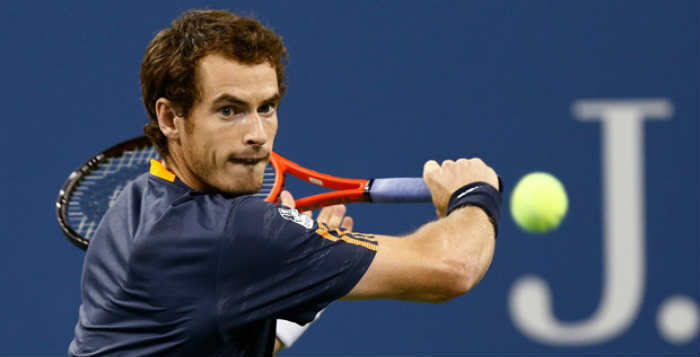
Photo courtesy of Movietvtechgeeks.com Andy Murray
Form coming in: Murray played aggressive fast court tennis to beat Djokovic in Montreal. It was not a decisive victory though and a point here or there could have turned it. But Murray stayed strong, took risks and got his first victory over Djokovic in nine attempts.
In Cincinnati, Murray looked good until the semi-finals where he was dismissed by Federer. There is little Murray could have done though as Federer’s game is tailor made for the Cincinnati surface.
How will the conditions suit him?: In 2012, Murray showed how he could master all conditions to take the title. The Scot has great versatility- he has fantastic touch for the wind, works the heavier balls to his advantage, plays more aggressively in the sun, and can be more defensive at night. There really is little Murray cannot do or adapt to on a tennis court and that has worked out well for him in New York.
Murray also loves fast courts- they are great for his defensive counter punching, and the heavier balls allow him that little bit of extra time to do more with the ball once he has tracked it down.
The Draw: Murray has drawn big serving, big shot-making and big headline making Nick Kyrgios in the first round. That could be a dangerous match in the heat of the day, but will likely be scheduled for the late afternoon or the night match when Murray’s return and tracking abilities will get the better of the 20 year old.
Murray might have to negotiate in-form big serving Kevin Anderson in the last sixteen. If Anderson is having a great serving day, that could be tricky for Murray. But you have to think Murray has too much game overall, will pounce on any chances he gets on the return, and will be able to drag out the match so that Anderson’s serve eventually begins to lapse.
In the quarters, Murray could face Wawrinka. Stan beat Murray in the 2013 quarter finals in convincing fashion, but Murray was struggling with a back injury. Wawrinka has not been in great form- retiring against Kyrgios in Montreal and winning only five games vs Djokovic in Cincinnati- so if Murray plays his best, he should take it.
A last four showdown with Roger Federer is the worst possible draw for Murray. The Scot cannot do anything when Federer is in prime fast court mode. If it is damp and late in the day, he will have a shot, but Federer has been so clinical of late that he won’t give Murray an inch to make this match go the distance, the only way for Murray to get a win.
In Murray’s favour: The conditions, the balls, the surface, his form.
Against: The draw.
Verdict: Murray will make the semis but, unless he can find an extra gear or two, will, once more, be beaten handsomely by Federer.
Commentary by Christian Deverille.
Liked this article? Share it and help us get read.
Have something you would like to say about the US Open? Get yourself heard in the comments box below or why not contact us with a guest post idea?
Subscribe to our email list for all the latest US Open 2015 posts straight to your in-box.
-
Five Players Who Could Cause a Stir This US Open Coric Gulbis Monfils
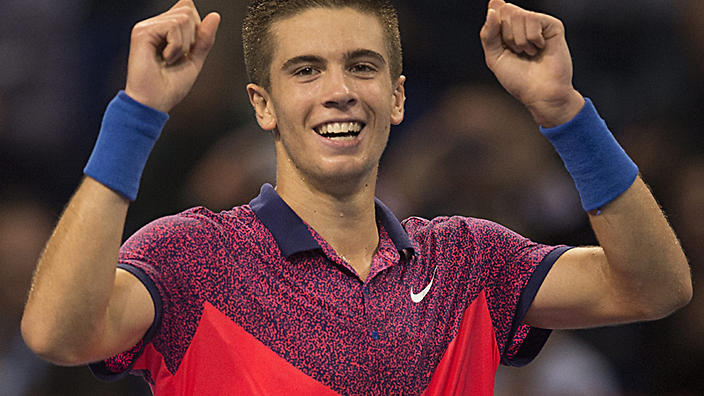
Photo courtesy of sbs.com.au The US Open spotlight may be taken up by the top three favourites but there are still plenty of opportunities for lesser known players to cause a stir in New York. The Tennis Review looks at five players who could steal a few headlines over the next two weeks.
Borna Coric
Coric first hit the headlines back in Basel last season when he defeated Rafael Nadal in the quarter-finals in straight sets.
Tonight he has another chance to make his name known, but on an altogether grander scale -tennis does not get much grander than the US Open night match on Arthur Ashe versus Nadal.
The world’s highest ranked teen (world no. 33, one spot away from being seeded) will take on the struggling eighth seeded Nadal in what will be a baseline battle that could go Coric’s way. Coric’s solid backcourt game and willingness to take on the short ball could be Nadal’s undoing once more if he is out of sorts and his forehand is erratic and short.
If Coric wins, there will be some consolation to Nadal’s fans- the headlines will not focus on their favorite’s slump but instead on the man who would have punctuated it – his win in Basel a bold capital letter, a win in New York an exclamation mark.
Philipp Kohlschreiber
At Halle this year Philipp Kohlschreiber pushed Roger Federer all the way to a final set tiebreaker. The German’s big ball striking pays off on all surfaces, and especially so on decoturf- the world no.29 has had his most consistent slam success there, reaching the fourth round the last three years.
Each of those fourth rounds has been reached with a defeat of John Isner in the third round. This year there would be another surreal moment if they were to meet in the fourth round, which could happen.
But it is a big could. If Kohlschreiber wants to make the fourth round for the fourth year in a row he would have to get past Federer.
The chances of that happening are low, but tennis is sport and anything can happen on the day. If Kohlschreiber, the recent Kitzbuhel champion, can push Federer to the brink on Halle’s grass, then why not Federer in New York? The Swiss is prone to bad days in slams and if it happens to be the day he meets Kohlschreiber the German could spoil what many believe will be Federer’s 18th slam winning party.
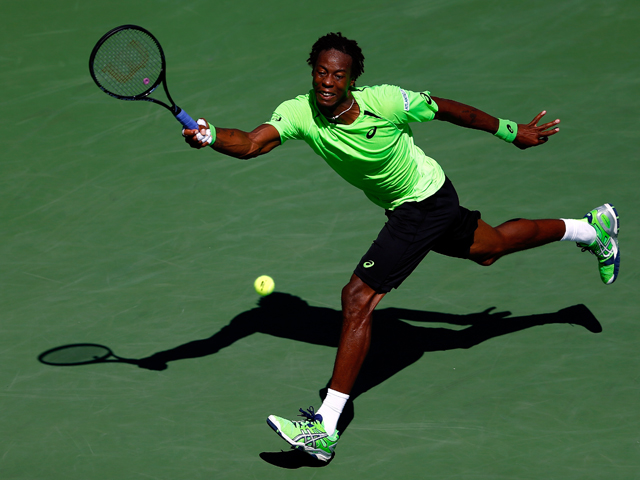
Photo courtesy of sportsmole.co.uk Gael Monfils
Monfils, with the shock upset of Kei Nishikori in his quarter, could find himself the main beneficiary.
The out of form David Ferrer is the seventh seed in that section of the draw and the erratic Jo-Wilfried Tsonga is Monfils’ biggest obstacle in the third round.
Last year the Frenchman nearly caused sensational headlines when he held two match points against Roger Federer at the US Open in the last eight.
This year he could set himself up as the nearly man once more against the out of sorts Djokovic who has a very kind draw to the semis and might be a bit shell-shocked to come up against an intense, hungry Monfils in that round.
Monfils may be 0-11 versus the world no. 1, but he is most likely to cut down that deficit on fast hard courts. He pushed Djokovic to a third set tiebreaker at Toronto last year, and the Frenchman, who plays great fast court tennis, would have a real chance to pull an upset this year.
Most likely, it would be like so many of Monfils’ big chances- a wasted one. But who knows, the odds have to work in his favor one day, and if it happened this year, that would be a headline no one predicted.
David Goffin
A couple of weeks ago, Goffin led Djokovic 3-0 in the third in Cincinnati. The Belgian got there thanks to his shot-making talent on the court. Unfortunately for him, he did not get the win thanks to what goes on between his head.
Goffin, the 14th seed, could get another go at the vulnerable Djokovic in the US Open’s second week. His first round win was a breeze, and if he can conserve energy, go for broke and hold his nerve versus the world No.1 he might be able to settle some unfinished business.
Ernests Gulbis
Gulbis is the player on tour for whom headlines are just waiting to happen. The closest he has been to getting them in print was the French Open 2014. There, he upset Federer and then Berdych to make the last four where he went down in a bad tempered erratic performance to an out of sorts Djokovic.
Gulbis nearly hit the headlines again a few weeks back in Montreal when he held match points against the world no.1. Ranked in the mid 80s and on the back end of a dire slump, Gulbis’ close encounters with glory were a welcome in a game crying out for characters of the likes of the Latvian.
Gulbis has a tough draw at this year’s US Open with the recently inform Aljaz Bedene in his opening round and then a possible second round clash with Gilles Simon. If he could get past those rounds, and Troicki in the third, he could have a very winnable round of 16 match versus Stan Wawrinka.
Things could go either way with Gulbis- a first round defeat or some stunning performances in a deep run. We’re hoping the Latvian’s fortunes go the way of the latter- few tennis sights are more entertaining than an in form Gulbis going for it with his wind up forehand. We’d like to see it sail him into his second slam semi-final.
Liked this article? Share it and help us get read.
Have something you would like to say about the US Open? Get yourself heard in the comments box below or why not contact us with a guest post idea?
Subscribe to our email list for all the latest US Open 2015 posts straight to your in-box.
-
ATP Cincy 5 Reasons Roger Federer Win Vs Djokovic Crucial For US Open
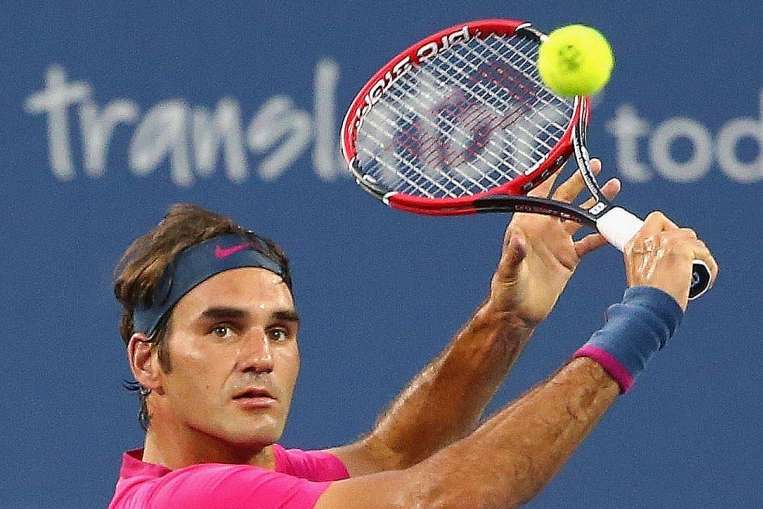
Photo courtesy of straitstimes.com Roger Federer’s 7-6(1), 6-3 victory over top seed Novak Djokovic in the Cincinnati final was a masterclass in serving, risk-taking, attack, and efficiency. The Swiss did not put a foot wrong and the performance, and his run to the title might be the perfect setup for an 18th career slam at the upcoming US Open. The Tennis Review looks back at Federer’s performance and considers its possible positive impact on his chances in New York.
First win Over Djokovic in ATP 1000 Final Since Cincy ‘12
Since Federer committed to attacking tennis and got healthy again at the start of 2014, he has made 6 ATP 1000 finals and won two of them (Cincinnati ’14, Shanghai ’14) beating Simon and Ferrer respectively.
One of the four finals he lost was to Jo-Wilfred Tsonga (Canada ’14) while the other three (Indian Wells ’14, ’15, Rome ’15) defeats were at the hands of one man – Novak Djokovic.
Djokovic not only denied Federer those titles, but also beat him in the two slam finals the Swiss made –Wimbledon ’14, ’15.
That run came to an end last week in Cincinnati, and the impact that long-awaited big final win will have on Federer could be seen if the two meet in the New York final.
Against Djokovic, Federer is now 21-20. That slight lead, and the Cincinnati final win over his long-time rival that tipped the head to head in his favour, will be factors he can draw upon on in mentally difficult moments if the two should contest the final. Factors that could, in a game decided by a few key points, be decisive in determining the winner.
Back to World No.2
Federer’s win gets him back to No. 2 in the ATP rankings and assures him of the No.2 seed at the US Open.
Federer has said he does not care about the rankings and he has to deal with whatever draw he gets, but earning the second seed means he is guaranteed not to face Djokovic until at least the final. With Djokovic being out of sorts, the Serbian might not make it that far, making Federer’s quest for slam no. 18 a little bit easier.
Federer enjoyed the advantage of the second seed at last year’s US Open, and it looked to have worked in his favour when Kei Nishikori defeated Djokovic in the first semi-final. Unfortunately, Federer could not capitalize on that stroke of luck as he went down in straight sets to Marin Cilic.
This year it is hard to see Federer, considering his form, slipping up on the way to the final, and if he does get another huge stroke of luck and anyone other than Djokovic in the final, he won’t hesitate to take advantage (see Roland Garros ’09)
Serve on Song
Federer served better than he ever has against Djokovic in the Cincinnati final and, much like in his semi-final against Murray, he did not face a break point.
Federer’s first serve percentage of 57 might seem low to the 70s he was hitting in earlier rounds, but it is a compliment to the Djokovic return game. When Federer did get it in, his smart strategy meant it was effective – he won 83% of points behind that first delivery. His second service winning percentage was excellent too at 73%.
Not only was his service on form, though, but his return game was, too. Federer won 39% of points on his return, creating 8 break points for himself, and converting one of them. Not a spectacular conversion rate, but no one plays better with his back against the wall than Djokovic, and Federer’s positioning inside the baseline and risk taking on the return paid off handsomely –he out-returned that master of that shot, a most encouraging sign for the US Open.
Attack, attack, attack
Federer is not going to beat Djokovic, or any other baseliner, from the back of the fairly neutral US Open Deco-turf courts. Fortunately for him, his attacking game is well-oiled – Federer won 21 of 29 net points against Djokovic in the Cincy final. Compare that to Djokovic who won 2 of 9.
Back when Federer began to lose his grip at the top of the game, in 2010 when he first lost to Djokovic at the US Open after holding match point, Federer was intimidated from approaching the net by the Serb’s defence and passing shots.
Now Federer, thanks to his, currently sharper forehand, and much improved backhand, which he says Edberg helped him improve and shank less, he has greater consistency and depth. Invaluable assets to keep Djokovic behind the baseline, approach the net and get those points won fast.
Sharpening up those weaknesses won’t win him the Open, but they will make him much tougher to beat, and after how they held up in Cincinnati, the confidence Federer should have in them is immeasurable.
Efficiency is key
If Federer is going to win the US Open he is going to have to be quick about it. He certainly looked to be in a race to get home in time for the twins’ bedtime in Cincinnati.
Federer beat the world no 1 and 2 in straights sets, winning the final in 90 minutes, thrashed Anderson 1 and 1 and won comfortably versus Lopez.
At 34, and competing against men who could run all day, Federer’s nimble feet need to get up to the net as fast as they can.
He certainly proved, for a man who does not have time on his side age-wise, he has time on his side game wise, controlling the length of rallies and his time spent on court.
Playing like that will give Federer plenty of time to recover after best of five sets matches and ensure all his Cincinnati preparation gets put into practise as the 17 time slam winner attempts to win what has proven to be an elusive slam no.18, but which has, in the last three years, never looked more within his reach.
Commentary by Christian Deverille.
Liked this article? Share it and help us get read.
Have something you would like to say? Get yourself heard in the comments box below.
Subscribe to our email list for all the latest posts straight to your in-box.
-
ATP Cincinnati Final Preview Roger Federer Vs Novak Djokovic
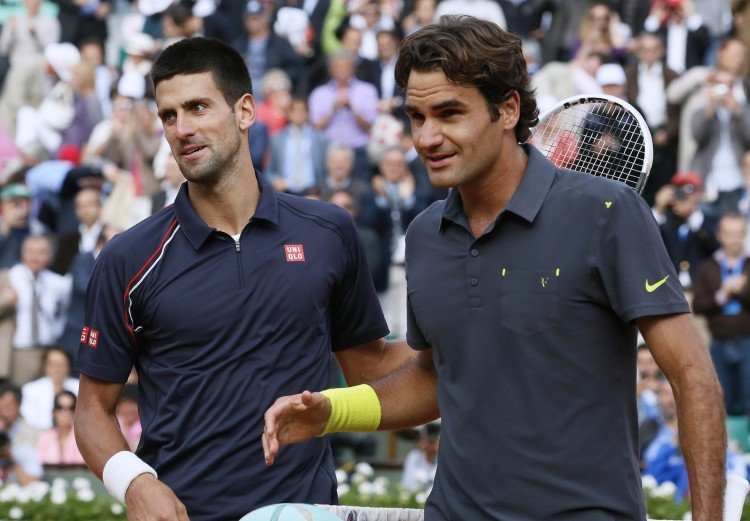
Photo Courtesy of movietvtechgeeks.com Top seed Novak Djokovic and second seed Roger Federer will meet in the 2015 Cincinnati final in what will be a high stakes encounter. For Djokovic, a first Cincinnati title and the only missing title in his ATP 1000 collection is on the line while for Federer the US Open No.2 seeded position is on his racket. The Tennis Review previews the action and predicts the winner.
Head to head:
These two are equal at 20-20. Djokovic has the recent lead though, going 6-4 since Federer’s return to form in 2014.
All 6 of those wins have come in finals (Wimbledon ’14, ’15, Indian Wells ’14, ’15, WTF ’14, Rome ’15) while Federer has one final win (Dubai ’15) and three semi-finals (Dubai ’14 Monte-Carlo ’14, Shanghai ’14).
Those Federer wins are the most telling when it comes to predicting the outcome of this season’s Cincinnati final – three of Federer’s wins have come on the tour’s fastest surfaces in Shanghai and Dubai and the last two were won in straight sets.
History in Cincinnati.
Djokovic’s last loss in an ATP 1000 final before he lost last week in Montreal to Murray came at the hands of Federer in the 2012 final, a match in which he only managed to win six games. Federer also beat Djokovic for the 2009 trophy.
Federer has won six titles in Cincinnati, the most of any player in ATP history, while Djokovic has never managed to win there.
What is at stake:
Djokovic has a chance to become the first man to win all nine ATP 1000 titles (formally known as Masters). He would also get a confidence boost with a win over the tour’s best fast court player before the US Open, a slam he has not win since his sole title in 2011.
Federer could grab back the ATP world No.2 spot and the second seed at the US Open. That would make his run at an 18th slam title a little easier, sparing him from meeting his nemesis Djokovic until the final, and with Djokovic’s struggles recently, the Serbian might not even make it there to face him, which would increase Federer’s chances greatly.
Form coming in:
The world No.1 may be winning more than he is losing this US Open Series, but he is struggling. Djokovic lost his first ATP 1000 final since Cincinnati ’12 in Montreal last week to Murray, a player he had not lost to in eight matches.
This week he was 0-3 down in the third set versus David Goffin in the fourth round, and went three sets versus Alexandr Dolgopolov in the semis.
The world No.1 was impressive against Stan Wawrinka though, losing just five games, but Wawrinka struggles on outdoor fast courts and the win means little for the final.
Federer has been in formidable form. While he may not have been challenged much – he has never lost to Anderson or Lopez and has beaten Murray now in their last five matches- he beat them, particularly Murray who played well, in great style.
Against Murray, Federer’s first serve percentage may have dropped to 55, his first and second serves won were 77% and 79% and he never faced a break point. His ground and net game were also impressive –Federer hit 26 winners to 23 errors and he won 13 points at the net from 18 attempts.
The Favorite:
Officially, it is Djokovic. He has the recent winning head to head versus Federer and is the world No.1.
However, unofficially, it has to be Federer. While the situation was similar back at Wimbledon, it was on the condition Federer won in three or four sets. Once Djokovic led two sets to one it was all over for the Swiss and Djokovic won because he is the better best of five sets player of late, and the grass courts in the second week are a touch slower than the tour’s faster courts.
In Cincinnati, however, the courts are some of the ATP’s fastest. Federer’s forehand is hitting through them, his serve is almost unreturnable at times and too well-placed at others, thus negating Djokovic’s strength, his return, and his aggressive approach on the return and in rallies is paying dividends.
Against Djokovic on fast courts, as we saw in Dubai ’14 and ’15 and Shanghai ’15, that game style, if Federer executes it well, is too much for Djokovic to handle.
Djokovic can win if:
Djokovic has to keep his first and second serve winning percentages high, he has to be aggressive at the baseline, move inside the court, and his defence has to be optimum, too. To win, nothing less than Djokovic’s best will do.
Djokovic also has a chance if Federer is a touch below par as he has been now and then in big finals the past two years. If Federer’s level drops, Djokovic, the master of the waiting game, will pounce and take it to a third set where he will have worked himself into his groove, keeping Federer back as much as possible, and grinding out the win.
The likely winner:
Federer. Even if Djokovic does bring his best to the final, the surface favors Federer, the Swiss is well-rested, motivated and has just too much on the serve, on his shot-making and his net game, which even if the match is decided on tie-breakers, should make the crucial difference in this high stakes and highly-anticipated match.
Commentary by Christian Deverille.
Liked this article? Share it and help us get read.
Have something you would like to say? Get yourself heard in the comments box below.
Subscribe to our email list for all the latest posts straight to your in-box.
-
ATP Cincinnati Semi-Finals Preview Roger Federer Vs Andy Murray
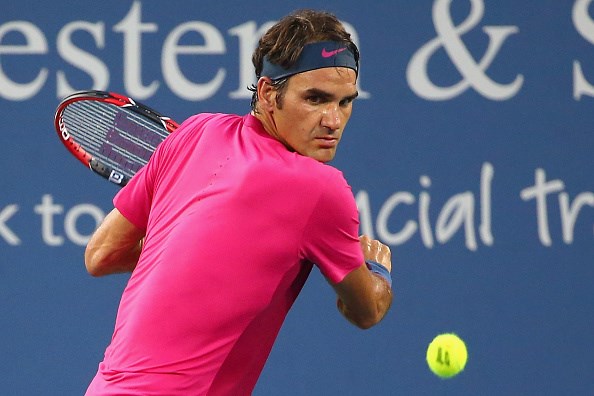
Photo courtesy of http://www.livetennis.com Roger Federer, who was recently knocked off the ATP No.2 spot by long-term rival Andy Murray, has a great chance to get back that spot today. The two will meet in the Cincinnati Semi-finals to potentially decide who is the real No.2 on the tour and who will enter the US Open as the No.2 seed. The Tennis Review previews the action and predicts the winner.
Head to head:
Federer leads the head to head 13-11 and has an 11-9 lead on hard courts. Two of those wins came over Murray at Cincinnati (2014, 2009). Murray has one win over Federer in Cincinnati back in 2006.
Federer has won their last four matches (Australian Open 2014, Cincinnati 2014, WTF 2014, Wimbledon 2015). That Wimbledon win, which Murray came into in top form, was a resounding victory and Federer will enter this contest with the same focus and motivation.
History:
Federer has the record of Most ATP 1000 tournament victories at Cincinnati with six titles (2005, 2006, 2009, 2010, 2012, 2014). Murray has two titles (2008, 2011).
Form coming in:
Federer is playing the better tennis, but he has not been pushed. He thrashed Kevin Anderson 6-1, 6-1, and beat Feliciano Lopez in straights, two players he has a winning head to head over. However, this is not an unusual situation for Federer who, throughout his career, has sailed through early rounds of tournaments and then raised his game when asked to.
Murray has been in tournament winning form, taking last week’s title in Montreal in which he scored as first win over Novak Djokovic in nine matches. However, that run has tired him out and he has struggled this event. He had to save match point to defeat Grigor Dimitrov and come from a set down to beat Richard Gasquet, victories that resulted partly from his skill of hanging in when his opponents are playing their best, and his opponent’s failure to keep their best going until the finish line.
Favorite for the win:
Federer. The Swiss is the better fast court player. He is also more rested and playing well. Most significantly, Federer is serving at around 70% on his first serve which means Murray’s best weapon, the return, is not going to come into play at all.
Another significant factor is that, unlike Dimitrov and Gasquet, if Federer moves ahead quickly in the match, and he is the quicker starter of the two, he is not going to let that lead slip.
Murray could win if:
He gets off to a formidable start by holding serve and breaking Federer early, keeps his first serve percentage high, and plays aggressively from the outset instead of feeling Federer out and gauging his form.
If Murray sneaks the first set, no one has a better record of winning matches this season after taking the first set so the omens would be good.
Murray has a chance if Federer gets nervous. A lot is at stake in this match- the No.2 seed at the US Open, if Federer wins the title he takes it, and a better draw. With Federer aged 34 and trying for one last Slam, the No. 2 seed would definitely give him an extra shot at the title.
Likely winner:
Federer. The chances of him actually getting nervous are slim, and he is more rested, better suited to the surface and in great form.
Commentary by Christian Deverille.
Liked this article? Share it and help us get read.
Have something you would like to say? Get yourself heard in the comments box below.
Subscribe to our email list for all the latest posts straight to your in-box.
-
Roger Federer vs Rafael Nadal at the US Open and the Rivalry Missing Link
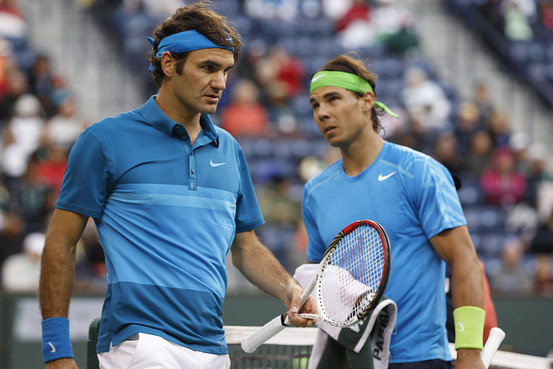
Photo courtesy of http://www.wsj.blog.com The Federer- Nadal rivalry has been one of the most enthralling in tennis, a clash of contrasts that has spanned 11 years and 33 matches on the world’s biggest stages. There is one notable exception though – the US Open. The tennis review looks at how the rivalry might have turned out had they met on the game’s most neutral, surface-wise, and passionate, fans-wise, stages.
The Federer Nadal rivalry is a complex one for fans. For some a lopsided rivalry led by one party 23-10 is anything but a rivalry. For some, the head to head is misleading as no less than 18 of those matches have come on clay, a surface which favours Nadal. (Of the matches played on grass, Federer leads 2-1, on outdoor hard, Nadal leads 5-3, and on indoor hard Federer has a 4-1 advantage.)
Those 33 contests have taken place on every great tennis stage bar one – the US Open. The Flushing Meadows Deco Turf surface may be the most neutral of the Slams, but it should favour Federer’s game style and the head to head might read differently if they had competed there as often as they have at Roland Garros.
Federer dominates, Nadal capitulates
The year Federer won his first US Open, 2004, was the same year he first faced and first suffered defeat to Nadal, in the fourth round of the Sony Open, Miami.
That 6-3, 6-3 loss was a blimp in a 3 slam winning year in which Federer defeated Roddick in the Flushing Meadows final while it was a highlight for Nadal who went slamless and lost in the second round of the US Open.
A battle of the minds
That very year was an indication of the most intriguing aspect of the Federer Nadal rivalry- the mental issue. Back then Nadal was seen, courtesy of his heavy top spin and strong legwork, by many as a future Clay expert and as a player who would struggle on hard courts. Meanwhile Federer was an all court player, particularly strong on hard courts, and in 2004 had won the Australian Open convincingly.
While Miami might be one of the slowest paced hard courts on the ATP tour, Nadal has never won there, and Federer is a three time champion. Nevertheless, Nadal, in his first match against the world no.1, came out and showcased the skills which would transcend his then weaker hard court ability – fearlessness and a tactical astuteness regarding how to employ his natural game, his heavy top spin shots, to defeat a player who would become an all-time great.
In 2005 the two met again in Miami, in a best of five final and though Nadal led two sets to love, Federer’s superior all court skills and experience came to his rescue as he took the match in five.
Nadal would recover well from that defeat, beating Federer in the Roland Garros semi-finals on his way to a first of nine titles there.
Though Roland Garros eluded Federer for the next few years (he lost the 2006-2008 finals to Nadal), other slams did not, and just like the Spaniard did to the Roland Garros trophy, Federer did to the US Open one – he made it his own.
While Federer only had Nadal, Safin, and Nalbandian to challenge and defeat him in big matches on hard courts in this period, (Nadal beat him in Dubai 2006) they could not do it in New York. Nadal, at that time perhaps the strongest world no.2 in tennis history, could not even get to him in the final there.
Nadal’s problem was that he had to contend with a greater depth of potential conquerors on hard than Federer did on Clay. Hard courters knew that to defeat Nadal they had to serve big, take time away from him so he could not get his heavy top spin going, and use the greater speed of the court to end the points early. Youzhny, Murray, Ferrer and del Potro all executed that strategy to perfection, taking care of Nadal at the US Open from 2006-2009, and denying the rivalry of its missing link.
Nadal solves his US Open problem as Federer’s problems in New York begin.
In 2010 Nadal did to the US Open what he had done to Wimbledon in 2008- he wore it down. But not the way he wore down opponents on the court with his defense. Nadal got the better of the US Open by beefing up his serve, and turning his forehand into a weapon which attacked his opponent’s weakness, earning him the short ball and allowing him to move up the court.
Nadal won the title in 2010 not by beating Federer, though, but by beating Novak Djokovic. The Serb would be the one who would now get in the way of Federer-Nadal battles in New York as, two years in a row, 2010 and 2011, he came back from sets and match points down, to defeat Federer in the semis and contest Nadal for the title.
The US Open rivalry still fails to get started
In 2012, Nadal did not enter and Federer was upset by Tomas Berdych in the quarters. The following year, 2013, Federer was upset by Robredo in the last sixteen while Nadal defeated Djokovic for the title. Then in 2014, Nadal withdrew injured, and Federer was defeated by Marin Cilic in the semi-finals.
This year, if the averages play out, could finally be the one in which these two old rivals meet on Arthur Ashe stadium. Federer is likely seeded third, Nadal eighth. If they did meet, it would come at a time in which Federer is playing aggressive tennis and ranked three while Nadal, ranked eighth, is muddling along, at best picking up ATP 500 titles, at worst losing in the second round of slams and the last sixteen of ATP 1000s to players he once dominated as he did this week to Feliciano Lopez in Cincinnati.
Such a match, if you were writing the script, could go either way. Federer could win it on his way to a record 18th Slam, ending the Greatest of all Time debate once and for all, a defeat of Nadal along the way the perfect touch. Or Nadal could win, reigniting his career, and spurring him onto a fifteenth slam and leaving him in contention of the Greatest ever status. In the script, neither man can lose in the next round. In reality, the let-down that would come after such an emotional win might make an exit in the next round inevitable. So, for the sake of the perfect story, we need this match to happen in the final.
If they were to meet this US Open, considering Federer’s commitment to aggressive tennis and Nadal’s short forehand and serving issues, Federer should win, and easily, too. But in a match up decided by what goes on in the mind more than any other factor, Federer could revert to his normal game plan versus Nadal- starting out all guns blazing inside the court until retreating beyond the baseline and into his shell, broken down by faster wheels, winning passing shots, and a will that knows no such word as won’t.
Would Federer have been able to overcome those strengths had they met at the US Open as often as at Roland Garros over the last 10 years? Would he have been more confident and able to start and finish their US Open matches up at the net? The surface may be neutral, but would favour him more than any of the other slams and you have to hypothesise he would have won three of every four matches they would have played at the US Open.
A closer head to head would have cut Federer’s head to head deficit, made Federer’s claim to the status of goat even stronger, and given a convincing rebuttal to the criticism ‘how can you be the greatest ever when you were not the greatest of your generation?’
Unfortunately that US Open rivalry never happened, much like their projected Cincinnati clash this week never took place. There is still hope though that in two weeks we might get a glimpse of what could have been, and while it will tell us little, it will be fun to watch and discuss the missing link in the greatest tennis rivalry of the last twelve years. A rivalry which poses lots of questions about both its participants and answers them with as much as what did happen- the French Open head to head, the Slam final epics-as what, like their US Open rivalry, never took place at all.
Commentary by Christian Deverille.
Recent Posts About Roger Federer :
Can Roger Federer Win the US Open?
Who Can Stop Roger Federer in Cincinnati?
Liked this article? Share it and help us get read.
Have something you would like to say? Get yourself heard in the comments box below.
Subscribe to our email list for all the latest posts straight to your in-box.
-
Roger Federer Cincinnati 2015 Who Can Stop Him?
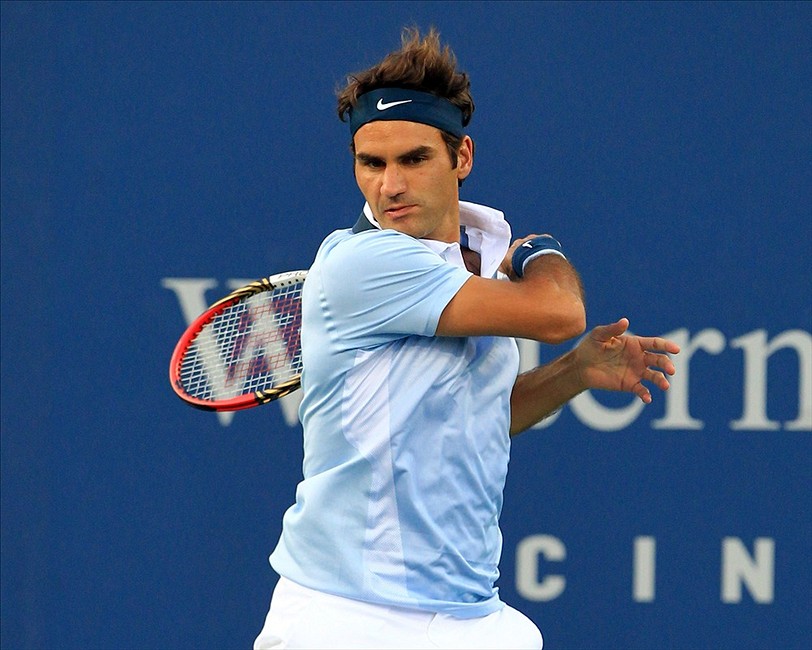
Photo courtesy of livetennisguide.com Roger Federer will be aiming to break his own record of most ATP 1000 titles won at the same event when he goes for his Seventh Cincinnati Western and Southern Open title this week. The Tennis Review looks at which of his rivals is most likely to stop him.
Rafael Nadal
Federer has not met his nemesis since the Australian Open 2014 semi- finals when Nadal grabbed his ninth hard court win over Federer (leads the Series 9-6).
One of those wins came in Cincinnati in 2013. Back then Nadal was on his way back to world no.1 and in perhaps his greatest ever hard court form while Federer was falling down the rankings, suffering with a back injury and getting used to his new racket.
Now the roles are somewhat reversed. Nadal is the one sliding down the rankings and that forehand that was so strong back in Summer 2013 is now falling too short and the serve that was so effective is much less so. Meanwhile Federer, who says he is playing better than he was a decade ago, is used to that now year-old racket and using it to great effect, executing an aggressive game that last year helped him lift a record sixth Cincinnati title and challenge for the No.1 ranking.
Should this contest happen this year, Federer would be the favourite, but Nadal has shown he gets in Federer’s head better than anyone, and if he can raise his game, and you have to think he is going to at some point, he could get under Federer’s skin and grab a tenth hard court win and a 22nd overall.
Marin Cilic
When Novak Djokovic lost in last year’s US Open semi-finals to Kei Nishikori, Federer’s run to an 18th Slam title looked as assured as things get in tennis. The recently returned to the tour Marin Cilic, who he led 5-0 in their head to head, was waiting for him in the semi-final, and the slam final debutante Kei Nishikori was standing between him and the trophy.
Cilic, though, had other ideas about Federer’s 18th Slam, surprising many a pundit by beating Federer in straight sets on his way to his first Major.
The two could meet again in the last four at the Western and Southern Open this week. This time Cilic is once again on a comeback trail, not from a ban from the tour however, but from a shoulder injury which kept him out of the Australian Open and saw him go without three consecutive match wins from last year’s WTF until he reached the French Open fourth round this Summer. A month later, he went on to reach the quarter-finals of Wimbledon.
Cilic’s much improved serve, huge ground-strokes and underrated defence will pose a big challenge to Federer once again in Cincinnati, but Federer will benefit from being the much better best-of-three player. (Cilic has never made an ATP 1000 semi final yet has made four Slam quarter-finals, a semi-final and won a title).
Andy Murray
Back at world No.2, and last week’s Canadian Open winner, beating Novak Djokovic for the first time in nine matches, Murray is a force to be reckoned with on fast hard courts.
Murray led Federer in their head to head before his surgery, but now trails it 11-13 overall and 10-11 on hard courts including a defeat in the quarter-finals of last year’s Cincinnati Open.
Murray earned his first win over Federer in the Swiss’ peak years at Cincinnati in 2006. The Scot’s defence means he can chase down Federer’s flatter shots and his counter punching skills mean he can send them back with too much interest for Federer to do much with. Those strengths could trouble Federer this week, as could Murray’s more aggressive approach on faster courts.
With Murray back at his medium fast court peak, and his recent Montreal run means he is also match fit, this potential contest would decide not only who will be the US Open Second Seed but also consign one of them to second best on fast courts right now.
Novak Djokovic
Before losing to Murray in last week’s Montréal final, the last time Djokovic lost an ATP 1000 final was to Roger Federer in Cincinnati in 2012, losing the match 6-0, 7-6.
Since then Djokovic has beaten Federer in three ATP finals (Indian Wells’14, ’15, Rome ’15) and two slam finals (Wimbledon ’14, ’15), but Federer has beaten the world no.1 in the matches they have played on the tour fastest surfaces (Shanghai ’14, Dubai ’15).
If the two meet in the final, we have to presume Djokovic is not suffering with an arm injury- it is hard to see even him being superhuman enough to reach two ATP 1000 finals in a row injured. However, another final appearance will not be a sign that his form has necessarily improved from Montréal where he managed to, despite patchy play, make the final, an achievement we can put down to both his fighting qualities and his opponent’s inabilities to exploit his poor form.
If Djokovic’s form has improved, he will be hard to beat in the final and will be motivated by three things – the fact he has not won a North American hard court event since Canada 2012, Cincinnati is the one ATP 1000 trophy missing from his cabinet, and he wants to go into the US Open with a confidence boosting warm up title.
Federer might be too much for Djokovic in the final though. The Swiss will likely have had to negotiate a tough draw and will be sharp. He will need to be even sharper to take a record seventh title against Djokovic, but few serves, shots and wills are sharper than Federer’s.
Order of probability to defeat Federer.
Murray. He is the worst match up right now for Federer on the surface and is in great form. If he gets to Federer in the semis then he might be able to take advantage of Federer’s lack of match play.
Djokovic. The world no.1 has a dominant head to head over the Swiss in recent finals (6-1 since 2013) and even though he would be playing on his worst surface, it is still a surface he has beaten Federer on in tight matches at the US Open, and if he could push Federer to three sets, his chances of winning improve greatly.
Cilic: If he dials into his A game again then Federer will have to serve at his very best.
Nadal: Federer’s nemesis may be well below his peak but this match up, on anything other than indoor courts, is about what goes on in the head rather than what form they are in leading into the match. Federer, though, is much more aggressive than he was the last time these two played and it will be interesting to see how Nadal deals with a Federer committed to all out aggression over a whole match and not just until he gets put off by winning passing shots flying past him.
Ultimately, Federer is going to be tough to beat and if he keeps his first serve at above 65% and executes his attacking strategy to its full potential he has to be the favorite to win a Seventh Cincinnati title.
Commentary by Christian Deverille.
Liked this article? Share it and help us get read.
Have something you would like to say? Get yourself heard in the comments box below.
Subscribe to our email list for all the latest posts straight to your in-box.
-
ATP Montréal Final Review Five Things Andy Murray Did Right Vs Djokovic
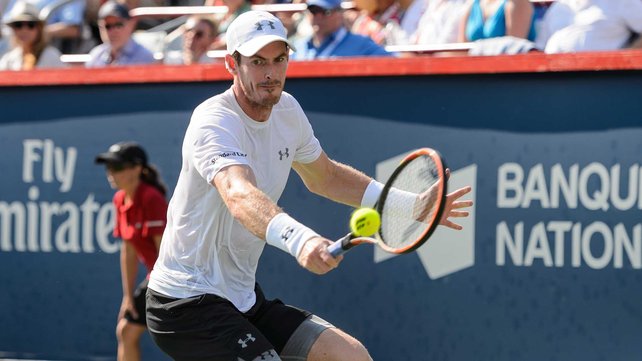
Photo Courtesy of http://www.rte.ie Andy Murray marked his return to the ATP no.2 spot by beating world no.1 Novak Djokovic 6-4, 4-6, 6-3 in the ATP 1000 Montreal final in nearly three hours. The Tennis Review looks at what Murray did right to put an end to a run of eight straight defeats to his long-time rival.
He showed Courage.
In big matches, Murray has been criticized for not having the courage in big moments. He can’t be faulted in this final though.
The Scot was under huge pressure to get a first win over Djokovic after suffering eight defeats in a row. Even when Murray led 3-1 in the third set, there was always the danger the world no.1 would pull off one of his famous comebacks as he pushed Murray all the way in an epic game closing in on 20 minutes.
Murray did not shrink away from the challenge though, and as a result of his continuing to take risks on his serve and ground game, he managed to pull off his biggest victory since winning the Wimbledon ’13 trophy.
Executed an aggressive game strategy.
Murray now leads Djokovic 5-1 in the US Open Series. The Scot is, at heart, a defensive counterpuncher who tracks down balls, feeds off his opponent’s pace and takes time away from his opponent.
That style works better on fast courts than Djokovic’s aggressive baseline game, which is more suited to medium slow courts found in Melbourne, Miami and Indian Wells.
Murray did not rely on his defensive counterpunching though. Murray also employed, and crucially sustained, creating opportunities and coming forward when they arose, thus saving himself a lot of energy, and not allowing Djokoivic to play his favorite game- dictating from the baseline.
Got off to a great start in the the third.
Murray lost the last set in the Melbourne final 6-0, and the third set in Miami and the fifth set in Paris 6-1. If he had let Djokoivic grab the momentum after winning the second set, the score line of this match might have been similar.
Kept his First Serve Percentage high
Instead of going away in the third set, Murray held serve to open it, and then got the break. But being a break up against Djokovic, the best returner in the game, in the final set is not enough of a cushion, as Murray found out in the first set when he let a break lead slip. This time though Murray held, and he held again at 3-1 with Djokovic threatening to break, and, over the course of the third set, saved nine break points against his serve.
For a player much criticised for having a weak second serve, keeping his first serve percentage high was crucial in the third set and Murray performed in that category better than his supporters could have hoped under such intense pressure with a first serve percentage of 70% compared to Djokovic’s 55.
Kept his cool.
The performance was in no way a shining example of keeping cool under pressure – there was the usual barking at himself and his box – but things never boiled over into the kind of self-destructive behavior that has contributed to big defeats throughout his career.
There were times when it could have, such as when the umpire gave him a code violation in the third set for hitting a camera with his racket. Murray questioned it, laughed it off, and then answered with a service winner. That kind of reaction to things not going his way kept him positive and was a crucial factor, if not the most crucial, in getting the most positive of results.
Commentary by Christian Deverille.
Liked this article? Share it and help us get read.
Have something you would like to say? Get yourself heard in the comments box below.
Subscribe to our email list for all the latest posts straight to your in-box.
-
Who is Thanasi Kokkinakis?
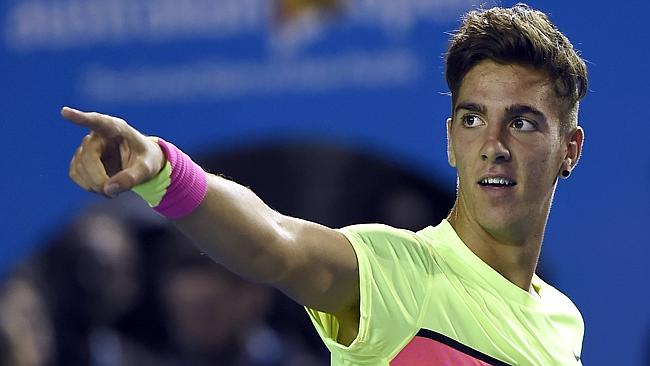
Photo Courtesy of News.com.au Thanasi Kokkinakis qualified for the Cincinnati main draw today where he will face Fabio Fognini. The 19 year old has been making himself known on the ATP Tour this season, beating Ernests Gulbis at the Australian Open, and reaching the fourth round of Indian Wells. The Tennis Review profiles this exciting young up and coming player.
Junior Career
Kokkinakis was a runner up at the 2013 Australian Open (lost to Kyrgios) and U.S Open juniors (lost to Coric).
Playing style
Kokkinakis has a big serve- he is 6ft6. That gives him a lot of free points and a lot of short balls to come in on – in 2015, he has averaged a 60 % first serve percentage and wins 74% of points behind that delivery.
He is a powerful player, with potential with big ground-strokes, a double handed backhand, and his forehand is a weapon, with a lot of range.
Kokkinakis is an aggressive player and likes to step inside the court and take control of points.
Early ATP Tour days
Kokkinakis played his first ATP event in 2014 at Brisbane, qualifying for the main draw before going down to Llyeton Hewitt in the opening round.
A week later, ranked 570, he beat 73rd ranked Igor Sisling in the first round of his home slam The Australian open before Rafael Nadal defeated him in straight sets.
After losing in the first round of the Open 13 ATP 250 event as a wildcard, Kokkinakis focused more on getting his ranking up by competing on the Futures and Challenger Circuits, reaching the semi-finals of Heillbron II and winning the Canada F5.
Kokkinakis made a mark on the ATP Pro tour when, ranked 199, he beat 59th ranked Marinko Matosevic in the final round of qualifying for the ATP 1000 Canadian Open before falling to 21st ranked Kevin Anderson in three sets.
In Shanghai 2014 he qualified for his second ATP 1000 tournament. He took the first set against 21st ranked Feliciano Lopez in a tiebreaker before losing the match in three.
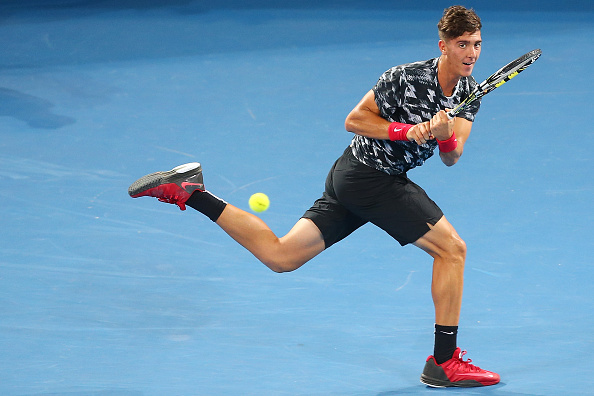
Photo courtesy of rippa.com 2015 Breakthough Top 100 and Roland Garros Round Three
Kokkinakis got 2015 off to a great start when he made the fourth round of the Sydney Open, beating 25th ranked Julien Benneteau before losing to compatriot Barnard Tomic.
Kokkinakis would then hit the headlines when he upset struggling 13th seed Ernests Gulbis in the Australian Open first round in a five set epic.
The season has gone from strength to strength for Kokkinakis as he qualified for four tournament in a row (Memphis, Delray Beach, Acapulco and Indian Wells). In Indian Wells, he beat 48th ranked veteran Juan Monaco in a three set thriller.
The Clay season was a successful one as he qualified for Istanbul and Madrid and though he went out in the first round both times, he broke into the ATP top 100 to world No.98.
He then suffered some bad luck, missing his flight from Madrid to Rome. In order to not miss out on match practise before the French Open, Kokkinakis entered qualifying for a Challenger in Bordeaux, made the main draw and then won the event.
The 19 year old then went on to reach his first round of 32 in a Slam, at Roland Garros, where he pushed Novak Djokovic to three 6-4 sets.
Since then, Kokkinakis has gone 1-2 on the tour, beating Chardy at the AEGON classic but going out in the first round of Wimbledon. He also entered qualifying for Montreal but was beaten in the first round.
Controversy.
Kokkinakis has not been out of the headlines in 2015, and recently for, unfortunately, all the wrong reasons. His name came up in Kyrgios’ comments to Wawrinka about the Swiss’ rumoured girlfriend Donna Vekic, and then, a few days later, he was involved in an almost physical dispute with Ryan Harrison in the first round of qualifying for Cincinnati.
Future prospects:
Kokkinakis is one of four teens in the top 100 (Zverev, Coric, Chung) and is likely to feature in the top 3 in the next five or six years.
The Slams he will most likely succeed at will be the slower courts of Melbourne and Paris where his baseline skills and aggression can prosper the most.
Check out other articles in our Who is Series:
Commentary by Christian Deverille.
Liked this article? Share it and help us get read.
Have something you would like to say? Get yourself heard in the comments box below.
Subscribe to our email list for all the latest posts straight to your in-box.
-
ATP 1000 Montreal Final Preview Novak Djokovic Vs Andy Murray
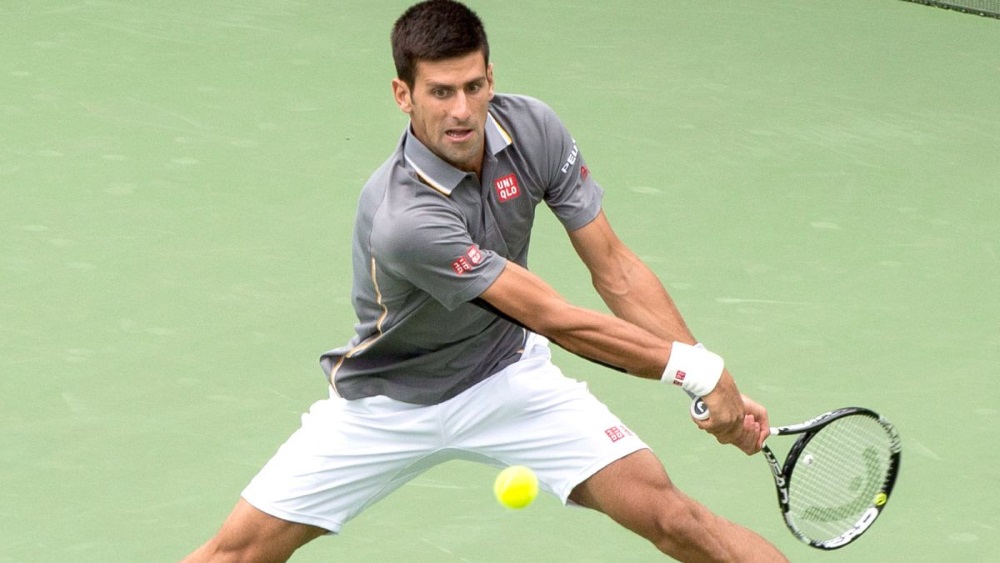
Photo Courtesy of http://www.sofascore.com World No.1 Novak Djokovic takes on soon to be world No.2 Andy Murray in the final of the ATP 1000 Canadian Open. The Tennis Review previews the action and predicts the winner.
Head to head: Djokovic leads 19-8 and has won their last eight matches including this season’s Australian Open final and the Miami 1000 final.
Form coming in: Djokovic has been the most tested of the two- he had to save two match points on his way to defeating Ernests Gulbis in 3 sets in the quarter-finals.
Djokovic was a little sloppy in that match, and allowed himself to be dictated to by the Latvian, and was helped a little by his erratic opponent’s implosion, and his own high margin for error and depth of shot, asking the Latvian to produce his very best under extreme pressure.
Other than that test, Djokovic has had a straightforward road to the title, dropping just three games to Jack Sock and beating first time ATP 1000 semi-finalist Jeremy Chardy 6-4, 6-4 in the Semis.
Murray has not been tested at all. The Scot had an easy quarter-final win over Tsonga, whom he now leads 12-2 in their head to head, and beat Kei Nishikori for the loss of three games. Nishikori was injured though, and there is little to tell from those matches other than Murray is playing his usual brand of solid tennis that has helped him climb back to No.2 in the world.
The Favorite: Djokovic has to be the strong favorite. The world No.1 is so much better than the rest of the tour and he is used to not being pushed in the run up to the business end of an event and then finding his best tennis in the finals.
Most crucially, against Murray, he has a huge mental advantage. A few times this year, in Melbourne, Miami and Paris, Murray has taken Djokovic to the brink, winning a set or two, only for Djokovic’s superior fitness, more aggressive baseline game, and winner’s mentality to wipe the floor with him in the last set or two of the match, memories Murray will need to wipe out if he is to stand a chance in what will be their 28th contest.
Murray could win if: Djokovic is not focused, which he has not been in the recent past in the North American hard court swing (he has not won a title since Canada 2012 in that part of the season), but there have been few examples of a lack of focus this year other than against Gulbis.
if Murray is to get his tenth win over Djokovic, he has to keep his first serve percentage high and not let Djokovic attack his second serve. He served at 65 percent versus Tsonga and saved three break points, and against Nishikori, a better returner than Tsonga, he served at 61 and dropped serve twice. Against Djokovic, that serve needs to stay above 65 percent.
Murray can only beat a decent playing Djokovic if he is aggressive, is hitting his forehand well, and can play like he did from the US Open 2012- Wimbledon 2013, his peak period, which he bookended with wins over Djokovic in slam finals.
Decisive factor: The mind. No matter how close Murray gets to victory, Djokovic will not feel close to defeat. Few understand better than Djokovic that it only takes one point to turn a match around, and he will be waiting, should Murray have a good start, for that point to come.
Winner: Djokovic, two sets, one close set, one easy set.
Commentary by Christian Deverille.
Liked this article? Share it and help us get read.
Have something you would like to say? Get yourself heard in the comments box below.
Subscribe to our email list for all the latest posts straight to your in-box.

Tennis from a fan's point of view
[
[
[
]
]
]
 thetennisreview