-
U.S Open Series 2015 Five Faces to Watch Dimitrov Kokkinakis Sock
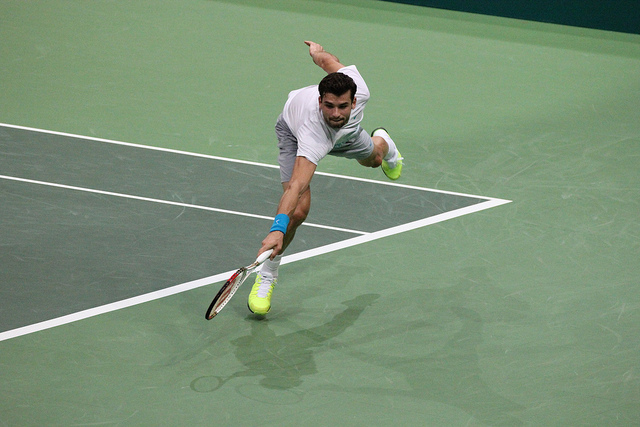
CC courtesy of Marianne Bevis at flickr The U.S Open Series starts Monday and eight weeks of exciting hard court tennis lies ahead. The Tennis Review picks five faces to watch for the 2015 North American Summer Swing.
Grigor Dimitrov
With the recent split ups from coach Roger Rasheed and from girlfriend Maria Sharapova, Dimitrov may find being single and fancy free just the reboot he needs for his tennis singles career.
Critics accused both Rasheed and Sharapova of getting in the way of the young talent’s career. Rasheed was said to have focused too much on Dimitrov’s fitness and encouraged him to be too passive and defensive rather than on developing his all court skills and natural aggression.
Meanwhile, Sharapova was thought to have distracted the ATP star, who already received enough attention in his own right, and was now not only the ATP’s poster boy but was also caught up in the romance of the tennis world.
Dimitrov has himself said he believes this Summer will be the start of new things, and the recent sighting of him hitting with Ivan Lendl suggests he has been getting some great advice.
The U.S Open Series would be a great stage for Dimitrov to get his act together again. The world no.16 is the 2008 U.S Open boys champion and has had some success as a pro in the North American Summer, taking Nadal to three sets in the Cincinnati fourth round in ‘ 13 and was a semi-finalist at last year’s Canadian Open.
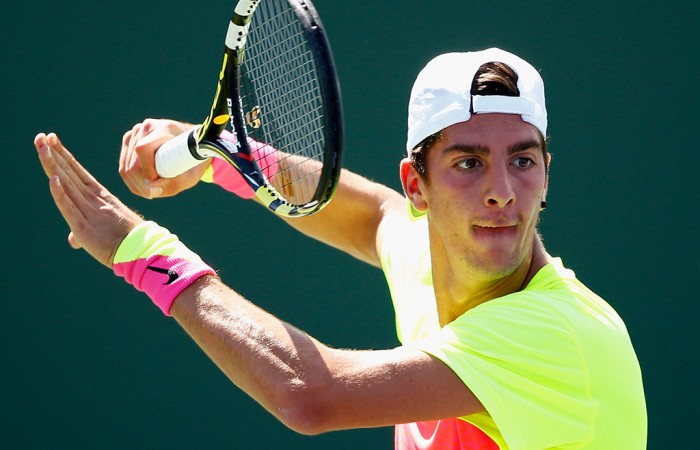
Thanasi Kokkinakis
Kokkinakis has been quiet since winning a Challenger mid-May on Clay, but expect him to make some noise this Summer –he has had his best results on hard courts and has shown himself to be quite the big match player, beating Gulbis at the Australian Open and reaching the last sixteen of Indian Wells after beating veterans Garcia Lopez and Monaco in three sets back to back.
The 18 year old qualified for the Canadian Open main draw last year, losing in the first round to Anderson, and he went as far as the U.S Open qualifying second round.
With his direct entry into the U.S Open main draw this year, we are sure to see a lot more of the world no.72 in New York, and with the right draw, Kokkinakis could make a few headlines.
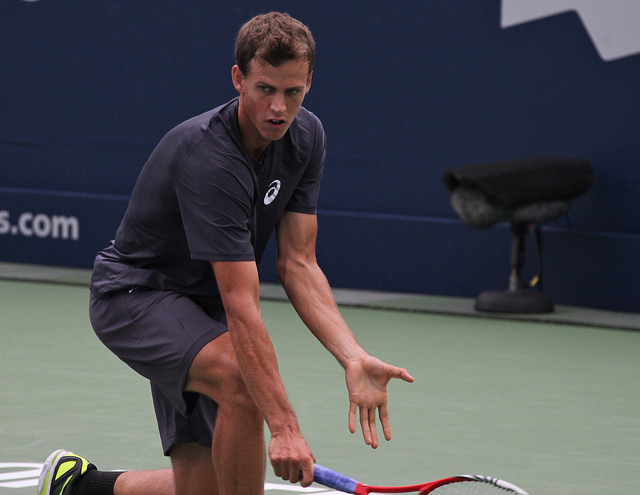
CC courtesy of Marianna Bevis Vasek Pospisil
Pospisil made the Washington final last season with his big serve and aggressive game, and after his run to the Wimbledon quarters this year it is easy to see him repeating that success n the U.S Open Series.
Pospisil will have plenty of support in his home tournament The Canadian Open and currently ranked 30 he would likely be seeded for the U.S Open where he will aim to better his career best second round finish in 2011.
Frances Tiafoe
17 year old American Tiafoe’s debut onto the ATP tour happened at last year’s Citi Open. His debut was greeted with much fanfare and for good reason – Tiafoe is the youngest ever winner of the Orange Bowl and is one of the most promising youngsters on the tour.
Since that first round defeat to Evan Donskoy, Tiafoe has played in the main draws of the U.S Open ’14 and Roland Garros ’15, turned pro and reached 284 on the ATP rankings.
While little is expected in this early stage of his career, American tennis fans will be keeping an eye on the progress of their current biggest prospect.
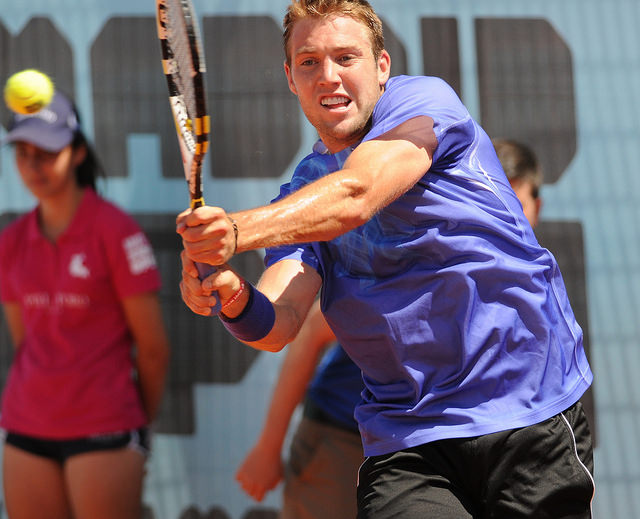
CC courtesy of Tatiana @ flickr.com Jack Sock
Sock was the 2010 U.S Open junior champ and after five years on the pro tour, he seems to be finally fulfilling his junior promise, winning his first ATP title, on Clay in Houston, and earning a seeded position at this year’s Wimbledon for the first time.
Sock has had some success on American hard courts, his big serve and aggressive game paying off for him in the heat on the hard surfaces- he has been to the U.S Open third round twice and reached the quarters of the 2012 Atlanta Open.
If he can have a good run this U.S Open Series and guarantee seeding for the U.S Open, Sock’s big game, and the huge support behind him, would make him a dangerous opponent for a top seed and a face to watch this U.S Open Series.
Commentary by Christian Deverille
Follow the U.S Open Series with The Tennis Review.
Like this post? Share it and help us get read 🙂
-
Wimbledon 2015 Final Review Novak Djokovic Defeats Roger Federer
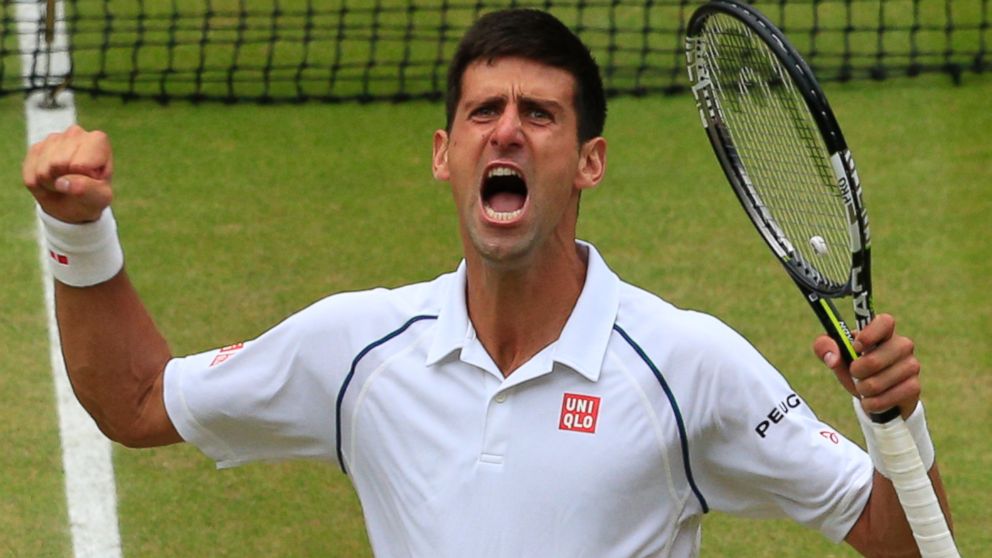
Photo courtesy of a.abcnews.com Novak Djokovic, the top seed and defending champion, may have been the bookies favorite going into the 2015 Wimbledon final, but he was not so in the eyes of many fans and pundits. The Federer grass court game had promised much in the semi-finals but the Swiss legend could not deliver, and, when he threatened to Djokovic was not getting to let him either. The top seed’s 7-6(1), 6-7(10), 6-4, 6-3 victory will not go down as one of the most popular wins, but it will be well up there alongside some of the most solid and clutch Wimbledon final displays in history.
When Roger Federer broke Novak Djokovic for 4-2 in the first set of the 2015 Wimbledon final, his legion of fans celebrated. The high risk return game the Swiss had executed so impressively beating Andy Murray in the semi-final was, once again, paying off, and the prospect of an 18th Slam for the Swiss looked to be a few sets away.
Andy Murray, though, is no Novak Djokovic. They may have a few things in common, but the Serb is a far more dangerous rival to Federer at Slams, and especially in finals. The defending champion also has a much better return game, arguably the best on tour. He would demonstrate just how good that return game was in the next game as he did something only Gilles Simon had managed to do all fortnight- break the Federer serve. He did not have to fight for it either. Aggressive on his ground strokes, and smart on break point with a high, heavy passing shot off the backhand that forced a Federer error at the net break point down, the Serbian broke to 30.
That immediate break back left Federer fans with little time to enjoy the prospect of victory, changing the mood of a match that looked to be another vintage Federer display at SW19 into something else very familiar of late- Djokovic beating Federer in a final.
The Serbian had won 4 of their last five finals, and all the big ones- Wimbledon ’14, Indian Wells ’14 and ’15, and Rome ’15. If Federer was going to change that trend, he needed a similar serving display to the one he had put in against Murray, but the way he surrendered that service game to Djokovic so quickly, suggested he would not be able to repeat his semi-final display, and also, just as fatally, that Djokovic would not let him.
That winning record in recent finals looked to continue for Djokovic as his depth of shot, defense and carefully constructed attack, and variety of length and angles dismantled Federer in the first set tie-break 7-1, the Swiss feeling the pressure of the Djokovic return as he double faulted to surrender the set, and the Serb led by a set to love.
Losing the first set was, in many people’s eyes, an almighty nail in the Swiss’ coffin, though it was only the first one and the lid was still loose enough for him to break out could he gather all his strength. The consensus before the match was that Federer needed to get the job done quickly, and falling a set down to Djokovic meant if Federer were to win, it was going to be, like last year, another long afternoon, the kind of afternoons that turn into early evening. The kind of afternoons Djokovic likes.
There was still hope that this year’s result might be different, though. Three of those four Djokovic final wins had gone the distance, with Djokovic getting nervous and failing to take a grip on the match, and Federer had had his chances. That script played out in this final, too, as Djokovic squandered set points in set two, and Federer took the second set tiebreaker 12-10 to level the match at a set all.
But while Djokovic is prone to nerves on the big occasion, he is also skilled at getting back on track, and he was threatening the Federer serve from the first game of the third set, finally breaking Federer a service game later to get an early lead. The Serbian, keeping his error count low and his shots deep, held all the way to 5-4 and then, with the pressure on again, could not have been more solid serving out for a two sets to one lead. The world No.1 did not miss a first serve.
In the fourth set, Djokovic could not have been more clinical as he, as confident in his tools as ever, took the Federer game apart all the way to 5-3 where, returning the Federer serve, he earned championship point with a backhand winner. After his roar had died down, he sprung to life again on his return game, working his way to the middle of the court with two backhands and then whipping a short ball away with the forehand for a winner, converting his first championship point with another roar that more than made up for the muted response from the mostly pro-Federer crowd, many still in their seats as the two players shook hands at the net.
The crowd may not have wanted to believe the 7-6(1), 6-7(10), 6-4, 6-3 score in Djokovic’s favor, but they slowly stood up and applauded a man whose game may not be as smooth, as beautiful or as awe-inspiring as the Swiss’, but whose mastery of the modern game, the unrivalled transition from defense to attack that may make him the most successful all surface player of all time, has its own beauty, one that grows on you much like the grass Djokovic ate post-victory grows on the Center Court lawn he is making his own.
Commentary by Christian Deverill
Like this article? Share it and help us get read 🙂
-
Wimbledon Final Preview Roger Federer Vs Novak Djokovic
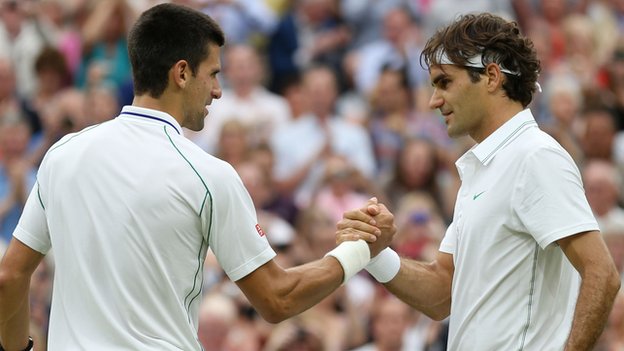
Photo courtesy of bbc.co.uk The Wimbledon 2015 final will be contested between top seed Novak Djokovic and second seed Roger Federer. Both men have a lot to win, their eighth and third Wimbledon titles respectively, and a lot to lose, too. The Tennis Review previews the action and predicts the winner.
What’s at stake? Roger Federer, at 33 years old, and under a month shy of turning 34, will not have many more chances to add to his tally of 17 slams. This is his tenth Wimbledon final, a record for most finals reached at any slam, and he already has seven titles. Those kind of numbers already have many arguing he is the Greatest ever, an eighth title at Wimbledon would make that argument an open and shut case.
Djokovic has an 8-8 record in Slam finals, and he has only one multi slam year on his resume, 2011. Since then, he has managed one slam a year and lost two finals in 2012, two in 2013, and one in 2014. That kind of record has something about the Hingis years about it. Djokovic, like Hingis was from 1998-2001, is dominant enough week in week out to be No.1, but is prone to being defeated in the majority of big matches at Slams by opponents with bigger games, and sometimes, stronger minds.
A third Wimbledon title would earn Djokovic another multiple slam year on his resume and put him in the black on his Slam titles-runner up finishes ratio.
With so much at stake in a Slam final, both men will be nervous, and whoever handles their nerves better will win. Who will do that is hard to say as both men have had issues in finals the last few years. Djokovic has lost a few Slam finals, including last month’s Roland Garros, in which he was the heavy favourite, and Federer has lost a slam final and five of seven ATP 1000 finals he has played in since 2014. and he has lost four of those matches to Djokovic, five if you count his default from the 2014 WTF final.
With both men being questionable mentally in big finals, the match will be a fascinating one, and with their head to head so close, Federer leads 20-19, this match really could go either way.
Form coming in: Federer played one of his greatest slam matches since 2012 when he defeated Murray 7-5, 6-4, 6-4, a scoreline that actually flatters the no.3 seed.
The Swiss shut the Scot out of every single one of his service games, and in the final game of each set, with the Scot serving to stay in, Federer wrecked havoc on the Murray second serve, broke him, and then started the next set with his strongest weapon, the serve, dictating matters. The win was a masterclass of aggressive, perfectly paced tennis, and showed Federer has a Grand Slam winning performance still left in him.
Djokovic did not have such a task as facing a former champion on his hands in his semi and beat Richard Gasquet for the 13th time in his career (head to head now 13-1). The Serbian, whose opponent in the last eight, Marin Cilic, has been his highest seeded one, will face a completely different level of class when he meets Federer. Luckily for Djokovic he has had to fight in the tournament, coming back two sets to love down against Kevin Anderson in the fourth round so he is, at the very least, match tough.
Who is the favourite to win? Djokovic is the bookmaker’s favourite, but Federer, as the more natural grass courter, is highly fancied and should win.
Head to head: The serve. Federer has impressive stats here over the course of the tournament: 67% of first serves in, 85% of points behind that delivery, 66% of second serve points won, and 67 aces.
Djokovic, though, is not so far behind, his numbers reading 71, 77, 65 and 64. The Serb also has one of the best second serves on the tour and places it more effectively than anyone bar Federer.
However, the stat that really separates them is on break points saved and lost- Federer has had only 5 break points against him, and failed to save only one of them. Meanwhile, Djokovic has faced 25 break points and lost five of them.
Advantage: Federer. If he can repeat or get close to his serving display versus Murray, he will cruise through his service games and save his energy for trying to break Djokovic.
The return of serve: Djokovic has earned himself the reputation of best returner in the game, but this Wimbledon Federer’s return stats are as good, if not better.
Of course, this stat is not so reliable in that it very much depends on whose serve you are facing, but Federer’s stats, he has converted 28/61 break points (46%), slightly better than Djokovic’s 25/60 (42%), suggest he is very much on his return game, a fact that was perfectly demonstrated against Murray against whom he had the perfect return strategy.
Federer was of course helped by the fact Murray’s second serve is a weakness, but the Scot actually served well for most of the match. What Federer made look so easy was attacking the weak serves and he will also be just as ready for any chances Djokovic gives him as well.
Djokovic will be ready for Federer, too. The Swiss is unlikely to emulate his formidable serving display from the semis and there is going to be a time when Djokovic works himself into a Federer service game and earns a break point.
Federer will take risks to stave off those break points, and they may or may not pay off. All we know, from looking at his serving performance, and his ground game and net game, too, that there is a very strong chance fortune will favour the brave, and Federer will dig himself out of any holes.
Advantage: Federer is returning well here, but the way Djokovic broke an in-form Anderson’s serve in the last sixteen and picked apart the Cilic serve in the quarters gives him the edge.
The Ground Game: Djokovic, who stays at or around the baseline more than Federer, grabs this one on default. The world No.1 does have, though, the best back court game in the business, and this tournament he has won 55 percent of baseline rallies. He has also struck 68 forehand winners, and 49 backhand winners.
Federer, who is to be found in the middle of the court and at the net more often than at the baseline, has been more impressive on the forehand- striking 73 winners- and a little less so on his more vulnerable backhand with 29 winners. Though when he has needed it, that shot has been sublime.
Advantage: Djokovic. His depth of shot, and his variety of length, will keep Federer back at times, and he will win most of the longer rallies, though Federer’s aggressive game will rob him of some rhythm resulting in more errors than usual.
The Net Game: Much like Djokovic with the ground game, Federer wins this by default, too. The Swiss’ commitment to the net over the last season and a half is what has brought him up from No.8 to No.2 in the world and the principal reason he now has another shot at an 18th slam title. Federer has been to the net 199 times, and won 145 points up there (73%).
Djokovic, to his credit, has also been successful at the net. Under Becker, he has started to come to the net more, but typically only when the opportunity to do so has presented itself, rather than, as is the case with Federer, working each point to finish it up there. Djokovic has won 116 of 166 net approaches (70%).
Advantage: Federer.
Fitness/stamina: Djokovic is the fittest player on tour and can outlast anyone. That factor played a major role in his defeat of Federer in last year’s final.
Fortunately for Federer this year, he will go into the final fresh. The Swiss has spent just 9 hours 58 minutes on court. Meanwhile Djokovic has been on court for 13 hours 04 minutes. That will not bother the world no.1, as fit as he is, but Federer’s lesser time on court could prove to be decisive in this final.
Advantage: If the match goes the distance, Djokovic will have a huge edge.
The match up: While all these numbers are well and good, what really matters is how this match up pans out. Federer leads it by a whisker- 20-19- and they are 4-3 (in Djokovic’s favour) in their past seven matches since 2014. Djokovic has the edge in finals since 2014 though , leading 4-1, and has won the bigger tussles in Indian Wells (2014, 2015), Rome (2015), and at Wimbledon last year, which gives the Serb a slight mental edge.
That edge is negated somewhat though by the fact that Federer has won two of their recent matches on the tour’s faster surfaces (Shanghai 2014, Dubai 2015). The grass of Wimbledon might be slower if the match is played under the roof, but the ball will bounce even lower, ensuring Federer’s slices, drives and volleys die before Diokovic can reach them and keep the point alive.
In this final, Federer will likely have the advantage early on, cruising through his service games, and he will, courtesy of his better serve and more aggressive game on grass, have the advantage in the lotteries that are tiebreakers. He may not even need them, if he plays his return games as shrewdly as he has been.
Whatever happens, Federer will, just as he did against Murray, have to get the job done quickly. Federer is almost 34, and the longer the match goes on, the more likely his biggest weapons are to tire, and Djokovic will be there, waiting for his chance, ready to get one more ball back, put the pressure on, and tear the title from the Swiss’ grasp.
Prediction: Federer to win in four sets. The Swiss will take the first two, struggle and then drop the third, before raising his game for one final burst and wrapping up the win in four.
Commentary by Christian Deverille.
Like this article? Share it and get it read 🙂
Come back tomorrow and read our thoughts on the final. Until then, Enjoy the tennis 🙂
-
Roger Federer Defeats Murray Wimbledon Semi-Final Five Remarkable Things
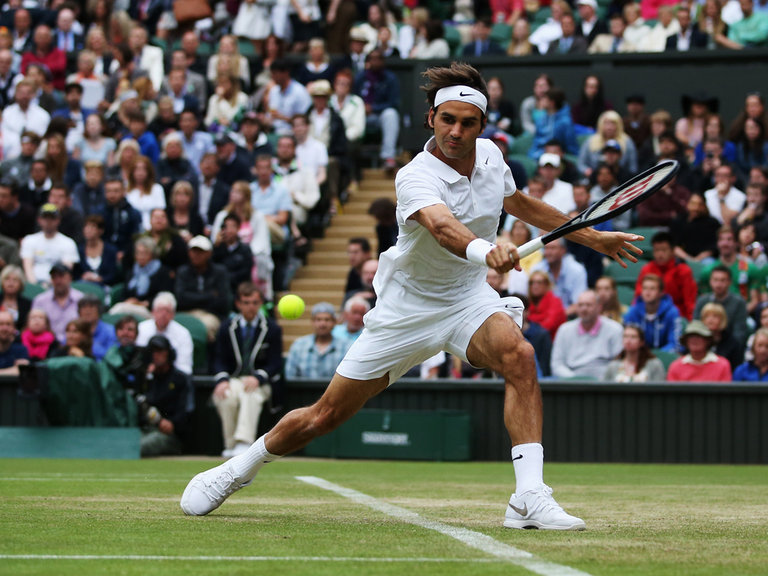
Photo courtesy of sportinglife.com Roger Federer’s 7-5, 6-4, 6-4 semi-final victory over Andy Murray in the Wimbledon 2015 semi-finals was a masterclass in grass court tennis on the big stage. The Tennis Review looks at five remarkable things from the win.
1. Federer’s pacing. Federer cruised and cranked his way to this win. He cruised through his service games- he did not face one break point the entire match- and kept to his aggressive game plan during the Murray service games, going for his returns and attacking the net, robbing Murray off any rhythm.
Then at the end of each set, with Murray serving to stay in, Federer cranked things up aggression wise, piling the pressure on Murray, whose second serve was a liability at key moments.
The Swiss broke Murray to take each set, and, in the process started each set with his own incredibly strong service game.
2. The serve. Federer struck down 20 aces, had a first serve percentage of 76, won 84 percent of those points, and won 55 percent of his second serves. A weapon like that, which can win him free point after free point from just one stroke, is invaluable for a 33 year old a month away from turning 34.
Even more so when you consider Murray’s return of serve is one his biggest weapons.
3. The Swiss’ winner to error count. Federer clearly reaped the benefits of his fine serving by saving plenty of energy which he used in some of the match’s extraordinary rallies.
However, the seven time champ kept most points short with his aggressive, high risk game. That game paid off, too, as Federer hit 56 winners in total to 11 errors. That is a positive differential of 45 over three sets, an average of 15 a set.
4. That net game. Federer won 29 points at the net from 42 attempts, a percentage of 69. The grass may be slower than it once was, but the ball still bounces lower and dies quicker than on other surfaces, and Federer made that fact work for him, and made it look easy, too.
5. Federer is now into his tenth Wimbledon final- a record. Federer made his first final back in 2003, the start of a run of seven consecutive finals until 2010 when Tomas Berdych stopped him in the quarters.
Federer made his eighth appearance in the final in 2012, a winning one and his last Grand Slam victory, and then made his ninth appearance last year when he finished runner-up to Novak Djokovic.
Ten final appearances at the same Major is a record. The tennis world now waits to see if Federer can break his own record on Sunday- winning his eighteenth slam, and if he doe, he will achieve another record, too- becoming, at 33 and 338 days, the oldest male Slam winner in history.
Remarkable, yes, but for Federer being remarkable is very, very ordinary.
Commentary by Christian Deverille.
Like this article? Share it and help us get read 🙂
-
Wimbledon 2015 Semi-Finals Preview Federer Vs Murray Djokovic Vs Gasquet
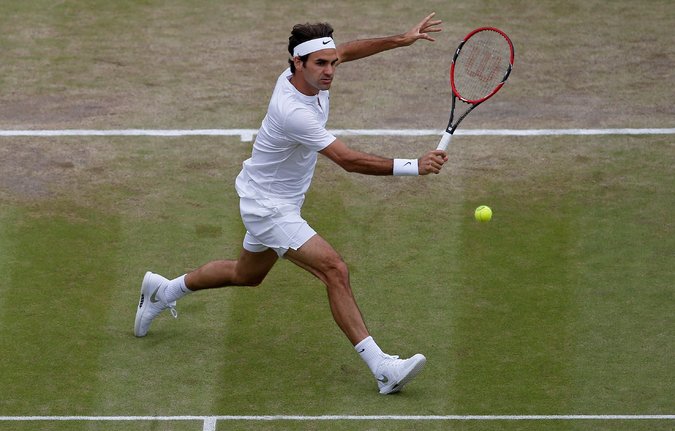
Photo courtesy of nyt.com The Wimbledon semi-finals feature a much anticipated clash between seven time Champion Roger Federer (2) and 2013 Champion Andy Murray (3) while defending champion Novak Djokovic (1) takes on 2007 semi-finalist Richard Gasquet (21). The Tennis Review previews the action and predicts the winners.
Roger Federer (2) Vs Andy Murray (3).
Head to head: Federer leads Murray 12-11 and has won their last three matches including a 6-0, 6-1 win over Murray at last season’s WTF in London. Federer also leads Murray 1-0 at Wimbledon, beating him in the 2012 final, and leads him 4-1 in Grand Slams. Murray, though, does have one big win over Federer on grass- the 2012 Olympic final which the Scot won in straight sets.
Form coming in: Neither man has really been pushed to their very best so far. Federer has had the smoother ride, dropping just one set to big-serving Sam Groth, and he got past the usually difficult for him Gilles Simon in straights in the previous round, but Simon was well below the form he had shown in his fourth round win over Berdych.
Murray has been patchy, and dropped sets to Karlovic and Seppi, his second serve proving to be a liability, and if Pospisil had a better return of serve, that match would likely have gone to four sets as well.
Who should win?: Murray is the bookies favourite, but Federer should win. This season he has played well on the tour’s quicker surfaces, beating Djokovic in Dubai, and winning in Halle.
Federer is also the better grass court player and is committed to being aggressive, playing at the net, and going for his shots.
The Swiss is also by far the better server- he has been broken only once, by Simon in his last match, since playing Phillip Kohlschreiber in the first round of Halle three weeks ago- and the energy he will save cruising through his service games can be spent on trying to break Murray. That might not prove to be too hard either as the Scot has been struggling with his serve all fortnight.
Federer also has the edge when it comes to the game’s most vital deciding factor- mental toughness. Federer is world no.2, has 3 wins over Djokovic the past 12 months, and has, throughout his career, proven to be mentally tougher than Murray who has, more often than not, succumbed to the pressure in big matches against his biggest rivals. Federer’s superior mental toughness should enable him to take charge of this match by the second set and finish it without any undue fuss.
Murray could win if: Federer has had his off days over the last few years in Slams, most notably against Ernests Gulbis at Roland Garros ’14 and Andreas Seppi at the Australian Open this season. If Murray sits back at the start of the match, as he tends to do, feeling out his opponent’s level and then adjusting his game accordingly, and sees Federer is below par then he will be ready to strike.
Murray also has a chance if he can stay with Federer during any of the Swiss’ peak periods and if he can use his defensive skills to get enough balls back in the lulls for Federer to start making errors and drop a set or two. The longer the match goes on, the more of a chance Murray has to win as Federer’s first serve starts to wane and Murray, whose return is one of the game’s best, gets a chance to grab a decisive break in the fifth set.
Prediction: Federer to win in four sets.
Novak Djokovic (1) Vs Richard Gasquet (21)
Head to head: Djokovic leads Gasquet 12-1, losing just one match to him back in the 2007 WTF. In his 12 wins, Djokovic has dropped just 2 sets to Gasquet. They have played twice at Grand Slams, both times at Roland Garros, including this year. This is their first ever meeting on Grass.
Form going into the match: Djokovic struggled against a big server, as he is prone to do, when he went five sets against Kevin Anderson in the fourth round. However, Anderson was on form going into the match and has rarely played better in a slam than he did in the first few sets of that match.
Against another big server, Marin Cilic, in the quarters, Djokovic cruised to victory and did not have to go into his upper gears. Gasquet, meanwhile, had to go up a few gears to win the fifth set of his match versus Wawrinka 11-9, and also had to play his best to beat Nick Kyrgios in four sets in round three.
Who should win? Djokovic is the overwhelming favourite here. He may not be the greater grass court player- grass brings out the best in Gasquet whose defensive game, slicing and volleying skills come to the fore on the surface- but he has the greater all surface game, vastly superior athleticism, and is by far and away the better big match player.
Gasquet will win if: He plays the kind of inspired tennis he showed in the fifth set versus Wawrinka and Djokovic has not just a bad day but one of the worst in his career.
Prediction: Djokovic to win in straight sets.
Commentary by Christian Deverille
Like this article? Share it and help us get read 🙂
Who do you think will win? Let us know in the comments box below.
-
Five Reasons Rafael Nadal’s Defeat to Dustin Brown at Wimbledon Is No Surprise
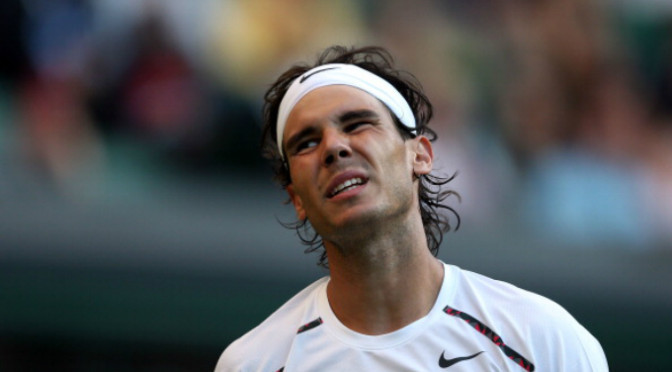
Photo courtesy of Ubitennis.com Rafael Nadal was beaten 7-5, 3-6, 6-4, 6-4 by qualifier Dustin Brown in the Second round of Wimbledon today. On paper, the tenth seed losing to the world no. 102 is an upset, but on the tennis court, where anything can happen, and where Nada has been struggling the past 12 months, the defeat is, in reality, not such a surprise. The Tennis Reviews gives you five reasons why.
1. Brown beat Nadal in the Spaniard’s Opening match in Halle last season.
Brown only dropped five games, too. The German stunned the then recently recrowned French Open Champion and was the first player to inflict a defeat on Nadal at the start of his Slump. Back then Nadal held the French Open title, the U.S Open title and three ATP 1000 titles. Now? Nadal has two ATP 250 titles under his belt over the past 12 months.
We knew Brown could beat Nadal on grass over 12 months ago. No surprise he could do it again when Nadal was in even worse form 12 months later.
2. Nadal has lost the last three years at Wimbledon before the last eight.
Nadal’s last three Wimbledon exits have been in the second round, the first round and the last sixteen. And each defeat has been to unseeded players with huge serves and aggressive games- Lukas Rosol, Steve Darcis, and Nick Kyrgios. Players of Brown’s type are bad match ups for Nadal on grass and his losing to them is no surprise.
3. Attack should always beats defence on grass.
Attacking players should get the better of defensive ones on grass. Nadal may not always be defensive, but he is often, on grass, the least attacking of the two players on court, and against Brown he was even more so than usual. Brown has a high risk game, much like Rosol and Kyrgios, and is not afraid to take the net on or go for broke on a second serve and those strengths were decisive factors in the match.
Against Nadal, Brown came to the net 85 times, and won 49 points (58%). Nadal, on the other hand, came in just 41 times, and won 26 points. Brown also hit 58 winners to Nadal’s 42, won 77% percent of first serves to Nadal’s 69, and 53 percent of second serves to 46.
By being more attacking than Nadal, and successfully executing the majority of the time, Brown did what he needed to do the beat the more defensive player on a surface that rewards aggressive play.
4. Nadal is always more vulnerable in the first week of play when the Grass is faster.
The grass was even faster in this heat, too. In the early days of his career, Nadal went home in the first week of his first two Wimbledons, and when he made his first final in 2006, he had to survive a tough five setter against Kendrick in the second round. In 2007, he survived five setters against Soderling and Youzhny. In his peak years of 2008-2011, he won the title (2008, 2010) quite comfortably and made the final (2011).
But in his non-peak years he has struggled in the early rounds, and then gone on to the final in the second week when the courts are more beaten up, the bounce gets higher and he can execute his top spin game. The years he made the final though he lost to one of the greatest grass court players of all time- Federer- whose superior serve and all court game helped him defeat the Spaniard.
5. Nadal is the tenth seed this year and has failed to reach his seeded position in 11 of his 18 tournaments played since the French Open ’14.
Nadal is not the player he was, and the latest in a long line of early defeats is proof of this. He has lost to players such as Brown (x2), Klizan, Coric, Berrer, Berdych, Fognini- all world class players, but not ones who troubled him in his best years.
Nadal has slipped from world no.1 to world no.10 since last year’s Wimbledon, but aged 29, and coming back from another in a long line of knee injuries, is it really that surprising? What is really surprising is that Nadal has managed to stay at the top of tennis for a decade with a game that has mostly relied on defense and brute strength.
A step slower, and thus more easily overwhelmed by faster, fitter players, Nadal is going to suffer more defeats like he did to Brown today. That’s what happens to the greats- they decline. Best to remember them at their peaks, and Nadal, a two time Wimbledon champ, and three time runner-up, has given us plenty of those.
Commentary by Christian Deverille
Follow the ATP Tour and Wimbledon with The Tennis Review.
Liked this post? Share it and help us get read 🙂
-
Wimbledon 2015 Preview Djokovic Federer and Murray the Favorites
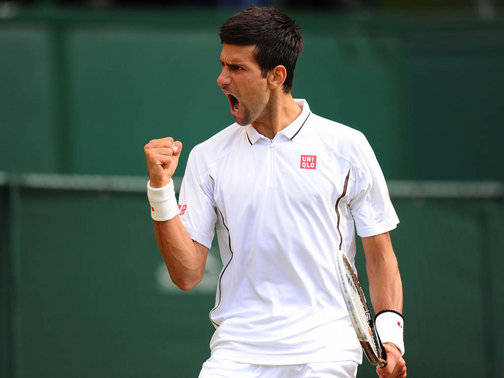
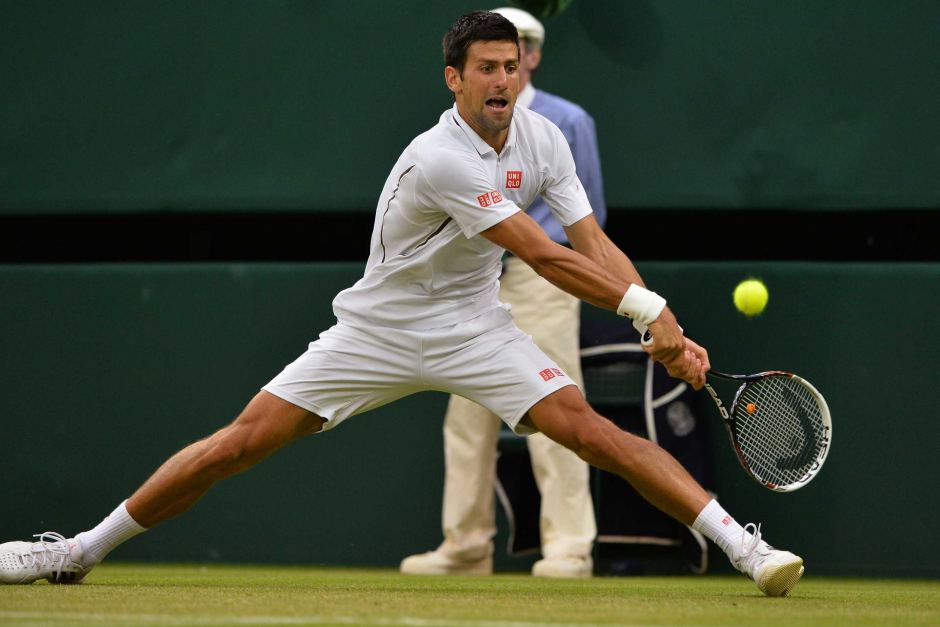
Photo courtesy of abc.net.au Wimbledon 2015 starts on Monday and the Championship has three favorites- Novak Djokovic, Roger Federer and Andy Murray- and a host of second tier potential Champions. The Tennis Review assesses their chances at the world’s most famous tennis event.
Novak Djokovic. Champion 2011, 2014. Runner up 2013.
Djokovic returns to SW19 to defend his title as very much the man to beat. The Serbian has lost just three times all season (Karlovic in Doha, Federer in Dubai, Wawrinka at Roland Garros) and is as dominant as he was in 2011, picking up a slam (Australian Open) and four ATP 1000 titles on his way to London.
The Serb will have no problems shrugging off his disappointment in Paris- he also lost there in 2011 and 2014, his Wimbledon winning years- and if anything, the loss to Wawrinka should motivate him even more to win his ninth Career Grand Slam.
Djokovic has not played any warm ups, his sole grass outing being an exhibition where he suffered a defeat to 18 year old Alexander Zverev, but with Becker in his camp and plenty of practice time in London, the lack of ATP grass tournaments won’t hurt him.
In his favor: He knows how to win at Wimbledon and he has a winning recent record over Federer and Murray in big matches.
Against: There are some questions about his mentality. He played a poor last three sets in Paris after looking strong in the first set last month in his loss to Wawrinka and has an 8-8 record in slam finals overall.
Likely outcome: Champion
Roger Federer. Champion 2003-2007, 2009, 2012. Runner up 2008, 2014.
Federer comes into Wimbledon as the Halle Champion for the eighth time and the world no.2. No one in the draw come anywhere close to his credentials at SW19 and he has to fancy his chances of an eighth title.
In his favor: Federer is playing aggressive tennis and grass rewards his great serve and skills at the net. He is also nearing the end of his career and will be up for a chance to add to his 17 Grand slam tally.
Against: Federer has under-performed at Slams since losing last year’s Wimbledon final, failing to reach his projected No.2 seeding (U.S Open SF, Australian Open r3, Roland Garros QF). He has also not managed to win any of his biggest finals since his return to form in 2014 and has failed to beat Djokovic in a final in that period.
Likely outcome: Runner up
Andy Murray. Champion 2013. Runner up 2012.
Murray is playing his best tennis since his slam winning run from US Open 2012 to Wimbledon 2013 and this year he has climbed back to world No.3, been runner up at the Australian Open and Miami, won his first clay court titles in Munich and Madrid and won Queen’s.
In his favor: Murray has the touch and soft hands to make the most of Grass’ lower bounce, and will have all the support he could possibly need. He also knows how to win in SW19 under immense pressure.
Against: The Scot has lost his last eight matches to Djokovic, his most likely opponent in the final. He also has a less than stellar serve which the Serbian will tee off on. Most worryingly, Murray has been guilty of retreating into his shell when thing get tight against the world no.1 and cannot afford to do that should they meet in the final.
Likely outcome: Semi-finalist
Second Tier Favorites:
Marin Cilic. Quarter-finalist 2014.
Cilic, the 2014 U.S Open champion, has the serve and powerful game to lift the Wimbledon trophy. The progress he made in going from an unfulfilled talent to a slam champ has been slowed by a shoulder injury and he has lacked match play this season, but if he can dial into his A game, he could very well be the one to threaten the top three.
Likely outcome : Quarter-finalist
Tomas Berdych. Runner up 2010.
Berdych has been having a great year and he has the game to do well at Wimbledon- witness his Wimbledon 2010 run in which he beat Roger Federer.
However, he has failed to bring that game to big matches this season, and would need to avoid meeting both Djokovic and Murray who have beaten him in big matches this season.
Likely Outcome: Semi-finalist
Stan Wawrinka. Quarter-finalist 2014.
The recent French Open champion has the game and confidence to win slams, but does he have it on grass? Wawrinka has never done much on the surface and has had his best results on slow hard courts and clay.
Still, he has the game to beat anyone, and if he and Magnus Norman can make the right adjustments to his game, notably his swing, then his serve, aggressive game and feel at the net could see him spring a surprise.
Likely outcome: Quarter-finalist.
Follow Wimbledon with The Tennis Review.
Like this article? Why not share it? 🙂
-
French Open 2015 Semi-finals Preview Djokovic Vs Murray Wawrinka Vs Tsonga
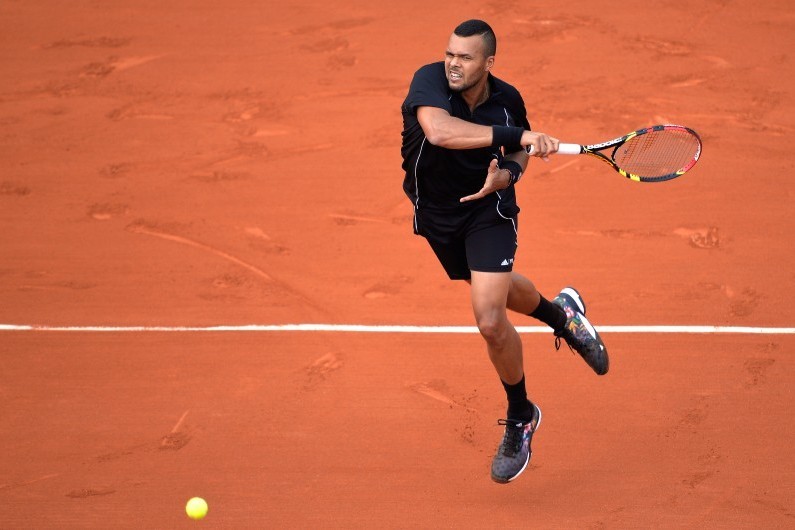
Photo courtesy of http://www.tennishighlights.eu The French Open semi-finals 2015 feature form players Novak Djokovic (1) and Andy Murray (3) going head to head, and the surprise springers Stan Wawrinka (8) and Jo-Wilfried Tsonga doing battle. The Tennis review previews the action and predicts the winners.
Novak Djokovic (1) Vs Andy Murray (3)
Novak Djokovic was by far and away the most impressive player in the Clay lead ups to Roland Garros, winning the ATP 1000 events Monte-Carlo and Rome. the two tournaments most similar conditions-wise to Roland Garros. In the semi-finals he will take on the player who was the next most impressive, Andy Murray, who won in the faster conditions of Madrid, beating Nadal in the final. The Scot also won his first ever career clay court title , the ATP 250 Munich BMW Open.
Djokovic has also been the most impressive of the four semi-finalists coming into the last four. The world No.1 has not dropped a set and defeated nine time champion Rafael Nadal in the last eight, dropping just nine games. Murray, meanwhile, has been solid, and at times brilliant, but has dropped three sets, and let a match point slip in the third set of his last eight match versus David Ferrer before winning in four.
Djokovic comes into the last eight meeting with the most confidence, and in a match up which he is currently dominating that factor could prove crucial. Djokovic’s victory over Nadal was his first in seven attempts and the biggest hurdle, bar actually converting championship point this Sunday, in the way of his quest to complete the career Grand Slam. While Nadal may be a shadow of his former self, a fact tactfully acknowledged by the Djokovic camp after the win, the Serbian was not assured of victory in a French Open match up in which the mental side of tennis played a greater part than the physical one. However, now, with the demons of losses to Nadal at Roland Garros the past three years banished, the tournament is now Djokovic’s to lose.
Murray, meanwhile, achieved another milestone of his own, in beating Ferrer for the first time on Clay, but like his clay court milestones this season, it pales in significance compared to Djokovic’s. Also, Murray did not achieve his latest Clay court milestone with the panache of his rival- the Scot struggled to hold serve against Ferrer and played a patchy match against a player well below his best form. Worryingly the world No. 3 let a match point slip in the third set, and though he won 6-0 in the fourth, he cannot afford such sloppiness against Djokovic who will not go away once back into a match.
Djokovic and Murray have not met on clay since their epic match at Rome 2011, and they meet again at a time when both are arguably playing their best tennis in their careers on the red stuff since then. The two have never met in a Slam when both are at their respective peaks- one has either been fatigued, slumping or on the road back from injury- and so this match should be a little different to the usual defensive, stamina-sapping, at times turgid offerings these two have dished up over the years. Murray has been playing some aggressive minded tennis this season, much like he did in 2012-2013, and Djokovic has been better than ever at turning defense into offense and forcing the issue during long rallies.
Djokovic leads the head to head 18-8, leads 2-0 on Clay and has won 10 of their last 11 matches. Three of their last four slam matches (Australian Open 2013, 2015, U.S Open 2014) have seen a typically exhausting first couple of sets, split between the two, followed by the fitter Djokovic finding his stride and running away with the last two.
That pattern could play out tomorrow, but most likely Djokovic will win in straight sets. The Serbian is playing at several leagues above the level any player Murray has faced in his 15 clay court matches this year, is a far more accomplished player on Clay, and also knows how to win big matches at Roland Garros and is on a mission to win his biggest one yet.
Jo-Wilfried Tsonga (14) versus Stan Wawrinka (8)
Tsonga and Wawrinka provided the biggest upsets of the men’s draw so far in the quarter-finals with Tsonga beating the fancied Kei Nishikori and Wawrinka blowing Federer away in straight sets. Tsonga is on something of an upset binge, defeating Monte-Carlo finalist Tomas Berdych in the last sixteen.
The head to head between the two is tied at 3-3 with five of those matches played on Clay. Wawrinka leads that head to head 3-2, and the two are tied at 1-1 at Roland Garros, both matches going the distance.
Both players are shot-makers, play aggressive tennis, and have big serves. Wawrinka has the biggest weapon of the two, his backhand, which will give him the advantage in longer rallies, but Tsonga has a big weapon, too- the French crowd.
Tsonga has also been to the semi-finals of Roland Garros before, in 2013 on the back of a convincing win over Roger Federer. Unfortunately, he froze on his last visit to the final four, failing to show up against Ferrer, a factor that could motivate him this time as he tries to make that nop-show up to the home crowd.
The crowd or experience could help win the match for Tsonga if matters go down to the wire, but if Wawrinka executes his superior clay court game and can take control of the match then the Swiss should move into his second slam final.
Commentary by Christian Deverille
Follow ATP Tennis with The Tennis Review.
Liked this article? Get it read and share 🙂
-
French Open 2015 Novak Djokovic Defeats Rafael Nadal
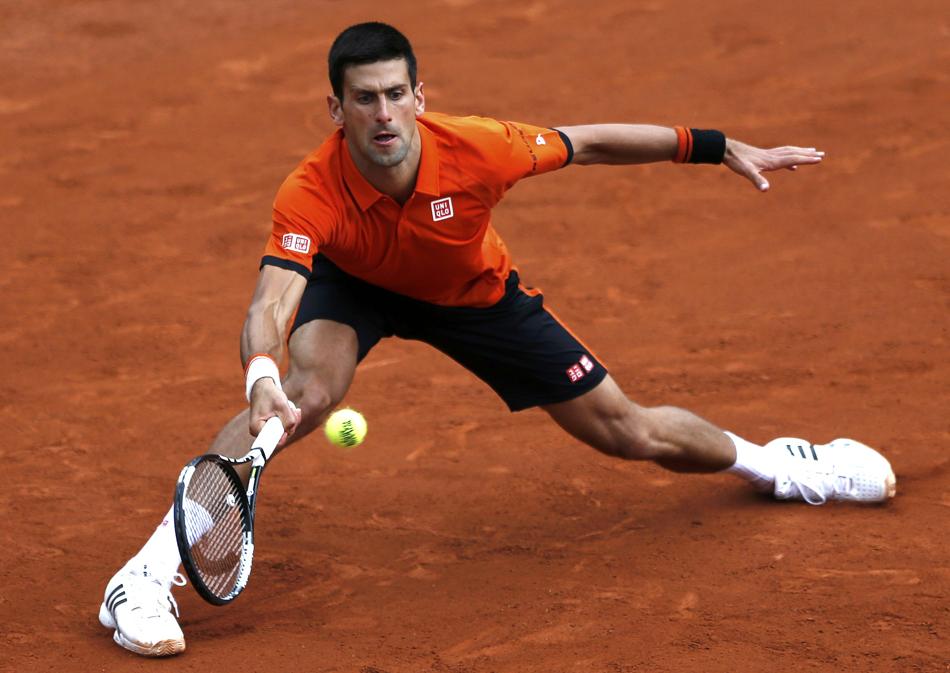
Photo courtesy of ibtimes.com Novak Djokovic (1) defeated Rafael Nadal (6) at Roland Garros in the 2015 quarter-finals on his seventh attempt at the tournament. The Tennis review looks back at a much anticipated match that delivered a spectacle, but not in the way tennis fans had hoped.
Novak Djokovic’s 7-5, 6-3, 6-1 defeat of Rafael Nadal at Roland Garros was not a great surprise, but the manner of the defeat was a little shocking. Rafael Nadal had lost only once on Phillipe Chartier , was on a 39 match winning streak in Paris and. having beaten Djokovic six times at the tournament, had a mental hold over his rival. The Spaniard was expected to push the Serbian to the very brink yet ended up winning only nine games.
Djokovic’s intent- to impose his game on Nadal and score a first ever victory over him at Roland Garros- was well-executed as he raced into a 4-0 lead. He could not keep up such dominance though against The French Open’s most dominant player- and was pegged back to 4-4. A real struggle for control emerged, and at times it looked as if Nadal might sneak the first set- until 30-15, 5-6, Nadal serving.
An exhausting rally, the kind these two have been serving up since their first meeting in 2006, looked to go the way of the Spaniard as an inviting overhead, the entire court at the Spaniard’s disposal, came his way. Only Nadal did the unthinkable- he missed. On the court where he had executed such shots with ease over and over, he was now making amateur errors.
That miss marked the end of Nadal’s competitive participation in the match- he would win only four more games.
The Nadal who was broken at the start of the third set was not the Nadal we had seen lift Roland Garros nine times, the one we saw 12 months ago breaking Djokovic’s spirit. The 2015 Nadal was now finding out for himself just how that felt and at the hands of the Serb himself.
The Nadal we saw today was the one we had seen suffering defeats to Berdych in Melbourne, to Fognini in Rio and Barcelona, to Wawrinka in Rome, to Murray in Madrid and to Djokovic in Monte Carlo. A Nadal whose forehand now spilled more errors in matches that it had once done in entire tournaments, whose serve could not deliver and was liability against the world’s best returner, a Nadal who hit balls short and invited his opponents to punish him for it. A Nadal who is a few steps slower and still unable to shake off the rust, eight months into his most difficult comeback to the ATP tour from injury.
That Nadal should be slower and lacking his former power is no surprise, that it came so soon, at the age of 28, though, is shocking. The sight of Nadal winning one game in the third set will remain the kind of spectacle no one wanted to see – we wanted to see him go down, if he was going to, in the guise of the nine times Roland Garros champion- but like most shocking spectacles, we could not look away.
And why should we when on the other side of the net was a quite different spectacle, too? One we could watch with a healthy appetite, the sight of Djokovic, an athlete at his peak. The Serbian is on a tear in 2015- the first man to win The Australian Open, Indian Wells, Miami, Monte Carlo, and Rome, in one season. The Serb has suffered only two defeats in 2015 (Karlovic, Doha, Federer, Dubai) and is arguably in even better form than he was in 2011 when he entered the French Open undefeated, a run that included two defeats of Nadal on Clay, only to lose to Federer in the last four.
A third defeat in 2015 is sure to come for the world No.1, but one suspects, if his defeat of Nadal is anything to go by, not in his next couple of matches.
Commentary by Christian Deverille.
Follow Roland Garros 2015 with The Tennis Review
Who do you think of Djokovic’s win? Share your thoughts with us in the Comments Box below.
Sign up to our e-mail subscription list and get notifications of the latest posts.
Like this post? Help us get it read 🙂 Share below :
-
French Open 2015 Quarter-final Preview Novak Djokovic Vs Rafael Nadal
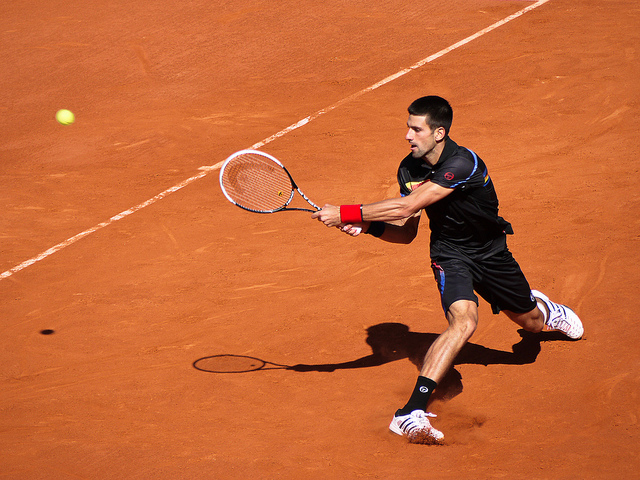
CC courtesy of Yann Caradec at flickr.com The match tennis fans have been waiting for at this year’s Roland Garros has arrived- the quarter-final between world No.1 Novak Djokovic and nine time French Open champion Rafael Nadal. The Tennis Review previews the action and predicts the winner.
What”s at stake:
What makes this match so intriguing is what is at stake. Novak Djokovic, in arguably his best ever career form, will try for the fourth consecutive year to complete the Career Grand Slam, while Nadal, ranked no. 7, his lowest ranking for over a decade, will try and get his career back on track and also win a historic tenth Roland Garros, becoming the first player to win ten singles titles at a slam.
Head to head: Nadal leads 23-20 career, 6-0 at Roland Garros, 14-5 on clay.
Rafael Nadal has stopped Djokovic the last three years at Roland Garros. However, those matches have not been easy. In 2012, Nadal dropped the third set 2-6 as Djokovic thrived on the damp c0nditions and heavier balls, and the Spaniard was saved by the match being delayed until the following day. In 2013, Djokovic lead by a break in the fifth set before a bad decision a the net (Djokovic touched it before the ball bounced on the other side) distracted the then No.1 seed.
But while Nadal has Djokovic’s number at Roland Garros, Djokiovic has inflicted five clay defeats on the Spaniard, more than any player, and has beaten him in each of the three ATP 1000 Clay finals (Monte Carlo 2012, Rome 2011, 2014, Madrid, 2011).
Djokovic also convincingly beat Nadal the last time they met on clay, a straight sets win in the Monte-Carlo semi-finals.
Form coming into the quarter-final:
Djokovic has kept up his stellar 2015 form and breezed through a very kind draw, notching up his 26 th consecutive win on his way, and not dropping a set. Nadal has also been impressive, dropping only one set to Jack Sock in the fourth round, proving that it is one thing to beat him at ATP 1000 and 500 events, but a quite different task at Roland Garros.
Neither man though has had to face a ‘problem’ opponent, like an Isner. This will hurt Nadal more as he has struggled all year to beat the top players in the middle and later stages of events while Djokovic has been beaten only twice (Karlovic, Doha, Federer, Dubai), and has had no issues stepping up a level against the top ten.
Match up:
Djokovic matches up well to Nadal on Clay.He can defend against Nadal’s weapon, the forehand, and his back hand down the line can take Nadal off balance and help him dictate matches. He also has a return of serve to make Nadal pay for anything less than stellar serving.
This match, though, is not so much about the physical game, but the mental one. Nadal is a very different beast at Roland Garros to other events, and has beaten Djokovic there in other years when he has been far from his best (2012, 2014). Djokovic, just as he has had in those years, will have all the pressure on him to get the career slam done while he is at his peak, and how he deals with that pressure and the presence of Nadal on the other side of the net will decide the match.
Prediction:
It really feels like Djokovic’s year this season. The Serb has been playing at a level or two above everyone else while Nadal has been well below his best, failing to win a single European Clay court event. Of course we have said it is Djokovic’s year to win Roland Garros many times over, but Djokovic will never get a better shot than now, and he is playing the kind of tennis to allow him to finally find his target, a first Roland Garros title.
Commentary by Christian Deverille.
Follow Roland Garros 2015 with The Tennis Review
Who do you think will win? Share your thoughts with us in the Comments Box below.
Sign up to our e-mail subscription list and get notifications of the latest posts.
Like this post? Help us get it read 🙂 Share below :

Tennis from a fan's point of view
[
[
[
]
]
]
 thetennisreview