-
French Open 2015 Quarter-final Previews Federer Vs Wawrinka Murray Vs Ferrer
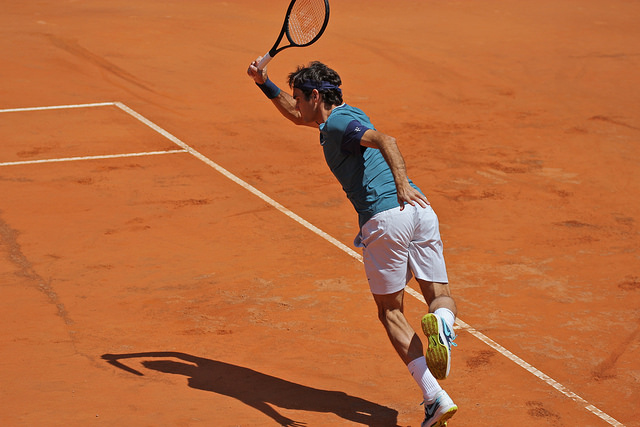
CC courtesy of Marianne Bevis at flickr.com This year’s French Open quarter-finals features an impressive line-up- seven of the top eight seeds, and a former semi-finalist. The Tennis Review previews three of the matches and predicts the winners.
Roger Federer (2) versus Stan Wawrinka (8)
Wawrinka has beaten Federer in big matches on clay- in the 2014 Monte Carlo final and at the 2008 Italian Open- but has only managed to win one set in their four Grand Slam meetings (Wimbledon 2014). Wawrinka also underperformed in his last clash with Federer, on clay a few weeks ago in Rome.
Federer overcame his biggest hurdle of the French Open so far, Gael Monfils, who had won the rival’s last two clay court matches, in the fourth round. The world No.2 won the last two sets convincingly, bringing his best game when the pressure was on. Meanwhile Wawrinka brushed aside Gilles Simon in straight sets, a match that could not have contrasted more with their five set 2012 battle in Paris.
Prediction: Federer, the Rome 2015 runner up. is in the much better form of the two, and knows that this is a great opportunity for him to reach his first Roland Garros final since 2011. He also knows the pressure Djokovic, who he beat so convincingly at the French Open in 2011 when the Serbian was in career top form, will be under should he face him for the title. Federer is not going to let that opportunity slip and should get past Wawrinka in straight sets.
Andy Murray (3) versus David Ferrer (7).
The general consensus in the tennis world right now is that Andy Murray is playing his best ever clay court tennis. However, not everyone is convinced- Madrid is a faster clay court than others, Munich is an ATP 250, and Murray has played just as well on Clay, if not better, in 2009, 2011, and arguably last season.
Murray’s upcoming quarter-final with David Ferrer will really tell us if he is better on Clay now than in other years. The Spaniard has beaten Murray 4 times on Clay, including the last time they met at Roland Garros in 2012. That year Ferrer made the final, his greatest achievement on a surface he has excelled on.
Going into the quarter-final, Ferrer has won more slow clay court matches (8-3) than Murray at ATP 500 and above level in 2015, and won the ATP 250 clay event in Rio. Murray meanwhile won one match on slow clay pre-Roland Garros, which means he is at some disadvantage against a man who thrives on slow clay conditions.
Ferrer has been impressive moving through the draw, dismantling Cilic in the last sixteen and dropping one game in sets four and five against Bolleli in round three. In the 12 sets he has won, he has dropped four games only once, in the last set of his match versus Cilic.
Murray, meanwhile, has dropped two sets (Sousa, Chardy), but has not had to respond to any real challenge yet. He will have to do that, though, versus Ferrer.
Prediction: Ferrer to win in five sets.
Kei Nishikori (5) Versus Jo-Wilfried Tsonga (14).
This is Nishikori’s first French Open quarter-final, and he has done it with the minimum amount of fuss, winning his three matches in straight sets (received a bye into round four after Benjamin Becker’s withdrawal). The Japanese, who is now the first Japanese man to reach the last eight at all four Grand Slams, had had a mixed clay court season coming into Roland Garros, winning the ATP 500 Barcelona Open then under-performing versus Murray in Madrid, but has pulled his game together when it counts.
The low profile Nishikori has assumed waltzing through the Roland Garros draw is about to come to an end, however, when he takes on Tsonga. The Frenchman has always raised his game in Paris, and did it again in the fourth round, breaking down the Berdych game. He will do it against Nishikori, too. While Nishikori leads Tsonga 4-1, all four of those wins have gone the distance, and Tsonga dropped just six games in the match he won.
The two have never met on Clay, and on their first meeting, the Frenchman has the advantage of the more inspired form, and the home crowd. The Frenchman is also a streaky player, see his 2014 Toronto run for the last example of that quality, and is definitely on one of his streaks now, playing explosive and beautiful tennis. If Nishikori is to win, he will have to mix up his solid brand of tennis with his best shot-making, but even that might not be enough against an inspired Tsonga.
Prediction: Tsonga to win in four sets,
Commentary by Christian Deverille.
Follow Roland Garros 2015 with The Tennis Review
Who do you think will win? Share your thoughts with us in the Comments Box below.
Sign up to our e-mail subscription list and get notifications of the latest posts.
Like this post? Help us get it read 🙂 Share below 🙂
-
French Open 2015 Men Who Could Be Champion Murray Nishikori Ferrer Berdych
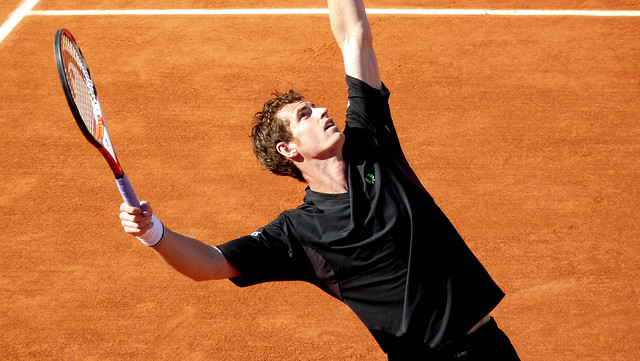
CC courtesy of Yann Caradec The French Open has three favorites but the second tier of potential champions has a bigger field. The Tennis Review looks at five players who could be King of Clay at Roland Garros and assesses their chances of winning the French Open 2015.
Andy Murray Semi-finalist 2014, 2011 Quarter-finalist 2012, 2009
Murray leads the pack of contenders as a multiple slam champion and a player with a solid history at Roland Garros. The world No.3 has made two semi-finals and two quarter-finals and in his seven defeats in Paris, only the game’s best have beaten him- Nadal (x2), Ferrer, Amalgro, Berdych, Monfils and Gonzales.
This year, on the back of his wins at the ATP 250 Munich Open and the ATP 1000 Madrid Open, Murray is touted as one of the favorites However, while winning his first clay court titles in his career and defeating Nadal in straight sets in an ATP 1000 final were impressive feats, Murray won only one match at an ATP 1000 slow clay tournament and had to pull out of his last sixteen match in Rome with fatigue.
However, we did not need a fine slow clay court showing from Murray this season to tell us what we already know- Murray has always been a good slow clay court player. Watch his past Rome battles with Nadal and Djokovic for evidence, but he has never made a slow clay court final, nor has be made the Roland Garros finals.
In every one of his Roland Garros campaigns, Murray has been beaten by a superior player on the surface, and with Djokovic arguably playing the best tennis of his career, and Federer a recent Rome finalist, it is hard imagining him getting past either of them in the later stages of the tournament, and winning an ATP 250 event where his toughest opponent was Kohlschreiber, or a fast clay ATP 1000 does not change that.
Still, if either Djokovic or Federer slip up, and Nadal’s poor form continues, Murray will be there, solid and smart as ever, ready to take his first French Open title.
David Ferrer Runner-up 2013, Semi-finalist 2012, Quarter-finalist 2014, 2008, 2005
David Ferrer has been having a good year in 2015- he has three titles (Acapulco, Rio, Doha) and is 10-4 on clay going into Roland Garros.
Ferrer is a former finalist at the event, will be seeded eighth, and none of the top four seeds will relish facing him, particularly Murray and Berdych. Ferrer would have to hope to get one of those two in the draw, though, as his chances of defeating Djokovic or Federer are much more limited.
However, if Ferrer does get some lucky breaks, there are fewer men who have worked harder on Clay to earn them. Ferrer is a former finalist, has won 12 clay court titles, been runner up at Monte Carlo (2011) and Rome (2010).
The biggest question mark over Ferrer though is his mentality. After losing to Nadal at last year’s French Open, Ferrer admitted he did not believe he could win the match and gave up. Those who give up, in the Federer-Nadal-Djokovic age, do not win slams and unless Ferrer approaches every match at this year’s French Open with the belief he can win, then being the 2013 French Open runner-up will remain his greatest career achievement.
Kei Nishikori
Nishikori won the ATP 500 Barcelona Open leading up to Roland Garros, and has been touted as a favorite at the last five slams now.
His win over Novak Djokovic in the U.S Open last season on his way to the final certainly backs up those speculations. However, there is a big question mark over his fitness- he went down tamely to an in-form Cilic in the final and has often failed to maintain his best play over the course of a match that has gone the distance.
There are also doubts as to his ability to handle the pressure of being a slam favorite. At last year’s French Open, he suffered a shock defeat in the first round and at this year’s Australian Open he did not perform against Stan Wawrinka in their much anticipated quarter-final.
Tomas Berdych Semi-finalist 2010, Quarter-finalist 2014.
Berdych made a change to his coaching team this season, hiring Murray’s former assistant coach Daniel Vallverdu. That change has paid off in some respects with Berdych putting in some career best performances, achieving a career high ranking of 4, and reaching the Monte Carlo final where he took a set off Djokovic.
However, one thing has not changed much- Berdych’s ability to handle the pressure at the very top of the game. His Australian Open performance versus Murray was a big let down, and he has performed poorly in big matches versus Federer in Miami and Nadal in Madrid.
Berdych is the game’s cleanest ball striker, and when he is on, he can beat anyone. But he has yet to prove he can do it in a big final. This year, with Djokovic in such stellar form, Berdych would have to play the match of his life to win the French Open. That is highly unlikely to happen, but this is sport where anything can happen, and if that anything was a Berdych win in Paris, it would be quite spectacular.
Stan Wawrinka Quarter-finalist 2013
Wawrinka has been quite open about not handling the pressure of winning his first slam last season, and his first round defeat in the French Open last year was concrete proof of that.
But that Australian Open 2014 win was a while ago now, and the streaky player has been putting his game back together. Wawrinka made the ATP World Tour finals Semis where he played one of the matches of the year against Federer, took Djokovic to five sets in Melbourne this year, won titles in Chennai and Rotterdam and beat Rafael Nadal in straight sets in Rome.
Those highs, though, have been punctuated by some lows– Wawrinka lost the fifth set against Djokovic to love, put in a dismal performance in his Rome semi versus Federer, won three games versus Dimitrov in Monte Carlo and was upset early in both Miami and Indian Wells.
If Wawrinka is due another fine streak, it could come in Paris. His 2014 Monte Carlo title and his 2008 Runner up showing in Rome show he can play on slow red clay. Also, while his record at the French Open is anything but remarkable, his record at the Australian Open was similar before he won it.
Commentary by Christian Deverille.
If you liked this article, read this: French Open 2015 The Favorites Novak Djokovic Roger Federer and Rafael Nadal
Follow Roland Garros 2015 with The Tennis Review
Who do you think will win this year? Share your thoughts with us in the Comments Box below.
Sign up to our e-mail subscription list and get notifications of the latest posts. Tomorrow we will be looking at the chances of the second tier of favorites for the 2015 Roland Garros title.
Like this post? Help us get it read 🙂 Share below 🙂
-
Grigor Dimitrov and the Curse of Baby Fed
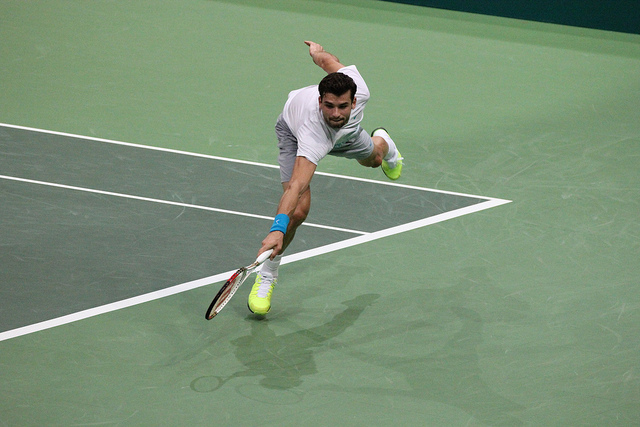
CC courtesy of Marianne Bevis at flickr. Grigor Dimitrov’s first round loss to Jack Sock at the French Open is another in a string of disappointing defeats for the man nicknamed Baby Fed. The Tennis Review comments on how what was meant to be flattery has turned out to be a curse once more.
It was always intended as a compliment. The Single handed backhand, the slice, the agile and powerful forehand, the fast and elegant footwork, the all court game, the touch at the net, the variety on the serve, the shot-making- it was all there. Onlookers could hardly not say it.
Baby-fed. The nickname given to a young Grigor Dimitrov when he entered the pro ranks in 2008, the reigning Wimbledon U.S Open Junior Champion and junior world no.1 at a time when Federer was No.1 and the reigning men’s champion in New York and London.
Dimitrov was not the first gifted player to earn that nickname. Richard Gasquet had been christened the son of Federer half a decade before.
Gasquet had been tipped for greatness since he was a young child, and seemed to be justifying those claims when in 2003 he became the youngest player ranked in the top 100.
That same year Federer would win his first slam at Wimbledon. When Gasquet beat Federer in a final set tiebreak in Monte Carlo in 2005, the 19 year old was tipped to challenge Federer at the top within the next few years.
But while Gasquet’s contemporary Rafael Nadal began beating Federer and winning slams, Gasquet struggled to get past the fourth round of the game’s biggest events, a semi-final at Wimbledon 2007 the furthest he reached during Federer’s dominant 2004-2007 period.
Baby-Fed is Born..again.
In 2008, Dimitrov hit the ATP world tour. The Wimbledon and U.S Open Junior Champion finished the year ranked in the top 500. The following season, Baby-fed qualified for the grass court event at the Nottingham Challenger and made the quarter-finals, beat 82nd ranked Ivan Navarro in the first round of Queens, and won the first set of his Wimbledon main draw first round match before retiring.
That was the year Federer completed the career Grand-Slam and won his sixth Wimbledon title. Federer and Dimitrov were both hitting headlines and the young Dimitrov was more commonly referred to as Baby-Fed than his own name.
In 2011, Dimitrov began to make a real name for himself though. Entering the year ranked 105, he qualified for and reached the Australian Open main draw and reached the fourth round. That win broke him into the top 100 and that year he won his first match at Wimbledon, and finished the season in the top 70.
Baby-Feds Battle
In 2012, Dimitrov faced Gasquet for the second time (he lost to him in Dubai in 2011) in the second round of Roland Garros in a much heralded battle of the Baby-Feds. By that time, Gasquet, who had been banned from the tour for a few months in 2009 for his ‘cocaine kiss’ in a nightclub, was almost 25 and had not been past the fourth round of a slam since his 2007 Wimbledon last four run. The Frenchman won that intriguing match between the ‘baby-fed’ who had failed to live up to the name, and the one who was in the process of trying to do so. (Gasquet would win their third match that year in Bangkok in three sets.)
Gasquet would also win their 2013 Italian Open battle. By that time, things were looking good for both Baby-Feds. Gasquet had gotten back into the top ten in an era where many players did not reach their peak until their mid to late 20s, and Dimitrov was ranked 26 and had beaten world No.1 Novak Djokovic in Madrid a couple of weeks before.
Dimitrov would continue to improve, going on to win his first title in Stockholm at the end of the season, beating David Ferrer in the final.
Baby-Fed Rises
It seemed like a steady career trajectory was taking place. Dimitrov reached his first career slam quarter-final in Australia, won an ATP 500 tournament in Acapulco, won another title in Bucharest, won a grass title at Queen’s (which completed a set of titles on all surfaces within the last eight months) and beat defending champion Andy Murray at Wimbledon.
That match was very much Dimitrov’s coming out party. The slice, the forehand, the serve, the net skills, they were all dressed up and ready to be on show. They appeared again in the last four when he pushed Djokovic to four sets.
In August, Dimitrov broke into the top ten for the first time. Baby-Fed it seemed was no longer taking baby steps to fulfilling his potential but was very much up and running.
The Slump
Then Dimitrov slipped. He was upset in the U.S Open fourth round, soundly beaten by Djokovic in the Beijing quarters, lost his Stockholm title to Berdych in the final, and then lost consecutive straight sets matches to Federer in Basel and Murray in Paris.
The Bulgarian turned down an invitation to be an alternate in the London World Tour Finals and dedicated his off season to practicing, but when he returned in 2015, he suffered another heavy defeat to Federer, winning just four games, in the Brisbane semi-finals. A couple of weeks later, he let a 5-2 fourth set lead slip against Murray in the Australian Open quarter-finals, and at 5-5, as he hit another error, he smashed his racket.
Early defeats continued to pile up- to Muller in the Rotterdam last sixteen in straight sets, to Harrison in the last sixteen of Acapulco, losing the third set 0-6, and the Robredo Indian Wells defeat where in the final game, serving to stay in the match, he threw in two double faults. Double faults at crucial moments came to haunt him in his defeat to Isner in Miami, too, when he threw one in to go 2-5 down in the second set, and handed Isner the opportunity to serve out for the match, which the game’s biggest server had no trouble doing.
Many theories circulate about why Dimitrov has not achieved what was predicted for him yet. Distracted by media duties, his off-court relationship with Maria Sharapova, his coaching relationship with Roger Rasheed, the pressure put upon him by being compared to a living legend still ranked No.2 are among them.
Whatever the reasons, we can only speculate. But what we do know is that Dimitrov is under-performing because his performance on-court is not the kind we saw from him between his win in 2013 Stockholm and his 2014 Wimbledon semi-final.
Dimitrov has been seen, much like Gasquet has over the years, camped at the baseline, or even beyond it, when his best tennis is produced inside the court, his aggressive instincts and touch allowed to flourish. Too many times he has lost matches he could have won, has crumbled when things got tight, has been passive when he should have been active.
At 23, Dimitrov still has time to become more than a nickname in tennis. There is, after all, plenty to be learned from all these defeats, and he could still emerge from this current slump a better player and win slams.
Federer did not live up to his potential for a while, suffering bad defeats and letting his emotions get the better of him. But by the time he was 23, Federer was comfortable in his own skin, had defeated his demons and won five slams.
Dimitrov has yet to reach a final. If he is to do so, then it is probably best for him to get as far away from the name Baby-Fed as he can. Perhaps that is why he has been losing so early so often. Hoping the defeats will make people forget the name they complimented him with, the people who christened him Baby-fed. Who cursed him.
The nickname did not help Gasquet, who now struggles with injury and is out of the top 20, and it has not helped Dimitrov. The tennis fans and tennis media have to help him though. They have to stop asking him when he is going to be the next Federer. After all, there is only one Federer.
And there is only one Dimitrov.
As much as it is time for Dimitrov to step up and be himself, to play a timeless game that is his own as much as Federer’s, it is also time for the tennis world to let him.
Commentary by Christian Deverille.
Follow the ATP Tour with The Tennis Review.
Do you think Grigor Dimitrov will fulfil his potential or do you think he will always be cursed by the nickname ‘Baby Fed’ like Gasquet has been? Please share your opinions below.
-
French Open 2015 The Favorites Novak Djokovic Roger Federer and Rafael Nadal
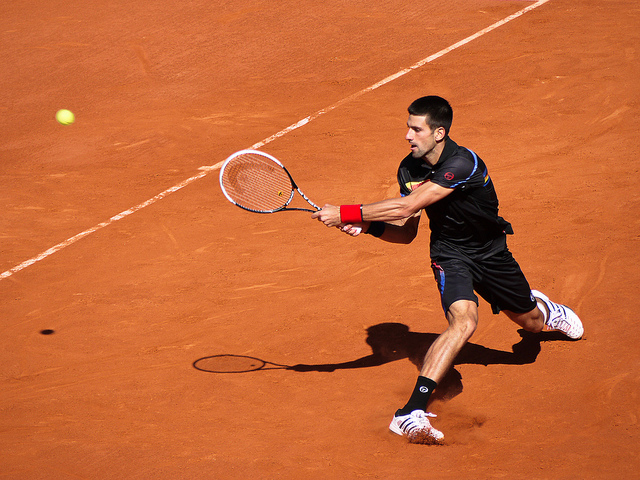
CC courtesy of Yann Caradec at flickr.com There are only three real favorites for the French Open 2015 title. One of them has won it nine times and suffered one defeat at the event, one of them has won one title and been runner up four times, and the other is putting together one of the greatest ever seasons and is a two time runner up. The Tennis Review looks at the chances of those three players- Novak Djokovic, Roger Federer and Rafael Nadal.
Novak Djokovic, Runner up 2012, 2014.
Novak Djokovic goes into Roland Garros as the clear favorite for the first time in his career. That status has been earned on the back of a record-breaking start to the season. The world No.1 has won the Australian Open, Indian Wells, Miami, Monte Carlo and Rome, and has suffered just two defeats (Doha to Karlovic, Dubai to Federer)
Djokovic has been one of the favorites at Roland Garros before (2011, 2012, 2013, 2014), but has shared that status with, or been a second favorite to, Nadal, who has beaten him the past three years in Paris.
This year, though, Nadal goes into the event without a European Clay court title and with his lowest ranking (7) for ten years, and Djokovic goes into it with two European Clay court titles, and the ones with the most similar conditions to Roland Garros, as well as holding the world No.1 ranking with a 4, 610 point lead over world No. 2 Federer.
Djokovic has also earned his status as a favorite at Roland Garros with two runner up finishes, and four semi-finals, losing five of those matches to Nadal and one to Federer.
Djokovic has had his chances, too, in those losses. In 2012, he took the third set of Nadal in the final, taking advantage of the damp conditions and the low spin of the heavy balls, but a rain delay interrupted his flow and he lost the fourth set, and the match, the next day. In 2013, he led Nadal by a break in the fifth set before an unfortunate incident with the net in which he touched it before the ball bounced distracted him and he went on to lose the match.
Last year, Djokovic was sick from the semi-finals onward and disappointed in the final. But, last year, the Djokovic playing the Roland Garros final was a very different one to the one playing now. The Serbian not only had the pressure of completing the career slam, but also had the pressure of losing his four of his previous five slam finals. Since then he has added two more slams to his resume.
With Nadal out of form, and with his match up against Federer on slow courts well in his favor, if Djokovic can keep his fitness, and his head, he has his greatest chance ever to win his first Roland Garros title and complete the Career Grand Slam
Roger Federer Champion 2009, Runner up 2006, 2007, 2008, 2011
Since winning the title in 2009, Federer’s record at Roland Garros has gotten gradually worse- semi-final, quarter final and fourth round.
It is difficult to say that it will get better this year. After all, after winning the Brisbane title convincingly at the start of the sesason, Federer lost in the third round of the Australian Open to Andreas Seppi, who he had beaten ten times and never lost to.
Going into Roland Garros, Federer has has mixed results. He lost in the fourth round of Monte Carlo to Gael Monfils, and lost in his opening match in Madrid to Nick Kyrgios in a final set tiebreak. The Swiss turned things around in Rome, making the final, but lost decisively to Novak Djokovic in 75 minutes.
Whatever his prior results, Federer is world No.2, a former French Open champion, and arguably the second best clay courter in the Nadal era, so he cannot be counted out. Djokovic could lose early if the pressure gets to him, Federer could go on an inspired streak, there are many possibilities, and as long as Federer is in the draw, he can win it.
Roland Garros has been the scene of Federer’s greatest slam moments- completing the Career Grand Slam and matching Sampras’ 14 slam record in 2009- and his worst- his biggest loss in a Slam final in 2008. How this year will go is anybody’s guess, but with Federer turning 34 this year, it could be one of his last chances to win another French Open, and whatever happens, it will make gripping viewing.
Rafael Nadal Champion 2005, 2006, 2007, 2008, 2010, 2011, 2012, 2013, 2014.
Nadal enters the tournament he has won a record nine times and lost to at only once in arguably his worst form for over a decade. For the first time going into his favorite event he has failed to win a European Clay court event and is ranked at his lowest ranking for ten years.
The four defeats he has suffered in the lead up to Roland Garros have all been decisive, all in straight sets, and have seen him unable to solve the problems he has so often talked about in a tennis match, a skill that was once his trademark.
Despite this lack of form and much publicized lack of confidence, Nadal cannot be discounted from the list of favorites. His record is too strong, and beating him in straight sets in a best of three event is one thing, overcoming him in five in Paris, and Roland Garros is sure to bring out the best in him, is another.
The only man to do that has been Robin Soderling, and it will take a similar performance of a lifetime by the Spaniard’s rivals to dethrone Nadal in Paris this year.
Commentary by Christian Deverille.
Follow Roland Garros 2015 with The Tennis Review
Who do you think will win this year? Share your thoughts with us in the Comments Box below.
Sign up to our e-mail subscription list and get notifications of the latest posts. Tomorrow we will be looking at the chances of the second tier of favorites for the 2015 Roland Garros title.
Like this post? Help us get it read 🙂 Share below 🙂
-
Rome ATP Review Novak Djokovic Wins Fourth ATP 1000 Title in 2015
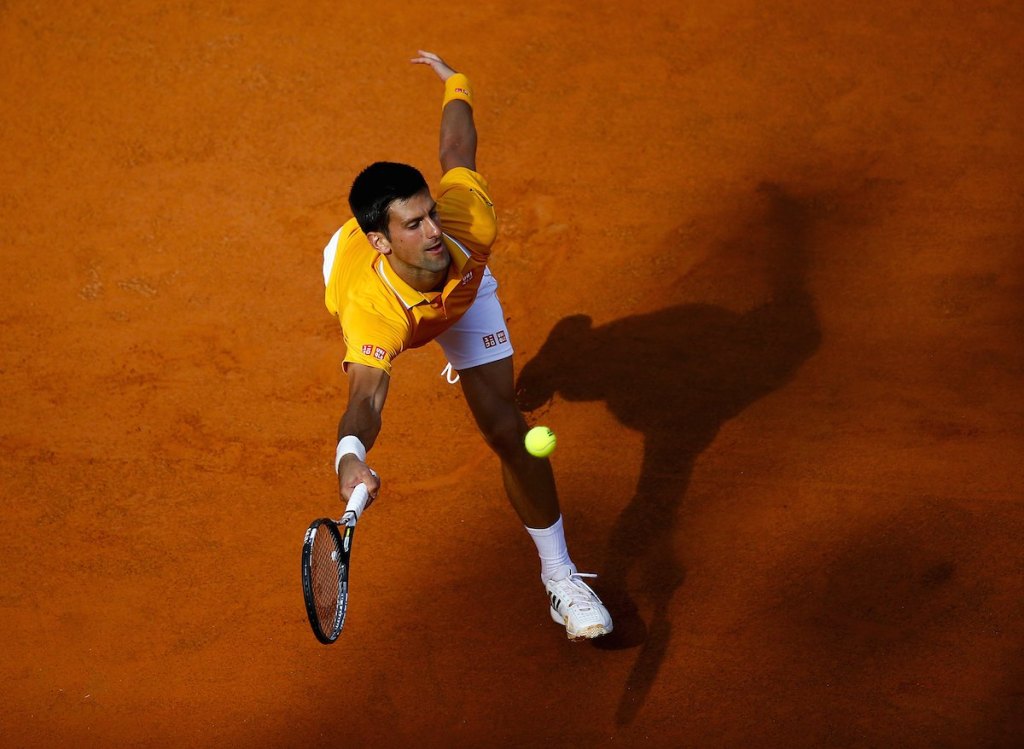
Photo courtesy of the http://www.themalaysianinsider.com Novak Djokovic won the Rome ATP 1000 tournament and became the first player to win Indian Wells, Miami, Monte Carlo and Rome in the same season.
Before the tournament began, The Tennis Review asked five questions about the event. Now it is over, we look at the answers to those questions.
Is Djokovic starting to feel the pressure of being, for the first time, the real favorite at Roland Garros?
It certainly looked like it in his first few matches. Djokovic dropped sets to Nicolas Amalgro, Tomaz Bellucci and Kei Nishikori. Djokovic had not played though since Monte Carlo, and that experienced trio on Clay is a tough one to come up against in your first three matches on the slow red stuff after a break.
On the bright side for Djokovic and his fans, he recovered well from losing those sets and won the deciding sets with some conviction, especially against Nishikori.
In fact. Djokovic got better as the week went on, dismissing David Ferrer in two sets in the semis, and then defeating Roger Federer 6-4, 6-3 in the final.
In that championship match, the Serbian saved break points at 4-4 in the first set, ripped a return winner at 5-4 for break point, and then converted to take the set as he got the better of Federer in a long rally, forcing an error to end the point.
Djokovic may be feeling the pressure, but he is wearing it well in 2015. So far, he has been making history with every tournament win, becoming the first man in the Open era to win five Australian Opens, and the first man to win Indian Wells, Miami and Rome in the same season.
In his trophy acceptance speech Djokovic said he did not know what would happen in Paris, but he was enjoying life now. That seems the healthiest approach. No one knows whether Djokovic will be up to the pressure of being the favorite in Paris and completing the Career slam, but one thing we do know is that it will be enjoyable to see him, if he can produce the tennis he has been showing so far this year, do it.
Does Federer have a serious shot at winning in Paris?
Federer’s appearance in the final was his best showing this Clay season. He may have won the ATP 250 Istanbul event, but went out early in the big ones in Monte Carlo and Madrid. His runner up finish in Rome went some way to compensating for those upsets and tells us the 2009 champion has a serious shot in Paris, but he will need, as all players do, various factors to go his way.
Federer, up to the final, was playing to his strengths, and scored impressive wins over Tomas Berdych and Stan Wawrinka, players he matches up well to when his all out aggression is clicking. He should certainly be able to repeat those wins in Paris, and the draw could deliver them in his quarter and semi in Paris.
The big obstacle is going to be Novak Djokovic. The Serbian had too much depth of shot, too good a strategy, too effective a serve, and is too tough mentally for Federer to do much about on slow surfaces, a familiar story for Federer in big finals against Djokovic- the Serbian has beaten him in their biggest finals since 2014.
Federer would need Djokovic to get knocked out early to have a serious shot in Paris. Or play the match of his life. Both are certainly possible.
Just how much has Andy Murray really improved on Clay?
After defeating Jeremy Chardy, Murray withdrew from the tournament, leaving us none the wiser if he had really improved on the clay that counts- the slow red clay of Rome also found in Paris.
Certainly he has improved on ‘clay’ this year- he won his first titles on the stuff. But Munich is a 250 event, with a higher altitude than Paris, and it is a puzzle he has not won one of those smaller clay events, even a 500 one, up until now. As for Madrid, the high altitude makes the conditions more favorable for Murray.
We already know Murray is good on slow clay- he has two Roland Garros semis to prove it and has contested two epic semis in Rome with Nadal and Djokovic. A trip to the final in Rome, however, would have told us for sure he was a better player on the slow dirt than before.
Right now, all we know is he is playing well on the stuff, nothing more, nothing less, and that is exactly how the world No.3 might want it, too.
Is Nadal really done?
After losing to Wawrinka 7-6, 6-2, in a match in which he held four set points in the first set, Nadal said the combination of the night time slot and Wawrinka had done him in. However, once upon a time, Nadal would have found a way round that, would have found a way to win.
This season, for the first time, Nadal goes into the French Open without a European Clay court title to his name, and the four defeats he suffered to Djokovic, Fognini, Murray and Wawrinka all have one thing in common- they were all over in straight sets.
That is a worrying fact, By the time Nadal was ready to go home, he was ready to go quickly. His opponents were able to impose their game, and he was unable to impose his, even when he had big chances.
Just as worryingly, as was the case against Murray in Madrid, his opponents were able to take advantage of Nadal being very much off his game, and Nadal was not able to win ugly, one of the many factors that have made him such a great champion.
We won’t really know if Nadal is done until we see what happens in Paris. This lead up could fuel him to pull of one more, and it would be a record tenth, Roland Garros title, or it could be the final dying splutters of an engine which has, after one of the game’s greatest runs, finally had enough miles on its clock.
Who else is a threat to the Roland Garros title?
No one really put in a last minute bid as a contender. There were a couple of attempts, but they were shut down not long after they started.
Wawrinka looked like a threat as he brushed aside Rafael Nadal in their quarter-final. He is rarely likely to play a better set on clay than he did in the second against the 9 times French Open champion. He is also, hopefully, rarely likely to play as badly as he did in his dismal showing against Federer , a match that perfectly reflected what a streaky player he is.
Wawrinka could go on one of those streaks in Paris, and the disappointment of that Federer loss might push him to do so, but it is hard to see it happening.
Kei Nishikori also looked good as he took a set off Djokovic, but went away tamely in the third, a microcosm of much of his career.
Commentary by Christian Deverille
Follow The French Open with The Tennis Review.
Sign up to our e-mail mailing list and get notifications of the latest posts.
What did you think of Rome? Please share a comment with us.
-
Rome ATP Final Preview Novak Djokovic Vs Roger Federer
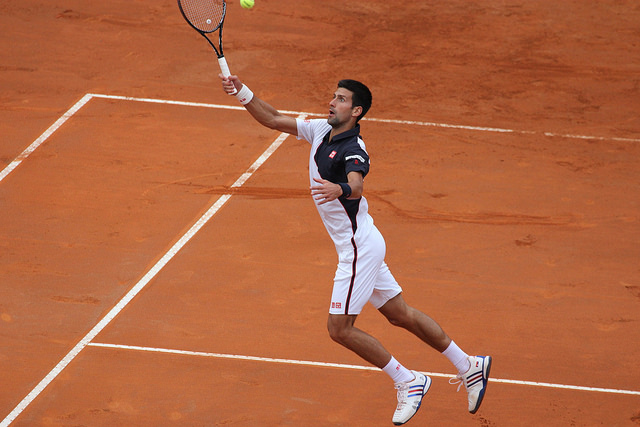
CC courtesy of Marianne Bevis at Flickr Novak Djokovic and Roger Federer will compete for the 39th time in the 2015 ATP 1000 Rome final. The Tennis Review previews the contest and predicts the winner.
Head to head:
Roger Federer leads the head to head 20-18.
Federer leads the clay head to head 4-3.
Recent history:
Since Federer’s resurgence in 2014, the rivals are tied at 4-4 with Federer leading their head to head 1-0 on Clay (Monte Carlo ’14).
However, Djokovic leads 4-1 in finals and has won their biggest matches (Indian Wells ’14, ’15, Wimbledon ’14).
History in Rome:
Djokovic has won the title three times (2008, 2011, 2014), and has beaten Rafael Nadal in two finals. He has also been runner up twice, both times to Nadal (2009, 2012). Djokovic is 29-5 at the event, and has never lost before the quarter-finals.
Federer, meanwhile, has been to three finals (2003 L. Mantilla, 2006 L. Nadal, 2013 L. Nadal). He is 27-14 at the event and in his 14 visits has only made it to the quarter-finals and beyond six times.
Djokovic won their two encounters in Rome (2009, 2012)
2015 form:
Djokovic won the Australian Open, the first man to take the title five times in the Open era, and became the first man to ever win Indian Wells, Miami, and Monte Carlo in the same season.
He has suffered two losses- to Karlovic in Doha, and to Federer in Dubai.
Federer’s year has been a little bit patchy. He won in Brisbane but was upset by Seppi in Melbourne. He beat Djokovic to take the Dubai title, made the Indian Wells final,and then lost to Monfils in the last sixteen in Rome. He then won the title in Istanbul only to suffer an opening round defeat to Kyrgios in Madrid.
Form coming into the final:
Djokovic struggled in his first three matches against Amalgro, Bellucci and Nishikori, dropping the second set in all three matches, but took the third sets pretty comfortably. However, he had not played an ATP match on slow clay since Monte Carlo, and those three are also a pretty tough and experienced clay court group.
Djokovic’s semi-final win over Ferrer was more impressive- a 6-4, 6-4 win.
Federer has improved as the week has gone on. He has beaten Cuevas, Anderson, Berdych and Wawrinka in straight sets. He dropped just six games to Berdych, and came back from 0-3 in the first set to beat Wawrinka 6-4, 6-2, winning 20 points in a row at one stage.
Prediction:
Federer has not looked so good on slow clay for a while, seems to have a good balance between attack and defence, and goes into the final with confidence and good rhythm.
Djokovic, on the other hand, has possibly played his worst tennis of the season this week. However, he did look more focused in the semi-finals, and he will go into the final as the favorite.
Djokovic is the better slow court player of the two, and he and Federer have been splitting the faster surfaces matches and the slow court ones between them, with the exception of last year’s Monte Carlo, which Djokovic was injured in, and Wimbledon, which Federer very nearly won.
Djokovic also has been the better player in finals, and is almost unstoppable in ATP 1000 finals, winning the last ten he has competed in. Federer was the last man to beat him in one, at Cincinnati 2012.
Djokovic seems to have the edge in too many categories- history at the event, recent form, form in ATP finals, recent head to head over Federer on slower surfaces and in finals- to look beyond the world No.1 as the winner.
Djokovic to win in three sets.
Commentary by Christian Deverille
Follow the ATP Tour with The Tennis Review
Sign up to our e-mail list to get notifications of the latest posts.
Who do you think will win the final? Please share your thoughts below.
-
Rome ATP 1000 Will Answer Five Questions About ATP Tour
CC courtesy of Marianne Bevis at flickr.com The Rome ATP 1000 tournament is the last significant warm up to the French Open. The slow clay conditions will give a good indication of who will do well in Paris and the tournament, featuring the ‘Big Four’, will answer five important questions about the ATP Tour.
Does Federer have a serious shot at winning in Paris?
Federer has only made the finals at two Majors since winning the Australian Open in 2010- Wimbledon (2012, 2014) and Paris (2011). Since his 2011 run to the Paris final, Federer has gone SF, QF, 4R at the event.
If the pattern plays out, Federer could be going out in the last 32 in Paris in 2015. Considering he is 5-2 on Clay this year, is 1-2 at the ATP 1000 Clay events, and has only played one top twenty player on the surface so far (Gael Monfils, 18), a strong run in Paris is vital to Federer’s chances of winning Roland Garros.
The Rome draw has been kind. The first serious threat would be Tomas Berdych in the last eight, and Federer is 3-0 against him on Clay. Then, if the Spaniard gets that far, a struggling Nadal awaits. A win over Nadal on Clay before the French Open could be just the boost Federer needs.
Federer would be unlikely to beat Djokovic in the final, but a runner up finish in Rome would mean he would have a serious shot a making the Roland Garros final, and anything, with all the pressure Djokovic is under and in front of the Pro-Federer crowd, could happen in three Sundays time on Court Chatrier.
Just how much has Andy Murray really improved on Clay?
Winning back to back titles in Munich and Madrid was an impressive feat for Murray- he had never made a clay final before, let alone an ATP 1000.
Things in clay tennis also don’t get much better than beating Nadal, whatever his form, before his home crowd for your first Clay ATP 1000 title.
However, Murray’s Munich draw did not pit him against any serious threats until Kohlschrieber in the final, and Murray led him 3-1 before that match. Then, in Madrid, Murray may have put in his best ever clay display against Nishikori, but he did not have to produce anything special in his other matches, not even against Nadal who hit 26 errors in 17 games.
One or two impressive performances in a nine match run, for a man who has arguably played better in clay matches in Rome versus Nadal last year and at the same venue versus Djokovic in 2011, does not mean Murray is a better clay court player than before. Instead, it is more a testament to Murray’s experience, big match mentality, and overall consistency.
In Rome, though, Rome will be challenged from the get go. If the Scot has actually improved on the surface, then Rome will be the place we will really find out.
Up first is Jeremy Chardy, who upset Federer in last year’s Rome Opening round, and then could come either Jo-Wilfried Tsonga or David Goffin, both of whom have had some of their career best results on Clay.
Murray would then likely have to get past Ferrer, Federer and Djokovic to take the title. If he can achieve that feat, then we can not only say he has really improved on Clay, but also that he is, for the first time in his career, a genuine contender at Roland Garros.
Is Djokovic starting to feel the pressure of being, for the first time, the real favorite at Roland Garros?
Djokovic has gone into Roland Garros before as a favorite, but never as The favorite like he will this year. Nadal’s crushing loss to Murray in the Madrid final has cemented Djokovic’s status even further, and Rome will be his last event before he tries, for the fourth consecutive year, to complete the Career Grand Slam with a win in Paris.
Djokovic has played some of his best clay tennis in Rome and has three titles there (2008, 2011, 2014). This season he enters the event in some of his strongest ever form- he has gone undefeated in ATP 1000 events in 2015, leads Roger Federer in the rankings by 5,200 points.
His great form has also coincided with the decline of his biggest threat in Paris, Rafael Nadal, slipping out of the ATP Rankings top five, to No.7, for the first time in a decade.
If ever Djokovic has been in the right place at the right time, it is now. Unfortunately, Roland Garros brings out the nerves in him greater than any other stop on the ATP Tour. If he is feeling them in the run up, we will see signs of it in Rome.
Signs his rivals will be on the lookout for.
Is Nadal really done?
In Monte Carlo, Nadal came up against a dominant Djokovic, in Barcelona he was undone by an opportunistic and inspired Fognini, and in Madrid a consistent Murray and 26 unforced errors from his own racket were his downfall.
That is three big defeats on clay in a row, and all in straight sets. The words ‘Nadal is Done‘ seem set to be graffitied all over Roland Garros, but no one should even think about buying a canister until Rome is over.
Nadal has suffered a lot these past few months, and openly, too. He has learned a lot of lessons, and if he is going to put them to use, he has to, and will, do it now- a defeat before the Rome final could see him fall out of the top eight, which would mean a meeting with a top four seed in Paris.
The slow clay courts of Rome, where Nadal has won the title seven times, could be the place where, if it ever going to happen, the Nadal comeback finally gathers steam.
Nadal could be tested as soon as the fourth round by the in-form John Isner, who pushed him to five sets at Roland Garros ’12. Stan Wawrinka is his scheduled last eight opponent, but the Swiss has under-performed this clay season. In the last four Nadal could face Roger Federer. The Spaniard has a huge mental edge over the Swiss on Clay, and that could be the match that makes or breaks him.
In the final, Nadal would likely face Djokovic, and likely lose. But he has lost to Djokovic twice in Rome (2011, 2014) and gone on to win in Paris, and a third defeat would be another valuable lesson in the most difficult course of Nadal’s career.
A course he can still come out on top of if he can make up some lost ground in Rome.
Who else is a threat to the Roland Garros title?
The ‘Big Four’ really are the big four when it comes to threats for the Roland Garros 2015 title. Nishikori is the only other player to have shown his credentials somewhat, though he disappointed in Madrid. No one else has really made an impression other than Berdych who had a great run in Monte Carlo, but who could not build in against Nadal in Madrid.
Wawrinka, Ferrer, and Dimitrov have underwhelmed, and Monfils started with a spark in Monte Carlo only to get sidelined by injury once more. Meanwhile, Nick Kyrgios, who showed what a great match player he was in Madrid against Federer, is already out in Rome, losing to Lopez.
Can Goffin, Thiem or Dolgopolov, three of the biggest talents in the Rome draw, show off their clay court skills in the final big warm up to Roland Garros?
Now is the time to showcase their skills and get some confidence on a big stage against the biggest names. In an underwhelming clay season, notable mainly for Nadal’s lack of wins, it is not too late for one of the lower ranked players to make a name for themselves as a Roland Garros dark horse and add a bit of excitement in the run up to the French Open.
Commentary by Christian Deverille
What do you think of Murray’s Madrid Win? Please share your thoughts below.
Follow the ATP Tour with The Tennis Review.
Like this article? Please share it.
Subscribe to our email list and get the latest posts delivered to you instantly
-
Murray Madrid Win Impressive But Reveals Little About French Open
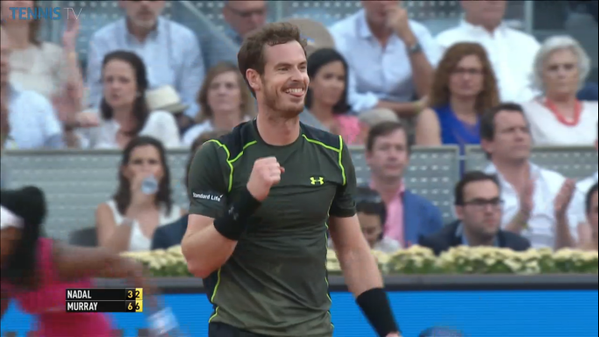
Screenshot from twitter Andy Murray’s 6-3, 6-2 defeat of Rafael Nadal in the Madrid ATP 1000 final was an impressive surprise. The Scot had never made an ATP 1000 Clay final, had only won his first career clay title this very same week, on Monday in Munich, and inflicted on Nadal arguably the heaviest clay final defeat of his career.
The win is Murray’s ninth in a row on clay and comes on the back of a convincing performance against Kei Nishikori in the semi-finals. Murray never had to scale those same heights in his win over Nadal- the Spaniard hit 26 errors in the 17 game contest– but did what he does best- just enough to get the job done, and what a fine job he did.
But while the win may be impressive and will look good on Murray’s resume (it is his tenth ATP 1000 win, his 33rd career title), the fact is it tells us very little about what will happen in two weeks time at the French Open.
Madrid’s high altitude and the surface’s faster pace means it does not serve well as a reliable indicator of what will go down in Paris. Nadal has won the title just four times since its inception in 2009, and has suffered heavy defeats to Roger Federer (2009) and Novak Djokovic (2011) in the final, and was upset by Fernando Verdasco in the fourth round in 2012.
The Spaniard was also a set and a break down to Nishikori in last year’s final before the Japanese got injured and had to retire in the final set.
Nishikori likes a faster court, as does three time winner Roger Federer, 2009 finalist Tomas Berdych, and 2013 runner up Stan Wawrinka. Murray is also a fan of faster surfaces- his two grand slam wins have come in London and New York and have been the scenes of his finest displays of aggression and touch, elements he showcased in his run to the Madrid title.
Murray, who earns 1000 ranking points for his efforts, will not mind Madrid serves as little more than a side show on the road to Paris. The tournament, the baby of Romanian Ion Tiriac, who so infamously made the surface blue in 2012, was once played in Hamburg where the altitude and court speed was similar to Paris. Murray went 3-3 in Hamburg from 2006-2008, but made the quarters in his first trip to Madrid in 2009, two more quarter finals and two fourth rounds before becoming only the fourth man to defeat Nadal in a Clay court final after Djokovic (x4), Federer (x2) and Zeballos.
That fact alone should boost Murray’s confidence as he enters Rome and then Paris. The Scot has done well in France, his athleticism and defensive skills serving him well, reaching the semi-finals twice and compiling a 23-7 record there. But as Nadal’s other Madrid conquerors have found, Nadal at Roland Garros over five sets is incomparable to the one beaten in Madrid over three. Nadal bounced back from Madrid defeats in 2011 and 2012 to take the Roland Garros title, comprehensively beating Federer and Djokovic in the finals.
In 2009, though, Roger Federer defeated Nadal 6-4, 6-4 in the final, and went on to win Roland Garros. However, the Swiss did not have to face Nadal, Robin Soderling taking care of that so sensationally in the fourth round. Should someone else do a Soderling in 2015, Murray could find himself in the final, and with the kind of clay court tennis he has been showing these past two weeks, and considering how Roland Garros brings out Djokovic’s nerves like nowhere else, the once unthinkable words ‘Andy Murray Roland Garros Champion’ could become a very impressive reality.
A very big ‘could’ it may be, but before today, it did not seem even a possibility.
Commentary by Christian Deverille
Follow the ATP Tour with the Tennis Review
Sign up to our e-mail list to get notifications of all the latest posts.
What did you think of Murray’s win? Share your thoughts with us below.
-
Novak Djokovic Right to Miss ATP 1000 Madrid Open
CC courtesy of Marianne Bevis at Flickr Novak Djokovic’s decision to skip the ATP 1000 Madrid Open was the right one to make. The Tennis Review looks at why the season’s fourth ATP 1000 event will not be a stop on the world No 1’s schedule.
The conditions.
Madrid is 667 m above sea level compared to Paris which is 28 to 130 m. That means the balls fly faster through the air, the serve is as much, if not more, a weapon as the return, and aggressive tennis is better rewarded than in Paris, Rome or Monte Carlo.
Those conditions have helped Roger Federer win three times, Rafael Nadal three times and Djokovic only once. It is also the ATP clay event where Nadal has struggled the most – he has suffered two straight sets defeats in finals there and an exit in 2012 in the last sixteen. Djokovic has also been upset there early, too, losing to Tipsarevic in 2012 and Dimitrov in 2013.
Timing
The Madrid final, which Dokovic would very likely contest, takes place the day before Rome starts. Djokovic would have to play ten matches in fourteen days if he were to reach both finals and then have a rest week before the big one in Paris.
In 2011, the only year Djokovic has made the finals of both Madrid and Rome, and won them both, the Serbian suffered a surprise defeat to Roger Federer in the Roland Garros semi-finals.
While Djokovic may be the fittest player on tour, back to back ATP 1000 tournaments finishing a week before the French Open might be too much even for him with another six matches to go before attempting one of tennis’ most elusive feats – beating Rafael Nadal in best of five in Paris.
Djokovic is also a five time Australian Open champion, the Slam with the shortest lead-up, and knows how to compensate for minimal match play with training.
Confidence.
2011 is the only season Djokovic has made the Madrid final. Since 2009, he has made a semi-final (2009), a quarter-final (2012), lost his opening match (2013) and not played twice (2010, 2014).
While Djokovic would likely make the final, he could be vulnerable, particularly to Roger Federer who has sprung two straight sets defeats on him on faster surfaces in the last seven months (Shanghai, Dubai) and could likely repeat that feat on a faster than usual clay court.
That defeat, or any defeat, would put a dent into the confidence Djokovic has built up winning The Australian Open, Indian Well, Miami and Monte Carlo this season, becoming the first man in history to do so.
Those surfaces, all medium- slow to slow, suit the Djokovic game, much like Rome and Roland Garros, and if he can enter The French Open with Rome on his resume too, his chances of his first French Open will be high.
However if he goes in with a defeat in Madrid, an inspired opponent on a sunny day in Paris might fancy their chances, take them, and with it Djokovic’s hopes of a Career Grand Slam for another year.
Commentary by Christian Deverille
What do you think of Djokovic’s decision to skip Madrid? Please share your thoughts below.
Follow the Madrid Open with The Tennis Review.
Like this article? Please share it.
Subscribe to our email list and get the latest posts delivered to you instantly
-
Novak Djokovic Seven Factors for ATP Success

CC courtesy of Marianne Bevis at flickr.com Novak Djokovic celebrated his 142nd week on top of the ATP Rankings (beating Rafael Nadal’s 141 weeks) on Sunday April 19th 2015 by becoming the first man in ATP history to win Indian Wells, Miami and Monte Carlo in the same season. The Tennis Review looks at seven factors contributing to the eight time Grand Slam champions history-making success.
1. Fitness
Djokovic is the fittest player on the ATP tour-fact. That was not always the case, however. In his early career he was infamous for retiring from matches due to sickness. But in 2010, he worked hard in the gym, got fit, became gluten free and became the player most capable of dealing with the trying playing conditions of the ATP tour.
Djokovic’s fitness allows him to compete on an eleven month tennis circuit, take part in 18 tournaments a year (and reach the later stages of 80-90% of them), and gives him the stamina to compete for hours in some brutally hot conditions. See his six hour 2012 Australian Open final against Rafael Nadal to appreciate the extent of his fitness.
Watch the Video of Novak Djokovic’s 2012 Australian Open defeat of Rafael Nadal below
Impressively, Djokovic is as fit at the start of the tennis season as he is at the end of it- winning the Australian Open in January five times and the WTF in November four times.
2, Court surfaces and game style
Djokovic’s feat of winning both the Australian Open and the WTF multiple times is helped by the fact that both the Australian Open and the season ending event in London are played on similar surfaces- slow, high bouncing ones. He also benefits from the general homogenization of the ATP surfaces, mostly medium slow- slow courts, which have helped him win the Indian Wells- Miami double three times (2011, 2014, 2015) and compile impressive winning streaks from Beijing in September to the WTF in November.
The slow high bouncing surfaces complement Djokovic’s aggressive baseline game which can switch to defense when needed, and he is the best player on the tour at turning offence into defense. He does that through his biggest weapon, his backhand, which he can hit cross-court at a variety of lengths and angles, pulling his rival wide, and opening up the court, and he is a master at changing direction of the ball and going down the line. Those slow surfaces give him plenty of time to get to the ball and set up his favorite shot.
He has also added variety to the game, coming to the net more, which gives him the edge against other baseline players such as Murray and Nadal, and added an element of surprise to his predominantly baseline style.
3. Open-mindedness
Djokovic’s increased play at the net was courtesy of Boris Becker’s influence. Djokovic hired the five time Slam champion as his coach at the end of 2013, and his risky decision paid off.
However much success Djokovic had had with his team – he had won six slams with them before hiring Becker- change was needed. In 2013, Djokovic lost his No.1 ranking, and the Wimbledon and U.S Open finals, and that U.S Open final loss to Nadal was his fifth loss in his last six Slam finals.
The results did not come immediately with Becker. Djokovic lost the Australian Open final, losing on a missed volley on serve match point down to Wawrinka in the last eight. But things took a turn for the better when he won Indian Wells and Miami back to back and beat Nadal in the Rome final. However his slam final record took another blow when he lost the Roland Garros final to Nadal.
At Wimbledon, though, everything clicked. Djokovic finally won another slam, and against his biggest rival at the time, Roger Federer.
4. Mental toughness
That much longed for Slam win was down to Djokovic’s improved mental toughness. In that final, Djokovic served for the Championship in the fourth set only to be broken and taken to a fifth set. He did not break down, though, under the pressure. Instead he held serve to 5-4 returning and then broke for the title.
Djokovic displayed great mental toughness in that match, the quality which has been a key aspect of his game when he won three slams in 2011. That toughness had diminished in 2012, when he lost the French Open final, double faulting match point down, and the U.S Open final that same season to Murray.
But most worrying was his 2013 Wimbledon final loss to Andy Murray in which he appeared tired and at times defeated before the final ball, a shadow of the player who in 2011 was almost unbeatable in big matches.
Djokovic certainly tried at Wimbledon 2015 though, and managed to stave off a resurgent Federer. Holding his serve with greater ease than the Swiss was a key factor. There were to be no double faults on key moments in this final thanks to a much improved second serve.
5. The Second serve
It is an old cliche, but in tennis, you are only as good as your second serve. Djokovic can tell you about that. He lost the French Open final 2012 on a double fault. Becker cleaned up the action, though, and gave Djokovic arguably the best second serve in men’s tennis. That serve held up in the Wimbledon 2014 final- Djokovic won 65 percent of his second serves in that match, compared to Federer’s 44, and his second serve has been the deciding factor in many a close match.
Add that to the best return in the game, and you have an eight time slam champion No.1.
6. Timing
Djokovic’s rise has also timed with his rival’s demise. Nadal is slumping, Murray has not been the same player since surgery, and while Federer is able to beat him on faster surfaces in best of three, the Swiss, now aged 33, has not been able to impress in best of five at slams, going to the finals once since winning Wimbeldon 2012.
The next generation have also failed to impress at the highest levels of the game due to the slower surfaces not rewarding their youthful speed and the lack of mental toughness early breakthroughs provide.
But while all around him have either been failing to progress or have been losing their games, Djokovic has been maintaining his, improving it even, and reaping the rewards.
7. Heart
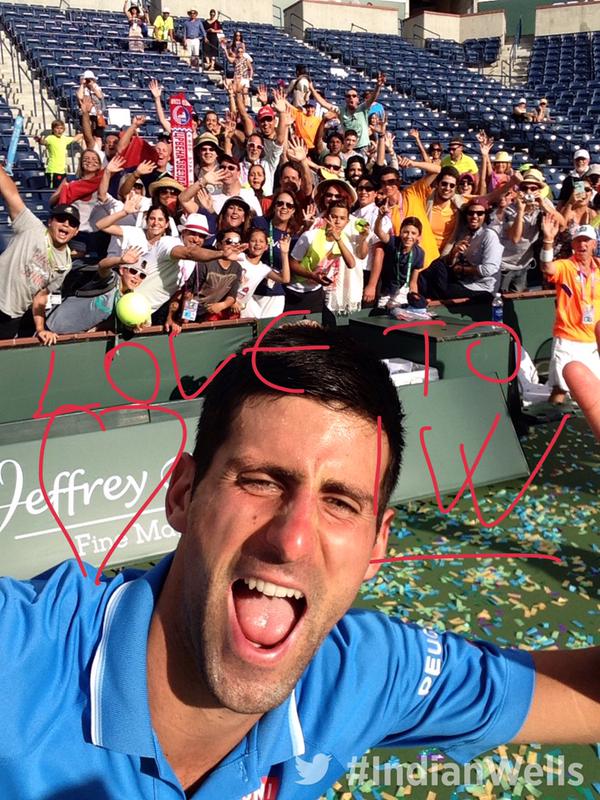
Heart is something Djokovic is not short of, and it has helped him fight through tough matches and motivated him to improve. Who can forget his saving match points against Tsonga at the French Open 2012, his five set win over Murray at the Australian Open that same year, or when he edged Roger Federer in a final set tiebreak at Indian Wells 2014.
That heart comes from his love of the game- he loves what tennis has done for him and his family, and he loves the fans his game has earned him. Few player show their love as much as he does either or receive it from the fans with such passion. Check out the Nole family to see one of the tour’s biggest and most vocal fan clubs.
Djokovic even gives his heart to the fans who do not support him, and there are many when he plays other greats, most notably Federer. But whatever the crowd do, from booing his challenges or shouting out between his serves at crucial moments, the world No. 1 finds it inside himself to dig deep and win, as he did at Indian Wells this year, and he always thanks the crowds and tells them he loves them.
One day, when Federer and Nadal are gone, and Djokovic is still giving it his all at the top of the game, challenged by a new generation, he will get that love back, too.
Not that that is why he gives his love, though.
Djokovic gives love to the game and its fans for one reason only- his heart. And quite a heart it is ,too- the heart of an eight time Grand Slam champion with the sixth longest reign on the top of the ATP rankings.
Commentary by Christian Deverille @thetennisreview
Follow The ATP Tour with The Tennis Review
What do you think about Djokovic’s factors for Success? Please share your thoughts below.
Liked this article? Please share it 🙂

Tennis from a fan's point of view
[
[
[
]
]
]

 thetennisreview