-
Miami Open Quarter-final Review John Isner Defeats Kei Nishikori
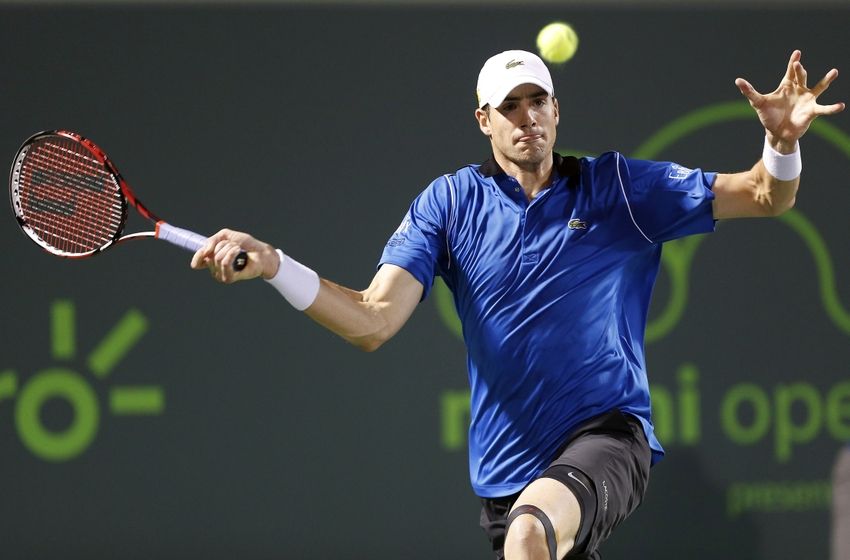
Photo courtesy of cdn,fansided.com John Isner (22) defeated his third ATP ‘young gun’ in a row when he defeated Kei Nishikori (4) 6-4, 6-3 in the ATP 1000 Miami Open quarter-finals. The win put Isner into the Miami Open semi-finals for the first time and also revealed the American was much more than just a big serve.
The match took its twist at 5-4 Isner returning when the American reached 0-30 on the Nishikori serve with a forehand down the line winner. Isner then hit a backhand cross-court return on the rise, forcing Nishikori to shank his forehand, and earning break point.
Back court winners, break points, these were supposed to be Nishikori’s strengths, but not, it seemed, today.
The break point illustrated that this was meant to be Isner’s day. The American went for broke break point up, hitting an angled forehand cross-court which hit the net cord and then dropped dead on Nishikori’s side of the court. Fortune favors the brave may be a cliche, but it is also very true.
In the second set, leading 1-0 , Isner earned three break points when he hit a forehand return winner down the line. The 22nd seed then converted the break point when he rallied with Nishikori from the baseline, proving to be the more patient of the two as Nishikori broke down first, going for a forehand cross-court winner and firing it long.
Isner’s cry of ‘Yeah’ was understandable. Return winners, playing the steadier tennis in baseline rallies- Isner was not reading the script, he was writing a new one.
A script starring an Isner who was more than just a serve. One featuring a location with the right conditions for the plot to unfold in – the afternoon heat helping his serve fly faster through the air, the slow surface giving him time to get to balls, time to unleash his forehand, executing in areas he was not just expected to perform, but also in aspects of the game in which he was greatly underestimated.
There were surprises more to come- the highlight being when Isner, leading 3-0, struck a backhand down the line winner, changing the direction of the ball against one of the game’s masters of that play, to end another hard hit rally to earn break-point.
No wonder Isner was smiling.
At 5-3, Isner served for the match. A forehand down the line winner, a perfect forehand volley, another forehand volley winner, and Isner had three match points.
The American took it on his second one with the weapon he is most known for doing damage with, his 12th ace, the shot he has built his career around, ending a 70 minute exhibition of all the other shots he can execute.
Isner also, in defeating Nishikori, executed his third higher seed in a row. And not just any old seeds either. In taking out Dimitrov (9), Raonic (5), and Nishikori, Isner had beaten all three of the ATP’s top-ranked ‘young guns’. Add into that mix the world Junior No. 1 Andrey Rublev the American beat in the first round, and 29 year old Isner had put paid to quite a few future world No.1s.
Next, Isner will have to take on his generation, the old guard, and all more highly accomplished than him. He would have to beat either Ferrer or Djokovic in the semi-finals, and then one of Tomas Berdych or Andy Murray for the title.
But in a week in which Isner has been tearing up the script with his return and back court game as much as he has been tearing through the court with his serve, it would not be too surprising if he continued his role of the executioner, an assassin with more than just a serve as a weapon, but a very sharp, and stacked, tool box at his disposal.
Commentary by Christian Deverille.
Follow the ATP Tour with The Tennis Review.
What did you think of Isner’s performance? Share your thoughts with The Tennis Review.
Like this article? Please feel free to share it 🙂
-
Kei Nishikori Vs John Isner Miami Open Quarter-Final Preview
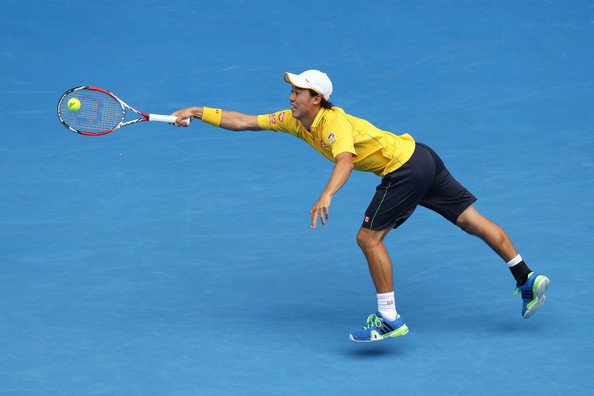
Photo courtesy of zimbio.com Kei Nishikori (4) takes on John Isner (22) in the ATP 1000 Miami Open quarter-finals. The Tennis Review previews the action and predicts the winner.
One of tennis’ best servers takes on one the game’s best returners in the Miami Open quarter-finals today. This will be the first meeting between the U.S’ highest ranked players and Japan’s highest ever ranked ATP tennis player.
Both men come into the last eight on the back of impressive runs. Nishikori’s has been impressive for it’s efficiency- the world no. 5 has not dropped more than 2 games in a set. Isner’s, meanwhile, has been remarkable for who he has beaten- none other than Nishikori’s generational peers Grigor Dimitrov and Milos Raonic.
Against Dimitrov, Isner faced a shot-making talent, and overwhelmned him with his serve. Playing Raonic, the American came up against another one of the game’s great serves, and edged him in a tiebreaker when Raonic took a risk, as you need to do in breakers, and came up short. Isner, meanwhile, stayed steady, held serve and made it through to his first Miami quarter-final on his eighth attempt.
Facing the Japanese, who is aiming to reach his second consecutive Miami semi-final, Isner’s serve comes up against a great return game. Isner won’t have too much coming back at him from his first delivery, but Nishikori will have something to say on the second.
Isner, though, won’t be putting in too many of those. In 2015, Isner has put in 71% of his first serves, won 84% of points behind that delivery, and saves 71% of break points. Perhaps, most ominously for his opponents, he wins 76% of his service games.
But, the 6ft9 Isner does get broken, and if anyone is going to break him, Nishikori is a likely candidate. The slow Miami hard court is good for his aggressive baseline game, and he is quite the shotmaker, too, so he will have plenty of time to take charge of points with stunning winners.
Nishikori is going to be the favorite in rallies, and he is going to have a shot when Isner does serve a second delivery, particularly of it is on break point- Nishikori wins 26 % of his return games, and converts 40 percent of his break points, too.
Nishikori also has a high chance of winning his service games, too- Nishikori wins 86 % of his service games, and the American only wins 8% of his return games.
This match, with both men having such strong weapons, is going to come down to the smallest of margins, and possibly in tiebreakers. At some point, the two are going to engage in a rally, and Nishikori is one of the game’s best from the back of the court. That quality will be the deciding one when this match comes down to decision time.
Prediction: Nishikori in three sets
Commentary by Christian Deverille @thetennisreview
Follow the Miami Open and The ATP Tour with The Tennis Review
Who do you think will win this match? Please share your thoughts below.
Liked this article? Please share it 🙂
-
Why We Love Tennis
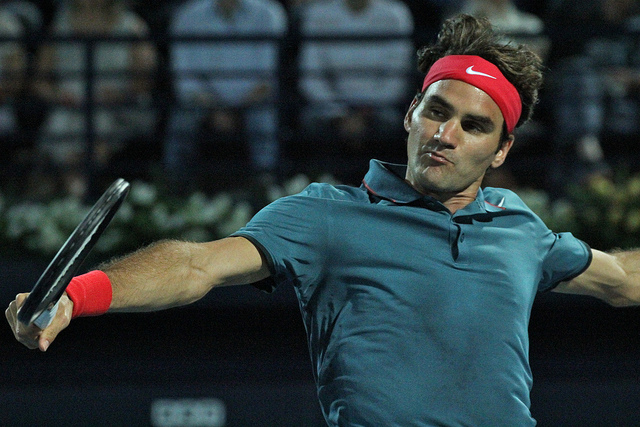
CC courtesy of Marianne Bevis on flickr. To celebrate World Tennis Day, The Tennis Review looks at ten of the many reasons why we tennis fans love tennis. Happy World Tennis Day and Happy watching!
1. Great battles.
Ranked by many as the greatest match of all time, the Wimbledon 2008 final between Roger Federer and Rafael Nadal was a battle between the grass court King and the two time runner up hungry to prove he could be champion.
Watch the tiebreak below to relive the drama, intensity and quality of one of tennis’ greatest battles.
But it’s not just tennis which gets tennis players battling each other. Check out this video from last year’s Roland Garros featuring Gael Monfils and Laurent Lokoli. As if it was not enough to be great at tennis, these two had to master dancing as well.
2. Emotion
We live tennis on the court, we live through it from our armchairs, too. The big matches provide big emotions, few more tear jerking that when Roger Federer broke down in the trophy ceremony of the 2009 Australian Open.
Federer had been on the verge of tying Pete Sampras’ 14 slam record in front of Rod Laver, but Nadal proved too good for the Swiss, a fact that reduced Federer to tears.
Federer’s tears divided fans- some cried with him, some taunted him for crying like a baby- but whatever side you were on, you felt something, and tennis was why.
For those Federer fans who found the above video upsetting, here is one which will bring back happier memories- Federer’s tears of happiness when he won his first Grand Slam at Wimbledon 2003.
3. Excellence
You want to see aces, volleys, lobs, perfectly timed forehands, incredible shot-making, strategic genius and all that is excellent about tennis? Then look no further than Roger Federer.
The Swiss is not just talented, he has worked hard and turned that talent into sheer excellence.
Check out this Roger Federer compilation video to see tennis at its most excellent and fall in love all over again.
4. Talent
Tennis has been blessed with some great talents – McEnroe, Becker, Nalbandian, Safin, Santoro, Rios, Federer, Wawrinka to name a few.
Grigor Dimitrov is arguably the most talented player of his generation, the one tennis fans are waiting for to make their move to the very top of the game.
Take a look at the video below to see why Dimitrov has earned himself the nickname ‘Baby Fed’ and the talent that has many believing he will be, like his tennis daddy once was, the future of tennis.
5. Shocks.
The thought of Rafael Nadal losing at the French Open in 2009 was not one many fans were entertaining at the time. Nadal was the reigning French Open, Wimbledon and Australian Champ, the world No.1 and had never lost at Roland Garros since winning his first title on his debut in 2005.
The idea of Nadal losing in the last sixteen was as crazy as the French getting rid of the clay and replacing it with grass.
Robin Soderling thought differently. He not only thought it, however- he did it. The Swedish player played the match of his life, and knocked the champion out in four sets.
Nadal has not lost since at Roland Garros while Soderling has been absent from the tennis courts for far too long, but his 2009 Roland Garros win ensures he is still very much in the memories of many a shock loving tennis fan.
6. Humor
Tennis is not just sport, it can be comedy, too, especially when Novak Djokovic is around. Impressions, funny faces, silly comments, the World No. 1 has them all in his box of comedy tricks.
7. Controversy.
Controversy is never too far away from tennis and there are few better examples than the Australian Open 2014 final. Mid-match, an injured Rafael Nadal left Stan Wawrinka on the court and the Swiss was not pleased. Neither were the crowd.
Tennis fans loved it, though – booing Nadal like they were at a pantomine and debating it for weeks after the match.
8. Diversity
Tennis has many styles of play from serve and volley to baseline aggression from counter punching to all-court to name a few.
The sport is arguably at its best when two contrasting styles clash, and the rivalry between Andre aggressive baseliner Agassi and serve and volleyer Pat Rafter, which peaked with their semi-final battles at Wimbledon and the Australian Open, was a celebration of the diversity which causes many fans to fall in love with tennis.
9. Characters
Tennis has had its fair share of characters such as Ilie Nastase, John McEnroe, Boris Becker and Andre Agassi, but few have been as smart and witty as Marat Safin.
Watch him here after his breakout U.S Open 2000 victory on the David Letterman show to see a young Safin talk not just tennis but Anna Kournikova and Vodka.
10. Amazing athleticism.
Tennis can compete with any sport going when it comes to athleticism. In 2012, at the the Australian Open, Novak Djokovic and Rafael Nadal’ tested each others atheletic skills for over six hours to decide the men’s champion.
Six hours of tennis? Many people might wonder how you could sit in an armchair and watch tennis for six hours. Not tennis fans, though. Six of hours of tennis? Six hours of love more like.
Commentary by Christian Deverille
Follow ATP tennis with The Tennis Review. Subscribe to our e-mail mailing list to receive notification of the latest posts
Why do you love tennis? Share your thoughts with the Tennis Review Community in the comments box below.
-
Who is Borna Coric?

Photo courtesy of http://www.thenational.ae Borna Coric has been making all the right noises on the ATP Tour the past seven months, but who is the 18 year old Croatian getting the tennis world all excited? The Tennis Review gives you the lowdown.
Playing Style:
Coric said early this year that at his best he was similar to Djokovic, at his worst he was like Murray. It was an observation that drew criticism from the tennis media and Coric had to do some backtracking on social media.
The comment, though, was not incorrect. Coric has both slam winner’s strengths- their defensive skills and a weapon of a double handed backhand. His footwork also means on faster courts, he can track down most balls and return them with interest. When he is on form, he can be aggressive, too, like Djokovic, and when he is a little off, he plays, like Murray at his worst, a little passively.
Junior Career:
Coric’s junior career is impressive. He won the U.S Open Boy’s Juniors title in 2013, beating Thanassi Kokkinakis in the final. That victory propelled him to No.1 in the ITF Junior rankings.
Early Pro career:
In 2013, Coric won five ITF Futures titles. Coric started the year ranked 1,298 and finished it ranked 303. He lost his first ATP match Umag in July to 58th ranked Haracio Zeballos after winning the first set on a tiebreak.
2014 Breakthrough:
A year later at Umag, Coric, ranked 230, beat Edouard Roger-Vasselin, ranked 46, in the first round, avenged his 2013 defeat to Zeballos in the last sixteen and took 20th ranked Fabio Fognini to three sets in the last eight.
At the U.S Open, Coric, a qualifier, upset 27th ranked Lukas Rosol in the first round, dropping just seven games.
In Basel, Coric upset Gulbis, and then defeated Nadal, on the comeback from injury in straight sets, on his way to losing to Goffin in three sets in the last sixteen.
2015
Coric did not really get going in 2015 until Dubai when he took advantage of a huge stroke of luck. He was let into the main draw as a lucky loser, beat an error prone Murray (the Scot hit 55 errors in their quarter-final) and played Federer in the last four.
Coric carried over the momentum to Indian Wells where he saved match points in the final qualifying round and then won his first ATP 1000 match.
Future expectations
Coric himself has said he is the Best of his Generation, but he has strong competition from Nick Kyrgios, Thanasi Kokkinakis and Alexander Zverev. Those four could end up dominating the game in years to come.
Coric is most likely to win Majors at the Australian Open and is quite likely to make no. 1 with the dominant tour surface being medium paced hard courts.
Commentary by Christian Deverille
Follow the ATP Tour with The Tennis Review
-
Andy Murray Player of the Day Miami Open Day 8
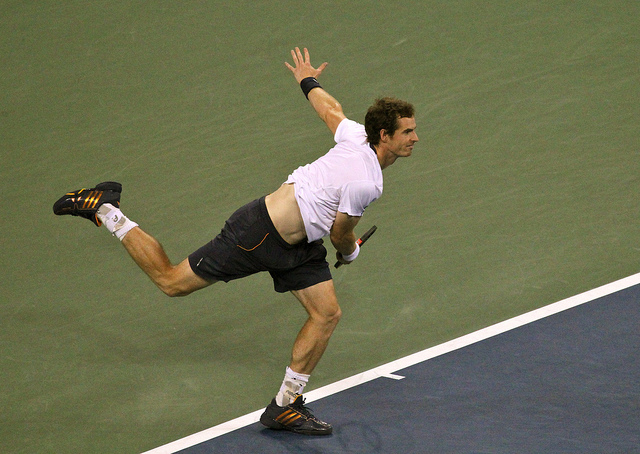
CC courtesy of Marianne Bevis at flickr. Andy Murray won his 500th ATP Tour match when he beat Kevin Anderson in the fourth round of the ATP 1000 Miami Open. That milestone makes him our player of the day.
Andy Murray had to fight hard for his 500th ATP Tour career victory, beating Kevin Anderson 6-4, 3-6. 6-3. Miami was a fitting location for such a career milestone- Murray has won 2 titles there (2009, 2013), and, after his safe passage into the 2015 quarter-finals, he is now 25-7 lifetime at the tournament, one of the most prestigious on the ATP Tour.
Fighting for a win is nothing new for Murray. Of those 25 Miami Open wins, eight have been three setters, including his marathon final set tiebreaker championship match win over Ferrer in 2013.
Few players on the ATP tour are as well-equipped to go the distance as Murray whose athleticism, fitness, and defensive skills come into their own on the predominantly medium slow surfaces of the ATP Tour. The Scot is versatile, too. While he won 44 points from the baseline against Anderson, he also won 14 points at the net.
ATP 1000 events have been a rewarding hunting ground for Murray throughout his career. Murray has won 9 ATP 1o0o titles and a total of 155 of his career wins have come at those events.He entered his first one in Cincinnati 2005, and won his first match against Taylor Dent before losing to Marat Safin in the second round.
At Grand slams, Murray has won 2 titles (Wimbledon 2013, U.S Open 2012), and 140 matches.
Murray’s first ATP victory came at Queen’s Club in 2005 when as a wild card, ranked 347, he beat 110th ranked Santiago Ventura in straight sets.
Murray’s victory over Anderson was a fine example of just why he is only the 46th man in the history of the ATP Tour to reach 500 wins. The world no. 4 was his consistent self- hitting 23 winners to 19 unforced errors, had a first serve percentage of 60, won 84% of points behind that delivery, and won 50% of his second serves.
The Scot also racked up impressive return statistics against one of the tour’s biggest serves. Murray’s return game is one of the ATP’s best, and he earned 11 break points and converted four of them.
Murray took the first set with his usual efficient style against players ranked below him. In the second, he did well to recover from falling 0-4 down, but could not prevent Anderson taking the set 6-3.
In the third set, Murray broke in the second game, converting his third break point when he returned a second serve right at Anderson’s feet at the baseline and forced an error. A signature shot from the Scot that he celebrated with a fist-pump and a cry of ‘come on’, another signature that has punctuated his 500 wins, and many of his 155 losses, too.
At 5-3, Murray reached break point courtesy of his fine defensive skills when he retrieved a big forehand down the line return from Anderson. The Scot’s footwork, reflexes, and touch, arguably the greatest mark of his talent, allowed him to get his racket on the ball and slice it back to the baseline. Anderson tried to generate pace, but made an error instead.
Murray’s retrieving skills, touch and, in particular his slice, a rare quality on the tour, have also been a characteristic of his game over the years, frustrating many an opponent into error.
On match point, Murray served into Anderson’s body on the forehand side, stepped into the court, and hit his ever-reliable backhand aggressively to Anderson’s backhand side, once more earning an error, and with it, his 500th career win.
Watch highlights of Murray’s win over Anderson below.
Commentary by Christian Deverille @thetennisreview
Follow the Miami Open and The ATP Tour with The Tennis Review
Liked this article? Please share it 🙂
Do you agree with our choice of player of the day? Please share your thoughts below.
-
Milos Raonic Vs John Isner Miami Open Last Sixteen Preview
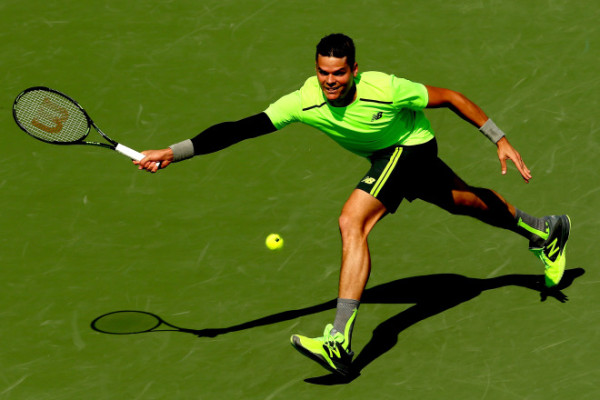
Photo courtesy of movietvtechgeeks.com Milos Raonic (5) and John Isner (22) go head to head in the last sixteen at the ATP 1000 Miami Open tonight. The Tennis Review previews the action and predicts the winner.
Isner leads this battle of the big serves 2-0, winning both of their matches at ATP 1000 North American Hard court events (Toronto 2012, Cincinnati 2013).
That period was perhaps Isner’s career peak and one in which Raonic was still developing. This match will see them meet in very different circumstances- Isner is currently ranked 24 (he was ranked 11 when he beat Raonic in Toronto ’12) while Raonic is now a solid top ten player, ranked no. 6.
Back in 2012-2013, Raonic had his big serve, but the rest of his game was still a work in progress. Since late 2013, Raonic, with the help of coach Ivan Ljubicic, a lot of progress has been achieved and the Canadian has a better back court game, a better net game and a much improved return game.
The hard work has paid off- a Wimbledon semi-final, a French Open last eight finish, a Washington title, wins over Federer, Nadal and Murray, a career ranking of no.5, all have been added to the Raonic resume in the last year.
Raonic showcased his improved skills in his match against Chardy in the last 32. The fifth seed was taken to the brink by the Frenchman, wobbling when serving for the match in the second set and being taken to a final set tiebreaker.
Raonic took control in that tiebreaker though as he took it 7-3 with service winners, winners at the net, and his much improved forehand helping him land safely into the fourth round after a turbulent match.
Isner, meanwhile, had a different path to the last sixteen- the American was rock solid in his straight sets defeat of Dimitrov.
It is a good thing both men have recent practice of being clutch when they need to be. Serve will rule in this match, (Isner wins 96% of his service games, Raonic is at 94) and it will most likely be decided in tiebreakers.
That is where Raonic’s better overall game should come into effect. On Miami’s slow hard courts, he will have more chances on the return and in rallies, and the Canadian is mentally tough enough to block out the pro-Isner crowd when the match gets tight, tougher than he was back in 2012/13.
A lot has changed since these two big serves last met, and that should be reflected in tonight’s result.
Prediction: Raonic to win.
Commentary by Christian Deverille @thetennisreview
Follow the Miami Open and The ATP Tour with The Tennis Review
Who do you think will win this match? Please share your thoughts below.
Liked this article? Please share it 🙂
-
Milos Raonic Miami Open Day 7 Player of the Day
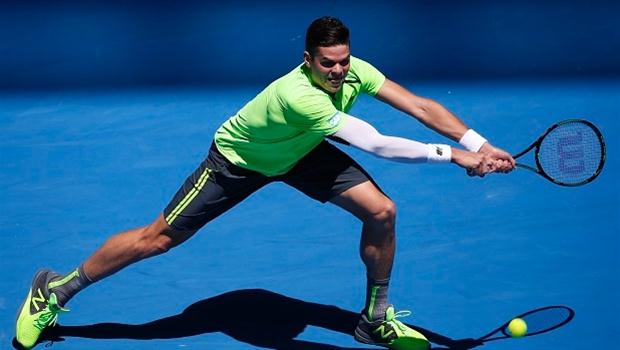
Photo courtesy of http://www.cbc.ca Milos Raonic (5) had to fight to get past giant-killer Jeremy Chardy (31) in the last 32 of the ATP 1000 Miami Open. The fifth seed’s 6-1, 5-7, 7-6 (3) victory earns him our player of the day award.
Losing to Chardy would not have been the Canadian’s most shocking career defeat- only six months ago he lost a match to a player outside of the top 100. Chardy is at least a top 40 player and has a list of notable scalps- Del Potro at the Australian Open 2013, Murray at Cincinnati 2012, Federer at Italian Open 2014.
The way in which the Canadian lost his grip on the match, however, was a little surprising considering he led Chardy 5-0 in their head to head and was playing the better tennis on the day by far.
The Canadian swept through the first set 6-1, and broke to lead 3-2 in the second, and looked set to cruise to victory.
At 5-4, Raonic served out for the match, but his increasing errors and Chardy’s consistency, variety and well-crafted moments of aggression allowed the world no.38 to break back and level the set at 5-5.
Raonic was unable to convert breaks point in the next game, Chardy held serve, and then took control of the match to break Raonic and take the second set 7-5.
Chardy served first in the decider and both men held serve, with Raonic two points from defeat serving at 4-5, all the way to the tiebreaker.
In the tie-break, though, Roanic showed the improvement to his game over the last eighteen months, particularly on the mental side of things. While he had looked rattled since losing his grip on the match, in the tiebreak he settled himself and took control.
The fifth seed was gifted a mini-break on the very first point of the tie-break when Chardy double-faulted. Raonic then struck a service winner and followed it up with a serve down the middle and a forehand winner off the short ball to lead 3-0.
At 3-2, Raonic served down the tee, hit a slice backhand approach shot and hit a winning forehand volley. It was a confident and calm display against a man who had pushed him all the way the previous hour. A service winner later and Raonic was 5-2 up, no longer being pushed, but, just as he had started the match, doing the pushing around.
At 5-3, Raonic unleashed his backhand on the return, hitting it deep to Chardy’s forehand, got the Frenchman on the stretch, and then, with all the time in the world, hit an inside out forehand cross-court to force an error.
On his first match point, on his serve, Raonic hit a service winner, and sealed the win.
The Canadian took a deep breathe, and for good reason. His run to the semi-final in Indian Wells had helped him get some momentum going again, and he had taken his eye off the ball against Chardy, one of the game’s most dangerous 30-40 ranked players, for a second and narrowly avoided letting the win slip from his grip.
Raonic can take great confidence, and heart, that his serve, forehand, return and volley all stood up to the Chardy test when it had mattered most, the hard work put into his game the past eighteen months paying off in the form of a hard-fought second consecutive trip to the Miami last eight.
Commentary by Christian Deverille @thetennisreview
Follow the Miami Open and The ATP Tour with The Tennis Review
Liked this article? Please share it 🙂
Do you agree with Milos Raonic as player of the day? Please share your thoughts below.
-
Miami Open Day 7 Preview Grigor Dimitrov Vs John Isner
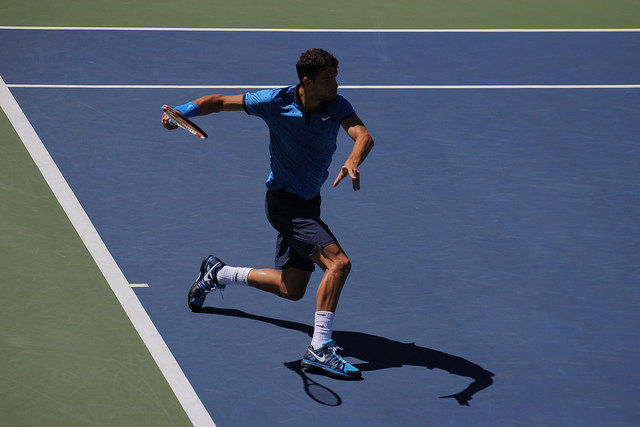
CC courtesy of Marianne Bevis @ Flickr Day 7 of the ATP 1000 Miami Open features Grigor Dimitrov taking on home hope John Isner. The Tennis Review previews the action and predicts the winner.
This clash of the big serve-big forehand combo of Isner versus the shot-making and variety of Dimitrov fully deserves its night match status.
This will be the first meeting between the two. Dimitrov has a good record against big servers on hard court surfaces- he dealt Raonic a defeat at the 2014 Australian Open, and has wins over Kevin Anderson (leads 5-1). Isner, meanwhile, has a mixed record versus shotmakers, being 1-4 versus Federer, but 2-2 versus Gasquet and 2-1 versus Wawrinka.
Neither man, though has done particularly well in Miami. Dimitrov is 5-4 at the event, with his best result being the last sixteen. He also scored a win over 2010 finalist Tomas Berdych in 2012. Isner is 8-7 and has been to the last 16 twice (2011 and 2014).
The serve, being an Isner match, will play a huge role in the outcome. In 2015, Isner has won 96 percent of his service games with an average first serve of 71 percent, and he wins 83 percent of points behind that delivery. Dimitrov has impressive stats himself, but he cannot compete with Isner in that department.
But neither can Isner compete well with Dimitrov on the return, though both are far from being the best returners on the ATP tour.
Dimitrov has the better return game of the two in 2015- he has converted 34 percent of break points to Isner’s 22, and wins 21 percent of his service games to Isner’s 8.
The slower surface will help Dimitrov out on the return, but it is unlikely he will get many looks at a second serve.
This match will most likely come down to tiebreakers, and with Isner having the advantage of the serve, that big forehand of his to swing at short returns and the crowd behind him, Dimitrov will be up against it.
Dimitrov is struggling, too. He recently lost to Robredo in Indian Wells, throwing in two double faults when serving to stay in the third set at 5-6, another bad loss in a worrying string. Isner, meanwhile, is one of the game’s toughest players who will not blink when things get tight and will trust in his serve to get him through it, and against Dimitrov right now, it most probably will.
Prediction: Isner in three sets.
Commentary by Christian Deverille @thetennisreview
Follow the Miami Open and The ATP Tour with The Tennis Review
Who do you think will win this match? Please share your thoughts below.
Liked this article? Please share it 🙂
-
Fernando Verdasco Miami Open Day 6 Player of the Day
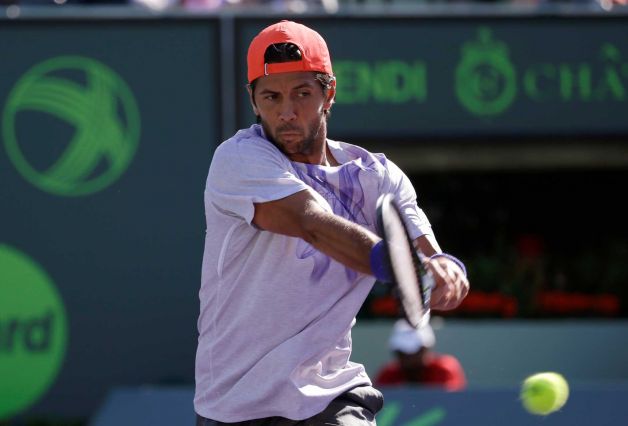
Photo courtesy of timesunion.com Fernado Verdasco’s 6-4, 2-6, 6-3 upset of Rafael Nadal in the third round of the Miami Open earns him the title of Player of the Day.
Verdasco (29) was 1-13 against Nadal (2) going into the match. Now he has beaten the 14 time slam champion twice in a row- he won the last time they met on the blue clay of Madrid in 2012, another three set win.
The last time Verdasco had beaten a top ten player was when he beat then world no. 9 Richard Gasquet in Indian Wells last year.
Verdasco broke Nadal in the ninth game of the first set when the Spaniard shanked a forehand, one of a few uncharacteristic shanks to come off his racket in the match.
Verdasco was nervous in the second set, missing some easy shots and dropped it 2-6.
In the third, he pulled himself together and hit a purple patch at at 2-1 returning. Verdasco hit a forehand winner down the line for 15-30, and then hit another forehand winner, his 14th of the match, this one angled and into the corner of the service box, clipping the outside line, for break point.
Verdasco took his second break point with an inspired combination of an angled backhand cross-court into the service box and then, when the ball came right back to him, hitting a inside out forehand to the same spot with such pace it could only be a winner.
Verdasco, now leading 3-1, grabbed the momentum. He kept going for his shots and hitting winners to hold onto his lead and serve out for the match at 5-3.
Verdasco reached his second match point with a forehand winner from mid-court. He then took the match courtesy of a body serve, heavy with top spin, which bounced high off the line and forced an error from the world no. 2.
Verdasco was 12-12 in Miami before this year and enters the last 32 for the third time in his career (2009, 2010). He will play Juan Monaco for a place in the last eight.
Commentary by Christian Deverille
Follow The Miami Open and the ATP Tour with The Tennis Review
-
Five Reasons Tsonga’s Miami Open Return is Great for Tennis
 CC courtesy of Marianne Bevis at Flickr.
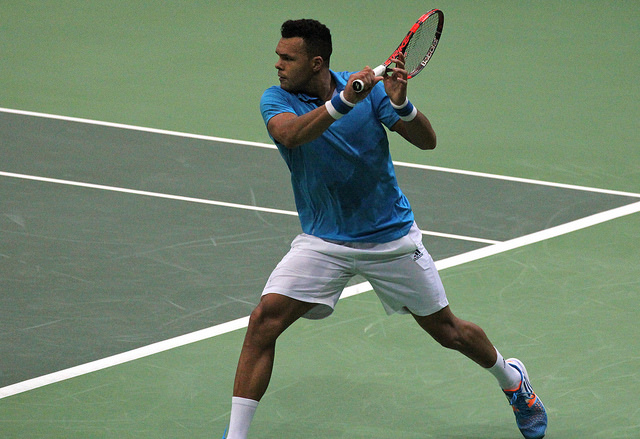
Jo-Wilfried Tsonga’s 2015 campaign took a while to get started, but his first match of the year, a three set defeat of Tim Smyczek in the second round of the Miami Open, finally got things going. Tsonga’s return was well worth the wait, too, and tennis is all the better for his return for five good reasons.
Entertainment:
Few players on the ATP Tour play with as much variety as Tsonga. The Frenchman can strike winners with his forehand down the line, can hit back hand winners on the run, can step inside the court and dictate, can finish points of at the net, can hit aces.
What is more, in the course of a match, he will most likely entertain us and perform all of them.
He plays to win:
One thing that makes Tsonga such a joy to watch is he plays to win. The Frenchman never lets an opportunity to move forward and finish the point inside the court pass him, even if he might get passed doing so. He is a risk taker, whether it is the opening point, or he is match point down.
That quality was on show in his match against Smyczek. His winner count was 30, while his error count was 36. The two being so close together reflects his aggressive approach to winning, an aspect of his game which makes him so easy to cheer for.
His serve
Tsonga has one of the best serves in the game, especially his second serve, and when he faces a good returner, he can ace his way out of trouble.
When you watch Tsonga, you know his opponents will have to play their best to beat him. Breaking the Tsonga serve is tough, and so they will have to serve and return at their best which often results in a high quality match, and Tsonga has been involved in some classics.
A good example of the strength of his serve is the way he dealt Djokovic one of his heaviest defeats on hard courts last year in Canada. The Frenchman dropped just four games on his way to stunning the world No.1, and his serve simply overwhelmed the game’s best returner.
Tsonga went on to beat Dimitrov, Murray and Federer on his way to the ATP 1000 title, his serve a huge factor in that run.
Check out the video below to see Tsonga serve his way out of trouble against Djokovic in Marseille 2009.
He fights
Tsonga’s fight against Smyczek was typical of the Frenchman. This is the man who came back from two sets to love down to beat Federer at Wimbledon in 2011.
Watch highlights of Tsonga’s comeback victory against Federer at Wimbledon 2011 below.
He has that celebration dance
Words cannot do it justice. See for yourself below (from 00:19).
Watch highlights of Tsonga’s win over Smyczek below.
Commentary by Christian Deverille
Follow the ATP Tour with The Tennis Review
Are you happy to see Tsonga back on court? Please share your thoughts below.

Tennis from a fan's point of view
[
[
[
]
]
]
 thetennisreview