-
What Were the Top Ten Tennis Moments of 2015?
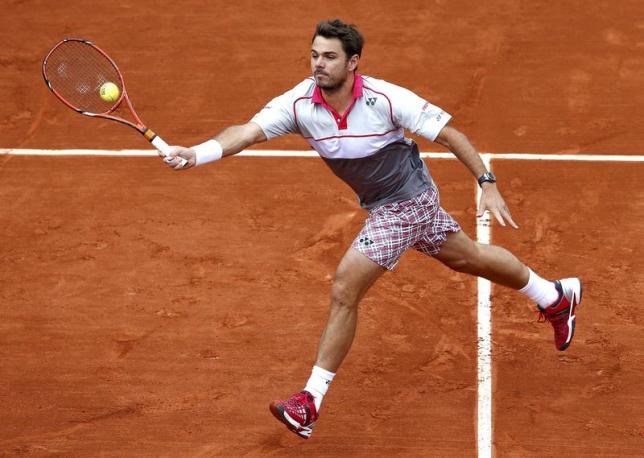
Photo courtesy of baomoi.com Tennis featured some great moments in 2015 so The Tennis Review enjoyed looking back and choosing our ten best. We decided Stan Wawrinka’s Roland Garros win was our number one moment, but what about the other nine? Let us know if you agree in the comments below.
1. Stan Wawrinka stuns Novak Djokovic in the Roland Garros Final.
Stan Wawrinka’s aggressive dismantling of the heavy favorite Novak Djokovic in the 2015 Roland Garros final will go down as one of the greatest upsets, and greatest performances, in Grand Slam history.
Djokovic’s road to the missing trophy from his slam collection, the French Open title, was the Clay court season story, and his comprehensive quarter-final defeat of nine time Champion Rafael Nadal seemed like the penultimate chapter to his successful completion of the career slam.
Before the narrative’s climax, we still had two more matches to go, and against dangerous opponents- Andy Murray who was having his best ever run on Clay, and Stan Wawrinka who had been a tricky opponent for Djokovic in the slams over the last two seasons.
Neither though were expected to do anything more than provide a few twists and turns as Djokovic created history.
So the twist we got courtesy of Stan Wawrinka was one of the most shocking the tennis tour has been treated to in recent history. For while Djokovic managed to survive a tough scrap against Andy Murray, he was not able to get past the first time French Open finalist, who had never been beyond the quarters of the event, Stan Wawrinka.
The match started out as we expected as Djokovic took a nervy opening set. But the Swiss changed his strategy in the second, going all out on the attack, and hitting the world No.1 off the court, striking 60 winners to 45 errors over the course of the contest, while Djokovic went 30-41.
The sublime Wawrinka performance was the perfect response to an increasingly nervy Djokovic showing, and a lesson to all tennis players in how to wrestle a slam from the game’s dominant player on a surface he has mastered- take it to him and make him play his best.
Djokovic was unable to do so, and looked increasingly helpless as one Wawrinka winner after another flew past him, and he was deprived of controlling the baseline rallies with the rhythm he had worked so hard at perfecting all season.
Wawrinka leveled the match at a set all, and then grew in confidence as he went about adding another slam to his resume, and inflicting a painful defeat on the world No.1 .
Despite the disappointment, Djokovic accepted his loss with grace, and some tears as he was overwhelmed for the second time that day- the French Open crowd continuing from where Wawrinka had left off.
The sight of the world No.1 holding back the tears receiving the warm applause from a sympathetic Roland Garros crowd- a crowd hardly known for that quality- is one that will inspire many to cheer him on next year.
That is if they are not cheering for Stan, of course. The popular Swiss won even more fans than he already has with the win, one which showed exactly why trophies are not just handed to the favorite but are shed sweat, blood, and tears over.
2. Roger Federer produces superb tennis to defeat Andy Murray in the Wimbledon Semi-finals.
Roger Federer winning Grand Slam 18 is the stuff of many a tennis fan’s dream, and after Federer’s commanding performance over Andy Murray in the Wimbledon semis, many thought that elusive 18th win would finally make it into his hands.
All of Federer’s slam winning arsenal was firing- the serve, the net game, the creative flair- and on Federer’s favorite stage, the Wimbledon Center Court, before a crowd who were as keen for him to win as they were for their very own 2013 champion.
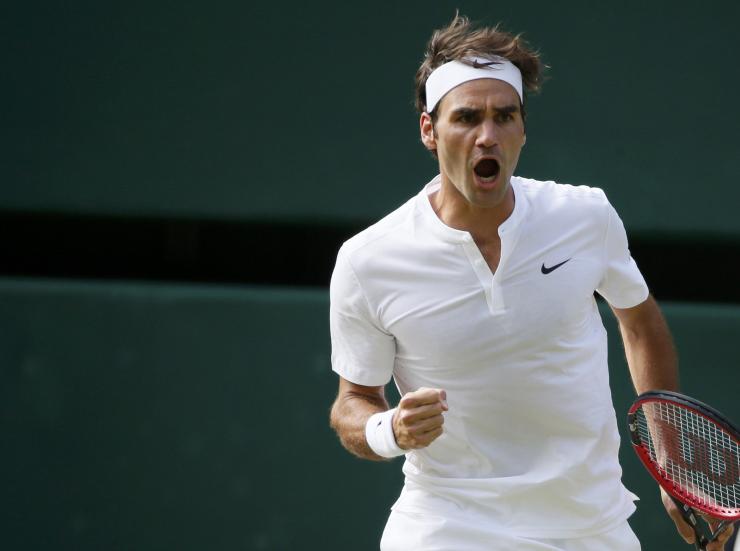
Photo courtesy of Ibtimes.com Those hopes, sadly, came crashing down, and the much longed for scene of Federer celebrating his 18th slam never happened- Novak Djokovic was always going to be a very different opponent than Murray, and even more so in a slam final, no matter how hard tennis fans world wide hoped otherwise.
Nevertheless, Federer’s semi-final remarkable performance versus Muray did happen, was a spectacle to savor and will go down as one of Federer’s finest in SW19.
3. Novak Djokovic battles from two sets to love down against Kevin Anderson in the fourth round at Wimbledon.
That Djokovic Wimbledon trophy win looked like it might not materialize at one stage when the defending champion trailed Kevin Anderson by two sets to love in the fourth round in London.
Anderson, who had never beaten a top tenner in a slam, looked like he was on the verge of doing so as his big serve and risky tennis posed too many questions for the world No.1.
The Serb has struggled in the past against the biggest serves in the game such as John Isner and Ivo Karlovic. For while Djokovic may have the best return in the game, he needs to get his racket on the ball and get some rhythm going to make it effective, and the likes of Anderson deny him that chance.
Djokovic found an answer, of course, as Anderson struggled with his service the closer he got to a career breakthrough win. As the Serb got more of his racket on the ball, and as Anderson’s level dropped, Djokovic got his rhythm going and battled back from two sets to love down to level things up.
At two sets all, night fell and the match was postponed to the next day. Djokovic was the one who the break benefited the most, and the world No.1 came back, took the deciding set, and went go on to win his ninth slam title and his third Wimbledon.
That win may have been a greater moment, but Djokovic’s fightback against Anderson, in which he demonstrated his resilience, fight and mental toughness was gave us a great insight into the mind of the game’s dominant player, and reminds us that behind every brilliant performance he produces in finals have been many less stellar ones quality ones but full of the grittiness that has taken him to the top of the game.
4. Alexander Zverev squeezes past Borna Coric in the Cincinnati Open first round
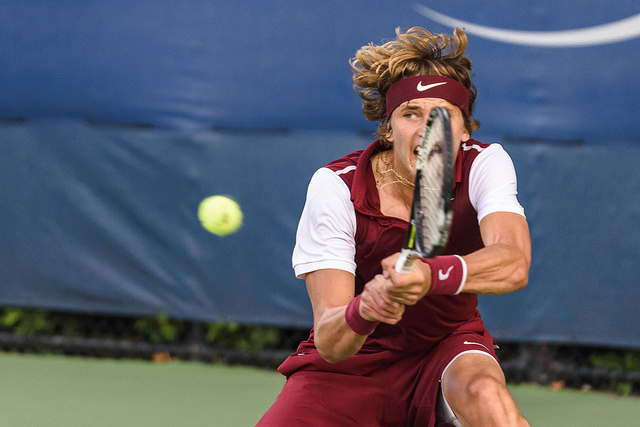
Photo courtesy of Steven Pisano at Flickr.com (Creative commons) While the Nishikori generation seems to have declined since 2014, all eyes turned in 2015 to the current crop of teens (Zverev, Chung, Coric, Kokkinakis) making their way up the ATP’s top 100.
Two of that talented group, Borna Coric and Alexander Zverev, the ATP’s 2015 Star of Tomorrow winner, met in the first round match in Cincinnati, a match met with great interest by those desperate for the next wave of players to break though on the ATP tour.
The match did not disappoint those who tuned in to see what talents could be dominating in five seasons time. It may not have been the best quality, but there was no question about how much either player wanted the win.
The match went all the way to a third set breaker with Zverev’s greater willingness to make something happening trumping Coric’s consistency.
Though neither player is likely to break through and win a big title next year- the tour’s slower surfaces will hold them back much as they did the lost Nishikori generation-their rise up the rankings should continue (Coric is ranked 44, Zverev 83), and we look forward to being treated to even more down-to-the-wire contests.
5. Juan Martin del Potro returns to tennis at Indian Wells.
The Argentine met Canadian Vasek Pospisil, who would later reach the Wimbledon quarter-finals in 2015, and lost 4-6, 6-7 (7).
Win or lose, the result was a win-win for del Potro and his fans. The 2009 US Open champion has been riddled with injuries since winning that slam trophy, yet he is committed to coming back, and frequently tweets to his followers his gratitude for their support and his strong desire to return to the tour.
Aunque la cima se vea lejos, cada paso me acerca más. Although the top looks far away, each step brings me closer. pic.twitter.com/arLN35o9u5
— Juan M. del Potro (@delpotrojuan) November 18, 2015
Each tweet and update is welcomed with open arms as tennis fans look forward to the return of arguably the game’s most endearing and charming players.
//platform.twitter.com/widgets.js
6. Marin Cilic makes a deep run into the US Open semis.
Marin Cilic’s 2014 US Open win may have been the biggest shock in tennis since Gaston Gaudio won the 2004 French Open as he confounded the doubters to prove he had the mental strength to fulfil his potential and win a slam.
Those doubters began voicing their disbelief in Cilic’s elite credentials a year later when injury sidelined the Croat from the WTF ’14 until Indian Wells ’15 and he struggled to put together match wins.
That loss of form led many to believe Cilic would make an early exit in the defense of his maiden slam win.
In fact, Cilic would go on to make his deepest run of the year so far at the US Open, winning five matches in a row to make the last four. On the way, he defeated Mikhail Kukushkin in a tough five setter in the third round, and Jo-Wilfried Tsonga in an entertaining five setter in the quarters.
Cilic limped out the event a little tamely, suffering both a foot injury and a comprehensive loss to Djokovic, but he did prove something to his critics- he was a force to be reckoned with in New York and was anything but a one slam wonder.
7. Roger Federer and Rafael Nadal renew their rivalry in the Basel final.
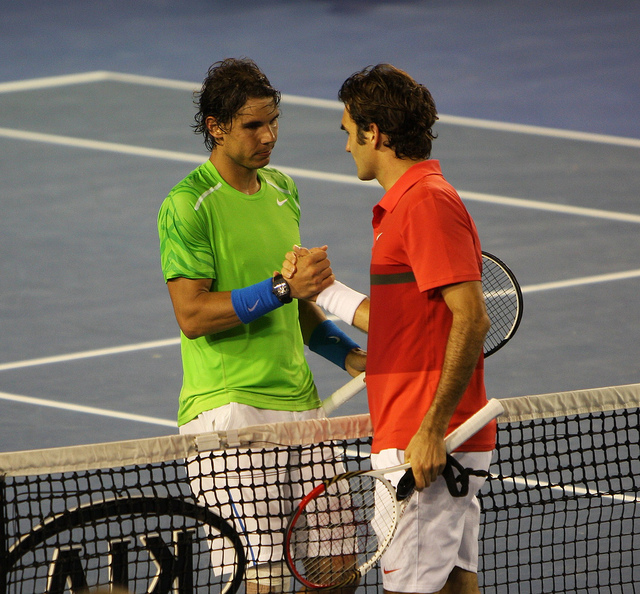
Photo courtesy of Tennis’s two greatest active players had not met since the Australian Open semis ’14 until they faced each other in the Basel final this seaon.
Since Nadal’s Melbourne win, their career have taken different turns. Federer’s has gone up- all the way to 2 in the world and making slam finals again- while Nadal’s has gone down and he his 2015 has turned into Federer’s ’13.
However, the Australian Open ’14 was a turning point for Federer whose newly-committed to attacking strategy was winning him big matches again. Basel this season was a little similar for Nadal in that respect. The Spaniard had shown improved mental toughness in his recent runs to the Beijing final, the Shanghai semis and now the Basel final in what had traditionally been his toughest stretch of the season.
This match, though, unlike their Melborune one, was a competitive return to their rivalry. Federer brought out some of Nadal’s best tennis, as always, and when the Spaniard fought back to take the second set, it seemed the match might be the one in which we could finally announce that Rafael Nadal was back.
Federer though, did not do what he had done in Melbourne all those years ago, which was to submit to Nadal’s plan A. Instead, he executed his own one, his attacking game, despite the number of balls coming back and flying past him at the net.
With the faster than usual indoor conditions and the motivation of playing before his home crowd, Federer’s game proved superior to Nadal’s and the Swiss earned his 11th win over the Spaniard in a match which was not one of the year’s best moments quality wise but stood out for its moments of tension and its sense of occasion.
8. Fabio Fognini becomes the first man to defeat Nadal from two sets to love down in a Grand Slam.
151 times Rafael Nadal has gone up two sets to love in a Grand Slam match, and each time he had gone on to get the win.
Fognini struck 70 winners in the contest under the lights on Arthur Ashe before a typically exciteable crowd, conditions which brought out the very best in the streaky Italian.
Nadal could do little to subdue Fognini’s shotmaking except fight, but with his confidence at an all time low, he did not have the killer punch necessary to put an end to Fognini’s inspiring performance, one which helped make this match arguably the contest of 2015.
Watch highlights of Fognini’s historic win over Nadal in the US Open third round below
9. Roger Federer injects life into the ATP WTF by beating Novak Djokovic in the round robin stage.
By the ATP WTF this season, tennis had become, shall we say, a little predictable. Novak Djokovic had not been beaten since Roger Federer defeated him in straight sets in the Cincinnati final, and had dropped a single set since the US Open.
So, it was a pleasant surprise to see Federer take a tight first set off him in the round robin stage of the World Tour Finals, and then overwhelm him in the second.
That victory got people asking a question that had seemed unthinkable a day before- would Djokovic qualify for the semis?
The Serbian did. The defeat, somewhat predictably, motivated him to produce even higher levels of tennis than we had already seen as he defeated Tomas Berdych, Rafael Nadal, and Roger Federer in straight sets matches which left spectators partly admiring such impressive displays of dominance and partly remembering fondly Federer’s rousing and boat-rocking round robin performance.
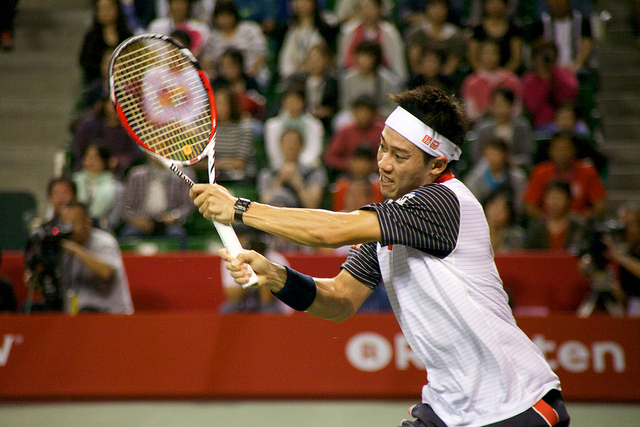
Photo courtesy of Angelicalbite at Flickr,com (creative commons) 10. Kei Nishikori reaches No.4 in the ATP Rankings
2014 was a difficult year for Nishikori and his generation as injuries sidelined them and poor decision-making derailed them.
The Japanese, though, managed to put in the best showing of himself, Dimitrov and Raonic, and on March 2nd he reached a career high of No.4 on the ATP rankings, which was not just the highest placing of his generation, but of any Japanese player in the game’s history.
Though Nishikori could not sustain his ranking as injuries continued to derail his progress, he did qualify for the ATP WTF, stole a set from Federer in a fighting performance in the round robin stage, and finished the year at No.8, the only one of his generation to finish in the top ten.
That might not be what we had hoped for them in 2015, but at least Nishikori was still among the game’s best, and if he can sort out his physical troubles, we might see more impressive milestones in 2016, and a moment which could feature higher than number ten on our 2016 Top ten moments list.
What was your best tennis moment in 2015?
Share with us in the comments box below 🙂
-
Novak Djokovic Defeats Roger Federer ATP WTF Final Five Formidable Things
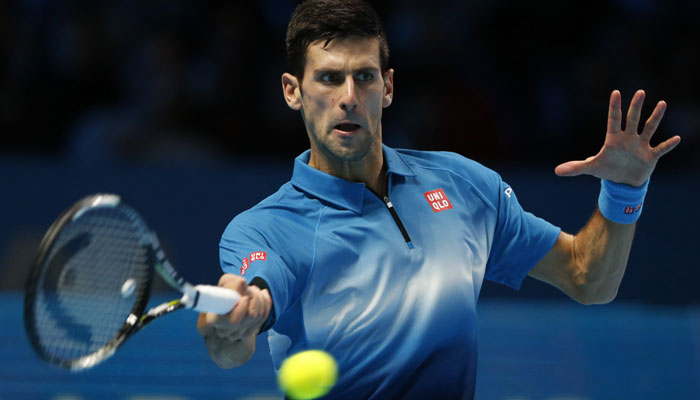
Photo courtesy of zeenews.india.com Novak Djokovic’s 6-3, 6-4 defeat of Roger Federer in the ATP World Tour Finals may not have been an edge of the seat contest, but it was yet another first class exhibition of the World No.1’s talents. The Tennis Review looks at five formidable things about Djokovic’s win.
Djokovic won just 2 points at the net from 2 ventures.
In the entire 80 minutes of this indoor hard court match, and over the course of the 115 total points played, Djokovic ventured to the net twice, and he won both points. Federer, meanwhile, came to the net 21 times, and was successful 66% of the time.
Yet it was Djokovic who emerged the winner, the world No.1 making this contest about playing to his strengths and negating his opponent’s, a feat he pulls off better than anyone in the game’s history.
Had Djokovic needed to come to the net more he would have- the world No.1 is no stranger up there- but he managed to establish his baseline rhythm early on in the match and once he was in his comfort zone he had things the way he wanted them, and he kept them so.
The three time defending champ kept Federer back with his depth, variety of spin, and kept him guessing with his direction change, qualities which contributed to the Serbian winning 42 of the 65 baseline points contested.
There really was no need for Djokovic to move up and be aggressive at the net when his own trusted brand of baseline aggression was working very nicely, keeping Federer back for the most part, wary of coming in, and committing plenty of errors for a 19 game match-31 in total (to 19 winners). Djokovic’s error count? 14 (to 13 winners).
Those baseline abilities have not always worked this season- Federer’s variety and aggression overwhelmed him in the Round Robin stage-but it does tend to work for Djokovic in finals when the solid base of his game holds up better than any other player’s in the face of pressure.
Djokovic’s relentless high quality hitting deep into the baseline intimidates his opponents, keeping them back where he wants them and leaving him free to play his very modern, and very smart, game.
That is how it played out against a nervy and at times timid Federer. But the Swiss was nervy and timid for a reason- he was facing three time defending champion Novak Djokovic at the ATP World Tour Finals.
Djokovic lost only 3 points on his second serve.
Of all the match stats, this one has to be the most impressive. The old cliche ‘you are only as good as your second serve’ rings true with Djokovic.
Remember when that second serve was something of a liability? That double fault that put an end to his 2012 Roland Garros title hopes in a match he had done so well to make a contest of?
Those days have been long gone since taking on Boris Becker to his coaching team.
Djokovic’s return game, the best in the business and one which earned him nine break points against Federer, won three of them, and won 57% of points on Federer’s second serves, is now complemented by the most reliable serve on the ATP tour.
That combo, like Djokovic and Becker, is some team.
Djokovic’s defeat of Federer was his 31st win over a top ten opponent this season
That record is unlikely to ever be broken. Five of those wins came over Federer, too. (Indian Wells, Rome, Wimbledon, US Open, ATP WTF).
Djokovic is the first player to win four ATP World Tour Finals in a row.
That’s something other ATP World Tour Final Greats such as Federer, Sampras, Lendl and Nastase could never achieve.
Lendl got the closest- reaching his eighth final in a row in 1988 and taking the previous three trophies (1985-87)- but was defeated by none other than Boris Becker, and in a fifth set tiebreaker, too.
Djokovic’s win arguably makes his 2015 the greatest season since Rod Laver’s 1969 and Roger Federer’s 2006.
The title was Djokovic’s 11th of the season, not a record itself, but the quality of his titles is what makes it stand out- 3 slams, 6 ATP 1000s, and the ATP WTF. The only 500 title came in Beijing, one of the most prestigious 500s,
That very impressive collection- and his stellar runner up finishes, too (Roland Garros, Montreal, Cincinnati)- is what has many arguing that Djokovic’s 2015 should go down as the Greatest Season Ever.
While there are arguments for Laver’s 1969 and Federer’s 2006 being better years, Djokovic’s ATP World Tour Final win certainly puts him in the debate. A debate, however, which even his own coach Boris Becker does not back him in (see tweet below).
Just a word to all the @rogerfederer fans in the world …he is the GOAT ! 2006 was even better than 2015 but give @DjokerNole respect!!!
— Boris Becker (@TheBorisBecker) November 23, 2015
//platform.twitter.com/widgets.js
That is what Djokovic’s real great achievement is-managing in a tennis era once ruled by Federer and Nadal to contend for the status of having had the greatest tennis season ever.
More great achievements might come, too. Djokovic, aged 28 and a half, is anything but finished breaking records, winning big titles- who knows what Greatest ever debates he might be putting himself forward for this time next year?
Commentary by Christian Deverille
What was the most formidable thing for you about Djokovic’s win? Let us know in the comments box below.
-
Roger Federer Vs Novak Djokovic ATP Finals Final What’s at Stake?
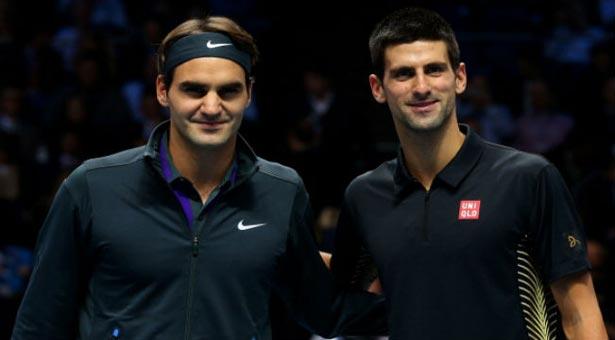
Photo courtesy of somoynews.tv There is plenty at stake in this year’s ATP World Tour Finals Championship match between Novak Djokovic (1) and Roger Federer (3). The Tennis Review looks at what both man stand to win or lose and predicts who will walk away with the trophy.
1. A record breaking fourth trophy in a row for Djokovic (fifth overall) and a record seventh trophy for Federer.
Novak Djokovic is the three time defending champion at the ATP World Tour Finals, and has beaten Roger Federer for two of those trophies, though last year’s was a walkover when Federer withdrew.
A fourth trophy in a row would be an achievement not even Federer, Sampras, Connors or Nastase, who all dominated the event in their time, managed to achieve, and would add to Djokovic’s ever-growing list of accomplishments.
Federer would also add to his remarkable list were he to win- he would win the trophy undefeated for the sixth time and would break his own record for the most trophies won (6).
2. Novak Djokovic’s claim to have had the best Open era season of all time.
Djokovic’s 3o wins over top ten players (a record), six ATP 1000 trophies (another record), three slams, appearances in all four slam finals, and 15 consecutive finals all combine to make a great case for the Serb putting together the greatest season of the Open era.
The Serbian is not there yet, though, and one man with whom he is competing for that title is Federer himself whose 2006 was pretty impressive.
Like Djokovic, Federer made all the slam finals and lost one, dominated the field, losing only five times (Djokovic has lost six times) to two players (Djokovic has lost to four), and won 12 titles to Djokovic’s current tally of 10, and won more matches- 92 to Djokovic’s current record of 81.
If Djokovic were to lose the final to Federer, which would mean he had lost twice to Federer in the week, it would weaken his case for the best season ever as in 2006 Federer did not lose from the US Open first round to lifting the WTF title.
If he won, though, the fact it was his fourth title in a row, and that he had beaten an in-form Federer to do it (Federer won his in 2006 beating Blake) would seal Greatest season in the Open era status for him in many eyes.

Photo courtesy of Marianne Bevis @ flickr.com 3. Federer’s year-end No.2 ranking and the No.2 seed for the Australian Open.
If Federer wins he will have a chance to finish the season as the world No.2 (Murray can then only get that ranking if he wins all his Davis Cup rubbers), but if he loses he will stay at No.3 behind Andy Murray.
Though the rankings may not mean much to Federer at this stage of his career compared to the trophy itself, the No.2 seed at the Australian Open would at least keep him away from that tournament’s greatest ever champion – Novak Djokovic– until the final.
4. Djokovic will either level the head to head at 22-22 or Federer will lead it 23-21.
Djokovic has never led the head to head, and if Federer wins this match and leads 23-21 then Djokovic would need to beat Federer three consecutive times to finally achieve that milestone, and with the back and forth nature of their recent rivalry, that would be, considering Federer does not look like slowing down anytime soon, unlikely.
Since Federer’s resurgence from back injury in 2014, the two have faced 13 times with Djokovic winning seven times and Federer six.
Djokovic has won the three biggest matches in the Wimbledon ’14 and 15 finals, and the US Open ’15 final (each time in four sets), has won three other matches on slow courts in Indian Wells (‘14, ’15, three sets each), and Rome (’15 in straights) and had the walkover in last year’s final.
Meanwhile, Federer has recorded his last five wins over Djokovic in straight sets with his Dubai ’14 semi-final the only match he has won against Djokovic going the distance.
Federer has been winning the matches on the tour’s faster surfaces (Dubai x 2, Shanghai ’14, Cincinnati ’15) while Djokovic has been winning on slower courts, a factor that made Federer’s round robin match this event so intriguing.
Federer executed his attacking strategy as he always does on a slower court against Djokovic, but this time it worked out for him. The Swiss put a lot of pressure on Djokovic’s serve, served great himself, and never lost focus once as Djokovic made a lot of errors by his standards, and was the most negative he has been on-court since 2013.
If Federer is going to win his seventh ATP World Tour Final trophy then he has to reproduce the game he played on Tuesday, and he has to get it done in straights.
That, though, will be a hard task to achieve over the world No.1 twice in the space of five days. Djokovic is going to be especially driven this final, and it is in the finals where the world No.1 brings his best game.
Djokovic’s knack of playing just the right match at the business end of events is what allows him to produce the kind of tennis he did to beat a resurgent Rafael Nadal so decisively in their semi-final and he will be in a similar mood tomorrow with so much on the line historically.
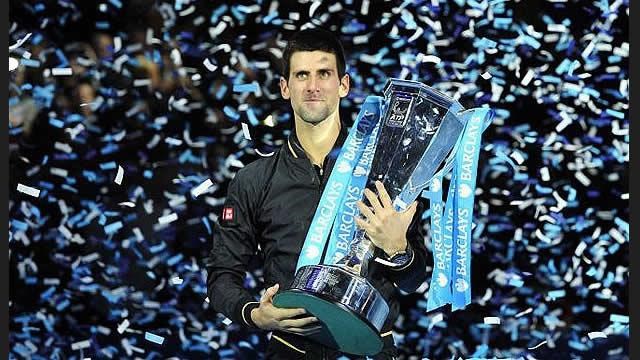
Photo courtesy of bao.hay.la 5. The reputation of men’s tennis.
This tournament, like last year, has been a mixed bag quality wise, and after two less than inspiring semi-finals, the event, the end of season ‘showdown’ of the ATP’ s top eight players, needs a great final to help build the reputation of the game.
Federer has it in him to make a match of it against Djokovic, and could win the title himself considering his recent form. The Swiss picked himself up from an up and down performance against Kei Nishikori in his final round robin match to defeat Stan Wawrinka 7-5, 6-3 in a semi-final match which saw him use his serve, forehand, slice and net game to come back from a break down in the first set, take control of the match and win in 70 minutes.
Federer can not afford to get off to such a slow start against Djokovic- who will not let him get back into the match as easily- and should produce a high standard of tennis from the get-go which will make this a competitive match.
If Federer does get off to a slow start then this match might be another one to forget and will do no favors for the name of a game that Federer, more than anyone, through sheer charm, his beautiful game and current status as media darling, has managed to make such a positive one.
Prediction: This one is tough to call as each player knows how to get the best out of their games on the surface and either one could take it.
If Djokovic can hang with Federer through a couple of tight sets, and not be overwhelmed in straights as has happened throughout their recent history then expect Djokovic to win.
The Serb will take control of the match the second Federer’s level dips, which is more likely to happen the longer the match goes on, get deep into Federer’s weakening service games by hitting deep, well-placed returns, and then either out rally him and hit a winner, force an error or pass him at the net on the big points.
Whatever way this match plays out, considering what is at stake, it will make for potentially fascinating viewing. If either Djokovic wins with a typically gritty and high octane performance or Federer stuns him once again with his aggression and flair, then tennis is in for an end of season treat either way.
Commentary by Christian Deverille
What do you think will happen in the final? Let us know in the comments below.
-
ATP World Tour Finals Semis Preview Roger Federer Vs Stan Wawrinka
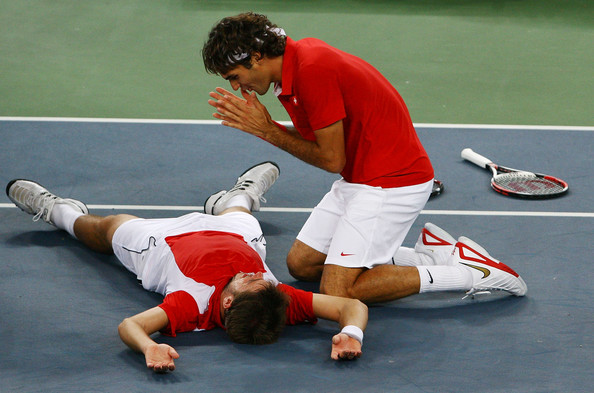
Photo courtesy of zimbio.com The ATP World Tour Finals last four feature a repeat of last year’s best contest at the same stage, Roger Federer Vs Stan Wawrinka, and an old rivalry rekindled in Novak Djokovic up against Rafael Nadal. The Tennis Review previews the action and predicts the winners.
Roger Federer Vs Stan Wawrinka
These two produced by far the best match in last year’s ATP WTF semi-finals when Roger Federer came back from match points down to defeat Stan Wawrinka 7-5 in the third.
Wawrinka is a tough match up for Federer on a slow court- he may trail Federer 3-17, but all three of those wins have come on Clay.
The ATP World Tour Finals surface, labeled by some as blue clay, shares some of the qualities of the red stuff with its slow surface and the ball can bounce high for an indoor court .
Those factors will benefit Stan whose single handed backhand, unlike Roger’s, is an attacking shot- it’s heaviness, and high bounce if he piles on the top spin, sends the receiver running back to retrieve which leaves Stan able to open up the court for the winner or gives him plenty of time to step into the court and attack.
If Stan can get Federer involved in cross court backhand rallies then he has a chance to do some serious damage.
While Wawrinka will get the chance to do that in own service games, he won’t get much of a look in during Federer’s one- the Swiss will be implementing his own strategy of sending Stan low sliced balls to dig up, attacking the net, and being aggressive on the forehand to pull Wawrinka wide and open the court.
That proactive aspect of both their games- neither one reacts to their opponent’s game but sets out to execute their own Plan A- is what will make this another great contest that will likely be decided in tight sets.
The likely winner? With Wawrinka in a big match in the last two years, you never know what could happen. The Swiss number two gets up for these ones, and if he catches a flash of inspiration, Federer will have to fight hard for the win like he did last year.
Federer has plenty of fight in him this tournament, though, and is clearly enjoying the conditions. He is also the better best of three player of the two, and arguably the better big match player- he will be able to see through Wawrinka’s peak periods and put pressure on him when things get tight which should be enough to edge Federer the win.
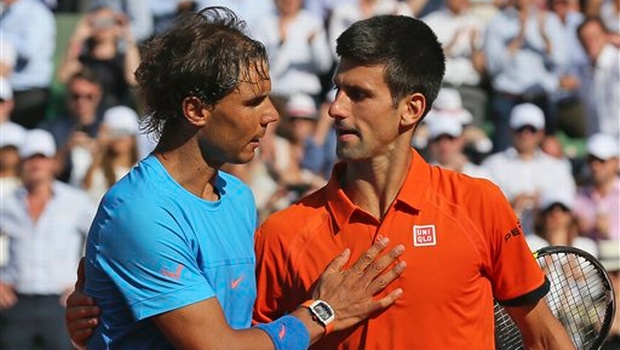
Photo courtesy of newindianexpress.com Novak Djokovic Vs Rafa Nadal
Nadal’s resurgence this indoor season is illustrated by his 3-0 record in this year’s Finals round robin, beating Murray, Wawrinka and Ferrer.
Nadal was helped somewhat by Wawrinka and Murray’s shaky performances, but his consistency and tactical powers put enough pressure on his opponent’s to make their bad days even worse.
The Ferrer match though- a grinding three setter and a match he might have lost earlier this year- was a testament to how far he has come since a post injury loss of confidence saw him drop to No.10 in the rankings.
That lack of confidence was never more apparent than at Roland Garros when he suffered a straight sets defeat to Djokovic in which he looked lost in the third set– one of the strangest sights in tennis this season.
Just as strange was seeing Djokovic so dismantled by Roger Federer in their round robin match on Tuesday. Federer beating Djokovic in straight sets is no surprise- he has done so in his last four wins vs Djokovic since Madrid ’14- but doing it on a slow indoor court was quite a shock.
Nadal’s confidence rising high, Djokovic looking a little out of sorts- could this set the stage for Nadal to get a first win over Djokovic since Roland Garros ’14?
An upset would be unlikely. Djokovic’s loss to Federer may have been out-of-character- the Serb hit 26 unforced errors- but if anyone is going to beat Djokovic decisively, it is Federer. We should also remember that a round robin match which a player can lose yet still qualify for the business end of the event is a very different scenario than the actual business end itself , the semi-finals of the ATP World Tour Finals, an event Djokovic has won three years running.
However, the most decisive factor here is the match up issue on slow hard, particularly slow indoor hard. Even in Nadal’s best season- 2013- Djokovic dominated Nadal on slow hard, beating him in straight sets in both the Beijing and ATP WTF finals.
Nadal, though, is a player whose mind can triumph over matter, and if he gets an under par Djokovic then he has the defensive skills, a weapon in his forehand down the line, and enough experience at exploiting Djokovic’s weaknesses- Nadal leads the head to head 23-22– to get the upset. Strange things happen in tennis, and Nadal has been the master of making them happen- after all, who expected him to be a two time Wimbledon and US Open champion back in 2006?
That transition from clay-courter to all surface champion did not happen overnight, though, and it is unlikely that Nadal is going to go from losing to Djokovic in straight sets as he did back in this season’s Beijing final to beating him in a big match on a similar surface in a couple of months.
This match is likely to go much the same way as that recent Beijing final with Djokovic winning in straight sets, although this match should be, considering Nadal’s great improvement, closer. Whatever happens, considering Djokovic’s performance against Federer and Nadal’s surge in confidence, this match will make compulsive viewing.
Commentary by Christian Deverille
Do you think Wawrinka and Nadal have a good chance to upset Federer and Djokovic in the ATP World Tour Finals? Let us know in the comments below 🙂
-
ATP World Tour Finals Roger Federer Beats Novak Djokovic Five Things
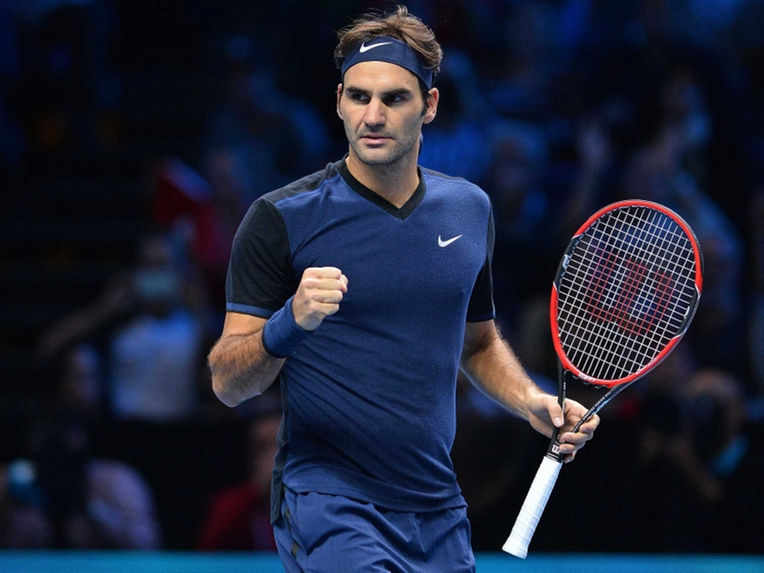
Photo courtesy of hilias.com Roger Federer’s 7-5, 6-2 defeat of Novak Djokovic in the Stan Smith round robin group of the ATP World Tour Finals has made what looked to be a foregone conclusion -Djokovic’s march to the title- suddenly a touch unpredictable. The Tennis Review looks at five of the more interesting things about a result which saw a man who may not be able to control time in terms of how long he has left on the court demonstrate he is very capable of controlling time while he is still competing on it.
Federer defied the odds to defeat Djokovic on one of the tour’s slowest courts
The odds were not in Federer’s favor going into the match- Djokovic was on a 23 match winning streak, had won their most recent slow hard court matches, and Federer had suffered a disappointing loss to John Isner in the round of sixteen in Paris-Bercy leaving him with a lack of match practice in his rival’s most successful stretch of the season.
But while few expected Federer to win, no one thought it was impossible- slow courts complement Federer’s attacking game by giving him time to set up his approach and at the age of 34 that extra bit of time comes in handy for the former champion.
Federer made great use of that time- he looked as light on his feet as he has all season- stepping into the court, moving Djokovic around, and keeping him guessing with a mix of spins and slice, the latter really troubling Djokovic as he struggled to chase down Federer’s sliced shots and pick them up with any interest.
That control of the court, and of Djokovic, and the lack of rhythm he imposed on the Serbian, allowed Federer’s talents to flourish- that drop volley to win the set point in set one, and another one to break in the second were the perfect plays on big points, and produced more errors of Djokovic- 22 in total- than we are used to seeing from the world no.1 in strings of matches.
Federer also timed to perfection the shot he had the most control over- the serve. The slow hard courts really allow Djokovic to negate his opponent’s service weapons, but Federer rarely let Djokovic get his racket on the ball.
The Swiss won 75 % of his first serves (delivered 67% in total), succeeded in winning 67% on his second serve, and only faced three break points, losing one of them.
Federer returned well, too, earning 8 break points and converting 4 of them- that success, he said post match, down to his stepping in on the return, and feeling confident.
Federer the second greatest clay courter of the last decade, also displayed his underrated defensive skills, going toe to toe with Djokovic, and being patient, not trying to end every point as soon as possible, but willing to take on and break down Djokovic’s own strengths no matter how long it took.
Time- Federer played like he had plenty of it in a match which did not last long at all- Federer got the job done quickly, in jut under 78 minutes.
Incidentally, Federer has won in straight sets the last four times he has beaten Djokovic in best of three, the Swiss’ quick of the mark ambushes deflating Djokovic quickly and leaving him little time to blow himself up to full confidence and get the match back on his terms.
Federer inflicted on Djokovic his first loss indoors since 2012
Winning indoors on his terms is something Djokovic is very used to- you have to go all the way back to the round of 32 of the 2012 BNP Paribas Masters to track down the last time Djokovic lost indoors when Sam Querrey defeated him in three.
Since that shock loss, Djokovic had put together a 31 match winning streak on indoor hard, including going undefeated at the O2 in his last 16 matches, before Federer put an end to his formidable streak.
The Swiss ended another Djokovic streak, too- his 23 match winning one going all the way back to the Cincinnati Open final when Federer beat him, again in straight sets.
Federer now leads the head to head 22-21
Had Djokovic won his 43rd encounter with Federer, he would have led the head to head for the first time in his rivalry with Federer.
Djokovic has come close to getting that edge before- he was a match away at Cincinnati- but was overwhelmed in straights on that day, too.
Either Djokovic just cannot quite seem to get his head around the fact he could lead arguably the greatest player of all time in their rivalry, or Federer is super-motivated to stop him. Most likely, it is somewhere in the middle.
Federer has now qualified for his 13th ATP World Tour Semi-finals
That stat tells you all you need to know about Federer- not only does he have remarkable longevity, but he is still at the top of the game in his mid thirties, a situation that does not look like changing anytime soon.
Despite setting slam tally and weeks at no.1 records, Federer is still hard at work on his legacy- however close Djokovic and future greats get to his slam tally, they are going to have to work just as hard to match his number of years at the top of the game.
If Nishikori defeats Federer then Djokovic might not qualify
If this match has done anything, it has injected some much needed unpredictability into the tournament, one that did no favors for the men’s game last season.
Djokovic came in as the heavy favorite, but now, after a straight sets loss to Federer, his qualification to the semi-finals hangs in the balance.
In his next match the world no.1 will face Tomas Berdych, who can produce his best tennis versus him on occasion, as seen a couple of weeks ago in Paris.
Meanwhile, Federer will come up against Nishikori who has beaten him twice, on the slow hard courts of Miami (2014), and the fast slow courts of Madrid (2013) and who played well to defeat Berdych in the event’s only three setter so far.
If Nishikori beats Federer, and Djokovic loses easily to Berdych, then Djokovic might not qualify for the last four- a scenario that was the stuff of make believe before Federer’s win over the world No.1.
While Djokovic falling apart after this one defeat is unlikely- look how he responded to another heavy loss to an attacking player on a slow court versus Wawrinka at Roland Garros– the fact the possibility of his not winning the trophy is a talking point, after a worryingly one sided opening win, and that the event has been brought to life with a dramatic injection of competition, is a much welcome and very well-timed boost to the tournament.
Commentary by Christian Deverille.
What did you think was the most interesting thing about the match? Please share with us in the comments box below.
-
ATP World Tour Finals Round Robin Preview Novak Djokovic Vs Roger Federer
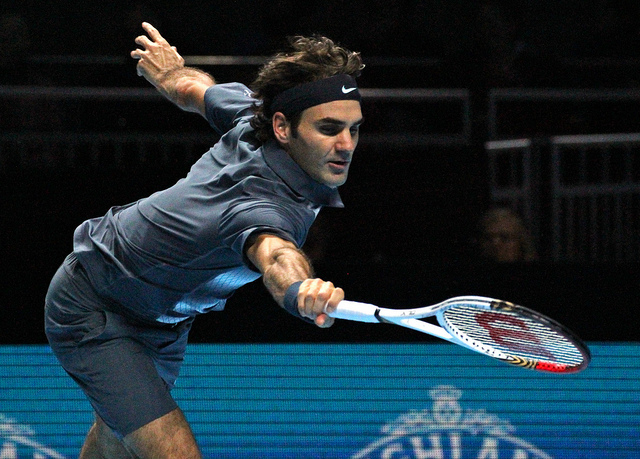
Photo courtesy of Marianne Bevis @ flickr.com One of the ATP tour’s biggest rivalries will take the stage for the 43rd time when Novak Djokovic (1) meets Roger Federer (3) in the Stan Smith group at the ATP World Tour Finals on Tuesday. The Tennis Review previews the action and predicts the winner.
History: This head to head is tied at 21-21 and if Novak Djokovic wins then he will lead the rivalry for the first time in its history.
This year they have met 6 times, and Djokovic leads 4-2. Federer won on the faster courts of Dubai and Cincinnati while Djokovic has been winning on the slower surfaces of Indian Wells and Rome and in their biggest matches, in the best of five format, in the Wimbledon and US Open finals.
At the ATP World Tour Finals, Djokovic leads 3-1, and has won the last 3 meetings, though the final last year did not happen when Federer pulled out with injury.
This meeting, therefore, has an extra edge to it of unfinished business- just how will Federer’s predominantly attacking game match up against Djokovic’s baseline consistency, depth of shot and defense to offense transition on a slow indoor court?
Djokovic’s other wins at the O2, in 2013 and 2012, all came when Federer was more vulnerable to being pinned to the baseline and outdone by Djokovic’s rallying skills. But this year, Djokovic will be up against an altogether different game plan from Federer, one that has been beating him and stealing sets in most of their matches. (They are 7-5 in favor of Djokovic since Federer rejigged his game in 2014, and Federer has won sets in five of the matches he has lost).
Form coming in: Novak Djokovic is in the form of his life- he is on a 23 match winning streak after defeating Kei Nishikori 6-1, 6-1 in his opening round robin match.
Federer, meanwhile, has been patchy. While he won the title on the faster indoor courts of Basel, he has been struggling a little on slow hard courts, losing early in Shanghai and Paris-Bercy.
Those struggles looked like they might continue when he dropped serve to go down 0-2 versus Tomas Berdych in their round robin opener, but the Swiss came back strong to win 6-4, 6-2 in under an hour.
That quick win should make Federer feel confident he can execute his game on slow hard, and confidence will be the key versus Djokovic who, playing in his most favorable conditions, has all the tools to make Federer doubt himself on the big points.
Who should win: Djokovic has to be the favorite- he is the best player on this surface and has shown time and again his consistency, depth, and belief are too much for Federer on the game’s slower surfaces.
Federer could win if: he gets off to a good start, keeps his first serve higher than the 61% he managed versus Berdych, attacks the Djokovic forehand with slice, goes down the line with his own attacking forehand, commits to aggressive tennis, and denies Djokovic the baseline rhythm he loves
If Federer can bombard Djokovic early on and keep him guessing – as he has done so skillfully in all his recent defeats of Djokovic (he has beaten him in straight sets in his last four wins)- he could become the first man to beat Djokovic since he himself achieved that feat back in the Cincinnati final.
Prediction: Djokovic to win in three sets. Federer will be confident and wanting to end the year on a high note, which should motivate him to produce his best tennis, but the surface lends itself to Djokovic more than Federer.
The Serbian’s depth, consistency, and point construction will keep Federer further back than he would like at crucial moments and edge the world No.1 ahead in this rivalry for the first time.
Commentary by Christian Deverille
Who do you think will win? Share your thoughts with us below 🙂
-
ATP World Tour Finals Preview Eight Crucial Questions Fans Want Answered
Photo courtesy of bao.hay.la The ATP World Tour Finals starts Sunday November 15 with the top 8 players competing in London for the end of year trophy. The Tennis Review poses a question about each of the competitors and looks at their chances at an event Novak Djokovic is heavily favored to win.
Novak Djokovic, Champion 2008, 2012, 2013, 2014
Is Novak Djokovic’s 2015 going to be the Greatest ATP season ever?
The statistics have been doing the rounds all week since Djokovic’s win in Paris-Bercy– 6th ATP 1000 title in a season, 27 wins over top tenners in 2015, 22 match win streak. The Serbian will be looking to build on those stats in London and also to put an emphatic final stamp on what may go down as the greatest season ever.
Competing with Federer’s 2006, Sampras’ 93, McEnroe’s 84 and his own ’11 among others, Djokovic could inch past them with the 2015 ATP World Tour Final trophy, what would be his 11th title in a three slam winning season.
If anyone is going to stop Djokovic, it is going to take the type of huge effort only four players have managed to muster in 2015. Everyone in his group is certainly capable of it, they have all beaten him in big matches, but with Nishikori’s health in question, his status as Berdych’s worst match up, and his dominance over Federer on slow surfaces, Djokovic is the heavy favorite to win his group, to put it mildly.
In the semis, he also has huge chances against his prospective opponents, with Wawrinka seemingly the only one with a realistic shot at upsetting him. Should Djokovic meet him, get past him and make the final, where he plays his very best tennis, he will be one of the heaviest favorites there have been- he has lost just four finals from 14 played this season.
But with history on the line, Djokovic has stumbled before, (see his defeat in the French Open final this season), and he has had a career littered with mental meltdowns. Though he looks to have conquered them, his opponents should not be fooled by his confident demeanor- the Serbian feels pressure as greatly as anyone, he just hides it better, and if his opponents can tap into those depths, they might capitalize.
The Federers and Wawrinkas will have to be on their toes to get that deep- Djokovic will give them very few chances, will create plenty of his own, and will, as he has done all season, play those big points better than anyone else on his way to what may be known as the greatest ATP season ever.
One historic legacy has always passed Djokovic by this year, it is hard to imagine that he will let another one escape him, too.
Roger Federer, Champion, 2003, 2004, 2006, 2007, 2010, 2011.
Can Federer execute his attacking game all the way to a title on the slow London surface?
In the days when Federer won the WTF, the surface was a touch faster than now (Players like Blake, Tsonga and Gonzalez were his final opponents). One of the few finals he lost was to Nalbandian whose variety was perfect for indoor fast.
Since the slowing down of the courts, Federer has still done well in London- finals in 2012, runner up last year- but he has not been able to master the surface or one opponent in particular- Novak Djokovic.
We do not know how Federer’s rejuvenated attacking game would have done against Djokovic in last year’s final, but it would not be a surprise if we get to find out this year- Federer does not have the Davis Cup hanging over his head. has the upper hand, recently anyway, over Berdych (that match up will be the most dangerous for him), Kei Nishikori’s health is in question, and Federer has a dominant head to head over French alternate Richard Gasquet.
Crucially, the Swiss has great confidence in his game and believes his attacking strategy could yield great results on slow hard as he has that extra time to set up his net approach.
That theory, expressed in Paris-Bercy, has not worked this season with early defeats in Shanghai and Paris-Bercy, (his Basel win was on a much faster surface), but those defeats came at the hands of opponents executing great tactics, and early on in the tournaments where Federer is more vulnerable.
It will be a much tougher task to edge Federer in a close three setter in London where every match will be a big occasion and where he will arguably be even more popular than home player Murray
The crowd support, his self-confidence, and some rest, might be the combination that earns Federer his first ATP WTF trophy since 2011, and though his work is cut out considering the form of Djokovic, if Federer gets on a roll, Djokovic will have to be at his very best to stop him.
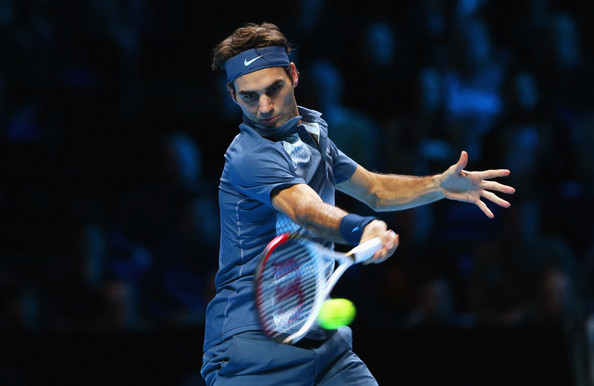
Photo courtesy of zimbio.com Will Kei Nishikori hobble across the line?
Nishikori’s qualification to his second ATP Tour finals (he made the semis of his first last season) comes at the end of what has been a rocky 2015 hampered by injuries and withdrawals.
The Japanese, who reached a career high of No.4 this season, a Japanese record, and won 3 events, has tweeted he is proud of his top 8 finish, but how proud he will be able to make his fans is in question as there is speculation he may not even finish the round robin stage after his Paris-Bercy round of 16 withdrawal against Gasquet when he was a set and 4-1 down.
Whatever the result, though, if Nishikori can make it to the end of round robin stage without withdrawing or aggravating an injury then he and his fans can take great heart going into 2016. The off season will be a much welcomed chance for Nishikori and his team to rest, evaluate his broken down body and make some important decisions.
Can Berdych end his 2015 how he started it?
At the start of 2015, everything was looking encouraging for Berdych. Armed with a new coach, Danny Vallverdu, the Czech was the runner up in Doha, and beat Rafael Nadal for the first time in 16 matches in the quarter-finals of the Australian Open before losing to Andy Murray.
Those losses, coming after impressive runs in which his clean hitting had never looked better, featured the key factors why Berdych’s year did not lead anywhere-in Doha he was beaten by Ferrer who got one too many balls back and exposed his lack of a viable plan B, and in Melbourne his defeat at the hands of Murray exposed his mental frailties in big matches.
Last week, though, in Paris, Berdych looked intent on ending the year on a high as he pushed Djokovic to two tiebreak sets, and played, arguably, one of his best matches of the season.
If he can bring that form to London then he has a strong chance of defeating Federer, whom he has had a knack of upsetting, getting a set of Djokovic and defeating Nishikori, which might be enough to get him out of the group stage for the very first time, and finish his year the way he started.
Ilie Nastase Group
Is Murray’s Upcoming Davis Cup Final Going to Help or Hinder Him?
Murray’s participation in his home event was in doubt up until a couple of weeks ago. The Scot’s controversial proposal he might skip the event to concentrate on the upcoming historic Davis Cup final was not carried out , but there is still some concern he might be too focused on the Ghent finale to really give his all in London.
That focus has meant Murray has been practicing on clay, and not indoor hard, which is not the worst of strategies considering the at times clay like slowness of the London surface.
However, that Davis Cup focus might not be great for Murray’s ATP World Tour title chances- the world No.2 has trouble keeping his head down and getting on with things at the best of times.
The mental and physical energy the world No.2 will need in Belgium- and no one should underestimate David Goffin who is keenly practicing as we speak-means Murray may want to save some energy and could prevent him from producing the peak tennis he would need to win the ATP World Tour Finals where even when fully motivated he has never made the final despite the home crowd and favorable conditions.
On the other hand, Murray may decide to give his all and see what happens in Belgium, particularly as he will want to avoid another crushing defeat to Djokovic. A victory over Djokovic, or even a competitive match, would send Murray into the final on a confident note, and end what has been an incredible ATP season on a promising note.
Can Nadal still master Murray?
Nadal getting his game together in what has traditionally been his worst part of the season has been one of the year’s most intriguing storylines.
Now another one arises- will Nadal’s mastery of Murray continue after not meeting since Rome 2014? That event, in the early stages of what looked to be a career threatening slump for Nadal, saw Murray take Nadal all the way to 7-5 in the third.
Murray has had his winning periods versus Djokovic and Federer during his career, but he has never been able to do get more than get the odd win over Nadal- the Spaniard has simply had too much consistency, been too aggressive, and, most crucially, been too mentally tough for him.
This surface will not help Murray in his quest to get a rare win over the Spaniard – Nadal likes things slow and is feeling confident on the surface. The Spaniard also likes the big stage, a challenge (and beating the world no.2 will be one he will lap up), will know he has an opportunity to continue his recent reassertion of himself, and has no problem playing the villain, taking that role on in many of his big defeats of Roger Federer over the years.
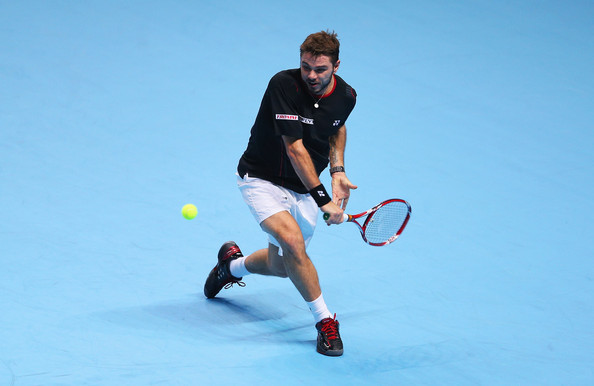
Photo courtesy of zimbio.com What side of the bed is Stan Wawrinka going to get out off?
Last year Stan Wawrinka made the semis of his first WTF finals, playing easily the match of the tournament against Roger Federer.
That run to the last four ended what had been a post Australian Open slump for Wawrinka, and since then the Swiss has really gotten his game together winning another slam, two ATP 500 titles and an ATP 250 in 2015.
The Swiss is still prone to strange defeats, though, and it is hard to call any of his match ups because he can beat anybody, and lose to them, no matter what his previous match’s form was like (see his impressive win over Nadal in Rome followed by his dismal loss to Federer).
For what it’s worth, Wawrinka comes into the WTF in good form, winning a close match versus Nadal in Paris before becoming the first man to take a set off Djokovic since the US Open. He also has a nice group- he has beaten Murray in their most recent big matches, is coming off a confidence boosting defeat of Nadal, and is the bigger big match player than Ferrer.
Wawrinka could go 3-0 or 0-3- he is perhaps the hardest to predict of all the players, a quality which makes his matches compulsive viewing , has injected some great moments into 2015, and makes him, after Djokovic and Federer, the man most likely to win the trophy.
Can David Ferrer pull an Alex Corretja?
Ferrer is the player most flying under the radar. No one expects him to win, a situation one suspects the unassuming Spaniard enjoys, and if he were to win, it would be the biggest shock since Alex Corretja beat Agassi, Sampras and Moya for the 1998 title, also played in London.
Ferrer would need some luck to emulate his countryman, much like Corretja had when Agassi retired injured in the round robin stage and when he faced a struggling Sampras in the last four. Unfortunately for Ferrer, there are no injuries in Ferrer’s group, and Djokovic is anything but struggling.
A trophy therefore is unlikely, but this is tennis and, in theory at least, anything can happen, and if anyone deserves a bit of luck it is Ferrer, one of the tour’s hardest working players.
Looking at his group, Ferrer matches up well with Murray, has the ability to beat Nadal, and is 6-7 versus Wawrinka. In the semis, he would likely need to take Djokovic to the brink and seize the one chance he might get, and in the final, he would have to be better than the other guy under great pressure.
Producing your best and, most crucially, being better than the rest, is what it takes to win the sport’s big titles. That is what Corretja had to do and what Ferrer has worked his whole life for. If some luck comes his way as a result of all that work, Ferrer will do his absolute best to take it and come out from under that radar.
Predictons
Stan Smith Group qualifiers
- Novak Djokovic
- Roger Federer
Ilie Natase Group qualifiers
- Rafael Nadal
- Stan Wawrinka
Semi-finals
- Novak Djokovic defeats Stan Wawrinka
- Roger Federer defeats Rafael Nadal
Final
- Novak Djokovic defeats Roger Federer
Commentary by Christian Deverille
Which storyline are you most excited about at this year’s ATP World Tour Finals? Let us know below.
-
Why The ATP Big Four Can Never Become The Big One
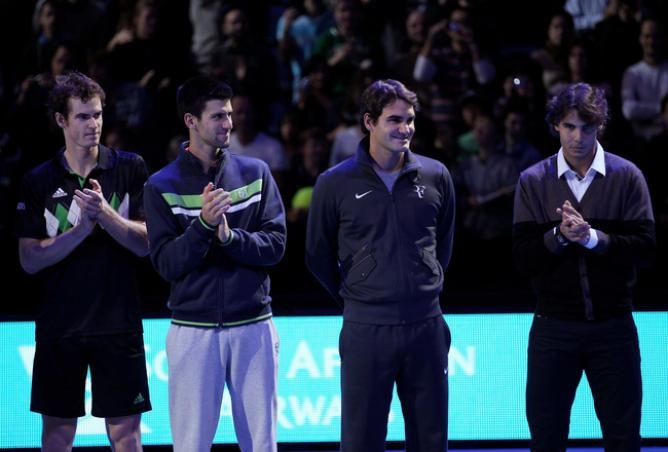
Photo courtesy of http://www.vijesti.me A recent article in a British Broadsheet claimed that the ATP’s Big Four had become the Big One and that the days of the Big Four were done. The Tennis Review, though, has other ideas- the Big Four was never about who achieved the most but about what they achieved together, and anyway, they split up a good few seasons ago.
The ‘Big Four’ was the label coined by the tennis media back in 2008 when a strange thing started occurring- the sight of the same four players, Roger Federer, Rafael Nadal, Novak Djokovic, and Andy Murray, competing in the last four of the game’s biggest tournaments over and over again.
That the top four should meet now and then in the semis of a Slam was not that odd, but that it should be every Slam was. The Greats had rarely found consistency across all Majors- Sampras had been missing from the French semis every year bar one, for example- so it seemed a remarkable feat that the game’s very best were the best right across the board.
The mystery of the Big Four’s dominance soon came to light, however- the same names in the last four of the Slam draws were competing with each other on very similar surfaces.
That surface similarity helped the Big Four along very nicely in becoming tennis’ most popular quartet. From the 2008 to 2012, they occupied the top four of the year end ATP rankings, and from Wimbledon 2010 to Australian Open 2012 they appeared in 6 of 7 Slam semi-finals. The one Slam semi they failed to all reach was the US Open 2010 when Andy Murray lost in the third round.
Murray’s name was the one missing from another important line up, too- the Slam winners circle. The Scot did make a final in that Wimbledon 2010-Australian Open 2012 stretch, (the Australian Open 2011), but he was the only Big Four member who during their 2008-2012 reign did not take home one of the Big Four trophies.
From the Australian Open 2008 to 2012, Nadal took home seven Slams, Djokovic five, and Federer four. The one remaining Slam trophy was won by Juan Martin del Potro at the US Open 2009.
That random run by the Argentine surpassed anything Murray- who did not win a slam until the US Open ’12- achieved in terms of silverware, but no one other than the big three could compete with the Scot consistency wise.
That consistency is what the Big Four were about anyway- it was never about winning the Slams. If it had been it would have the Big Three plus a cameo. But that would not have sold tennis’ biggest event’s semi-finals as the toughest possible competition, and, the Big Four at the Big Four had a catchy ring to it, too.
That ring, like every great hit does, faded out in the Summer of 2012 when an injured Nadal crashed out of the second round of Wimbledon. The other Big Four members kept winning slams, even Murray joined in, but the four were never back together again competing in the final four of Slams- Federer suffered a back injury in 2013, the year he, too, departed from the second round of SW19, and in 2014, it was Murray’s turn to suffer.
Finally, those injuries spells are over and at the end of 2015, all four of them are back in the top six, but only one member of what was the Big Four has been winning slams and been anywhere near the top of the rankings. That achievement has not ended the Big Four, though. That foursome ended a long time ago.
Commentary by Christian Deverille
-
BNP Paribas Masters Final Novak Djokovic Wins 6th ATP 1000 title of Season
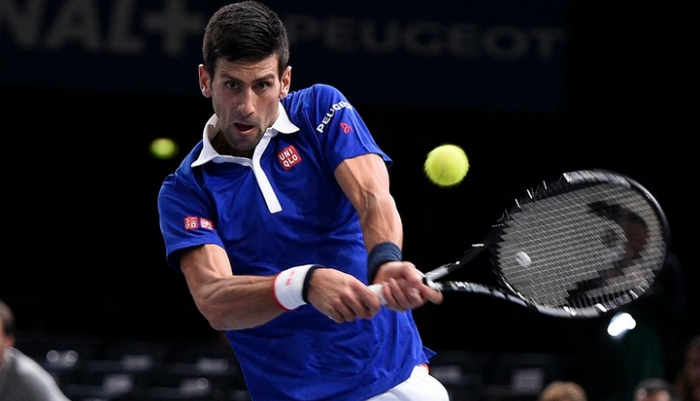
Photo courtesy of http://www.oktennis.it Novak Djokovic (1) beat Andy Murray (2) 6-2, 6-4 in the BNP Paribas Masters Final at Paris-Bercy to lift a record sixth ATP 1000 trophy in a season. The Tennis Review looks back at the world no. 1’s all too familiar march to a big title and defeat of one of his biggest rivals.
Novak Djokovic’s 6-2, 6-4 defeat of Andy Murray in the BNP Masters final was a familiar scene. The Serbian had defeated the Scot in nine of their previous ten matches, only slipping up in this season’s Montreal final.
Murray produced his best tennis that day in August and the consensus was that he would have to do so again in Paris-Bercy. But against Djokovic, producing your best is a tough task- the world no.1 quite simply does everything in his power to stop you.
Djokovic anticipated Murray would attack, the only viable winning strategy available for the Scot, and was careful not to give him any pace to feed off, to get as many balls back as possible and let the Murray errors come his way.
That was a winning strategy- Murray is not, at heart, an attacking player, and though he tore away at his forehand and stepped into the court, he missed the lines more than he painted them, and before he knew it he was a break down at 1-3.
A break down early in the first set was the worst possible scenario for Murray against the game’s best returner, a player whose own highly efficient serving made him difficult to break and an opponent who was as comfortable running away with matches against you as he was at running all over the ATP’s slow hard-courts.
Before long an even worse scenario presented itself-Murray was looking at the prospect of being a double break down. Memories of their Shanghai semi-final must have been hovering around in Murray’s sub-conscious somewhere. Confidence wrecking memories.
To his credit, Murray did not let those memories get him down. He did not surrender behind the baseline but kept on with his attacking strategy to save a break point with a deft volley, produced a fine winning serve out wide to the forehand side, and benefited from a Djokovic forehand error to fight back to 2-3.
That was as close as the score line would read for set one. Djokovic served with his usual calculated efficiency and backed the serve up with deep second balls, punished Murray’s weaker service deliveries, and did what he does best- stepped up his game on the big points.
Rather than play every point as if it was a big one, like he did in Shanghai, Djokovic, instead saved his best for the big moments, stepping inside the court, and executing the game’s smoothest transition from defense to attack that has made him so effective on the tour’s slower surfaces.
Djokovic earned another break point leading 4-2 and converted it as Murray, who once again had the right idea, coming in after the serve to take on a short ball with his forehand, went for too much and netted the strike.
Two breaks under his belt, Djokovic served out the first set 6-2, Murray’s 19th unforced error helping his cause, and then went about his history-making business in the second.
Murray did his best to perform his duty as the second seed and put up a fight, fending off break points in his opening service game, and winning it with a second service ace. However, his efforts were not enough as Djokovic took an early break for 2-1, involving Murray in a long baseline rally, pulling him out wide and then winning the point at the net as a Murray lob went long.
Murray did not lessen his efforts though and responded the best possible way, breaking back, to love no less, a huge return that forced an error on break point a reminder he was in the conversation when it came to the game’s best returners on the ATP tour.
The top two seeds went all the way to 3-3 before an enthusiastic crowd pleased to see a possible contest shaping, but just as has been the case in so much of Djokovic’s 22 match winning streak, those competitive moments were fleeting. Djokovic once again produced his best when it mattered, breaking Murray for 4-3, and then holding his serve twice more to charge over the finish line 6-2, 6-4.
The stag-shaped trophy was Djokovic’s tenth of the season, his sixth ATP 1000 prize (a record), his 26th ATP 1000 title overall, (second place), and his 27th win in 2015 over a top tenner (another record). That win was over the new world no.2 (Murray has to win two WTF RR matches to achieve his highest year end finish) in a rivalry that does not look to be getting competitive anytime soon.
But that is a whole different article. For now the story is Djokovic’ remarkable achievement of perfecting a game that perfectly capitalizes on the tour’s slower surfaces, his skill of negating every one of his opponent’s strengths and a game which, despite being more than good enough, continues to improve.
The Serbian has, on the back of those qualities, arguably compiled the best season ever and if he wins the upcoming WTF, in what would be another all too familiar scene, that argument will be won as easily as his recent slew of titles seem to be.
Commentary by Christian Deverille
What did you think of Djokovic’s history-making win? Let us know below.
-
BNP Paribas Masters Final Preview Novak Djokovic Vs Andy Murray
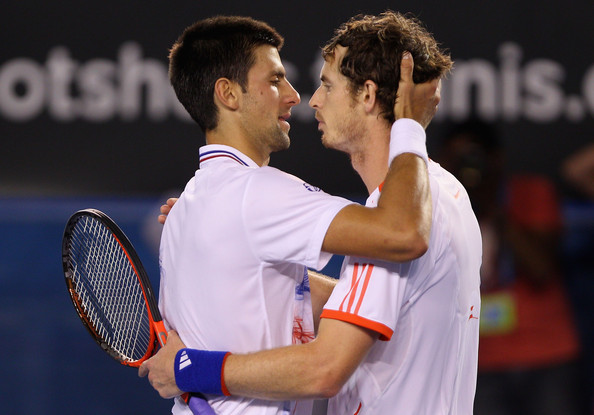
Photo courtesy of zimbio.com Novak Djokovic (1) will take on Andy Murray (2) in the BNP Paribas Masters final. The Tennis Review previews the action and predicts the winner.
History: Novak Djokovic leads the head to head 20-9 and has won 9 of their last 10 matches going back to Miami 2014.
Murray’s sole win in that ten match period was in Montreal when he beat Djokovic in three sets. Murray had to play his best tennis to defeat Djokovic in three, and he will have to be every bit as good in tomorrow’s final to repeat that win.
Form coming in: Novak Djokovic has won his last 21 matches and has dropped one set in his last 14 matches. That set was the second set of his contest versus Stan Wawrinka in their Paris-Bercy semi-final.
Novak’s reaction? To win the next set 6-0.
Djokovic won 20/28 points at the net in that match and the ease with which he is transitioning from the baseline to the net on these slow courts is ominous for Murray.
Murray has been in mixed form, cruising past Coric and then Goffin, getting into a scrap with Gasquet, and then putting in a patchy performance to defeat David Ferrer in their semi. Encouragingly for Murray he did play aggressively and started and ended the match very strongly.
Who should win: Djokovic. The Serbian is having his best career year, even better than 2011, and he loves playing Murray on a slow hard court.
The world no.1 defeated the world no.3 6-1, 6-3 in Shanghai a month back and in the imposing form he is in now it is hard to see him not grabbing another win over the Scot.
The Serb is getting into the exact rhythm he likes on slow hard from the baseline, is serving his first serve in the high 60s, and is creating plenty of break points opportunities (14 versus Wawrinka.)
Murray could win if: Murray has to approach this match with the attacking mindset that has won him most of his matches over Djokovic.
That attacking mindset has to be a controlled one too. Murray has to master his emotions against a player so skilled at wrecking them. The Scot should not help Djokovic tire him out by exhausting himself with negativity- the second seed is up against it as it is.
The Scot has a lot to do- he has to serve at 70% or higher against the game’s best returner, to return at his best versus one of the game’s most intelligent servers, to out-attack a Djokovic who is committed to stepping inside the baseline, and to not get upset at what goes on down the other side of the court.
Nothing less will do.
Prediction: Djokovic to win. Murray is not going to be a pushover, he is far too motivated to put in a positive showing with the Davis Cup final coming up, but he is not going to be able to withstand a Djokovic on course for posssibly the best season in tennis ever.
Murray may grab a set if he comes out on the attack, but when it comes to the big points, or at seizing the momentum, there is no one better than Djokovic right now, and the Serbian is very experienced at doing both of those versus Murray in big finals.
Commentary by Christian Deverille.
Who do you expect to win the final? Let us know below.

Tennis from a fan's point of view
[
[
[
]
]
]
 thetennisreview