-
Australian Open Who Can Beat Novak Djokovic? Wawrinka Federer Nishikori
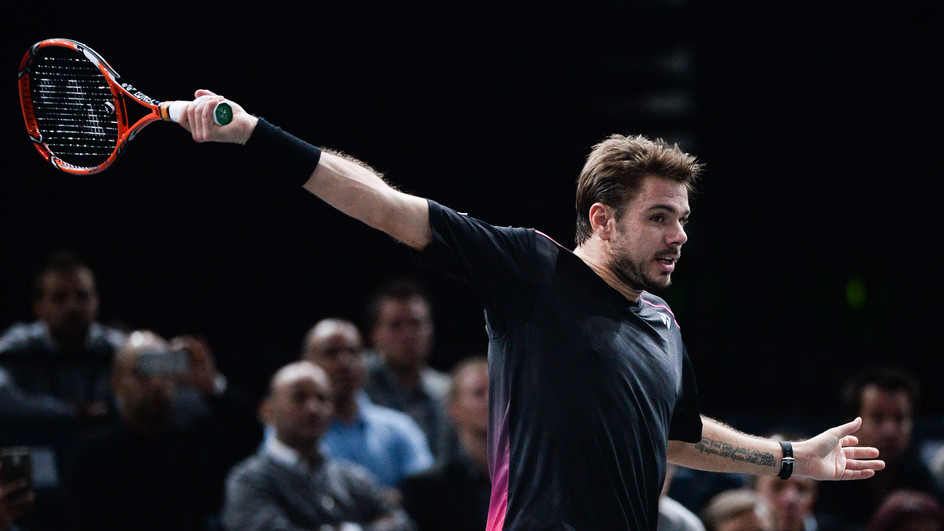
Novak Djokovic is the heavy favorite to win the Australian Open, but there are a few players who have a legitimate chance of defeating him, namely Roger Federer, Kei Nishikori, Andy Murray and Stan Wawrinka. The Tennis Review looks at what makes them likely candidates, and what, other than the five time Champion himself, stands in their way.
Stan Wawrinka, Champion 2014, Semi-final 2015
Possible match stage: Final
Why he is a candidate: Stan Wawrinka was the last man to beat Djokovic in Melbourne when he knocked him out 9-7 in the fifth of their Australian Open 2014 quarter-final. That was nice revenge for his 10-12 fifth set loss to the Serbian in the fourth round the previous year. Last year, the Swiss also took Djokovic to five sets in their Semi-final.
Wawrinka is not only one of the few men to get in the way of Djokovic’s Australian Open title challenge since 2008 (Tsonga and Roddick are the other two), he is also the man who stopped Djokovic completing his career grand slam when he stunned him in the French Open final last season.
The Swiss’ big serving and aggressive game (he hit 60 winners in that four set Roland Garros final) can overwhelm the world No.1 and the slow court gives Wawrinka plenty of time to get the full swing he needs to really unleash his biggest weapon, that single-handed backhand.
What stands in his way (other than Djokovic): Consistency. The Swiss could bring his A game or he could dramatically flunk. You just never know. That’s part of the fun, and the angst, of being a Wawrinka fan.
Kei Nishikori Quarter-finalist 2015
Possible match stage: Quarter-final
Why he is a candidate: Since Wimbledon 2014, Djokovic has lost only two slam matches- the Roland Garros ’15 final to Wawrinka, and the 2014 US Open final to Kei Nishikori.
The 26 year old is an aggressive baseliner with great athleticism and shot-making skills in the mould of Djokovic and can take on the Serbian at his own game when at the baseline. Whoever can establish a comfortable rhythm first dictates their rallies which can be some of the best you will see on the tour.
If Nishikori is going to break through and fulfill his multi slam winning potential, then, at the age of 26, he needs to do it soon, and it might as well be at the Australian Open on the plexi-cushion which suits his game so well. If Nishikori catches fire the way he did in New York in 2014, and he has four matches to get his game in better shape than it was in his recent error-filled Brisbane loss to Tomic, then watching him go up against Djokovic could be one to savor.
What stands in his way (other than Djokovic): Nishikori may be able to compete with Djokovic in a baseline rally or get the better of him in a set, but he lacks the Serbian’s health and stamina, and by the time Nishikori makes their scheduled last eight match, he might have already run out of gas if his earlier matches have gone the distance.
Roger Federer Champion 2004, 2006, 2007, 2010 Runner-up 2009
Possible match stage: Final
Why he is a candidate: On the days Roger Federer can execute his aggressive game against Djokovic, he has swept him away, most recently at the 2015 ATP WTF.
While Federer has not been able to pull off his game plan versus Djokovic in a slam in their last three slam meetings since 2014, this time he could get the world No.1 in the semis where there would be less pressure and where Djokovic tends to struggle more than he does in finals.
If the Swiss can get through his previous five matches unscathed with no strenuous five setters and get off to a quick start against the Serb – and he will need to finish quick, too- he could find himself in his fourth slam final since his 2014 rejuvenation and for the first time without Novak Djokovic in the way of that elusive 18th slam.
What stands in his way (other than Djokovic): His own bad luck- last season Federer came into the draw with a Brisbane trophy only to get bitten by a bee on his hand and knocked out in the third round by Andreas Seppi.
Federer can also be prone to off days where he is a little flat and a little slow – such as the recent one he had versus Raonic in the Brisbane final- and at the age of 34 it can be harder for him to fight through them than when he was in his prime.
Andy Murray Runner-up 2010, 2011, 2013, 2015
Possible match stage: Final
Why he is a candidate: Andy Murray was one of only four players (Karlovic, Wawrinka and Federer were the others) to defeat Djokovic in 2015 when he beat him in the Montreal final, and as a four time runner up in Melbourne, his chances of making the final this season as the second seed are strong.
When Murray is serving well, striking his forehand with aggression and down the line, and is feeling positive then he can challenge him right down to the wire as he did in their epic 2012 semi-final.
What stands in his way (other than Djokovic): Murray already has the toughest of rivals when he faces Djokovic in Melbourne, but as we saw in last year’s final, Murray is often his own worst enemy when playing the five time champ. The Scot has to keep his cool when Djokovic’s intensity rises and the mind games really begin or he will be holding up his fifth Australian Open runners up plate.
Who do you think has the greatest chance of beating Novak Djokovic at the Australian Open? Share your views in the comments below.
-
Australian Open Which Title Outsider Can Beat Djokovic? Nadal Tsonga Raonic
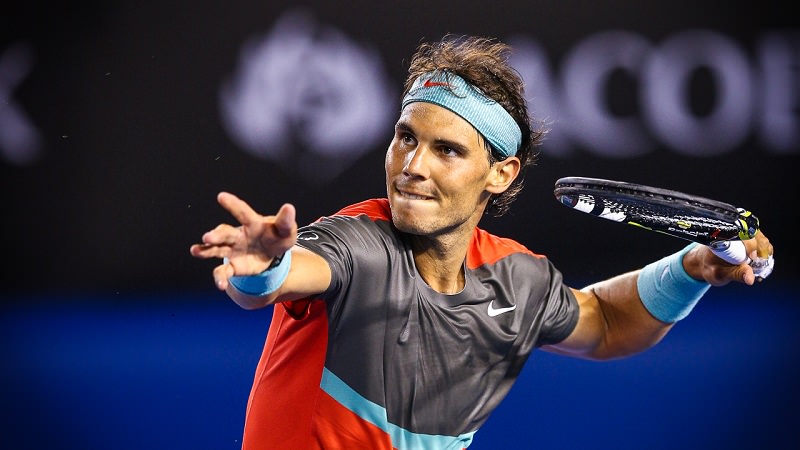
Photo courtesy of http://www.arabgt.com Novak Djokovic is the heavy favorite to lift his sixth Australian Open in a fortnight’s time, and it seems only a handful of players have a legitimate shot at beating him. There are though some worthy title outsiders who if things go right for them could deliver a stunning defeat of the ATP’s dominant No.1. The Tennis Review looks at the chances of Rafa Nadal, Milos Raonic and Jo-Wilfried Tsonga.
Rafael Nadal Champion 2009, Runner-up 2014
Round they would meet: Final
Why they have a shot: For Nadal to get to Djokovic at this year’s Australian Open, he would also need to get to the final which is where Djokovic might be the toughest but is also where Nadal would be his most dangerous.
The chances of Nadal making the final look slim- the former Champion has not been to a slam final since Roland Garros 2014, and has not gone beyond the quarters since then so is a little out of practice when it comes to making the business end of majors. (His record at slams since RG ’14 is 4r-DNP-QF-QF-2R-3R).
That should not deter Nadal though, the one time comeback king of tennis, and neither should the opposition who will be laying in wait. At the end of 2015, Nadal started beating top tenners again, getting the better of Raonic and Wawrinka in Shanghai, and then beating Wawrinka again at the ATP WTF and Murray and Ferrer.
If Nadal is to go beyond the quarters of this year’s Australian Open then he would likely have to get past Stan Wawrinka again, the man who beat him in the 2014 Melbourne final,and also more recently in the Paris-Bercy quarters, or Milos Raonic who defeated him at last year’s Indian Wells.
With both those men just coming off warm-up trophies in Chennai and Brisbane, Nadal would have to be playing well to get past them and full of the confidence he was missing in the first half of 2015, but which seemed to be about 70% back by his semi-final finish at the ATP WTF.
In the semis, Nadal would then most likely have to get past Andy Murray who he has a huge mental hold over (witness their ATP WTF match last season) and whom he has a good shot at getting past in a match as big as the Australian Open semis.
High on confidence, in slam-final making form- a slam final really would be the best place for a back to his best Nadal to meet Djokovic who has been dominating him of late, and never in such severe fashion as he did last week in Doha when he dropped just three games.
However, Djokovic has dominated Nadal before only to have that dominance turned around. From Indian Wells 2011-Australian Open 2012 Djokovic beat Nadal in seven finals, three of them slams, only for Nadal to beat him three times in a row in ’12, and then come back from injury in ’13 to beat him in two slam finals and take back the ATP world No.1 ranking from the Serbian.
So if anyone is going to come back to making slam finals and ending Djokovic’s dominance it is going to be Nadal.
Their biggest obstacle: Djokovic is never more dangerous than he is in Australian Open finals. He has not lost a single one, and even when Nadal was at his best in the 2012 final and had chances in the fifth set, the Spaniard could not pull it off.
Nerves will also be an issue. Nadal will dearly want a second Australian Open title- he would then join Laver and Emerson with two titles at each Major- and a 15th slam and that great desire is sure to produce huge nerves, the kind Djokovic is the master of sniffing out and working to his favor.
Milos Raonic Quarter-finalist 2015
Round they would meet: Final
Why they have a shot: Milos Raonic, along with Kei Nishikori and Grigor Dimitrov, has been the next big thing for a while now. That status looked set to be under serious threat when the 2014 Wimbledon semi-finalist was sidelined from the tour for much of 2015, but after the Canadian’s breakthrough Brisbane title win over Federer, that status might be ready to be updated to The Big Thing.
Raonic has the big weapons to make that happen, and it is not just his serve anymore which devastates his opponents. The world No.14 has worked hard to build up his all round game and can hit lethal ground strokes from the back of the court and move into the court to put away some fine volleys.
A more complete player and looking healthy, Raonic also has the advantages of flying under the radar and the momentum of his Brisbane run. If he made his first slam final and faced Djokovic the moment could either ruin him or inspire him to great heights to grab a first win over the world No.1 and that all important first slam.
Both- that first Djokovic win and that first slam- seem overdue. The Canadian is just the type of player who troubles Djokovic with his huge serve that his great return can barely touch, and the kind of game that when on can overwhelm him.
Their biggest obstacle: Those debut slam nerves tend to get to most people, and after a lifetime of dreaming about it, the reality can often turn into a nightmare (Look at what happened to Kei Nishikori in his slam final debut).
Jo-Wilfried Tsonga Runner-up 2008
Round they would meet: Quarter-finals.
Why they have a shot: Tsonga can claim to have a major part to play in Djokovic’s illustrious Australian Open history- he was the player Djokovic beat in his first ever slam final, and he is one of only three players to beat Djokovic in Melbourne since that 2008 debut win.
In fact, Tsonga is one of the players who has troubled him the most in his career, beating him 6 times, and most recently to the loss of just four games at the 2014 Canadian Open on a medium slow hard court.
The setting of a grand slam quarter-final will be one Tsonga gets up for, too. As much as the Frenchman has the reputation of letting the big moments get to him, it is also when his high risk aggressive game tends to pay off the greatest for him. Last season he demonstrated how the big occasions bring out the best in him when after a long period of injury problems he returned to the tour and defeated Nishikori at the French Open to make the semis and then took defending champion Marin Cilic to five sets in the US Open quarters.
The Australian open quarters versus Novak Djokovic, it does not get much more high profile than that, and if Tsonga is going to pull off the upset of the tournament, it will be there. Djokovic is at his weakest before the finals and Tsonga will be ready and waiting to see what he can make happen.
Their biggest obstacle: There is a reason Tsonga has just one slam final to his name considering his considerable talent- his shot-making selection which can go from the sublime to the ridiculous in seconds, and usually it is the former to get to the big point and the latter on it. If Tsonga does push Djokovic to five, like he did at the 2012 French Open, he will have two battles going on- one with the world No.1 who so often plays his best when down, and another with his mind that tends to melt just when he needs it to be its most solid.
Which title outsider do you think has the best shot of getting an upset over Djokovic at this year’s Australian Open? Please share your views with us in the comments box below.
Check out our other Australian Open preview articles here: Why Novak Djokovic is the heavy favorite to win the Australian Open
-
Australian Open 2016 Novak Djokovic Three Reasons He Is The Heavy Favorite
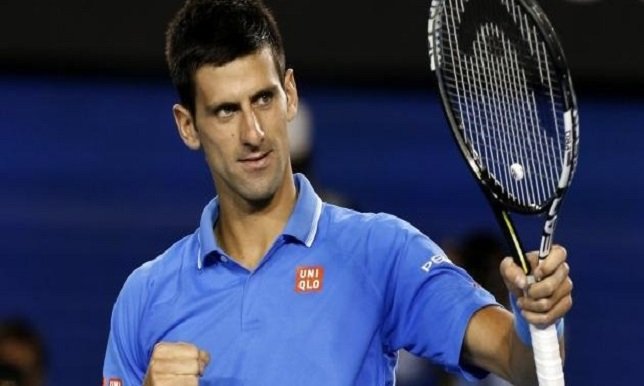
Photo courtesy of alef-yaa.com Novak Djokovic will go into the Australian Open 2016, which starts January 18th, as the heavy favorite. The Tennis Review gives you three reasons why.
1. He has the record for most Australian Open titles in the Open Era (five titles- 2008, 2011, 2012, 2014, 2015).
Djokovic won his first slam at the Australian Open 2008 as a 20 year old, defeating then dominant world No.1 Roger Federer along the way. The Serbian has won four more titles since then (2011, 2012, 2013, 2015).
Some of the wins Djokovic has had on those title runs will go down as the greatest in Slam history such as his 2012 5 hr 53 min final defeat of Rafael Nadal and his 2013 fourth round battle versus Stan Wawrinka.
Only Rafael Nadal (2009), Roger Federer (2010) and Stan Wawrinka (2014) have managed to win titles during Djokovic’s dominance.
In the years Djokovic did not win, he retired injured versus Andy Roddick in ’09, was beaten in five by former finalist Jo-Wilfried Tsonga in ’10, and was just bettered in an epic fifth set 9-7 by Stan Wawrinka in ’14.
While being dominant at a slam does not mean you are going to keep winning it, the game’s greats tend to have dominated one, or even two, slams in their primes. Roger Federer dominated Wimbledon (seven titles from 2003-2012), Rafael Nadal has been king at the French winning nine titles in eleven years, and Sampras ruled at Wimbledon (seven titles from 1993-2000).
With Djokovic holding ten slams aged only 28, and with a tennis pro’s career going on into their mid 30s, his place in the top tier greats looks assured, and with his dominance looking to be far from over, it seems only natural that he will continue to display all the reasons for his reign- his aggressive baseline skills, his solid and smart serve, especially on that all important second delivery, his much improved net game, and his all time great return of serve- at his most prolific slam.
Watch Djokovic winning what many believe to be the greatest Australian Open final ever against Rafael Nadal in 2012 in the video below.
2. Djokovic is perhaps the most dominant No.1 ever.
Right now, with 16, 790 points, (12 titles including WTF, 3 slams, 6 ATP 1000s) on his No.1 ranking, Djokovic has the record for most points while at No.1 and has nearly as many points as the world No.2 (Andy Murray) and no.3 (Roger Federer) combined (17, 110).
Considering that just over 13 months ago Djokovic was being chased by Federer for the top ranking after just taking the top spot from Rafael Nadal with his Wimbledon win, Djokovic has gotten stronger the last 18 months and may be at the top of his game right now.
While the only way may be down, taking into his account his good health and smart scheduling, it is hard to see his fall from the top happening anytime soon, or his grip on the Australian Open title loosening.
3. Djokovic is in great form.
Especially when you look at his recent form- only last week Djokovic pummelled Rafael Nadal 6-1, 6-2 in the Doha final, hitting 30 winners in 15 games. Doha may not be the best conditions for Nadal, but he made the final and as world No.5 and a former Doha champion (2014), was expected to do better than winning 3 games.
Djokovic was in no mood to entertain a Nadal battle and in the manner we have come to expect of him these past 14 months, the Serbian, despite not looking that great in the run up to the final, saved his best till last.
That best, according to Nadal after the match, was better than the Spaniard had ever seen anyone play against him.
That best is what Djokovic will bring with him into this season’s Australian Open. A best that will be almost impossible to better.
What do you think about Djokovic’s chances at the Australian Open?
-
Milos Raonic Upsets Roger Federer in Brisbane Final Five Interesting Points
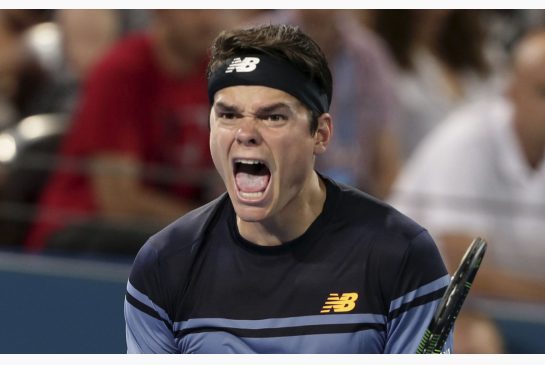
Photo courtesy of thestar.com Milos Raonic surprised the tennis world with a comprehensive 6-4, 6-4 defeat of defending champion Roger Federer in the ATP 250 Brisbane final. The Tennis Review looks back at five interesting things about the world No.14 ‘s victory.
1.The win marks only Raonic’s second victory in eleven matches against Federer
Raonic’s only victory over Federer before this Brisbane win was another straight setter- 7-6, 7-5- in the quarter-finals of the 2014 Paris Masters.
Although Raonic trailed Federer 1-9 before their Brisbane final, Raonic had pushed Federer in many of his losses- most notably in last year’s Brisbane final- and had taken four sets off Federer in his nine losses, and lost four sets on tiebreakers.
With both men having such effective serves, their matches are decided on just a couple of points here and there. Federer’s better all round game, shot selection and the experience he brings to the big points have usually made the difference which is what made him the favorite to win the match.
2.Raonic did not play his best but played better than Federer
Raonic was not a total underdog, though. The Canadian had proven he could beat Federer and his serve and attacking game, which work so well on the Brisbane hard courts, made Raonic the man most likely to defeat Federer in Brisbane.
A Raonic win would, we thought, be possible, but it would be a tough task- if Federer played his best tennis, then Raonic would have to deliver a career best performance to get the win.
Federer, however, did not play near his best, which can be just as tricky to come up against, but Raonic responded perfectly- he did not produce his best either, Federer never demanded it, but Raonic did something just as vital- he played the better tennis of the two.
Most crucially, Raonic played the better tennis on the big points. In the first set, Federer was struggling on serve, compiling just 46% of first serves in, and at 4-4, the Swiss was break point down for the fourth time. Raonic did not do much on that point- he hit a backhand return mid-court to Federer’s backhand, followed it up with a deep inside out forehand rally ball to Federer’s feet, then repeated that shot to earn the break as Federer netted a forehand down the line.
The rally was nothing spectacular shot-making wise, but it was solid, asked questions of the shaky Federer ground game, and most importantly, it was better than what Federer was producing.
With that decisive break, Raonic kept his cool and served out the first set to 30.
At 3-3 in the second set, Federer looked to be in control of his serve at 30-0, but Raonic hung in there for 30-30 and then hung in there some more when he picked up a forehand behind the baseline, got it back short to Federer’s forehand. The Swiss looked to have the point won but instead hit an error down the line to give Raonic break point. All the Canadian had done was get the ball back in play, and against a struggling Federer that was all he had to do.
The next point was one of the biggest Raonic would play- a break point against Federer when leading by a set in one of the Australian Open’s biggest warm up events. Raonic got his racket on a service down the line, hit a forehand cross court, and then went down the line on the forehand, striking the ball so flat and deep that it produced a Federer error and all important break of the Federer serve. Everything fell into place for Raonic on that point- his great movement, footwork, and his attacking, positive mindset, and he was on the verge of a career best win.
At 5-4, Raonic held championship point. This time his signature stroke, the shot that has helped him earn the reputation as one of the next big things in tennis, did the hard work for him as he struck a first serve to the Federer backhand and got the service winner to seal his first win over one of the big four in an ATP final.
Watch highlights of Raonic’s Brisbane final win over Federer in the video below.
3.Raonic won 20 of 25 points at the net
That might be the most significant stat of them all from this win. The only way to defeat Federer in a straightforward manner on hard courts is to out-attack him.
Raonic delivered on that front. The Canadian won 20 of 25 points at the net while Federer compiled an unusually low 7 of ten ratio. Raonic was helped by Federer not making passing shots he would on a good day, but the previous year’s finalist played with such confidence you have to think he might have got his racket on those passing shots anyway.
4.The win is an ATP 250 but worth a 1000 in confidence before the Australian Open
The 2016 Brisbane title is Raonic’s eighth title and his seventh ATP 250 trophy.
While the title might not be his biggest- he won the ATP 500 Washington 2014 title- it is his most important one considering the opponent he defeated in the final, the significance the event has as one of the few pre-Australian Open warm up events, and the confidence it will give him going into the season’s first slam after a nine month spell troubled by injury.
5.Raonic is now back to where he left off when he was injured
Back before Raonic started having injury problems in the spring of ’15, the Canadian was up to world No.4 (11.05.2-15), had an ATP 500 title and a Wimbledon semi-final on his 12 month resume, had earned a first career win over Rafa Nadal at Indian Wells, and pushed Federer close in a tight semi-final.
Raonic’s much improved all round game and step by step breakthroughs had many fans hopeful that the talented 24 year old was going to deliver on the promise he showed when he broke into the top 100 a month after his 20th birthday. But his injury troubles had many worried all his hard work might not pay off.
Raonic’s Brisbane final win over Federer means that his progress is not derailed after all- with both men at the stages of their careers, this probably should have been the result anyway.
It was the result of a lot of hard work, an intelligent strategy, and a lot of heart. A hungry heart. Listen to the roar of Raonic after he got the win and you will know just how hungry he is. The Canadian has a huge appetite when it comes to tennis – expect to hear that roar again.
What did you find most interesting about Milos Raonic’s win over Roger Federer in the Brisbane final? Let us know in the comments box below.
-
2MinuteTennis.net™ Promo Offer Get First Month High Quality Online Tennis Coaching Free!
 ***First Month Free Coupon Code Below***If you play club or recreational tennis, then you really care about just one thing: the ability to play to your highest potential so you can beat your toughest opponents.With the growth of online tennis instruction, players looking to improve their game can now learn new techniques and strategies from the comfort of their own home.So what’s the problem?Well, most tennis sites feature former tour pros who teach most or all of the instruction.This may not seem like a problem, but former pros usually have little or no experience working with recreational athletes…This can cause an inability to relate to their audience and it lowers the student’s ability to improve from the instructional site.Yet, there hasn’t been an alternative.Until now…Hello, my name is Ryan Reidy, Founder of the instructional tennis website 2MinuteTennis.net™.After almost 20 years coaching club players, I know what to say and how to say it, so you improve as quickly as possible.Currently, there are over 140 videos and counting (all around “2” minutes long) and all of them are geared toward helping the you, the club player, win more and play better…And with two new videos uploaded every week, your improvement is endless.For recreational players looking to improve their game, 2MinuteTennis.net™ is a NEW category of instructional tennis websites.***SPECIAL DISCOUNTED RATE***Use Coupon Code “FREEMONTHTTR” (without quotes) during sign up and receive your FIRST MONTH OF MEMBERSHIP FREE and then $9.99 a month thereafter.Cancel anytime.
 -
Roger Federer Who Can Beat Him in Brisbane? Can Milos Raonic Get Revenge?

Photo Courtesy of Marianne Bevis @ flickr.com (Creative commons license) Roger Federer defends his ATP 250 Brisbane International title this week and the top seed and defending champion will be the heavy favorite to lift his 89th career title at one of the tour’s faster hard court events and in one of the toughest ATP 250 draws featuring the potential next generation of slam champs in Kei Nishikori, Milos Raonic and Grigor Dimitrov. The Tennis Review looks at who has the best chance to defeat Federer among his rivals in the draw.
Final
Milos Raonic (4)
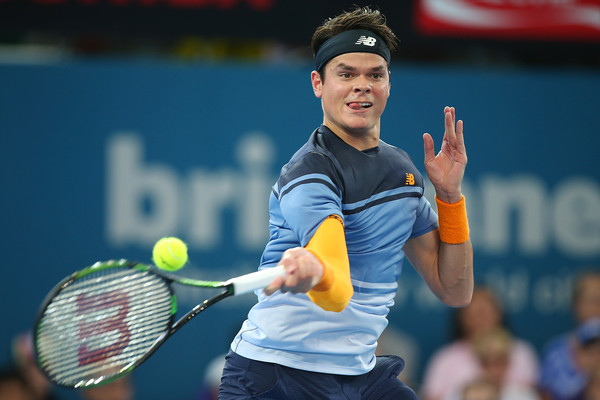
Photo courtesy of zimbio.com In last season’s Brisbane final, Raonic pushed Federer to three sets, and his big serve and aggressive game which work well on Brisbane’s fast hard courts could help him challenge Federer again when they meet for the title for the second year in a row today.
Raonic, who has been plagued by injuries the last nine months, is looking to be in much better shape physically and recently made the final of the Abu Dhabi exhibition where he lost in straights to Nadal.
Raonic has made his way through the draw beating Ivan Dodig in three sets, Lucas Pouille in straights, and was impressive in his 7-6, 7-6 defeat of a well playing Bernard Tomic. The way he took control of both tiebreaks before a Tomic supporting home crowd was a positive sign of his mental strength.
Raonic will need that match strength, and toughness, when he meets Federer in this year’s Brisbane final. The Canadian has only managed to defeat Federer once in ten attempts (in straights at the Paris Masters ’14), but can take some extra confidence from the fact he has taken four sets in his nine losses.
Raonic knows he can challenge Federer, even beat him, and if he gets the chance in the Brisbane final, he could rise to the occasion. Such chances will be fleeting though, if they come along at all, so the Canadian has to control the match from the start by serving impeccably- the slightest wobble and Federer has the necessary skills to get a crucial break or mini-break in a tiebreaker- and to be as fluid and confident as he was against Bernard Tomic when he grabbed match point on Tomic’s serve with some great back-court play and then a beautiful volley.
If Raonic cannot impose his game from the start, and if Federer is in fine form, then Raonic is going to have to stay with Federer on serve, and find some inspiration in tiebreakers. We know the Canadian is feeling a little inspired from the following tweet:
Now I get a shot at the title tomorrow, that’s what I play for. A challenge lies ahead of me… https://t.co/ag6E8GYH1P
— Milos Raonic (@milosraonic) January 9, 2016
Raonic is renowned for his hard work ethic and his professionalism- he is never surprised at his success because that is what he has been working for- and you have to think that an ATP final before the Australian Open versus Federer on a favorable surface in good form after all his injury problems is the kind of shot he will get pumped up for.
Federer, though, will be pumped, too. Title 89 is on the line, his chances at slams are getting slimmer with each one, and he also has some fresh blood in his camp in the guise of Ivan Ljubicic who knows both Federer’s and Raonic’s games inside out, a valuable resource for this upcoming Brisbane final.
Federer has also been in great form, beating players he matches up well against. He swept aside Kamke in the last sixteen and Thiem in the semis, and though he slipped up against Dimitrov in the quarters, he got himself back on track in the third in convincing style.
With both men motivated and playing well this final should deliver when it comes to entertainment, tennis skills and giving us some insight into how Federer, the game’s living legend, and Raonic, one of its potential slam champions, are doing before the season’s first slam.
Prediction:
Raonic could surprise us all. The Canadian has been around long enough to handle these matches, and players can often gain a lot of mental toughness after injury lay-offs.
However, it might be too much too soon after all his recent physical troubles so we are going to go with Federer to win in three sets. The Swiss has proven he is a difficult match up for Raonic, has a more solid game when it comes to crucial moments in the match, and his superior shot-making skills and selection on big points should make the difference in this final.
Round of 16: Tobias Kamke
Never underestimate Federer’s opening round opponent- we learned that lesson back in Shanghai last season when Albert Ramos-Vinolas shocked the defending champion in the Swiss’ opening round.
This time Federer’s first challenger is Tobias Kamke. Kamke, currently ranked 277, has a career high ranking of 64 (31.01.2011), and has been on the pro tour since 2004.
The German’s chances against Federer if the Swiss carries over his 2015 form into the new season are slim, however, Kamke is not without hope. The German has plenty of experience- he has two wins against top ten players, (beating Tomas Berdych (6) at Basel ’10 and Juan Martin del Potro (7) at the Sony Open ’13), pushed then world No.1 Rafael Nadal to three sets at Doha ’14, has beaten players of the quality of Nishikori and Goffin before they became established players, and defeated 21st ranked Alexandr Dolgopolov at Hamburg ’14.
Those experiences should give Kamke the confidence to know he can push the top players, even beat them, and he should also draw some self-belief from the valuable match toughness he has gained this week while Federer comes in with none.
Kamke, like Ramos-Vinolas in Shanghai, has made it through qualifying, defeating Norbert Gambos and Jurgen Zopp, and then beat Australian Benjamin Mitchell in his main draw opener to earn the right to meet Federer in the last 16. That opening round main draw win against a home player receiving strong support should also give the German a real boost before such a big match against the world No.3.
This will be the second meeting between Kamke and Federer. The Swiss won their first meeting back at the 2012 French Open in straight sets, but it was not at all straightforward as Kamke led 4-1 in the second set.
Considering Kamke’s current match toughness and his previous career highlights, the Swiss will need to be at his best in their Brisbane opener or he could face the kind of nervy encounter he had against then ranked 153 John Millman in his opening Brisbane ’15 match.
A nervy opener does look on the cards whatever happens- rumors are circulating that Federer is injured with a left forearm complication so Kamke might find he has an under the weather Federer in the slower night time conditions. Those factors could favor him and if he has played himself into good enough form then anything could happen.
Quarter-final: Grigor Dimitrov
Dimitrov has a tough task ahead of him to get back into the top ten and start winning tournaments again after a disastrous 2015, and a win over Federer if he meets him in the Brisbane quarter-finals would help make that journey back to the top a lot easier .
A win would give Dimitrov much needed confidence, and it would be a break through of sorts for a player christened Baby Fed since his first steps onto the tour but who has not been able to climb out of the shadow of his so called Tennis father.
Dimitrov has also not managed to topple Federer in their on court encounters. The two have met three times and Federer leads 3-0 including a decisive 6-2, 6-2 victory in the Brisbane semis last season.
Dimitrov does not have the aggressive baseline game that can break Federer down on a hard court. Instead, Dimitrov will have to match Federer’s net aggression and flair, and beat him at his own game. Dimitrov will have to have a high first serve percentage, take risks, and be creative. That is when Dimitrov is at his very best, and only his best will do against Federer.
Semi-finals: Marin Cilic (3)
Cilic has a famous win over Federer on hard courts, defeating him on his run to the 2014 US Open title. The two have not met since then, and their careers have gone in different directions with Cilic slowly coming back from a shoulder injury and Federer making the 2015 US Open final and winning 6 titles in 2015.
Back in New York ’14, Cilic was on a real roll, and that confidence played a huge factor in his win. He will not have that confidence coming into this match though a tricky opening round win versus Hyeon Chung in straight sets should have warmed him up nicely and given him some self-belief.
Cilic would have to be on a little bit of roll to get to Federer in the semis as he will have to get past Dominic Thiem in his last eight match. The two have never met, but Thiem has a tricky dynamic game that Cilic will have to be on top of his game to get past.
If that match gets messy, Cilic is a much stronger player mentally than he was pre-2014 and so has a better chance to get through it. If he does, then the knowledge he can fight through a bad day against a tough opponent and the match toughness that will come with a hard-fought win will make the Croat even more of a danger in the semis.
If Cilic also manages to get his game going in that match, then Federer will have to be on top form. Cilic’s top game on fast hard is a sight to behold- he has a great serve, aggressive and penetrating ground-strokes, and an underrated net game, and if everything is clicking, Federer will be, like he was on that Summer’s day in New York, in a lot of trouble.
Dominic Thiem (8)
Roger Federer and Dominic Thiem will meet for the first time in what is a surprise veteran meets next generation clash in the Brisbane semis.
Thiem is Federer’s unscheduled last four opponent after the eighth seed upset third seed Marin Cilic in the quarter-finals 2-6, 7-6, 6-4. Thiem did well to come back from a set down to defeat the ’14 US Open champion, and his consistency and point construction were too much for Cilic when the match went deep in the third, qualities that could be decisive if Thiem manages to take Federer deep into the third in their match.
Federer will also go into the semi match tough after he took three sets to defeat Grigor Dimitrov 6-4, 6-7, 6-4. His form was patchy against the Bulgarian as he seemed to have the match under control only to lose his way a little in the second set tiebreak which is where he usually proves to be the stronger of two aggressive players on a fast hard court.
The Swiss did come back strong in the third, but that earlier lack of focus could cost him if it happens against the 22 year old Thiem who has nothing to lose in this encounter and will not take his eye off the ball for even a millisecond.
Thiem will need to be on the ball and aggressively so against Federer who goes into match as the favorite. The Swiss’s aggressive game is tailor made for fast hard courts and as the defending champion he is very comfortable at the Pat Rafter Arena. Meanwhile, the Austrian has proven to be more of a clay courter. winning three ATP 250 clay titles in ’15, though he has had success on fast courts, reaching the US Open last 16 in 2014.
The Austrian is a strong transitional player capable of some fine defensive play and then attacking once he has constructed the point well enough to move inside the court and execute. Those defensive skills will come in handy versus the Swiss, especially his ability to hit stunning single handed backhand winners down the line on the run, but he won”t have much time to track down balls and return them with interest, and his attacking skills are what he will need to focus on in this match to stand a chance on these courts versus Federer.
Thiem, like he did against Cilic, will try to control the match from where he is most comfortable -from behind the baseline where he has enough time to swing through that backhand. There, he can try to get some rhythm going, get Federer on the run with a mix of depth and angles and then move in to end the point.
Those opportunities will be fleeting though, especially during Federer’s service games. The Austrian will need to return well if he is going to stand a chance against Federer in the Swiss’ service games or in tiebreaks. Federer is, if healthy, going to serve as well as ever, take Thiem on inside the court, and go for his shots. That recipe has been working well as Federer has faced just two break points in 23 service game played in Brisbane.
Thiem will have to be on top of his serve, too as Federer will go for broke on his second service returns, especially if things get tight and he senses Thiem is getting nervous. That is where Federer’s veteran status will come into play- the Swiss will play the big points with that confidence gained from winning 88 ATP titles, and will handle his nerves better.
Thiem’s nerves, on the other hand, may betray him. The world No.20, who has just three titles to his name, will be feeling the pressure of playing an elite player of Federer’s status in an ATP semi for the first time and will need to serve as well as he did against Cilic in their third set if he is going to win. If his serve falters at any stage of the match, that one break down could be decisive in determining his fate.
An attacking strategy should be enough for Federer to get the win, but if Thiem can keep him out there, get some rhythm and confidence going, get lucky on some big points, and most ultimately hold his nerve, then this match could get very interesting for neutrals and Thiem fans, and be somewhat nerve-wracking for Federer fans.
Final:
David Goffin (6)
Goffin’s verstaile game translates well to all surfaces, and he has a good record on the tour’s faster courts. In 2015, he made the Chennai semis, the quarter-finals of Basel, where he took Federer to three sets, the round of 32 of the US Open, and the round of 16 in Cincinnati and Montreal.
Goffin has never beaten Federer in three attempts, but he has taken two sets off him, including one at the French Open ’12 where Goffin made the fourth round as a lucky loser.
The Belgian will not shy away from the challenge of facing Federer in a big ATP match, and has enough aggression and flair in his game to put up a fight, but his mentality might let him down if things get close. Take a look at his loss against Novak Djokovic in Cincinnati last season when he led the world No.1 3-0 in the third set before losing the last six games. That kind of loss is not unheard of against Djokovic for any of the ATP players, but an assertive Goffin had looked well in control and the manner in which he lost his grip on the match once Djokovic’s intensity rose was a little worrying.
However, Goffin can develop that side of his game, and will likely have done so in the off-season. If he gets past Milos Raonic and then his nemesis Kei Nishikori, who leads him 3-0, to make the final, and is feeling inspired for 2016, then a Brisbane final versus Federer could be a great place for Goffin to make another big breakthrough on his way to the top of the ATP.
Kei Nishikori (2)
The Japanese is always a tough opponent for Federer. His aggressive baseline game can keep Federer pinned to the baseline, break down his backhand, and pass him at the net. Those abilities have been showcased in Nishikori 2 wins to 4 losses to Federer, and in their last highly competitive match at last season’s WTF.
Nishikori is the favorite, as the second seed, to make the final and face Federer for the title. The Japanese has not always done so well against the Swiss on fast courts, though, losing their matches in Halle (’14) and Basel (’11), but he has had convincing hard fought wins over him on fast clay (Madrid ’13), and on slow hard (Miami ’14).
However, if Nishikori can come up with a winning strategy against Federer on faster courts, and if he can keep his second serve from falling apart in tight moments, then he has the game, and the big match experience on fast courts that comes with beating Novak Djokovic on the way to the US Open ’14 final, to get a win over Federer in Brisbane.
Conclusion: It really does look like the person with the greatest chance of defeating Federer in Brisbane is Roger Federer. Though the opposition might be tough depth wise, Federer leads them all in his head to heads and his game on fast hard courts is strategically in his favor versus all of them.
Whoever beats Federer, and Raonic might be the most likely, is going to have to be at the top of their game, which means tennis fans will be treated to either Federer executing his unique fast court game to its usual high standards or being beaten by a career best performance by a member of, potentially, the next slam winner’s circle.
Either way, tennis wins.
Who do you think has the best chance of beating Roger Federer in Brisbane? Let us know in the comments box below.
-
Eleven Questions the 2016 ATP Tennis Season Will Answer
-
Novak Djokovic 2015 An Imperfectly Excellent Year
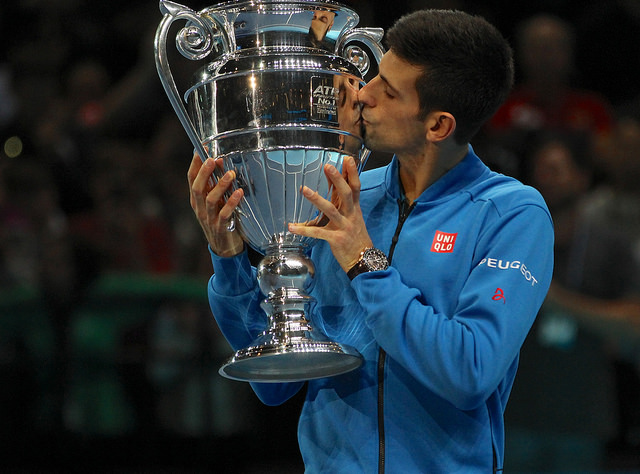
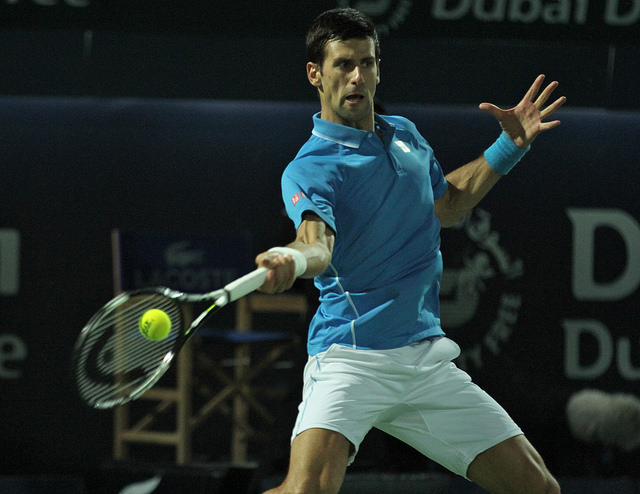
Photo courtesy of Marianne Bevis at Flickr.com (creative commons) Novak Djokovic’s 2015 was all about, in his own words, striving for perfection and reaching excellence. It was those imperfect moments in the space between perfection and excellence- shock losses, close escapes, and some less than friendly crowds- that drove the world No.1 to put together arguably one of the most perfect tennis seasons yet. The Tennis review takes a look back at Novak Djokovic’s 2015- an excellently imperfect year.
An Imperfect Start
After a dominant 2014 which saw Djokovic regain the world No.1 spot and win multiple slams for the second time in his career, many pundits expected great things from the Serbian in 2015.
Few however expected the excellence the Serbian would end up achieving, especially after the bumpy beginning the world No.1 had to his 2015 season
In his opening tournament in Doha, Djokovic suffered a shock three set loss at thehands of the big serving Ivo Karlovic.
The game’s huge servers (Isner, Roddick, Tsonga, Federer), or players having a career best big serving day (Nadal US Open ’10) have always troubled the Serbian but he has also, more often than not, been able to find answers to the problems they pose, his return proving a more consistent weapon than their serves at critical stages of the match.
Against Karlovic, it looked like Djokovic had found those answers once again as he took the first set 7-6(2). However, he was unable to close out a tight second set and was ultimately unable to break through the Karlovic serve as he lost the final two sets 6-7 (6), 4-6.
The History Making Begins Down Under
However, bouncing back is what Djokovic does as well as any player has on the ATP Tour, and the world No.1 more than made up for that imperfect start to the season at the Australian Open. That Doha loss only served to push him to even greater heights against big servers as he cruised through the draw, his return on form, beating both Gilles Muller and Milos Raonic in straight sets on his way to the semis.
At that stage of the event, Djokovic came unstuck against Stan Wawrinka, and was taken to five sets in an error filled match as the world No.1 was given no rhythm. The Swiss’ big serve and aggressive game had inflicted on Djokovic his sole loss down under since 2011 the previous year, but the Serbian was not going to let history repeat itself and cut down the errors when it came to the business end of things, the right thing to do against the streaky Wawrinka, and took the final set 6-0.
After such an uncharacteristically poor performance on the medium slow Melbourne courts, few thought Djokovic would produce the tennis he did in the final.
Djokovic did not have it all his own way against an in-form Murray as the two split the opening sets, but Djokovic took control of the match in the final two sets, stepped up the intensity to overwhelm the Scot and dropped just three more games.
Djokovic created history with that win as he became the first man to win five Australian Opens in the Open era.
Faster Courts and A loss in Dubai to Federer
Djokovic’s dominance down under is no surprise. The conditions are perfect for him- slow medium high bouncing hard courts that give him all the time in the world to get his ground-strokes going, get some rhythm and get his opponents where he wants them.
Those are the conditions that most ATP Courts are played under, and one of the reasons why Novak Djokovic, by the end of 2015, has held the No.1 spot for 179 weeks, and has held it for an uninterrupted 78 weeks since July 7 2014.
However, not all the courts are slow hard, and Djokovic took part in one of the fastest events of the season in Dubai. Now Djokovic is no slouch on faster hard courts- he has won Dubai four times (2009, 2010, 2011, 2013), however against an attacking player who takes away the time he needs, Djokovic struggles on faster courts, a fact perfectly illustrated in 2014 when he lost to Federer in straight sets in the semis.
In 2015, Djokovic struggled again against attacking players. He managed to get past a fighting Berdych in three sets in the semis, but was helpless against Federer in the final. Once again in Dubai, the Serbian was unable to keep the Swiss back on the baseline and put pressure on his ground-strokes on big points. Federer simply did not fall into his traps and played the perfect match, as he is prone to do versus Djokovic in Dubai-like conditions, and the Serbian was a runner up at an ATP event for only the second time since the US Open 2013 (the other time was Roland Garros 2014, both losses were to Nadal).
A Perfect U.S Spring Run
A shock loss to Karlovic, and a comprehensive defeat to Federer in Dubai, and the Australian Open Champion looked vulnerable in the best of three format as he entered the US Spring hard court swing.
Indian Wells was a good place for Djokovic to reassert himself- he was the defending champion and the courts were slow. The Serb skipped through the first two rounds and then negotiated a tough encounter with big serving John Isner.
In the semis, Djokovic crushed Andy Murray, and the final, where Federer awaited, looked to be the perfect setting for him to remind the Swiss who was No.1.
Djokovic got off to a great start, taking the first set, and then took the second set to a tiebreaker. But, he could not win the big points, Federer mounted a comeback, and the Swiss took the match to three.
Djokovic, clearly infuriated at having let the match go the distance, survived a close opening to the third, and then broke away as his consistency proved to be too much for the risk taking Swiss, and the world No.1 won his second title of the year.
That win gave him the confidence to carry over into the next ATP 1000 event in Miami where he survived three tough setters against Klizan, Dolgopolov, and then Murray in the final.
Djokovic made history with that final win as he became the first man to win Indian Wells and Miami back to back three times.
Roland Garros, the Quest for History and Tears in the Final
But the most pressing piece of history was to come – the French Open crown which would give Djokovic, who back in June had five Australian Opens, two Wimbledons and one U.S Open on his resume, the perfect slam collection in the form of the Career Grand slam.
Only four men have accomplished the Career Grand Slam in the Open Era- Laver, Agassi, Federer and Nadal. Other greats of the game have had Slams they were unable to win (Sampras, Edberg, McEnroe, and Becker could not conquer Paris and only Edberg got close with his ’89 final, Lendl could not win Wimbledon despite two finals), and the French Open was looking to be Djokovic’s as he had failed to win the title the years he was the favorite (2011, 2013, 2014).
Djokovic’s failure to complete the Slam set, like it had been for his predecessors, was understandable- the historical significance is huge. If Djokovic could compete the Career Grand Slam, he would be among the very elite of tennis and his inclusion in the Greatest of all time debate would be strengthened if he could reach 13 or 14 slams by the end of his career.
Djokovic could not have set his Roland Garros bid up more perfectly. He beat Nadal on his way to the Monte Carlo title, made the difficult decision to pull out of Madrid, and then beat Federer convincingly in the Rome final.
Djokovic continued where he left off when he arrived at Roland Garros. He swept through to the quarters where he became only the second man to beat Rafael Nadal at the French Open.
A French Open title now seemed a near certainty for Djokovic, but a tough five setter against Murray in the semis reminded us how Djokovic can struggle on the red stuff when the going gets tough.
Those struggles were, unfortunately for Djokovic, insurmountable in the final. The world No.1 came up against a confident Wawrinka in the final and after winning the first set was blown off the court 6-4, 4-6, 3-6, 4-6 as Wawrinka hit 60 winners.
Wawrinka could not have played a better match than he did, defeating Djokovic with the sustained controlled attacking tennis necessary, and it was that kind of perfection that was necessary to defeat Djokovic in 2015.
And it was Djokovic’s own imperfections – his inability to be more aggressive and play riskier tennis than Wawrinka- that cost him that final that drove him on to make 2015 one of the best seasons ever for any player in the ATP Tour’s history.
Wimbledon, Federer and the Pro-Swiss Crowd
That Roland Garros loss could have destroyed many players, but it would not destroy Novak Djokovic.
The Serbian came into Wimbledon without playing a single warm up and confidently marched into the fourth round.
There he met Kevin Anderson and he could not have asked for a more thorough interrogation of his skills moving into the business end of the tournament.
Anderson’s big serve was too much for even the Djokovic return, and his ground-strokes, struck mostly from inside the court, were too well struck for Djokovic to run down.
Those assets got Anderson into a two sets to love lead, but his serve and ground-strokes did not hold up, and when his level dropped, Djokovic’s rose, and the Serbian drew level at two sets all as bad light called off play for the day.
The next day, Djokovic returned and took the fifth set.
That fight prepared Djokovic for what was to come a couple of matches later- a final match up against Roger Federer, and the Wimbledon crowd.
Federer’s performance against Andy Murray in the semis was about as perfect as a grass court match could get against a former Wimbledon champion, and put Federer in many pundits eyes as the favorite for the final.
Djokovic, though, saves his best tennis for last, and in the final he put too much pressure on Federer’s strengths- his net game and serve- and on his weaknesses- his backhand- and took the match in four sets, overcoming an inform Swiss and a pro-Federer crowd.
That pro-Federer crowd tried their best to help the Swiss, and their cheers after Federer won the second set on a tiebreak must have made the pressure Djokovic was under even greater. But Djokovic did not succumb as he might have once done. Instead, he focused, got to work, silenced the Federer fans, and gave his own supporters plenty to cheer about- a ninth slam, a third Wimbledon and his third Multiple slam year (2011, 2014).
Watch Djokovic defeat Federer in the Wimbledon final in the video below.
A Rested and Rusty Djokovic Returns to the Tour
The low of the French Open loss and the high of the Wimbledon win were followed by a month’s break from the ATP tour.
When Djokovic came back, he was rusty. In Montreal, he survived a tough three setter with Ernests Gulbis in the quarter-finals and then suffered his first loss after an eight match winning streak against Andy Murray.
Murray has a history of big wins over Djokovic on North American hard courts, and he was inspired by the conditions, slightly faster than most, the poor form of his opponent, and those circumstances gave him the confidence he play the aggressive tennis needed to defeat Djokovic.
Djokovic looked out of sorts in his next event, too, the Cincinnati Open, one of the few titles he has not won, and the missing piece of his collection of ATP 1000 titles (won 8 of 9).
Despite playing sub-par, Djokovic did not give up easily. The Serbian came back from 0-3 down in the third to David Goffin in the last 16, and fought back from a set down against Alexandr Dolgopolov in the last four.
Both those players have the flair to keep Djokovic guessing and take him to three sets, but neither were as skilled as using that flair as Djokovic’s final opponent Roger Federer, and at getting the win. The Swiss put in as good a performance on fast hard as he ever has and Djokovic was beaten in straights.
The US Open, and Another battle Against Federer and the Crowd.
The US Open is, after the French Open, the slam at which Djokovic has struggled the most. He has won one title there, in 2011, and been runner up four times (2007, 2010, 2012, 2013).
Each loss has come at the hands of the better player on the faster US Open courts on the day. In 2007, Federer was too aggressive and Djokovic too nervous, in 2010 Nadal had never served better or hit his forehand with more venom, in 2012 Murray played the aggressive fast court tennis he has in him but can rarely produce, and in 2013 Nadal’s forehand down the line was too effective and Djokovic could not chase it down and return it with interest.
In 2015, the prospect of Federer being too good for Djokovic was very, in the minds of many, real. That Cincinnati win was about as convincing as it got, and Federer defeated Wawrinka in the US Open semi-finals with similar conviction.
Djokovic was looking much better than he had been in his warm up events, but was still a little rusty as he dropped sets to Lopez and Agut, and though he crushed defending champion Cilic in the semis, Cilic was injured and Djokovic’s level was hard to assess.
Federer and the crowd were certainly out to assess Djokovic in the final, but Djokovic had peaked at the right time, and all the patchy performances from the warm up events and earlier rounds were a thing of the past as he fought past Federer, who had plenty of opportunities to take control of the match, and won his third slam of the season, and his tenth slam in total.
Once again, Djokovic did not only have to conquer a formidable opponent and his own imperfections on a faster hard court. He had to do battle with the pro-Federer crowd who went as far as trying to disturb him between serves in the crucial stages of the match. But Djokovic has gotten used to being the underdog when it comes to crowd support- it is the burden most dominant players have to carry- and he handled it with the grace he has managed to master the last few years of his career.
Photo courtesy of Marianne Bevis at Flickr.com An Almost Perfect End of Season Run, Certainly an Excellent One.
There was no letdown for Djokovic in the final, and arguably his favorite, stretch of the season. Slow hard courts, both outdoors and indoors, let Djokovic showcase his skills at transitioning from defense to offense, and his general strategic smarts, and he embarked on a 16 match wining streak that took in titles in Beijing, Shanghai, and Paris, and which saw him not drop a single set until the Paris Indoors Semis.
That run came at the fine hands of Roger Federer who did everything right in his straight sets win over the world No.1 as he executed his attacking game plan from the first to the last point.
Djokovic’s flaws were ruthlessly exploited by the Swiss in that match, but when they met in the final, Djokovic never let Federer get a chance to impose himself and expose him.
The Serbian was as focused as he had been all year- an amazing feat considering the length of the season and that it was his 88th match of the season- and he dictated the terms of the match against Federer who could not compete in the mental toughness department with a man determined to end his season on a perfect note.
Djokovic’s perfect note was the end to an excellently imperfect year. There had been big losses, and he had struggled at times in his wins, but few players have learned from their mistakes as Djokovic has, and applied those lessons in the biggest moments. That quick learning, and that knack for playing his most excellent tennis in those tough, moments is what makes Djokovic about as perfect as a tennis player can get and what made his 2015 as perfect as they come.
What was Djokovic’s most perfect moment of 2015 for you? Let us know in our poll or give us more detail in the comments box below. Or do both 🙂
-
ATP Top Ten All They Want For Christmas From the Tennis Santa Is…

Photo courtesy of deccanchronicle.com The ATP Tennis Top ten have probably already written their Christmas 2015 wish lists and dropped them in the post, but The Tennis Review decided to ask the Tennis Santa to give them all a gift for 2016 as a little something extra in their stocking.
Novak Djokovic – A French Open Title
Djokovic has certainly been good enough to win the one slam missing from his collection. Three times he has made the final (2012, 20014, 2015), and he is only the second player to beat Rafael Nadal in Paris.
The pressure of completing the career slam seems to get to him though- in 2012 he double faulted championship point down, in 2014 he played his nerviest match of the season, and this year he was overwhelmed by Wawrinka.
After his French Open final loss to Wawrinka this season, Djokovic would have been forgiven for getting down about coming up against one of the performances of the year in what was his most important match career wise.
The Serb had done all the hard work in the lead-up- winning Monte Carlo and Rome, beating Nadal twice- and had made the hard decisions- pulling out of Madrid- only to find that a man he had beaten 13 times and lost to only three times was feeling in the mood for grabbing his fourth win.
But the Serbian came back to win Wimbledon and the US Open and prove he was the man to beat at the Slams in 2015. In 2016, perhaps the Tennis Santa can help him be not just the man to beat at Roland Garros, but to be the man unbeaten.
Andy Murray – A second serve
Photo courtesy of twitter.com Murray would probably have swopped the Christmas Jumper that Santa so kindly gave him for Christmas last year and which he is so merrily wearing in the above photo for a much more needed gift- a second serve.
Santa was kind to Murray in 2015, though, gifting him a No.2 ranking, a slam final, and a win over Djokovic in the ATP 1000 Canadian Open final. But if Murray wants that No.1 ranking, that elusive Australian Open crown, and more than a single win over Novak in 2016, he very badly needs Santa to bring him a Second serve.
Against Novak Djokovic, the best returner in the game, Murray’s second serve is the worst possible weakness to have in in slam and ATP 1000 finals. In those pressure filled situations, Novak stands a bit further in the court on the second serve and Murray knows what will come at him if he does not produce something special- a winning return.
The very presence of Djokovic breathing down his neck as he tosses the ball for the second serve has seen Murray double fault at big moments or throw in a weak delivery which has been, and deservedly so, swatted away by the Serb.
A stronger second serve would give him the chance to make those jumps in his career- world No.1 and another Slam title- that could turn him from a very good player to a great one.
Roger Federer – Slam No.18
Santa has been incredibly good to Federer over the years, bringing him plenty of slams, but three seasons have gone by now without one, and with only a few Christmas tennis years to go for the Swiss, another final slam, the elusive No.18, would be warmly welcomed.
Santa is most likely to bring that slam to Federer at Wimbledon. The Swiss star has certainly made it look like that is where he would like it- he has not included any Roland Garros warm ups in his schedule and will compete in an additional Grass court warm up in Stuttgart.
An 18th slam would not only be a welcome Christmas present for Federer- tennis crowds around the world have shown in 2015 just how much they would like to be present at an 18th slam trophy presentation and would consider Federer’s 18th slam one of the best gifts the Tennis Santa could bring them.
Photo courtesy of elvetia.net Stan Wawrinka – More consistency
Stan Wawrinka has shown he can be more consistent in 2015. His titles were quite spread out (Chennai in January, Rottterdam in February, Roland Garros in early June, Tokyo in September) and his grand slam record was SF-W-QF-SF.
However he is still arguably the streakiest slam winner around. That streakiness is no bad thing- the consistency displayed by the likes of Djokovic, Murray, Nadal and Federer is freakish for the tennis world- but a little more consistency could see Wawrinka go deeper in ATP 1000s and 500s and balance out his CV (he has ‘only’ one ATP 1000, two ATP 500 and six ATP 250 titles).
It would also enable tennis fans to get more chances to marvel at that oh so beautiful backhand- what a great gift that would be.
Rafael Nadal – That fight back
If you wanted to see something puzzling this season, then you should have tuned into watching Nadal at the slams.
The sight of Nadal being blown off court by Berdych in Melbourne, Brown at Wimbledon, Fognini at the US Open, and most puzzling of all, by Djokovic in straight sets at Roland Garros would have had many people wondering if this really was the 14 time slam champ on court.
There was something sad about seeing Nadal lose the third and final set of his Roland Garros quarter final 1-6. That Djokovic should finally beat him there was no shock considering their respective forms going into the match, but that he should go down without that one thing he almost prided himself on – his fight- was mystifying.
No one has fought harder than Nadal in the last ten years of tennis, and without that fight he was unable to get out of those matches he had for many years squeezed out of.
If Santa gave him his fight back, he could go deeper in events, get some of that confidence back, and get back into the top four.
That would be a great gift for tennis fans of the Big Four who would like to see a couple more seasons of that quartet fighting it out, and for Nadal fans for whom the Spaniard’s fight was one of the many qualities they admired in the man.
Tomas Berdych – Mental strength
Tomas Berdych played some of his best career tennis in the early part of 2015. He made a great run to the Doha final and then beat Nadal in straight sets in the Australian Open quarter-finals with some formaidable clean hitting.
Both runs though were ended with poor losses in big matches. The Czech went down to Ferrer in straights in the Doha final, and then put in a weak performance against Murray in the Australian Semis.
Both matches were big ones against gritty players and the Czech was not able to put in his best tennis with the pressure coming at him from all side.
If he wants to achieve a slam, and his tennis certainly should be able to produce one, then Berdych is going to have to conquer whatever demons it is that drive his best tennis away on the big match day.
That is going to be a tough job, but perhaps the Tennis Santa can give him a helping hand and put a little extra mental strength in the Berdych stocking.
David Ferrer – A lucky draw at Roland Garros
Ferrer, the 2013 French Open finalist, is, at the age of 33, in his tennis twilight years.
Good years they are, too. The Spaniard is ranked No.7 and won five titles in 2015.
Tennis has had many hard working, talented top players sneak in a slam – Thomas Johansson, Gaston Gaudio, Andreas Gomez among them- and Ferrer’s name would not look odd alongside them.
All of those players had a bit of luck on their way- Johansson had a distracted Safin in the final, Gaudio made Coria’s nerves work for him, and Gomez had a final debutante in Agassi who was having a bad hair-piece day.
Ferrer would also need a huge stroke of luck. Such luck certainly has happened in the past to others, and could happen again. And you have to think if anyone deserves it, it is the veteran Ferrer.
Kei Nishikori – An Injury Free season
In March 2015, Nishikori reached a career high ranking of No.4 after a twelve month period that had seen him make the US Open final, reach an ATP 1000 final in Madrid, and win titles in Barcelona, Memphis and Tokyo.
Nishikori was unable to hold onto that ranking for long, however. The Japanese was plagued by injuries and though he won titles in Barcelona and Washington, after each success came injury and tournament withdrawals.
A first round exit at the US Open and an early exit from the Japan Open were the low points of what has been an up and down career. By the end of the year, he had dropped to world No. 8.
If Santa can bring Nishikori arguably the most vital gift of all for a tennis pro, or indeed anyone- health- then the Japanese might really be able to get some momentum going after a strong tournament run and reach his potential.
At 25, Nishikori is nearing his peak, he just needs the strength to make that final step to the top.
Richard Gasquet – More fast, low bouncing courts
Watching Gasquet defeat Wawrinka at Wimbledon and make the Basel semis was a great sight in 2015, and the Frenchman getting more chances to move so skillfully up to the net with his deft touch would be a gift for not only him, but for fans of old-school tennis as well.
Gasquet has not been able to live up to the huge expectations thrust upon him in the early 2000s, but not because he lacks the skills. Like many all court players, Gasquet’s all court skills have been abandoned for the gritty, back-court, defensive baseline game demanded by the current conditions of the ATP Tour.
Perhaps the ATP could gift Gasquet and his like a few more faster courts in 2016? The tennis santa would give them plenty of gifts all year round in the form of fans pleased with greater variety, and a chance to see some beautiful tennis skills in action.
Jo Wilfried Tsonga – Better shot selection.
The tennis Santa has certainly been generous to Tsonga over the years- he has given him a great serve, a good forehand down the line to get up the court with, advanced net skills, and a sublime variety of shots that makes him one of the game’s great shot-makers.
However, Santa has forgotten one crucial gift when it comes to Tsonga- the ability to make the right decisions what to do with all those shots.
If Tsonga was better at picking the right shots, many of those tight matches he has lost over the years might have gone his way.
It is not too late though- in 2015, despite a long injury lay-off, Tsonga made the French semis and the US Open quarters. The Frenchman has shown he can always find his way to the big matches no matter what obstacles get in his way – now he just needs Santa’s help finding the right shots at the crucial moments and seize himself a career defining moment in 2016.
What would you give your favorite top ten tennis player for Christmas? Let us know in the comments box below.
-
Roger Federer and Stefan Edberg 4 Great Things About the Tennis Dream Team
Photo Courtesy of sportzwiki.com The Tennis Review gives you four great things about the Roger Federer- Stefan Edberg dream team which so very gentlemanly showed the tennis world volleying was still very much alive and you could still be in the mix for slams in your mid-thirties.
1. Edberg was Roger Federer’s childhood idol, and he still idolizes him to this day.
Thanks #StefanEdberg. You were an invaluable coach for 2yrs & will be my idol for life✌️🇸🇪🇨🇭https://t.co/h3i9jxWx8rpic.twitter.com/eUYjWJ6SxG
— Roger Federer (@rogerfederer) December 8, 2015
Federer’s words in the tweet above say it all.
Roger Federer’s idol. That is quite some status- being the idol of Federer, the most idolized tennis player on the planet, if not in the game’s history.
Federer’s idolizing of Edberg was there for all to admire in his early years on the tour in his willingness to volley and his one-handed backhand. A style of play that brought Federer to the attention of the world when he defeated Edberg’s old rival Pete Sampras in the 2001 Wimbledon fourth round.
That style helped Federer to become the world No.1, win his first Wimbledon title in 2003, and put together some of the greatest tennis seasons ever from 2004-2006.
However, Federer had to decrease his forays to the net in 2006 when a slew of young baseliners, namely Nadal, Djokovic, and Murray, began passing him at the net, pinning him back and beating him from the baseline with their heavy top spin and aggressive double handed backhands.
That double-handed backhand trio were helped along by the slowing down of the courts as they joined Federer at the top of the game and the Big Four were born.
Federer’s baseline game was good enough to enable him to compete with his challengers, but he could not dominate anymore, and he lost the No.1 ranking to Nadal in 2008.
Though the Swiss had to play more from the baseline, Federer still came forward when he could, and the net game and touch Edberg had inspired in him in his youth were still brilliant enough to win him four more slams from 2009 to 2012 and hold the No.1 ranking on two more occasions (2009, 2012) before injury took its toll in 2013.
2. Edberg rejuvenated Federer’s attacking game and brought him back to challenge for slams.
When Edberg joined Federer’s team, the Swiss was in decline after a disastrous 2013. He had struggled with a back injury, was adjusting to a new racket designed to compensate for his being a couple of steps slower aged 32, and had fallen to world No.8 by the end of the season.
Edberg came at just the right time with Federer recently recovered from his back injury and more comfortable with his larger framed racket.
Taking into consideration Federer’s vulnerable back, increasing age and larger racket, the Swede and Federer’s team devised an all out attacking strategy for Federer on-court and the results were seen immediately at the Australian Open ’14 when Federer breezed past Tsonga and Murray to make the Semi-finals.
Though Federer went down to Nadal in straights, in a match in which he struggled to impose his attacking game, he soon grew more comfortable with his new more aggressive approach and was challenging Djokovic in ATP 1000 finals, making slam finals (Wimbledon 2014), winning ATP 1000 titles (Cincinnati, Shanghai), and threatening Djokovic for the No.1 ranking.
Edberg’s influence on Federer’s attacking game allowed the Swiss to rob players like Djokovic and Murray of the rhythm they need to thrive (Federer has beaten them a combined 11 times since teaming up with Edberg), and to stop those rivals pinning him to the baseline and exploiting his single handed backhand with heavy top spin ground-strokes.
That strategy handsomely paid off most recently when Federer beat a fighting Nadal in the Basel final and dealt Djokovic a rare indoor defeat in the round robin stages of the ATP World Tour Finals, two matches that will linger in the memories of Federer fans for some time to come.
3. Edberg improved Federer’s backhand so that it was no longer such a weakness his top spin loving rivals could exploit.
Federer’s backhand is not a weakness- it is arguably one of the greatest shots of all time. But if Federer does have a shot prone to letting him down or being vulnerable to attack, it is his single-handed backhand.
Even Edberg himself has said it is the only shot which he feels he executed better than the Swiss.
Edberg, though, played in very different conditions. In Edberg’s day, the non- Clay courts were quicker, and balls coming to his backhand bounced lower and into his hitting zone so he could comfortably let rip on his backhand side or execute his formidable slice to open up the court.
Federer has been, and is still able to do that with his backhand- notice his rise back to No.2 in the rankings has been built mostly on deep runs at the tour’s quicker events.
As was also the case for Edberg’s backhand, Federer’s has been less of a strength on the tour’s slower courts, but unlike in Edberg’s day, slower surfaces dominate the ATP tour so Federer has had to deal with them more often than Edberg.
Federer has dealt with those slower courts remarkably well, too. The Swiss has developed into a far greater all surface player than Edberg was- he has had to-and Federer’s clay court achievements dwarf the Swede’s (Edberg made one French Open final his entire career.)
Federer, who has made five French Open finals (2006-2009, 2011), has, however, only managed to win one of them, and that was in the one final in which he did not have to face the player who punished his backhand the most- Rafael Nadal.
Nadal made a career of breaking down the Federer backhand, employing his heavy top spin to unsettle Federer on the baseline, get him off balance on the backhand side, force him into error or into hitting short balls, and, most crucially, by getting into his head.
Nadal is not the only player who has exploited that weakness in the Federer arsenal. Djokovic, Murray and other baseliners have employed heavy spin to the Federer backhand to produce errors, short balls, and shanks to great effect. Alberto Ramos Vinolas recently went for the Federer backhand with great success, and that was in Shanghai on a supposedly fast court.
Still, while Federer may have lost that match to Ramos-Vinolas, he has managed to win plenty of other tight encounters in which his opponent manged to exploit his weaknesses- Federer’s attacking game meant he only played 14 three setters in 2015 (from 50 best of 3 played), and he won 9 of them– thanks, in part, to Edberg’s contribution to making his backhand stronger.
Edberg has helped Federer position himself better in the court to hit the backhand, hit it back with greater depth, take risks when pressed so as to lose on a winner and not an error, and crucially, hit it back with the purpose of building a point to allow him to move up the court and employ the net game at which both he and Edberg so elegantly excel.
Watch the video below to see ten of Federer’s best backhands of 2015.
4. The sight of them together, and the obvious respect between them, always gave us a kick.
Photo Courtesy of http://www.click.ro Could anyone else but Stefan Edberg make Roger Federer this bashful?
Pictures like this have been giving pleasure to both Federer and Edberg fans over the years (not surprisingly fans of one tend to be fans of the other).
Seeing Edberg supporting Federer court-side has been poetic, and who has not enjoyed the contrast of having Edberg’s former great rival Boris Becker cheering on his charge Novak Djokovic just a few meters away?
One has to think that the bond of friendship and respect between Federer and Edberg will continue even if the business arrangement has ended, and that Edberg will be present in Federer’s box offering the Swiss his steely support at upcoming events.
After all, it would not feel right if, after all the impact Edberg has had on the Federer game, the Swiss’ idol was not present if he finally managed to get that elusive 18th Slam.
One gets the feeling that both Federer and Edberg would not have it any other way.
Commentary by Christian Deverille
What was the greatest quality of the Federer-Edberg team for you? We would love to hear your comments in the box below 🙂

Tennis from a fan's point of view
[
[
[
]
]
]
 thetennisreview